
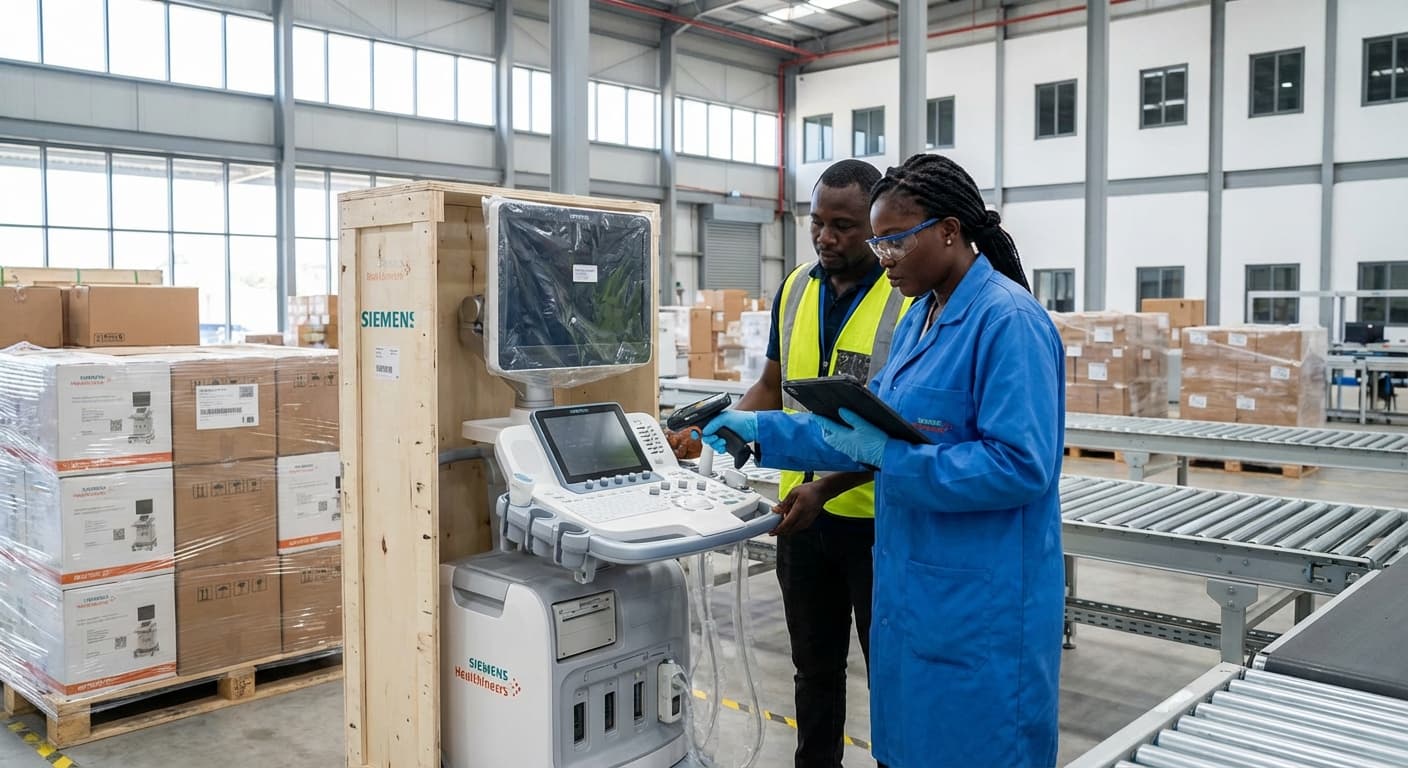
Warehouse Receiving Inspection Service (Medical Equipment) in Mali
Engineering Excellence & Technical Support
Warehouse Receiving Inspection Service (Medical Equipment) High-standard technical execution following OEM protocols and local regulatory frameworks.
ISO 13485 Certified Quality Assurance
Our receiving inspection service adheres to stringent ISO 13485 quality management standards, ensuring medical equipment meets all regulatory requirements and safety protocols before entering your inventory in Mali.
End-to-End Traceability & Lot Tracking
We implement robust lot and serial number tracking from the point of receipt, providing comprehensive traceability for all medical equipment. This critical feature supports recall management and regulatory compliance within Mali's healthcare system.
Specialized Medical Equipment Expertise
Our team comprises skilled technicians with specialized knowledge in inspecting a wide range of medical equipment, from diagnostics and surgical instruments to imaging devices, guaranteeing accurate and thorough assessments in Mali.
What Is Warehouse Receiving Inspection Service (Medical Equipment) In Mali?
Warehouse Receiving Inspection Service for Medical Equipment in Mali is a critical quality assurance process conducted upon the arrival of medical devices and supplies at a designated warehouse facility within Mali. This service is designed to verify the integrity, condition, and compliance of incoming medical equipment against predefined specifications, purchase orders, and regulatory requirements prior to their acceptance into inventory and subsequent distribution or utilization within the Malian healthcare system. The inspection aims to mitigate risks associated with damaged, non-conforming, counterfeit, or expired medical equipment, thereby safeguarding patient safety and ensuring the efficacy of healthcare interventions.
| Who Needs This Service | Typical Use Cases | |||||
|---|---|---|---|---|---|---|
| Hospitals and Clinics (Public and Private): Procurement departments and logistics managers responsible for managing medical equipment inventory. | Ministry of Health (Mali): For centrally procured medical supplies and equipment destined for public health facilities. | Non-Governmental Organizations (NGOs) and International Aid Agencies: Organizations involved in the provision of medical aid and equipment in Mali. | Medical Equipment Suppliers and Distributors: As part of their internal quality control and supply chain management processes before delivering to end-users. | Third-Party Logistics (3PL) Providers: Companies managing warehousing and distribution for medical equipment on behalf of other entities. | Regulatory Bodies (e.g., National Medicines and Food Agency - ANAM): Overseeing the quality and safety of medical products entering the market. | Manufacturers (in certain contractual arrangements): To ensure their products meet agreed-upon quality standards upon arrival at Malian distribution points. |
| Procurement of New Medical Equipment: Verifying the condition and specifications of newly purchased devices, consumables, and pharmaceuticals. | Receipt of Donated Medical Supplies: Ensuring the quality and usability of medical equipment received as donations from international partners or other organizations. | Inventory Replenishment: Inspecting routine deliveries of medical supplies to maintain adequate stock levels in warehouses. | Distribution of Emergency Medical Aid: Expedited inspection of critical medical supplies during public health emergencies or natural disasters. | Importation of Specialized Medical Devices: Confirming compliance with Malian import regulations and product standards for advanced medical equipment. | Stock Audits and Quality Control: Integrating receiving inspection as a component of broader inventory management and quality assurance initiatives. | Verification of Repairs and Maintenance Returns: Inspecting equipment returned from repair or maintenance to ensure the work was performed correctly and the item is fit for use. |
Key Components of Warehouse Receiving Inspection for Medical Equipment in Mali:
- Identity Verification: Confirming the received equipment matches the ordered items, including model numbers, serial numbers, manufacturer, and quantities.
- Condition Assessment: Visual inspection for any signs of damage incurred during transit (e.g., dents, scratches, broken seals, water damage). This includes checking packaging integrity.
- Documentation Review: Verifying the presence and accuracy of essential accompanying documents such as certificates of analysis, conformity, origin, warranties, and user manuals.
- Functional Testing (if applicable): Performing basic operational checks to ensure critical functionalities are intact, especially for complex or high-value equipment.
- Labeling and Traceability Check: Ensuring clear and correct labeling, including expiry dates, lot numbers, and any required regulatory markings.
- Compliance Verification: Confirming adherence to Malian regulatory standards, import regulations, and any specific contractual requirements stipulated by the procurement entity.
- Sampling and Quarantine Procedures: Implementing appropriate sampling plans for quality control and establishing quarantine protocols for items flagged for further investigation or rejection.
- Reporting and Documentation: Generating comprehensive inspection reports detailing findings, discrepancies, and recommendations, which serve as the basis for acceptance, rejection, or corrective actions.
Who Needs Warehouse Receiving Inspection Service (Medical Equipment) In Mali?
Warehouse Receiving Inspection Services for medical equipment in Mali are crucial for ensuring the quality, safety, and efficacy of imported medical devices. These services act as a vital gatekeeper, preventing substandard, counterfeit, or damaged equipment from entering the healthcare system, thereby safeguarding patient health and optimizing resource allocation. The target customers for such services are diverse, encompassing both public and private entities involved in the procurement, distribution, and utilization of medical equipment.
| Customer Type | Key Departments/Roles Involved | Specific Needs Addressed |
|---|---|---|
| Public Sector Healthcare Providers (e.g., Ministry of Health, Regional Hospitals, District Clinics) | Procurement Department, Central Medical Stores, Quality Assurance Unit, Clinical Engineering Department | Ensuring compliance with tender specifications, verifying equipment functionality, preventing introduction of faulty or unsafe devices, maintaining accurate inventory records, meeting national health standards. |
| Private Sector Healthcare Facilities (e.g., Private Hospitals, Clinics, Diagnostic Centers) | Procurement Manager, Biomedical Engineering Department, Quality Control Officer | Verifying the quality and authenticity of purchased equipment, ensuring timely delivery of functional devices, minimizing downtime due to equipment failure, maintaining patient safety, complying with internal quality standards. |
| Medical Equipment Distributors and Suppliers | Logistics and Warehousing Department, Quality Control Department, Sales and Technical Support | Confirming incoming goods match purchase orders, identifying shipping damage, ensuring correct product codes and specifications, facilitating smooth handover to end-users, maintaining their reputation for quality and reliability. |
| Non-Governmental Organizations (NGOs) and International Aid Agencies | Procurement and Logistics Teams, Program Managers, Field Operations Staff | Ensuring donated or purchased medical equipment meets the specific needs of the project, verifying that equipment is functional and appropriate for the local context, adhering to donor requirements and international standards, efficient distribution of essential medical supplies. |
| Government Regulatory Bodies (e.g., National Drug and Medical Device Authority) | Inspection and Enforcement Departments, Post-Market Surveillance Units | Verifying that imported medical equipment complies with national regulations and standards, identifying and intercepting counterfeit or substandard devices, supporting market surveillance efforts, ensuring public health is protected. |
Key Target Customers and Departments
- Public Sector Healthcare Providers
- Private Sector Healthcare Facilities
- Medical Equipment Distributors and Suppliers
- Non-Governmental Organizations (NGOs) and International Aid Agencies
- Government Regulatory Bodies
Warehouse Receiving Inspection Service (Medical Equipment) Process In Mali
This document outlines the Warehouse Receiving Inspection Service for Medical Equipment in Mali, detailing the workflow from initial inquiry to the final execution of the inspection. The process is designed to ensure the quality, safety, and compliance of medical equipment upon arrival at its destination within Mali.
| Step | Description | Responsible Party | Key Activities | Documentation/Output |
|---|---|---|---|---|
| The importer or distributor initiates contact to request the receiving inspection service for incoming medical equipment. | Importer/Distributor | Contacting the inspection service provider, providing details of the shipment (type of equipment, quantity, origin, expected arrival date), and requesting a quote. | Service Request Form, Quotation |
| Upon agreement on terms and scope, a service contract is established, and the inspection is scheduled. | Inspection Service Provider, Importer/Distributor | Formalizing the service agreement, defining inspection scope, criteria, and timeline. Scheduling the inspection date and time based on expected arrival. | Service Agreement/Contract, Inspection Plan |
| The importer ensures all necessary documentation and conditions are met for the inspection. | Importer/Distributor | Gathering and organizing relevant documents (e.g., packing lists, invoices, certificates of origin, quality certificates, import permits, manufacturer's specifications). Ensuring equipment is accessible and warehouse conditions are suitable. | Shipment Documentation, Warehouse Readiness Confirmation |
| The medical equipment arrives at the designated warehouse in Mali. The importer notifies the inspection service provider. | Importer/Distributor, Warehouse Operator | Receiving the shipment, verifying initial physical receipt against shipping documents, notifying the inspection service provider of arrival. | Arrival Notification, Warehouse Receipt (Provisional) |
| The qualified inspectors conduct a thorough examination of the received medical equipment. | Inspection Service Provider | Visual inspection (packaging integrity, labeling, damage), verification of equipment against specifications and documentation, checking serial numbers/batch numbers, assessing storage conditions, preliminary functional checks (if applicable and feasible). | Inspection Checklist, Field Notes, Preliminary Findings Report |
| Inspectors review all provided documentation to confirm compliance. | Inspection Service Provider | Cross-referencing equipment received with packing lists, invoices, certificates, and regulatory requirements. Verifying import permits and other necessary authorizations. | Document Review Report |
| Any deviations from specified standards or requirements are identified and documented. | Inspection Service Provider | Identifying and documenting any damages, discrepancies, missing items, incorrect labeling, or non-compliance with regulations or specifications. | Non-Conformance Report (NCR) |
| A comprehensive inspection report is prepared, outlining findings and recommendations. | Inspection Service Provider | Compiling all inspection data, findings, and review results into a formal report. Providing clear recommendations for acceptance, rejection, or corrective actions. | Final Inspection Report, Recommendations Document |
| The importer reviews the report and makes decisions based on the findings and recommendations. | Importer/Distributor | Reviewing the inspection report, deciding on actions such as accepting the shipment, initiating return/rejection procedures for non-conforming items, or implementing corrective actions. | Importer's Decision Notification, Action Plan (if corrective actions required) |
| The inspection service is considered complete upon satisfactory resolution of any issues and acceptance by the importer. | Inspection Service Provider, Importer/Distributor | Archiving inspection records. Issuing a final confirmation of service completion. | Service Completion Confirmation, Archived Records |
Warehouse Receiving Inspection Service (Medical Equipment) Process in Mali
- Objective: To verify that medical equipment received in warehouses in Mali meets specified quality, safety, and regulatory standards.
- Scope: Applicable to all medical equipment intended for distribution or use within Mali, including but not limited to devices, instruments, consumables, and pharmaceuticals requiring specialized handling or storage.
- Key Stakeholders: Importer/Distributor, Warehouse Operator, Regulatory Authorities (e.g., Ministry of Health), Inspection Service Provider, Manufacturer/Supplier.
Warehouse Receiving Inspection Service (Medical Equipment) Cost In Mali
The cost of warehouse receiving inspection services for medical equipment in Mali can vary significantly due to several key pricing factors. These factors influence the overall expense, from the initial quote to the final invoice. Understanding these elements is crucial for accurate budgeting and selecting the most suitable service provider.
Key Pricing Factors:
| Service Component/Factor | Typical Cost Range (Malian Francs - XOF) | Notes |
|---|---|---|
| Basic Receiving Inspection (Per Unit/Shipment) | 25,000 - 75,000 XOF | Covers visual inspection, documentation check, basic identification. Varies greatly by equipment complexity. |
| Detailed Functional Testing (Per Unit) | 50,000 - 200,000+ XOF | For more complex equipment requiring operational checks. Price escalates with complexity and time. |
| Full Equipment Verification (Including Accessories, Manuals) | 30,000 - 100,000 XOF | Ensuring all components are present as per specifications. |
| Report Generation (Standard) | Included in inspection fee | Basic digital or paper report. |
| Report Generation (Detailed/Photographic/Video) | 10,000 - 50,000+ XOF | Additional cost for comprehensive documentation. |
| Travel and Logistics (Per Inspector, Per Day) | 20,000 - 60,000 XOF | Covers transportation, accommodation, and per diems for inspectors, especially for remote locations. |
| Urgent/Expedited Service Fee | 25% - 100% Surcharge | Applied to the total service cost for immediate turnaround. |
| Minimum Service Fee (Per Engagement) | 50,000 - 150,000 XOF | Some providers may have a minimum charge for any inspection job. |
Key Pricing Factors for Warehouse Receiving Inspection Services (Medical Equipment) in Mali
- {"title":"Scope of Inspection:","description":"The depth and breadth of the inspection are primary drivers. This includes checks for physical damage, verification of serial numbers and model numbers against documentation, assessment of packaging integrity, confirmation of accessories and manuals, and basic functional tests. More comprehensive inspections, potentially involving specialized equipment or prolonged testing, will incur higher costs."}
- {"title":"Quantity and Type of Equipment:","description":"The sheer volume of equipment being inspected directly impacts labor time and resources. Furthermore, the complexity and criticality of the medical equipment play a role. Inspecting high-value, intricate diagnostic machines may require more specialized expertise and time compared to simpler medical supplies."}
- Value of Equipment:
- Insurance and liability considerations for high-value equipment can be factored into the inspection service cost.
- {"title":"Location of the Warehouse:","description":"The geographical location of the warehouse within Mali can affect costs due to travel time, logistics, and potential regional variations in labor rates. Remote or hard-to-reach locations might incur additional transportation and accommodation expenses for inspectors."}
- {"title":"Inspector's Qualifications and Expertise:","description":"Highly specialized inspectors with certifications or extensive experience in medical equipment can command higher fees. The need for specific technical knowledge or the ability to interpret complex technical specifications will also influence pricing."}
- {"title":"Urgency and Turnaround Time:","description":"If a rapid inspection is required, service providers may charge a premium for expedited services. Standard turnaround times will generally be more cost-effective."}
- {"title":"Reporting Requirements:","description":"The level of detail and format of the inspection report can influence costs. Standard checklist reports are less expensive than detailed, photographic, or video-documented reports requiring more time and resources to compile."}
- {"title":"Third-Party Certifications/Accreditations:","description":"If the inspection needs to be performed by an accredited third-party inspection body to meet specific regulatory or contractual requirements, this can add to the overall cost."}
- {"title":"Service Provider's Overhead and Profit Margin:","description":"Like any business, inspection service providers have operational costs (salaries, equipment, insurance, office space) and will incorporate a profit margin into their pricing."}
Affordable Warehouse Receiving Inspection Service (Medical Equipment) Options
Finding affordable warehouse receiving inspection services for medical equipment is crucial for maintaining quality, compliance, and cost-efficiency. This service ensures that incoming medical devices are inspected for damage, accuracy of shipment, and adherence to specifications before being integrated into inventory or distributed. We'll explore various value bundles and cost-saving strategies to help you secure the best service without breaking the bank.
| Value Bundle Option | Key Features | Ideal For | Potential Cost Savings |
|---|---|---|---|
| Basic Receiving Verification | Quantity count, visual damage check, basic documentation. | Low-value items, high-volume, less complex equipment. | Lowest per-unit cost, streamlined process. |
| Standard Inspection Package | Basic verification plus model/spec check, lot/serial number verification, basic functional spot-checks. | Most common medical equipment, moderate complexity. | Good balance of thoroughness and cost, reduces downstream errors. |
| Comprehensive Quality Assurance | Standard package plus detailed functional testing, environmental checks, compliance documentation review. | High-value, critical, or highly regulated medical equipment. | Minimizes risk of product failure, ensures regulatory compliance, reduces recalls. |
| Customized Service Tiers | Tailored inspection protocols based on specific equipment types, risk levels, and regulatory requirements. | Organizations with diverse medical equipment portfolios or unique needs. | Pays only for necessary services, optimizes inspection resources. |
Key Components of Warehouse Receiving Inspection for Medical Equipment
- Visual inspection for physical damage (dents, scratches, broken seals)
- Verification of quantity against purchase orders and packing lists
- Check for proper labeling and identification (lot numbers, serial numbers, expiry dates)
- Confirmation of correct product model and specifications
- Documentation of any discrepancies or damages
- Basic functional checks (where applicable and feasible during receiving)
- Temperature and environmental condition verification (for temperature-sensitive items)
Verified Providers In Mali
In Mali, ensuring access to reliable and high-quality healthcare is paramount. The selection of healthcare providers with verified credentials is not just a matter of preference but a critical step towards receiving safe and effective medical attention. Franance Health stands out as a leader in this regard, offering a network of healthcare professionals whose qualifications and expertise are meticulously vetted. Choosing a Franance Health-affiliated provider means opting for a level of trust, competence, and commitment to patient well-being that is unparalleled in the Malian healthcare landscape.
| Aspect | Franance Health Advantage | Benefit for Patients |
|---|---|---|
| Credentialing Process | Strict, multi-stage verification of licenses, degrees, and certifications. | Guaranteed access to qualified and legitimate medical professionals. |
| Professional Development | Emphasis on continuous learning and adherence to updated medical guidelines. | Receiving care based on the latest and most effective medical knowledge. |
| Patient Communication | Encouragement of clear, empathetic, and informative interactions. | Better understanding of health conditions and treatment plans, leading to improved adherence and outcomes. |
| Scope of Services | Access to a wide array of specialists and general practitioners across various medical fields. | Convenient access to specialized care for a broad spectrum of health needs within one trusted network. |
| Overall Trust | Building a reputation for integrity and dependable healthcare services. | Reduced anxiety and increased confidence in the quality and safety of medical treatment received. |
Why Franance Health Providers are the Best Choice in Mali:
- Rigorous Credential Verification: Franance Health employs a comprehensive and stringent process to verify the academic qualifications, professional licenses, and certifications of all its affiliated healthcare providers. This ensures that every practitioner meets the highest standards of medical education and practice.
- Commitment to Excellence: Beyond basic qualifications, Franance Health seeks providers who demonstrate a consistent dedication to ongoing professional development, staying abreast of the latest medical advancements and best practices. This commitment translates into superior patient care.
- Patient-Centric Approach: Franance Health emphasizes providers who prioritize the patient's needs and well-being. This includes fostering open communication, providing clear explanations of diagnoses and treatment options, and ensuring a compassionate and respectful patient experience.
- Specialized Expertise: The network includes a diverse range of specialists and general practitioners, allowing patients to find the precise expertise required for their specific health concerns. This broad coverage ensures that complex medical needs can be met effectively.
- Trust and Reliability: By choosing a Franance Health-verified provider, patients gain peace of mind knowing they are receiving care from professionals who have undergone thorough scrutiny. This fosters a strong sense of trust and reliability in the healthcare system.
Scope Of Work For Warehouse Receiving Inspection Service (Medical Equipment)
This Scope of Work (SOW) outlines the services to be provided for warehouse receiving inspection of medical equipment. The primary objective is to ensure that all received medical equipment meets the specified technical standards, is free from damage, and is properly documented before being accepted into the warehouse inventory. This service is critical for maintaining the integrity of medical equipment supply chains and ensuring patient safety.
| Activity | Description | Technical Deliverables | Standard Specifications |
|---|---|---|---|
| Pre-Inspection Verification | Review of incoming documentation (POs, packing lists, invoices) prior to physical inspection. | Verified documentation matching received goods. | Accuracy of PO numbers, item descriptions, quantities, and supplier information. |
| Visual Inspection | Examination of the external condition of the equipment and its packaging. | Detailed visual inspection report with photographic evidence of any damage. | Absence of physical damage (dents, scratches, cracks, punctures), contamination, or signs of tampering. Packaging integrity (no tears, spills, or compromised seals). |
| Product Identification & Configuration Check | Verification of equipment model numbers, serial numbers, and any specific configurations against documentation. | List of verified serial numbers and configurations. | Exact match of model number, serial number, and any specified build/configuration options (e.g., software version, accessories included) as per PO and manufacturer specifications. |
| Functional/Basic Operational Check (if applicable) | Performing basic operational checks to confirm the equipment powers on and performs fundamental functions, as defined by the client. | Report on basic functional status. | Equipment powers on, basic indicators function, and no immediate error codes or malfunctions are evident. Scope of 'basic' function to be agreed upon with the client. |
| Documentation & Labeling Compliance | Checking for the presence and accuracy of all required documentation (user manuals, warranty cards, certificates) and labeling. | Confirmation of all required documentation and labeling present. | User manuals, quick start guides, safety instructions, warranty information, and regulatory compliance labels (e.g., CE marking, FDA clearance) are present and legible. |
| Quantity Verification | Counting and verifying the quantity of each item received against the accompanying documentation. | Accurate quantity reconciliation report. | Exact quantity received matches the quantity specified on the PO and packing list. Any discrepancies noted. |
| Non-Conformance Reporting | Documenting and reporting any deviations from specified standards or presence of defects. | Formal Non-Conformance Report (NCR) with detailed descriptions and supporting evidence. | Clear identification of the item, nature of the non-conformance (damage, incorrect item, missing part, functional issue), quantity affected, and photographic evidence. |
| Inspection Reporting | Compilation and submission of a comprehensive inspection report. | Final Inspection Report, including summary of findings, details of any non-conformances, and recommendations. | Report to be issued within [X] business days of inspection completion. Format and content to be agreed upon with the client, including acceptance/rejection status for each item. |
| Segregation of Non-Conforming Goods | Ensuring that any identified non-conforming goods are clearly identified and segregated from accepted inventory. | Physically segregated non-conforming items with appropriate labeling. | Non-conforming items clearly marked with 'Quarantine' or 'Hold' labels and stored in a designated area as per client's warehouse procedures. |
Key Objectives
- Verify incoming medical equipment against purchase orders (POs) and packing lists.
- Conduct thorough visual inspections for any signs of damage, defects, or tampering.
- Confirm adherence to technical specifications, including model numbers, serial numbers, configurations, and quantities.
- Document all inspection findings, including discrepancies, damages, and non-conformities.
- Ensure proper labeling and packaging compliance.
- Facilitate the identification and segregation of non-conforming products.
- Provide timely and accurate inspection reports to relevant stakeholders.
Service Level Agreement For Warehouse Receiving Inspection Service (Medical Equipment)
This Service Level Agreement (SLA) outlines the agreed-upon service levels for Warehouse Receiving Inspection Service for Medical Equipment provided by [Service Provider Name] to [Client Name]. This SLA defines response times and uptime guarantees to ensure efficient and reliable inspection processes.
| Service Component | Uptime Guarantee | Response Time Target (First Response) | Resolution Time Target (Standard Issue) | Resolution Time Target (Critical Issue) |
|---|---|---|---|---|
| Receiving Dock Availability | 99.5% (Excluding scheduled maintenance) | N/A | N/A | N/A |
| Inspection Personnel Availability | 99.0% (During agreed operating hours) | Within 2 business hours of shipment arrival notification | Within 8 business hours of issue identification | Within 4 business hours of issue identification |
| Inspection Reporting | 99.8% (System availability) | Within 1 business hour of completing inspection | N/A | N/A |
| Damage/Discrepancy Documentation | 99.5% (System availability) | N/A | Within 4 business hours of issue identification | Within 2 business hours of issue identification |
Scope of Service
- Initial inspection of incoming medical equipment shipments.
- Verification of equipment against purchase orders and packing lists.
- Identification and documentation of visible damage or discrepancies.
- Segregation and quarantine of non-conforming items.
- Reporting of inspection findings.
Frequently Asked Questions

Ready when you are
Let's scope your Warehouse Receiving Inspection Service (Medical Equipment) in Mali project in Mali.

Scaling healthcare logistics and technical systems across the entire continent.