
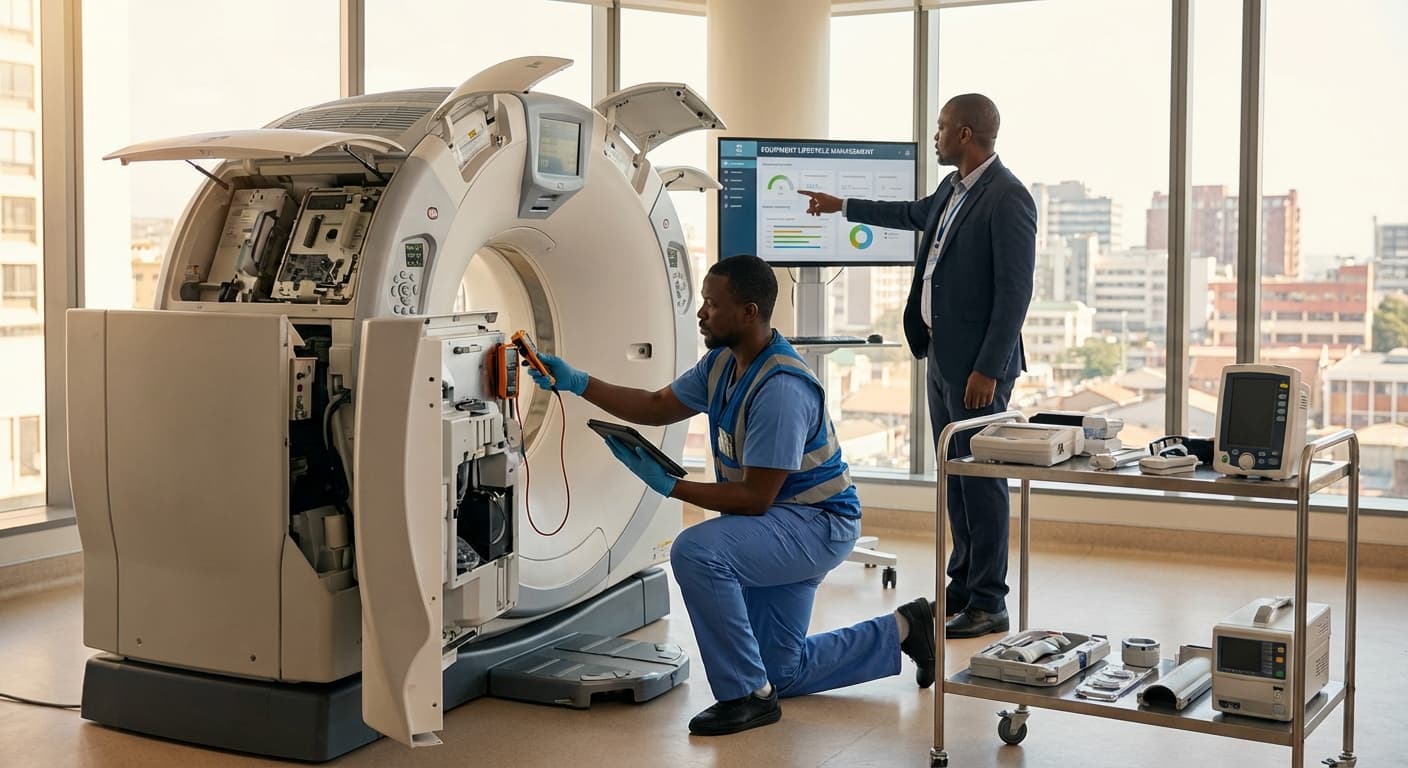
Equipment Replacement Planning & Obsolescence Strategy Service in Mali
Engineering Excellence & Technical Support
Equipment Replacement Planning & Obsolescence Strategy Service High-standard technical execution following OEM protocols and local regulatory frameworks.
Proactive Obsolescence Mitigation & Lifespan Extension
Leverage advanced analytics and predictive modeling to identify critical equipment at risk of obsolescence. Our service implements strategic sourcing, lifecycle management, and planned upgrades to extend operational lifespan, minimizing costly emergency replacements and ensuring continuity of service for vital infrastructure in Mali.
Optimized Replacement Cadence & Cost Reduction
Develop data-driven replacement schedules that balance asset performance, maintenance costs, and capital expenditure. We provide detailed TCO (Total Cost of Ownership) analyses for each asset, enabling Mali's organizations to optimize their investment in new equipment, avoid overspending, and achieve significant cost savings through planned, efficient replacements.
Comprehensive Asset Registry & Risk Assessment
Establish a robust and centralized asset registry for all critical equipment across Mali. Our service includes thorough risk assessments, identifying single points of failure and vulnerabilities due to outdated components. This empowers informed decision-making for strategic replacements and ensures enhanced operational resilience against supply chain disruptions and technological shifts.
What Is Equipment Replacement Planning & Obsolescence Strategy Service In Mali?
Equipment Replacement Planning & Obsolescence Strategy Service in Mali refers to a specialized consulting and operational framework designed to assist organizations in Mali with the systematic identification, evaluation, and management of their operational assets. This service aims to proactively address the challenges posed by aging equipment, technological obsolescence, and the increasing complexities of maintaining a modern and efficient operational infrastructure within the Malian economic and regulatory context. It encompasses a comprehensive lifecycle management approach for all categories of equipment, from critical production machinery to IT infrastructure and fleet vehicles.
| Who Needs This Service? | Typical Use Cases | ||||||||
|---|---|---|---|---|---|---|---|---|---|
| Manufacturing and Industrial Sectors: Factories, processing plants, and production facilities relying on heavy machinery and automated systems. | Mining and Extractive Industries: Operations involving large-scale extraction equipment, vehicles, and processing infrastructure. | Energy and Utilities: Power generation plants, water treatment facilities, and distribution networks with aging infrastructure. | Telecommunications: Providers managing networks, base stations, and IT infrastructure susceptible to rapid technological change. | Transportation and Logistics: Companies with large fleets of vehicles, specialized transport equipment, and warehousing systems. | Agriculture and Agribusiness: Farms and food processing operations utilizing mechanized equipment and specialized machinery. | Healthcare Institutions: Hospitals and clinics requiring reliable medical equipment and IT systems. | Government Agencies and Public Infrastructure: Entities managing public works, transportation networks, and administrative IT systems. | Construction and Civil Engineering: Firms with fleets of heavy equipment and specialized construction machinery. | |
| Proactive Replacement of Aging Production Lines: Identifying and scheduling the replacement of worn-out manufacturing equipment to avoid production downtime and ensure product quality. | Managing Obsolescence in IT Infrastructure: Planning for the upgrade or replacement of servers, network devices, and software before they become unsupported or pose security risks. | Optimizing Fleet Management: Developing a schedule for vehicle replacement based on mileage, age, maintenance costs, and fuel efficiency. | Responding to Technological Advancements: Evaluating and adopting new technologies that offer significant operational benefits or cost savings. | Minimizing Risk of Catastrophic Equipment Failure: Implementing a strategy to replace critical components or entire systems before they fail unexpectedly, preventing costly disruptions. | Ensuring Regulatory Compliance: Replacing equipment that no longer meets current environmental or safety standards. | Strategic Capital Expenditure Planning: Integrating equipment replacement into long-term financial forecasts and budgeting cycles. | Negotiating Favorable Procurement Contracts: Leveraging detailed replacement plans to secure better terms with equipment vendors. | Implementing Predictive Maintenance Programs: Using data from existing equipment to forecast failure points and schedule proactive maintenance or replacement. | Divesting or Upgrading Obsolete Assets: Managing the process of selling off or refurbishing equipment that is no longer essential but retains residual value. |
Key Components of the Service
- Asset Inventory and Valuation: Conducting a thorough audit of all existing equipment, including its acquisition date, original cost, current condition, residual value, and performance metrics.
- Condition Assessment and Performance Monitoring: Implementing methodologies for evaluating the physical condition, operational efficiency, and reliability of assets through inspections, testing, and data analysis.
- Obsolescence Risk Assessment: Identifying equipment that is nearing the end of its economic or technical life, at risk of discontinuation by manufacturers, or outpaced by newer, more efficient technologies.
- Replacement Cost Analysis: Determining the projected capital and operational expenditures associated with replacing obsolete or failing equipment, including installation, commissioning, and training.
- Life Cycle Costing (LCC): Analyzing the total cost of ownership for equipment over its entire lifespan, factoring in acquisition, operation, maintenance, and disposal costs.
- Risk Mitigation Strategies: Developing plans to minimize the impact of equipment failure or obsolescence, such as implementing predictive maintenance programs, establishing strategic spares inventories, or developing contingency plans.
- Technology Scouting and Evaluation: Researching and evaluating emerging technologies and equipment that can enhance operational efficiency, reduce costs, or improve product/service quality.
- Financial Planning and Budgeting: Aligning equipment replacement strategies with organizational financial goals and developing multi-year capital expenditure budgets.
- Procurement and Disposal Support: Assisting with the tender process for new equipment, contract negotiation, and the environmentally responsible disposal or resale of retired assets.
- Regulatory Compliance Review: Ensuring that replacement plans adhere to relevant Malian regulations, environmental standards, and import/export requirements.
Who Needs Equipment Replacement Planning & Obsolescence Strategy Service In Mali?
Equipment replacement planning and obsolescence strategy services are crucial for organizations in Mali facing the challenges of aging infrastructure, limited access to new technologies, and the need to optimize operational costs. These services help businesses proactively manage their asset lifecycle, mitigate risks associated with outdated equipment, and ensure continued operational efficiency and competitiveness.
| Industry/Sector | Key Departments Benefiting |
|---|---|
| Mining & Natural Resources | Operations, Maintenance, Procurement, Finance, Asset Management, Engineering |
| Manufacturing | Production, Engineering, Maintenance, Supply Chain, Quality Control, Finance |
| Energy & Utilities | Operations, Grid Management, Maintenance, Engineering, Planning, Finance, Procurement |
| Telecommunications | Network Operations, Engineering, IT, Procurement, Strategy, Finance |
| Transportation & Logistics | Fleet Management, Operations, Maintenance, Engineering, Procurement, Safety |
| Government & Public Sector | Public Works, Defense Logistics, IT Departments, Infrastructure Planning, Finance, Procurement |
| Construction & Engineering | Project Management, Operations, Procurement, Maintenance, Health & Safety |
Target Customers in Mali
- Large industrial enterprises (mining, manufacturing, agriculture)
- Public utilities (power generation and distribution, water and sanitation)
- Telecommunications companies
- Transportation and logistics firms (airlines, railways, port operators)
- Government agencies and ministries (defense, infrastructure, health)
- Financial institutions with significant IT infrastructure
- Large-scale construction and engineering projects
Equipment Replacement Planning & Obsolescence Strategy Service Process In Mali
This document outlines the typical workflow for an Equipment Replacement Planning & Obsolescence Strategy Service, specifically tailored for operations in Mali. The process guides clients from initial inquiry to successful execution, ensuring their equipment remains functional, cost-effective, and compliant with current technological standards, while mitigating risks associated with obsolete assets.
| Phase | Key Activities | Deliverables | Mali-Specific Considerations |
|---|---|---|---|
| Client contacts service provider with a need for equipment replacement planning and/or obsolescence management. Initial discussion to understand business objectives, existing challenges, and desired outcomes. | Initial meeting minutes, preliminary understanding of client needs. | Understanding of local regulatory requirements for specific industries (e.g., mining, energy). Identifying any import/export restrictions on new equipment or spare parts. Language proficiency (French, local dialects) of the client's key personnel. |
| Detailed discussion to define the scope of services, including specific equipment categories, geographical coverage within Mali, desired level of detail for analysis, and key performance indicators (KPIs). Preparation of a tailored service proposal. | Service proposal document outlining scope, methodology, timeline, costs, and team composition. | Availability of local expertise for site visits. Potential for travel and logistical challenges within Mali. Cultural nuances in business negotiations. Payment terms suitable for the Malian market. |
| Formalization of the agreement through a service contract. Onboarding of the client team, establishing communication channels, and defining roles and responsibilities. | Signed service agreement. Project kickoff meeting. Communication protocols established. | Understanding of Malian contract law. Importance of clear, written communication due to potential language barriers. Establishing trusted local contacts. |
| Gathering comprehensive data on existing equipment: age, purchase date, maintenance history, performance data, operational costs, criticality, supplier information, and current market availability of spares. | Detailed equipment inventory database. Historical performance reports. Cost analysis of current operations. | Access to equipment locations (may require security clearances). Potential for limited internet connectivity for data transfer. Availability of local technicians for on-site inspection and data verification. Local currency fluctuations impacting cost analysis. |
| Analyzing collected data to identify equipment nearing or past its end-of-life, with limited or no manufacturer support, or using outdated technology that poses operational risks (safety, efficiency, compliance). | Obsolescence risk matrix. Identification of critical obsolete assets. | Availability of local technical expertise to assess the condition of aging equipment. Potential for counterfeit spare parts in the local market and their implications for safety and reliability. |
| Developing replacement plans based on equipment criticality, operational impact, budgetary constraints, and technological advancements. Prioritizing replacements to minimize disruption and optimize investment. | Prioritized replacement schedule. Budgetary estimates for replacement projects. Risk assessment of continued use of obsolete equipment. | Lead times for importing new equipment into Mali. Local availability of specialized tools and training for installation and maintenance of new equipment. Government incentives or restrictions related to technology upgrades. |
| Formulating a comprehensive obsolescence management and replacement strategy. This includes recommendations for: in-house refurbishment, outsourcing, purchasing new equipment, or alternative solutions. Defining the optimal balance between cost, risk, and performance. | Obsolescence strategy document. Recommended actions for each piece of equipment. Long-term lifecycle management plan. | Understanding local repair capabilities and their cost-effectiveness. Identifying reputable local suppliers and service providers. Considering the socio-economic impact of large-scale equipment replacements on local employment. |
| Developing detailed implementation plans for approved replacement strategies. This involves procurement processes, project timelines, resource allocation, and risk mitigation strategies. | Detailed project implementation plans. Procurement strategy. Resource management plan. | Navigating Malian customs and import procedures. Establishing relationships with local logistics providers for efficient delivery. Training local personnel on new equipment and maintenance procedures. |
| Overseeing the procurement, installation, and commissioning of new equipment. Managing vendor relationships, ensuring quality control, and addressing any unforeseen issues during the execution phase. | Project completion reports. Successful installation and commissioning of new equipment. Handover documentation. | On-site project management presence. Coordination with local authorities and stakeholders. Ensuring adherence to safety standards in a potentially challenging environment. Managing potential delays due to infrastructure or logistical challenges. |
| Post-implementation review of the effectiveness of the replacement strategy. Ongoing monitoring of equipment performance, costs, and obsolescence risks. Periodic reviews and adjustments to the strategy as needed. | Performance monitoring reports. Updated obsolescence risk assessments. Recommendations for future strategy refinements. | Establishing long-term maintenance contracts with reliable local partners. Training local teams for ongoing monitoring and reporting. Continuous engagement with the client to adapt to evolving operational needs and technological landscape within Mali. |
Equipment Replacement Planning & Obsolescence Strategy Service Workflow in Mali
- Inquiry & Needs Assessment
- Scope Definition & Proposal Development
- Contracting & Onboarding
- Data Collection & Analysis
- Obsolescence Assessment
- Replacement Planning
- Strategy Development & Recommendation
- Implementation Planning
- Execution & Project Management
- Monitoring & Review
Equipment Replacement Planning & Obsolescence Strategy Service Cost In Mali
Developing a robust Equipment Replacement Planning & Obsolescence Strategy Service is crucial for organizations in Mali to maintain operational efficiency, minimize downtime, and avoid the risks associated with outdated or failing equipment. The cost of such a service is influenced by a variety of factors, making it essential to understand these to budget effectively. The pricing will generally be quoted in the local currency, the Malian Franc (XOF).
| Service Level/Scope | Estimated Cost Range (XOF) | Typical Deliverables |
|---|---|---|
Key Pricing Factors for Equipment Replacement Planning & Obsolescence Strategy Services in Mali:
- {"title":"Scope and Complexity of Equipment Portfolio:","description":"The number, type, criticality, and age of the equipment being assessed will significantly impact the service cost. A large, diverse, and complex inventory will require more extensive data collection, analysis, and strategic development."}
- {"title":"Depth of Analysis and Strategic Development:","description":"Basic inventory and lifecycle assessment will be less expensive than a comprehensive strategy that includes risk mitigation, total cost of ownership (TCO) analysis, vendor management, and detailed replacement roadmaps with financial projections."}
- {"title":"Data Availability and Quality:","description":"The ease with which the service provider can access reliable data (maintenance records, purchase history, performance metrics, manufacturer specifications) affects the time and effort required. Significant data cleansing or collection efforts will increase costs."}
- {"title":"Technology and Software Utilization:","description":"The use of specialized asset management software, simulation tools, or AI-driven analytics can enhance the quality of the service but may also be reflected in the pricing. The provider's internal tools and licenses will factor in."}
- {"title":"Provider's Expertise and Reputation:","description":"Established consulting firms or specialized service providers with a proven track record and deep expertise in asset management and obsolescence planning in the Malian context will likely command higher fees than smaller or less experienced entities."}
- {"title":"Level of Client Involvement and Collaboration:","description":"The extent to which the client's internal teams are involved in data provision, review, and decision-making can influence the provider's resource allocation and thus the overall cost."}
- {"title":"Geographical Reach and Site Visits:","description":"If the service requires extensive site visits to different operational locations within Mali, travel and accommodation costs will be additional factors. The size and dispersion of the client's facilities matter."}
- {"title":"Deliverables and Reporting Requirements:","description":"The format, detail, and frequency of reports and presentations will influence the provider's effort. Highly customized or interactive reporting might incur additional charges."}
- {"title":"Project Duration and Timeline:","description":"Urgent or accelerated project timelines may necessitate the allocation of more resources and specialized personnel, potentially leading to higher costs."}
Affordable Equipment Replacement Planning & Obsolescence Strategy Service Options
Our Affordable Equipment Replacement Planning & Obsolescence Strategy Service helps organizations proactively manage their asset lifecycle, ensuring operational continuity and maximizing return on investment. We offer flexible value bundles and implement cost-saving strategies to make vital equipment replacement planning accessible and financially sensible. By understanding your current asset portfolio, operational needs, and budget constraints, we tailor solutions that prevent costly emergency replacements, mitigate risks associated with outdated technology, and optimize procurement processes.
| Cost-Saving Strategy | Description | Benefit |
|---|---|---|
| Bulk Procurement Discounts | Leveraging future replacement needs to negotiate better pricing through consolidated orders. | Reduced acquisition costs per unit. |
| Phased Replacement Scheduling | Spreading capital expenditures over multiple budget cycles to ease financial strain. | Improved cash flow management and reduced upfront investment. |
| Extended Equipment Lifespan Optimization | Implementing proactive maintenance and upgrades to delay replacement cycles where feasible. | Deferred capital expenditure and reduced overall TCO. |
| Standardization of Equipment | Reducing complexity and gaining economies of scale by standardizing on fewer equipment models. | Lower inventory costs, simplified maintenance, and bulk purchasing advantages. |
| Trade-in and Resale Value Maximization | Strategic planning for equipment disposal to recover maximum value. | Increased capital recovery and reduced net replacement cost. |
| Predictive Maintenance Integration | Utilizing data analytics to identify potential failures before they occur, allowing for planned, rather than emergency, repairs or replacements. | Reduced downtime, minimized emergency repair costs, and optimized replacement timing. |
Value Bundles for Equipment Replacement & Obsolescence Strategy
- {"title":"Core Planning Package","description":"Essential services for establishing a baseline replacement plan. Includes initial asset inventory, basic obsolescence risk assessment, and a preliminary replacement roadmap."}
- {"title":"Advanced Strategy Bundle","description":"Expands on the Core Package with in-depth analysis. Features detailed obsolescence forecasting, TCO (Total Cost of Ownership) analysis for replacement options, and risk mitigation strategies."}
- {"title":"Proactive Lifecycle Management","description":"A comprehensive solution for continuous asset management. Includes ongoing monitoring, adaptive replacement planning, maintenance optimization, and end-of-life disposal strategies."}
- {"title":"Customized Solution","description":"Tailored service to address unique organizational challenges and specific asset classes. We work with you to define the scope and deliverables that best meet your needs."}
Verified Providers In Mali
When seeking healthcare services in Mali, it's paramount to choose providers who offer not only quality medical care but also ethical and transparent practices. Franance Health has established itself as a leading organization in Mali's healthcare landscape, distinguished by its rigorous credentialing process and unwavering commitment to patient well-being. Their verified providers represent the gold standard in healthcare, offering a blend of expertise, reliability, and a patient-centric approach. This dedication to excellence makes Franance Health credentials a crucial indicator of superior medical services.
| Franance Health Credentialed Provider Benefit | Description | Impact on Patient Experience |
|---|---|---|
| Expertise and Experience | Providers undergo thorough background checks, confirming their medical education, training, and years of practice. | Access to highly skilled and knowledgeable medical professionals who can accurately diagnose and treat a wide range of conditions. |
| Ethical Practice Standards | Franance Health verifies that providers adhere to a strict code of conduct and patient privacy regulations. | Peace of mind knowing that your healthcare is delivered with integrity, respect, and confidentiality. |
| Patient Safety and Quality Assurance | The credentialing process includes checks for any disciplinary actions or malpractice claims. | Reduced risk of medical errors and assurance of receiving safe, high-quality care. |
| Reliability and Accountability | Franance Health maintains a registry of verified providers, ensuring a level of professional accountability. | Greater confidence in the provider's commitment to their patients and professional responsibilities. |
| Streamlined Access to Care | Franance Health aims to simplify the process of finding and connecting with trusted healthcare providers. | Efficiently find the right specialist or general practitioner for your healthcare needs. |
Why Franance Health Credentials Matter
- Rigorous Vetting Process: Franance Health employs a stringent evaluation system for all its affiliated healthcare professionals. This includes verifying medical licenses, educational qualifications, professional experience, and adherence to ethical guidelines.
- Commitment to Quality: The credentialing process ensures that all Franance Health verified providers meet high standards of clinical competence and patient care, promoting better health outcomes.
- Enhanced Patient Trust: By choosing a Franance Health verified provider, patients gain confidence in the quality and integrity of the medical services they receive.
- Access to Specialized Care: Franance Health works to connect patients with specialists across various medical fields, ensuring comprehensive and tailored healthcare solutions.
- Continuous Professional Development: Franance Health encourages and monitors ongoing training and development for its providers, keeping them abreast of the latest medical advancements and best practices.
Scope Of Work For Equipment Replacement Planning & Obsolescence Strategy Service
This Scope of Work (SOW) outlines the services to be provided by [Service Provider Name] to [Client Name] for Equipment Replacement Planning and Obsolescence Strategy. The primary objective is to develop a comprehensive, data-driven strategy to proactively manage the lifecycle of critical equipment, mitigate risks associated with obsolescence, and optimize replacement investments. This includes assessing the current state of equipment, forecasting future needs, identifying obsolescence risks, and recommending strategic replacement approaches.
| Deliverable Name | Description | Format | Key Information Contained | Standard Specification/Template |
|---|---|---|---|---|
| Equipment Inventory & Condition Report | A detailed compilation of all identified equipment, including its current status, condition, and operational context. | Digital Document (PDF, Excel) | Asset Tag, Equipment Name, Manufacturer, Model, Serial Number, Installation Date, Current Condition Rating (e.g., Excellent, Good, Fair, Poor), Location, Operational criticality score, Maintenance history summary. | Standardized Equipment Data Sheet Template |
| Obsolescence Risk Assessment Matrix | A matrix that quantifies and prioritizes the obsolescence risk for each piece of equipment. | Digital Document (PDF, Excel) | Equipment Identifier, Risk Level (e.g., High, Medium, Low), Primary Obsolescence Driver (e.g., End-of-Support, Parts Availability, Technology Gap), Mitigation Recommendations, Estimated Impact. | Obsolescence Risk Matrix Template |
| Predictive Maintenance & Replacement Schedule | A forecast of anticipated equipment failures and recommended replacement timelines. | Digital Document (PDF, Excel) | Equipment Identifier, Predicted Failure Window, Recommended Replacement Date/Window, Justification, Estimated Cost Range for Replacement. | Equipment Lifecycle Projection Template |
| Lifecycle Cost Analysis Summary | A comparative analysis of the total cost of ownership for key equipment across their lifecycle. | Digital Document (PDF, Excel) | Equipment Identifier, Acquisition Cost, Operational Costs (over time), Maintenance Costs (over time), Estimated Disposal Costs, Total Cost of Ownership (TCO) projection. | Lifecycle Cost Analysis Spreadsheet Template |
| Strategic Equipment Replacement Plan | A comprehensive plan outlining prioritized equipment replacement initiatives, budget recommendations, and phasing. | Digital Document (PDF, PowerPoint) | Executive Summary, Detailed Replacement Recommendations (prioritized), Justification for each recommendation, Phasing Strategy, Budgetary Estimates, Key Performance Indicators (KPIs) for success, Risk Register for the plan. | Strategic Planning Framework Document |
| Obsolescence Mitigation Strategy Brief | A document detailing strategies to address identified obsolescence risks, including alternative sourcing and vendor management. | Digital Document (PDF) | Summary of key obsolescence risks, Recommended mitigation tactics (e.g., extended maintenance contracts, alternative part sourcing, vendor collaboration, phased upgrades), Implementation considerations. | Mitigation Strategy Framework |
| Final Project Report & Executive Presentation | A comprehensive report and accompanying presentation summarizing all findings, analyses, and strategic recommendations. | Digital Document (PDF) & Presentation Slides (PPTX) | All key findings, detailed methodologies, risk assessments, lifecycle cost analyses, recommended strategies, implementation roadmap, and future recommendations. | Standard Project Report Template & Presentation Template |
Key Service Activities
- Current State Assessment: Detailed inventory and condition assessment of existing equipment, including age, performance data, maintenance history, and operational criticality.
- Obsolescence Risk Identification: Analysis of equipment against manufacturer support lifecycles, availability of spare parts, regulatory compliance, and technological advancements to identify obsolescence risks.
- Predictive Modeling & Forecasting: Development of models to predict equipment failure rates, remaining useful life, and future replacement needs based on historical data and operational context.
- Lifecycle Cost Analysis: Evaluation of total cost of ownership for each piece of equipment, including acquisition, operation, maintenance, and disposal costs.
- Replacement Strategy Development: Formulation of prioritized replacement strategies based on risk, criticality, cost-effectiveness, and operational impact.
- Technology Trend Analysis: Research and analysis of emerging technologies and their potential impact on equipment performance and future operational requirements.
- Risk Mitigation Planning: Development of strategies to mitigate risks associated with equipment obsolescence, such as alternative sourcing for parts, vendor engagement, or phased upgrades.
- Reporting & Recommendations: Generation of comprehensive reports detailing findings, analyses, and actionable recommendations for equipment replacement and obsolescence management.
Service Level Agreement For Equipment Replacement Planning & Obsolescence Strategy Service
This Service Level Agreement (SLA) outlines the guaranteed response times and uptime for the Equipment Replacement Planning & Obsolescence Strategy Service. This SLA aims to ensure the proactive management of equipment lifecycles, minimizing disruption and maximizing the return on investment for our clients. The service focuses on providing timely analysis, strategic recommendations, and proactive identification of obsolescence risks to enable informed decision-making regarding equipment replacement and technology roadmaps.
| Service Component | Response Time Guarantee | Uptime Guarantee |
|---|---|---|
| Initial Risk Assessment & Report Generation (upon request or scheduled) | Within 3 business days of confirmed request/data submission. | N/A (Service is consultatory and report-driven) |
| Urgent Obsolescence Notification (for critical equipment) | Within 24 business hours of confirmed critical alert. | N/A (Service is consultatory and report-driven) |
| Strategic Replacement Plan Development (per agreed scope) | As per project timeline agreed with the client (typically 2-4 weeks for initial plan). | N/A (Service is consultatory and report-driven) |
| Access to Obsolescence Management Portal/Dashboard | N/A | 99.5% availability during business hours (Monday-Friday, 9 AM - 5 PM Client's Time Zone) |
| Ad-hoc Consultation & Support (phone/email) | Within 4 business hours during business hours. | N/A (Service is consultatory and report-driven) |
Scope of Service
- Proactive identification of equipment nearing end-of-life or end-of-support.
- Analysis of technology trends and market availability for replacements.
- Development of strategic replacement plans aligned with business objectives.
- Risk assessment of equipment obsolescence and its potential impact.
- Recommendations for phased upgrades and technology refreshes.
- Regular reporting on equipment lifecycle status and obsolescence risks.
- Consultation on best practices for asset management and technology adoption.
Frequently Asked Questions

Ready when you are
Let's scope your Equipment Replacement Planning & Obsolescence Strategy Service in Mali project in Mali.

Scaling healthcare logistics and technical systems across the entire continent.