
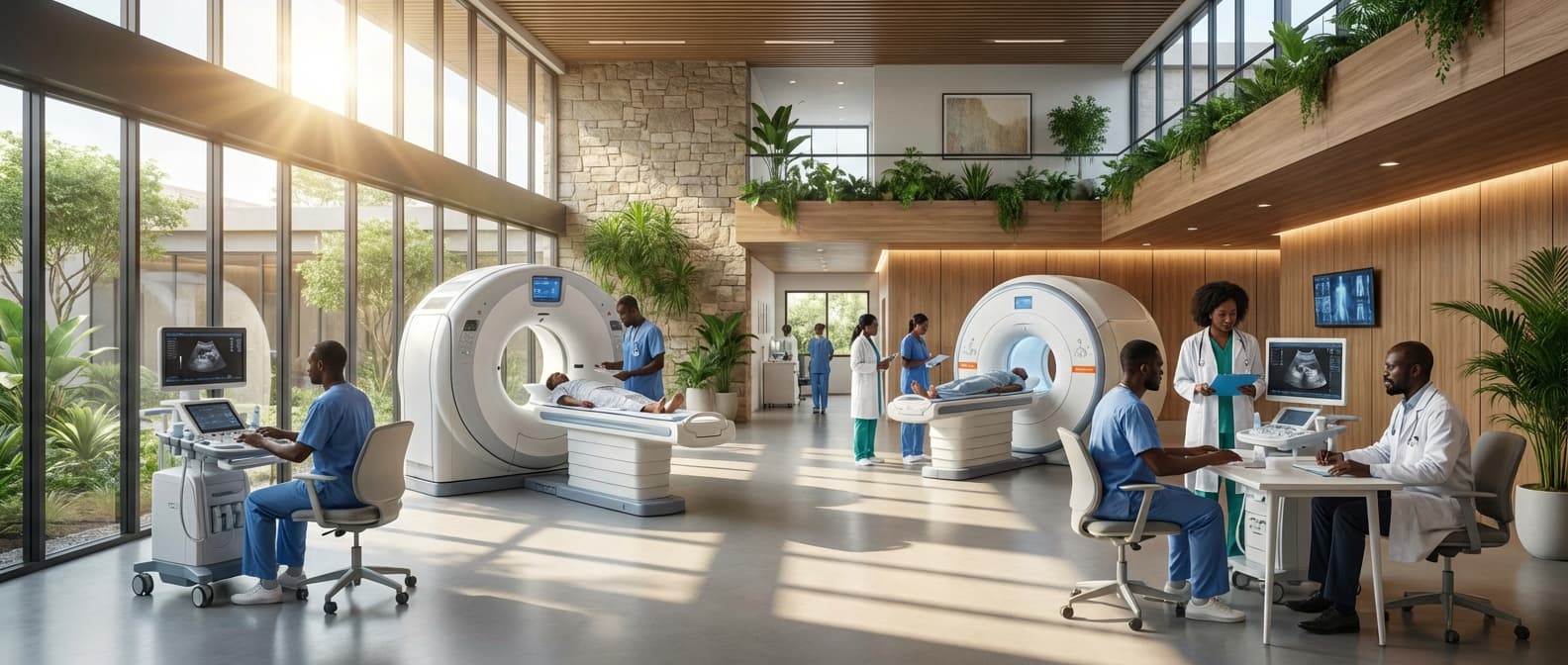
Endoscopy Solutions in Mali
Engineering Excellence & Technical Support
Advanced endoscopic equipment delivering superior visualization and diagnostic precision for minimally invasive procedures. High-standard technical execution following OEM protocols and local regulatory frameworks.
Advanced Endoscopic Imaging for Early Disease Detection
Introducing state-of-the-art high-definition endoscopy systems with advanced imaging capabilities, enabling earlier and more accurate detection of gastrointestinal disorders, significantly improving patient outcomes in Mali.
Comprehensive Endoscopic Training and Support
Providing specialized training programs and ongoing technical support for healthcare professionals in Mali, ensuring the optimal utilization of advanced endoscopy equipment for improved diagnostic and therapeutic procedures.
Minimally Invasive Therapeutic Endoscopic Procedures
Facilitating the adoption of minimally invasive therapeutic endoscopic techniques, reducing patient recovery times and hospital stays, and offering advanced treatment options for complex conditions within Mali's healthcare system.
What Is Endoscopy Solutions In Mali?
Endoscopy solutions in Mali refer to the provision of specialized medical services and equipment designed for minimally invasive diagnostic and therapeutic procedures within the gastrointestinal, respiratory, and urological tracts. These solutions encompass the utilization of endoscopes – flexible or rigid tubes equipped with a light source and a camera – to visualize internal organs, identify abnormalities, and perform interventions. The service typically involves trained medical professionals, including gastroenterologists, pulmonologists, urologists, and specialized nurses, operating within healthcare facilities equipped with state-of-the-art endoscopic technology.
| Who Needs Endoscopy Solutions? | Typical Use Cases |
|---|---|
| Patients presenting with gastrointestinal symptoms (e.g., abdominal pain, nausea, vomiting, difficulty swallowing, rectal bleeding, unexplained weight loss). | Diagnosis and management of peptic ulcers, gastritis, esophagitis, inflammatory bowel disease (Crohn's disease, ulcerative colitis), gastroesophageal reflux disease (GERD). |
| Individuals with a history of gastrointestinal polyps or colorectal cancer, or those undergoing routine screening for colorectal cancer. | Screening, diagnosis, and removal of colorectal polyps; staging and follow-up of gastrointestinal malignancies. |
| Patients experiencing respiratory symptoms such as chronic cough, hemoptysis, or persistent pneumonia. | Diagnosis and management of lung infections, tumors, airway obstructions, and interstitial lung diseases (bronchoscopy). |
| Individuals with urinary tract symptoms like blood in urine, recurrent infections, or difficulty urinating. | Diagnosis and management of bladder tumors, kidney stones, prostate enlargement, and urinary tract infections (cystoscopy, ureteroscopy). |
| Patients requiring investigation for liver and pancreatic conditions. | Diagnosis of conditions affecting the bile ducts and pancreas via techniques like ERCP (Endoscopic Retrograde Cholangiopancreatography). |
| Healthcare facilities (hospitals, clinics) seeking to offer advanced diagnostic and therapeutic capabilities. | Establishing and maintaining modern gastroenterology, pulmonology, and urology departments; improving patient care outcomes and reducing the need for open surgical procedures. |
Key Components of Endoscopy Solutions in Mali:
- Diagnostic Endoscopy: Visual inspection of internal organs for diagnosis of conditions like ulcers, polyps, inflammation, and tumors.
- Therapeutic Endoscopy: Interventions performed during endoscopy, such as polyp removal (polypectomy), stent placement, dilation of strictures, and bleeding control (hemostasis).
- Endoscopic Equipment: Acquisition, maintenance, and operation of various endoscopes (gastroscopes, colonoscopes, bronchoscopes, cystoscopes), imaging systems, and ancillary instruments.
- Training and Education: Provision of specialized training for healthcare professionals in endoscopic techniques, safety protocols, and equipment handling.
- Sterilization and Reprocessing: Implementation of stringent protocols for the cleaning, disinfection, and sterilization of endoscopic equipment to prevent cross-contamination.
Who Needs Endoscopy Solutions In Mali?
Endoscopy solutions are critical for a wide range of medical professionals and institutions in Mali, particularly for diagnosing and treating gastrointestinal and respiratory conditions. These advanced diagnostic tools offer minimally invasive ways to visualize internal organs, leading to more accurate diagnoses, earlier intervention, and improved patient outcomes. The demand for endoscopy services is driven by the increasing prevalence of digestive diseases, the need for advanced diagnostic capabilities, and a growing emphasis on patient comfort and recovery.
| Customer Segment | Key Needs & Applications | Specific Departments/Roles |
|---|---|---|
| Hospitals (Public & Private) | Diagnostic imaging for upper/lower GI bleeding, strictures, polyps, tumors; therapeutic interventions like polypectomy, stent placement, foreign body retrieval; evaluation of respiratory symptoms like chronic cough, hemoptysis. | Gastroenterology, Surgery (General, Colorectal), Pulmonology, Oncology, Emergency Department, Endoscopy Suite/Unit |
| Diagnostic Centers & Private Clinics | Providing specialized diagnostic services for patients referred by primary care physicians or specialists; offering routine screening procedures. | Gastroenterology Departments, Endoscopy Centers |
| Specialty Clinics | Focusing on specific areas like digestive health, offering advanced diagnostic and therapeutic endoscopy for conditions like GERD, IBD, and celiac disease. | Gastroenterology, Digestive Health Specialists |
| Medical Training Institutions | Training future medical professionals in endoscopic procedures, research, and the use of modern endoscopic equipment. | Medical Schools, Teaching Hospitals, Simulation Labs |
| Emergency Medicine | Rapid diagnosis of acute conditions like GI bleeds, perforations, and foreign body ingestion/aspiration. | Emergency Department, ICU |
| Oncology Departments | Diagnosing and staging gastrointestinal cancers, monitoring treatment efficacy, and managing complications. | Oncology, Gastroenterology, Surgery |
Target Customers and Departments for Endoscopy Solutions in Mali
- Gastroenterologists
- General Surgeons
- Pulmonologists
- Oncologists
- Emergency Medicine Departments
- Diagnostic Centers
- Hospitals (Public and Private)
- Specialty Clinics (e.g., Digestive Health Centers)
- Medical Training Institutions
Endoscopy Solutions Process In Mali
This document outlines the standard workflow for endoscopy solutions in Mali, covering the process from the initial inquiry to the successful execution of the procedure. It details the steps involved for both patients and healthcare providers, emphasizing efficient and effective patient care.
| Stage | Key Activities | Responsible Parties | Notes |
|---|---|---|---|
| Inquiry and Initial Consultation | Patient expresses interest or is referred for an endoscopic procedure. Healthcare provider assesses the need, explains the procedure, risks, benefits, and alternatives. Discusses preliminary costs and insurance coverage. | Patient, Referring Physician, Gastroenterologist/Endoscopist | Importance of clear communication to manage patient expectations. |
| Scheduling and Pre-Procedure Preparation | Endoscopy is scheduled. Patient receives detailed instructions on dietary restrictions (fasting), medication adjustments, and bowel preparation (if required). Necessary pre-operative tests may be ordered. | Clinic/Hospital Administration, Patient, Nurse | Accurate adherence to preparation instructions is crucial for procedure success and patient safety. |
| Procedure Execution | Patient arrives at the facility. Vital signs are checked. Anesthesia/sedation is administered. The endoscopic examination is performed by the specialist, with biopsies or therapeutic interventions as needed. | Endoscopist, Anesthesiologist/Sedation Nurse, Endoscopy Nurse | Sterilization of equipment and sterile techniques are paramount. |
| Post-Procedure Care and Follow-up | Patient is monitored in a recovery area until they are stable. Discharge instructions are provided regarding diet, activity, and potential side effects. Follow-up appointments are scheduled for results and further management. | Recovery Nurse, Endoscopist, Patient | Prompt reporting of any concerning symptoms is encouraged. |
| Billing and Record Keeping | Charges for the procedure, including consumables and professional fees, are processed. All findings, procedures, and patient information are meticulously documented in the medical record. | Billing Department, Medical Records Department, Healthcare Provider | Ensures accurate financial transactions and comprehensive patient history. |
Endoscopy Solutions Workflow in Mali
- Inquiry and Initial Consultation
- Scheduling and Pre-Procedure Preparation
- Procedure Execution
- Post-Procedure Care and Follow-up
- Billing and Record Keeping
Endoscopy Solutions Cost In Mali
Endoscopy procedures in Mali, like elsewhere, involve a range of costs influenced by several key factors. These factors determine the final price patients can expect to pay for diagnostic and therapeutic endoscopic interventions. Understanding these elements is crucial for individuals seeking medical care and for healthcare providers in Mali. The pricing is generally discussed in the local currency, the West African CFA franc (XOF).
| Procedure Type (Example) | Estimated Cost Range (XOF) |
|---|---|
| Diagnostic Gastroscopy (EGD) | 50,000 - 150,000 |
| Diagnostic Colonoscopy | 70,000 - 200,000 |
| ERCP (Diagnostic & Therapeutic) | 250,000 - 600,000+ |
| Bronchoscopy (Diagnostic) | 80,000 - 220,000 |
| Endoscopic Ultrasound (EUS) | 200,000 - 500,000+ |
Key Pricing Factors for Endoscopy Solutions in Mali:
- Type of Endoscopic Procedure: Different procedures have vastly different complexities and equipment requirements. For example, a simple diagnostic gastroscopy will be less expensive than a complex therapeutic ERCP (Endoscopic Retrograde Cholangiopancreatography).
- Facility Type and Reputation: Private clinics and larger hospitals, especially those with more advanced technology and specialized staff, tend to charge higher fees than smaller public health centers. The reputation and perceived quality of the institution also play a role.
- Physician's Fees: The expertise, specialization, and experience of the endoscopist significantly impact the cost. Highly sought-after specialists often command higher fees.
- Anesthesia and Sedation: The type and duration of anesthesia or sedation required for the procedure will add to the overall cost. General anesthesia is typically more expensive than conscious sedation.
- Diagnostic vs. Therapeutic Interventions: Procedures that involve interventions like polyp removal (polypectomy), biopsies, stent placement, or dilation will naturally be more costly due to the added complexity and materials used.
- Location within Mali: While less pronounced than other factors, there might be slight variations in costs between major urban centers like Bamako and more rural areas due to differences in overhead and availability of resources.
- Pre- and Post-Procedure Care: Costs associated with pre-procedure consultations, diagnostic tests (blood work, imaging), and post-procedure monitoring or recovery room stays can contribute to the final bill.
- Materials and Consumables: The cost of disposable items used during the procedure, such as biopsy forceps, snares, guidewires, and catheters, is factored into the pricing.
Affordable Endoscopy Solutions Options
Endoscopy procedures, while vital for diagnosis and treatment, can represent a significant healthcare expense. Fortunately, various affordable endoscopy solutions and cost-saving strategies exist to make these essential services more accessible. These options range from exploring bundled service packages to understanding insurance benefits and considering different provider types. By proactively researching and planning, patients can significantly reduce their out-of-pocket costs for endoscopic procedures.
| Strategy/Solution | Description | Potential Savings |
|---|---|---|
| Value Bundles (Global Pricing) | A single price covering the procedure, anesthesia, facility fees, and sometimes post-procedure follow-up. This offers predictability and can be cheaper than individual billing. | Often 10-20% lower than itemized billing. |
| Outpatient vs. Inpatient | Performing the endoscopy as an outpatient procedure, rather than requiring an overnight hospital stay, significantly reduces costs. | Can save hundreds to thousands of dollars. |
| Negotiated Self-Pay Rates | Hospitals and surgical centers may offer discounted rates for patients paying entirely out-of-pocket, bypassing insurance complexities. | Discounts can range from 20-50% or more. |
| Provider Network Advantage | Utilizing in-network providers and facilities ensures you receive the full benefits of your insurance plan, minimizing out-of-network charges. | Avoids significant out-of-pocket expenses associated with out-of-network care. |
| Second Opinions/Price Shopping | Obtaining quotes from multiple qualified providers for the same procedure can reveal significant price discrepancies. | Can lead to savings of hundreds of dollars. |
| Health Savings Accounts (HSAs) & Flexible Spending Accounts (FSAs) | Using pre-tax dollars saved in these accounts can make out-of-pocket expenses more affordable. | Reduces your taxable income, effectively lowering the cost. |
| Telehealth Consultations | For initial consultations or follow-up appointments, telehealth can reduce travel and time-off-work costs. | Saves on travel expenses and lost wages. |
Key Considerations for Affordable Endoscopy
- Understand your insurance coverage thoroughly, including deductibles, copays, and coinsurance for endoscopic procedures.
- Inquire about potential discounts for self-pay patients or if paying upfront.
- Compare prices across different healthcare facilities and providers, not just for the procedure itself, but also for pre- and post-operative care.
- Discuss generic medication options with your doctor for any prescribed post-procedure medications.
- Explore the possibility of financing or payment plans if upfront payment is a barrier.
Verified Providers In Mali
In Mali, ensuring access to quality healthcare is paramount. The process of identifying and trusting healthcare providers can be complex. This is where the credentials and vetting processes of organizations like Franance Health become invaluable. Franance Health's rigorous approach to credentialing verifies the qualifications, experience, and ethical standing of healthcare professionals, offering peace of mind to patients and partners.
| Credential Type | Franance Health Verification Process | Benefit for Patients in Mali |
|---|---|---|
| Medical License | Verification of current, valid licenses with the Malian Ministry of Health and relevant professional bodies. | Ensures the provider is legally permitted to practice and meets basic professional standards. |
| Educational Degrees & Certifications | Cross-referencing diplomas, degrees, and specialized certifications with accredited institutions. | Confirms the provider has received appropriate academic and specialized training. |
| Professional Experience | Review of work history, employment verification, and peer references. | Provides assurance of practical application of knowledge and a history of competent service. |
| Background Checks | Assessment for any disciplinary actions, malpractice claims, or criminal records relevant to healthcare practice. | Mitigates risks and ensures providers maintain ethical conduct. |
| Continuing Medical Education (CME) | Confirmation of ongoing professional development and commitment to staying updated. | Guarantees that providers are current with the latest medical advancements and practices. |
Why Franance Health Credentials Matter in Mali
- Expertise and Qualifications: Franance Health meticulously checks medical licenses, educational backgrounds, and specialized training to confirm that providers possess the necessary expertise.
- Experience and Track Record: Beyond formal qualifications, their verification includes assessing a provider's practical experience and professional history.
- Ethical Standards and Compliance: Franance Health ensures adherence to ethical guidelines and relevant healthcare regulations within Mali.
- Patient Safety: By confirming credentials, Franance Health directly contributes to enhancing patient safety and reducing the risk of substandard care.
- Trust and Reliability: Their verified providers offer a higher degree of trust and reliability for individuals seeking medical services.
- Access to Quality Care: Partnering with Franance Health facilitates access to a network of demonstrably competent and trustworthy healthcare professionals in Mali.
Scope Of Work For Endoscopy Solutions
This Scope of Work (SOW) outlines the requirements for the development and implementation of Endoscopy Solutions. It details the technical deliverables and standard specifications necessary for a comprehensive and effective system. The objective is to provide advanced endoscopic capabilities for diagnostic and therapeutic procedures, ensuring high-quality imaging, user-friendly interfaces, and seamless integration with existing hospital information systems.
| Specification Category | Parameter | Minimum Requirement | Target Value | Notes |
|---|---|---|---|---|
| Imaging System | Resolution | 1920 x 1080 (Full HD) | 3840 x 2160 (4K UHD) | For enhanced detail visualization. |
| Imaging System | Color Reproduction | High fidelity, >90% sRGB | 95% sRGB | Accurate tissue color representation. |
| Imaging System | Frame Rate | 30 fps | 60 fps | For smooth motion tracking. |
| Endoscope | Diameter (Working Channel) | ≥ 2.8 mm | ≥ 3.2 mm | To accommodate various therapeutic instruments. |
| Endoscope | Field of View (FOV) | ≥ 120 degrees | ≥ 140 degrees | Wider visualization area. |
| Endoscope | Angulation (Up/Down, Left/Right) | ≥ 210°/90°, ≥ 180°/180° | ≥ 220°/100°, ≥ 190°/190° | Improved maneuverability. |
| Light Source | Illumination Type | LED | LED (High-power) | Energy efficient, long lifespan. |
| Light Source | Color Temperature | Neutral White (4000K-5000K) | Adjustable (3000K-6500K) | For optimal tissue differentiation. |
| Video Processing | Image Enhancement Features | Noise Reduction, Contrast Enhancement | Advanced AI-driven enhancement (e.g., spectral enhancement) | Improved diagnostic accuracy. |
| Video Processing | Compression Format | H.264 | H.265 | Higher compression efficiency for storage and transfer. |
| Data Management | Storage Capacity | Minimum 1 TB HDD | Minimum 2 TB SSD | For extensive video and image storage. |
| Data Management | Connectivity | DICOM, HL7 | DICOM, HL7, EMR integration | Seamless integration with PACS and EMR systems. |
| User Interface | Control Panel | Intuitive touch screen/button interface | Customizable interface | Ease of operation. |
| Sterilization Compatibility | Method | Autoclave, Sterrad | All FDA-approved methods | Ensures proper infection control. |
| Safety Standards | Electrical Safety | IEC 60601-1 | IEC 60601-1 | Compliance with medical device safety regulations. |
Technical Deliverables
- Endoscopic Camera System (High Definition)
- Endoscope Insertion Tubes (Various types: gastroscopes, colonoscopes, etc.)
- Light Source Unit (LED or Xenon)
- Video Processor/Image Capture Unit
- Monitor (High Resolution, Medical Grade)
- Video Recording and Archiving Software
- Documentation and Reporting Module
- Instrument Compatibility Matrix
- User Training Materials and Sessions
- Installation and Calibration Services
- Post-Implementation Support and Maintenance Plan
Service Level Agreement For Endoscopy Solutions
This Service Level Agreement (SLA) outlines the response times and uptime guarantees for the Endoscopy Solutions platform and its associated services. It defines the commitments provided to customers to ensure the reliability and performance of the system.
| Service Component | Uptime Guarantee | Response Time (Critical Incident) | Response Time (Standard Incident) | Resolution Target (Critical Incident) | Resolution Target (Standard Incident) |
|---|---|---|---|---|---|
| Endoscopy Solutions Platform | 99.9% | 15 minutes | 2 hours | 4 hours | 24 hours |
| Data Storage and Retrieval | 99.99% | 15 minutes | 2 hours | 4 hours | 24 hours |
| Integration Services | 99.5% | 30 minutes | 4 hours | 8 hours | 48 hours |
| Customer Support (Phone/Email) | N/A (Availability Hours Apply) | 5 minutes (for critical issues, during business hours) | 2 business hours (for standard issues) | N/A (Focus on response, not resolution) | N/A (Focus on response, not resolution) |
Key Service Components
- Endoscopy Solutions Platform (web and mobile)
- Data Storage and Retrieval
- Integration Services (e.g., EHR, PACS)
- Customer Support
Frequently Asked Questions

Ready when you are
Let's scope your Endoscopy Solutions in Mali project in Mali.

Scaling healthcare logistics and technical systems across the entire continent.