
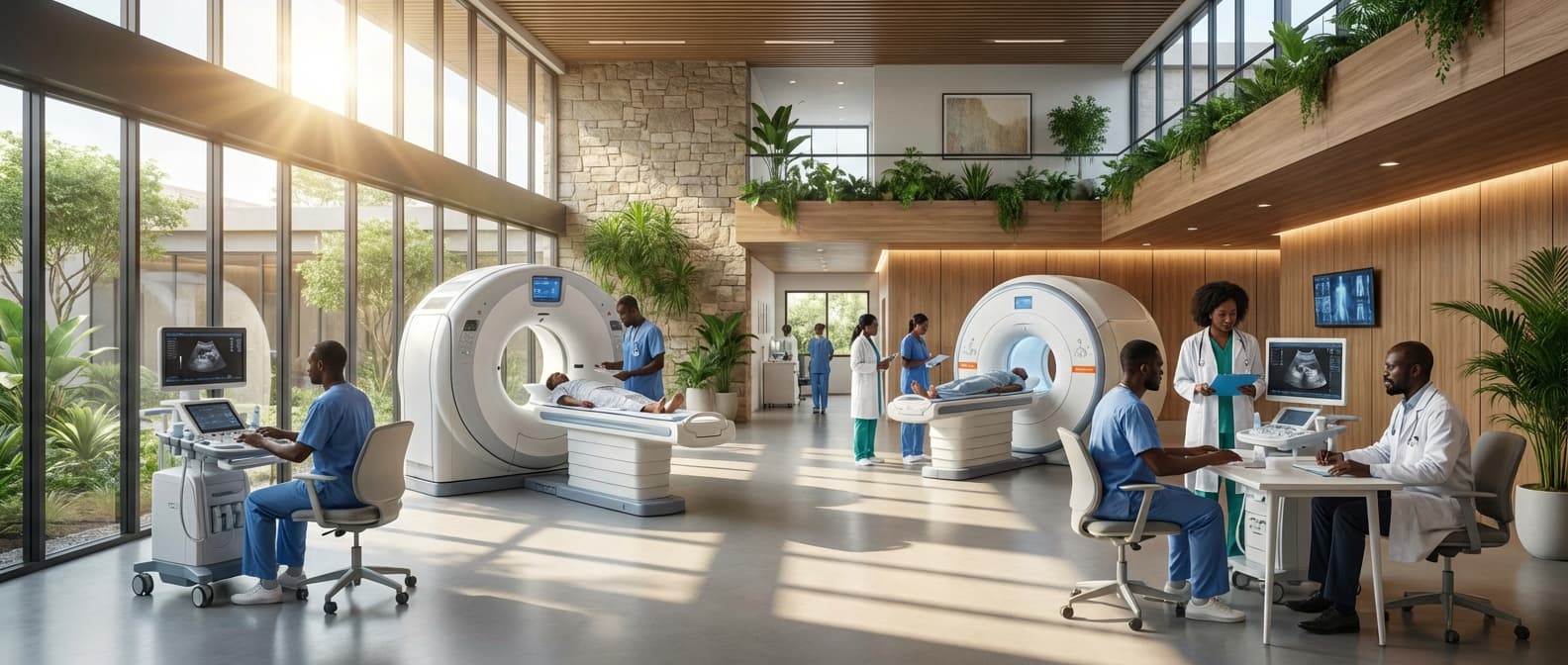
Diagnostic Imaging in Mali
Engineering Excellence & Technical Support
High-resolution imaging systems including CT scanners, MRI, X-ray, and ultrasound technology for accurate clinical diagnosis. High-standard technical execution following OEM protocols and local regulatory frameworks.
Mobile Digital X-ray Units in Remote Areas
Deployment of portable, battery-powered digital X-ray units to underserved rural communities, enabling on-site diagnostics for common conditions like pneumonia and fractures. Integration with cloud-based PACS for remote expert consultation and image archiving.
Point-of-Care Ultrasound (POCUS) Training Program
Comprehensive training initiative for healthcare workers in basic point-of-care ultrasound applications, focusing on obstetrics, emergency triage, and abdominal diagnostics. Emphasis on practical skills and rapid interpretation to improve patient management at primary healthcare levels.
Tele-Radiology Network Expansion
Establishment and expansion of a tele-radiology network connecting regional hospitals with specialized diagnostic imaging centers in urban areas. Utilizing secure internet infrastructure to facilitate rapid interpretation of complex imaging studies, improving access to specialized expertise and reducing patient referral times.
What Is Diagnostic Imaging In Mali?
Diagnostic imaging in Mali refers to the use of medical imaging technologies to visualize the internal structures of the human body for the purpose of diagnosing, monitoring, and treating medical conditions. This encompasses a range of non-invasive and minimally invasive procedures that generate images of organs, tissues, bones, and other anatomical structures. The service plays a crucial role in modern healthcare by providing objective anatomical and physiological information that aids clinicians in making informed diagnostic and therapeutic decisions. Access to these technologies is vital for effective patient management across various medical specialties within the Malian healthcare system.
| Who Needs Diagnostic Imaging? | Typical Use Cases | ||||||||
|---|---|---|---|---|---|---|---|---|---|
| Patients with suspected or known medical conditions: Across all age groups and genders. | Trauma and injury assessment: Fractures, dislocations, internal bleeding (e.g., in emergencies, road traffic accidents). | Infectious disease diagnosis and monitoring: Tuberculosis, pneumonia, abscesses. | Cancer detection, staging, and follow-up: Identifying tumors, assessing their size and spread, monitoring treatment response. | Cardiovascular conditions: Assessing heart structure and function, identifying blockages (though advanced cardiac imaging may be limited). | Gastrointestinal disorders: Diagnosing conditions like appendicitis, gallstones, bowel obstructions. | Neurological issues: Investigating headaches, strokes, seizures, spinal cord injuries. | Obstetric and gynecological assessments: Monitoring fetal development, diagnosing pelvic masses, evaluating reproductive health. | Musculoskeletal problems: Diagnosing arthritis, ligament tears, bone deformities. | Pre-operative and post-operative evaluation: Planning surgical procedures and assessing outcomes. |
Key Aspects of Diagnostic Imaging in Mali
- Definition: The application of imaging modalities to create visual representations of the human body's internal anatomy and physiological processes for medical assessment.
- Scope of Services: Includes X-ray radiography, ultrasound (sonography), computed tomography (CT) scans, and magnetic resonance imaging (MRI), though availability and sophistication may vary geographically within Mali.
- Purpose: To detect abnormalities, confirm diagnoses, assess disease progression, guide interventions, and monitor treatment efficacy.
- Provider Landscape: Services are typically offered in public hospitals, private clinics, and specialized imaging centers, with varying levels of technological infrastructure and trained personnel.
Who Needs Diagnostic Imaging In Mali?
Diagnostic imaging plays a crucial role in modern healthcare, enabling accurate diagnosis and effective treatment planning. In Mali, a country facing unique healthcare challenges including limited resources and accessibility, understanding who needs these services and where they are most impactful is essential for strategic deployment and resource allocation.
| Department/Specialty | Primary Imaging Needs | Examples of Conditions Diagnosed |
|---|---|---|
| Radiology Department | X-ray, CT scans, MRI, Ultrasound, Fluoroscopy | Fractures, pneumonia, tumors, organ abnormalities, vascular issues, digestive problems |
| Internal Medicine | X-ray, CT scans, Ultrasound | Infections, organ disease (liver, kidney, lungs), cardiovascular issues, gastrointestinal disorders |
| Surgery (General, Orthopedic, Neurosurgery, etc.) | X-ray, CT scans, MRI, Ultrasound | Trauma assessment, pre-operative planning, post-operative monitoring, complex fractures, spinal injuries, brain injuries |
| Obstetrics and Gynecology | Ultrasound (especially transvaginal and abdominal) | Pregnancy monitoring, fetal abnormalities, pelvic masses, gynecological conditions |
| Pediatrics | X-ray, Ultrasound, CT scans (when necessary) | Congenital abnormalities, infections, growth disorders, developmental issues, injuries |
| Cardiology | Echocardiography (ultrasound of the heart), CT angiography, Cardiac MRI | Heart valve disease, coronary artery disease, heart muscle disorders, congenital heart defects |
| Oncology | CT scans, MRI, PET scans (if available), Ultrasound | Cancer detection, staging, treatment monitoring, tumor characterization |
| Neurology | MRI, CT scans, specialized X-rays (e.g., myelography) | Stroke, brain tumors, epilepsy, multiple sclerosis, degenerative brain diseases |
| Emergency Department | X-ray, CT scans, Ultrasound (FAST scan) | Trauma, acute abdominal pain, suspected internal bleeding, head injuries |
Target Customers and Departments for Diagnostic Imaging in Mali
- {"item":"Hospitals (Public and Private): Central, regional, and district hospitals are primary hubs for diagnostic imaging. They serve a broad spectrum of patients with diverse medical conditions."}
- {"item":"Specialty Clinics and Centers: Facilities focusing on specific areas like cardiology, neurology, oncology, pediatrics, and orthopedics will require imaging to support their specialized patient populations."}
- {"item":"Maternal and Child Health Centers: Imaging is vital for prenatal care (ultrasound), obstetric emergencies, and diagnosing pediatric conditions."}
- {"item":"Emergency and Trauma Centers: Rapid diagnostic imaging is critical for assessing injuries, internal bleeding, and other life-threatening conditions in emergency situations."}
- {"item":"Rural Health Posts and Dispensaries (with referral systems): While direct access may be limited, these facilities act as initial contact points. Patients requiring imaging would be referred to higher-level facilities, highlighting the need for strong referral networks."}
- {"item":"Medical Schools and Teaching Hospitals: These institutions require advanced imaging capabilities for training future medical professionals and conducting research."}
Diagnostic Imaging Process In Mali
The diagnostic imaging process in Mali, like in many healthcare systems, involves a structured workflow to ensure accurate and timely diagnosis for patients. This process typically begins with a physician's request, progresses through scheduling, the imaging procedure itself, and concludes with the interpretation and reporting of the findings. Challenges such as resource availability, infrastructure, and skilled personnel can influence the efficiency and accessibility of these services across the country.
| Stage | Description | Key Actors | Potential Challenges in Mali |
|---|---|---|---|
| Inquiry/Referral | A physician suspects a medical condition and requires imaging to confirm or rule it out. They generate a request form detailing the clinical history and the specific imaging modality needed. | Referring Physician | Limited access to specialists in remote areas, leading to delayed referrals. Lack of awareness about the benefits of specific imaging techniques. |
| Scheduling | The patient or healthcare facility contacts the imaging center to book an appointment. This involves checking availability, modality, and confirming patient details. | Receptionist/Administrative Staff, Patient | Long waiting times due to high demand and limited equipment. Inefficient scheduling systems. Communication barriers with patients regarding appointment details. |
| Patient Preparation | Depending on the imaging type (e.g., MRI, CT scan), patients may need to fast, drink contrast agents, or remove metal objects. This ensures optimal image quality. | Radiology Technologist, Patient | Lack of patient education and understanding of preparation requirements. Limited availability of contrast agents or specialized preparation materials. |
| Image Acquisition | The patient undergoes the imaging procedure (X-ray, Ultrasound, CT, MRI, etc.) performed by a trained radiographer/technologist using specialized equipment. | Radiology Technologist, Patient | Equipment malfunction or outdated technology. Power supply inconsistencies. Shortage of skilled radiographers. High cost of consumables (e.g., film, contrast). |
| Image Processing & Storage | Images are processed (e.g., developing film, digital manipulation) and stored securely for interpretation and future reference. | Radiology Technologist, IT Support (if digital) | Lack of digital archiving systems (PACS). Inadequate storage facilities for physical films. Data security concerns. |
| Interpretation | A radiologist reviews the acquired images, analyzes them in conjunction with the clinical information, and makes a diagnostic assessment. | Radiologist | Severe shortage of radiologists, particularly in rural areas. Heavy workload for existing radiologists. Limited access to advanced diagnostic tools or software. |
| Reporting | The radiologist dictates or writes a detailed report of their findings, including a diagnosis and recommendations, which is then sent back to the referring physician. | Radiologist, Medical Secretary | Delays in report generation due to workload. Inaccurate or incomplete reports due to communication gaps. Inefficient delivery of reports (e.g., manual transport). |
| Clinical Follow-up | The referring physician uses the imaging report to guide further patient management, treatment, or follow-up appointments. | Referring Physician, Patient | Lack of integration between imaging reports and electronic health records. Limited access to follow-up care in underserved regions. Financial barriers to accessing treatment based on diagnosis. |
Diagnostic Imaging Workflow in Mali
- Physician Inquiry and Referral
- Patient Registration and Information Gathering
- Scheduling of Imaging Appointment
- Patient Preparation (if applicable)
- Image Acquisition (Imaging Procedure)
- Image Processing and Storage
- Radiologist Interpretation and Diagnosis
- Report Generation and Transmission
- Clinical Follow-up and Treatment Planning
Diagnostic Imaging Cost In Mali
Diagnostic imaging costs in Mali can vary significantly due to several factors, including the type of imaging modality, the complexity of the examination, the specific medical facility (public vs. private, urban vs. rural), and the availability of specialized equipment. These costs are typically presented in Malian Francs (XOF). Generally, private clinics and hospitals in urban centers like Bamako tend to have higher prices than public institutions or facilities in more remote areas. The expertise of the radiologist and the need for contrast agents or sedation also contribute to the overall cost.
| Imaging Type | Estimated Cost Range (XOF) | Notes |
|---|---|---|
| X-ray (e.g., Chest X-ray) | 5,000 - 15,000 | Basic imaging, widely available |
| Ultrasound (e.g., Abdominal, Pelvic) | 10,000 - 30,000 | Common for soft tissue visualization |
| CT Scan (e.g., Head, Abdomen) | 50,000 - 150,000 | More detailed cross-sectional imaging; cost increases with contrast |
| MRI (e.g., Brain, Spine) | 100,000 - 300,000+ | Highest cost due to advanced technology; can vary significantly based on area and contrast |
Key Factors Influencing Diagnostic Imaging Costs in Mali
- Imaging Modality (X-ray, Ultrasound, CT Scan, MRI)
- Complexity of the Examination
- Type of Medical Facility (Public vs. Private)
- Geographic Location (Urban vs. Rural)
- Availability of Specialized Equipment
- Need for Contrast Agents
- Requirement for Sedation or Anesthesia
- Radiologist's Expertise and Reputation
Affordable Diagnostic Imaging Options
Diagnostic imaging plays a crucial role in healthcare, enabling accurate diagnosis and treatment planning. However, the cost of these services can be a significant concern for many individuals. Fortunately, there are affordable diagnostic imaging options available, often achieved through value bundles and strategic cost-saving measures. Understanding these approaches can empower patients and healthcare providers to make more cost-effective decisions without compromising the quality of care.
| Cost-Saving Strategy | Description | Potential Impact on Affordability |
|---|---|---|
| Outpatient Imaging Centers | These facilities often have lower overhead costs compared to hospital-based imaging departments, allowing them to offer lower prices for the same diagnostic tests. | Significant cost reduction, often 20-50% less than hospital charges. |
| Negotiated Cash Prices | Many imaging centers offer discounted prices for patients paying out-of-pocket, bypassing insurance entirely. This can be a great option for those with high deductibles or no insurance. | Can result in substantial savings, especially for uninsured or underinsured patients. |
| Shop Around and Compare Prices | Don't accept the first quote. Prices for the same imaging procedure can vary widely between different providers and locations. Use online tools or call different facilities to get estimates. | Potential to find savings of hundreds or even thousands of dollars depending on the complexity of the scan. |
| Generic vs. Brand-Name Imaging Procedures (Conceptual) | While not a direct parallel to medications, some facilities might offer 'standard' imaging protocols that are less resource-intensive and therefore more affordable than advanced or specialized protocols, if clinically appropriate. | May offer a slight reduction in cost for less complex cases, but requires careful discussion with your doctor. |
| Tele-Radiology and Remote Interpretation | In some cases, particularly for specialized interpretations or after-hours readings, outsourcing to remote radiologists can streamline processes and potentially reduce costs. | Can contribute to overall operational efficiency, indirectly benefiting patient costs. |
| Preventive Screenings and Early Detection Programs | While not direct cost-saving strategies for a specific diagnostic need, participation in well-structured screening programs can lead to earlier detection of diseases, potentially averting more expensive, advanced treatments later. | Long-term reduction in overall healthcare expenditure through proactive health management. |
Understanding Value Bundles
- {"title":"What are Value Bundles?","description":"Value bundles, also known as bundled payments or package pricing, are arrangements where a single price is set for a defined set of services related to a specific medical condition or procedure. Instead of paying for each individual service (e.g., scan, radiologist's interpretation, follow-up), the patient or insurer pays one all-inclusive fee. This encourages providers to coordinate care efficiently and reduce unnecessary costs."}
- {"title":"Benefits of Value Bundles","description":"For patients, value bundles offer price predictability and can be significantly cheaper than out-of-pocket costs for individual services. For providers, they incentivize efficiency, improved patient outcomes, and better coordination among different healthcare professionals involved in a patient's care."}
- {"title":"Examples in Diagnostic Imaging","description":"A common example might be a bundled price for a 'low back pain workup' which could include an MRI, the radiologist's interpretation, and potentially a follow-up consultation to discuss the results. Similarly, pre-operative imaging for a specific surgical procedure might be bundled."}
Verified Providers In Mali
Ensuring access to quality healthcare is paramount, and in Mali, identifying verified providers is crucial for patient safety and effective treatment. Franance Health stands out as a premier choice due to its rigorous credentialing process and unwavering commitment to excellence. This document outlines why Franance Health's credentials represent the best choice for healthcare services in Mali.
| Credentialing Component | Franance Health's Approach | Benefit for Patients in Mali |
|---|---|---|
| Medical Education & Training Verification | Thorough review of degrees, diplomas, and specialized training from accredited institutions. | Ensures practitioners possess foundational knowledge and appropriate skills. |
| Licensure & Registration Checks | Confirmation of valid and current medical licenses and registrations with relevant Malian authorities. | Guarantees providers are legally authorized to practice. |
| Professional Experience Assessment | Evaluation of past employment history, practice patterns, and peer reviews. | Confirms practical application of knowledge and experience in real-world settings. |
| Specialty Certifications | Verification of board certifications and advanced qualifications in specific medical fields. | Ensures access to highly specialized and expert care. |
| Background Checks & Ethical Review | Comprehensive checks for any disciplinary actions, malpractice claims, or ethical violations. | Protects patients from potentially harmful or unprofessional conduct. |
| Continuing Medical Education (CME) Compliance | Requirement for providers to demonstrate active participation in ongoing learning and skill enhancement. | Ensures patients receive care informed by the latest medical knowledge and techniques. |
Why Franance Health is the Best Choice for Healthcare in Mali
- Rigorous Vetting Process: Franance Health employs a multi-faceted credentialing system that goes beyond basic licensing. It includes in-depth verification of medical education, training, certifications, and professional experience.
- Commitment to Patient Safety: The credentialing process is designed with patient safety as the absolute priority, ensuring that all associated healthcare professionals adhere to the highest ethical and professional standards.
- Access to Specialized Expertise: Franance Health’s network comprises specialists across a wide range of medical disciplines, meticulously vetted to guarantee their competence and up-to-date knowledge.
- Adherence to International Standards: Franance Health aligns its credentialing practices with recognized international healthcare quality benchmarks, bringing global best practices to Mali.
- Continuous Professional Development: Verified providers through Franance Health are often required to demonstrate ongoing commitment to professional development, ensuring they are at the forefront of medical advancements.
- Transparent and Reliable Network: Patients can trust the Franance Health network for reliable and high-quality medical care, knowing that each provider has undergone extensive scrutiny.
- Enhanced Patient Outcomes: By partnering with credentialed and reputable providers, Franance Health aims to significantly improve patient outcomes and foster a healthier community in Mali.
Scope Of Work For Diagnostic Imaging
This document outlines the Scope of Work (SOW) for providing Diagnostic Imaging services. It details the technical deliverables expected from the service provider and specifies the standard specifications to be adhered to for all imaging procedures and equipment. The objective is to ensure high-quality, accurate, and timely diagnostic imaging results that support effective patient care and treatment planning.
| Category | Technical Deliverables | Standard Specifications |
|---|---|---|
| Imaging Modalities | Availability of X-ray, CT, MRI, Ultrasound, Fluoroscopy, Mammography, and Nuclear Medicine. | All modalities must be current generation, CE/FDA approved, and maintained according to manufacturer recommendations. Minimum resolution requirements for each modality will be specified in Annex A. |
| Equipment Performance | Regular calibration, preventive maintenance, and performance testing of all imaging equipment. | Service provider to maintain a log of all maintenance activities. Equipment downtime must not exceed X hours per month per modality. Response time for critical equipment failure within Y hours. |
| Image Acquisition | Acquisition of high-quality diagnostic images meeting established protocols for each examination. | Adherence to standardized imaging protocols for all procedures. Protocol optimization based on clinical indications. Use of appropriate contrast agents and dosages as per clinical guidelines. |
| Image Interpretation | Provision of timely and accurate radiology reports signed by board-certified radiologists. | Turnaround time (TAT) for routine reports: Z hours. TAT for STAT/emergency reports: A hours. Reports must be clear, concise, and include relevant findings, impression, and recommendations. Radiologists must be subspecialty trained where applicable. |
| PACS Integration | Seamless integration with the hospital's existing Picture Archiving and Communication System (PACS) and Radiology Information System (RIS). | All images and reports must be archived in the PACS in DICOM format. Compatibility with existing PACS infrastructure. Secure and reliable data transfer protocols. |
| Quality Assurance | Implementation of a robust Quality Assurance (QA) program for all imaging procedures and interpretations. | Regular review of image quality, report accuracy, and technologist performance. Participation in peer review processes. Compliance with all regulatory requirements and accreditation standards (e.g., ACR, JCI). |
| Patient Safety | Adherence to strict patient safety protocols, including radiation safety measures. | Implementation of ALARA (As Low As Reasonably Achievable) principles for radiation dose. Patient identification verification, proper shielding, and screening. Emergency preparedness plan in place. |
| Reporting System | A user-friendly system for referring physicians to access reports and images. | Secure web-based portal or direct integration with EMR for report and image retrieval. Capability for multi-format image viewing (e.g., JPEG, PDF). |
| Staffing | Provision of qualified and licensed radiographers and radiologists. | Radiographers must possess relevant certifications (e.g., ARRT). Radiologists must be board-certified and licensed. Adequate staffing levels to meet service demand. |
| Supplies and Consumables | Provision of all necessary imaging supplies, contrast media, and consumables. | Use of high-quality, FDA-approved contrast agents and supplies. Expiration date management and adequate stock levels maintained. |
Key Objectives of Diagnostic Imaging Services
- To provide a comprehensive range of diagnostic imaging modalities.
- To ensure accurate and timely interpretation of all imaging studies.
- To maintain high standards of patient safety and radiation protection.
- To utilize state-of-the-art imaging equipment and technology.
- To ensure seamless integration with existing hospital information systems (HIS/RIS/PACS).
- To provide efficient and professional patient care throughout the imaging process.
Service Level Agreement For Diagnostic Imaging
This Service Level Agreement (SLA) outlines the performance standards for diagnostic imaging services provided by [Provider Name] to [Client Name]. It defines the agreed-upon response times for critical requests and the uptime guarantees for the diagnostic imaging systems.
| Service Component | Uptime Guarantee | Response Time (Critical Requests) | Response Time (Routine Requests) |
|---|---|---|---|
| Diagnostic Imaging System Availability (Modalities, PACS, RIS) | 99.5% (excluding scheduled maintenance) | 24/7 Availability, initiation of scan within 30 minutes of critical order. | Scheduled based on operational capacity, typically within 4-8 business hours of order. |
| Radiologist Interpretation (Critical Reports) | N/A (Focus on timeliness) | Preliminary interpretation within 60 minutes of image acquisition. Final report within 4 hours. | N/A |
| Radiologist Interpretation (Routine Reports) | N/A (Focus on timeliness) | N/A | Within 24 business hours of image acquisition. |
| Technical Support (System Outages) | N/A (Focus on resolution) | Initial response and acknowledgment within 15 minutes. Restoration of service within 4 hours. | Initial response and acknowledgment within 2 business hours. Restoration of service within 8 business hours. |
Key Definitions
- Diagnostic Imaging Services: Refers to the provision of medical imaging procedures (e.g., X-ray, CT, MRI, Ultrasound) and the interpretation of resulting images by qualified radiologists.
- Critical Request: An imaging request deemed urgent by a qualified medical professional, requiring immediate attention due to patient acuity or potential for rapid deterioration.
- Routine Request: An imaging request that is not classified as critical and can be scheduled within standard operational parameters.
- System Uptime: The percentage of time that the diagnostic imaging systems (including PACS, RIS, imaging modalities, and associated hardware/software) are operational and accessible for use.
- Response Time: The duration from the initial request for service (e.g., a critical scan order placed) to the commencement of that service or the initial acknowledgment of the request by the provider's technical or clinical staff.
Frequently Asked Questions

Ready when you are
Let's scope your Diagnostic Imaging in Mali project in Mali.

Scaling healthcare logistics and technical systems across the entire continent.