
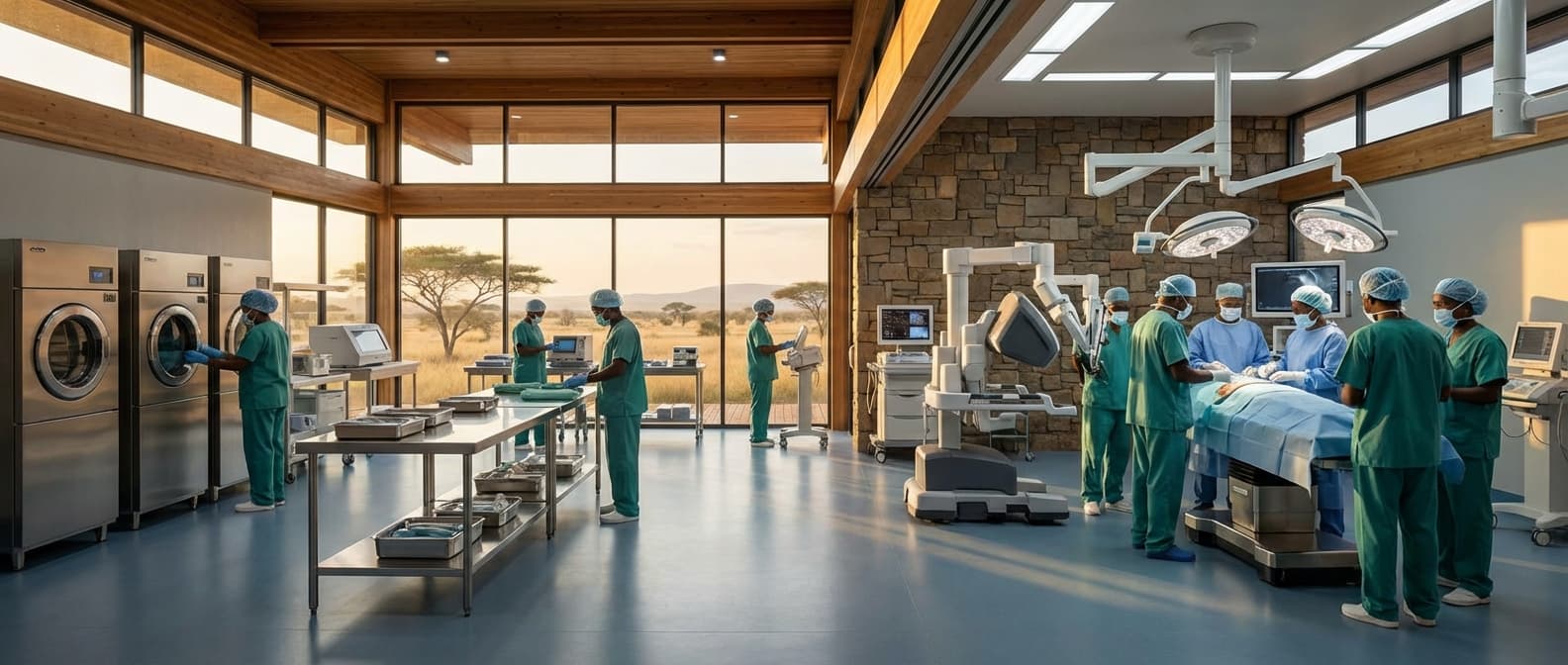
Endoscopy Reprocessing Validation in Mali
Engineering Excellence & Technical Support
AER validation, SOP development and compliance High-standard technical execution following OEM protocols and local regulatory frameworks.
Microbiological Validation Studies
Rigorous testing of automated endoscope reprocessors (AERs) and manual cleaning protocols against established microbiological standards to confirm effective inactivation of critical pathogens relevant to healthcare settings in Mali, ensuring patient safety and infection prevention.
Process Performance Monitoring
Implementation of continuous monitoring systems for key reprocessing parameters (e.g., detergent concentration, water temperature, cycle times) and regular lumen cleanliness checks to maintain consistent and validated reprocessing efficacy throughout the lifecycle of equipment.
Regulatory Compliance Assurance
Documentation and validation of reprocessing workflows to meet or exceed national and international guidelines for medical device reprocessing, providing robust evidence of compliance for regulatory bodies and stakeholders in Mali.
What Is Endoscopy Reprocessing Validation In Mali?
Endoscopy reprocessing validation in Mali refers to the rigorous verification process ensuring that reusable endoscopic instruments are thoroughly cleaned, disinfected, and/or sterilized according to established guidelines and standards. This validation is critical for preventing the transmission of healthcare-associated infections (HAIs) by eliminating or inactivating pathogenic microorganisms from complex, semi-critical, and critical medical devices prior to their reuse. The process involves a multi-faceted approach, encompassing chemical, biological, and physical parameters to confirm the efficacy of the reprocessing cycle. In Mali, as in other global health contexts, maintaining sterile or high-level disinfected instrumentation is paramount for patient safety in a resource-constrained environment. The validation aims to provide objective evidence that the adopted reprocessing protocols are consistently effective, thereby safeguarding patient well-being and upholding the integrity of endoscopic procedures.
| Service/Activity | Description | Target Audience | Typical Use Cases |
|---|---|---|---|
| Cleaning Validation | Verifying the effective removal of visible and non-visible soil, including organic matter and microbial biofilms, from the internal lumens and external surfaces of endoscopes. | Healthcare facilities in Mali performing procedures requiring reusable endoscopes (hospitals, specialized clinics, diagnostic centers). | Pre-operative assurance of instrument cleanliness; troubleshooting inadequate cleaning; implementation of new cleaning agents or equipment. |
| High-Level Disinfection (HLD) Validation | Confirming the efficacy of chemical agents and immersion times in inactivating vegetative bacteria, mycobacteria, fungi, and viruses, while not necessarily inactivating bacterial spores. | Healthcare facilities utilizing endoscopes for procedures where sterilization is not feasible or required by guidelines. | Routine validation of HLD processes; assessing the performance of new disinfectants; validating manual HLD protocols. |
| Sterilization Validation (if applicable) | Ensuring the complete elimination of all viable microorganisms, including bacterial spores, through validated sterilization methods (e.g., steam, low-temperature sterilization). | Healthcare facilities that reprocess critical endoscopic accessories or instruments requiring sterilization. | Commissioning of new sterilizers; periodic validation of sterilization cycles; validating reprocessing of sterile accessories. |
| Automated Reprocessing Equipment Validation | Validating the performance of automated washer-disinfectors and sterilizers to ensure they consistently deliver the specified cleaning, disinfection, or sterilization parameters. | Facilities employing automated reprocessing systems for endoscopes. | Installation qualification (IQ), operational qualification (OQ), and performance qualification (PQ) of washer-disinfectors and sterilizers. |
| Process Validation Audits | Periodic review and assessment of the entire reprocessing workflow, including documentation, personnel competency, and adherence to protocols. | Any healthcare facility in Mali committed to infection prevention and control standards. | Internal quality assurance programs; preparation for external accreditation; incident investigation related to HAIs. |
Key Components of Endoscopy Reprocessing Validation
- Process Documentation Review: Scrutiny of written protocols, standard operating procedures (SOPs), and manufacturer's instructions for use (IFUs) for cleaning, high-level disinfection (HLD), and sterilization methods.
- Equipment Verification: Calibration and functional testing of automated washer-disinfectors, sterilizers (e.g., steam, ethylene oxide, hydrogen peroxide plasma), and drying cabinets.
- Chemical Monitoring: Verification of disinfectant and cleaning agent concentrations, pH, and temperature to ensure efficacy.
- Biological Monitoring: Use of specific biological indicators (BIs) containing highly resistant microorganisms (e.g., Geobacillus stearothermophilus for steam sterilization, Bacillus atrophaeus for dry heat) to confirm sterilization lethality. For HLD, validated enzymatic cleaners and detergents are used to ensure removal of proteinaceous and organic soil.
- Physical Monitoring: Recording of critical parameters such as temperature, pressure, time, and humidity during sterilization and disinfection cycles.
- Visual Inspection: Thorough examination of reprocessed instruments for residual organic matter, debris, and structural integrity, often aided by magnification.
- Endoscope Leak Testing: Ensuring the integrity of the endoscope channels to prevent fluid ingress during reprocessing.
- Microbiological Testing (Post-Reprocessing): In some validation scenarios, sampling of reprocessed instruments and lumens for microbial enumeration to confirm the absence of viable microorganisms.
- Training and Competency Assessment: Evaluation of healthcare personnel involved in reprocessing to ensure they possess the necessary knowledge and skills.
Who Needs Endoscopy Reprocessing Validation In Mali?
Endoscopy reprocessing validation is crucial for ensuring patient safety and preventing the transmission of infections. In Mali, as in any healthcare setting, the meticulous cleaning, disinfection, and sterilization of endoscopic equipment are paramount. This validation process confirms that the reprocessing procedures effectively eliminate or inactivate pathogens that could be present on reusable medical devices. Without proper validation, there's a significant risk of healthcare-associated infections (HAAs), which can lead to prolonged illness, increased healthcare costs, and even mortality. Therefore, all facilities in Mali utilizing reusable endoscopes must implement and regularly validate their reprocessing protocols to meet international standards and safeguard public health. This is not a luxury but a fundamental requirement for ethical and safe medical practice.
| Target Customer Type | Key Departments Requiring Validation |
|---|---|
| Hospitals (Public) | Gastroenterology Department, Pulmonology Department, Urology Department, Endoscopy Unit, Surgical Suites, Infection Control Department, Central Sterile Services Department (CSSD) |
| Hospitals (Private) | Gastroenterology Department, Pulmonology Department, Urology Department, Endoscopy Unit, Surgical Suites, Infection Control Department, Central Sterile Services Department (CSSD) |
| Specialty Clinics | Gastroenterology Clinic, Pulmonology Clinic, Urology Clinic, Endoscopy Suite, Infection Prevention Team |
| Diagnostic Centers | Endoscopy Unit, Imaging Department, Infection Control Personnel |
| Surgical Centers | Surgical Services, Endoscopy Unit, Central Sterile Services Department (CSSD), Infection Control |
Target Customers and Departments for Endoscopy Reprocessing Validation in Mali
- Hospitals (Public and Private)
- Specialty Clinics (e.g., Gastroenterology, Pulmonology, Urology)
- Diagnostic Centers
- Surgical Centers
Endoscopy Reprocessing Validation Process In Mali
This document outlines the workflow for validating the endoscopy reprocessing process in Mali. It covers the steps from the initial inquiry to the successful execution of the validation. The goal is to ensure that all reusable endoscopes are reprocessed according to established standards and protocols, thereby minimizing the risk of patient-to-patient transmission of infections.
| Phase | Activity | Description | Responsible Party (Typical) | Key Deliverables |
|---|---|---|---|---|
| Initial Contact | Healthcare facility or relevant health authority expresses the need for endoscopy reprocessing validation. | Healthcare Facility / Ministry of Health | Formal request or expression of interest. |
| Needs Assessment | Initial evaluation of the existing reprocessing practices, equipment, and available resources. | Validation Team / External Consultant | Gap analysis report, preliminary resource assessment. |
| Customized Protocol Design | Developing or adapting a validation protocol based on national guidelines, international standards (e.g., WHO, CDC), and the facility's specific context. | Validation Team / Technical Experts | Approved validation protocol document. |
| Equipment and Consumables | Ensuring availability of necessary validation equipment (e.g., biological indicators, chemical indicators, cleaning efficacy testing kits), consumables, and trained personnel. | Healthcare Facility / Ministry of Health | Procured supplies, allocated personnel. |
| Personnel Training | Training reprocessing staff on the validation protocol, proper execution of tests, and documentation requirements. | Validation Team / Trainers | Trained personnel, training records. |
| On-Site Validation Activities | Performing all steps outlined in the validation protocol, including manual cleaning verification, automated washer-disinfector performance testing, high-level disinfection/sterilization efficacy testing, and sterility assurance. | Reprocessing Staff / Validation Technicians | Completed test logs, sample collection, visual inspection records. |
| Laboratory Testing and Interpretation | Submitting samples to accredited laboratories for analysis (e.g., microbial cultures, chemical residue testing) and interpreting results against predefined acceptance criteria. | Accredited Laboratory / Validation Team | Laboratory test results, data analysis report. |
| Validation Report Compilation | Documenting all procedures, results, observations, and conclusions in a comprehensive validation report. | Validation Team | Comprehensive validation report. |
| Stakeholder Review | Presenting the validation report to the healthcare facility management, quality assurance department, and relevant regulatory bodies for review. | Healthcare Facility Management / Ministry of Health | Feedback and initial approval. |
| Implementing Corrective and Preventive Actions (CAPA) | Addressing any identified deficiencies or non-conformities through implementing appropriate corrective and preventive actions. | Healthcare Facility Management | CAPA plan, evidence of implementation. |
| Final Validation Approval | Official sign-off on the validation process and the implemented reprocessing procedures by the relevant authorities, confirming compliance. | Ministry of Health / National Regulatory Authority | Official validation certificate or approval letter. |
| Routine Monitoring and Revalidation | Establishing a system for ongoing monitoring of reprocessing practices and scheduling periodic revalidations to ensure sustained compliance. | Healthcare Facility Quality Assurance | Regular audit reports, revalidation schedule. |
Endoscopy Reprocessing Validation Workflow in Mali
- Inquiry and Request Initiation
- Pre-Validation Assessment
- Protocol Development and Customization
- Resource Mobilization
- Training and Capacity Building
- On-Site Validation Execution
- Data Collection and Analysis
- Report Generation and Submission
- Review and Feedback
- Corrective Action Implementation
- Final Validation Approval
- Ongoing Monitoring and Revalidation
Endoscopy Reprocessing Validation Cost In Mali
Endoscopy reprocessing validation is a critical step in ensuring patient safety and preventing healthcare-associated infections. The cost of this process in Mali is influenced by several factors, including the type and complexity of the endoscope, the reprocessing method employed, the reagents and consumables used, the personnel involved, and the laboratory capacity for validation. Due to the localized nature of healthcare services and varying provider capacities, precise, universally applicable pricing is challenging to ascertain without specific quotes. However, we can outline the key pricing factors and provide estimated ranges in Malian Francs (XOF).
| Cost Component | Estimated Range (XOF) | Notes |
|---|---|---|
| Basic Cleaning and Disinfection Validation (e.g., HLD monitoring) | 15,000 - 40,000 | Primarily covers testing strips for disinfectant concentration and potentially basic visual inspection. May not include extensive microbiological checks. |
| Comprehensive HLD Validation | 30,000 - 80,000 | Includes monitoring of disinfection efficacy, potentially with simple microbial challenge tests or environmental swabs. Cost is higher due to more rigorous testing and consumables. |
| Sterilization Validation (e.g., Ethylene Oxide, Peracetic Acid) | 70,000 - 200,000+ | This is the most expensive validation. It requires biological indicators, incubation, and highly specialized testing. Costs can vary significantly based on the sterilization method and the number of indicators used. |
| Reagents and Consumables per validation cycle | 5,000 - 25,000 | This is a recurring cost for testing strips, biological indicators, culture media, etc. It's often bundled into the overall validation cost but can be itemized. |
| Personnel Time (estimated for a full validation process) | 20,000 - 60,000 | This is an estimation of labor costs for trained staff involved in cleaning, reprocessing, and testing. This is highly variable. |
| Overall Endoscopy Reprocessing Validation (per endoscope, initial) | 50,000 - 250,000+ | This represents a broad estimate for initial validation covering all necessary steps, depending on the complexity of the endoscope and the validation required. |
Factors Influencing Endoscopy Reprocessing Validation Costs in Mali
- Type of Endoscope: Flexible endoscopes, particularly complex ones like duodenoscopes with elevator channels, often require more extensive validation processes than rigid endoscopes.
- Reprocessing Method: Manual cleaning followed by high-level disinfection (HLD) or sterilization (e.g., ethylene oxide, peracetic acid) will have different validation requirements and associated costs.
- Reagents and Consumables: The cost of specialized cleaning agents, disinfectants, sterilants, testing strips (for HLD efficacy), and biological indicators (for sterilization) significantly impacts the overall expense.
- Personnel Expertise and Time: The labor cost is a major component. This includes trained technicians for cleaning, disinfection/sterilization, and laboratory personnel for validation testing. Time spent on each step is directly proportional to cost.
- Laboratory Testing and Equipment: Validation often involves microbiological testing (e.g., to detect residual organic material or microbial contamination). The availability and maintenance of laboratory equipment, as well as the cost of culture media and reagents, contribute to the price.
- Frequency of Validation: While initial validation is crucial, periodic revalidation or validation after equipment maintenance is also necessary, adding to the ongoing costs.
- External vs. In-house Validation: Some facilities may outsource validation to specialized laboratories, which can have different pricing structures compared to in-house validation.
- Geographic Location: Costs might vary slightly between urban centers like Bamako and more remote regions due to logistical challenges and local market dynamics.
Affordable Endoscopy Reprocessing Validation Options
Ensuring the safety and efficacy of reusable medical devices, particularly endoscopes, hinges on rigorous reprocessing validation. This validation process confirms that sterilization or high-level disinfection (HLD) procedures effectively eliminate microorganisms. While comprehensive validation can be costly, particularly for smaller healthcare facilities or those with limited budgets, several affordable options and strategic approaches exist. These strategies aim to balance regulatory compliance and patient safety with financial sustainability. The concept of 'value bundles' in endoscopy reprocessing refers to packages of services, equipment, or training designed to offer a comprehensive solution at a potentially reduced overall cost compared to procuring individual components. Cost-saving strategies involve optimizing existing processes, leveraging technology, exploring alternative validation methods, and strategically partnering with vendors.
| Strategy/Option | Description | Potential Cost-Saving Aspect | Considerations |
|---|---|---|---|
| Value Bundles (Vendor-Specific) | Package deals often including equipment, consumables, training, and sometimes initial validation support from a single vendor. | Bulk purchasing discounts, streamlined procurement, bundled service contracts. | Requires careful comparison of bundle contents and vendor reputation. May limit flexibility in choosing individual components. |
| Third-Party Validation Service Contracts | Long-term contracts with specialized validation laboratories for ongoing testing and documentation. | Predictable costs, potential for volume discounts, access to expertise. | Requires commitment to a specific vendor. Ensure contract clearly defines scope and deliverables. |
| Consolidated Procurement of Consumables | Purchasing HLD solutions, cleaning brushes, and other reprocessing consumables through GPOs or by negotiating with multiple suppliers for bulk discounts. | Reduced per-unit cost of essential supplies, increased purchasing power. | Requires active participation in GPO programs or dedicated procurement efforts. |
| Process Optimization & Standardization | Analyzing and refining existing reprocessing workflows to improve efficiency and reduce errors. | Decreased rework, less waste of supplies, potentially fewer validation interventions due to improved consistency. | Requires dedicated time for process analysis and implementation of changes. |
| Technology Investment (e.g., Automated Scanners) | Investing in automated tracking and verification systems for reprocessing steps. | Reduced manual labor costs, improved data accuracy, fewer manual errors leading to potential validation issues. | Initial capital outlay can be significant. Requires training and integration into existing systems. |
| Microbial Challenge Kit Subscriptions | Ongoing subscription services for microbial challenge kits used for routine monitoring. | Predictable recurring cost, ensures consistent supply of testing materials. | Only suitable for routine monitoring, not full validation. Must be used correctly for accurate results. |
| Cross-Training Staff | Training reprocessing technicians on multiple aspects of the process and equipment. | Increased flexibility in staffing, reduced reliance on specialized personnel, improved overall process understanding. | Requires investment in training time and resources. |
Affordable Endoscopy Reprocessing Validation Options & Cost-Saving Strategies
- In-House Validation Testing (Limited Scope): For basic validation needs (e.g., verifying the effectiveness of a specific HLD solution), some facilities may choose to conduct limited in-house testing with commercially available microbial challenge kits. This is generally for routine monitoring rather than initial validation of a new process.
- Third-Party Validation Services (Phased Approach): Engage with specialized third-party laboratories for validation testing. Instead of validating all reprocessing steps at once, consider a phased approach, prioritizing critical steps first and gradually expanding validation as budget allows.
- Vendor-Provided Validation Support: Many reprocessing equipment and chemistry vendors offer validation support as part of their product offerings or at a reduced cost. Inquire about these services when purchasing new equipment or supplies.
- Consortium or Group Purchasing Organizations (GPOs): Joining a GPO or forming a local consortium with other healthcare facilities can allow for bulk purchasing of validation services and supplies, potentially leading to significant discounts.
- Focus on Process Optimization: Thoroughly review and optimize existing reprocessing protocols. Eliminating unnecessary steps, standardizing procedures, and ensuring staff competency can indirectly reduce the need for extensive, ongoing validation by improving the reliability of the baseline process.
- Leverage Existing Data and Literature: For established reprocessing protocols that are compliant with manufacturer instructions and recognized guidelines, some regulatory bodies may accept existing validation data from similar validated processes, reducing the need for entirely new, site-specific studies.
- Invest in Automated Monitoring Systems: While an initial investment, automated monitoring systems for HLD efficacy and equipment performance can reduce manual labor, minimize human error, and provide continuous data that supports ongoing validation efforts and reduces the frequency of some manual validation tests.
- Microbial Challenge Kits for Routine Monitoring: Utilize cost-effective microbial challenge kits for routine daily or weekly monitoring of HLD effectiveness. This is a more affordable way to ensure ongoing disinfection efficacy between more comprehensive validation cycles.
- Training and Competency Assessment: Invest in robust staff training and regular competency assessments. Well-trained staff adhering to validated protocols are less likely to introduce errors that would necessitate repeated or extensive validation.
- DIY Validation Protocols (with Expert Oversight): In certain scenarios, and with strict adherence to guidelines and potential consultation with an expert, facilities might develop and validate their own internal protocols. This requires meticulous documentation and a deep understanding of regulatory requirements.
- Collaboration with Educational Institutions: Partnering with local universities or technical colleges with microbiology or healthcare programs might offer opportunities for supervised student projects that could assist with certain aspects of validation testing at a reduced cost.
- Focus on Manufacturer Instructions for Use (IFUs): Strict adherence to the IFUs for both the endoscope and the reprocessing equipment/chemicals is paramount. These IFUs often outline the manufacturer's recommended validation parameters. Understanding and implementing these effectively can simplify validation needs.
Verified Providers In Mali
In Mali, ensuring access to quality healthcare is paramount. When seeking medical services, identifying verified providers is crucial for patient safety and effective treatment. Franance Health stands out as a leading organization that rigorously vets and credentializes healthcare professionals and facilities. This meticulous process guarantees that all Franance Health-affiliated providers meet the highest standards of medical expertise, ethical practice, and patient care. Their commitment to verification goes beyond basic licensing, often involving in-depth reviews of qualifications, experience, and adherence to best practices. Choosing a Franance Health-credentialed provider in Mali means opting for a healthcare experience characterized by trust, competence, and a patient-centered approach.
| Provider Type | Franance Health Credentialing Benefits | Why They Are the Best Choice |
|---|---|---|
| Doctors and Specialists | Verification of medical degrees, specializations, and practical experience. Assessment of surgical skills and diagnostic accuracy. | Access to highly qualified medical professionals with proven track records, ensuring accurate diagnoses and effective treatment plans. |
| Hospitals and Clinics | Evaluation of facility infrastructure, equipment, hygiene standards, and patient safety protocols. Review of administrative efficiency and emergency preparedness. | Safe, well-equipped, and efficiently managed healthcare facilities offering a high standard of care and patient comfort. |
| Diagnostic Laboratories | Assessment of laboratory equipment calibration, quality control procedures, and staff qualifications. Verification of accuracy and reliability of test results. | Dependable and accurate diagnostic testing, crucial for informing treatment decisions and monitoring patient progress. |
| Pharmacies | Verification of pharmaceutical licenses, drug storage conditions, and dispensing practices. Assurance of the authenticity and quality of medications. | Access to genuine and safely stored medications dispensed by qualified pharmacists, ensuring treatment efficacy and patient safety. |
Key Aspects of Franance Health Credentialing
- Rigorous Vetting Process: Franance Health employs a comprehensive evaluation of medical professionals and facilities.
- High Standards of Expertise: Credentials ensure providers possess the necessary knowledge and skills.
- Ethical Practice Assurance: Focus on adherence to professional ethics and patient rights.
- Patient Safety First: Commitment to minimizing risks and ensuring a safe healthcare environment.
- Continuous Quality Monitoring: Ongoing assessment to maintain credentialing standards.
- Reputation for Trust: Franance Health's brand signifies reliability and excellence in healthcare.
Scope Of Work For Endoscopy Reprocessing Validation
This document outlines the Scope of Work (SOW) for the validation of the endoscopy reprocessing procedures at [Healthcare Facility Name]. The objective is to ensure that the implemented reprocessing protocols meet current regulatory standards and best practices, thereby guaranteeing the safety and efficacy of reusable endoscopes for patient care. This SOW details the required technical deliverables and standard specifications for the validation process.
| Item | Description | Standard Specification / Reference | Acceptance Criteria |
|---|---|---|---|
| Validation Protocol Document | A detailed document outlining the objectives, scope, methodology, acceptance criteria, and responsibilities for the validation study. | ISO 13485:2016, AAMI TIR34, FDA Guidance on Validation of Reprocessing Medical Devices | Protocol approved by all relevant stakeholders prior to execution. |
| Validation Report Document | A comprehensive report summarizing the validation activities, results, analysis, conclusions, and recommendations. | ISO 13485:2016, AAMI TIR34, FDA Guidance on Validation of Reprocessing Medical Devices | Report clearly documents all testing performed, data collected, and justifies acceptance or rejection of the process. |
| Process Flow Diagrams (PFDs) | Visual representation of the end-to-end reprocessing workflow, including manual and automated steps. | Industry best practices for process documentation | Accurate reflection of the current reprocessing workflow. |
| Equipment Calibration and Maintenance Records | Documentation demonstrating that all reprocessing equipment (e.g., washer-disinfectors, drying cabinets, leak testers) is functioning within specified parameters. | Manufacturer's specifications, facility's internal PM program | Records demonstrate that all equipment is within its calibration/service interval and functioning as intended. |
| Chemical Indicators (CI) and Biological Indicators (BI) Data | Data logs from the use of CIs for process monitoring and BIs for the validation of high-level disinfection (HLD) or sterilization effectiveness. | ANSI/AAMI ST58, ISO 11138 series, Manufacturer's instructions for CIs/BIs | All CIs demonstrate expected results. BI testing meets established efficacy criteria (e.g., absence of growth for sterilization, significant kill for HLD). |
| Microbiological Sampling and Testing Results | Results of environmental monitoring and endoscope surface sampling to assess microbial contamination reduction. | CDC Guidelines for Disinfection and Sterilization in Healthcare Facilities, Facility's Infection Control Plan | Microbial counts and presence of specified pathogens meet pre-defined safety limits. |
| Staff Training Records and Competency Assessments | Documentation of training provided to staff on reprocessing procedures and evidence of their competence in executing these procedures. | Healthcare Infection Control Practices Advisory Committee (HICPAC) Guidelines, Facility's HR policies | All relevant staff have received documented training and have demonstrated competency through observed practice or testing. |
| Non-Conformance Reports (NCRs) and CAPA Plans | Documentation of any deviations from the protocol or expected results, and the plans implemented to address and prevent recurrence. | ISO 13485:2016, Facility's Quality Management System | All NCRs are thoroughly investigated, and effective CAPA plans are implemented and verified. |
| Risk Assessment Report | An assessment of potential risks associated with endoscopy reprocessing and the controls in place to mitigate these risks. | ISO 14971, Facility's Risk Management Plan | Identifies significant risks and demonstrates that adequate control measures are in place. |
Key Technical Deliverables
- Validation Protocol Document
- Validation Report Document
- Process Flow Diagrams (PFDs) for each reprocessing step
- Equipment Calibration and Maintenance Records (for all reprocessing equipment)
- Chemical Indicators and Biological Indicators (BI) data logs
- Microbiological Sampling and Testing Results
- Staff Training Records and Competency Assessments
- Non-Conformance Reports (NCRs) and Corrective Action/Preventive Action (CAPA) plans
- Risk Assessment Report for Endoscopy Reprocessing
- Summary of findings and recommendations
Service Level Agreement For Endoscopy Reprocessing Validation
This Service Level Agreement (SLA) outlines the guaranteed response times and uptime for the Endoscopy Reprocessing Validation service. This service is critical for ensuring the safety and compliance of endoscopes, and we are committed to providing reliable and timely support.
| Issue/Request Type | Response Time Target | Uptime Guarantee | Resolution Target (Best Effort) |
|---|---|---|---|
| Critical Incident | 15 Minutes | 99.9% (Monthly) | 4 Hours |
| Major Incident | 1 Hour | 99.9% (Monthly) | 8 Business Hours |
| Minor Incident | 4 Business Hours | 99.9% (Monthly) | 2 Business Days |
| Service Request | 8 Business Hours | N/A | 3 Business Days |
Service Level Objectives
- Response Time: The maximum time allowed for the service to acknowledge and begin addressing a reported issue or request.
- Uptime Guarantee: The percentage of time the Endoscopy Reprocessing Validation service is available and fully operational.
- Critical Incident: An issue that prevents the validation of endoscopes, directly impacting patient care or regulatory compliance.
- Major Incident: An issue that significantly degrades performance or limits certain functionalities of the validation service, but does not entirely prevent operation.
- Minor Incident: An issue that causes minimal impact or affects non-critical functionalities of the validation service.
- Service Request: A request for information, guidance, or a non-incident related task related to the validation service.
Frequently Asked Questions

Ready when you are
Let's scope your Endoscopy Reprocessing Validation in Mali project in Mali.

Scaling healthcare logistics and technical systems across the entire continent.