
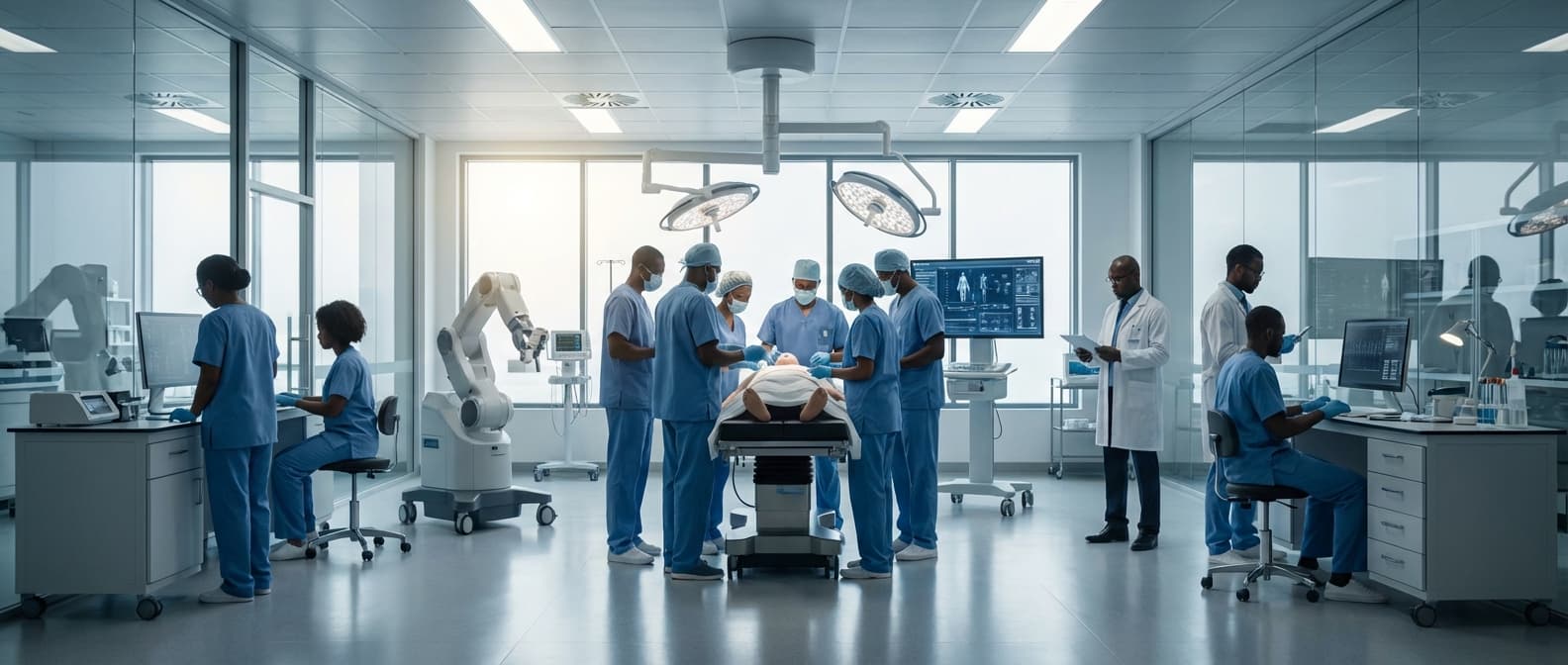
Managed Equipment Service (MES) in Mali
Engineering Excellence & Technical Support
Long‑term equipment provision with uptime SLAs and lifecycle management. High-standard technical execution following OEM protocols and local regulatory frameworks.
Proactive Predictive Maintenance for Critical Infrastructure
Leveraging advanced IoT sensors and AI-driven analytics, our MES solution in Mali predicts potential equipment failures in sectors like water treatment and power generation before they occur. This minimizes unplanned downtime, reduces costly emergency repairs, and ensures the continuous delivery of essential services to communities.
Optimized Spare Parts Management & Localized Logistics
Our MES platform integrates real-time inventory tracking with demand forecasting to optimize spare parts availability for essential equipment across Mali. We establish strategic local warehousing and partner with regional logistics providers to ensure timely delivery, reducing transit times and associated costs, even in remote areas.
Empowering Local Workforce Through Skill Development & Knowledge Transfer
MES in Mali includes comprehensive training programs for local technicians on the operation, maintenance, and troubleshooting of critical equipment. This knowledge transfer builds sustainable local capacity, creates skilled employment opportunities, and ensures long-term operational self-sufficiency for vital infrastructure projects.
What Is Managed Equipment Service (Mes) In Mali?
Managed Equipment Service (MES) in Mali refers to a comprehensive outsourcing model where a third-party provider assumes responsibility for the procurement, installation, operation, maintenance, and eventual disposal of critical equipment for organizations. This service extends beyond simple repair or leasing, encompassing the entire lifecycle of the equipment to ensure optimal performance, cost-efficiency, and compliance. MES aims to alleviate the burden of equipment management from the client organization, allowing them to focus on their core competencies. The service is characterized by service level agreements (SLAs) that define performance metrics, uptime guarantees, and response times.
| Who Needs MES in Mali? | Typical Use Cases |
|---|---|
| Healthcare Facilities: Hospitals, clinics, diagnostic centers requiring reliable medical equipment (e.g., imaging machines, laboratory analyzers, patient monitoring systems) with guaranteed uptime for patient care. | Educational Institutions: Universities, vocational schools, and research facilities needing specialized laboratory equipment, IT infrastructure, and audio-visual systems for teaching and research. |
| Industrial and Manufacturing Sectors: Factories and production plants requiring specialized machinery, automation equipment, and heavy-duty operational tools to maintain production continuity. | Telecommunications Companies: Providers needing robust network infrastructure, base stations, and other communication hardware with high availability requirements. |
| Government Agencies and Public Services: Offices and operational units requiring reliable office equipment, IT systems, and specialized field equipment for service delivery. | Large Corporations with Extensive IT Infrastructure: Businesses that outsource the management of their printers, copiers, servers, networking devices, and other IT hardware to focus on strategic initiatives. |
| Organizations with Limited Technical Expertise or Resources: Companies that lack in-house specialists to manage complex equipment or prefer to reallocate internal resources. | Businesses Seeking Cost Predictability and Control: Companies aiming to transition from unpredictable capital expenditure and variable operational costs to a fixed, predictable operational expenditure model. |
Key Components of Managed Equipment Service (MES) in Mali
- Equipment Procurement and Sourcing: Identifying, selecting, and acquiring appropriate equipment based on client requirements and budget.
- Installation and Configuration: Professional setup, integration, and initial configuration of all managed equipment.
- Proactive Maintenance and Monitoring: Regular scheduled maintenance, preventative measures, and continuous real-time monitoring of equipment status and performance.
- Breakdown Maintenance and Repair: Rapid response to equipment failures, including diagnosis, repair, and replacement of parts.
- Software and Firmware Updates: Ensuring all equipment runs on the latest, secure, and optimized software and firmware versions.
- Consumables Management: Managing the inventory and timely replenishment of necessary consumables (e.g., toners, ink, filters).
- Performance Optimization: Implementing strategies to maximize equipment efficiency, reduce energy consumption, and extend lifespan.
- Reporting and Analytics: Providing detailed reports on equipment usage, performance, maintenance activities, and cost analysis.
- End-of-Life Management: Planning and executing the secure and environmentally responsible disposal or recycling of obsolete equipment.
Who Needs Managed Equipment Service (Mes) In Mali?
Managed Equipment Service (MES) offers a comprehensive solution for organizations in Mali to optimize the use, maintenance, and management of their critical equipment. This service addresses the unique challenges faced by various sectors, including healthcare, manufacturing, and potentially infrastructure development, by ensuring equipment reliability, cost-effectiveness, and technological advancement. MES can be particularly beneficial for organizations that require high uptime for their machinery, lack in-house technical expertise for complex equipment, or are seeking to reduce capital expenditure on equipment acquisition and maintenance.
| Department | Key Equipment/Services Needed | MES Benefits |
|---|---|---|
| Medical Services (Hospitals/Clinics) | Diagnostic imaging (X-ray, CT, MRI), surgical equipment, laboratory analysers, patient monitoring systems, sterilization equipment. | Ensures high availability of life-saving equipment, access to latest technologies, reduced downtime for critical procedures, predictable operational costs, enhanced patient care. |
| Operations/Production (Manufacturing) | Production machinery, processing units, assembly lines, heavy-duty vehicles, logistics equipment. | Maximizes production uptime, reduces manufacturing defects due to well-maintained machinery, improves efficiency, provides access to specialized maintenance expertise, lowers total cost of ownership. |
| Logistics and Transport | Fleet vehicles, specialized transport equipment, warehouse machinery (forklifts, cranes). | Ensures reliable transportation of goods, reduces vehicle downtime, optimizes fleet maintenance schedules, improves safety, manages fuel efficiency. |
| Infrastructure and Public Works | Construction machinery, road maintenance equipment, utility management systems (e.g., water pumps, power generators). | Guarantees operational readiness of public infrastructure, supports timely project completion, ensures uninterrupted essential services, reduces emergency repair costs. |
| Research and Development (Educational/Industrial) | Laboratory equipment, scientific instruments, specialized testing machines. | Provides access to high-precision, well-calibrated equipment, supports research integrity, allows focus on innovation rather than equipment management, ensures equipment longevity. |
Target Customers for MES in Mali
- Hospitals and Clinics
- Manufacturing and Industrial Facilities
- Agricultural Cooperatives and Large Farms
- Mining and Resource Extraction Companies
- Telecommunications Providers
- Government Agencies (e.g., for public works, defense)
- Educational Institutions (for specialized laboratories)
Managed Equipment Service (Mes) Process In Mali
The Managed Equipment Service (MES) process in Mali is a comprehensive workflow designed to ensure the efficient and effective provision and maintenance of medical equipment for healthcare facilities. This process typically begins with an inquiry from a healthcare provider and culminates in the fully operational and supported deployment of the equipment. The specific steps and stakeholders may vary slightly depending on the MES provider and the contract terms, but the general flow remains consistent.
| Stage | Description | Key Stakeholders | Deliverables |
|---|---|---|---|
| Inquiry & Needs Assessment | Initial contact from a healthcare facility to explore MES. Detailed discussion of current equipment, future needs, and operational challenges. | Healthcare Facility Management, Clinical Staff, MES Provider Sales/Business Development | Needs assessment report, preliminary equipment list, understanding of facility's goals. |
| Proposal Development & Negotiation | MES provider analyzes needs and develops a comprehensive proposal outlining equipment, service levels, costs, and contract duration. Negotiations on scope, price, and terms. | MES Provider (Technical, Commercial, Legal Teams), Healthcare Facility Management | Detailed MES proposal, refined equipment list, proposed contract terms. |
| Contract Finalization | Formal agreement is drafted, reviewed, and signed by both parties, legally binding them to the terms of the MES agreement. | Legal Departments of both parties, Healthcare Facility Management, MES Provider Senior Management | Signed MES contract. |
| Equipment Sourcing & Procurement | MES provider identifies, orders, and procures the agreed-upon equipment from authorized manufacturers, ensuring quality and compliance. | MES Provider (Procurement, Logistics Teams), Equipment Manufacturers/Suppliers | Ordered and delivered equipment. |
| Installation & Commissioning | Qualified technicians install equipment in the designated locations, conduct rigorous testing, and ensure it is fully operational and calibrated according to specifications. | MES Provider (Field Service Engineers, Biomedical Technicians), Healthcare Facility (Site Preparation Team) | Installed and commissioned equipment, installation reports, calibration certificates. |
| Training & Handover | Comprehensive training sessions are conducted for clinical and technical staff on equipment operation, basic troubleshooting, and safety protocols. Formal handover of equipment. | MES Provider (Trainers, Service Engineers), Healthcare Facility Clinical & Technical Staff | Trained staff, training manuals, handover documentation. |
| Ongoing Maintenance & Support | Regular preventative maintenance schedules are followed. On-demand repair services, technical assistance, and spare parts management are provided as per contract. | MES Provider (Service Engineers, Helpdesk), Healthcare Facility Clinical & Technical Staff | Scheduled maintenance, timely repairs, technical support, readily available spare parts. |
| Performance Monitoring & Reporting | MES provider tracks equipment uptime, performance metrics, and service response times. Regular reports are shared with the healthcare facility for transparency and review. | MES Provider (Service Management, Operations Teams), Healthcare Facility Management | Performance reports, service logs, analysis of equipment utilization. |
| Equipment Lifecycle Management | Proactive planning for equipment upgrades, replacements based on technological advancements and wear and tear. Responsible decommissioning of end-of-life equipment. | MES Provider (Strategic Planning, Procurement), Healthcare Facility Management | Equipment upgrade/replacement plans, end-of-life management. |
Managed Equipment Service (MES) Workflow in Mali
- Inquiry & Needs Assessment: A healthcare facility expresses interest in MES and outlines their equipment needs.
- Proposal Development & Negotiation: The MES provider develops a tailored proposal based on the facility's requirements, budget, and service level agreements. Negotiations ensue.
- Contract Finalization: Once terms are agreed upon, a formal contract is signed, detailing equipment, services, responsibilities, and payment terms.
- Equipment Sourcing & Procurement: The MES provider procures the specified equipment from approved manufacturers and suppliers.
- Installation & Commissioning: Equipment is delivered, installed, tested, and commissioned by qualified technicians to ensure it meets performance standards.
- Training & Handover: Healthcare staff receive comprehensive training on the operation and basic maintenance of the equipment.
- Ongoing Maintenance & Support: Routine preventative maintenance, repairs, and technical support are provided as per the contract.
- Performance Monitoring & Reporting: The MES provider continuously monitors equipment performance and provides regular reports to the healthcare facility.
- Equipment Lifecycle Management: This includes planning for upgrades, replacements, and eventual decommissioning of equipment.
Managed Equipment Service (Mes) Cost In Mali
Managed Equipment Service (MES) in Mali offers a comprehensive solution for healthcare facilities to acquire, maintain, and upgrade medical equipment without the burden of direct ownership. The cost of MES in Mali is influenced by a multitude of factors, leading to a wide range of pricing. Key determinants include the type and volume of equipment required, the service level agreements (SLAs) encompassing maintenance response times, parts availability, and training provisions, and the overall duration of the MES contract. Furthermore, the specific vendor offering the MES solution, their overheads, and their profit margins play a significant role. The depreciation of currency, import duties on specialized equipment, and the logistical complexities of service delivery within Mali's diverse geographical landscape also contribute to the final cost.
| Equipment Category (Illustrative) | Estimated MES Cost Range (Mali) | Typical Contract Duration (Years) | Notes |
|---|---|---|---|
| Basic Diagnostic Equipment (e.g., Ultrasound, ECG) | 500,000 - 2,000,000 XOF per month | 3-5 | Depends on model, number of units, and SLA. |
| Imaging Equipment (e.g., X-ray, CT Scanner) | 2,000,000 - 10,000,000+ XOF per month | 5-7 | Higher complexity and maintenance needs. May include advanced imaging modalities. |
| Surgical and Anesthesia Equipment | 1,000,000 - 5,000,000+ XOF per month | 5-7 | Critical for patient safety, requiring rigorous maintenance and calibration. |
| Laboratory Equipment (e.g., Analyzers, Microscopes) | 700,000 - 3,000,000+ XOF per month | 3-5 | Varies significantly based on the complexity and throughput of the lab. |
| Hospital Furniture and General Ward Equipment | 200,000 - 1,000,000 XOF per month | 3-5 | Focus on durability and regular servicing. |
| Complete Hospital Package (Multiple Categories) | Negotiated based on a bundled approach, potentially significantly higher than individual categories. | 5-10+ | Comprehensive offering, requiring detailed site assessment and custom pricing. |
Key Pricing Factors for MES in Mali
- Type and Volume of Equipment: The more sophisticated and numerous the equipment, the higher the MES cost.
- Service Level Agreements (SLAs): Stricter response times, guaranteed uptime, and comprehensive training increase costs.
- Contract Duration: Longer-term contracts can sometimes offer economies of scale, potentially lowering periodic costs.
- Vendor Reputation and Expertise: Established vendors with strong track records may command higher prices.
- Equipment Age and Technology: Newer, more advanced equipment typically has higher upfront costs and potentially higher maintenance expenses.
- Geographical Location of Facility: Remote locations might incur higher logistical costs for service and parts.
- Inflation and Exchange Rates: Fluctuations in the Malian Franc (XOF) against major currencies can impact costs, especially for imported components.
- Customization and Value-Added Services: Bespoke solutions or additional services beyond standard maintenance will increase the overall price.
- Spare Parts Availability and Logistics: The cost of sourcing and maintaining a readily available stock of critical spare parts for the Malian context.
- Training and Skill Development: The cost associated with training local technicians or providing ongoing user training.
Affordable Managed Equipment Service (Mes) Options
Managed Equipment Service (MES) can be a strategic investment for businesses, but cost is often a primary concern. Fortunately, numerous affordable MES options exist, focusing on delivering essential services and value without unnecessary overhead. This involves understanding different service tiers, leveraging value bundles, and implementing smart cost-saving strategies. Affordable MES prioritizes core functionalities like preventative maintenance, reactive repairs, and compliance management, often with scalable service levels to match your specific operational needs and budget. The goal is to ensure your critical equipment remains operational and compliant, maximizing uptime and minimizing unexpected expenditures.
| Value Bundle Type | Description | Typical Cost Savings | Ideal For |
|---|---|---|---|
| Preventative Maintenance Focus | Prioritizes scheduled inspections and maintenance to prevent failures. | 15-25% reduction in unexpected repairs and downtime. | Organizations with predictable equipment usage and a desire to minimize reactive costs. |
| On-Demand Repair & Support | Offers rapid response to breakdowns and expert troubleshooting. | Reduced downtime costs by ensuring quick resolution of issues. | Businesses experiencing frequent but varied equipment issues. |
| Compliance & Certification Package | Bundles services to ensure equipment meets all relevant industry and safety regulations. | Avoidance of fines, penalties, and potential legal liabilities. | Highly regulated industries (e.g., healthcare, manufacturing, food processing). |
| Basic Monitoring & Alerting | Includes remote monitoring of key equipment parameters and proactive alerts. | Early detection of potential problems, preventing minor issues from becoming major ones. | Businesses seeking to optimize resource allocation for maintenance. |
| Full Service Lite | A streamlined version of comprehensive MES, focusing on essential services at a lower price point. | Significant cost savings compared to full-service MES, while still providing critical support. | Small to medium-sized businesses or those with less complex equipment needs. |
Key Components of Affordable MES
- Core Maintenance & Repair: Ensuring equipment is functioning optimally and addressing breakdowns promptly.
- Compliance & Safety: Meeting regulatory standards and maintaining a safe working environment.
- Parts Management: Efficiently managing spare parts inventory to minimize downtime.
- Reporting & Analytics: Providing insights into equipment performance and maintenance history.
- Scalable Service Levels: Offering flexible plans that can be adjusted based on business needs.
Verified Providers In Mali
Ensuring access to reliable and qualified healthcare providers is paramount, especially in regions like Mali where navigating the healthcare landscape can be complex. Franance Health stands out as a premier credentialing body, meticulously vetting and certifying healthcare professionals and facilities. Their rigorous process ensures that all verified providers meet the highest standards of expertise, ethical conduct, and patient care. Choosing a Franance Health-verified provider offers a crucial layer of assurance for individuals seeking medical services in Mali, guaranteeing that they are in the hands of competent and trustworthy professionals.
| Verification Component | Franance Health Standard | Benefit to Patients |
|---|---|---|
| Licensure and Certifications | Thorough validation of all relevant medical licenses and specialized certifications. | Guarantees that providers are legally authorized and possess the necessary qualifications for their practice. |
| Educational Background | Verification of degrees, diplomas, and specialized training from accredited institutions. | Ensures a strong foundational knowledge base and expertise in medical disciplines. |
| Professional Experience | Assessment of practical experience, including areas of specialization and years in practice. | Confirms hands-on skills and practical application of medical knowledge. |
| Reputation and Background Checks | Inclusion of peer reviews, disciplinary record checks, and background investigations. | Minimizes risks by identifying and excluding individuals with a history of malpractice or misconduct. |
| Continuing Medical Education (CME) | Verification of ongoing professional development and adherence to CME requirements. | Ensures providers stay updated with the latest medical advancements and techniques. |
Why Franance Health Verification is the Best Choice in Mali
- Uncompromising Quality Assurance: Franance Health's credentialing process involves in-depth verification of licenses, certifications, educational backgrounds, and professional experience.
- Commitment to Ethical Standards: Verified providers adhere to strict ethical guidelines and best practices in patient care and medical conduct.
- Enhanced Patient Safety: By entrusting your health to Franance Health-verified professionals, you significantly reduce the risk of encountering unqualified or fraudulent practitioners.
- Streamlined Healthcare Access: Franance Health's directory simplifies the process of finding reliable healthcare options, saving you time and stress.
- Promoting Trust and Confidence: Their certification acts as a beacon of trust, empowering patients to make informed decisions about their healthcare needs.
- Continuous Monitoring: Franance Health maintains ongoing oversight to ensure that verified providers consistently uphold their standards.
Scope Of Work For Managed Equipment Service (Mes)
This document outlines the Scope of Work (SOW) for a Managed Equipment Service (MES) contract, detailing the technical deliverables and standard specifications required for its successful execution. The MES will encompass the provision, installation, maintenance, and eventual decommissioning of specific medical equipment as defined in the contract. The primary objectives are to ensure equipment availability, optimal performance, cost-effectiveness, and compliance with all relevant regulations.
| Category | Specification/Requirement | Details/Description | Acceptance Criteria |
|---|---|---|---|
| Equipment Procurement | New Equipment Standards | All new equipment procured under this MES shall be from reputable manufacturers, meet current clinical standards, and have a minimum expected lifespan of X years (e.g., 7 years). | Manufacturer's specifications, warranty documentation, and independent review of clinical suitability. |
| Equipment Procurement | Refurbished Equipment Standards | If refurbished equipment is permitted, it must be certified by the manufacturer or an accredited third-party, with documented warranty and performance validation. Refurbishment process must adhere to ISO 13485 or equivalent standards. | Certification of refurbishment, warranty documentation, performance validation reports. |
| Installation & Commissioning | Installation Procedures | All installations must be performed by qualified, manufacturer-certified technicians according to manufacturer guidelines and site-specific requirements. Includes site assessment, power/network requirements, and environmental checks. | Successful installation, functional testing, and sign-off by clinical stakeholders. |
| Installation & Commissioning | Commissioning Protocols | Comprehensive commissioning including initial performance verification, calibration, safety checks, and integration with existing hospital IT systems (e.g., PACS, HIS). | Completion of all commissioning tests, verified by an independent party if required, and documented approval from clinical users. |
| Maintenance - Preventive | PM Frequency | PM shall be conducted according to manufacturer recommendations, clinical best practices, and regulatory requirements. Minimum frequency for critical equipment shall be Y times per year (e.g., bi-annually). | Scheduled PM completion within +/- 1 week of the planned date, documented in the CMMS. |
| Maintenance - Preventive | PM Scope | Thorough inspection, cleaning, lubrication, adjustment, calibration, and replacement of wear-and-tear parts. Includes functional testing and performance verification. | Completion of all PM tasks as defined in the manufacturer's service manual, with documented test results. |
| Maintenance - Corrective | Response Time | Guaranteed response times for CM incidents based on equipment criticality: Critical (e.g., within 2 hours), High (e.g., within 4 hours), Medium (e.g., within 8 hours), Low (e.g., within 24 hours). | Time from notification to technician on-site/remote troubleshooting initiated, as recorded in the CMMS. |
| Maintenance - Corrective | Resolution Time | Guaranteed resolution times for CM incidents: Critical (e.g., within 12 hours), High (e.g., within 24 hours), Medium (e.g., within 48 hours). Resolution defined as equipment back to full operational status. | Time from notification to equipment fully operational, as recorded in the CMMS. |
| Maintenance - Corrective | Uptime Guarantees | Guaranteed equipment uptime percentage (e.g., 98% for critical equipment, 95% for others) during operational hours. | Actual uptime calculated based on reported downtime, compared against the guaranteed percentage. Service credits may apply for non-compliance. |
| Spare Parts Management | Availability | Maintain an adequate stock of critical and commonly failing spare parts on-site or with guaranteed rapid delivery (e.g., within 4 hours for critical parts). | Minimum stock levels maintained for designated critical spare parts, confirmed by inventory audits. |
| Performance Monitoring | Reporting Frequency | Monthly reports detailing equipment utilization, failure rates, maintenance activities (PM/CM), response/resolution times, and uptime performance. | Timely submission of monthly reports, consistent with agreed-upon format and data accuracy. |
| Training | User Training | Initial and ongoing training for clinical users on the safe and effective operation, basic troubleshooting, and routine care of the equipment. | Training materials provided, attendance records maintained, and post-training competency assessments conducted. |
| Compliance & Safety | Regulatory Compliance | All equipment and services must comply with relevant national and international standards and regulations (e.g., FDA, CE marking, local health authority requirements). | Evidence of compliance through documentation, certifications, and successful regulatory audits. |
| Compliance & Safety | Electrical Safety Testing | Regular electrical safety testing and certification of all equipment as per manufacturer and regulatory requirements. | Scheduled and documented electrical safety tests performed by qualified personnel. |
| Decommissioning | Decommissioning Procedures | Safe and environmentally sound removal and disposal of equipment at the end of its service life, adhering to all relevant regulations. | Documentation of disposal certificates, environmental impact assessments, and data sanitization. |
Key Technical Deliverables
- Detailed Equipment Inventory and Asset Register
- Installation and Commissioning Reports
- Preventive Maintenance (PM) Schedules and Records
- Corrective Maintenance (CM) Response Times and Resolution Reports
- Performance Monitoring and Reporting (Uptime, Utilization, Failure Rates)
- Calibration Certificates and Records
- Training Materials and Records for End-Users
- Decontamination and Sterilization Procedures and Records
- Equipment Upgrade and Replacement Plans
- End-of-Life Assessment and Decommissioning Reports
- Compliance Documentation (Regulatory, Safety)
- Spare Parts Inventory Management and Reporting
Service Level Agreement For Managed Equipment Service (Mes)
This Service Level Agreement (SLA) outlines the guaranteed response times and uptime for the Managed Equipment Service (MES) provided by [Your Company Name] to [Client Name]. This agreement is effective as of [Start Date] and remains in effect until [End Date].
| Service Component | Severity Level | Response Time Target | Uptime Guarantee |
|---|---|---|---|
| Core MES Functionality | Critical (System Outage) | 15 Minutes | 99.9% (Monthly) |
| Core MES Functionality | High (Significant Performance Degradation) | 1 Hour | 99.9% (Monthly) |
| Core MES Functionality | Medium (Minor Issue Affecting Non-Critical Functionality) | 4 Business Hours | 99.9% (Monthly) |
| Core MES Functionality | Low (Cosmetic or Informational Issue) | 8 Business Hours | 99.9% (Monthly) |
| Ancillary Services (e.g., Reporting, Notifications) | Critical | 1 Hour | 99.5% (Monthly) |
| Ancillary Services (e.g., Reporting, Notifications) | High | 4 Business Hours | 99.5% (Monthly) |
Key Performance Indicators (KPIs)
- Response Time: The maximum time allowed for [Your Company Name] to acknowledge and begin addressing a reported issue.
- Uptime Guarantee: The minimum percentage of time the managed equipment is expected to be operational and available for use.
Frequently Asked Questions

Ready when you are
Let's scope your Managed Equipment Service (MES) in Mali project in Mali.

Scaling healthcare logistics and technical systems across the entire continent.