
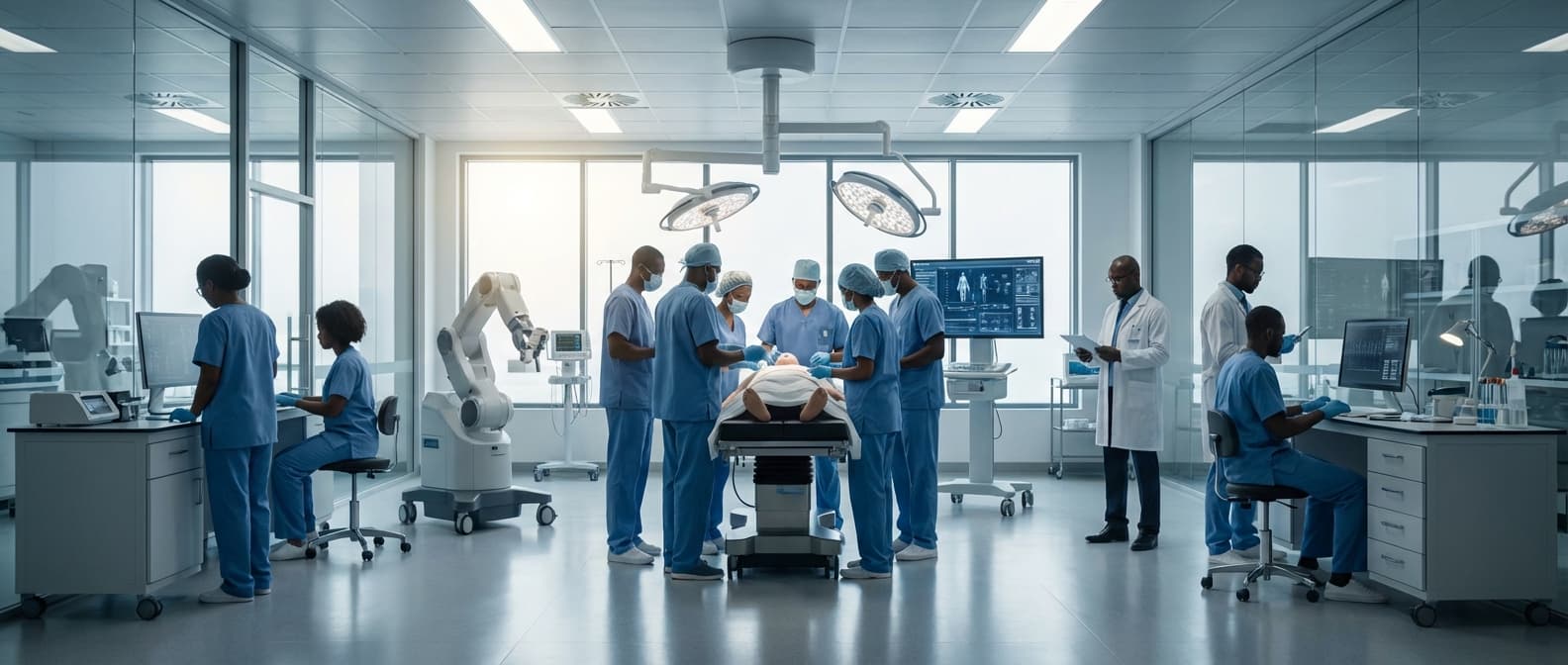
Calibration & Electrical Safety Testing in Mali
Engineering Excellence & Technical Support
Equipment calibration and IEC safety testing High-standard technical execution following OEM protocols and local regulatory frameworks.
Precision Calibration for Reliable Medical Devices
Ensuring the accuracy of vital medical equipment like ventilators, defibrillators, and diagnostic imaging systems through rigorous calibration against international standards. This minimizes diagnostic errors and optimizes patient treatment outcomes in Malian healthcare facilities.
Comprehensive Electrical Safety Audits for Patient Protection
Conducting thorough electrical safety inspections and testing on all medical equipment, from basic examination lights to complex surgical units. Identifying and mitigating potential electrical hazards prevents shocks, fires, and equipment malfunctions, safeguarding both patients and healthcare professionals in Mali.
Advanced Diagnostic & Repair for Uptime Assurance
Leveraging specialized diagnostic tools and expert knowledge to identify and rectify electrical faults in medical devices. Our proactive maintenance and repair services maximize equipment uptime, ensuring continuous availability of critical healthcare services across Mali's diverse geographic regions.
What Is Calibration & Electrical Safety Testing In Mali?
Calibration and Electrical Safety Testing (EST) are critical metrological and compliance services essential for ensuring the accuracy, reliability, and safety of electrical and electronic equipment within Mali. Calibration involves the comparison of a measuring instrument's readings against a known standard (traceable to national or international metrology institutes) to determine and document any deviation, and then adjusting the instrument to minimize this deviation. Electrical Safety Testing (EST), also known as product safety testing or compliance testing, is a systematic evaluation of electrical equipment to ensure it meets predefined safety standards and regulations designed to prevent hazards such as electric shock, fire, and radiation. These services are not solely for regulatory compliance but are fundamental for maintaining operational integrity, product quality, and worker and end-user safety in various industrial, medical, and commercial sectors operating within Mali's regulatory framework.
| Aspect | Description | Who Needs It | Typical Use Cases |
|---|---|---|---|
| Calibration | Process of verifying and adjusting measuring instruments against traceable standards to ensure accuracy and minimize measurement uncertainty. | Manufacturers, research laboratories, quality control departments, industrial facilities, healthcare providers, and any entity relying on precise measurements for production, testing, or diagnosis. | Ensuring consistency in manufacturing processes (e.g., temperature, pressure, voltage measurements), validating analytical results in laboratories, maintaining accuracy of medical diagnostic equipment, calibrating power quality analyzers for energy audits, verifying environmental monitoring sensors. |
| Electrical Safety Testing (EST) | Systematic assessment of electrical equipment's design and construction to ensure it meets safety requirements and prevents hazards like electric shock, fire, and electromagnetic interference. | Manufacturers of electrical and electronic products for the Malian market, importers, distributors, and users of high-risk electrical equipment (e.g., in healthcare, industrial settings). | Pre-market approval testing for consumer electronics, medical devices, industrial control systems, IT equipment, and laboratory instruments; periodic safety checks on installed electrical equipment (e.g., PAT testing in office environments); verification of compliance with Malian electrical codes and import regulations. |
Key Aspects of Calibration & Electrical Safety Testing in Mali
- Calibration establishes and maintains the accuracy and traceability of measuring instruments.
- Electrical Safety Testing verifies that equipment does not pose a risk of electric shock, fire, or other electrical hazards.
- Services are performed by accredited laboratories or qualified service providers.
- Testing methodologies are based on international standards (e.g., IEC, ISO) adapted to Malian regulations.
- Outputs typically include calibration certificates with uncertainty values and test reports detailing compliance with safety standards.
Who Needs Calibration & Electrical Safety Testing In Mali?
Regular calibration and electrical safety testing are crucial for a wide range of organizations in Mali to ensure the accuracy of their measurements, the reliability of their equipment, and the safety of their personnel and patients. This service is essential for compliance with national and international standards, preventing equipment failures, and maintaining operational efficiency.
| Customer Type | Key Departments/Applications | Reasons for Calibration & Electrical Safety Testing |
|---|---|---|
| Healthcare Facilities (Hospitals, Clinics, Diagnostic Centers) | Medical Imaging (X-ray, MRI, CT Scanners), Patient Monitoring (ECG, vital signs monitors), Surgical Equipment, Laboratory Analyzers, Anesthesia Machines, Ventilators, Pharmacy Automation, Electrical Safety Officers, Biomedical Engineering | Patient safety, accurate diagnosis and treatment, regulatory compliance (e.g., Ministry of Health), equipment longevity, prevention of electrocution or equipment malfunction during critical procedures. |
| Industrial Manufacturing Plants | Production Lines, Quality Control Labs, Process Control Systems, Motor and Drive Testing, Power Distribution Systems, Environmental Monitoring Equipment, Maintenance Departments | Product quality assurance, process efficiency, machine reliability, safety of workers operating machinery, compliance with industrial safety regulations, preventing production downtime. |
| Food and Beverage Producers | Quality Control Laboratories, Production Processes (temperature, pH, pressure monitoring), Packaging Equipment, Sterilization Equipment, Refrigeration Systems | Ensuring food safety and quality, compliance with food safety regulations (e.g., HACCP principles), maintaining product consistency, preventing spoilage, accurate process control. |
| Research and Development Laboratories | Analytical Instruments (spectrophotometers, chromatographs), Environmental Chambers, Calibration Standards, Electrical Safety Testing of R&D equipment, Scientific Equipment Maintenance | Accuracy of experimental results, scientific integrity, reliability of research findings, safety of researchers, compliance with laboratory standards. |
| Educational Institutions (Universities, Technical Colleges) | Science Laboratories (Physics, Chemistry, Biology), Engineering Workshops, Electrical Training Labs, Medical Training Facilities, IT Departments | Providing accurate learning experiences, safety of students and faculty, ensuring functional equipment for practical training, compliance with educational standards. |
| Telecommunications Companies | Network Monitoring Equipment, Signal Generators, Power Supplies, Base Station Maintenance, Testing Labs | Ensuring network reliability and performance, accurate signal measurements, preventing equipment damage, safety of technicians working with electrical equipment. |
| Construction and Engineering Firms | Testing and Measurement Tools (surveying equipment, multimeters, oscilloscopes), Power Tools, Site Safety Equipment, Quality Assurance Labs | Accuracy of measurements on-site, safety of workers, ensuring compliance with building codes and safety standards, preventing accidents. |
| Government Agencies and Public Services (e.g., Water Treatment, Environmental Protection) | Environmental Monitoring Equipment, Water Quality Testing Labs, Electrical Infrastructure Maintenance, Public Health Laboratories | Ensuring public safety and environmental protection, accurate data collection for policy decisions, reliability of critical infrastructure, compliance with regulatory mandates. |
| Energy and Utilities Sector (Power Generation, Distribution) | Power Meters, Protective Relays, Switchgear, Transformers, Electrical Testing Equipment, Grid Monitoring Systems | Ensuring reliable power supply, safety of personnel, preventing blackouts, accuracy of billing, compliance with energy sector regulations. |
Target Customers & Departments for Calibration & Electrical Safety Testing in Mali
- Healthcare Facilities
- Industrial Manufacturing Plants
- Food and Beverage Producers
- Research and Development Laboratories
- Educational Institutions
- Telecommunications Companies
- Construction and Engineering Firms
- Government Agencies and Public Services
- Energy and Utilities Sector
Calibration & Electrical Safety Testing Process In Mali
The process for Calibration and Electrical Safety Testing in Mali, from initial inquiry to the final execution of services, involves several key stages. This workflow ensures that equipment is properly verified for accuracy and safety, complying with relevant standards. The process begins with a client's need for testing, followed by a formal request, evaluation, quotation, scheduling, execution, and finally, reporting and certification.
| Stage | Description | Key Activities | Responsible Party (Typical) | Deliverables/Outcomes |
|---|---|---|---|---|
| The client identifies a need for calibration and/or electrical safety testing of their equipment. | Contacting potential service providers, outlining the equipment to be tested, desired standards, and timelines. | Client | Clear understanding of testing needs. |
| Client seeks out accredited or reputable service providers in Mali. | Researching providers, reviewing credentials, and making initial contact. | Client | Shortlist of potential service providers. |
| Detailed understanding of the testing requirements and the specific equipment involved. | Providing equipment details (make, model, serial number, current calibration status), defining the exact tests required (e.g., specific electrical safety parameters, calibration points). | Client & Service Provider | Defined scope of work and list of equipment. |
| Service provider evaluates the scope and provides a cost estimate and service proposal. | Site visit (if necessary), assessment of complexity, preparation of a detailed quotation including service fees, materials, and estimated duration. | Service Provider | Formal quotation and service proposal. |
| Client reviews and accepts the proposal, leading to a formal agreement. | Negotiation of terms, signing of contracts or service agreements, confirmation of payment terms. | Client & Service Provider | Signed contract/agreement. |
| Arranging the practical details for the testing to take place. | Coordinating dates and times, arranging access to the testing location, ensuring necessary power and environmental conditions, planning for transport of equipment (if off-site). | Client & Service Provider | Confirmed testing schedule and logistical arrangements. |
| The actual calibration and electrical safety testing is performed. | Following defined test procedures, using calibrated test equipment, recording all measurement data accurately, performing safety checks according to relevant Malian and international standards (e.g., IEC standards, local regulations). | Service Provider | Raw test data and observations. |
| Interpreting the collected data and preparing a comprehensive report. | Analyzing results against specifications, identifying any deviations or non-compliance, compiling a detailed test report including equipment details, test methods, results, and technician's signature. | Service Provider | Draft test report. |
| Formalizing the results and providing official certification. | Issuing calibration certificates and/or electrical safety test reports, affixing compliance labels to tested equipment (if applicable). | Service Provider | Official calibration certificate(s) and/or electrical safety test report(s). |
| Ensuring continued compliance and planning for future testing. | Client review of reports, payment for services, service provider advising on recommended re-calibration/testing intervals, and potentially scheduling future services. | Client & Service Provider | Completed service cycle, updated records, and future service plan. |
Calibration & Electrical Safety Testing Workflow in Mali
- Client Inquiry & Requirement Gathering
- Service Provider Identification & Initial Contact
- Scope Definition & Equipment Identification
- Quotation & Proposal Submission
- Agreement & Contract Finalization
- Scheduling & Logistics Planning
- On-site or Off-site Testing Execution
- Data Analysis & Report Generation
- Certification & Documentation Issuance
- Follow-up & Re-calibration Scheduling (if applicable)
Calibration & Electrical Safety Testing Cost In Mali
Calibration and electrical safety testing are crucial for ensuring the accuracy and reliability of scientific instruments, medical equipment, and industrial machinery, as well as for maintaining a safe working environment. In Mali, the cost of these services is influenced by several factors, including the complexity of the equipment, the specific parameters to be calibrated, the number of test points, the type of calibration (e.g., traceable to national or international standards), the location of the testing (on-site vs. laboratory), and the reputation and accreditation of the service provider. Prices are typically quoted in Malian Franc (XOF).
| Service Type | Typical Range (XOF) | Notes |
|---|---|---|
| Basic Electrical Safety Test (e.g., insulation resistance, earth continuity for a few devices) | 10,000 - 30,000 | Per device/unit. Can be lower for bulk testing. |
| Standard Calibration (e.g., multimeter, clamp meter) | 15,000 - 40,000 | Per instrument. Includes basic adjustments if needed. |
| Advanced Calibration (e.g., oscilloscopes, power meters, single-function calibrators) | 30,000 - 100,000+ | Per instrument. Depends on complexity and number of parameters. |
| Complex Equipment Calibration (e.g., medical devices, industrial sensors, laboratory balances) | 50,000 - 250,000+ | Highly variable. May involve multiple days or specialized equipment. |
| On-site Service Call Fee (per technician) | 20,000 - 50,000 | Plus calibration costs. Covers travel and basic time. |
| Certification/Accreditation Fees (if applicable) | Included in overall quote or quoted separately | For ISO 17025 or similar accredited reports. |
Factors Influencing Calibration & Electrical Safety Testing Costs in Mali
- Equipment Complexity: More intricate or specialized equipment generally commands higher calibration fees.
- Number of Calibration Points: The more points measured and adjusted during calibration, the higher the cost.
- Type of Calibration: Calibration traceable to accredited national or international standards (e.g., ISO 17025) is usually more expensive than internal or supplier calibrations.
- On-site vs. Laboratory Testing: On-site testing may incur additional charges for travel, accommodation, and setup, but can save on logistics for the client.
- Service Provider Accreditation & Reputation: Certified and reputable providers, especially those with international accreditations, often charge more due to their expertise and reliability.
- Urgency: Rush services or expedited testing can lead to increased costs.
- Additional Services: Requirements for detailed reports, uncertainty analysis, or recommendations for improvement can add to the overall price.
- Geographic Location: While Mali has a unified currency, the cost might slightly vary between major cities like Bamako and more remote regions due to logistical considerations.
- Type of Equipment: Calibration costs differ significantly between simple multimeters and complex industrial process control systems or medical imaging devices.
Affordable Calibration & Electrical Safety Testing Options
Ensuring your electrical equipment is calibrated and safe is crucial for reliable operation and compliance. We offer a range of affordable calibration and electrical safety testing options designed to fit various budgets and needs. Explore our value bundles and cost-saving strategies to maximize your investment.
| Service Bundle | Includes | Ideal For | Cost-Saving Strategy |
|---|---|---|---|
| Essential Safety Package | Basic Electrical Safety Test (PAT Testing) for up to 10 portable appliances | Small businesses, offices, and low-volume environments | Bundled pricing offers a discount compared to individual testing. |
| Standard Calibration & Safety | Calibration for 2 standard test instruments + Electrical Safety Test for up to 20 appliances | Workshops, small labs, and general purpose electrical testing | Package deal provides a more economical rate per service. |
| Comprehensive Assurance Bundle | Calibration for 5 key instruments + Electrical Safety Test for up to 50 appliances + Basic Report Generation | Medium-sized businesses, technical facilities, and compliance-focused operations | Bulk service discount and simplified scheduling reduces administrative overhead. |
| High-Volume Testing Program | Customizable volume-based pricing for large-scale calibration and safety testing + Priority scheduling | Large organizations, manufacturing plants, and educational institutions | Negotiated rates for significant testing volumes and long-term contracts. |
Key Benefits of Affordable Calibration & Electrical Safety Testing
- Reduced Downtime: Accurate calibration minimizes unexpected equipment failures, keeping your operations running smoothly.
- Enhanced Safety: Electrical safety testing identifies potential hazards, protecting your personnel and assets.
- Compliance Assurance: Meet industry regulations and standards with documented testing and calibration.
- Improved Performance: Properly calibrated instruments deliver more accurate readings, leading to better decision-making.
- Cost Savings: Proactive maintenance through calibration and safety testing prevents costly repairs and replacements.
Verified Providers In Mali
In Mali, ensuring access to reliable and high-quality healthcare is paramount. When seeking medical services, it's crucial to identify Verified Providers. These are healthcare professionals and facilities that have undergone rigorous checks and meet established standards for expertise, ethical practice, and operational integrity. Franance Health stands out as a leading credentialing body and a trusted partner for identifying these top-tier providers.
| Provider Type | Franance Health Verified Benefits | Key Differentiators |
|---|---|---|
| Hospitals & Clinics | Ensured adherence to safety protocols, modern equipment standards, and qualified medical staff. | Commitment to patient-centered care, advanced diagnostic capabilities, and efficient service delivery. |
| Specialist Physicians | Verification of advanced degrees, specialized training, and proven clinical experience. | Access to cutting-edge medical knowledge, specialized treatment options, and a strong track record of positive patient outcomes. |
| General Practitioners | Confirmation of general medical expertise, primary care proficiency, and ethical practice. | Reliable first point of contact for a wide range of health concerns, emphasis on preventative care and patient education. |
| Diagnostic Laboratories | Standards for accuracy, reliability, and adherence to quality control measures. | Timely and precise diagnostic results, advanced testing methodologies, and interpretation by qualified pathologists. |
Why Franance Health Credentials Represent the Best Choice in Mali
- Rigorous Verification Process: Franance Health employs a multi-faceted approach to credentialing, scrutinizing educational qualifications, professional experience, licensing, and adherence to ethical guidelines. This ensures that only genuinely competent and trustworthy providers are accredited.
- Focus on Patient Safety: Patient safety is at the core of Franance Health's mission. Their verification process includes checks for malpractice history, criminal records, and any disciplinary actions, minimizing risks for patients.
- Commitment to Quality Care: Beyond basic qualifications, Franance Health assesses the operational standards of facilities, including hygiene, equipment maintenance, and patient care protocols. This promotes an environment of consistent, high-quality healthcare delivery.
- Promoting Transparency: Franance Health’s accredited providers are clearly identifiable, offering patients the assurance and confidence they need when making healthcare decisions.
- Continuous Monitoring and Re-verification: The credentialing process is not a one-time event. Franance Health engages in ongoing monitoring and periodic re-verification to ensure that accredited providers consistently maintain their high standards.
- Access to Specialized Expertise: Franance Health's network includes a diverse range of specialists, ensuring that patients can find the right expertise for their specific health needs.
- Building Trust and Confidence: By partnering with Franance Health, healthcare providers demonstrate their commitment to excellence and patient well-being, fostering greater trust within the community.
Scope Of Work For Calibration & Electrical Safety Testing
This Scope of Work (SOW) outlines the requirements for providing professional calibration and electrical safety testing services for specified equipment. The objective is to ensure that all tested equipment meets the established accuracy, performance, and safety standards, thereby guaranteeing reliable operation and user safety.
| Item/Equipment | Calibration Requirements | Electrical Safety Test Requirements | Standard Specification Reference |
|---|---|---|---|
| Medical Infusion Pumps | Accuracy of flow rate and volume delivery. Calibration traceable to national/international standards. | Leakage current (earth and touch), insulation resistance, protective earth resistance, enclosure integrity. | IEC 60601-1, AAMI ES60601-1, Local Regulatory Standards |
| Ventilators | Accuracy of pressure, volume, flow, and respiratory rate. Calibration traceable to national/international standards. | Leakage current (earth and touch), insulation resistance, protective earth resistance, alarm functionality. | IEC 60601-1, AAMI ES60601-1, Local Regulatory Standards |
| Defibrillators | Energy delivery accuracy, waveform parameters, pacing function accuracy (if applicable). Calibration traceable to national/international standards. | Leakage current (earth and touch), insulation resistance, protective earth resistance, defibrillation energy output. | IEC 60601-1, AAMI ES60601-1, Local Regulatory Standards |
| Electrocardiographs (ECG) | Signal amplification, frequency response, lead integrity, paper speed (if applicable). Calibration traceable to national/international standards. | Leakage current (earth and touch), insulation resistance, protective earth resistance, lead integrity. | IEC 60601-1, AAMI ES60601-1, Local Regulatory Standards |
| Patient Monitors | Accuracy of vital signs measurements (SpO2, NIBP, ECG, Temperature), alarm limits. Calibration traceable to national/international standards. | Leakage current (earth and touch), insulation resistance, protective earth resistance, alarm functionality. | IEC 60601-1, AAMI ES60601-1, Local Regulatory Standards |
| General Laboratory Equipment (e.g., Balances, Thermometers, Pipettes) | Accuracy and precision within manufacturer specifications. Calibration traceable to national/international standards. | N/A (unless electrically powered and poses a direct safety risk beyond general use). | Manufacturer Specifications, ISO 17025 (for accredited labs) |
Key Technical Deliverables
- Calibrated equipment with updated calibration stickers and certificates.
- Electrical safety test reports for each tested item.
- Detailed reports summarizing all testing performed, including pass/fail results and any identified anomalies.
- Recommendations for repair or replacement of any non-compliant equipment.
- Access to a secure online portal for retrieving calibration certificates and test reports.
Service Level Agreement For Calibration & Electrical Safety Testing
This Service Level Agreement (SLA) outlines the commitment for Calibration and Electrical Safety Testing services provided by [Your Company Name] to [Client Company Name]. It details the expected response times for incidents and the uptime guarantees for the calibration and testing services.
| Service | Priority Level | Response Time Target | Uptime Guarantee (Monthly) |
|---|---|---|---|
Definitions
- {"title":"Calibration","description":"The process of comparing a measuring instrument to a known standard to detect and correct inaccuracies."}
- {"title":"Electrical Safety Testing","description":"The process of testing electrical equipment to ensure it meets safety standards and regulations."}
- {"title":"Incident","description":"Any event that disrupts or degrades the provision of Calibration & Electrical Safety Testing services, requiring immediate attention."}
- {"title":"Response Time","description":"The time elapsed from when an Incident is reported by the Client to [Your Company Name] until [Your Company Name] begins working to resolve the Incident."}
- {"title":"Resolution Time","description":"The time elapsed from when an Incident is reported by the Client to [Your Company Name] until the Incident is resolved and the service is restored to its normal operational state."}
- {"title":"Uptime Guarantee","description":"The percentage of time the Calibration and Electrical Safety Testing services are available and operational, excluding scheduled maintenance."}
- {"title":"Scheduled Maintenance","description":"Pre-planned periods during which the services may be unavailable for updates, upgrades, or routine maintenance. Clients will be notified of Scheduled Maintenance in advance."}
Frequently Asked Questions

Ready when you are
Let's scope your Calibration & Electrical Safety Testing in Mali project in Mali.

Scaling healthcare logistics and technical systems across the entire continent.