
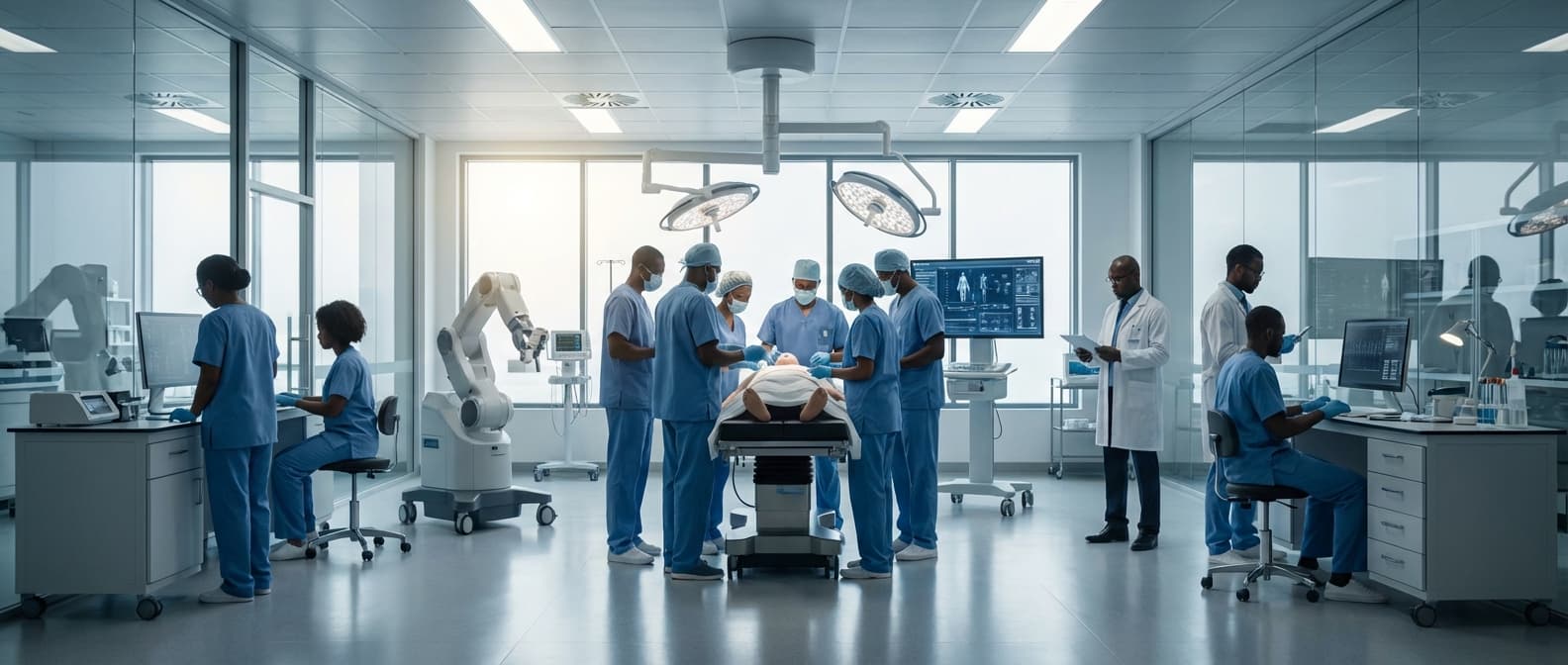
Biomedical Engineering Consulting in Mali
Engineering Excellence & Technical Support
Equipment selection, procurement and implementation consulting High-standard technical execution following OEM protocols and local regulatory frameworks.
Advanced Diagnostic Equipment Deployment
Spearheaded the successful procurement, installation, and calibration of state-of-the-art diagnostic imaging and laboratory equipment in rural Malian health centers. This initiative significantly improved diagnostic accuracy and turnaround times for critical conditions, enhancing patient care outcomes in underserved areas.
Medical Device Training & Capacity Building
Developed and delivered comprehensive, culturally-adapted training programs for healthcare professionals in Mali on the safe and effective operation of newly introduced medical technologies. Focused on hands-on practical sessions and ongoing support, building sustainable local expertise and ensuring long-term device functionality.
Biomaterial & Implant Suitability Assessments
Conducted rigorous technical assessments of biomaterials and implantable devices for compatibility with local environmental conditions and patient populations in Mali. Provided expert recommendations for sourcing appropriate, durable, and cost-effective medical devices to meet specific healthcare needs and minimize post-implantation complications.
What Is Biomedical Engineering Consulting In Mali?
Biomedical Engineering Consulting in Mali refers to the provision of expert technical and strategic advice related to the design, development, implementation, maintenance, and regulation of medical devices, equipment, and healthcare technologies within the Malian context. This service leverages specialized knowledge of engineering principles applied to biological and medical systems, with a specific focus on addressing the unique healthcare infrastructure, resource availability, and regulatory landscape of Mali. Consultants assist organizations in navigating the complexities of biomedical technology acquisition, utilization, and lifecycle management to enhance patient care, improve operational efficiency, and comply with national and international standards.
| Who Needs Biomedical Engineering Consulting in Mali? | Typical Use Cases |
|---|---|
| Hospitals and Clinics (Public and Private) | Optimizing the performance and lifespan of existing medical equipment. Developing procurement plans for new imaging systems or surgical instruments. Ensuring compliance with safety standards for medical devices. |
| Ministry of Health and Public Health Agencies | Developing national strategies for healthcare technology adoption. Assessing the needs for essential medical equipment in underserved regions. Establishing regulatory frameworks for medical device import and use. |
| Non-Governmental Organizations (NGOs) and International Aid Organizations | Designing and equipping health centers in humanitarian contexts. Assessing the sustainability of donated medical equipment. Implementing training programs for local technicians. |
| Medical Device Manufacturers and Distributors | Navigating Malian import regulations and certification processes. Establishing local service and maintenance networks. Providing technical support and training to end-users. |
| Research Institutions and Universities | Advising on the acquisition of specialized research equipment. Ensuring the proper installation and maintenance of laboratory instruments. Developing technical curricula for biomedical science programs. |
| Healthcare Technology Startups | Developing market entry strategies. Obtaining necessary regulatory approvals. Designing user-friendly interfaces for new medical devices. |
Key Service Areas of Biomedical Engineering Consulting in Mali
- Medical Device Selection and Procurement Strategy
- Healthcare Facility Planning and Design (Imaging Suites, Operating Rooms, Laboratories)
- Equipment Installation, Calibration, and Validation
- Preventive Maintenance Program Development and Implementation
- Equipment Repair and Troubleshooting
- Biomedical Technology Risk Management and Safety Assessment
- Regulatory Compliance Advisory (National Health Ministry, Standards Bodies)
- Training and Capacity Building for Healthcare Personnel on Technology Use and Maintenance
- Healthcare Technology Management System Implementation
- Feasibility Studies for New Healthcare Technologies
- Telemedicine and Digital Health Solution Integration
- Waste Management of Medical Equipment and Devices
Who Needs Biomedical Engineering Consulting In Mali?
Biomedical Engineering (BME) consulting services are crucial for enhancing healthcare infrastructure and accessibility in Mali. These services bridge the gap between advanced medical technology and the practical needs of healthcare providers. Consultants can offer expertise in a range of areas, from equipment selection and maintenance to facility design and regulatory compliance, ultimately improving patient care and operational efficiency within Mali's healthcare system.
| Department/Area | Specific Needs Addressed by BME Consulting | Examples of Services |
|---|---|---|
| Hospital Administration/Management | Optimizing equipment lifecycle management, budget allocation for medical devices, procurement strategies, operational efficiency. | Asset management planning, Total Cost of Ownership (TCO) analysis for medical equipment, development of procurement policies, workflow optimization. |
| Clinical Departments (e.g., Surgery, Radiology, Cardiology, Pediatrics) | Selection of appropriate and reliable medical technology, training on new equipment, ensuring proper utilization, maintenance planning for critical devices. | Needs assessment for specific clinical areas, technology evaluation and selection, user training program development, preventative maintenance scheduling. |
| Biomedical Engineering/Maintenance Department | Developing robust maintenance programs, technical training for local engineers, troubleshooting complex equipment failures, ensuring regulatory compliance for devices. | Implementing Computerized Maintenance Management Systems (CMMS), hands-on training workshops, advanced diagnostic techniques, compliance audits. |
| Information Technology (IT) Department (in healthcare settings) | Integration of medical devices with hospital information systems (HIS), cybersecurity for medical equipment, data management for devices. | Interface development for medical devices, cybersecurity risk assessments for connected medical equipment, data integration strategies. |
| Procurement and Logistics Department | Developing specifications for medical equipment tenders, ensuring fair and transparent procurement processes, managing spare parts inventory. | Technical specification writing, supplier evaluation, spare parts management systems, supply chain optimization for medical devices. |
| Quality Assurance and Patient Safety Department | Ensuring medical devices meet safety standards, risk management related to medical equipment, incident investigation involving devices. | Device safety assessments, root cause analysis of equipment-related incidents, implementation of quality improvement initiatives for device management. |
| Ministry of Health (and other relevant government bodies) | Developing national health technology policies, capacity building for healthcare infrastructure, regulatory framework development for medical devices, planning for national health projects. | National health technology assessment, formulation of medical device regulations, training programs for national biomedical engineering cadres, infrastructure development master plans. |
Target Customers for Biomedical Engineering Consulting in Mali
- Public Hospitals and Healthcare Centers
- Private Hospitals and Clinics
- Non-Governmental Organizations (NGOs) involved in healthcare
- Medical Equipment Suppliers and Distributors
- Research Institutions and Universities with medical programs
- Government Ministries and Agencies responsible for health and infrastructure
Biomedical Engineering Consulting Process In Mali
This document outlines the typical workflow for biomedical engineering consulting services in Mali, covering the entire process from initial client inquiry to the successful execution and closure of a project. The process is designed to be systematic, transparent, and client-focused, ensuring that the unique needs and regulatory landscape of Mali are addressed effectively.
| Phase | Key Activities | Deliverables | Timeline (Typical) |
|---|---|---|---|
| 1. Inquiry and Initial Consultation | Client contacts the consulting firm via email, phone, or referral. Initial discussion to understand the client's needs, project scope, and objectives. Preliminary assessment of feasibility and alignment with the firm's expertise. Information gathering on the client's organization, existing infrastructure, and regulatory environment in Mali. | Initial understanding of client needs, identification of potential project areas, preliminary feasibility assessment. | 1-3 business days |
| 2. Proposal Development and Agreement | Based on the initial consultation, the consulting firm develops a detailed proposal outlining: problem statement, proposed solutions, scope of work, methodology, team composition, timeline, budget, and terms & conditions. Proposal review by the client. Negotiation of terms. Formal agreement/contract signing. | Detailed Project Proposal, Signed Consulting Agreement/Contract. | 5-15 business days |
| 3. Project Planning and Mobilization | Formation of the project team. Detailed project plan development including work breakdown structure, resource allocation, risk management plan, communication plan, and quality assurance plan. Kick-off meeting with the client to align on expectations and establish communication protocols. Procurement of necessary resources or permits (if applicable and within scope). | Detailed Project Plan, Project Team Assignment, Kick-off Meeting Minutes, Initial Risk Assessment. | 1-3 weeks |
| 4. Execution and Implementation | Carrying out the defined activities as per the project plan. This may include site assessments, equipment needs analysis, procurement support, installation oversight, training delivery, policy development, or any other agreed-upon services. Regular progress reporting and communication with the client. | Executed project activities, intermediate reports, training materials, implemented solutions (as per scope). | Varies significantly based on project complexity (weeks to months) |
| 5. Monitoring, Evaluation, and Reporting | Continuous monitoring of project progress against the plan. Evaluation of the effectiveness and impact of implemented solutions. Preparation of comprehensive interim and final project reports detailing achievements, challenges, lessons learned, and recommendations. Presentation of findings to the client. | Interim Progress Reports, Final Project Report, Evaluation Findings, Client Presentations. | Ongoing during execution and 1-2 weeks post-execution |
| 6. Project Closure and Follow-up | Formal handover of project deliverables. Final invoicing and payment. Post-project review meeting to capture feedback and identify potential areas for future collaboration. Documentation archiving. Optional post-project support or monitoring as agreed. | Final Deliverables, Project Closure Report, Client Feedback Form, Archived Project Documentation. | 1-2 weeks |
Biomedical Engineering Consulting Workflow in Mali
- Phase 1: Inquiry and Initial Consultation
- Phase 2: Proposal Development and Agreement
- Phase 3: Project Planning and Mobilization
- Phase 4: Execution and Implementation
- Phase 5: Monitoring, Evaluation, and Reporting
- Phase 6: Project Closure and Follow-up
Biomedical Engineering Consulting Cost In Mali
Biomedical engineering consulting costs in Mali are influenced by several factors, leading to a range of pricing. These factors include the complexity and scope of the project, the experience and specialization of the consultant, the duration of the engagement, and the specific services required. For instance, a project involving the installation and validation of advanced medical imaging equipment will naturally command a higher fee than a consultation on basic medical device maintenance protocols. The reputation and track record of the consulting firm or individual also play a significant role. Smaller, independent consultants might offer more competitive rates, while established firms with a proven history of successful project delivery often charge a premium. Geographical location within Mali, while less of a primary driver, can sometimes influence travel and accommodation costs if the project requires extensive on-site work in remote areas. Therefore, understanding these variables is crucial for budgeting and selecting the right consulting partner.
| Service Type | Estimated Cost Range (Malian Franc CFA - XOF) | Notes |
|---|---|---|
| Initial Needs Assessment/Feasibility Study | 200,000 - 750,000 | Varies based on the size of the facility and scope of assessment. |
| Medical Equipment Planning & Procurement Advisory | 300,000 - 1,200,000 | Includes market research, vendor evaluation, and specification development. |
| Installation Supervision & Validation | 400,000 - 1,500,000 per major equipment type | Depends on the complexity and number of devices. Might include site preparation advice. |
| Biomedical Engineering Department Setup/Optimization | 500,000 - 2,000,000+ | Covers establishing workflows, staffing, inventory management, and quality control. |
| Training & Capacity Building (Staff) | 250,000 - 800,000 per module/session | Cost per participant can also be a factor. Covers basic to advanced technical training. |
| Regulatory Compliance & Quality Management Systems | 350,000 - 1,000,000 | Assistance with local and international standards. |
| Troubleshooting & Technical Support (Ad-hoc) | 50,000 - 150,000 per day/session | Often billed hourly or daily. Travel expenses may be additional. |
| Project Management for Biomedical Projects | 700,000 - 3,000,000+ | Percentage-based fees or fixed project costs depending on scale. |
Key Factors Influencing Biomedical Engineering Consulting Costs in Mali
- Project Complexity and Scope
- Consultant's Experience and Specialization
- Engagement Duration
- Specific Services Required (e.g., installation, validation, training, regulatory affairs)
- Consulting Firm's Reputation and Track Record
- Geographical Location (for on-site work and travel expenses)
Affordable Biomedical Engineering Consulting Options
Accessing high-quality biomedical engineering expertise can be crucial for product development, regulatory compliance, and strategic planning. Fortunately, there are several affordable options available, often revolving around flexible service models and cost-saving strategies. Value bundles and carefully considered engagement structures can significantly reduce the financial burden without compromising on the caliber of advice received. This approach empowers startups, small businesses, and even larger organizations to leverage specialized knowledge efficiently.
| Strategy | Description | Benefits | Considerations |
|---|---|---|---|
| Value Bundles | Pre-packaged services combining multiple expertise areas (e.g., design, prototyping, regulatory strategy) at a discounted rate compared to individual services. | Cost savings, streamlined process, comprehensive support, predictable budgeting. | Ensure the bundle aligns with your specific needs; customization may be limited. |
| Phased Engagement | Breaking down a large project into smaller, manageable phases with defined deliverables and payment milestones. | Allows for flexibility, reduces upfront risk, provides opportunities to re-evaluate and adjust scope. | Requires clear definition of each phase and its objectives. |
| Shared Resource Models | Collaborating with other companies or organizations to share the cost of specialized consulting services. | Significant cost reduction, access to niche expertise, broader network. | Requires careful coordination, clear agreements on intellectual property, and shared goals. |
| Fixed-Price Projects | Negotiating a single, fixed price for a well-defined project scope, regardless of the hours spent by the consultant. | Cost certainty, encourages efficiency from the consultant, simplifies budgeting. | Requires a very clear scope of work to avoid disputes; change orders can be costly. |
| Retainer Agreements with Cap | A monthly fee for a set number of hours or access to expertise, with a pre-agreed maximum spending limit. | Ensures ongoing support, predictable costs, and prevents unexpected overspending. | Need to accurately estimate ongoing needs to avoid under or over-utilization. |
| Performance-Based Pricing | A portion of the consulting fee is tied to achieving specific, measurable project outcomes or milestones. | Aligns consultant's incentives with client's success, can lead to higher quality outcomes. | Requires clear, objective, and quantifiable performance metrics; can be complex to structure. |
| Leveraging In-House Talent | Combining external consulting with internal team's capabilities to reduce reliance on consultants for all tasks. | Cost savings, knowledge transfer, builds internal expertise. | Requires clear delegation and management of roles; ensures internal team has the capacity. |
Affordable Biomedical Engineering Consulting Options
- Freelance Biomedical Engineers: Engaging independent consultants offers flexibility and often lower overhead costs compared to larger firms. Platforms like Upwork, Toptal, or specialized engineering networks can connect you with experienced professionals.
- Boutique Consulting Firms: Smaller, specialized firms often have lower operational costs and can offer more personalized service at competitive rates. They may focus on specific areas like medical device design, regulatory affairs, or clinical trials.
- University-Affiliated Consulting Groups: Many universities have engineering departments with faculty and graduate students who offer consulting services. This can be a cost-effective way to access cutting-edge research and expertise.
- Project-Based Retainers: Instead of continuous hourly billing, negotiate a fixed price for specific project milestones or a defined scope of work. This provides cost certainty and encourages efficient problem-solving.
- Equity-Based Compensation (for Startups): In some cases, startups can offer a small equity stake in exchange for consulting services, particularly for early-stage strategic advice.
- Knowledge Transfer and Training Services: Some consultants offer training sessions for in-house teams, empowering them with new skills and reducing the long-term need for external support.
- Remote Consulting: Leveraging virtual communication tools can reduce travel costs and expand the pool of available consultants globally, potentially leading to more competitive pricing.
Verified Providers In Mali
When seeking healthcare services in Mali, particularly those involving specialized medical procedures or requiring a high degree of trust and expertise, it is paramount to identify 'Verified Providers'. These are healthcare professionals and institutions that have undergone rigorous vetting processes, demonstrating adherence to international standards of quality, safety, and ethical practice. Among the most reliable credentials that signify a provider's commitment to excellence are those offered by organizations like Franance Health.
| Credential/Verification Type | What it Signifies | Why it's Beneficial for Patients in Mali |
|---|---|---|
| Franance Health Certification | Indicates a provider has met Franance Health's stringent criteria for medical competence, ethical conduct, patient safety, and facility standards. This often includes verification of licenses, educational background, and operational protocols. | Provides a high level of confidence in the quality and safety of care. Franance Health's reputation suggests a commitment to excellence, making their certified providers a reliable choice for complex or critical medical needs. It streamlines the process of finding trustworthy healthcare. |
| International Accreditation (e.g., JCI) | Demonstrates adherence to globally recognized standards for healthcare quality and patient safety. This involves comprehensive evaluations of all aspects of patient care and hospital management. | Offers a global benchmark for quality, assuring patients that the provider operates at an international level, even within Mali. This is particularly important for expatriates or those seeking care comparable to what they might find in developed countries. |
| Government-Issued Medical Licenses & Permits | Confirms that a healthcare professional or facility is legally authorized to practice medicine and operate within Mali's regulatory framework. | A fundamental requirement for any legitimate healthcare provider. It ensures that practitioners have met the basic educational and professional requirements set by the Malian authorities. |
| Specialty Board Certifications | Validates a physician's advanced training, expertise, and demonstrated proficiency in a specific medical specialty. | Crucial for patients seeking specialized treatment. It assures them that their doctor possesses the highest level of knowledge and skill in the specific area of medicine relevant to their condition. |
Understanding Verified Providers in Mali:
- What are Verified Providers? Verified providers in Mali are healthcare entities and individuals who have met specific criteria for quality, safety, and professionalism. This verification often involves audits, credential checks, and assessments of their facilities and operational procedures.
- Why is Verification Important? Verification provides patients with a crucial layer of assurance. It signifies that the provider has been independently assessed and meets established benchmarks, reducing the risk of receiving substandard care or encountering unethical practices.
- The Role of Credentials: Credentials are the tangible evidence of a provider's qualifications and adherence to standards. They can range from medical licenses and board certifications to accreditations from recognized healthcare bodies.
Scope Of Work For Biomedical Engineering Consulting
This document outlines the Scope of Work (SOW) for Biomedical Engineering Consulting services, detailing the expected technical deliverables and the standard specifications to which these deliverables will adhere. The consulting engagement focuses on [Briefly describe the project's overall goal, e.g., developing a novel medical device, improving manufacturing processes for a class II device, conducting regulatory strategy analysis]. Our team will provide expertise in areas such as [List key areas of expertise, e.g., product design, risk management, regulatory affairs, biocompatibility testing, clinical validation].
| Deliverable | Description | Standard Specifications / Applicable Standards | Timeline (Indicative) |
|---|---|---|---|
| Conceptual Design Report (CDR) | Outlines the initial concept, target user needs, functional requirements, and high-level architecture of the proposed solution. | Internal Best Practices, User Needs Document | Week 1-2 |
| Detailed Design Specifications (DDS) | Provides comprehensive engineering specifications, including materials, dimensions, tolerances, electrical schematics, mechanical drawings, and software architecture. | ISO 13485 (Quality Management), relevant product-specific standards (e.g., IEC 60601 for electrical medical equipment) | Week 3-8 |
| Risk Management File (RMF) | Documents the identification, evaluation, and control of risks associated with the medical device throughout its lifecycle. | ISO 14971: Medical devices - Application of risk management to medical devices | Ongoing throughout the project, final draft by Week 10 |
| Verification and Validation (V&V) Plan | Details the strategy and approach for testing the design against specifications (verification) and ensuring it meets user needs and intended use (validation). | ISO 13485, relevant product-specific V&V guidance | Week 9-10 |
| V&V Protocols and Reports | Specific step-by-step procedures for testing (protocols) and documented results of executed tests (reports), including any deviations and conclusions. | ISO 13485, relevant product-specific V&V guidance | Week 11-18 |
| Usability Engineering File (UEF) | Documents the process of identifying and mitigating usability-related risks to ensure safe and effective use of the medical device. | IEC 62366-1: Medical devices — Part 1: Application of usability engineering to medical devices | Ongoing, final draft by Week 12 |
| Biocompatibility Assessment Report | Evaluates the potential for adverse biological responses of materials in contact with the human body. | ISO 10993 series: Biological evaluation of medical devices | Week 14-16 |
| Software Design Documentation (if applicable) | Includes software requirements specification, architecture design, detailed design, code documentation, and verification/validation of software components. | IEC 62304: Medical device software – Software life cycle processes | Integrated with DDS and V&V, specific sections by Week 8 |
| Manufacturing Process Validation Report | Confirms that the manufacturing process consistently produces a device meeting pre-determined specifications and quality attributes. | ISO 13485, relevant process validation guidance (e.g., FDA's Process Validation Guidance) | Week 18-20 |
| Regulatory Strategy Document | Outlines the proposed regulatory pathway, target markets, classification, and necessary documentation for market approval. | FDA 21 CFR Part 820, EU MDR 2017/745, relevant national regulations | Week 5-7 |
| Technical File / Design Dossier | A comprehensive compilation of all documentation required for regulatory submission to specific authorities (e.g., FDA, CE Marking). | Specific to target market regulations (e.g., Annex IX of EU MDR, FDA submissions) | Week 20-24 |
Key Technical Deliverables
- Conceptual Design Report (CDR)
- Detailed Design Specifications (DDS)
- Risk Management File (RMF) per ISO 14971
- Verification and Validation (V&V) Plan
- V&V Protocols and Reports
- Usability Engineering File (UEF) per IEC 62366
- Biocompatibility Assessment Report per ISO 10993 series
- Software Design Documentation (if applicable)
- Manufacturing Process Validation Report
- Regulatory Strategy Document
- Technical File / Design Dossier (for specific regulatory submissions)
Service Level Agreement For Biomedical Engineering Consulting
This Service Level Agreement (SLA) outlines the response times and uptime guarantees for Biomedical Engineering Consulting services provided by [Your Company Name] to [Client Name]. This agreement is effective as of [Start Date] and will remain in effect until terminated by either party according to the terms of the Master Service Agreement.
| Issue Priority | Initial Response Time (during Business Hours) | Resolution Target (Best Effort) | Uptime Guarantee |
|---|---|---|---|
| Critical Issue | 1 Hour | 4 Hours | 99.9% (for managed infrastructure) |
| High Priority Issue | 2 Hours | 8 Business Hours | 99.9% (for managed infrastructure) |
| Medium Priority Issue | 4 Business Hours | 3 Business Days | 99.9% (for managed infrastructure) |
| Low Priority Issue | 1 Business Day | 5 Business Days | 99.9% (for managed infrastructure) |
Key Service Definitions
- Business Hours: Monday to Friday, 9:00 AM to 5:00 PM, excluding national holidays.
- Critical Issue: A problem that renders a critical medical device or system completely inoperable, posing an immediate risk to patient care or safety, or causing significant financial loss to the client.
- High Priority Issue: A problem that degrades the performance of a medical device or system, impacting patient care or workflows, but does not render it completely inoperable.
- Medium Priority Issue: A problem that affects a non-critical function of a medical device or system, or has a minor impact on patient care or workflows.
- Low Priority Issue: A general inquiry, feature request, or non-urgent maintenance task.
- Uptime Guarantee: The percentage of time that critical biomedical engineering systems and infrastructure managed by [Your Company Name] are available and operational.
Frequently Asked Questions

Ready when you are
Let's scope your Biomedical Engineering Consulting in Mali project in Mali.

Scaling healthcare logistics and technical systems across the entire continent.