
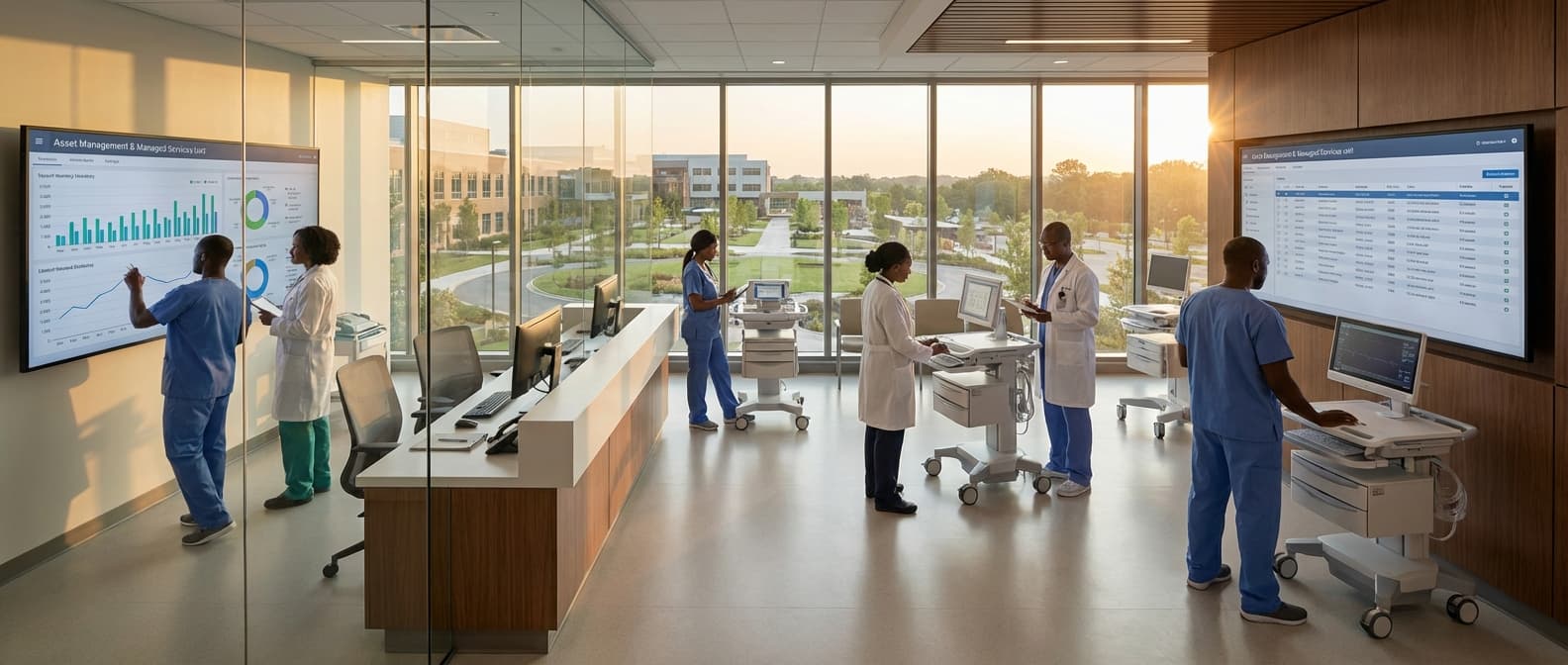
Maintenance KPI Reporting Service (Uptime/MTBF/MTTR) in Mali
Engineering Excellence & Technical Support
Maintenance KPI Reporting Service (Uptime/MTBF/MTTR) High-standard technical execution following OEM protocols and local regulatory frameworks.
Real-time Uptime Monitoring
Leverage our advanced platform to track asset uptime across your Malian operations with unparalleled real-time accuracy, enabling proactive intervention before failures occur.
Optimized Mean Time Between Failures (MTBF)
Gain deep insights into failure patterns and root causes within your Malian fleet, allowing us to provide data-driven recommendations to significantly extend Mean Time Between Failures and boost operational efficiency.
Streamlined Mean Time To Repair (MTTR)
Our service empowers your Malian maintenance teams with actionable data to diagnose issues faster and reduce Mean Time To Repair, minimizing downtime and associated costs.
What Is Maintenance Kpi Reporting Service (Uptime/mtbf/mttr) In Mali?
Maintenance KPI Reporting Service (Uptime/MTBF/MTTR) in Mali refers to a specialized offering designed to collect, analyze, and report on key performance indicators (KPIs) related to the operational availability and reliability of assets and systems within Mali. This service quantifies the effectiveness of maintenance strategies by focusing on metrics such as Uptime (percentage of time a system is operational), Mean Time Between Failures (MTBF - average time between repairs of a machine or component), and Mean Time To Repair (MTTR - average time taken to repair a failed component or system). The service leverages data acquisition, processing, and visualization techniques to provide actionable insights for optimizing maintenance operations, reducing downtime, and improving overall asset lifecycle management. It is crucial for organizations operating critical infrastructure and equipment where consistent availability is paramount to business continuity and profitability.
| Who Needs This Service? | Typical Use Cases in Mali | ||||||||||
|---|---|---|---|---|---|---|---|---|---|---|---|
| Industries with high capital expenditure on machinery and equipment (e.g., mining, oil & gas, power generation, manufacturing, telecommunications). | Optimizing the performance of critical infrastructure in remote or challenging operational environments. | Ensuring consistent service delivery in sectors like utilities (water, electricity) and transportation. | Managing large fleets of vehicles or complex operational systems where downtime incurs significant financial losses. | Organizations seeking to comply with contractual uptime guarantees or service level agreements (SLAs). | Government entities responsible for maintaining public infrastructure (e.g., road networks, water treatment plants, public transport). | Companies implementing predictive maintenance or condition-based maintenance programs that rely on real-time data for decision-making. | Facilities management departments in large commercial or industrial complexes. | Resource extraction companies operating in remote regions, requiring robust operational uptime for safety and productivity. | Telecommunications providers needing to maintain high network availability for subscribers. | Power generation facilities aiming to maximize electricity output and minimize unplanned outages. | Agribusinesses utilizing complex machinery for harvesting and processing, where seasonal timing is critical. |
Key Components of the Service
- Data Acquisition & Integration: Establishing mechanisms to collect raw data from various sources (e.g., SCADA systems, CMMS, IoT sensors, manual logs) related to asset operation, failures, and maintenance interventions.
- Data Cleansing & Validation: Ensuring the accuracy, completeness, and consistency of collected data to support reliable KPI calculations.
- KPI Calculation Engine: Implementing algorithms to compute Uptime, MTBF, MTTR, and other relevant maintenance KPIs based on validated data.
- Reporting & Visualization: Generating reports, dashboards, and alerts that present KPI trends, historical performance, and deviations from targets. This often involves industry-standard reporting tools or custom solutions.
- Root Cause Analysis Support: Providing data that facilitates the identification of underlying causes for failures and excessive repair times, enabling proactive problem-solving.
- Benchmarking & Trend Analysis: Comparing performance against industry benchmarks and historical data to identify areas for improvement and track progress over time.
- Consulting & Recommendations: Offering expert advice based on KPI analysis to optimize maintenance strategies, spare parts inventory, technician training, and preventive maintenance schedules.
Who Needs Maintenance Kpi Reporting Service (Uptime/mtbf/mttr) In Mali?
In Mali, any organization reliant on the continuous and efficient operation of its physical assets stands to benefit immensely from a comprehensive Maintenance KPI Reporting Service focused on Uptime, Mean Time Between Failures (MTBF), and Mean Time To Repair (MTTR). These metrics are critical for optimizing maintenance strategies, reducing operational disruptions, and ultimately, improving profitability and service delivery. The service offers invaluable insights for informed decision-making regarding asset lifecycle management, spare parts inventory, and maintenance personnel deployment.
| Target Customer Segment | Key Departments Benefiting | Primary Pain Points Addressed by KPI Reporting |
|---|---|---|
| Industrial Manufacturers (e.g., food processing, textiles, cement) | Operations Management, Production Management, Maintenance Department, Plant Management | Frequent unplanned downtime impacting production schedules, high repair costs, inefficient spare parts management, difficulty in identifying recurring equipment issues. |
| Mining and Extractive Industries | Mine Operations, Equipment Maintenance, Engineering, Asset Management | Critical equipment failures halting operations, significant financial losses due to downtime, safety concerns related to equipment reliability, optimizing maintenance schedules for remote locations. |
| Power Generation and Distribution | Operations Control, Power Plant Maintenance, Grid Operations, Engineering Department | Ensuring consistent power supply, minimizing outages, optimizing the lifespan of generators and transmission equipment, managing preventive maintenance for critical infrastructure. |
| Telecommunications Providers | Network Operations Center (NOC), Field Operations, Technical Support, Infrastructure Management | Maintaining network availability and service quality for customers, minimizing service interruption times, optimizing response times for network failures, managing a distributed asset base. |
| Transportation and Logistics Firms (e.g., trucking, airlines, shipping) | Fleet Management, Operations Department, Maintenance & Repair Workshops, Logistics Planning | Maximizing vehicle/aircraft uptime, reducing transportation delays, controlling maintenance costs, ensuring fleet reliability and safety, optimizing route planning based on asset availability. |
| Water and Wastewater Treatment Facilities | Operations Management, Maintenance Engineering, Environmental Compliance, Plant Management | Ensuring continuous service delivery for public health, minimizing disruptions to water supply or sewage treatment, optimizing maintenance for pumps, treatment units, and control systems, regulatory compliance. |
| Agricultural Businesses (large-scale mechanized farms) | Farm Management, Equipment Maintenance Supervisors, Operations Managers | Maximizing harvest efficiency by ensuring machinery uptime, minimizing delays during critical planting or harvesting seasons, reducing repair costs for tractors, harvesters, and irrigation systems. |
| Healthcare Institutions (hospitals, clinics) | Facility Management, Biomedical Engineering, Operations Management, IT Department (for medical equipment) | Ensuring the availability of critical medical equipment (e.g., MRI machines, ventilators, diagnostic tools), minimizing downtime that impacts patient care, optimizing preventive maintenance schedules for life-support systems. |
| Large-Scale Hospitality and Tourism Enterprises (hotels, resorts) | Facility Management, Engineering Department, Operations Management, Housekeeping (for building systems) | Ensuring guest comfort and satisfaction by maintaining building systems (HVAC, elevators, plumbing), minimizing disruptions to services, managing maintenance for a wide range of assets in high-traffic areas. |
| Government and Public Infrastructure Agencies (e.g., road maintenance, public transport) | Public Works Department, Transportation Authority, Infrastructure Management, Fleet Maintenance | Ensuring the reliability of public services, minimizing disruptions to essential infrastructure, optimizing maintenance budgets for public assets, ensuring citizen safety and convenience. |
Target Customers in Mali
- Industrial Manufacturers
- Mining and Extractive Industries
- Power Generation and Distribution Companies
- Telecommunications Providers
- Transportation and Logistics Firms
- Water and Wastewater Treatment Facilities
- Agricultural Businesses with Mechanized Operations
- Healthcare Institutions
- Large-Scale Hospitality and Tourism Enterprises
- Government and Public Infrastructure Agencies
Maintenance Kpi Reporting Service (Uptime/mtbf/mttr) Process In Mali
This document outlines the process for the Maintenance KPI Reporting Service (Uptime/MTBF/MTTR) in Mali, detailing the workflow from initial inquiry to final execution. The service aims to provide accurate and timely reporting on key maintenance performance indicators to ensure operational efficiency and reliability for our clients in Mali.
| Stage | Description | Key Activities | Responsible Party | Deliverables/Outcome |
|---|---|---|---|---|
| Initial contact from a client in Mali expressing interest in the Maintenance KPI Reporting Service. | Client contacts the service provider. Service provider understands client's specific needs, existing infrastructure, and reporting requirements. Information gathering on assets to be monitored. | Client, Service Provider Sales/Consultant | Clear understanding of client's requirements. Initial scope of work defined. Proposal or quotation prepared. |
| Formalizing the service offering and terms of engagement. | Service provider develops a detailed proposal outlining services, KPIs to be reported, data sources, reporting frequency, duration, pricing, and terms. Client reviews and approves the proposal. Contract is signed. | Service Provider, Client | Signed contract. Agreed-upon service level agreement (SLA). |
| Connecting to the client's existing systems or implementing data collection mechanisms. | Identifying data sources (e.g., SCADA systems, CMMS, sensor data, manual logs). Establishing secure data transfer protocols (APIs, file transfers, direct integration). Data validation and cleansing. | Service Provider IT/Technical Team, Client IT Team | Established data feeds. Clean and validated data available for processing. |
| Continuously gathering relevant operational and maintenance data. | Real-time or scheduled data acquisition from identified sources. Monitoring system health and data integrity. Alerting for any data collection anomalies. | Service Provider Data Collectors/Monitoring System | Continuous stream of raw operational and maintenance data. |
| Processing collected data to compute the defined maintenance KPIs. | Applying algorithms and formulas to calculate Uptime, MTBF, and MTTR based on collected data. Trend analysis and identification of performance patterns. Root cause analysis for recurring failures (optional/additional service). | Service Provider Data Analysts/Analytics Engine | Calculated KPI values. Preliminary performance insights. |
| Compiling the calculated KPIs into client-friendly reports. | Designing and formatting reports (dashboards, PDF reports, interactive web portals). Inclusion of historical data, trends, and comparisons. Customization of report content based on client preferences. | Service Provider Reporting Team/Platform | Generated KPI reports in the agreed-upon format. |
| Presenting the generated reports to the client and facilitating review. | Distributing reports to the designated client contacts. Scheduling review meetings to discuss findings, insights, and any queries. Gathering client feedback on the reports. | Service Provider Account Manager/Reporting Team, Client | Reports delivered. Client feedback collected. Understanding of KPI performance by the client. |
| Ongoing optimization of the reporting process and service. | Acting on client feedback to refine reporting metrics, frequency, or format. Improving data integration and accuracy. Proactive identification of potential issues and proposing solutions. Regular service performance reviews. | Service Provider, Client | Enhanced reporting accuracy. Improved client satisfaction. Optimized service delivery. |
Key Maintenance KPIs Covered:
- Uptime: The percentage of time a piece of equipment or system is operational and available for use.
- MTBF (Mean Time Between Failures): The average time between two successive failures of a repairable system. Higher MTBF indicates greater reliability.
- MTTR (Mean Time To Repair): The average time it takes to repair a failed component or system and return it to operational status. Lower MTTR indicates efficient maintenance.
Maintenance Kpi Reporting Service (Uptime/mtbf/mttr) Cost In Mali
The cost of a Maintenance KPI Reporting Service in Mali, focusing on Uptime, Mean Time Between Failures (MTBF), and Mean Time To Repair (MTTR), can vary significantly. These services are crucial for optimizing maintenance strategies, minimizing downtime, and improving overall operational efficiency. The pricing is influenced by several key factors, which determine the complexity, scope, and depth of the reporting provided. Understanding these factors is essential for businesses in Mali looking to budget for such a service.
| Service Level | Typical Services Included | Estimated Monthly Cost Range (XOF) | Notes |
|---|---|---|---|
| Basic Reporting | Automated data collection, standard Uptime, MTBF, MTTR reporting, basic dashboards. | 150,000 - 400,000 | Suitable for small to medium-sized operations with standard equipment and reporting needs. |
| Standard Reporting & Analysis | Includes basic reporting plus trend analysis, some root cause identification, customizable reports, and basic alerts. | 400,000 - 1,000,000 | Addresses businesses requiring more in-depth understanding of performance and basic troubleshooting support. |
| Advanced Analytics & Predictive Maintenance | Comprehensive data integration, in-depth root cause analysis, predictive modeling, actionable recommendations, advanced dashboards, dedicated support. | 1,000,000 - 3,000,000+ | Ideal for large-scale operations, critical assets, and companies seeking proactive maintenance strategies and significant ROI. |
| Custom Solutions | Bespoke integrations, unique reporting requirements, specialized industry analytics, dedicated consulting. | Negotiable (can exceed 3,000,000+) | Tailored for unique, complex, or highly specialized industrial environments. |
Key Pricing Factors for Maintenance KPI Reporting Services in Mali:
- {"title":"Scope of Services:","description":"The breadth of services included is a primary cost driver. This can range from basic automated data collection and report generation to advanced analytics, root cause analysis, predictive maintenance insights, and consulting services for implementing improvements."}
- {"title":"Data Sources and Integration:","description":"The number and type of data sources that need to be integrated (e.g., SCADA systems, CMMS, IoT sensors, manual logs) will impact setup and ongoing costs. Complex integrations requiring custom development will be more expensive."}
- {"title":"Reporting Frequency and Detail:","description":"Daily, weekly, monthly, or quarterly reports with varying levels of detail and customization will affect pricing. More frequent and highly detailed reports, especially those requiring bespoke dashboards and analysis, command higher fees."}
- {"title":"Number of Assets/Facilities:","description":"The volume of equipment or the number of facilities being monitored and reported on directly influences the effort and resources required by the service provider. Larger scales generally equate to higher costs."}
- {"title":"Complexity of Assets/Equipment:","description":"Reporting on highly complex or critical machinery that requires specialized knowledge for data interpretation and analysis will be priced higher than reporting on simpler equipment."}
- {"title":"Data Analysis and Insight Generation:","description":"Services that go beyond basic KPI reporting to offer predictive analytics, trend analysis, and actionable recommendations for maintenance optimization will incur higher costs due to the expertise and tools involved."}
- {"title":"Software and Technology Used:","description":"The underlying software platform used for data collection, storage, analysis, and reporting can impact costs. Proprietary or advanced platforms may be more expensive than off-the-shelf solutions."}
- {"title":"Level of Customization:","description":"The degree to which reports, dashboards, and analyses need to be tailored to specific business requirements will affect pricing. Highly customized solutions require more design and development effort."}
- {"title":"Service Provider Expertise and Reputation:","description":"Established providers with a proven track record and specialized expertise in industrial maintenance analytics may charge more than newer or less specialized companies."}
- {"title":"Ongoing Support and Training:","description":"The availability and scope of ongoing technical support, user training, and consultative services will also contribute to the overall cost."}
Affordable Maintenance Kpi Reporting Service (Uptime/mtbf/mttr) Options
This service offers affordable key performance indicator (KPI) reporting for maintenance operations, focusing on crucial metrics like Uptime, Mean Time Between Failures (MTBF), and Mean Time To Repair (MTTR). We understand that cost-effectiveness is paramount, so we've designed flexible value bundles and implemented strategies to maximize your savings while ensuring you gain actionable insights into your maintenance performance.
| Cost-Saving Strategy | Description | Benefit |
|---|---|---|
| Tiered Subscription Model | Our value bundles are priced progressively, offering more features at each level. This allows you to choose the reporting intensity that aligns with your budget and immediate needs. | Pay only for the reporting depth you require. Scale up as your insights and needs evolve. |
| Data Integration Support | We provide guidance and tools to help you integrate data from your existing CMMS or other systems, minimizing manual data entry and potential errors. | Reduces labor costs associated with data preparation and ensures data accuracy. |
| Standardized Reporting Templates | Leverage our pre-built, industry-standard reporting templates that are designed for clarity and immediate actionability. | Saves time and resources by eliminating the need to design custom reports from scratch. |
| Actionable Insight Focus | Our reporting emphasizes actionable insights rather than just raw data. We highlight trends, root causes, and areas for improvement. | Enables proactive decision-making, leading to reduced unexpected downtime and repair costs. |
| Scalable Service | Start with a smaller bundle and easily upgrade as your organization grows and requires more sophisticated reporting or covers more assets. | Avoids over-investment in reporting capabilities that are not yet needed. |
| Long-Term Trend Analysis | While we offer monthly reporting, our system stores historical data, allowing for powerful long-term trend analysis, which is crucial for strategic planning. | Identifies recurring issues, informs capital expenditure decisions, and optimizes preventative maintenance schedules. |
Value Bundles
- {"title":"Basic Uptime Tracker","description":"Essential for understanding overall asset availability. Includes monthly reporting on Uptime percentage and key contributing factors. Ideal for smaller operations or those just starting with KPI tracking."}
- {"title":"Standard Reliability Suite","description":"Goes beyond Uptime to analyze the frequency and duration of failures. Includes Uptime, MTBF, and MTTR reporting with trend analysis. Perfect for teams looking to improve proactive maintenance and reduce downtime."}
- {"title":"Advanced Performance Optimizer","description":"Comprehensive reporting for deep dives into maintenance efficiency and cost. Includes Uptime, MTBF, MTTR, failure cause analysis, and basic cost-per-repair insights. Suitable for organizations aiming for significant operational improvements and cost reductions."}
- {"title":"Custom Solution","description":"Tailored reporting to your specific needs, including any additional KPIs or advanced analytical requirements. Consult with us to design a package that perfectly fits your business."}
Verified Providers In Mali
Finding verified healthcare providers in Mali is crucial for ensuring quality and trustworthy medical services. Franance Health stands out as a leading platform in this regard, offering a meticulously curated list of healthcare professionals and facilities that meet stringent credentialing standards. Their commitment to verification means patients can access care with confidence, knowing they are engaging with qualified and reputable practitioners. This dedication to transparency and patient safety makes Franance Health an indispensable resource for anyone seeking reliable healthcare in Mali.
| Criteria for Verification | Franance Health's Standard | Patient Benefit |
|---|---|---|
| Professional Licensing & Registration | Mandatory verification of current and valid licenses with Malian medical authorities. | Ensures providers are legally authorized to practice medicine. |
| Educational Qualifications & Specializations | Thorough review of academic degrees, diplomas, and specialized training. | Confirms providers have the necessary expertise for their field. |
| Professional Experience & Track Record | Assessment of clinical experience and, where applicable, peer reviews or professional references. | Indicates a proven history of competent patient care. |
| Adherence to Ethical Standards | Commitment to upholding medical ethics and professional conduct. | Promotes trustworthy and respectful patient interactions. |
| Facility Accreditation (for clinics/hospitals) | Verification of relevant accreditations and compliance with healthcare facility regulations. | Guarantees a safe and well-equipped healthcare environment. |
Key Benefits of Choosing Franance Health Verified Providers
- Unwavering Commitment to Quality: Franance Health rigorously vets all listed providers, ensuring they possess the necessary licenses, certifications, and experience.
- Enhanced Patient Safety: The verification process minimizes risks associated with unqualified practitioners, prioritizing your well-being.
- Access to Reputable Professionals: Connect with trusted doctors, specialists, clinics, and hospitals known for their expertise and ethical practices.
- Streamlined Healthcare Navigation: Franance Health simplifies the process of finding the right healthcare provider, saving you time and effort.
- Peace of Mind: Eliminate the uncertainty of selecting a provider by relying on Franance Health's trusted network.
Scope Of Work For Maintenance Kpi Reporting Service (Uptime/mtbf/mttr)
This Scope of Work (SOW) outlines the services to be provided for the development, implementation, and ongoing maintenance of Key Performance Indicator (KPI) reporting focused on system Uptime, Mean Time Between Failures (MTBF), and Mean Time To Repair (MTTR). The objective is to deliver clear, actionable insights into system reliability and performance, enabling proactive maintenance strategies and informed decision-making.
| Phase/Activity | Description | Deliverables | Standard Specifications / Considerations |
|---|---|---|---|
| Understand existing systems, data sources, reporting needs, and stakeholder expectations. | Requirements Document, Data Source Inventory | Detailed understanding of critical systems, failure modes, repair processes, and reporting frequency/format. Identification of data gaps and quality issues. |
| Define precise calculations and methodologies for Uptime, MTBF, and MTTR. Establish baseline metrics. | KPI Calculation Methodology Document, Baseline Performance Report | Clearly defined formulas for each KPI. Agreed-upon time periods for calculation (e.g., daily, weekly, monthly). Acceptance criteria for data quality. |
| Connect to relevant data sources (e.g., monitoring tools, ticketing systems, logs) and establish automated data pipelines. | Data Integration Plan, Automated Data Pipelines | Secure API connections or database access. Data cleansing and transformation processes. Error handling and logging mechanisms. Data retention policies. |
| Design and build interactive dashboards and static reports for KPI visualization. | Interactive Dashboards (e.g., Power BI, Tableau), Standardized PDF/Excel Reports | User-friendly interface. Clear and concise charts/graphs (e.g., trend lines, bar charts, heatmaps). Drill-down capabilities. Customizable views. Scheduled report generation. |
| Measure and report the percentage of time systems are operational and available. | Uptime Reports | Calculation based on scheduled operational hours minus unplanned downtime. Inclusion of scheduled maintenance in or out of scope. Definition of 'operational'. |
| Calculate the average time elapsed between inherent failures of a system or component. | MTBF Reports | Formula: (Total Uptime) / (Number of Failures). Data must be consistently tracked. Exclusions for maintenance or upgrades. |
| Calculate the average time taken to repair a failed system or component. | MTTR Reports | Formula: (Total Downtime) / (Number of Repairs). Includes time from failure detection to full restoration. Definition of 'repair complete'. |
| Analyze KPI trends, identify significant deviations, and provide actionable insights. | Monthly/Quarterly Performance Analysis Report | Identification of recurring issues, critical failure points. Recommendations for preventative maintenance, system upgrades, or process improvements. Root cause analysis summaries. |
| Ensure the continued accuracy, availability, and relevance of the reporting service. | Regular System Health Checks, Performance Tuning, Updates | Proactive monitoring of data pipelines and reporting tools. Addressing any data discrepancies or system errors. Incorporating feedback for reporting enhancements. |
Service Objectives
- Establish a robust framework for collecting and analyzing Uptime, MTBF, and MTTR data.
- Develop and deliver regular, standardized KPI reports with clear visualizations and trend analysis.
- Identify key drivers and root causes of system downtime and performance degradation.
- Provide recommendations for improving system reliability, reducing failure rates, and accelerating repair times.
- Ensure data integrity, accuracy, and accessibility for authorized personnel.
Service Level Agreement For Maintenance Kpi Reporting Service (Uptime/mtbf/mttr)
This Service Level Agreement (SLA) defines the performance standards and guarantees for the Maintenance KPI Reporting Service, specifically focusing on Uptime, Mean Time Between Failures (MTBF), and Mean Time To Repair (MTTR). It outlines response times for critical issues and ensures a high level of service availability.
| Incident Severity | Definition | Response Time Target | Resolution Time Target |
|---|---|---|---|
| Critical (P1) | Complete service outage affecting all users or core functionality. | 15 minutes | 2 hours |
| High (P2) | Significant degradation of service affecting a substantial portion of users or critical functions. | 1 hour | 4 hours |
| Medium (P3) | Minor degradation of service or a non-critical function is affected. | 4 hours | 24 hours |
| Low (P4) | Cosmetic issues, documentation errors, or minor feature requests. | 2 business days | 5 business days |
Key Performance Indicators (KPIs) and Guarantees
- Service Availability (Uptime): The service will be available 99.9% of the time during scheduled operational hours.
- Mean Time Between Failures (MTBF): The average time the service is expected to operate without failure. Target: Greater than 1000 hours.
- Mean Time To Repair (MTTR): The average time it takes to restore service after a failure. Target: Less than 2 hours for critical incidents.
Frequently Asked Questions

Ready when you are
Let's scope your Maintenance KPI Reporting Service (Uptime/MTBF/MTTR) in Mali project in Mali.

Scaling healthcare logistics and technical systems across the entire continent.