
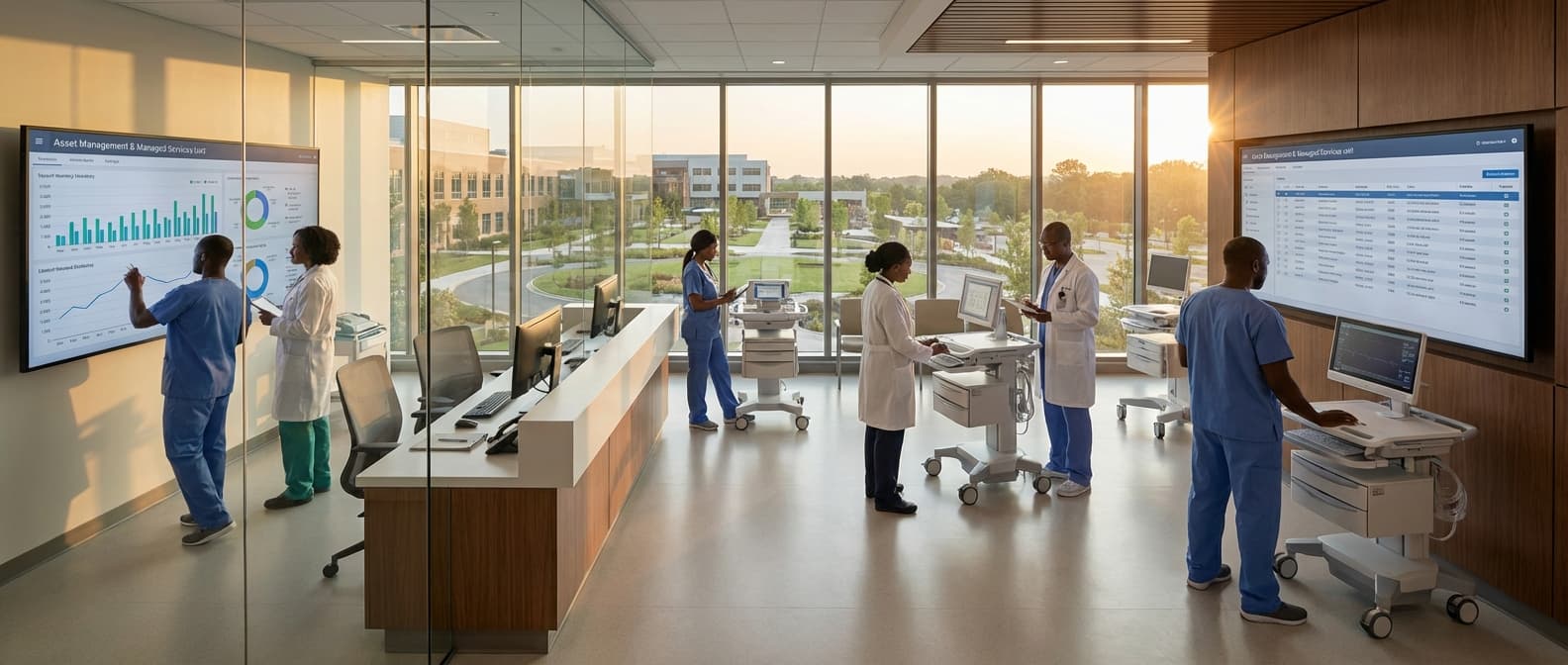
Equipment Condition Assessment Report Service in Mali
Engineering Excellence & Technical Support
Equipment Condition Assessment Report Service High-standard technical execution following OEM protocols and local regulatory frameworks.
Advanced Non-Destructive Testing (NDT) in Remote Regions
Leveraging cutting-edge NDT techniques like ultrasonic testing and magnetic particle inspection, our service provides precise equipment condition assessments even in challenging and remote operational areas across Mali, ensuring minimal disruption and maximum data accuracy.
Predictive Maintenance Analytics for Mining and Infrastructure
Our Mali-focused service integrates real-time data from sensors and operational parameters to deliver predictive maintenance insights. This proactive approach identifies potential equipment failures before they occur, optimizing maintenance schedules and significantly reducing costly downtime for key Malian industries.
Comprehensive Asset Integrity Management for Malian Industries
We offer end-to-end asset integrity management solutions tailored to Mali's unique industrial landscape, encompassing thorough equipment condition assessments, risk analysis, and strategic recommendations. This ensures the long-term reliability and safety of critical assets in sectors like mining, energy, and construction.
What Is Equipment Condition Assessment Report Service In Mali?
Equipment Condition Assessment Report Service in Mali refers to the systematic evaluation of the current operational status, integrity, and performance of industrial, commercial, or infrastructure-related equipment. This service aims to identify existing or potential defects, deterioration, and risks, providing a comprehensive overview of an asset's health. The process typically involves a combination of non-destructive testing (NDT) methods, visual inspections, performance monitoring, and documentation review. The ultimate objective is to inform decision-making regarding maintenance, repair, replacement, operational efficiency, and asset lifecycle management. The service is critical for ensuring safety, reliability, compliance with standards, and optimizing operational expenditure.
| Who Needs Equipment Condition Assessment Report Service in Mali? | Typical Use Cases | |||||||
|---|---|---|---|---|---|---|---|---|
| Industrial Facility Owners/Operators: Manufacturers, mining companies, energy producers (hydroelectric, solar, thermal), agricultural processing plants, and other industrial entities operating complex machinery and infrastructure. | Asset Management Departments: Responsible for the lifecycle management of tangible assets, including planning, budgeting, and execution of maintenance and capital expenditure strategies. | Construction & Infrastructure Developers: For assessing the condition of existing assets prior to acquisition, expansion, or during the construction phase of new projects (e.g., bridges, dams, pipelines). | Financial Institutions & Insurance Companies: For due diligence, risk assessment, and valuation of assets prior to lending or insuring them. | Government Agencies & Public Utilities: Responsible for the upkeep and safety of public infrastructure (e.g., transportation networks, water treatment plants, power grids). | Procurement & Project Managers: To ensure the quality and integrity of procured equipment and to manage project risks related to asset condition. | Maintenance & Engineering Teams: To gain in-depth knowledge of equipment health for proactive and predictive maintenance planning. | ||
| Pre-Purchase/Due Diligence Inspections: Evaluating the condition of used equipment or entire facilities before acquisition. | Routine Maintenance & Condition Monitoring: Establishing baseline conditions and tracking degradation over time to optimize maintenance schedules. | Failure Investigation: Determining the root cause of equipment failure and recommending corrective actions. | End-of-Warranty Inspections: Assessing equipment condition before warranty expiration to identify any latent defects. | Regulatory Compliance Audits: Ensuring equipment meets safety and performance standards mandated by Malian authorities. | Life Extension Programs: Evaluating the feasibility and scope of extending the operational life of existing assets. | Risk Management & Safety Assurance: Identifying and mitigating potential hazards associated with equipment malfunction or failure. | Budgeting for Capital Expenditure: Informing decisions on future investment in repairs, upgrades, or replacements. | Environmental Compliance: Assessing equipment for potential environmental risks (e.g., leaks, emissions). |
Key Components of Equipment Condition Assessment Report Service:
- Visual Inspection: Detailed examination of equipment surfaces, connections, and visible components for signs of wear, corrosion, damage, or leakage.
- Non-Destructive Testing (NDT): Application of techniques such as ultrasonic testing (UT), radiographic testing (RT), magnetic particle testing (MT), liquid penetrant testing (PT), eddy current testing (ECT), and thermography to detect internal flaws or surface defects without causing damage.
- Performance Monitoring & Data Analysis: Review of operational data (e.g., pressure, temperature, flow rates, vibration levels, power consumption) to assess performance against design specifications and identify deviations.
- Dimensional & Geometric Checks: Measurement of critical dimensions and geometric tolerances to ensure equipment is within acceptable manufacturing or operational parameters.
- Material Analysis & Metallography: In certain cases, sampling and analysis of materials to determine composition, microstructure, and assess degradation mechanisms like fatigue or embrittlement.
- Documentation Review: Examination of historical maintenance records, operational logs, manufacturer's specifications, and previous inspection reports.
- Risk Assessment: Identification and evaluation of potential failure modes and their associated risks, including safety hazards and operational impacts.
- Reporting & Recommendations: Generation of a detailed report outlining findings, the condition of each assessed component, identified deficiencies, remaining useful life estimates, and actionable recommendations for maintenance, repair, or replacement.
Who Needs Equipment Condition Assessment Report Service In Mali?
An Equipment Condition Assessment Report Service is crucial for various entities in Mali to ensure the reliability, safety, and longevity of their critical machinery and infrastructure. These assessments provide detailed insights into the current state of equipment, identifying potential issues, predicting future failures, and recommending maintenance or replacement strategies. This proactive approach helps minimize downtime, reduce operational costs, and prevent catastrophic failures, which are particularly impactful in an economy striving for development and efficiency.
| Customer Type | Key Departments/Divisions | Specific Equipment of Interest |
|---|---|---|
| Mining Companies | Operations, Maintenance, Engineering, Asset Management | Excavators, haul trucks, bulldozers, crushers, conveyor belts, processing equipment, pumps, generators. |
| Energy Providers (Public & Private) | Plant Operations, Maintenance, Transmission & Distribution, Asset Management | Turbines, generators, transformers, switchgear, boilers, pumps, pipelines, cooling towers. |
| Infrastructure Development Agencies | Construction Management, Civil Engineering, Maintenance, Public Works | Cranes, excavators, concrete mixers, asphalt pavers, graders, rollers, bridges, tunnels, dams. |
| Manufacturing Plants | Production, Maintenance, Engineering, Quality Control | Production lines, assembly machinery, industrial robots, presses, CNC machines, motors, gearboxes. |
| Transportation Authorities | Port Authority Operations, Airport Maintenance, Railway Engineering, Fleet Management | Cranes, forklifts, conveyor systems, aircraft ground support equipment, locomotives, railcars, heavy-duty trucks. |
| Water and Sanitation Utilities | Operations, Technical Services, Maintenance, Infrastructure Management | Pumps, motors, valves, treatment machinery, aeration systems, pipelines, control systems. |
| Large-Scale Agricultural Enterprises | Farm Management, Irrigation Management, Maintenance | Tractors, harvesters, irrigation pumps, processing machinery (e.g., for milling, pressing). |
| Government Ministries (e.g., Mines, Energy, Infrastructure) | Technical Inspection, Asset Oversight, Regulatory Compliance | Varies widely depending on the ministry's mandate; includes equipment within state-owned enterprises or regulated industries. |
Target Customers and Departments for Equipment Condition Assessment Report Service in Mali
- Mining and Extractive Industries: Operations involving heavy machinery like excavators, haul trucks, crushers, and processing plants.
- Energy Sector (Power Generation and Distribution): Power plants (thermal, hydro, solar), substations, transmission lines, and distribution networks.
- Infrastructure and Construction: Large-scale construction projects, road and bridge maintenance, and public works departments.
- Manufacturing and Industrial Production: Factories, processing plants, and any facility relying on industrial machinery for production.
- Transportation and Logistics: Ports, airports, railway systems, and fleet management of heavy-duty vehicles.
- Water and Sanitation: Water treatment plants, pumping stations, and sewage treatment facilities.
- Agriculture and Agribusiness: Large-scale irrigation systems, agricultural machinery, and food processing facilities.
- Government Agencies and Public Utilities: Departments responsible for managing public assets and infrastructure.
Equipment Condition Assessment Report Service Process In Mali
This document outlines the service process for Equipment Condition Assessment Reports in Mali, detailing the workflow from initial client inquiry to the final report delivery and follow-up. The process is designed to be thorough, transparent, and efficient, ensuring clients receive accurate and actionable insights into the condition of their equipment.
| Workflow Stage | Key Activities | Deliverables/Outcomes | Responsible Party |
|---|---|---|---|
| Inquiry | Client contact, needs clarification, scope definition | Initial understanding of requirements | Client, Service Provider (Initial Contact) |
| Proposal & Quotation | Scope definition, methodology, timeline, cost estimation | Formal Proposal, Quotation | Service Provider |
| Contract Agreement & Planning | Contract signing, detailed scheduling, logistics, permits | Signed Contract, Execution Plan | Client, Service Provider |
| On-site Execution | Visual inspection, functional testing, NDT, record review, interviews | Raw data (notes, photos, measurements, test results) | Service Provider (Assessors) |
| Analysis & Report Generation | Data compilation, analysis, risk assessment, recommendation formulation | Draft Equipment Condition Assessment Report | Service Provider (Analysts, Engineers) |
| Report Review & Validation | Internal quality check, accuracy and completeness verification | Finalized Equipment Condition Assessment Report | Service Provider (Senior Staff) |
| Report Delivery & Presentation | Report distribution, executive summary, Q&A session | Final Report, Presentation Meeting | Service Provider, Client |
| Follow-up & Support | Client satisfaction check, implementation support, further consultations | Client Feedback, Ongoing Relationship | Service Provider |
Service Process for Equipment Condition Assessment Reports in Mali
- {"step":1,"title":"Inquiry and Initial Consultation","description":"The process begins with an 'Inquiry' from a client (e.g., a company owning or operating equipment, a potential buyer, or a financing institution). This inquiry can be received via phone, email, or through a dedicated online portal. The initial consultation aims to understand the client's needs, the type and quantity of equipment to be assessed, the purpose of the assessment (e.g., pre-purchase, maintenance planning, insurance valuation, regulatory compliance), the location of the equipment, and any specific concerns or requirements. This stage often involves preliminary discussions to clarify scope and objectives."}
- {"step":2,"title":"Proposal Development and Quotation","description":"Based on the initial consultation and gathered information, a detailed 'Proposal' is developed. This proposal outlines the scope of work, methodology to be employed (e.g., visual inspection, non-destructive testing, performance testing), deliverables (e.g., detailed report with findings, recommendations, photographs, supporting data), timeline for execution, team expertise, and associated costs. A formal 'Quotation' is then provided to the client for review and approval."}
- {"step":3,"title":"Contract Agreement and Planning","description":"Upon acceptance of the proposal and quotation, a formal 'Contract Agreement' is signed by both parties. Following this, a detailed 'Execution Plan' is created. This plan includes scheduling of site visits, logistics for personnel and equipment, identification of necessary permits or access permissions, and a breakdown of tasks and responsibilities. Client coordination is crucial at this stage to ensure smooth access and availability of equipment and relevant personnel."}
- {"step":4,"title":"On-site Data Collection and Inspection","description":"The 'Execution' phase begins with the qualified assessors visiting the equipment's location in Mali. This involves a comprehensive 'Data Collection and Inspection' process. Depending on the equipment, this may include: \n- Visual inspection for wear, damage, corrosion, and overall condition.\n- Functional testing to assess operational performance.\n- Non-destructive testing (NDT) methods like ultrasound, magnetic particle testing, or eddy current testing for internal integrity.\n- Review of historical maintenance records and operational logs.\n- Taking detailed photographs and measurements.\n- Interviewing equipment operators and maintenance staff."}
- {"step":5,"title":"Analysis and Report Generation","description":"After data collection, the team returns to their base (or continues remotely) for 'Analysis and Report Generation'. This involves compiling all gathered data, analyzing findings against industry standards, manufacturer specifications, and regulatory requirements. Expert judgment is applied to determine the current condition, identify potential risks or failure modes, estimate remaining useful life, and formulate practical 'Recommendations' for maintenance, repair, or replacement. The 'Equipment Condition Assessment Report' is then drafted."}
- {"step":6,"title":"Report Review and Validation","description":"The drafted report undergoes an internal 'Review and Validation' process. Senior engineers or subject matter experts check for accuracy, completeness, clarity, and consistency. This ensures the report meets the highest professional standards and addresses all aspects of the client's initial requirements. The report is then finalized."}
- {"step":7,"title":"Report Delivery and Presentation","description":"The finalized 'Equipment Condition Assessment Report' is delivered to the client. This can be in a digital format (PDF) or hard copy, as agreed in the contract. In many cases, a 'Presentation' of the findings and recommendations is offered. This allows the client to ask questions, clarify any points, and discuss the implications of the assessment in detail. This interactive session helps ensure full understanding and facilitates decision-making."}
- {"step":8,"title":"Follow-up and Support","description":"The service doesn't end with report delivery. A 'Follow-up' is conducted to ensure the client has received and understood the report. The service provider may offer ongoing 'Support' for implementing recommendations, further consultations, or subsequent assessments. This stage aims to build long-term relationships and provide continued value to the client."}
Equipment Condition Assessment Report Service Cost In Mali
The cost of equipment condition assessment services in Mali is influenced by a variety of factors, leading to a significant range in pricing. These assessments are crucial for businesses to understand the operational status, remaining lifespan, and potential risks associated with their machinery and infrastructure. The final price is typically determined by a combination of the scope of work, the type and complexity of the equipment being assessed, the expertise of the assessing firm, and logistical considerations within Mali.
| Service Component/Equipment Type | Estimated Cost Range (XOF) | Notes |
|---|---|---|
| Basic Visual Inspection (per item) | 50,000 - 150,000 | Covers general condition, wear, and tear. Suitable for less critical assets. |
| Standard Equipment Assessment (e.g., pumps, motors, generators - per item) | 150,000 - 500,000 | Includes some functional checks, basic diagnostics, and reporting. |
| Complex Machinery Assessment (e.g., industrial machinery, processing equipment - per item) | 500,000 - 2,000,000+ | Involves detailed performance testing, NDT, and in-depth analysis. Cost highly variable. |
| Specialized Equipment Assessment (e.g., mining, heavy construction - per item) | 1,000,000 - 5,000,000+ | Requires highly specialized expertise and equipment. Price depends on specific machinery. |
| Structural/Infrastructure Assessment (e.g., bridges, buildings - per project) | 2,000,000 - 10,000,000+ | Large-scale projects with extensive surveys and engineering analysis. |
| Non-Destructive Testing (NDT) Services (e.g., ultrasonic, radiography - per test/day) | 100,000 - 500,000 | Cost varies by NDT method and the extent of application. |
| Travel and Logistics (per day/trip) | 50,000 - 200,000+ | Dependent on distance, mode of transport, and duration. |
| Report Generation (standard report) | 50,000 - 200,000 | Included in many assessments, but premium reports incur extra costs. |
Key Factors Influencing Equipment Condition Assessment Costs in Mali:
- Scope and Depth of Assessment: A basic visual inspection will be significantly cheaper than a comprehensive analysis involving non-destructive testing (NDT), detailed performance testing, historical data review, and advanced diagnostics.
- Type and Complexity of Equipment: Assessing simple machinery like pumps or generators will cost less than evaluating intricate systems such as mining equipment, complex manufacturing lines, large power generation units, or specialized laboratory instruments.
- Number of Equipment Items: The more pieces of equipment that require assessment, the higher the overall cost. However, some providers may offer volume discounts.
- Location and Accessibility: Remote or difficult-to-access locations within Mali can increase travel time, transportation costs, and potentially the need for specialized logistics, thereby raising the price.
- Required Expertise and Specialization: Assessments requiring highly specialized knowledge, certifications (e.g., API, ASNT), or niche technologies will command higher fees due to the scarcity of qualified personnel.
- Reporting Requirements: The level of detail, documentation, and format of the final report can impact cost. Extensive reporting with detailed recommendations, risk assessments, and photographic evidence will be more expensive.
- Urgency of Service: Rush assessments or those requiring immediate attention may incur premium pricing.
- Provider's Reputation and Experience: Established firms with a proven track record and strong reputation often charge more due to the trust and quality assurance they offer.
- Technology and Tools Used: The use of advanced diagnostic tools, drones for inspections, or specialized software for data analysis can influence the pricing.
- Regulatory and Compliance Requirements: If the assessment is driven by specific industry regulations or compliance needs, this can add to the complexity and cost.
- Travel and Accommodation: For assessments conducted outside major urban centers, the cost of travel, accommodation, and per diem for the assessment team will be factored in.
- Currency Exchange Rates: While local currency (Malian CFA Franc - XOF) is used, significant fluctuations in exchange rates for imported specialized equipment or foreign expert fees could indirectly influence pricing.
Affordable Equipment Condition Assessment Report Service Options
This document outlines affordable equipment condition assessment service options, focusing on value bundles and cost-saving strategies to help businesses optimize their maintenance and operational budgets while ensuring asset integrity. We understand that comprehensive equipment assessments are crucial for preventing costly downtime, extending asset lifespan, and making informed repair or replacement decisions. Our tiered service offerings are designed to cater to a range of needs and budgets, from basic inspections to in-depth analyses.
| Cost-Saving Strategy | Description | Benefit |
|---|---|---|
| Bundled Service Discounts | Purchasing a value bundle of multiple assessment services offers a lower per-service cost compared to individual bookings. | Significant reduction in overall assessment expenditure. |
| Scheduled vs. On-Demand Assessments | Scheduling assessments proactively as part of a planned maintenance program is generally more cost-effective than emergency on-demand services. | Avoids premium pricing for urgent requests and allows for better resource allocation. |
| Tiered Service Levels | Selecting the appropriate service level (Basic, Standard, Advanced) based on the criticality of the equipment ensures you are not overspending on assessments for non-critical assets. | Optimized spending by matching service intensity to asset importance. |
| Data Integration & Analysis | Leveraging existing sensor data and integrating it with our assessment findings can reduce the need for redundant data collection. | Streamlined data management and potentially lower on-site assessment time. |
| Remote Monitoring Options | For certain types of equipment, remote monitoring can supplement on-site assessments, reducing the frequency and cost of physical visits. | Reduced travel costs and faster identification of potential issues. |
| Preventive Maintenance Focus | Our assessments are designed to identify potential issues before they become major problems, aligning with a preventive maintenance strategy which is inherently more cost-effective than reactive repairs. | Minimizes costly breakdowns, reduces unplanned downtime, and extends equipment lifespan. |
Value Bundles for Equipment Condition Assessment
- {"title":"Basic Health Check Bundle","description":"Ideal for routine monitoring and early detection of minor issues. Includes visual inspections, basic vibration analysis, and thermal imaging of critical components."}
- {"title":"Standard Performance Audit Bundle","description":"A more comprehensive assessment for established assets. Includes all Basic Health Check features plus advanced vibration analysis, oil analysis, and ultrasonic testing for leaks and electrical faults."}
- {"title":"Advanced Predictive Maintenance Bundle","description":"Our most thorough offering, designed for proactive asset management and risk mitigation. Encompasses all Standard Audit features, along with detailed failure analysis, remaining useful life (RUL) estimation, and customized maintenance recommendations."}
- {"title":"Customizable Assessment Packages","description":"Tailor a service package to your specific equipment types, operational priorities, and budget constraints. We work with you to design the most effective and cost-efficient assessment plan."}
Verified Providers In Mali
When seeking healthcare services in Mali, prioritizing verified providers is paramount. This ensures you receive safe, effective, and ethical medical care. Franance Health stands out as a leader in this regard, offering a robust credentialing process that guarantees their network of providers meets the highest standards. Their commitment to thorough vetting and ongoing evaluation makes them the best choice for individuals and organizations looking for reliable healthcare partners in Mali.
| Credentialing Aspect | Franance Health's Standard | Benefit to Patients |
|---|---|---|
| Licensure and Certification | Verified with relevant national and international bodies. | Ensures providers are legally qualified and possess necessary certifications. |
| Professional Education and Training | Thorough review of academic and post-graduate qualifications. | Confirms providers have received adequate and up-to-date training. |
| Clinical Experience | Verification of prior work history and scope of practice. | Guarantees providers have practical experience in their respective fields. |
| Peer Review and Performance | Ongoing evaluation and peer assessment of clinical outcomes. | Promotes continuous improvement and maintains high-quality care. |
| Ethical Conduct and Background Checks | Comprehensive checks for any disciplinary actions or criminal records. | Ensures patient safety and trust in the provider's integrity. |
Why Franance Health is the Best Choice for Verified Providers in Mali
- Rigorous Credentialing Process: Franance Health employs a multi-layered approach to verify the qualifications, licenses, and experience of all their healthcare professionals.
- Commitment to Quality and Safety: Their vetting ensures providers adhere to international best practices and patient safety protocols.
- Comprehensive Network: Franance Health collaborates with a wide array of specialists and general practitioners, covering diverse medical needs.
- Trust and Reliability: By choosing Franance Health, you gain access to a network of providers who have undergone thorough background checks and have established proven track records.
- Enhanced Patient Experience: Their verified providers are committed to ethical conduct, patient-centered care, and effective communication.
- Peace of Mind: Knowing your healthcare provider is credentialed by a reputable organization like Franance Health offers significant reassurance.
Scope Of Work For Equipment Condition Assessment Report Service
This Scope of Work (SOW) outlines the requirements for a professional Equipment Condition Assessment Report service. The service aims to provide a comprehensive evaluation of the current operational status, integrity, and remaining useful life of designated equipment. The report will detail findings, identify potential risks, and offer recommendations for maintenance, repair, or replacement to ensure optimal performance, safety, and cost-effectiveness.
| Section | Description | Standard Specifications / Methodology |
|---|---|---|
| Define the scope of the assessment, identify target equipment, establish communication protocols, and develop a detailed assessment plan. | Project kickoff meeting, detailed equipment inventory list, preliminary risk assessment, development of site-specific safety plan, confirmation of access requirements. |
| Conduct thorough visual inspections, non-destructive testing (NDT), and performance monitoring of the designated equipment. | Visual inspection checklists (e.g., ASTM D2232), NDT methods (e.g., Ultrasonic Testing - ASTM E317, Magnetic Particle Testing - ASTM E709, Eddy Current Testing - ASTM E570), vibration analysis (e.g., ISO 10816), thermal imaging (e.g., ASTM E1316), operational parameter logging (e.g., pressure, temperature, flow rates). |
| Analyze collected data to identify trends, anomalies, and potential issues. Correlate findings with manufacturer specifications and industry best practices. | Statistical analysis of performance data, defect classification and severity assessment, root cause analysis (RCA) for identified issues, comparison against original equipment manufacturer (OEM) specifications and industry benchmarks (e.g., API, ASME standards). |
| Estimate the remaining operational lifespan of the equipment based on current condition, historical data, and projected operational loads. | Reliability-Centered Maintenance (RCM) principles, Failure Modes and Effects Analysis (FMEA), life expectancy curves (e.g., Weibull analysis), expert judgment based on accumulated experience and data. |
| Compile all findings, analysis, and recommendations into a comprehensive and clear report. | Standard report structure including: Executive Summary, Introduction, Scope and Methodology, Detailed Equipment Condition Findings (with photographic evidence), RUL Assessment, Risk Assessment Matrix (e.g., Probability vs. Severity), Prioritized Recommendations (maintenance, repair, replacement), Cost-benefit analysis for recommendations, Appendices (raw data, test results). Report format: Digital (PDF) and potentially hardcopy. |
| Present the findings and recommendations to stakeholders and facilitate a review session. | Formal presentation meeting, Q&A session, document for stakeholder feedback and approval. |
| The tangible outputs of the service. | Comprehensive Equipment Condition Assessment Report, Raw data logs and NDT reports, photographic evidence of findings, digital model or schematics (if applicable and within scope), presentation slides. |
| Adherence to relevant industry standards and best practices. | Compliance with applicable ISO standards (e.g., ISO 9001 for quality management), API standards for relevant equipment types, ASME codes, relevant local and national safety regulations (e.g., OSHA in the US). Adherence to client-specific standards or procedures if provided. |
Key Objectives
- To accurately assess the current physical and operational condition of specified equipment.
- To identify all existing defects, wear and tear, and potential failure modes.
- To estimate the remaining useful life (RUL) of the equipment based on collected data and industry standards.
- To provide prioritized recommendations for maintenance, repair, or replacement strategies.
- To establish a baseline for future monitoring and assessment of equipment health.
- To ensure compliance with relevant safety regulations and operational standards.
Service Level Agreement For Equipment Condition Assessment Report Service
This Service Level Agreement (SLA) outlines the performance standards and commitments for the Equipment Condition Assessment Report Service (hereinafter referred to as the 'Service'). It defines response times for report delivery and uptime guarantees for access to the reporting platform.
| Service Component | Service Level Objective (SLO) | Measurement Metric | Exclusions/Conditions |
|---|---|---|---|
| Equipment Condition Assessment Report Delivery | 95% of reports delivered within 5 business days | Time from completion of on-site assessment and receipt of all required documentation to the date of report delivery. | Reports requiring specialized external testing or analysis may have extended delivery times, as communicated upfront. Delays caused by client-side data provision issues are excluded. |
| Reporting Platform Uptime | 99.5% uptime | Percentage of time the reporting platform is operational and accessible to users, calculated monthly. | Scheduled maintenance windows (with at least 48 hours' notice), force majeure events (e.g., natural disasters, power outages beyond our control), and issues caused by client-side network or equipment failures are excluded. |
Service Level Objectives
- Report Delivery Time: The target time for delivering a completed Equipment Condition Assessment Report upon completion of the on-site assessment and receipt of all necessary data.
- Platform Uptime: The guaranteed percentage of time the reporting platform, where assessment reports are accessed and managed, will be available to authorized users.
Frequently Asked Questions

Ready when you are
Let's scope your Equipment Condition Assessment Report Service in Mali project in Mali.

Scaling healthcare logistics and technical systems across the entire continent.