
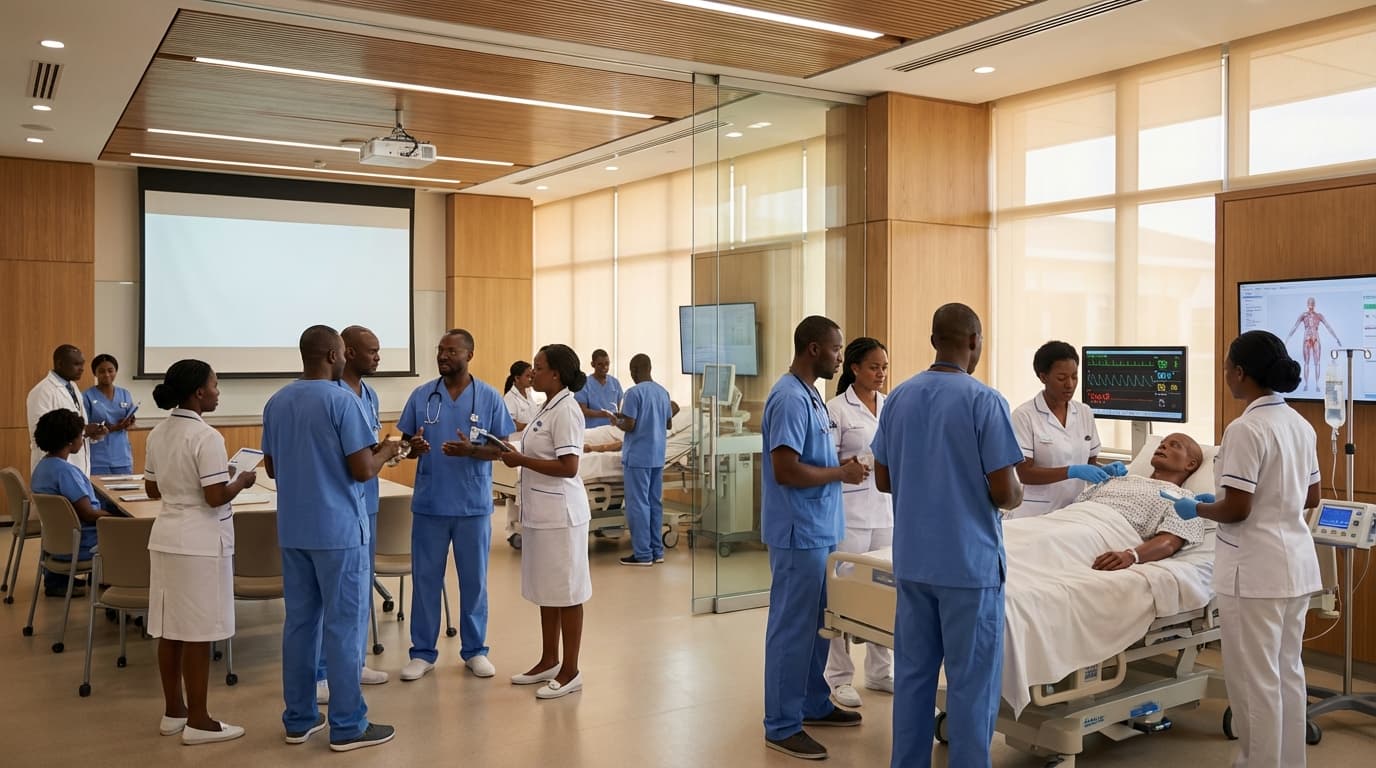
Equipment Training & Education in Malawi
Engineering Excellence & Technical Support
Comprehensive equipment training and certification programs High-standard technical execution following OEM protocols and local regulatory frameworks.
Mobile Training Units
Leveraging a fleet of fully equipped mobile training units, we bring hands-on equipment operation and maintenance training directly to remote agricultural communities and industrial sites across Malawi. This ensures accessibility and minimizes downtime for trainees.
Virtual Reality (VR) Simulators
We utilize advanced VR simulation technology to provide safe, immersive, and cost-effective training on complex machinery. Trainees can practice critical procedures, troubleshoot common issues, and gain proficiency in various equipment operations without risk to themselves or valuable assets.
Digital Learning Platform & Certification
Our comprehensive e-learning platform offers self-paced modules, video tutorials, and interactive assessments covering a wide range of equipment. Upon successful completion, participants receive digital certifications, enhancing their employability and recognizing their acquired skills within Malawi's workforce.
What Is Equipment Training & Education In Malawi?
Equipment training and education in Malawi refers to the systematic process of imparting knowledge, skills, and practical experience necessary for the safe, efficient, and effective operation, maintenance, and troubleshooting of specific machinery, tools, and technological systems within various Malawian sectors. This service is critical for maximizing asset lifespan, minimizing operational downtime, ensuring worker safety, and enhancing overall productivity and service quality. It encompasses a range of pedagogical approaches, from theoretical instruction to hands-on practical application, tailored to the specific equipment and the competencies of the target audience.
| Who Needs Equipment Training & Education? | Typical Use Cases & Sectors | ||||||||
|---|---|---|---|---|---|---|---|---|---|
| Industrial Operators: Personnel directly involved in operating manufacturing, processing, or production machinery. | Agricultural Workers: Farmers, extension officers, and farm managers requiring training on tractors, irrigation systems, harvesters, and processing equipment. | Healthcare Professionals: Technicians and medical staff needing to operate sophisticated medical devices, diagnostic equipment, and laboratory instrumentation. | Construction Personnel: Site managers, heavy machinery operators, and skilled trades requiring training on excavators, cranes, concrete mixers, and power tools. | Information Technology Staff: Technicians and administrators needing to manage and maintain servers, networking hardware, and specialized software systems. | Energy Sector Technicians: Engineers and maintenance crews involved with power generation equipment, transmission lines, and renewable energy systems (solar, wind). | Transportation and Logistics Personnel: Drivers, mechanics, and warehouse staff operating specialized vehicles, forklifts, and material handling equipment. | Vocational School Students & Graduates: Individuals acquiring foundational or advanced skills in operating specific trade-related equipment. | Maintenance and Repair Technicians: Professionals responsible for servicing, repairing, and ensuring the optimal performance of various equipment types. | Supervisory and Management Staff: Individuals who need to understand equipment capabilities, limitations, and operational requirements for effective resource allocation and oversight. |
| Manufacturing: Operation and maintenance of assembly lines, CNC machines, welding equipment, and packaging machinery. | Agriculture: Cultivation, harvesting, post-harvest processing, and irrigation system management. | Healthcare: Use of MRI/CT scanners, X-ray machines, ventilators, laboratory analysers, and surgical instruments. | Construction: Operation of earthmoving equipment, lifting machinery, concrete pumps, and power generation units for sites. | Information Technology: Server administration, network device configuration, and data centre hardware management. | Energy: Operation of turbines, solar panels, wind generators, and associated control systems. | Transportation: Operation of trucks, buses, locomotives, and material handling equipment in logistics hubs. | Mining: Operation of drills, excavators, haul trucks, and processing plants. | Water and Sanitation: Operation and maintenance of pumps, filtration systems, and treatment plant machinery. | Telecommunications: Installation and maintenance of cellular towers, base stations, and fiber optic networks. |
Key Components of Equipment Training & Education:
- Theoretical Instruction: Covers principles of operation, technical specifications, safety protocols, regulatory compliance, and theoretical underpinnings of the equipment's functionality.
- Practical Demonstration: Live or simulated demonstrations by qualified instructors showcasing correct operating procedures, emergency responses, and routine tasks.
- Hands-on Practice: Supervised opportunities for trainees to directly operate, calibrate, and interact with the equipment under realistic conditions.
- Troubleshooting and Diagnostics: Training on identifying common faults, understanding error codes, performing basic diagnostics, and implementing corrective actions.
- Preventive Maintenance: Instruction on scheduled inspections, lubrication, cleaning, and minor part replacements to prolong equipment life and prevent failures.
- Safety and Hazard Awareness: Comprehensive training on identifying and mitigating risks associated with equipment operation, including lockout/tagout procedures and personal protective equipment (PPE) usage.
- Documentation and Record-Keeping: Education on utilizing operation manuals, maintenance logs, and reporting mechanisms.
- Certification and Assessment: Evaluation of acquired competencies through written tests, practical assessments, and performance monitoring to ensure proficiency.
Who Needs Equipment Training & Education In Malawi?
In Malawi, comprehensive equipment training and education are vital for a diverse range of individuals and organizations to ensure operational efficiency, safety, and the effective utilization of machinery across various sectors. This training empowers users to operate equipment competently, perform basic maintenance, and understand safety protocols, ultimately contributing to increased productivity, reduced downtime, and a safer working environment. The demand spans from large industrial operations to smallholder farmers and vocational training institutions.
| Customer Segment | Specific Departments/Roles | Types of Equipment Requiring Training | Key Training Needs |
|---|---|---|---|
| Industrial & Manufacturing | Production Lines, Maintenance Departments, Quality Control, Warehouse Operations | Assembly line machinery, CNC machines, forklifts, cranes, welding equipment, packaging machines | Safe operation, routine maintenance, troubleshooting, quality control procedures, safety compliance |
| Agriculture | Smallholder Farmers, Commercial Farms, Agricultural Cooperatives, Extension Services | Tractors, plows, harvesters, irrigation systems, seed planters, processing equipment (e.g., maize mills) | Efficient operation for increased yields, basic maintenance, soil management techniques, pest control equipment usage |
| Mining | Mine Operations, Heavy Equipment Operators, Maintenance Crews, Safety Officers | Excavators, haul trucks, drills, loaders, conveyor systems, crushers, safety equipment | Heavy machinery operation, geological surveying equipment, mine safety protocols, emergency response procedures |
| Construction | Construction Site Managers, Equipment Operators, Foremen, Mechanics | Cranes, excavators, bulldozers, concrete mixers, scaffolding, power tools, surveying equipment | Safe operation of heavy machinery, site safety, basic repair and maintenance, blueprint reading, material handling |
| Healthcare | Medical Technicians, Biomedical Engineers, Hospital Maintenance Staff | Diagnostic imaging equipment (X-ray, MRI), laboratory analyzers, surgical equipment, sterilization units, patient monitoring devices | Sterilization procedures, safe operation of sensitive medical devices, calibration, basic troubleshooting, infection control |
| Transportation & Logistics | Warehouse Staff, Truck Drivers, Fleet Managers, Port Operations | Forklifts, reach trucks, pallet jacks, heavy-duty trucks, container handling equipment, loading/unloading machinery | Safe and efficient loading/unloading, vehicle operation and maintenance, logistics management software integration, safety regulations |
| Energy | Power Plant Operators, Maintenance Technicians, Renewable Energy Installers | Generators, turbines, solar panel installation tools, distribution equipment, safety harnesses | Operation of power generation equipment, safety procedures in high-voltage environments, installation and maintenance of renewable energy systems |
| Vocational Training Institutions & Educational Bodies | Instructors, Students in technical trades | All types of equipment relevant to trade courses (mechanics, welding, electrical, agriculture, etc.) | Curriculum development, hands-on training methodologies, assessment of practical skills, safety education integration |
| Government & Public Service Departments | Public Works, Disaster Management Agencies, Road Maintenance Units, Agriculture Extension Offices | Road construction equipment, emergency response vehicles, agricultural machinery, water pumps, sanitation equipment | Emergency preparedness and response training, infrastructure maintenance, public safety protocols, efficient resource management |
Target Customers and Departments in Malawi Requiring Equipment Training & Education
- Industrial & Manufacturing Sector
- Agricultural Sector
- Mining Sector
- Construction Sector
- Healthcare Sector
- Transportation & Logistics Sector
- Energy Sector
- Vocational Training Institutions & Educational Bodies
- Government & Public Service Departments
Equipment Training & Education Process In Malawi
The Equipment Training & Education Process in Malawi is a structured workflow designed to ensure effective knowledge transfer and skill development for the operation and maintenance of various equipment. This process begins with an initial inquiry from an individual or organization requiring training, leading through needs assessment, curriculum development, scheduling, execution of training sessions, and finally, evaluation and certification. The goal is to empower users with the competence to utilize equipment safely, efficiently, and reliably, contributing to improved productivity and service delivery across sectors.
| Stage | Description | Key Activities | Responsible Parties | Potential Challenges |
|---|---|---|---|---|
| Inquiry & Initial Contact | The process begins when a prospective trainee or organization expresses interest in equipment training. | Submitting training request forms, initial consultations, clarification of training needs. | Trainee/Organization, Training Provider (e.g., Government Agency, NGO, Private Company) | Lack of awareness about available training, unclear initial requests. |
| Needs Assessment & Requirements Gathering | Understanding the specific equipment, skill levels, and learning objectives of the trainees. | Surveys, interviews, skills gap analysis, defining training scope and target audience. | Training Provider, Trainee Representatives | Inaccurate assessment of needs, resistance from trainees to participate in assessment. |
| Curriculum & Material Development | Creating or adapting training content and resources tailored to the identified needs and local context. | Developing training manuals, presentations, practical exercises, case studies, translating materials if necessary. | Training Provider (Instructors, Curriculum Developers) | Lack of subject matter experts, insufficient resources for material creation, ensuring cultural relevance. |
| Resource Allocation & Planning | Securing necessary resources for training, including personnel, equipment, venues, and budget. | Budgeting, identifying qualified instructors, procuring or arranging access to training equipment, booking venues. | Training Provider (Management, Administration) | Funding limitations, unavailability of qualified trainers or specific equipment, competing priorities. |
| Scheduling & Logistics | Determining the optimal dates, times, and locations for training sessions. | Developing training schedules, communicating with trainees, arranging travel and accommodation (if applicable). | Training Provider (Administration, Logistics Team) | Scheduling conflicts, transportation challenges, accommodation issues, weather-related disruptions. |
| Training Execution & Delivery | Conducting the actual training sessions, encompassing theoretical and practical components. | Lectures, demonstrations, hands-on practice, group activities, simulations, field visits. | Instructors, Trainees | Trainee engagement issues, inadequate practical facilities, language barriers, varying learning paces. |
| Assessment & Evaluation | Measuring the trainees' comprehension and skill acquisition, and evaluating the effectiveness of the training. | Written tests, practical assessments, observation, participant feedback forms, post-training performance reviews. | Instructors, Training Provider | Subjectivity in assessments, lack of standardized evaluation tools, difficulty in measuring long-term impact. |
| Certification & Follow-up | Issuing certificates of completion or competency and providing ongoing support. | Awarding certificates, providing post-training support, refresher courses, troubleshooting assistance. | Training Provider, Trainees | Delays in certification, insufficient follow-up mechanisms, lack of sustained support. |
| Feedback & Continuous Improvement | Gathering feedback to identify areas for improvement in future training programs. | Analyzing trainee and instructor feedback, reviewing assessment results, updating curriculum and delivery methods. | Training Provider | Not acting on feedback, reluctance to adapt, lack of resources for program revision. |
Key Stages of the Equipment Training & Education Process in Malawi
- Inquiry & Initial Contact
- Needs Assessment & Requirements Gathering
- Curriculum & Material Development
- Resource Allocation & Planning
- Scheduling & Logistics
- Training Execution & Delivery
- Assessment & Evaluation
- Certification & Follow-up
- Feedback & Continuous Improvement
Equipment Training & Education Cost In Malawi
Equipment training and education costs in Malawi are highly variable, influenced by a range of factors including the complexity and type of equipment, the duration and depth of training, the provider's reputation and overhead, and the geographical location within Malawi. Training can range from basic operational familiarization to advanced maintenance and troubleshooting. The costs are typically quoted in Malawian Kwacha (MWK) and can fluctuate due to inflation and currency exchange rates.
| Training Category | Typical Price Range (MWK) | Notes |
|---|---|---|
| Basic Operational Training (e.g., agricultural tools, small machinery) | 15,000 - 50,000 MWK per participant | Covers fundamental usage and safety. Often provided by equipment suppliers. |
| Intermediate Technical Training (e.g., common industrial equipment, basic IT hardware) | 40,000 - 150,000 MWK per participant | Includes practical troubleshooting and maintenance. May involve a few days of instruction. |
| Advanced/Specialized Training (e.g., medical equipment, complex manufacturing machinery, specialized software) | 100,000 - 500,000+ MWK per participant | Requires expert instructors, often international. Can be multi-week courses. May include certification. |
| On-site Group Training (customized, for organizations) | Variable (quoted per project) | Cost depends heavily on duration, number of participants, and equipment complexity. Often negotiated. |
| Online/Remote Training Modules (self-paced or scheduled) | 10,000 - 75,000 MWK per module/course | More accessible and often cheaper. Effectiveness depends on the subject matter and learner engagement. |
Key Pricing Factors for Equipment Training in Malawi
- Type and Complexity of Equipment: Specialized or highly technical equipment (e.g., medical imaging devices, advanced industrial machinery) will inherently incur higher training costs than simpler tools or basic agricultural equipment.
- Training Duration and Intensity: Longer training programs, those requiring hands-on practice over extended periods, or those with a higher student-to-instructor ratio generally command higher fees.
- Provider Reputation and Accreditation: Established training institutions or manufacturers' authorized representatives often charge more due to their recognized expertise, quality assurance, and official accreditation.
- Location of Training: Training conducted in major urban centers like Lilongwe or Blantyre might have slightly different pricing than remote or rural areas, factoring in travel and logistical costs for trainers.
- Customization of Curriculum: Tailored training programs designed to meet specific organizational needs or address particular challenges will often be more expensive than standardized courses.
- Inclusion of Materials and Certification: The cost may or may not include training manuals, study guides, consumables for practical sessions, and official certifications, which can add to the overall price.
- Number of Participants: Group training sessions often have a lower per-participant cost compared to individual or very small group training.
- Delivery Method: In-person, on-site training will differ in cost from remote or online training modules, considering travel, accommodation, and facility rental for the former.
Affordable Equipment Training & Education Options
Acquiring necessary equipment and ensuring your team is proficient in its use is crucial for operational efficiency and safety. Fortunately, there are numerous affordable training and education options available. Value bundles, which combine training with equipment purchase or offer tiered training packages, can significantly reduce overall costs. Implementing smart cost-saving strategies, such as leveraging free resources, exploring online and hybrid learning models, and negotiating bulk discounts, can further stretch your budget while maximizing learning outcomes.
| Value Bundle Type | Description | Potential Cost Savings |
|---|---|---|
| Equipment Purchase + Training Bundle | Training is included or heavily discounted when purchased with new equipment. | Reduced training fees, integrated learning, faster operational readiness. |
| Tiered Training Packages | Offering different levels of training (e.g., basic, advanced, maintenance) at varying price points. | Pay only for the level of expertise required, avoid overspending on unnecessary advanced training. |
| Online Course Subscriptions | Access to a library of online training modules for a recurring fee. | Unlimited access for multiple users, reduced per-user cost compared to individual courses. |
| Certification Bundles | Package multiple certification courses together for a discounted rate. | Cost savings on individual certification fees, streamlined path to multiple qualifications. |
| Maintenance & Training Contracts | Combines ongoing equipment maintenance services with periodic training refreshers. | Predictable costs, ensures equipment is always in optimal condition and staff skills are current. |
Key Cost-Saving Strategies for Equipment Training & Education
- Leverage Free and Low-Cost Resources: Many manufacturers offer free introductory manuals, online tutorials, and basic product webinars. Industry associations and government bodies often provide free safety guidelines and best practice documents.
- Explore Online and Hybrid Learning: Online courses and virtual reality (VR) simulations can dramatically reduce travel, accommodation, and venue rental costs associated with traditional in-person training. Hybrid models combine the flexibility of online learning with targeted in-person practical sessions.
- Negotiate Value Bundles and Package Deals: When purchasing new equipment, inquire about bundled training packages. Manufacturers and training providers may offer discounts when training is purchased alongside equipment or as part of a larger service agreement.
- Consider Train-the-Trainer Programs: Invest in training a few key personnel who can then train the rest of your staff. This can be more cost-effective in the long run than sending everyone to external courses.
- Bulk Discounts and Group Rates: For larger teams or multiple training sessions, inquire about group discounts. Many training providers offer reduced rates for larger numbers of participants.
- Utilize Internal Expertise: Identify skilled employees who can mentor and train less experienced colleagues on specific equipment. This peer-to-peer learning can be informal but highly effective and cost-efficient.
- Partner with Educational Institutions: Community colleges and vocational schools often have equipment and training programs. They may offer customized training for businesses at competitive prices.
- Explore Government and Non-Profit Grants: Research if any grants or funding opportunities are available through government agencies or non-profit organizations for workforce development or safety training.
- Phased Training Approach: Break down comprehensive training into smaller, manageable modules. This allows for budget allocation over time and ensures that only necessary training is purchased when needed.
Verified Providers In Malawi
When seeking healthcare services in Malawi, particularly those related to financial assistance and health, it's crucial to engage with verified providers. Franance Health stands out as a leading entity, offering a robust framework of credentials that underscore their commitment to quality, ethical practices, and patient well-being. Understanding their credentials illuminates why they represent the best choice for individuals navigating the healthcare landscape in Malawi.
| Credential Type | Description | Benefit to Patient |
|---|---|---|
| Regulatory Compliance | Adherence to Malawian healthcare and financial laws. | Ensures legal and ethical operations, protecting patients from malpractice and fraud. |
| Health Authority Accreditation | Meeting established standards for healthcare service delivery. | Guarantees access to safe, effective, and high-quality medical care. |
| Verified Partner Network | Collaboration with accredited and reputable healthcare facilities. | Provides confidence that all contracted healthcare providers are trustworthy and competent. |
| Financial Transparency | Clear pricing, no hidden fees, and ethical financial dealings. | Empowers patients with knowledge to make informed financial decisions about their health. |
| Data Security Protocols | Robust measures to protect patient personal and health information. | Ensures privacy and prevents unauthorized access to sensitive data. |
| Expert Leadership | Management team with extensive experience in healthcare and finance. | Drives efficient operations, innovative solutions, and a patient-focused approach. |
| Patient Satisfaction | Consistent positive feedback and testimonials. | Provides real-world evidence of reliable and effective service delivery. |
Key Franance Health Credentials and Their Significance:
- Regulatory Compliance & Licensing: Franance Health rigorously adheres to all Malawian healthcare and financial regulations. This includes possessing necessary licenses from relevant government bodies, ensuring their operations are legal, transparent, and accountable. This compliance protects patients from fraudulent or substandard services.
- Accreditation by Health Authorities: Holding accreditations from recognized health authorities signifies that Franance Health meets stringent standards for service delivery, patient safety, and operational efficiency. This accreditation is a testament to their dedication to providing high-quality care.
- Partnerships with Verified Healthcare Facilities: Franance Health collaborates exclusively with a network of accredited and reputable healthcare facilities. This vetting process ensures that all partner clinics, hospitals, and specialists meet established quality benchmarks, guaranteeing patients receive care from trusted professionals.
- Financial Transparency & Ethical Practices: A cornerstone of Franance Health's credentials is their unwavering commitment to financial transparency. They operate with clear fee structures, no hidden costs, and adhere to ethical financial practices. This builds trust and empowers patients to make informed decisions about their healthcare spending.
- Patient Data Security & Confidentiality: Franance Health prioritizes the safeguarding of patient information. They implement robust data security protocols that comply with privacy regulations, ensuring that personal health and financial data are kept confidential and protected from unauthorized access.
- Experienced & Qualified Management Team: The leadership at Franance Health comprises experienced professionals with deep expertise in healthcare management, finance, and patient advocacy. Their understanding of the Malawian context allows them to tailor services effectively and address the unique needs of the population.
- Positive Patient Testimonials & Feedback: While not a formal credential, consistent positive feedback and testimonials from satisfied patients are powerful indicators of Franance Health's effectiveness and patient-centric approach. This real-world evidence speaks volumes about their service quality and reliability.
Scope Of Work For Equipment Training & Education
This Scope of Work (SOW) outlines the requirements for providing comprehensive equipment training and education to designated personnel. The objective is to ensure that trainees possess the necessary knowledge and skills to operate, maintain, and troubleshoot the specified equipment effectively and safely. This SOW covers the definition of technical deliverables and the establishment of standard specifications for the training program.
| Deliverable | Description | Format | Standard Specification | Acceptance Criteria |
|---|---|---|---|---|
| Training Curriculum Development | Design and development of a comprehensive training program tailored to the specific equipment. | Document (PDF/Word) | Includes modules covering theory, practical application, safety, and troubleshooting. Aligned with equipment manuals and operational procedures. | Curriculum approved by the client's technical lead. |
| Training Materials | Creation of all necessary training materials for instructors and trainees. | Digital (PDF, PPT, Video) and Printed | High-quality, accurate, and easy-to-understand content. Includes presentations, handouts, workbooks, and case studies. | Materials reviewed and approved by the client's subject matter experts. |
| Instructor-Led Training Sessions | Delivery of classroom and hands-on training sessions by qualified instructors. | Live Sessions (In-person or Virtual) | Sessions conducted by certified instructors with proven expertise in the equipment. Duration and schedule agreed upon in advance. | Trainee attendance records and post-training assessments. |
| Practical/Hands-on Training | Supervised practical exercises and simulations using the actual equipment or a functional equivalent. | Practical Sessions | Trainees perform operational and maintenance tasks under instructor supervision. Safe operating environment maintained. | Demonstration of competency in performing key tasks by trainees. |
| Assessment and Evaluation | Development and administration of assessments to measure trainee understanding and skill acquisition. | Quizzes, Practical Tests, Written Exams | Assessments cover theoretical knowledge and practical skills. Clear pass/fail criteria established. | Successful completion of assessments by a minimum percentage of trainees. |
| Training Report | A comprehensive report detailing the training activities, outcomes, and recommendations. | Document (PDF) | Includes trainee attendance, assessment results, feedback summary, and any identified areas for improvement. | Report submitted within 7 days of training completion. |
| Post-Training Support (Optional) | Provision of limited technical support or Q&A sessions following the initial training. | Email/Phone Support, Scheduled Q&A | Defined scope and duration of support (e.g., 30 days). Response time SLAs established. | Resolution of trainee queries within agreed timelines. |
Key Training Objectives
- Safe operation of the equipment according to manufacturer guidelines and industry best practices.
- Routine operational procedures, including startup, shutdown, and changeover processes.
- Preventive maintenance schedules and procedures.
- Basic troubleshooting and fault diagnosis.
- Understanding of equipment safety features and emergency procedures.
- Proper use of relevant documentation (manuals, schematics, logs).
- Environmental and regulatory compliance related to equipment operation.
Service Level Agreement For Equipment Training & Education
This Service Level Agreement (SLA) outlines the performance standards for Equipment Training & Education services provided by [Your Company Name] to [Client Company Name]. It specifically details response times for support requests and uptime guarantees for access to training materials and platforms.
| Service Component | Priority Level | Response Time Guarantee | Uptime Guarantee (for platforms/materials) |
|---|---|---|---|
| Technical Support (Training Platform/Access) | Critical (System Outage affecting all users) | 1 Hour | 99.9% |
| Technical Support (Training Platform/Access) | High (Individual user unable to access) | 4 Business Hours | 99.9% |
| Technical Support (Training Platform/Access) | Medium (Issue impacting specific feature) | 8 Business Hours | 99.9% |
| Technical Support (Training Platform/Access) | Low (General inquiry, feedback) | 2 Business Days | 99.9% |
| On-Demand Training Material Access | N/A | N/A | 99.9% |
| Scheduled Training Session Availability | N/A | Attendance confirmation within 2 business days of request | Guaranteed session start at scheduled time (unless unforeseeable circumstances arise, see section on Force Majeure) |
Key Service Components
- Scope of Service: This SLA covers all scheduled and on-demand training sessions, access to online learning modules, educational resources, and technical support related to the training platform and equipment.
- Service Hours: Standard service hours are Monday through Friday, 9:00 AM to 5:00 PM [Client's Time Zone], excluding national holidays.
- Definitions: [Define key terms like 'Support Request', 'Downtime', 'Scheduled Maintenance', 'Emergency Maintenance', 'Response Time', 'Resolution Time', etc.]
Frequently Asked Questions

Ready when you are
Let's scope your Equipment Training & Education in Malawi project in Malawi.

Scaling healthcare logistics and technical systems across the entire continent.