
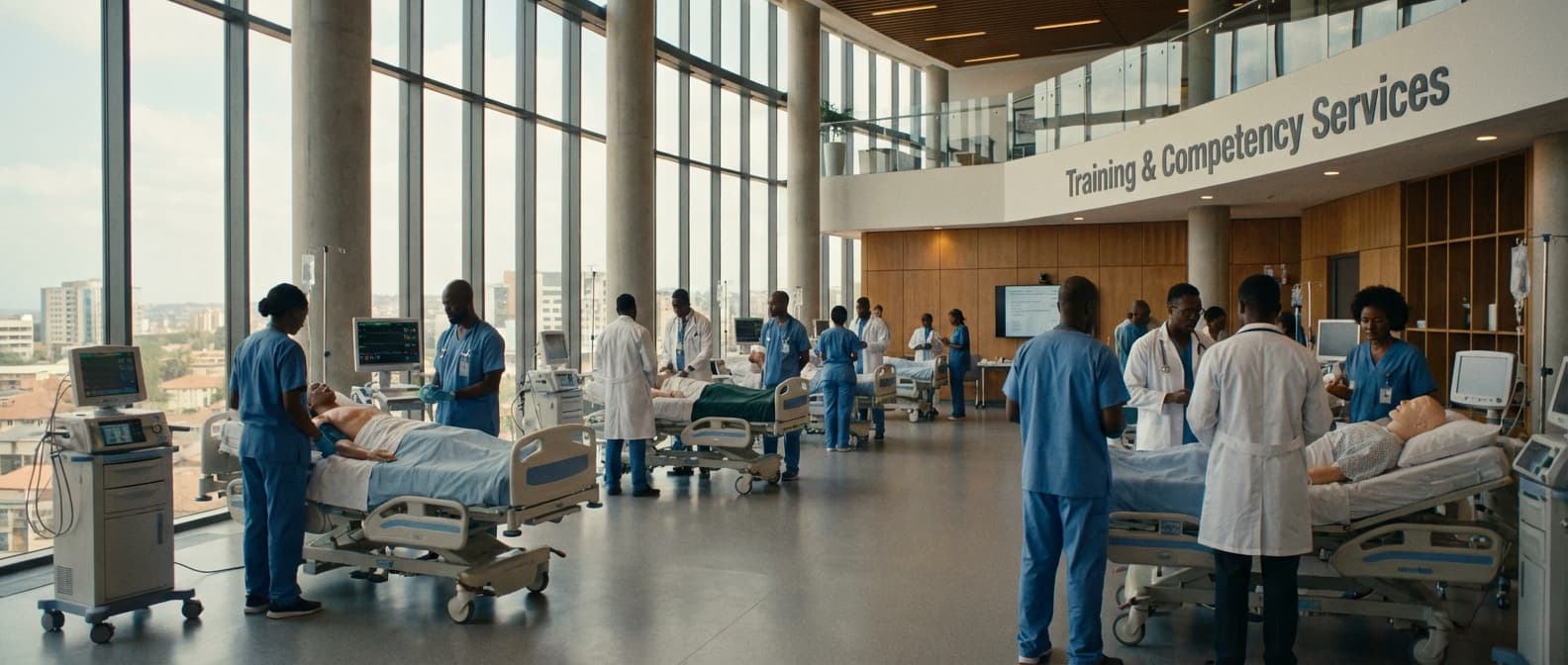
Ventilator User Training Service (Nurses) in Malawi
Engineering Excellence & Technical Support
Ventilator User Training Service (Nurses) High-standard technical execution following OEM protocols and local regulatory frameworks.
Mastering Ventilation Modes
Comprehensive training modules covering essential ventilator modes (e.g., AC/VC, SIMV, CPAP/PSV) with practical demonstrations tailored to common respiratory conditions encountered in Malawi. Learn to select, set, and optimize modes for patient-specific needs and resource availability.
Advanced Patient Monitoring & Interpretation
Develop critical skills in interpreting ventilator waveforms, pressure-volume loops, and essential patient parameters. This module focuses on early detection of ventilator-associated complications and prompt intervention strategies relevant to the Malawian healthcare context.
Troubleshooting & Maintenance Best Practices
Gain hands-on experience with common ventilator troubleshooting scenarios and essential preventative maintenance procedures. Learn to identify and address technical issues promptly, ensuring optimal device performance and patient safety within limited resource settings.
What Is Ventilator User Training Service (Nurses) In Malawi?
Ventilator User Training Service (Nurses) in Malawi is a specialized educational program designed to equip registered nurses with the theoretical knowledge and practical skills necessary for the safe and effective operation of mechanical ventilators in clinical settings. This service is critical for optimizing patient outcomes in critical care, addressing respiratory failure, and supporting post-operative recovery, particularly in resource-limited environments like Malawi where healthcare infrastructure and trained personnel can be strained. The training emphasizes understanding ventilator principles, patient assessment, ventilator setup and management, alarm troubleshooting, and weaning protocols, all within the context of Malawian healthcare guidelines and available equipment.
| Target Audience | Need for Training | Typical Use Cases | ||||
|---|---|---|---|---|---|---|
| Registered Nurses working in Intensive Care Units (ICUs), High Dependency Units (HDUs), and Emergency Departments in Malawian hospitals. | Management of patients experiencing acute respiratory failure due to conditions such as severe pneumonia (including COVID-19), acute respiratory distress syndrome (ARDS), exacerbations of chronic obstructive pulmonary disease (COPD), post-operative respiratory compromise, and sepsis-induced respiratory dysfunction. | Facilitating safe and effective mechanical ventilation for critically ill patients requiring respiratory support. | Reducing morbidity and mortality associated with respiratory failure. | Ensuring continuity of care and skill proficiency in resource-constrained settings. | Supporting the management of patients requiring airway support and mechanical ventilation during surgical procedures or in post-anesthesia care units. | Providing specialized care in critical illness scenarios where manual ventilation techniques are insufficient or unsustainable. |
| Nurses in district hospitals or referral centers that may have limited access to specialized respiratory therapists or physicians for ventilator management. | Empowering generalist nurses to provide essential respiratory support when specialized personnel are unavailable. | Addressing surges in respiratory illness, such as during public health emergencies or seasonal outbreaks. | Enhancing the capacity of the healthcare system to manage respiratory emergencies across various levels of care. | |||
| Nurses involved in patient transport of ventilated individuals within or between facilities. | Ensuring that nurses accompanying ventilated patients during transfers possess the skills to maintain ventilation and manage emergencies en route. | Facilitating the safe movement of critically ill patients requiring mechanical ventilation. |
Key Components of Ventilator User Training Service (Nurses) in Malawi
- Foundational principles of mechanical ventilation, including modes of ventilation (e.g., volume-controlled, pressure-controlled, SIMV, CPAP), lung mechanics, and gas exchange.
- Patient assessment and selection for mechanical ventilation, including identification of indications and contraindications.
- Ventilator setup, connection to the patient circuit, and pre-use system checks.
- Initiation of mechanical ventilation, including appropriate initial settings based on patient condition and diagnosis.
- Continuous monitoring of patient response to ventilation, including physiological parameters (SpO2, EtCO2, blood gases) and clinical signs.
- Recognition and management of ventilator-associated complications, such as ventilator-associated pneumonia (VAP) and barotrauma.
- Troubleshooting common ventilator alarms and system malfunctions.
- Principles and practical application of ventilator weaning and disconnection.
- Infection control practices related to mechanical ventilation and ventilator circuits.
- Documentation of ventilator settings, patient response, and interventions.
- Ethical considerations and legal aspects of mechanical ventilation.
- Familiarization with specific ventilator models commonly available in Malawian healthcare facilities.
Who Needs Ventilator User Training Service (Nurses) In Malawi?
This document outlines the essential need for Ventilator User Training Services for nurses in Malawi. Effective and safe operation of ventilators is critical for patient care, particularly in intensive care settings. This training aims to equip nurses with the knowledge and practical skills to confidently manage and monitor patients requiring mechanical ventilation, thereby improving patient outcomes and reducing the risk of complications.
| Department | Rationale for Training | Key Responsibilities Related to Ventilators |
|---|---|---|
| Intensive Care Unit (ICU) | Primary users of ventilators for critically ill patients requiring advanced respiratory support. | Setting up and initiating ventilation, monitoring patient response, titrating ventilator settings, troubleshooting alarms, weaning patients from ventilation, and identifying and managing ventilator-associated complications. |
| High Dependency Unit (HDU) / Step-down ICU | Patients in HDUs often require ongoing or less intensive ventilation support. | Monitoring stable ventilated patients, adjusting basic settings as per protocol, recognizing early signs of deterioration, and escalating care when necessary. |
| Accident & Emergency (A&E) / Emergency Department | Initial stabilization and management of patients with acute respiratory failure or trauma requiring immediate ventilation. | Rapid assessment of respiratory status, initiating emergency ventilation, and safely transporting ventilated patients. |
| Operating Theater (OT) / Perioperative Care | Ventilation is integral to anesthesia and surgery. | Assisting anesthesiologists with ventilator setup and monitoring during surgical procedures, and immediate post-operative care of ventilated patients. |
| Medical Wards (Specific Cases) | In certain situations, nurses on general medical wards may be responsible for stable, long-term ventilated patients or those undergoing weaning. | Routine monitoring, basic ventilator management under supervision, and reporting any changes in patient status. |
| Paediatric Wards / Neonatal Intensive Care Unit (NICU) | Specialized training may be required for paediatric and neonatal ventilation. | Managing ventilators for infants and children, which often involves different modes and settings compared to adult ventilation. |
Target Customers and Departments
- Nurses working in critical care units.
- Nurses involved in the management of respiratory distress.
- Nurses in emergency departments and accident & emergency units.
- Nurses in operating theaters where perioperative ventilation is common.
- Nurses in remote or underserved areas who may be the primary caregivers for ventilated patients.
Ventilator User Training Service (Nurses) Process In Malawi
The Ventilator User Training Service for nurses in Malawi is designed to equip healthcare professionals with the essential knowledge and skills to operate and manage mechanical ventilators effectively. This process ensures patient safety, optimal ventilator use, and adherence to clinical protocols. The workflow begins with an inquiry from a healthcare facility or individual nurse seeking training, followed by a structured process of assessment, planning, delivery, and evaluation to ensure comprehensive and competent training.
| Stage | Description | Key Activities | Responsible Parties | Output/Outcome |
|---|---|---|---|---|
| Inquiry and Needs Assessment | The initial step where potential trainees or their institutions express interest in the ventilator training service. This stage aims to understand the specific training needs and context. | Initial contact via phone, email, or website. Clarification of training objectives and expected outcomes. Identification of the number of nurses to be trained. Assessment of existing ventilator knowledge and experience. Understanding of available equipment and clinical settings. | Healthcare Facility Management Nurses Training Provider (e.g., Ministry of Health, NGO, specialized training institute) | Understanding of training requirements. Preliminary participant list. Identification of training gaps. |
| Training Proposal and Agreement | Based on the needs assessment, a detailed proposal outlining the training scope, objectives, methodology, duration, cost, and schedule is developed and agreed upon. | Development of a formal training proposal. Review of the proposal by the requesting facility. Negotiation of terms and conditions. Signing of a Memorandum of Understanding (MOU) or training agreement. | Training Provider Healthcare Facility Management | Formal agreement for training services. Defined scope of work. Financial commitment. |
| Curriculum Development and Customization | The training content is prepared, ensuring it aligns with national guidelines, best practices, and the specific needs identified. | Review and adaptation of existing ventilator training modules. Development of new content if required (e.g., specific ventilator models used in Malawi). Incorporation of case studies relevant to local health challenges. Preparation of training materials (manuals, presentations, handouts). | Training Provider (Curriculum Specialists, Clinical Educators) | Comprehensive training curriculum. Tailored training materials. Facilitator guides. |
| Logistics and Scheduling | All practical arrangements for the training are made, including venue, equipment, facilitators, and participant schedules. | Identification and booking of suitable training venue(s). Ensuring availability of functional ventilators for hands-on practice. Confirmation of training facilitators and their availability. Development of a detailed training schedule and participant roster. Arrangement of any necessary travel and accommodation. | Training Provider Healthcare Facility (for venue access and participant availability) | Confirmed training schedule. Secured training venue. Availability of training equipment. Participant list. |
| Training Delivery | The core phase where theoretical knowledge and practical skills are imparted to the nurses. | Theoretical sessions: Lectures, presentations, discussions on ventilator principles, modes, settings, monitoring, troubleshooting, and patient management. Practical sessions: Hands-on training with ventilators, including setup, adjustments, disconnection, and emergency procedures. Simulation exercises and case-based learning. Demonstrations by facilitators. | Training Facilitators Nurses (Trainees) | Acquisition of theoretical knowledge. Development of practical ventilator management skills. |
| Competency Assessment | Evaluation of the nurses' understanding and ability to apply the learned skills, ensuring they meet the required standards for safe ventilator use. | Written examinations to assess theoretical knowledge. Practical skills assessment (OSCE - Objective Structured Clinical Examination style). Observation during simulation exercises. Case study analysis. | Training Facilitators Assessors | Quantifiable measure of trainee competency. Identification of areas needing further reinforcement. |
| Certification and Follow-up | Upon successful completion of the training and assessment, participants receive certification, and mechanisms for ongoing support are established. | Issuance of certificates to successful trainees. Provision of post-training support resources (e.g., contact person for queries). Follow-up visits or remote check-ins to assess skill retention and address challenges in practice. Data collection on training impact. | Training Provider Healthcare Facilities | Certified nurses. Improved patient care with ventilators. Feedback for program improvement. |
| Feedback and Continuous Improvement | A crucial stage for gathering feedback from both trainees and facilitators to enhance the training program for future iterations. | Collection of feedback through questionnaires and debriefing sessions. Analysis of feedback to identify strengths and weaknesses of the training. Incorporation of lessons learned into curriculum updates and delivery methods. | Training Provider Nurses (Trainees) Facilitators | Refined training curriculum and methodology. Enhanced training effectiveness. |
Ventilator User Training Service (Nurses) Process in Malawi
- Inquiry and Needs Assessment
- Training Proposal and Agreement
- Curriculum Development and Customization
- Logistics and Scheduling
- Training Delivery
- Competency Assessment
- Certification and Follow-up
- Feedback and Continuous Improvement
Ventilator User Training Service (Nurses) Cost In Malawi
The cost of ventilator user training for nurses in Malawi can vary significantly, influenced by several key pricing factors. These factors determine the overall expense for healthcare facilities or organizations seeking to upskill their nursing staff in the safe and effective operation of mechanical ventilators. Understanding these elements is crucial for accurate budgeting and planning.
Key Pricing Factors:
- Training Provider: The reputation, accreditation, and overhead costs of the training provider are primary determinants. Established institutions or specialized medical training companies may charge more than smaller, local initiatives. Government-funded programs might offer subsidized or free training, but availability can be limited.
- Duration and Intensity of Training: A comprehensive program covering theoretical knowledge, practical skills, and emergency protocols will naturally be more expensive than a brief refresher course. The number of days or hours dedicated to the training directly impacts the cost.
- Curriculum Content and Specialization: Training focused on a wide range of ventilator types and advanced ventilation modes will be more costly than training on a single, basic model. Specializations in pediatric or neonatal ventilation, for example, often require more in-depth and specialized training.
- Number of Trainees: While per-person costs might decrease with larger groups due to economies of scale in instructor-to-trainee ratios, the overall cost for the facility will increase with more participants.
- Training Location and Logistics: If the training is conducted on-site at the healthcare facility, travel and accommodation costs for trainers may be included. Conversely, if nurses are required to travel to a training center, their travel, accommodation, and per diem expenses will need to be factored in, either by the facility or as a separate cost for the individual.
- Training Materials and Resources: The provision of high-quality training manuals, access to simulation equipment, and other learning resources can add to the overall cost.
- Trainer Expertise and Qualifications: Highly experienced and certified respiratory therapists or critical care nurses as trainers will command higher fees.
- Certification and Assessment: Costs associated with examinations, practical assessments, and the issuance of certificates will also be included in the pricing.
- Customization: If the training needs to be tailored to specific hospital protocols or equipment, there may be an additional charge for curriculum development and customization.
Estimated Cost Ranges (Malawian Kwacha - MWK):
Due to the dynamic nature of service provision and the factors listed above, providing exact figures is challenging. However, based on general market understanding and potential service providers, the following ranges can be considered. These are indicative and may fluctuate.
- Basic Ventilator User Training (e.g., 1-2 days, fundamental operation for common models): This could range from MWK 30,000 to MWK 70,000 per nurse. This might cover essential settings, patient monitoring, and common troubleshooting.
- Intermediate Ventilator User Training (e.g., 3-4 days, broader range of modes, advanced monitoring, common complications): Expect costs to be in the range of MWK 70,000 to MWK 150,000 per nurse.
- Advanced/Specialized Ventilator User Training (e.g., 5+ days, complex modes, pediatric/neonatal ventilation, prolonged care, simulation-based): These comprehensive programs could range from MWK 150,000 to MWK 300,000+ per nurse. The 'plus' accounts for highly specialized programs or those involving significant simulation time.
Important Considerations:
- Group Discounts: Facilities training multiple nurses concurrently can often negotiate discounts.
- Government vs. Private Providers: Government-supported training initiatives, if available, will likely be significantly cheaper or free, but capacity can be a constraint.
- Inclusions: Always clarify what is included in the quoted price (e.g., meals, accommodation, materials, certification fees).
- Quotes: It is highly recommended to obtain detailed quotes from multiple reputable training providers in Malawi to compare offerings and pricing accurately.
| Training Level | Estimated Duration | Approximate Cost Range (MWK per Nurse) |
|---|---|---|
| Basic Ventilator User Training | 1-2 Days | 30,000 - 70,000 |
| Intermediate Ventilator User Training | 3-4 Days | 70,000 - 150,000 |
| Advanced/Specialized Ventilator User Training | 5+ Days | 150,000 - 300,000+ |
Factors Influencing Ventilator User Training Costs for Nurses in Malawi
- Training Provider Reputation and Accreditation
- Training Duration and Intensity
- Curriculum Scope and Specialization (e.g., pediatric, neonatal)
- Number of Participating Nurses
- Training Location and Associated Logistics (travel, accommodation)
- Provision of Training Materials and Simulation Equipment
- Expertise and Qualifications of Trainers
- Certification and Assessment Fees
- Customization of Training Content
Affordable Ventilator User Training Service (Nurses) Options
This document outlines affordable ventilator user training service options specifically designed for nurses. We aim to provide high-quality, cost-effective training solutions that enhance nurses' confidence and competence in managing ventilated patients. We understand the budget constraints faced by healthcare facilities and have developed flexible training packages to meet diverse needs.
| Training Option | Description | Value Bundle Components | Estimated Cost-Saving Strategies |
|---|---|---|---|
| Basic Ventilator Essentials (Online Module) | Foundation-level training covering core ventilator concepts, modes, and monitoring. Ideal for nurses new to ventilation or requiring a refresher. | Core online modules, interactive quizzes, downloadable resource guides. | Reduced travel costs, flexible self-paced learning, lower instructor-to-learner ratio. |
| Advanced Ventilator Management (Blended Learning) | Combines online modules with hands-on simulation sessions. Covers complex modes, troubleshooting, and weaning strategies. | Online modules, simulated patient scenarios, debriefing sessions, competency checklists. | Reduced on-site training days, optimized instructor time, efficient skill acquisition through simulation. |
| Comprehensive Ventilator Competency Program (On-site/Remote) | In-depth, facility-specific training program. Includes initial training, competency validation, and ongoing support. Can be delivered on-site or virtually with local facilitators. | Customized curriculum, instructor-led sessions, practical skill stations, competency assessments, train-the-trainer options, ongoing remote support. | Group discounts, potential for shared trainer resources across departments/facilities, reduced need for external specialists, improved staff retention through professional development. |
| Ventilator Refresher & Update (Subscription Service) | Annual or bi-annual access to updated online content and webinars covering new guidelines, technologies, and common challenges. | Access to updated online modules, live Q&A webinars with experts, case study reviews. | Cost-effective ongoing education, proactive identification of knowledge gaps, avoidance of costly errors due to outdated practices. |
Key Features of Our Affordable Ventilator Training:
- Tailored curriculum for nursing staff
- Emphasis on practical skills and critical thinking
- Flexible delivery methods (on-site, remote, blended)
- Experienced and certified clinical educators
- Post-training support and refresher options
- Focus on evidence-based practices and safety protocols
Verified Providers In Malawi
When seeking healthcare services in Malawi, particularly those focusing on reproductive health, family planning, and sexual health, it's crucial to identify providers who are not only accessible but also possess verified credentials. Franance Health stands out as a leading organization committed to providing high-quality, confidential, and client-centered services. This commitment is underpinned by their rigorous credentialing process, ensuring that all their affiliated healthcare professionals and facilities meet stringent standards. Choosing a verified provider like those under the Franance Health umbrella guarantees access to skilled practitioners, reliable information, and a safe environment for your health needs. Their dedication to ethical practice and patient well-being makes them the best choice for anyone in Malawi requiring specialized health services.
| Key Aspect | Franance Health's Commitment | Benefit to Patients |
|---|---|---|
| Credential Verification | Meticulous screening and ongoing monitoring of all affiliated healthcare professionals and facilities. | Ensures access to qualified and competent medical practitioners, reducing the risk of receiving substandard care. |
| Service Quality | Focus on evidence-based practices, patient education, and a non-judgmental approach. | Provides accurate information and effective treatments, empowering patients to make informed decisions about their health. |
| Confidentiality and Safety | Strict adherence to patient privacy policies and maintaining a safe, secure environment. | Offers peace of mind, encouraging open communication and a comfortable experience for all clients. |
| Accessibility and Reach | Strategic partnerships and network development to extend services across various regions in Malawi. | Increases the likelihood that individuals can find and access essential health services when and where they need them. |
| Professionalism | Promotes continuous professional development for all providers within their network. | Guarantees that patients are treated by up-to-date and skilled healthcare professionals. |
Why Franance Health Represents the Best Choice:
- Verified Credentials: Franance Health rigorously vets all its partner providers, ensuring they possess the necessary qualifications, licenses, and certifications to offer specialized health services.
- Quality of Care: Emphasis on client-centered care, confidentiality, and a supportive environment. Patients can expect professional and respectful treatment.
- Comprehensive Services: Offers a wide range of services including family planning, reproductive health, and sexual health education and treatments.
- Accessibility: Works to make these essential services accessible to a broader population across Malawi.
- Ethical Standards: Adherence to high ethical guidelines in healthcare delivery, prioritizing patient safety and well-being.
- Trusted Network: Building a network of trusted healthcare providers ensures consistency in the quality of care received.
Scope Of Work For Ventilator User Training Service (Nurses)
This Scope of Work (SOW) outlines the requirements for providing comprehensive ventilator user training services specifically tailored for nurses. The objective is to ensure nurses possess the necessary knowledge and practical skills to safely and effectively operate and manage ventilators in a clinical setting, ultimately improving patient outcomes and reducing the risk of adverse events.
| Technical Deliverable | Description | Standard Specifications / Requirements |
|---|---|---|
| Training Curriculum Development | Creation of a comprehensive and modular training curriculum covering all essential aspects of ventilator use for nurses. | Curriculum must be evidence-based, aligned with current clinical guidelines (e.g., SCCM, ATS), and include theoretical and practical components. Modules should cover: ventilator basics, modes of ventilation, patient assessment, monitoring, troubleshooting, weaning, and VAP prevention. Curriculum must be adaptable to different ventilator models if applicable. |
| Training Materials | Development of high-quality, user-friendly training materials for nurses. | Materials to include: detailed training manuals, presentation slides, case studies, quick reference guides, and online learning modules (if applicable). Materials should be visually appealing, clearly written, and accessible in the required language(s). Must include detailed diagrams and illustrations of ventilator components and waveforms. |
| Hands-on Training Sessions | Conducting practical, hands-on training sessions using actual or simulated ventilators. | Sessions must be conducted by qualified and experienced clinical educators/respiratory therapists. A low nurse-to-instructor ratio (e.g., 6:1 or less) is required to ensure adequate individual attention. Training should cover: a) ventilator setup and pre-use checks, b) selection and initiation of appropriate ventilation modes, c) parameter adjustments based on simulated patient scenarios, d) alarm management and troubleshooting, e) disconnection and re-connection procedures. |
| Competency Assessment Tools | Design and implementation of robust competency assessment tools to evaluate nurse proficiency. | Tools to include: written examinations (multiple choice, short answer), practical skills checklists, and simulation-based assessments. Passing scores for each assessment method must be clearly defined and agreed upon. Assessment feedback mechanism must be provided. |
| Certification | Issuance of certificates of completion to nurses who successfully complete the training and achieve the required competency levels. | Certificates must clearly state the name of the nurse, the training program completed, the duration of the training, and the name of the training provider. Unique certification numbers or secure digital badges are desirable. |
| Post-Training Support | Provision of limited post-training support to address any immediate questions or concerns. | Support can be provided via email, phone, or a dedicated online forum for a defined period (e.g., 2 weeks) post-training. FAQs and troubleshooting guides should be readily available. |
| Training Venue and Equipment | Ensuring a suitable training environment and access to necessary equipment. | Venue must be adequately lit, ventilated, and spacious enough for the number of participants. A sufficient number of functional training ventilators (matching those used in the clinical setting if possible) with compatible patient simulators or manikins are required. Projector, screen, whiteboards, and other necessary AV equipment must be provided. |
| Trainer Qualifications | Ensuring trainers possess the requisite clinical expertise and teaching experience. | Trainers must be registered nurses or respiratory therapists with a minimum of 3-5 years of experience in critical care settings, extensive hands-on experience with the specific ventilator models to be trained on, and proven adult education and training skills. Documentation of trainer qualifications is required. |
Key Objectives of Ventilator User Training for Nurses
- To equip nurses with a thorough understanding of ventilator principles of operation and their underlying physiology.
- To train nurses on the correct setup, calibration, and initiation of various ventilation modes.
- To ensure nurses can proficiently monitor patient response to ventilation and identify potential complications.
- To enable nurses to perform timely and appropriate adjustments to ventilator settings based on patient status and clinical guidelines.
- To educate nurses on troubleshooting common ventilator alarms and malfunctions.
- To promote best practices in ventilator-associated pneumonia (VAP) prevention and infection control.
- To foster confidence and competence in nurses for managing mechanically ventilated patients.
Service Level Agreement For Ventilator User Training Service (Nurses)
This Service Level Agreement (SLA) outlines the response times and uptime guarantees for the Ventilator User Training Service provided to nurses. This SLA is intended to ensure timely and reliable access to training resources and support.
| Service Metric | Target | Measurement | Escalation/Remedy |
|---|---|---|---|
| Support Inquiry Response Time (Critical Issues) | Within 1 business hour | Time from initial contact (email, portal submission) to acknowledgment and assignment to a support agent. | If target is missed for 3 consecutive critical issues, a 10% service credit may be applied to the next billing cycle. For repeated missed targets, a review of support staffing and processes will be initiated. |
| Support Inquiry Response Time (General Inquiries) | Within 4 business hours | Time from initial contact to acknowledgment and assignment to a support agent. | If target is missed for 5 consecutive general inquiries, a 5% service credit may be applied to the next billing cycle. |
| Platform Uptime Guarantee | 99.8% | Percentage of time the training platform is accessible and operational during scheduled operating hours (24/7, excluding scheduled maintenance). Calculated monthly. | If uptime falls below 99.8% in a given month, a service credit of 5% of the monthly training service fee will be applied. For uptime below 99.5%, a 10% service credit will be applied. Further credits or root cause analysis may be triggered for prolonged or severe outages. |
| Training Content Availability | 99.9% | Percentage of time the training modules, videos, and associated resources are accessible and loadable on the platform. Calculated monthly. | If availability falls below 99.9% in a given month, a service credit of 3% of the monthly training service fee will be applied. For availability below 99.5%, a 7% service credit will be applied. |
Key Performance Indicators (KPIs)
- Response Time for Support Inquiries: Refers to the time taken to acknowledge and begin addressing a support request from a nurse regarding the training service.
- Uptime Guarantee: Refers to the percentage of time the Ventilator User Training Service platform is available and accessible for use by nurses.
- Training Content Availability: Refers to the percentage of time the training modules, videos, and associated resources are accessible on the platform.
Frequently Asked Questions

Ready when you are
Let's scope your Ventilator User Training Service (Nurses) in Malawi project in Malawi.

Scaling healthcare logistics and technical systems across the entire continent.