
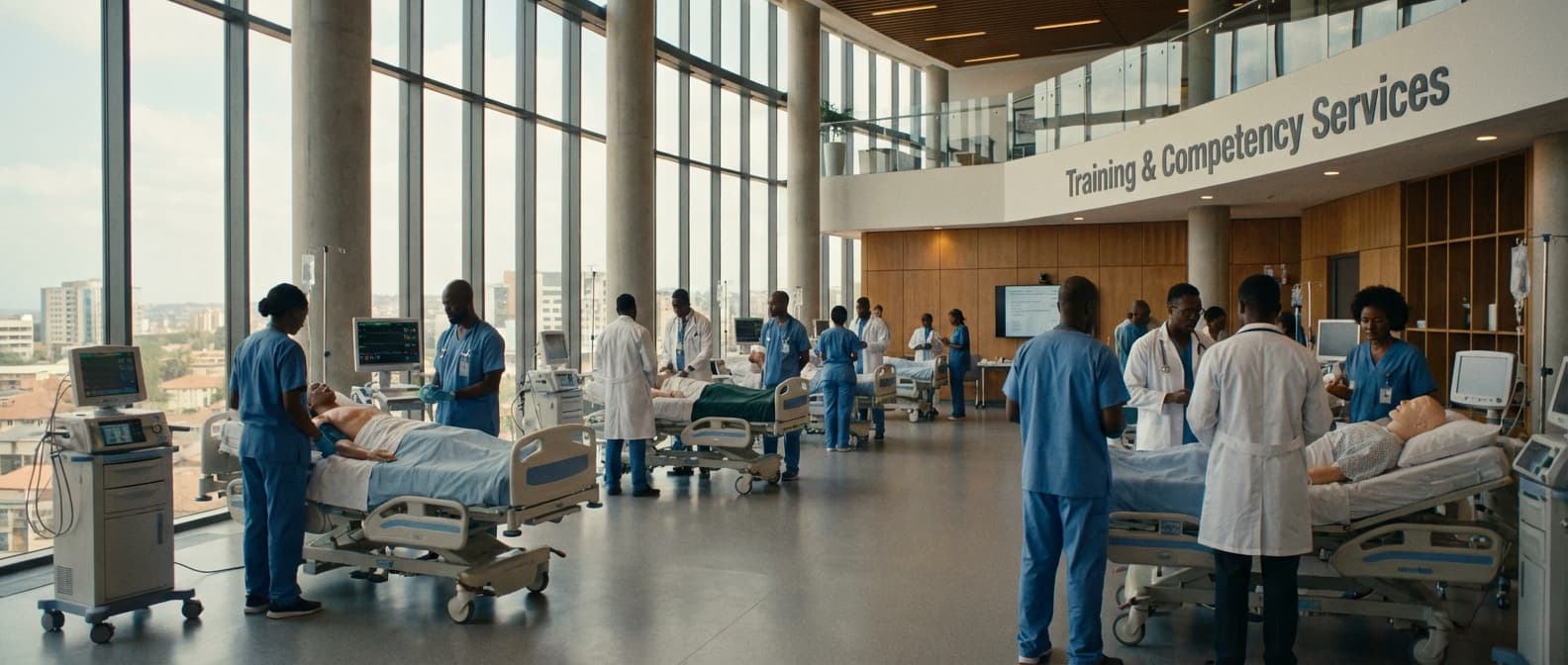
Ultrasound Application Training Service (Protocol-Based) in Malawi
Engineering Excellence & Technical Support
Ultrasound Application Training Service (Protocol-Based) High-standard technical execution following OEM protocols and local regulatory frameworks.
Empowering Healthcare Professionals
Our protocol-based ultrasound training in Malawi equips doctors and sonographers with standardized, evidence-based protocols, fostering confident and accurate diagnostic skills for improved patient care.
Bridging the Skills Gap
We deliver hands-on, practical training tailored to the Malawian context, addressing specific needs and resource limitations to enhance ultrasound proficiency and expand access to essential imaging services.
Standardized, Reproducible Results
Our curriculum focuses on mastering universally recognized ultrasound protocols, ensuring consistent image acquisition and interpretation, leading to more reliable diagnoses and better treatment outcomes for Malawian patients.
What Is Ultrasound Application Training Service (Protocol-based) In Malawi?
Ultrasound Application Training Service (Protocol-Based) in Malawi refers to specialized educational programs designed to equip healthcare professionals with the knowledge and practical skills necessary to perform and interpret ultrasound examinations in accordance with established, evidence-based protocols. This service is crucial for standardizing diagnostic quality, ensuring patient safety, and optimizing resource utilization within the Malawian healthcare system. It moves beyond general ultrasound principles to focus on specific clinical applications and the standardized procedures that define them.
| Who Needs This Service? | Typical Use Cases | |||||
|---|---|---|---|---|---|---|
| Medical Doctors (Radiologists, Obstetricians/Gynecologists, General Practitioners, Emergency Physicians): To enhance diagnostic capabilities and integrate ultrasound into their clinical practice. | Medical Imaging Technologists/Sonographers: To specialize in specific ultrasound applications and ensure adherence to standardized protocols. | Clinical Officers: Particularly those in primary healthcare settings, to provide essential diagnostic services where specialist access is limited. | Nurses (with advanced training/scope of practice): For point-of-care ultrasound (POCUS) applications, especially in critical care and emergency settings. | Healthcare Institutions (Hospitals, Clinics, Health Centers): To establish or improve ultrasound services, ensuring consistent quality and standardized practice across departments and facilities. | Training Institutions (Medical Schools, Nursing Colleges): To integrate comprehensive and protocol-driven ultrasound education into their curriculum. | |
| Obstetric Ultrasound: Gestational age estimation, fetal anomaly screening, monitoring fetal growth, assessing maternal and fetal well-being. | Gynecological Ultrasound: Pelvic mass evaluation, assessment of uterine and ovarian pathology, infertility investigations. | Abdominal Ultrasound: Evaluation of organs like the liver, gallbladder, kidneys, spleen, and pancreas for structural abnormalities and disease processes. | Vascular Ultrasound: Assessment of blood flow and identification of vascular pathologies (e.g., deep vein thrombosis, carotid artery stenosis). | Emergency Point-of-Care Ultrasound (POCUS): Rapid bedside assessment for conditions like trauma (FAST scan), pleural effusions, cardiac function, and fluid status. | Musculoskeletal (MSK) Ultrasound: Evaluation of joints, tendons, ligaments, and muscles for injuries and inflammatory conditions. | Thyroid and Breast Ultrasound: Characterization of nodules and masses. |
Key Components of Ultrasound Application Training Service (Protocol-Based):
- Protocol Development and Dissemination: Training programs are built around comprehensive, locally adapted or internationally recognized ultrasound protocols for various clinical scenarios (e.g., obstetric, gynecological, abdominal, emergency point-of-care ultrasound).
- Theoretical Instruction: In-depth lectures covering relevant anatomy, physiology, pathophysiology, ultrasound physics, image acquisition techniques, and common pathologies associated with specific applications.
- Practical Skills Training: Hands-on sessions utilizing ultrasound phantoms, simulators, and supervised scanning of actual patients under the guidance of experienced sonographers and radiologists.
- Image Interpretation and Reporting: Training on recognizing normal and abnormal ultrasound findings, documenting observations, and generating standardized, clinically relevant reports.
- Quality Assurance and Quality Control (QA/QC): Emphasis on maintaining consistent image quality, adhering to safety standards, and understanding the importance of regular equipment maintenance and performance checks.
- Case-Based Learning and Feedback: Review of real-world clinical cases to reinforce learning, identify areas for improvement, and discuss diagnostic challenges.
- Competency Assessment: Structured evaluation of trainees' theoretical knowledge and practical scanning skills to ensure they meet defined competency standards before independent practice.
Who Needs Ultrasound Application Training Service (Protocol-based) In Malawi?
In Malawi, the demand for Ultrasound Application Training Service (Protocol-Based) is driven by the critical need to enhance diagnostic capabilities, particularly in areas with limited access to specialized medical expertise. This training is crucial for healthcare professionals seeking to improve their proficiency in utilizing ultrasound for diagnosis and patient management, adhering to standardized protocols for consistent and reliable results. The service aims to bridge the gap in skill acquisition and ensure equitable access to quality ultrasound diagnostics across the nation.
| Department/Setting | Specific Needs & Applications | Impact of Training |
|---|---|---|
| Radiology Departments (Central, District Hospitals) | Comprehensive diagnostic ultrasound across various specialties (abdominal, pelvic, obstetric, vascular, musculoskeletal). Training on advanced techniques and protocol adherence for consistent reporting. | Improved diagnostic accuracy, reduced referral times, increased throughput, standardization of practice. |
| Obstetrics & Gynecology Departments | Antenatal scans (dating, anomaly, growth monitoring), gynecological assessments (pelvic masses, uterine abnormalities). Training on standardized obstetric protocols (e.g., IOTA for ovarian masses). | Early detection of pregnancy complications, improved maternal and fetal outcomes, effective management of gynecological conditions. |
| Pediatric Departments | Neonatal brain scans, abdominal ultrasounds for pediatric conditions (e.g., intussusception, appendicitis), urinary tract evaluations. | Reduced need for more invasive procedures, accurate diagnosis of pediatric ailments, improved patient care for children. |
| Emergency Departments | Point-of-care ultrasound (POCUS) for trauma assessment (FAST scan), identification of free fluid, evaluation of acute abdominal pain, and detection of life-threatening conditions. | Faster decision-making in emergencies, improved patient stabilization, reduced diagnostic delays in critical situations. |
| Primary Health Centers & Rural Clinics | Basic obstetric scans (detecting pregnancy, fetal presentation), screening for common abdominal pathologies where access to higher-level facilities is limited. Training on essential protocol-driven examinations. | Increased access to essential diagnostic imaging in underserved areas, early detection of critical conditions, improved referral pathway management. |
| Maternal & Child Health (MCH) Programs | Community-based ultrasound screening for pregnant women to identify high-risk pregnancies and ensure timely referral. | Strengthened MCH services, reduced maternal and infant mortality, improved access to essential antenatal care. |
| Non-Governmental Organizations (NGOs) & Faith-Based Organizations (FBOs) Providing Healthcare | Similar to primary health centers, focusing on essential diagnostics to support their outreach programs and clinics. | Expanded reach of diagnostic services, improved health outcomes in communities served by NGOs/FBOs. |
| Medical Training Institutions (Universities, Colleges) | Integrating comprehensive ultrasound training into medical and allied health professional curricula. Training educators on protocol-based ultrasound application. | Producing future healthcare professionals with standardized and competent ultrasound skills, ensuring a sustainable pool of trained personnel. |
Target Customers and Departments in Malawi for Ultrasound Application Training Service (Protocol-Based)
- Radiologists
- Sonographers
- General Practitioners
- Obstetricians & Gynecologists
- Pediatricians
- Emergency Medicine Physicians
- Midwives
- Clinical Officers
- Medical Technicians
- Paramedics
Ultrasound Application Training Service (Protocol-based) Process In Malawi
This document outlines the workflow for the Ultrasound Application Training Service (Protocol-Based) in Malawi, from initial inquiry to successful execution. The service aims to equip healthcare professionals with the necessary skills to perform ultrasound examinations effectively and according to established protocols. This structured approach ensures consistent quality and standardized training delivery.
| Phase | Key Activities | Responsible Party | Deliverables | Timeline (Indicative) |
|---|---|---|---|---|
| Initial contact from interested healthcare facility/individual. Discussion of training needs, target audience, specific ultrasound applications, and existing skill levels. Clarification of service scope and objectives. | Healthcare Facility/Individual, Training Provider | Initial understanding of training requirements, confirmation of service suitability. | 1-2 Weeks |
| Development of a detailed training proposal outlining objectives, curriculum, methodology, duration, required equipment, trainer qualifications, and cost. Review and negotiation of the proposal with the healthcare facility/individual. | Training Provider, Healthcare Facility/Individual | Approved training proposal, confirmation of agreement on terms and conditions. | 2-4 Weeks |
| Formalization of the training agreement, including scope, deliverables, payment terms, and cancellation policy. Joint scheduling of training dates, locations, and participant numbers. | Training Provider, Healthcare Facility/Individual | Signed training agreement, confirmed training schedule. | 1 Week |
| Logistics coordination (travel, accommodation for trainers if applicable). Distribution of pre-training materials and relevant protocols to participants. Confirmation of participant numbers and any specific equipment requirements from the facility. | Training Provider, Healthcare Facility/Individual | Prepared training venue, accessible pre-training materials, confirmed participant list. | 1-2 Weeks prior to training |
| Delivery of theoretical sessions covering ultrasound physics, anatomy, pathology, and protocol-specific guidelines. Practical hands-on sessions using ultrasound equipment (provided or facility-owned). Case study reviews and supervised scanning sessions. Assessment of learning through quizzes, practical demonstrations, and competency evaluations. | Training Provider, Participants | Knowledge acquisition, practical skill development, demonstrated competency in protocol-based scanning. | Duration varies based on module (e.g., 3-5 days per module) |
| Provision of certificates of completion to successful participants. Distribution of post-training evaluation forms to gather feedback. Follow-up support (e.g., Q&A sessions, remote assistance for a limited period) as agreed. Analysis of training effectiveness and reporting to the healthcare facility. | Training Provider, Healthcare Facility/Individual | Certificates of completion, training evaluation report, improved capacity of healthcare professionals. | 2-4 Weeks post-training |
Ultrasound Application Training Service (Protocol-Based) Workflow in Malawi
- Inquiry and Needs Assessment
- Proposal Development and Negotiation
- Training Agreement and Scheduling
- Pre-Training Preparation
- Training Execution
- Post-Training Follow-up and Evaluation
Ultrasound Application Training Service (Protocol-based) Cost In Malawi
This document outlines the typical cost of Ultrasound Application Training Services (Protocol-Based) in Malawi, focusing on pricing factors and presenting indicative cost ranges in Malawian Kwacha (MWK). Protocol-based training emphasizes hands-on practice using standardized protocols for specific ultrasound examinations, which is crucial for developing competency and ensuring consistent diagnostic quality.
The cost of such training services is influenced by several key factors, making it important for institutions and individuals to understand these variables when budgeting. These include the expertise and qualifications of the trainers, the duration and intensity of the training program, the specific ultrasound applications covered, the venue and logistical arrangements, and the number of participants. Furthermore, the inclusion of any specialized equipment, simulation tools, or materials can also impact the overall price.
| Training Type/Scope | Estimated Cost Range (MWK) |
|---|---|
| Basic General Ultrasound Applications (e.g., Abdomen, Pelvis) | 150,000 - 400,000 MWK |
| Obstetric Ultrasound (General & Routine) | 200,000 - 500,000 MWK |
| Advanced Obstetric Ultrasound (e.g., Fetal Echocardiography, High-Risk Pregnancies) | 300,000 - 700,000 MWK |
| Vascular Ultrasound (e.g., DVT, Carotid) | 250,000 - 600,000 MWK |
| Basic Echocardiography | 250,000 - 600,000 MWK |
| Specialized/Interventional Ultrasound Training (e.g., Biopsy Guidance, Musculoskeletal) | 400,000 - 900,000+ MWK |
| Refresher/Advanced Protocol Training (per module) | 100,000 - 300,000 MWK |
Key Pricing Factors for Ultrasound Application Training in Malawi
- Trainer Expertise and Qualifications: Highly experienced sonographers, radiologists, or medical professionals with specialized ultrasound knowledge command higher fees. Certifications and years of practical experience are significant differentiators.
- Training Duration and Intensity: Longer and more intensive training programs, often involving more practice sessions and case studies, will naturally incur higher costs. This can range from a few days to several weeks.
- Specific Ultrasound Applications Covered: Training focused on highly specialized or complex applications (e.g., advanced obstetric, cardiac, interventional ultrasound) is typically more expensive than general abdominal or basic obstetric training.
- Venue and Logistical Arrangements: The cost of renting suitable training facilities, providing accommodation and meals for trainers and participants (if applicable), and covering travel expenses will influence the overall price.
- Number of Participants: While some training providers may offer group discounts, a higher number of participants can sometimes increase the per-person cost due to the need for more individual attention and resources.
- Inclusion of Materials and Equipment: The provision of comprehensive training manuals, access to ultrasound machines (especially if specialized equipment is used for training), and simulation phantoms will add to the cost.
- Accreditation and Certification: Training programs leading to recognized certifications or accreditations may have higher fees due to the associated administrative and assessment costs.
Affordable Ultrasound Application Training Service (Protocol-based) Options
This service offers comprehensive and affordable ultrasound application training designed around established protocols. We understand that acquiring specialized skills can be a significant investment, so we've developed flexible training options and cost-saving strategies to make expert ultrasound knowledge accessible. Our protocol-based approach ensures trainees learn standardized and evidence-based scanning techniques, crucial for accurate diagnoses and efficient workflow. We cater to various experience levels, from beginners needing foundational knowledge to experienced practitioners seeking to expand their expertise into new applications.
| Feature | Basic Package | Premium Bundle | Institutional Plan |
|---|---|---|---|
| Protocol-Based Training Modules | ✓ | ✓ | ✓ |
| Hands-on Simulation Hours (Virtual) | 10 hours | 20 hours | Customizable |
| Expert Instructor Feedback | Email Support | Live Q&A Sessions | Dedicated Account Manager |
| Access to Protocol Library | 1 Application | 3 Applications | Full Library Access |
| Certification Exam Prep | Basic | Standard | Premium |
| Group Discounts | 10% off for 3+ | Tiered Discounts |
Training Packages & Value Bundles
- {"title":"Foundation Ultrasound Essentials","description":"Covers fundamental principles, basic knobology, and introductory protocols for a chosen core application (e.g., Abdominal, OB/GYN). Ideal for new sonographers or those transitioning into ultrasound."}
- {"title":"Specialty Application Deep Dive","description":"In-depth training on specific advanced applications (e.g., Vascular, Echocardiography, Musculoskeletal) utilizing industry-standard protocols. Designed for professionals aiming for specialization."}
- {"title":"Comprehensive Ultrasound Mastery Bundle","description":" Combines Foundation Essentials with multiple Specialty Application Deep Dives at a significantly reduced price. The most cost-effective option for broad skill acquisition."}
- {"title":"Team Training & Institutional Packages","description":"Customizable training programs for entire departments or institutions, delivered on-site or remotely. Includes group discounts and tailored curriculum development."}
- {"title":"Refresher & Advanced Protocol Update","description":" For existing sonographers, this package focuses on updating skills with the latest protocol changes and advanced techniques in their area of practice."}
Verified Providers In Malawi
Finding reliable and qualified healthcare providers is paramount for your well-being. In Malawi, discerning patients seek out healthcare professionals and facilities that have undergone rigorous verification processes. Franance Health stands out in this regard, not only for its comprehensive vetting of medical practitioners but also for the exceptional standards of care it champions. This commitment to quality assurance and patient safety makes Franance Health-credentialed providers the best choice for your healthcare needs in Malawi.
| Credentialing Aspect | Franance Health's Approach | Benefit for Patients |
|---|---|---|
| Licensing and Registration | Verification of current and valid medical licenses with relevant Malawian authorities. | Ensures providers are legally permitted to practice medicine. |
| Educational Background | Confirmation of degrees, diplomas, and specialized training from accredited institutions. | Guarantees a strong foundation of medical knowledge and expertise. |
| Professional Experience | Assessment of practical experience, including previous roles and areas of specialization. | Provides confidence in the provider's ability to handle diverse medical cases. |
| Reputation and Ethics | Inclusion of checks on professional conduct and patient feedback where possible. | Promotes a positive and trustworthy patient-provider relationship. |
| Continuing Medical Education (CME) | Encouragement and, where applicable, verification of participation in ongoing professional development. | Ensures providers are up-to-date with the latest medical advancements and treatments. |
Why Franance Health Credentials Matter
- Rigorous Verification: Franance Health employs a multi-faceted approach to verify credentials, ensuring all listed providers are licensed, accredited, and possess the necessary qualifications and experience.
- Commitment to Quality: Beyond basic licensing, Franance Health assesses adherence to ethical practices, patient-centered care, and up-to-date medical knowledge.
- Enhanced Patient Trust: Knowing a provider is Franance Health-credentialed offers a significant layer of assurance, reducing the anxiety associated with seeking medical attention.
- Access to Excellence: Franance Health helps connect patients with a network of highly competent and reputable healthcare professionals across various specializations.
- Continuous Monitoring: Franance Health's commitment extends beyond initial vetting, often involving ongoing monitoring to maintain high standards within its network.
Scope Of Work For Ultrasound Application Training Service (Protocol-based)
This Scope of Work (SOW) outlines the requirements for providing a comprehensive, protocol-based ultrasound application training service. The service aims to equip sonographers and other relevant medical professionals with the necessary skills and knowledge to perform specific ultrasound examinations according to established protocols, ensuring diagnostic accuracy and patient safety. The training will be delivered through a combination of theoretical instruction, hands-on practical sessions, and standardized assessment methods. Emphasis will be placed on adhering to defined protocols for image acquisition, optimization, and interpretation.
| Technical Deliverable | Standard Specification | Description | Verification Method |
|---|---|---|---|
| Ultrasound Protocol Library (Digital/Print) | Adherence to established professional guidelines (e.g., AIUM, EFSUMB, local standards) | A comprehensive collection of detailed, step-by-step protocols for each targeted ultrasound application (e.g., Abdominal, OB/GYN, Vascular, Cardiac). Protocols will specify views, measurements, patient positioning, and scanning techniques. | Review of provided protocols against recognized industry standards and expert validation. |
| Training Curriculum (Module-Based) | Each module clearly defines learning objectives, content, and duration. | Structured curriculum divided into modules, covering theoretical aspects, protocol breakdown, practical demonstration, and case studies for each application. Modules will be sequential and build upon prior knowledge. | Curriculum review by subject matter experts to ensure logical flow and comprehensive coverage. |
| Practical Scanning Sessions (Minimum Hours per Application) | Minimum 8 hours of supervised hands-on scanning per major application (e.g., Abdominal, OB/GYN) with at least 50% of the time dedicated to independent scanning under supervision. | Supervised practical sessions where trainees apply learned protocols on phantoms, simulators, or volunteer models. Focus on real-time feedback and correction to ensure protocol adherence. | Trainee scanning logs, supervisor observation reports, and recorded scanning sessions for review. |
| Image Quality Checklist | Checklist items must be measurable and observable, related to protocol requirements. | A standardized checklist used during practical assessment to evaluate the quality of acquired images against protocol-specific criteria (e.g., correct transducer selection, optimal depth and gain settings, absence of significant artifacts, presence of all required views). | Auditing of completed checklists from assessment sessions. |
| Competency Assessment Tools | Standardized scoring rubric with clearly defined pass/fail criteria. | Formal assessment of trainee competency, typically including a practical scanning evaluation where the trainee performs a protocol-guided examination and a theoretical assessment (e.g., multiple-choice questions, short answer) covering protocol details and relevant ultrasound principles. | Review of assessment results, including scoring rubrics and examiner notes. |
| Training Feedback Forms | Standardized format with quantitative and qualitative feedback options. | Forms for trainees to provide feedback on the training content, instructors, facilities, and overall effectiveness of the program. This is crucial for continuous improvement. | Analysis of aggregated feedback data to identify areas for enhancement. |
| Certificate of Completion | Issued upon successful completion of all training modules and assessments, clearly stating the trained application(s) and the protocol-based approach. | Formal document issued to trainees who meet the required competency standards for each trained ultrasound application. | Verification of issuance based on successful assessment outcomes. |
Key Training Components
- Theoretical foundation of ultrasound physics and principles relevant to specific applications.
- In-depth review and practical application of standardized ultrasound protocols for targeted examinations.
- Hands-on scanning sessions with real or simulated patients to practice protocol adherence.
- Image optimization techniques to achieve diagnostic quality images.
- Introduction to common artifacts and troubleshooting strategies.
- Basic principles of image interpretation and reporting within the context of the trained protocols.
- Competency assessment through practical scanning evaluations and theoretical quizzes.
- Provision of training materials and reference guides aligned with protocols.
Service Level Agreement For Ultrasound Application Training Service (Protocol-based)
This Service Level Agreement (SLA) outlines the response times and uptime guarantees for the Ultrasound Application Training Service (Protocol-Based). This agreement is designed to ensure the consistent and reliable availability of the training platform and timely support for users.
| Service Component | SLA Guarantee | Measurement Period | Exclusions |
|---|---|---|---|
| Training Platform Uptime | 99.5% Monthly Uptime | Calendar Month | Scheduled maintenance, force majeure events, and issues caused by customer's network or equipment. |
| Support Request Response Time (Critical Issues) | 1 Business Hour | During Business Hours (9 AM - 5 PM PST, Mon-Fri) | Issues not impacting core training functionality or ability to access the platform. |
| Support Request Response Time (General Inquiries/Non-Critical) | 4 Business Hours | During Business Hours (9 AM - 5 PM PST, Mon-Fri) | N/A |
| System Updates & Maintenance (Scheduled) | Advance notice of 48 hours | As needed | Emergency maintenance or security patches may require shorter notice. |
Key Service Components
- Training Platform Uptime
- Response Times for Support Requests
- Escalation Procedures
Frequently Asked Questions

Ready when you are
Let's scope your Ultrasound Application Training Service (Protocol-Based) in Malawi project in Malawi.

Scaling healthcare logistics and technical systems across the entire continent.