
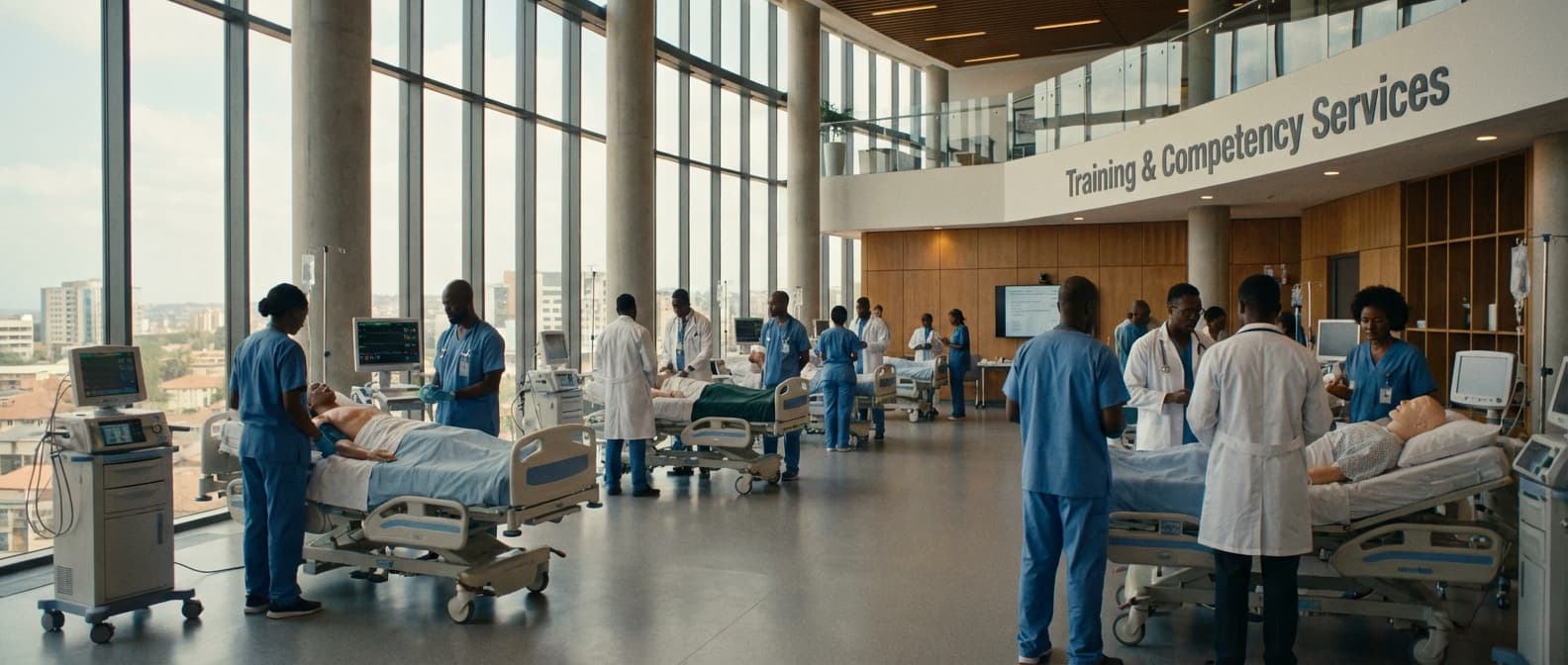
MRI Operator Training Service (Radiographers) in Malawi
Engineering Excellence & Technical Support
MRI Operator Training Service (Radiographers) High-standard technical execution following OEM protocols and local regulatory frameworks.
Advanced Neuroimaging Protocols
Master intricate MRI sequences for neurological conditions, including diffusion tensor imaging (DTI) and functional MRI (fMRI), enhancing diagnostic accuracy for complex brain pathologies relevant to Malawian healthcare needs.
Thoracic & Abdominal Imaging Excellence
Gain proficiency in specialized MRI protocols for thoracic and abdominal imaging, focusing on common and critical conditions encountered in Malawi, ensuring optimal image quality and precise anatomical assessment.
Equipment Optimization & Troubleshooting
Develop hands-on skills in optimizing MRI scanner performance, managing image artifacts, and performing basic troubleshooting for common issues, ensuring reliable and efficient operation of MRI equipment in diverse Malawian settings.
What Is Mri Operator Training Service (Radiographers) In Malawi?
MRI Operator Training Service (Radiographers) in Malawi refers to specialized educational programs designed to equip radiographers with the requisite knowledge and practical skills to safely and effectively operate Magnetic Resonance Imaging (MRI) equipment. This training is crucial for ensuring diagnostic image quality, patient safety during scans, and adherence to established protocols within the Malawian healthcare context. The service encompasses theoretical instruction, hands-on simulation, and supervised clinical experience tailored to the specific MRI systems and clinical workflows prevalent in Malawian medical facilities.
| Target Audience | Need for Training | Typical Use Cases |
|---|---|---|
| Newly qualified radiographers in Malawi. | To acquire fundamental knowledge and practical skills for independent MRI operation. | Introduction to MRI technology and patient scanning in academic hospitals and larger healthcare centers. |
| Existing radiographers transitioning to MRI specialization. | To bridge skill gaps and update knowledge on advanced MRI techniques and safety protocols. | Expansion of MRI services in regional hospitals, private clinics, and specialized diagnostic centers. |
| Radiographers in facilities acquiring new MRI equipment. | To ensure proficiency with specific vendor models, software versions, and optimized workflow implementation. | Installation and commissioning of new MRI scanners, requiring operator proficiency from inception. |
| Healthcare professionals involved in radiology department management. | To understand operational requirements, safety standards, and quality control for MRI services. | Developing and overseeing MRI service delivery, ensuring compliance with national healthcare regulations and international best practices. |
Key Components of MRI Operator Training Service:
- Physics of MRI: Fundamental principles of nuclear magnetic resonance, signal generation, image formation, and understanding of magnetic field interactions.
- MRI Safety Protocols: Comprehensive training on patient screening, contraindications (e.g., ferromagnetic implants), emergency procedures, radiation protection principles (though MRI is non-ionizing, safety considerations for magnetic fields are paramount), and personnel safety.
- Pulse Sequences and Image Acquisition: Understanding various pulse sequences (e.g., T1-weighted, T2-weighted, FLAIR, DWI), their parameters, and their application in generating specific tissue contrasts and anatomical detail.
- Image Reconstruction and Post-processing: Familiarization with image reconstruction algorithms, windowing, leveling, and basic post-processing techniques for optimal visualization.
- Patient Care and Management: Techniques for patient preparation, comfort, communication, and management of claustrophobia or anxiety during MRI examinations.
- Quality Assurance and Control: Principles of routine equipment checks, artifact identification, and troubleshooting to maintain optimal image quality.
- Anatomical and Pathological Correlation: Understanding common anatomical structures and pathological conditions visualized by MRI to effectively tailor scan protocols.
- Legal and Ethical Considerations: Awareness of data privacy, patient consent, and professional conduct within the MRI environment.
- Hands-on Practical Training: Supervised operation of MRI scanners, including patient positioning, protocol selection, scanning, and data management.
Who Needs Mri Operator Training Service (Radiographers) In Malawi?
This document outlines the critical need for specialized MRI Operator Training Services for radiographers in Malawi. As Magnetic Resonance Imaging (MRI) technology becomes increasingly vital for accurate diagnosis and effective patient care, ensuring that radiographers possess the necessary skills and knowledge is paramount. This training aims to equip radiographers with the competency to operate MRI scanners safely and efficiently, interpret complex imaging procedures, and contribute to the advancement of medical imaging services within Malawi.
| Target Customer Group | Primary Departments of Employment | Rationale for Training Need |
|---|---|---|
| Existing Radiographers (Public Sector) | Government Hospitals (Central, District), Ministry of Health Facilities | To upgrade skills to operate and manage existing or newly acquired MRI machines, improve diagnostic accuracy, and meet national healthcare standards. Addresses potential skill gaps due to limited prior training opportunities. |
| Existing Radiographers (Private Sector) | Private Diagnostic Imaging Centers, Private Hospitals, Specialized Clinics | To enhance service delivery in competitive private healthcare markets, offer advanced imaging services, and maintain high-quality patient care. Private facilities often invest in newer technologies requiring specialized operation. |
| Aspiring MRI Radiographers / New Graduates | Diagnostic Imaging Departments (with or without existing MRI), Training Institutions | To equip individuals with specialized knowledge and practical skills for a growing field, enabling them to fill critical roles in facilities acquiring or expanding MRI services. Provides a pathway to career advancement. |
| Radiographers in Remote or Underserved Areas | District Hospitals, Rural Health Centers (potentially with mobile MRI units in future) | To empower radiographers to provide essential MRI services in areas where access is currently limited, contributing to equitable healthcare distribution. Addresses the need for trained personnel even with limited local infrastructure. |
| Radiography Educators and Supervisors | Universities, Colleges of Health Sciences, Training Centers | To ensure trainers are up-to-date with current MRI technology and best practices, enabling them to effectively train future generations of MRI operators. This builds a sustainable training ecosystem. |
| Radiographers in Teaching Hospitals | University Teaching Hospitals | To support advanced diagnostic procedures, research, and medical education, often involving complex MRI protocols and interpretation. Crucial for academic medical centers. |
Target Customers and Departments for MRI Operator Training Service in Malawi
- Radiographers currently employed in diagnostic imaging departments.
- Radiographers aspiring to specialize in MRI imaging.
- New graduates from radiography programs seeking specialized skills.
- Radiographers working in both public and private healthcare facilities.
Mri Operator Training Service (Radiographers) Process In Malawi
This document outlines the typical workflow for an MRI Operator Training Service catering to Radiographers in Malawi. The process encompasses the journey from initial inquiry to the successful execution and completion of the training program.
| Stage | Description | Key Activities | Responsible Parties | Deliverables/Outcomes |
|---|---|---|---|---|
| The process begins when a radiography department, hospital, or individual radiographer expresses interest in MRI operator training. | Reception of inquiry, initial discussion of training needs, clarification of service offerings, preliminary discussion of scope and potential dates. | Potential Client (Radiography Department/Individual Radiographer), Training Service Provider | Understanding of client's basic needs, initial rapport established, willingness to proceed to next stage. |
| A detailed understanding of the client's specific requirements and existing infrastructure is crucial for tailoring the training. | Site visit (if feasible), assessment of existing MRI equipment, review of current radiographer skill levels, identification of specific training gaps (e.g., specific protocols, advanced techniques, safety procedures), discussion of desired learning outcomes. | Training Service Provider (Consultants/Trainers), Client Representatives (Radiology Manager, Senior Radiographers) | Detailed training needs analysis report, customized training curriculum outline, identification of logistical requirements. |
| Based on the needs assessment, a comprehensive proposal is developed, outlining the training program, costs, and terms. | Development of a detailed training proposal (including modules, duration, trainers, methodology, venue, equipment requirements, assessment methods), submission of the proposal, negotiation of terms, finalization and signing of a training agreement/contract. | Training Service Provider, Client | Signed training agreement, clear understanding of scope, deliverables, timelines, and financial commitments. |
| This stage involves all necessary logistical and administrative arrangements before the training commences. | Scheduling of training dates and times, confirmation of venue and facilities, procurement of training materials (manuals, presentations, case studies), pre-training communication with participants (outlining prerequisites, agenda, expectations), arrangement of trainer travel and accommodation. | Training Service Provider, Client (for venue access and participant availability) | Confirmed training schedule, prepared training materials, ready training environment, informed participants. |
| The core of the service delivery where the theoretical and practical training takes place. | Delivery of lectures and theoretical sessions, hands-on practical training on MRI equipment (simulated or actual), demonstration of imaging protocols and sequences, discussion of patient positioning and safety, problem-solving scenarios, quizzes and knowledge checks. | Lead Trainer(s), Assistant Trainer(s), Participants (Radiographers) | Acquisition of knowledge and practical skills in MRI operation, improved understanding of safety protocols and imaging techniques. |
| Assessing the effectiveness of the training and providing ongoing support. | Conducting post-training assessments (e.g., written exams, practical evaluations), gathering feedback from participants and client, providing post-training mentorship or Q&A sessions (e.g., via email, teleconference), offering refresher training options. | Training Service Provider, Participants, Client | Assessment reports of participant competency, feedback summary, identified areas for further improvement, ongoing support channel. |
| Formal recognition of training completion and maintaining a relationship with the client. | Issuance of training certificates to successful participants, final invoicing and payment, follow-up communication to gauge the impact of the training on departmental performance, potential for repeat or advanced training engagements. | Training Service Provider, Client | Certified Radiographers, satisfied client, potential for long-term partnership. |
MRI Operator Training Service Workflow (Malawi)
- Inquiry and Initial Consultation
- Needs Assessment and Customization
- Proposal and Agreement
- Pre-Training Preparations
- Training Execution
- Post-Training Evaluation and Support
- Certification and Follow-up
Mri Operator Training Service (Radiographers) Cost In Malawi
The cost of MRI operator training for radiographers in Malawi is influenced by a variety of factors, leading to a significant range in pricing. These factors include the duration and depth of the training program, the reputation and accreditation of the training institution, the specific skills and knowledge being imparted (e.g., basic operation vs. advanced techniques, specific MRI sequences), the inclusion of practical, hands-on experience with MRI equipment, and the availability of qualified instructors. Furthermore, whether the training is conducted locally within Malawi or involves travel to a neighboring country or overseas can substantially impact the overall cost due to associated travel, accommodation, and daily living expenses. The specific type of MRI equipment used during training, if any, can also play a role, as access to and maintenance of such specialized machinery incurs costs. Government subsidies or grants, if available, can also reduce out-of-pocket expenses for trainees or institutions.
| Training Type | Estimated Cost Range (Malawian Kwacha - MWK) | Notes |
|---|---|---|
| Basic MRI Operator Workshop (1-3 days) | MWK 50,000 - MWK 150,000 | Focuses on fundamental principles, safety, and basic image acquisition. May not include extensive hands-on. |
| Comprehensive MRI Operator Course (1-4 weeks) | MWK 200,000 - MWK 800,000 | Covers a broader range of topics, including physics, anatomy, protocols, and patient care. Usually includes practical sessions. |
| Specialized MRI Training Module (e.g., Neuro, MSK, Cardiac) | MWK 100,000 - MWK 400,000 (per module) | Advanced training for specific applications, often building upon basic operator skills. Cost varies with specialization. |
| On-site Training (at a Malawian facility) | Variable (negotiated) | Cost depends on the number of participants, duration, and trainer's fees. Institutional rates may apply. |
| Training Abroad (e.g., South Africa, India) | MWK 1,000,000 - MWK 3,000,000+ | Includes tuition, flights, accommodation, visas, and daily expenses. Significantly higher cost. |
Key Pricing Factors for MRI Operator Training in Malawi:
- Training Program Duration and Intensity
- Institution's Reputation and Accreditation
- Scope of Training (Basic vs. Advanced, Specific Modalities)
- Availability of Practical/Hands-on Experience
- Instructor Qualifications and Experience
- Location of Training (Local vs. International/Regional)
- Associated Travel and Accommodation Costs
- Type of MRI Equipment Used (if applicable)
- Potential for Government Subsidies or Grants
Affordable Mri Operator Training Service (Radiographers) Options
This service offers accessible and cost-effective MRI operator training for radiographers, focusing on practical skills and essential knowledge. We understand the budgetary constraints faced by healthcare facilities and are committed to providing high-value training solutions. Our approach emphasizes flexible learning options and strategic cost-saving measures to maximize your investment in radiographer development.
| Value Bundle | Description | Cost-Saving Benefit |
|---|---|---|
| Foundational MRI Operator Training | Covers core principles of MRI physics, patient safety, image acquisition techniques, and basic protocol management. Ideal for new MRI operators or those transitioning from other imaging modalities. | Reduces reliance on expensive external agencies for basic MRI staffing. Enhances diagnostic capabilities of existing staff. |
| Specialized Protocol Training | Focuses on specific MRI protocols for various anatomical regions (e.g., neuro, musculoskeletal, abdominal) and advanced applications (e.g., functional MRI, diffusion tensor imaging). | Improves image quality and diagnostic accuracy for specific examinations, leading to fewer repeat scans and better patient outcomes. Allows for in-house performance of specialized scans, reducing outsourcing costs. |
| MRI Safety and Compliance Training | Comprehensive training on all aspects of MRI safety, including ferromagnetic detection, screening procedures, RF and gradient safety, and emergency protocols. | Minimizes the risk of accidents and potential litigation, saving on insurance premiums and legal fees. Ensures compliance with regulatory requirements. |
| Comprehensive Skill Development Package | A bundled offering that includes foundational training, a selection of specialized protocols, and a refresher on MRI safety. Often includes train-the-trainer components. | Provides a holistic training solution at a significantly reduced per-person cost compared to purchasing individual modules. Creates internal training capacity, further reducing long-term training expenses. |
Key Features and Cost-Saving Strategies
- Modular Training Curriculum: Break down training into customizable modules, allowing facilities to select only the specific skills and knowledge required, reducing overall training time and cost.
- Blended Learning Approach: Combine online theoretical modules with on-site practical sessions. Online components reduce travel and accommodation expenses for instructors and trainees.
- Train-the-Trainer Programs: Empower experienced in-house radiographers to become certified trainers, creating a sustainable and cost-effective training infrastructure within your facility.
- Group Discounts: Significant savings are available for multiple radiographers trained simultaneously, encouraging team development and knowledge sharing.
- Flexible Scheduling: Training can be scheduled to minimize disruption to clinical operations, reducing the need for expensive overtime or locum tenens coverage.
- Refresher Courses and Advanced Specializations: Offer cost-effective options for ongoing professional development and upskilling of existing staff, preventing the need for recruitment of new, more experienced personnel.
- Access to Online Resources: Provide ongoing access to learning materials, case studies, and expert forums, extending the value of the initial training.
- Partnerships with Equipment Manufacturers: Leverage relationships with MRI equipment providers for potential bundled training discounts or access to specialized training equipment.
Verified Providers In Malawi
Finding trustworthy healthcare providers is paramount for ensuring quality care. In Malawi, Franance Health stands out as a premier resource for identifying verified and reputable medical professionals. Their rigorous credentialing process and commitment to transparency make them an invaluable partner for anyone seeking reliable healthcare.
| Provider Type | Key Verification Criteria | Benefits for Patients |
|---|---|---|
| General Practitioners | Medical degree from accredited institution, valid medical license, proof of continuing medical education (CME). | Access to reliable primary care, early diagnosis and treatment, referrals to specialists. |
| Specialist Physicians (e.g., Cardiologists, Pediatricians, Surgeons) | Board certification in their specialty, fellowship training, extensive clinical experience, peer reviews. | Expertise in specific medical conditions, advanced treatment options, management of complex health issues. |
| Nurses (RNs, ENs) | Nursing degree/diploma, valid nursing license, specialized certifications (e.g., critical care, midwifery). | Quality bedside care, patient education, medication administration, support during recovery. |
| Pharmacists | Pharmacy degree, valid pharmacy license, knowledge of drug interactions and formulations. | Safe and accurate dispensing of medications, advice on drug usage and side effects, pharmaceutical care. |
| Dentists | Dental degree, valid dental license, specializations in orthodontics, periodontics, etc. | Oral health assessment, preventive care, restorative and cosmetic dental treatments. |
Why Franance Health is the Best Choice for Verified Providers in Malawi:
- Comprehensive Credentialing: Franance Health employs a multi-faceted approach to verify the qualifications, licenses, and certifications of all listed providers. This includes checking educational backgrounds, professional affiliations, and any disciplinary actions.
- Focus on Expertise and Experience: Beyond basic credentials, Franance Health assesses the practical experience and specialized skills of healthcare professionals, ensuring that patients are connected with individuals best suited to their specific needs.
- Commitment to Patient Safety: The core of Franance Health's mission is patient safety. By thoroughly vetting providers, they mitigate risks and promote a secure healthcare environment for all.
- Transparency and Accessibility: Franance Health provides clear and accessible information about each provider's credentials, allowing patients to make informed decisions with confidence.
- Continuous Monitoring: Their commitment doesn't end with initial verification. Franance Health maintains ongoing monitoring to ensure providers continue to meet their high standards.
- User-Friendly Platform: Navigating the healthcare landscape can be daunting. Franance Health offers a user-friendly platform that simplifies the process of finding and selecting verified healthcare professionals.
Scope Of Work For Mri Operator Training Service (Radiographers)
This Scope of Work (SOW) outlines the requirements for providing comprehensive MRI Operator Training Services specifically for radiographers. The training will equip radiographers with the necessary theoretical knowledge and practical skills to safely and effectively operate MRI scanners, acquire high-quality diagnostic images, and manage patient care during MRI examinations. The training will adhere to industry best practices and safety protocols, ensuring competency and compliance with regulatory standards.
| Phase | Activity | Description | Deliverable | Standard Specifications |
|---|---|---|---|---|
| On-site Needs Assessment | Evaluate existing radiographer skill levels, current MRI equipment, and specific training requirements. | Needs Assessment Report | Report detailing identified gaps, training priorities, and recommended curriculum modules. |
| Customized Curriculum Design | Develop a tailored training curriculum based on the needs assessment, covering theoretical and practical aspects. | Training Curriculum Document | Comprehensive syllabus including learning objectives, content outline, duration, and assessment methods for each module. |
| Classroom Lectures & Seminars | Deliver in-depth lectures on MRI physics, pulse sequences, image formation, safety, and contrast agents. | Lecture Notes & Presentation Materials | High-quality, up-to-date materials aligned with current MRI technology and clinical practice. Accessible in digital format. |
| Interactive Discussions & Case Studies | Facilitate group discussions and analyze real-world clinical cases to reinforce learning. | Case Study Summaries & Discussion Outcomes | Well-documented case studies illustrating common pathologies and imaging challenges. Summaries of key learning points. |
| Scanner Operation & Parameter Optimization | Hands-on training on the actual MRI scanner, covering patient positioning, protocol selection, and parameter adjustment. | Trainee Competency Checklist | Checklist documenting successful completion of key operational tasks and parameter optimization for various protocols. |
| Image Acquisition & Quality Control | Practical sessions focused on acquiring high-quality images, identifying artifacts, and implementing quality control measures. | Sample Acquired Images (Anonymized) | Representative set of high-quality MR images demonstrating successful acquisition for different body parts and sequences. Images should be free from significant artifacts. |
| Patient Screening & Safety Procedures | Simulated and supervised practical training on patient screening for contraindications and management of MRI safety. | Patient Screening Protocol Adherence Record | Documentation of trainee's ability to accurately perform patient screening and adhere to safety protocols. |
| Contrast Agent Administration (if applicable) | Supervised practical training on the administration of MRI contrast agents, including dosage calculation and injection techniques. | Contrast Administration Competency Sign-off | Supervisor sign-off confirming trainee's proficiency in contrast agent administration according to institutional guidelines. |
| Theoretical Knowledge Assessment | Written or online examination to assess comprehension of theoretical concepts. | Examination Results | Pass/Fail or graded results, clearly indicating areas of strength and weakness. |
| Practical Skills Evaluation | On-site observation and evaluation of radiographers' performance during live or simulated MRI scans. | Practical Skills Assessment Report | Detailed report on demonstrated practical skills, including areas for improvement. |
| Training Completion Certificate | Issuance of certificates upon successful completion of all training modules and assessments. | Training Completion Certificates | Professionally designed certificates bearing the names of the trainee, the trainer, the training institution, and the scope of training. |
| Refresher Training & Consultation | Optional provision of refresher training sessions or remote consultation for ongoing support. | Session Logs & Consultation Summaries | Record of conducted refresher sessions or consultations with documented outcomes. |
Training Objectives
- To provide radiographers with a foundational understanding of MRI physics, principles, and hardware.
- To train radiographers in patient preparation, screening, and safety protocols for MRI examinations.
- To develop radiographers' proficiency in operating various MRI scanner functionalities and sequences.
- To enable radiographers to optimize imaging parameters for specific anatomical regions and clinical indications.
- To instill best practices in image acquisition, processing, and quality control.
- To ensure radiographers are knowledgeable about MRI contrast agents and their administration.
- To familiarize radiographers with common artifacts and troubleshooting techniques.
- To emphasize radiation safety principles relevant to MRI procedures.
- To cultivate effective communication and patient management skills in the MRI environment.
Service Level Agreement For Mri Operator Training Service (Radiographers)
This Service Level Agreement (SLA) outlines the agreed-upon service levels for the MRI Operator Training Service provided to radiographers. It defines the expected response times for support requests and establishes uptime guarantees for the training platform. This SLA aims to ensure the efficient and effective delivery of training, minimizing disruptions to the learning process.
| Incident Priority | Response Time Target (Business Hours) | Uptime Guarantee |
|---|---|---|
| Critical Incident | 1 Hour | 99.5% Monthly Uptime |
| High Priority Incident | 2 Business Hours | 99.8% Monthly Uptime |
| Medium Priority Incident | 4 Business Hours | 99.9% Monthly Uptime |
| Low Priority Incident | 1 Business Day | 99.9% Monthly Uptime |
Key Service Definitions
- Business Hours: Monday to Friday, 9:00 AM to 5:00 PM (Local Time). Excludes public holidays.
- Critical Incident: An issue that renders the MRI Operator Training platform completely inaccessible or prevents users from completing core training modules. This includes system outages, login failures for all users, or complete data corruption.
- High Priority Incident: An issue that significantly degrades the performance of the MRI Operator Training platform, affecting a substantial number of users or preventing access to essential functionalities, but does not render the entire platform inoperable. Examples include slow loading times for all modules, inability to access specific non-critical features, or recurring errors impacting multiple users.
- Medium Priority Incident: An issue that impacts a limited number of users or a specific functionality of the MRI Operator Training platform, but does not significantly hinder the overall training process. Examples include a minor bug in a specific module, incorrect display of certain information, or a single user experiencing login difficulties.
- Low Priority Incident: A general inquiry, request for enhancement, or a minor issue that does not prevent users from accessing or utilizing the core functionalities of the MRI Operator Training platform. Examples include questions about platform features, requests for additional documentation, or cosmetic issues.
- Response Time: The maximum time allowed for the service provider to acknowledge and begin working on a reported incident. This does not imply resolution time.
Frequently Asked Questions

Ready when you are
Let's scope your MRI Operator Training Service (Radiographers) in Malawi project in Malawi.

Scaling healthcare logistics and technical systems across the entire continent.