
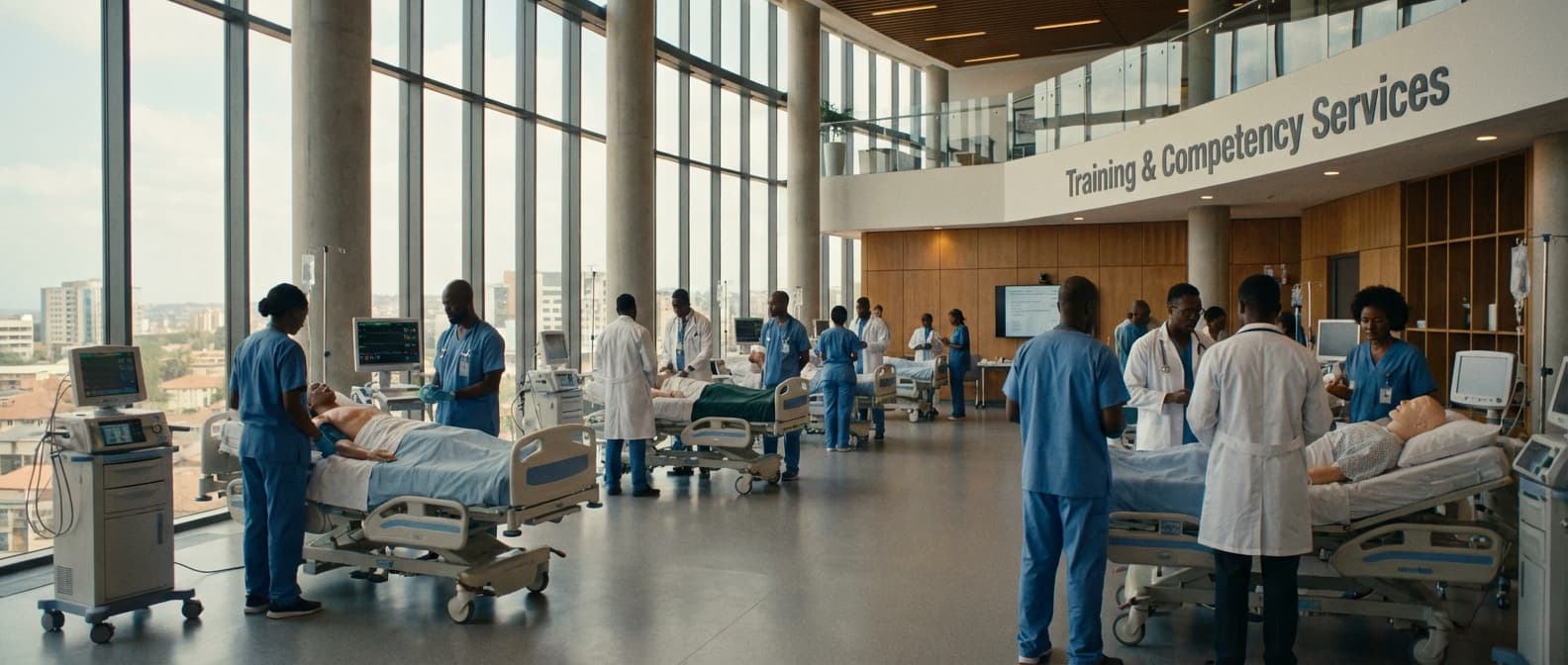
CT Operator Training Service (Radiographers) in Malawi
Engineering Excellence & Technical Support
CT Operator Training Service (Radiographers) High-standard technical execution following OEM protocols and local regulatory frameworks.
Advanced CT Imaging Protocols
Master state-of-the-art CT imaging protocols tailored for the Malawian healthcare landscape, focusing on efficient patient throughput and high-quality diagnostic images for common pathologies encountered locally.
Radiation Safety & Dose Optimization
Gain expert knowledge in ALARA principles and practical techniques for radiation dose optimization in CT examinations, ensuring patient and staff safety while maintaining diagnostic image integrity within the Malawian context.
Modern CT Equipment Operation & Troubleshooting
Develop proficiency in operating and performing basic troubleshooting on contemporary CT scanner models prevalent in Malawi, empowering radiographers to maximize equipment uptime and ensure reliable service delivery.
What Is Ct Operator Training Service (Radiographers) In Malawi?
CT Operator Training Service (Radiographers) in Malawi refers to specialized educational programs designed to equip diagnostic radiographers with the necessary theoretical knowledge and practical skills to proficiently operate Computed Tomography (CT) scanners. This service ensures that practitioners can perform CT examinations safely, effectively, and in accordance with established protocols and international best practices. It encompasses training on various aspects of CT imaging, including image acquisition, patient preparation, radiation safety, quality assurance, and understanding of cross-sectional anatomy and pathology.
| Who Needs CT Operator Training Service (Radiographers)? | Typical Use Cases | |||||||
|---|---|---|---|---|---|---|---|---|
| Diagnostic radiographers, radiologic technologists, and other allied health professionals involved in the direct operation of CT scanners in clinical settings. | Acquisition of new CT imaging technology requiring specialized operator training. | Introduction of new CT scanning protocols or applications. | Enhancement of existing skills and knowledge for experienced operators. | Compliance with regulatory requirements for CT operator competency. | Addressing radiographer shortages with upskilled personnel. | Improving diagnostic accuracy and patient outcomes through optimized imaging. | Facilitating advanced CT procedures such as CT angiography, CT colonography, and CT-guided interventions. | Ensuring adherence to radiation safety standards and dose optimization. |
Key Components of CT Operator Training Service:
- CT Physics and Principles: Understanding the fundamental physics behind X-ray generation, beam attenuation, data acquisition, image reconstruction algorithms (e.g., filtered back projection, iterative reconstruction), and the generation of cross-sectional images.
- CT Scanner Operation: Hands-on training on the specific hardware and software of various CT scanner models, including patient table movement, gantry operation, console controls, and parameter selection (kVp, mAs, pitch, slice thickness, reconstruction kernel).
- Patient Protocols and Positioning: Development and application of standardized scanning protocols for different anatomical regions (e.g., head, chest, abdomen, pelvis) and pathologies, including optimal patient positioning for image quality and diagnostic yield.
- Radiation Safety and Dose Management: Comprehensive training on radiation physics, biological effects of radiation, principles of ALARA (As Low As Reasonably Achievable), dose monitoring techniques, and optimization strategies to minimize patient and staff radiation exposure.
- Image Quality and Artifact Recognition: Understanding factors that influence image quality, common imaging artifacts (e.g., beam hardening, motion, metal), and methods for artifact reduction and correction.
- Contrast Media Administration and Management: Training on the principles of iodinated and non-iodinated contrast media, indications, contraindications, administration techniques, potential adverse reactions, and emergency management.
- Quality Assurance and Control: Implementing and performing regular quality assurance tests on CT equipment to ensure optimal performance and diagnostic accuracy, adhering to regulatory requirements.
- Anatomical and Pathological Correlation: Integrating knowledge of human anatomy and common pathologies with CT imaging findings to ensure accurate interpretation and reporting support.
- Emergency Procedures: Familiarization with emergency protocols for patient-related incidents during CT examinations.
Who Needs Ct Operator Training Service (Radiographers) In Malawi?
CT scan technology is a vital diagnostic tool in modern healthcare, and its effective operation relies heavily on skilled radiographers. In Malawi, a growing demand for advanced medical imaging necessitates a focus on ensuring radiographers are proficient in CT operation. This training service is crucial for maintaining high standards of patient care, diagnostic accuracy, and operational efficiency within healthcare facilities. The need for specialized CT operator training stems from the complexity of the equipment, the importance of radiation safety protocols, and the need to interpret complex cross-sectional images. Investing in such training directly contributes to improved patient outcomes and strengthens the overall healthcare infrastructure.
| Target Department/Role | Specific Needs Addressed by Training | Impact on Patient Care/Operations |
|---|---|---|
| Radiology Departments | Advanced CT imaging techniques, protocol optimization, image interpretation skills, radiation dose management. | Improved diagnostic accuracy, reduced repeat scans, enhanced patient safety, efficient workflow. |
| Oncology Departments | CT for treatment planning (radiotherapy), tumor staging and monitoring, understanding of specific oncological imaging protocols. | Precise radiation delivery, better assessment of treatment response, improved patient management for cancer care. |
| Emergency Departments (EDs) | Rapid CT acquisition for trauma and acute conditions, emergency protocols, efficient patient throughput. | Faster diagnosis of life-threatening conditions, timely intervention, reduced mortality and morbidity in emergencies. |
| Surgical Departments (e.g., Neurosurgery, Orthopedics, General Surgery) | CT for pre-operative planning, intra-operative guidance (where applicable), post-operative assessment, understanding of surgical indications for CT. | Safer and more precise surgical procedures, improved patient outcomes, reduced complications. |
| Internal Medicine Departments | Understanding of CT findings for various medical conditions, appropriate referral for CT imaging, interpretation of basic CT reports. | More informed clinical decision-making, better patient management for a wide range of medical illnesses. |
| Pediatric Departments | Pediatric-specific CT protocols, radiation dose reduction in children, handling and sedation considerations for pediatric patients. | Minimizing radiation exposure for vulnerable young patients, obtaining diagnostic quality images in children, ensuring patient comfort and safety. |
Target Customers for CT Operator Training Service (Radiographers) in Malawi:
- Public Hospitals (Central and District)
- Mission Hospitals
- Private Hospitals and Diagnostic Centers
- Tertiary Referral Centers
- Academic and Teaching Hospitals
Ct Operator Training Service (Radiographers) Process In Malawi
This document outlines the typical workflow for a CT Operator Training Service (Radiographers) in Malawi, covering the process from initial inquiry to the successful execution of the training program.
| Stage | Description | Key Activities | Responsible Parties | Potential Challenges |
|---|---|---|---|---|
| Inquiry and Initial Consultation | The process begins with an interested facility (hospital, clinic, training institution) expressing interest in CT operator training. | Receive inquiry via email, phone, or in-person meeting. Discuss training needs, desired outcomes, and potential participant numbers. Provide preliminary information on available training programs and general scope. | Prospective Client (Facility Management/Radiology Department), Training Service Provider (TSP) | Lack of clear understanding of training needs. Unrealistic expectations about course content or duration. Difficulty in identifying the right contact person. |
| Needs Assessment and Proposal Development | A detailed understanding of the client's specific requirements is established to tailor the training. | Conduct a thorough needs assessment (site visit, interviews, review of existing equipment and staff qualifications).
Develop a customized training proposal outlining:
| TSP (Training Specialists, Curriculum Developers), Prospective Client (Radiology Manager, HR Department) | Inadequate information gathering. Misalignment between perceived needs and actual needs. Difficulty in accommodating specific equipment variations. Delayed feedback on the proposal. |
| Contract Negotiation and Agreement | Formalize the training agreement, ensuring clarity on all terms and conditions. | Review and negotiate the training proposal. Finalize contract terms (scope, deliverables, timelines, payment schedule, intellectual property, confidentiality, cancellation policies). Sign the official training agreement. | TSP (Legal Department, Management), Prospective Client (Legal Department, Procurement) | Lengthy negotiation periods. Disagreements on contract clauses. Bureaucratic approval processes within the client organization. |
| Pre-Training Preparation and Logistics | All necessary arrangements are made for smooth training delivery. | Confirm training dates and venue. Mobilize trainers and subject matter experts. Prepare training materials (manuals, presentations, case studies). Arrange for any necessary equipment or simulators. Coordinate participant registration and communication. Secure accommodation and travel for trainers (if applicable). Ensure venue readiness (projector, internet, whiteboards, etc.). | TSP (Training Coordinator, Logistics Manager), Client (HR, Facilities) | Trainer unavailability. Logistical issues (transportation, accommodation). Last-minute participant cancellations. Technical difficulties with training equipment. |
| Training Execution | The core training program is delivered to the radiographers. | Conduct theoretical sessions (CT physics, anatomy, protocols, safety). Deliver practical sessions on CT scanners (hands-on scanning, image acquisition, manipulation). Utilize simulation exercises for complex scenarios. Provide case study analysis and discussion. Conduct formative assessments throughout the training. Facilitate interactive learning and Q&A sessions. | TSP (Trainers, Facilitators), Participants (Radiographers) | Varying levels of participant prior knowledge. Technical issues with CT scanners. Time constraints impacting curriculum coverage. Language barriers (if applicable). Participant engagement challenges. |
| Post-Training Evaluation and Certification | Assess the learning outcomes and formally recognize successful completion. | Conduct summative assessments (written exams, practical skill evaluations). Provide constructive feedback to participants. Issue certificates of completion for successful candidates. Gather feedback from participants on the training program (satisfaction surveys). Compile a post-training report for the client, summarizing outcomes and participant performance. | TSP (Assessors, Trainers), Participants | Subjectivity in practical assessments. Difficulty in administering standardized evaluations. Delayed feedback from participants. Challenges in translating assessment results into actionable insights. |
| Follow-up and Support | Offer ongoing assistance to reinforce learning and address any emerging issues. | Provide access to post-training resources (online forums, knowledge bases). Offer technical support for CT operations. Conduct follow-up refresher courses or advanced modules as needed. Monitor the application of learned skills in the workplace. Maintain a communication channel for ongoing queries. | TSP (Support Team, Senior Trainers), Client | Limited access to follow-up resources. Lack of a structured system for ongoing support. Difficulty in measuring the long-term impact of the training. Evolving technological advancements requiring updated training. |
CT Operator Training Service Workflow in Malawi
- Inquiry and Initial Consultation
- Needs Assessment and Proposal Development
- Contract Negotiation and Agreement
- Pre-Training Preparation and Logistics
- Training Execution
- Post-Training Evaluation and Certification
- Follow-up and Support
Ct Operator Training Service (Radiographers) Cost In Malawi
The cost of CT Operator Training Services for Radiographers in Malawi is influenced by several key factors, leading to a variable pricing structure. These factors include the duration and intensity of the training program, the qualifications and experience of the instructors, the institution providing the training (public vs. private), the level of hands-on practical experience offered, and the inclusion of additional modules or certifications. Generally, the training is delivered through formal educational institutions or specialized training centers. Costs can range significantly, impacting accessibility for individual radiographers and healthcare facilities.
Key Pricing Factors:
- Duration and Intensity: Shorter, introductory courses will be less expensive than comprehensive, multi-week programs covering advanced techniques. The number of hours of didactic and practical training directly correlates with cost.
- Instructor Expertise: Highly experienced and specialized radiographers or medical physicists as instructors command higher fees, which are reflected in the training cost.
- Institution Type: Publicly funded institutions may offer subsidized training, making it more affordable, while private training providers often have higher overheads and specialized resources, leading to elevated prices.
- Practical Training Component: Access to functional CT scanners for hands-on practice is crucial and a significant cost driver. The availability and maintenance of this equipment contribute to the overall price.
- Curriculum Scope: Training that includes theoretical foundations, operational procedures, image acquisition, post-processing, patient safety protocols, and quality assurance will naturally be more comprehensive and costly than basic operational training.
- Certification and Accreditation: If the training leads to a recognized certification or is accredited by a relevant professional body, this adds value and often increases the price.
- Location and Logistics: For training conducted outside of major urban centers, or if accommodation and travel are included, these logistical costs will be factored into the price.
Estimated Cost Ranges (Malawian Kwacha - MWK):
Given the factors above, it's challenging to provide exact figures without specific course details. However, based on general industry trends and the Malawian context, the following ranges are estimated:
- Basic/Introductory CT Operator Workshops (2-3 days): These might focus on fundamental principles and basic operation. Estimated cost could range from MWK 50,000 to MWK 150,000 per participant.
- Intermediate CT Operator Training (1-2 weeks): Covering more detailed protocols, common pathologies, and some practical sessions. Estimated cost could range from MWK 150,000 to MWK 400,000 per participant.
- Advanced/Comprehensive CT Operator Training (3-4 weeks or longer): Including in-depth theory, extensive hands-on experience, quality control, and troubleshooting. Estimated cost could range from MWK 400,000 to MWK 1,000,000+ per participant.
Note: These are estimations. Actual costs can vary widely. It is advisable to contact specific training providers in Malawi for precise quotations based on their course offerings.
| Training Level | Estimated Duration | Estimated Cost Range (MWK) |
|---|---|---|
| Basic/Introductory | 2-3 Days | 50,000 - 150,000 |
| Intermediate | 1-2 Weeks | 150,000 - 400,000 |
| Advanced/Comprehensive | 3-4 Weeks or longer | 400,000 - 1,000,000+ |
Factors Influencing CT Operator Training Costs in Malawi
- Duration and Intensity of Training
- Instructor Qualifications and Experience
- Type of Training Institution (Public vs. Private)
- Availability and Quality of Practical/Hands-on Training
- Scope and Depth of Curriculum
- Certification and Accreditation Status
- Logistical Considerations (Travel, Accommodation, if applicable)
Affordable Ct Operator Training Service (Radiographers) Options
This service focuses on providing accessible and budget-friendly CT operator training for radiographers. We understand the financial constraints many healthcare facilities face and offer flexible options to ensure high-quality education without breaking the bank. Our goal is to empower radiographers with the essential skills and knowledge to operate CT scanners safely and effectively. We achieve this through a combination of innovative training methodologies, optimized resource utilization, and strategic partnerships, allowing us to pass on significant cost savings to our clients.
| Bundle Name | Key Features | Target Audience | Cost-Saving Benefit |
|---|---|---|---|
| Core CT Operator Training Module | Fundamentals of CT, patient care, basic protocols. | New radiographers, transitioning staff. | Lower initial investment, comprehensive foundation. |
| Advanced Protocol Development & Optimization Bundle | CTA, cardiac CT, neuro CT protocols, dose reduction. | Experienced radiographers, lead technologists. | Improved efficiency, reduced repeat scans, potential for lower contrast/radiation costs. |
| On-Site Training & Simulation Packages | Training at your facility, hands-on with existing equipment. | All radiographers. | Eliminates travel and accommodation expenses for staff. |
| Blended Learning Solutions | Online modules + limited in-person sessions. | All radiographers. | Reduced downtime, lower training duration, cost-effective online delivery. |
| Group & Institutional Discounts | Tiered pricing based on enrollment numbers. | Departments, hospitals, imaging centers. | Significant per-person cost reduction for larger groups. |
| Train-the-Trainer Programs | Equipping internal staff to teach. | Senior radiographers, lead technologists. | Long-term cost savings through sustainable internal training, reduced external dependency. |
| Partnerships with Equipment Manufacturers | Integrated training for specific CT platforms. | Facilities using partnered manufacturers' equipment. | Potential for bundled discounts, specialized training at reduced rates. |
| Modular Training & Continuing Education Credits | Flexible, topic-specific modules, CEU eligible. | All radiographers seeking targeted skills or CEUs. | Pay only for necessary training, added value through CE credits. |
Key Value Bundles and Cost-Saving Strategies:
- {"title":"Core CT Operator Training Module","description":"This foundational package covers all essential aspects of CT operation, including principles of CT imaging, patient positioning, scan parameter selection, image acquisition protocols, and basic artifact recognition. It's designed to provide a comprehensive understanding for new or transitioning radiographers."}
- {"title":"Advanced Protocol Development & Optimization Bundle","description":"Geared towards experienced radiographers, this bundle delves into advanced techniques for developing and optimizing CT protocols for specific clinical applications (e.g., CTA, cardiac CT, neuro imaging). It emphasizes dose reduction strategies and improved image quality."}
- {"title":"On-Site Training & Simulation Packages","description":"We offer the flexibility of on-site training at your facility, reducing travel costs for your staff. These packages can be customized to include hands-on training with your existing equipment and simulation exercises for practical skill reinforcement. This significantly lowers the overall training expenditure."}
- {"title":"Blended Learning Solutions","description":"Combine the cost-effectiveness of online learning modules with focused in-person practical sessions. This allows for self-paced theoretical learning, minimizing the time radiographers need to be away from their clinical duties, and reducing the overall duration and cost of training."}
- {"title":"Group & Institutional Discounts","description":"The more radiographers you enroll, the greater the savings. We offer tiered pricing structures and significant discounts for bulk enrollments, making it an economical choice for departments and institutions."}
- {"title":"Train-the-Trainer Programs","description":"Empower your in-house senior radiographers to deliver foundational CT training. Our train-the-trainer programs equip them with the curriculum, teaching materials, and expertise to effectively onboard new staff, creating a sustainable and cost-efficient internal training resource."}
- {"title":"Partnerships with Equipment Manufacturers","description":"By collaborating with CT scanner manufacturers, we can often access specialized training modules or discounted training packages that integrate seamlessly with specific equipment. This can lead to significant cost reductions for facilities utilizing these manufacturers."}
- {"title":"Modular Training & Continuing Education Credits","description":"Our training can be broken down into smaller, focused modules, allowing you to address specific skill gaps or provide continuing education. This flexibility ensures you only pay for the training you need, and many modules are eligible for continuing education credits, further enhancing their value."}
Verified Providers In Malawi
When seeking healthcare services in Malawi, particularly those offered by international organizations or through specific health financing mechanisms, identifying verified providers is paramount. Franance Health has emerged as a leading entity in this space, earning a reputation for its stringent credentialing processes and commitment to quality care. This document outlines why Franance Health's verified providers represent the best choice for patients and partners in Malawi.
| Credential Type | Verification Process | Benefits to Patients | Examples of Franance Health Verified Providers (Illustrative) |
|---|---|---|---|
| Facility Accreditation | Assessment of infrastructure, equipment, hygiene, safety protocols, and adherence to regulatory requirements. | Ensures a safe and well-equipped environment for treatment; reduces risk of infections and medical errors. | Selected Hospitals and Clinics meeting international operational standards. |
| Practitioner Licensing and Certification | Verification of medical licenses from the Malawi Health Professions Council, specialized certifications, and continuous professional development. | Guarantees that medical professionals possess the necessary qualifications and expertise. | Registered Doctors, Nurses, Specialists with valid practicing certificates. |
| Specialty Competency | Evaluation of specific skills and experience in particular medical fields. | Ensures patients receive expert care for complex or niche medical conditions. | Cardiologists, Oncologists, Pediatric Surgeons, etc. |
| Patient Satisfaction and Feedback | Regular collection and analysis of patient feedback to gauge service quality and patient experience. | Drives continuous improvement in service delivery and patient care. | Providers consistently achieving high patient satisfaction scores. |
| Ethical Conduct and Compliance | Adherence to a strict code of conduct, including data privacy, non-discrimination, and transparent billing practices. | Protects patient rights and ensures fair and ethical treatment. | All verified providers must pass an ethical compliance audit. |
Why Franance Health Credentials Matter
- Rigorous Vetting Process: Franance Health employs a multi-stage vetting system that scrutinizes healthcare facilities and individual practitioners. This includes verification of licenses, certifications, adherence to ethical standards, and a review of patient feedback.
- Commitment to Quality Standards: Verified providers have demonstrated a commitment to upholding internationally recognized quality of care standards, ensuring patient safety, efficacy of treatment, and a positive patient experience.
- Transparency and Accountability: Franance Health promotes transparency by making provider credentials readily accessible, allowing patients to make informed decisions. Furthermore, their accountability framework ensures that verified providers are held to high operational and ethical standards.
- Access to Specialized Care: By partnering with a network of verified providers, Franance Health facilitates access to a range of specialized medical services, often bridging gaps in local healthcare availability.
- Enhanced Patient Trust: The 'Franance Health Verified' mark instills confidence in patients, assuring them that they are receiving care from reputable and well-qualified professionals and institutions.
Scope Of Work For Ct Operator Training Service (Radiographers)
This document outlines the Scope of Work (SOW) for CT Operator Training Services specifically targeting Radiographers. It details the technical deliverables and standard specifications required to ensure effective and standardized training for CT operators.
| Category | Specification | Description |
|---|---|---|
| Training Curriculum | Modular Design | Curriculum to be divided into logical modules covering fundamental CT physics, image acquisition, patient preparation, safety protocols, artifact recognition, and advanced techniques. Each module should have defined learning objectives. |
| Training Curriculum | Competency-Based | Training must focus on developing specific competencies required for safe and effective CT operation, directly linking to job performance and patient care. |
| Training Manuals | Content Accuracy | Manuals must reflect current best practices, manufacturer guidelines for specific CT equipment (if applicable), and relevant regulatory standards. |
| Training Manuals | Clarity and Accessibility | Content should be presented in a clear, concise, and easily understandable language with appropriate diagrams, images, and flowcharts. Available in both digital and printable formats. |
| Practical Training | Equipment Simulation | Where feasible, use of CT simulators or a designated training CT scanner is required for hands-on practice without patient involvement for initial skill development. |
| Practical Training | Real-time Patient Scenarios | Supervised practical sessions on actual patients (under strict supervision) to apply theoretical knowledge to real-world clinical situations. |
| Practical Training | Protocol Management | Training on selecting, modifying, and documenting appropriate CT protocols based on patient demographics, clinical indication, and image quality requirements. |
| Assessment Tools | Formative and Summative | Include both formative assessments during training to gauge understanding and summative assessments at the end of modules/program to evaluate overall competency. |
| Assessment Tools | Objective Scoring | Assessment tools should have clear, objective scoring criteria to ensure fairness and consistency in evaluation. |
| Training Certificates | Standardized Format | Certificates to include trainee name, course title, duration, date of completion, and issuing organization's details. Should clearly state 'CT Operator Training for Radiographers'. |
| Post-Training Support | Follow-up Mechanism | Provision for a defined period of post-training support, such as Q&A sessions, access to online resources, or remote expert consultation, to address any immediate post-training challenges. |
| Training Evaluation | Feedback Mechanism | A structured method for trainees and supervisors to provide feedback on the training program's effectiveness, content, and delivery. |
| Training Evaluation | Outcome Measurement | Report should analyze training effectiveness based on assessment results and feedback, identifying areas of strength and opportunities for improvement in future training. |
| Radiation Safety | Comprehensive Coverage | Training must extensively cover radiation physics, dose optimization techniques (e.g., ALARA principle), patient shielding, quality assurance (QA) of CT equipment, and emergency procedures related to radiation. |
| Image Quality | Artifact Identification & Mitigation | Thorough training on common CT artifacts, their causes, and methods for identification and minimization to ensure diagnostic image quality. |
| Patient Care | Contrast Media Management | Detailed training on the administration of contrast media, including indications, contraindications, potential adverse reactions, monitoring, and management protocols. |
| Patient Care | Patient Positioning & Immobilization | Effective techniques for patient positioning and immobilization to minimize motion artifacts and ensure optimal scan coverage. |
Technical Deliverables
- Comprehensive Training Curriculum Document
- Training Manuals for Radiographers
- Practical Training Session Protocols and Checklists
- Assessment Tools (Quizzes, Practical Exams, Case Studies)
- Training Completion Certificates
- Post-Training Support Plan
- Training Evaluation Report
Service Level Agreement For Ct Operator Training Service (Radiographers)
This Service Level Agreement (SLA) outlines the performance standards for the CT Operator Training Service (Radiographers) provided by [Your Company Name] to [Client Company Name]. It defines the expected response times for support requests and the guaranteed uptime of the training platform and associated resources.
| Service Component | Severity Level | Response Time Guarantee | Target Resolution Time | Uptime Guarantee |
|---|---|---|---|---|
Key Definitions
- {"item":"CT Operator Training Service:","description":"The provision of online and/or in-person training modules, simulations, and assessments designed to educate and certify radiographers on the safe and effective operation of CT scanners."}
- {"item":"Training Platform:","description":"The web-based or software application used to deliver, manage, and track CT operator training content."}
- {"item":"Support Request:","description":"A communication from the Client to [Your Company Name] regarding a technical issue, functional question, or access problem with the CT Operator Training Service."}
- {"item":"Scheduled Maintenance:","description":"Planned periods of downtime for the Training Platform to perform updates, upgrades, or system maintenance. Clients will be notified in advance."}
- {"item":"Response Time:","description":"The maximum time within which [Your Company Name] will acknowledge receipt of a Support Request and begin active investigation or provide an initial resolution/workaround."}
- {"item":"Resolution Time:","description":"The maximum time within which [Your Company Name] will aim to fully resolve a reported issue. This is an aspirational target and may vary based on issue complexity."}
- {"item":"Uptime:","description":"The percentage of time the Training Platform is available and accessible to authorized users."}
Frequently Asked Questions

Ready when you are
Let's scope your CT Operator Training Service (Radiographers) in Malawi project in Malawi.

Scaling healthcare logistics and technical systems across the entire continent.