
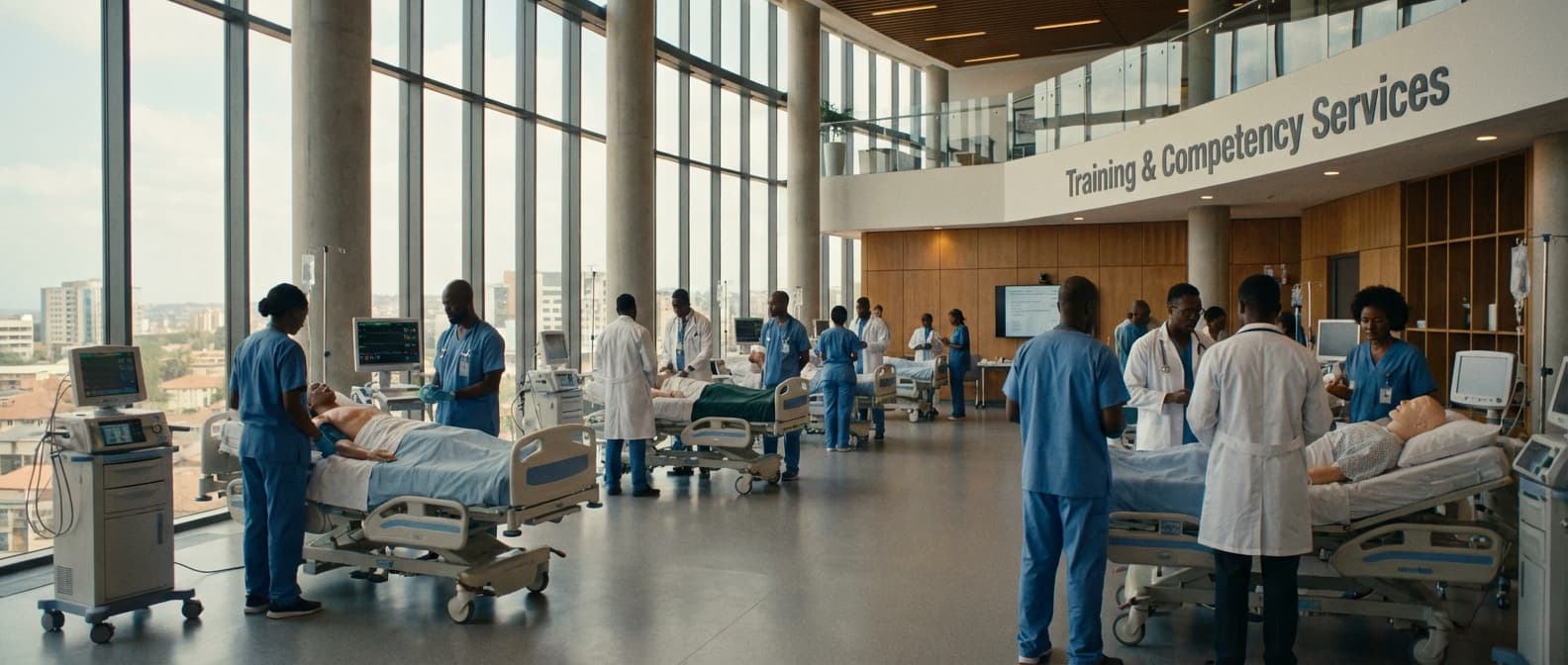
Biomedical Engineering First-Line Support Training Service in Malawi
Engineering Excellence & Technical Support
Biomedical Engineering First-Line Support Training Service High-standard technical execution following OEM protocols and local regulatory frameworks.
Remote Diagnostic & Troubleshooting Mastery
Empower Malawian Biomedical Engineers with advanced remote diagnostic tools and techniques, enabling rapid identification and resolution of medical equipment issues from anywhere, minimizing downtime and ensuring patient care continuity.
Hands-On Practical Skill Development
Provide intensive, practical training on the maintenance, repair, and calibration of essential biomedical devices prevalent in Malawian healthcare settings, fostering self-sufficiency and reducing reliance on external expertise.
Safety & Compliance Protocol Adherence
Instill a strong understanding of international safety standards and regulatory compliance for medical equipment operation and maintenance, ensuring the highest levels of patient and user safety within Malawi's healthcare infrastructure.
What Is Biomedical Engineering First-line Support Training Service In Malawi?
Biomedical Engineering First-Line Support Training Service in Malawi refers to the provision of foundational technical training and practical skills development for individuals tasked with the initial stages of maintaining, troubleshooting, and performing minor repairs on medical devices within healthcare facilities across Malawi. This service is crucial for ensuring the operational readiness and safety of essential medical equipment, thereby directly impacting patient care outcomes. It focuses on equipping personnel with the knowledge and competencies to identify common equipment malfunctions, perform routine preventive maintenance, and execute basic corrective actions, thereby reducing reliance on external specialized support for everyday issues.
| Target Audience | Rationale for Training | Typical Use Cases |
|---|---|---|
| Hospital Technicians and Maintenance Staff | Enhance on-site capacity for immediate response to equipment downtime, minimize service delays, and extend equipment lifespan. | Performing daily checks on vital signs monitors, sterilizers, centrifuges, and basic laboratory equipment. Basic troubleshooting of minor electrical faults in examination lights or patient beds. Routine cleaning and functional tests of nebulizers and oxygen concentrators. |
| Clinical Staff (Nurses, Doctors, Lab Technologists) | Empower clinicians to perform basic checks and identify issues that might hinder immediate use, thereby improving workflow and patient safety. | Verifying the operational status of essential devices before patient use (e.g., ECG machines, ultrasound probes). Identifying and reporting malfunctions of diagnostic equipment. Basic user-level maintenance such as filter replacement in ventilators. |
| Community Health Workers (CHWs) and Staff in Rural Health Posts | Provide essential skills for managing and maintaining simple medical tools in resource-limited settings where specialized biomedical support is scarce. | Ensuring functionality of basic diagnostic tools like stethoscopes, thermometers, and blood pressure monitors. Performing simple cleaning and storage protocols for portable medical equipment. Recognizing when a device requires escalation to a higher-level facility. |
| Newly Recruited Biomedical Engineering Trainees | Establish a fundamental understanding of medical equipment and support protocols as a prerequisite for advanced training and professional development. | Familiarization with a range of medical devices commonly found in training hospitals. Practicing basic diagnostic procedures under supervision. Understanding the importance of documentation and safety protocols. |
Key Components of Biomedical Engineering First-Line Support Training in Malawi:
- Basic principles of medical device operation and functionality.
- Identification and understanding of common medical equipment types prevalent in Malawian healthcare settings.
- Fundamentals of electrical and mechanical safety related to medical devices.
- Standard operating procedures for routine preventive maintenance (e.g., cleaning, calibration checks, battery management).
- Methodologies for initial troubleshooting and diagnostic assessment of equipment failures.
- Basic repair techniques for common and low-complexity hardware issues.
- Safe handling and disposal of medical devices and associated consumables.
- Documentation practices for maintenance and repair activities.
- Awareness of regulatory compliance and quality assurance principles.
- Introduction to essential test equipment and tools.
Who Needs Biomedical Engineering First-line Support Training Service In Malawi?
Biomedical Engineering First-Line Support Training Service in Malawi is crucial for ensuring the optimal functionality, safety, and longevity of medical equipment within the healthcare system. This training equips local technicians and healthcare professionals with the essential skills to perform routine maintenance, basic troubleshooting, and minor repairs, thereby reducing reliance on external support, minimizing equipment downtime, and improving patient care. The demand for such services is driven by the increasing number of medical devices in Malawian health facilities, the need for cost-effective equipment management, and the government's commitment to strengthening healthcare infrastructure.
| Target Customer Type | Specific Departments/Roles | Key Training Needs | Impact of Training |
|---|---|---|---|
| Government Hospitals | Biomedical Engineering Department (if existing), General Technicians, Clinical Engineers (basic first-line skills), Nurses/Clinical Officers (for specific device operation and basic checks), Maintenance Units | Preventive maintenance schedules, basic troubleshooting of common equipment (e.g., BP monitors, oxygen concentrators, basic lab equipment), minor repair techniques, safety protocols, documentation and reporting. | Reduced equipment downtime, improved reliability of essential medical devices, extended equipment lifespan, cost savings on external repair services, enhanced patient safety. |
| Mission Hospitals | In-house Maintenance Staff, Clinical Officers, Nurses in charge of specific units | Similar to Government Hospitals, with a focus on the specific types of equipment prevalent in mission settings, often including portable and less complex devices. | Sustainable equipment operation in resource-constrained environments, empowerment of local staff, improved service delivery to underserved populations. |
| NGO Health Facilities | On-site Technicians, Health Centre In-charges, Project Managers overseeing equipment | Practical, hands-on training for a range of medical devices, focusing on immediate problem-solving and maintenance within budget constraints. Understanding of donated equipment. | Ensuring the functionality of critical equipment for health programs, increased efficiency of aid delivery, reduced dependency on expatriate technical support. |
| Private Clinics and Hospitals | In-house Technicians, Clinic Managers, Heads of Departments (e.g., Radiology, Laboratory) | Training on more advanced or specialized equipment if present, efficient fault diagnosis, proactive maintenance to ensure high service quality and patient satisfaction. | Maintaining a competitive edge, minimizing revenue loss due to equipment failure, ensuring adherence to quality standards. |
| Medical Training Institutions | Technical Staff responsible for the maintenance of training equipment (simulators, lab instruments) | Basic repair and maintenance of educational tools to ensure consistent availability for practical training of future healthcare professionals. | Uninterrupted training programs, cost-effectiveness in managing educational resources, preparing competent future healthcare providers. |
Target Customers and Departments for Biomedical Engineering First-Line Support Training Service in Malawi
- Government Hospitals (Central, District, and Referral)
- Mission Hospitals
- Non-Governmental Organization (NGO) Health Facilities
- Private Clinics and Hospitals
- Medical Training Institutions (for their own equipment maintenance)
Biomedical Engineering First-line Support Training Service Process In Malawi
This document outlines the standard workflow for the Biomedical Engineering First-Line Support Training Service in Malawi, detailing the process from initial inquiry to successful execution. The service aims to equip healthcare facilities with trained personnel capable of performing basic maintenance, troubleshooting, and user support for biomedical equipment, thereby improving equipment uptime and reducing reliance on external technicians for minor issues.
| Stage | Description | Key Activities | Responsible Parties | Deliverables/Outcomes |
|---|---|---|---|---|
| The initial contact from a healthcare facility expressing interest in the training service. |
| Healthcare Facility Management, Biomedical Engineering Department, Service Provider Representatives | Understanding of facility's training requirements, list of target equipment, number of trainees, potential training dates. |
| Formalizing the training offering based on the assessed needs. |
| Service Provider (Training Department/Consultants), Healthcare Facility Management | Formalized training proposal, signed agreement/MoU, confirmed budget and schedule. |
| Tailoring the training content and logistics to the specific context. |
| Service Provider (Training Team), Subject Matter Experts (SMEs), Logistics Coordinators | Finalized curriculum, training materials, confirmed trainers, booked venue, logistical arrangements. |
| The actual execution of the training program at the designated facility. |
| Certified Trainers, Trainees (Biomedical Engineering Technicians, Clinical Staff) | Delivered training sessions, participant attendance records, trainee performance during assessments, initial feedback on training effectiveness. |
| Ensuring sustained learning and assessing the impact of the training. |
| Service Provider (Training Team, Technical Support), Healthcare Facility Management | Training certificates, documented post-training support interactions, evaluation reports, recommendations for future training or support, improved equipment reliability metrics (if measurable). |
Key Stages of the Training Service Process
- Inquiry and Needs Assessment
- Proposal Development and Agreement
- Curriculum Customization and Planning
- Training Delivery
- Post-Training Support and Evaluation
Biomedical Engineering First-line Support Training Service Cost In Malawi
Providing first-line support training for biomedical engineers in Malawi is a specialized service crucial for maintaining and extending the lifespan of medical equipment. The cost of such training is influenced by several factors, including the duration and depth of the curriculum, the qualifications and experience of the trainers, the location and facilities provided, and the specific equipment or technologies covered. Given the current economic landscape in Malawi, pricing is typically presented in Malawian Kwacha (MWK).
| Training Type | Estimated Duration | Estimated Cost Range (MWK) | Notes |
|---|---|---|---|
| Basic Preventive Maintenance & Troubleshooting | 2-3 Days | MWK 50,000 - 150,000 per participant | Focus on common equipment, routine checks, and simple fixes. Group discounts may apply. |
| Intermediate Equipment-Specific Training | 3-5 Days | MWK 100,000 - 300,000 per participant | Covers specific types of medical devices (e.g., patient monitors, basic imaging equipment). May include hands-on sessions. |
| Advanced Diagnostic & Repair Techniques | 5-7 Days | MWK 200,000 - 500,000+ per participant | For complex equipment or specialized systems. Often requires experienced trainers and specialized equipment access. |
| On-Site Customized Training | Variable | Negotiable (Package pricing) | Costs depend on duration, content, number of participants, and trainer travel/accommodation. Often quoted as a total package. |
| Online/Blended Learning Modules | Variable | MWK 30,000 - 100,000 per participant | More cost-effective, but may lack hands-on experience. Pricing varies by depth and interactivity. |
Key Pricing Factors for Biomedical Engineering First-Line Support Training in Malawi:
- Curriculum Scope and Complexity: Basic troubleshooting and preventive maintenance will be less expensive than advanced diagnostic techniques or training on specific high-tech medical devices (e.g., MRI, CT scanners, advanced ventilators).
- Trainer Expertise and Experience: Highly qualified biomedical engineers with extensive practical experience and international certifications will command higher fees.
- Training Duration: The number of days or hours dedicated to the training directly impacts the overall cost.
- Training Format: In-person, hands-on training with access to actual equipment is generally more expensive than online or theoretical sessions.
- Location and Logistics: If the training is delivered at a client's site, travel, accommodation, and per diem costs for trainers need to be factored in. For training at a dedicated facility, rental and maintenance of that facility contribute to the cost.
- Group Size: Larger groups may allow for a lower per-participant cost due to economies of scale, but this can sometimes compromise individual attention.
- Equipment Access and Simulation: Training that includes hands-on practice with functional medical equipment or realistic simulators will be more costly.
- Certification and Assessment: The inclusion of formal assessments, examinations, and accredited certifications will add to the price.
- Materials and Resources: Provision of training manuals, software licenses, and other learning materials are usually included in the overall fee.
- Provider Reputation and Accreditation: Established training providers with a strong reputation and relevant accreditations may charge a premium.
Affordable Biomedical Engineering First-line Support Training Service Options
Securing effective and affordable first-line biomedical engineering support training is crucial for healthcare facilities to ensure patient safety, equipment uptime, and efficient operations. This service focuses on equipping technicians with fundamental troubleshooting skills, preventative maintenance techniques, and basic repair knowledge for common medical devices. The value lies in reducing reliance on external vendors for minor issues, faster resolution times, and a more proactive approach to equipment management. Cost-saving strategies and value bundles are key to making this training accessible and impactful.
| Value Bundle Type | Description | Included Services/Content | Cost-Saving Strategy | Typical Cost Range (USD) |
|---|---|---|---|---|
| Core Skills Package | Focuses on fundamental, widely applicable skills for general biomedical support. | Basic troubleshooting (power, connectivity, error codes), preventative maintenance checklists, safety protocols, tool familiarization. | Reduces need for vendor calls for common, minor issues; empowers in-house staff for routine tasks. | $500 - $1,500 per technician |
| Device-Specific Introduction | Targeted training for specific, high-volume or critical device categories. | Troubleshooting and PM for specific ventilators, patient monitors, infusion pumps (e.g., 2-3 device types). | Expedites resolution of common issues with frequently used equipment; defers specialized training for complex repairs. | $800 - $2,500 per technician (depending on device complexity) |
| Train-the-Trainer Program | Equips senior technicians to train new or less experienced staff internally. | Advanced troubleshooting techniques, curriculum development for internal training, coaching skills, assessment methods. | Scales training efficiently within the organization; creates sustainable in-house expertise; reduces ongoing external training costs. | $3,000 - $7,000 per trainer (cohort-based pricing often available) |
| Modular Online Learning | Flexible, self-paced online modules covering specific topics. | Short video lectures, interactive quizzes, downloadable guides on specific troubleshooting steps or PM tasks. | Reduces travel and time-away-from-work costs; allows for just-in-time learning and reinforcement; highly scalable. | $50 - $200 per module per technician |
| On-Demand Virtual Support | Live, remote expert assistance for challenging first-line issues. | Real-time video consultation with a senior biomedical engineer to guide technicians through complex troubleshooting. | Prevents escalation to costly vendor support for issues that can be resolved with expert guidance; minimizes equipment downtime. | Subscription-based ($200 - $1,000 per month) or per-incident pricing |
| Blended Learning Approach | Combines online modules with in-person, hands-on workshops. | Online theory and concept learning, followed by practical application and skill validation in a workshop setting. | Optimizes learning efficiency and cost-effectiveness by leveraging the strengths of both methods; reduces overall instructor time. | $1,000 - $3,000 per technician (package deal) |
Key Components of Affordable Biomedical Engineering First-Line Support Training
- Foundational principles of medical device operation and safety.
- Basic troubleshooting methodologies for common equipment failures.
- Preventative maintenance procedures and schedules.
- Introduction to essential diagnostic tools and their usage.
- Hands-on practice with simulated or retired equipment.
- Understanding of regulatory compliance and documentation requirements.
- Effective communication and escalation protocols.
- Basic soldering, wiring, and mechanical repair skills.
Verified Providers In Malawi
In Malawi's burgeoning healthcare landscape, identifying reliable and credentialed providers is paramount for individuals seeking quality medical services. Franance Health stands out as a leading platform, meticulously vetting its network of healthcare professionals and institutions. This commitment to verification ensures that patients are connected with providers who not only possess the necessary qualifications and experience but also adhere to the highest ethical and professional standards. Choosing Franance Health means opting for peace of mind, knowing that your health is in the hands of trusted and verified experts.
| Credential | Why it's important for you | Franance Health's Verification Process |
|---|---|---|
| Valid Medical License | Ensures the provider is legally qualified and authorized to practice medicine, protecting you from unqualified practitioners. | Franance Health actively checks and confirms the current status of all medical licenses with the Malawi Medical Council. |
| Verified Educational Background | Confirms that your provider has received the appropriate formal medical training and holds recognized qualifications. | We meticulously review and authenticate diplomas, degrees, and certifications from accredited institutions. |
| Demonstrated Professional Experience | Connects you with practitioners who have practical, real-world experience in treating your specific health concerns. | Franance Health assesses and validates the work history and specialization of its listed healthcare professionals. |
| Clean Ethical Record | Provides assurance that your provider adheres to professional codes of conduct and has no history of malpractice or misconduct. | Background checks are conducted to ensure no adverse disciplinary actions are on record with regulatory bodies. |
| Facility Accreditation (for Clinics/Hospitals) | Guarantees that the healthcare facility meets established standards for safety, hygiene, equipment, and patient care. | Franance Health verifies the accreditation status of all listed healthcare institutions from relevant authorities. |
Key Franance Health Credentials and Why They Matter:
- Medical Licensing and Registration: All Franance Health providers are rigorously checked to confirm their active and valid medical licenses and registration with the Malawi Medical Council. This is the foundational requirement, ensuring they are legally permitted to practice medicine.
- Educational Background Verification: Franance Health verifies the academic qualifications and degrees of its healthcare professionals. This includes confirming the authenticity of their medical school diplomas and any specialized training or certifications.
- Professional Experience Validation: The platform assesses the practical experience of its listed providers, often requiring documentation or references to confirm their years of practice and areas of specialization. This ensures patients are matched with experienced practitioners.
- Ethical Conduct and Disciplinary Records: Franance Health conducts background checks to ensure providers have no adverse disciplinary actions on their records with relevant medical boards. This commitment to ethical practice is crucial for patient safety and trust.
- Facility Accreditation (for Institutions): For hospitals and clinics listed on Franance Health, the platform verifies their accreditation status from recognized health bodies. This signifies adherence to standards in terms of infrastructure, equipment, and quality of care.
- Patient Testimonials and Reviews (Curated): While not a primary credential, Franance Health may incorporate a system for collecting and presenting verified patient feedback. This offers insights into patient experiences and provider satisfaction.
Scope Of Work For Biomedical Engineering First-line Support Training Service
This Scope of Work (SOW) outlines the requirements for a comprehensive training service focused on Biomedical Engineering First-Line Support. The objective is to equip personnel with the essential knowledge and practical skills to effectively diagnose, troubleshoot, and resolve common issues with biomedical equipment, thereby ensuring optimal equipment functionality and patient safety. The training will cover a range of technical topics, including fundamental principles of biomedical device operation, common failure modes, basic preventative maintenance, troubleshooting methodologies, and the proper use of diagnostic tools. Emphasis will be placed on hands-on practice and scenario-based learning to build confidence and proficiency. This SOW details the technical deliverables expected from the training provider and the standard specifications for these deliverables.
| Deliverable ID | Deliverable Description | Technical Specification / Standard | Format | Acceptance Criteria |
|---|---|---|---|---|
| TD-001 | Training Curriculum Document | Detailed syllabus outlining learning objectives, module breakdown, topics covered, duration for each module, and assessment methods. Must align with industry best practices and relevant regulatory standards. | Digital Document (PDF) | Curriculum is comprehensive, logically structured, and clearly defines learning outcomes. Approved by the client's training coordinator. |
| TD-002 | Training Materials (Participant Manuals) | Comprehensive guides for each participant, including theoretical content, diagrams, illustrations, practical exercises, and key takeaways. Content must be accurate, up-to-date, and easy to understand. | Digital Document (PDF) and/or Printed Copy | Materials are accurate, relevant, and visually engaging. Participant feedback confirms clarity and usefulness. |
| TD-003 | Training Materials (Instructor Guide) | Detailed guide for instructors, including lesson plans, presentation slides, demonstration procedures, troubleshooting scenarios, and assessment guidelines. Must provide clear instructions for facilitating training sessions. | Digital Document (PDF) | Instructor guide is detailed, practical, and enables effective knowledge transfer. Includes answer keys for exercises and assessments. |
| TD-004 | Hands-on Training Equipment and Simulators | Access to functional, calibrated, and safe biomedical equipment or high-fidelity simulators representative of those used by the client. Equipment must be in good working order for practical demonstrations and exercises. | Actual Equipment or Verified Simulators | Equipment is functional, properly maintained, and meets the specifications agreed upon in advance. Adequate quantity provided for effective hands-on practice. |
| TD-005 | Assessment Tools (Quizzes/Exams) | Written or practical assessments designed to evaluate participant understanding and skill acquisition. Must include a mix of theoretical questions and practical troubleshooting scenarios. Pass/fail criteria clearly defined. | Digital Document (Word/PDF) and/or Practical Assessment Checklist | Assessments accurately measure learning objectives. Pass rate meets or exceeds agreed-upon threshold (e.g., 80%). |
| TD-006 | Training Completion Certificates | Certificates issued to participants who successfully complete the training program, meeting all assessment criteria. Must include participant's name, training title, date of completion, and provider's accreditation (if applicable). | Digital Document (PDF) and/or Printed Copy | Certificates are accurately populated, professionally designed, and issued promptly upon successful completion. |
| TD-007 | Post-Training Support Plan (Optional) | Outline of how participants can seek further assistance or clarification post-training, including contact points, access to resources, and duration of support. | Digital Document (PDF) | Support plan is clearly defined, actionable, and accessible to participants. |
| TD-008 | Training Feedback Report | Summary of participant feedback collected through surveys, including strengths, areas for improvement, and overall satisfaction. Includes analysis of assessment results. | Digital Document (PDF) | Report is comprehensive, objective, and provides actionable insights for future training iterations. |
Key Training Modules
- Introduction to Biomedical Engineering and Healthcare Technology Management
- Principles of Operation for Common Medical Devices (e.g., Patient Monitors, Infusion Pumps, ECG Machines, Ventilators - specific equipment list to be provided)
- Fundamental Electrical and Mechanical Safety Standards
- Common Biomedical Equipment Failure Modes and Troubleshooting Techniques
- Preventative Maintenance Procedures (Basic Level)
- Introduction to Diagnostic Tools and Test Equipment
- Documentation and Reporting Best Practices
- Regulatory Compliance and Ethical Considerations (e.g., FDA, HIPAA)
Service Level Agreement For Biomedical Engineering First-line Support Training Service
This Service Level Agreement (SLA) outlines the response times and uptime guarantees for the Biomedical Engineering First-Line Support Training Service. This SLA is applicable to all registered users of the training platform and the support services associated with it.
| Service Component | Severity Level | Response Time Target | Resolution Time Target (Best Effort) | Uptime Guarantee |
|---|---|---|---|---|
| Biomedical Engineering First-Line Support Training Platform (LMS, Content Access) | Critical (Platform Unavailability, Major Content Access Issues) | 1 hour | 4 business hours | 99.8% |
| Biomedical Engineering First-Line Support Training Platform (LMS, Content Access) | High (Significant performance degradation, Module access issues) | 2 business hours | 8 business hours | 99.8% |
| Biomedical Engineering First-Line Support Training Platform (LMS, Content Access) | Medium (Minor functional issues, Cosmetic errors) | 4 business hours | 2 business days | 99.8% |
| Biomedical Engineering First-Line Support Training Platform (LMS, Content Access) | Low (Inquiries, Feature requests, Clarifications) | 8 business hours | N/A (Guidance provided) | 99.8% |
| Support Request for Training Content Clarification/Guidance | All | 4 business hours | 1 business day | N/A (Support operates within business hours) |
Key Performance Indicators (KPIs)
- Response Time: The maximum time allowed for initial acknowledgment of a support request.
- Resolution Time: The target time for resolving a reported issue or providing a workaround.
- Uptime Guarantee: The percentage of time the training service is available and operational.
Frequently Asked Questions

Ready when you are
Let's scope your Biomedical Engineering First-Line Support Training Service in Malawi project in Malawi.

Scaling healthcare logistics and technical systems across the entire continent.