
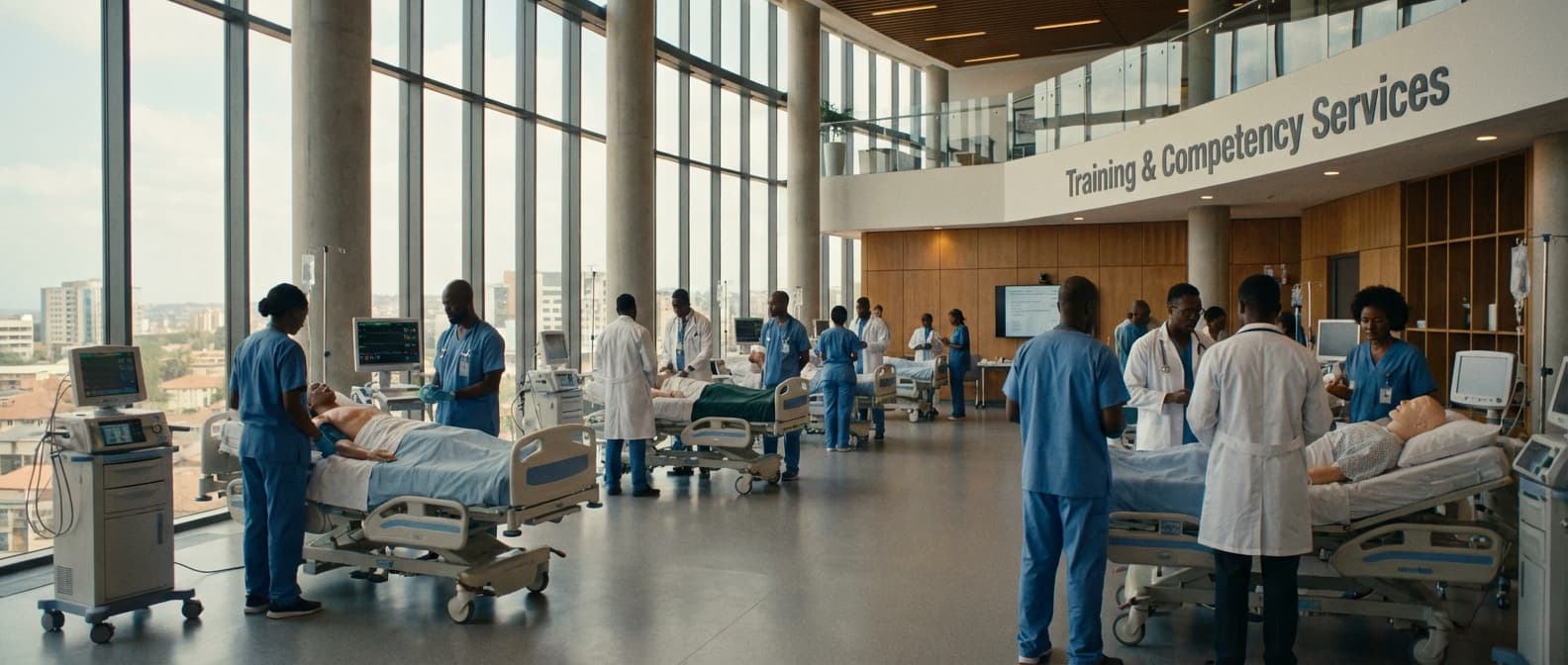
Anesthesia Workstation User Training Service in Malawi
Engineering Excellence & Technical Support
Anesthesia Workstation User Training Service High-standard technical execution following OEM protocols and local regulatory frameworks.
Mastering Advanced Ventilation Modes
This module focuses on optimizing patient ventilation with Anesthesia Workstation. Learn to confidently utilize advanced modes like APV, PCV-VG, and Dual Control, ensuring precise tidal volume delivery and lung protection for diverse patient populations and surgical complexities.
In-Depth Gas Monitoring & Analysis
Gain expertise in interpreting real-time anesthetic gas data. This highlight covers advanced features of the workstation's gas analysis module, including end-tidal CO2 monitoring, inspired/expired gas concentrations, and agent uptake/washout calculations for improved patient safety and anesthetic efficiency.
Critical Alarms & Troubleshooting Protocols
Empower your clinical team with comprehensive knowledge of the Anesthesia Workstation's alarm system. This session provides hands-on training in identifying, responding to, and troubleshooting critical alarms, ensuring swift and effective interventions to maintain patient safety during anesthetic procedures.
What Is Anesthesia Workstation User Training Service In Malawi?
Anesthesia Workstation User Training Service in Malawi refers to specialized educational programs designed to equip healthcare professionals with the knowledge and practical skills required to safely and effectively operate anesthesia workstations. These workstations are complex medical devices integrating multiple functions for patient monitoring, ventilation, and anesthetic gas delivery during surgical and other medical procedures. The service aims to ensure optimal utilization of these critical tools, thereby enhancing patient safety, improving clinical outcomes, and minimizing the risk of adverse events. Training typically covers device operation, troubleshooting, preventive maintenance, and adherence to best practices and local regulatory guidelines.
| Target Audience | Needs Addressed | Typical Use Cases |
|---|---|---|
| Anesthesiologists | Advanced understanding of complex ventilator strategies, advanced monitoring integration, and optimizing anesthetic delivery for critically ill patients. | Complex surgical procedures (e.g., cardiac surgery, neurosurgery), critical care settings, management of patients with severe respiratory compromise. |
| Anesthetic Nurses / Nurse Anesthetists | Competency in routine operation, setup, patient monitoring, basic troubleshooting, and assisting the anesthesiologist during procedures. | General surgery, obstetric procedures, minor surgical interventions, procedural sedation. |
| Biomedical Engineers/Technicians | In-depth knowledge of internal components, calibration procedures, advanced troubleshooting, repair, and preventive maintenance of anesthesia workstations. | Installation, commissioning, routine maintenance, repair, and validation of anesthesia workstations. |
| Training Institutions (Medical Schools, Nursing Colleges) | Curriculum development and delivery of foundational knowledge and practical skills related to anesthesia workstation operation for future healthcare professionals. | Simulation-based training, laboratory practical sessions, and inclusion in anesthesiology and critical care modules. |
Key Components of Anesthesia Workstation User Training
- Device Anatomy and Physiology: Understanding the functional components, principles of operation, and physiological basis of anesthetic delivery and patient support.
- Pre-use System Checks: Comprehensive procedures for verifying device integrity, functionality, and readiness before patient connection.
- Ventilator Management: In-depth training on various ventilation modes, settings optimization, waveform interpretation, and management of respiratory complications.
- Anesthetic Gas Management: Safe handling, delivery, and monitoring of volatile anesthetics and other gaseous agents, including calibration and waste gas scavenging.
- Monitoring and Alarms: Configuration, interpretation, and response protocols for integrated patient monitoring parameters (e.g., SpO2, EtCO2, ECG, NIBP, temperature).
- Troubleshooting and Error Management: Identification and resolution of common device malfunctions and alarm conditions.
- Infection Control and Sterilization: Protocols for cleaning, disinfection, and sterilization of workstation components.
- Maintenance and Service Procedures: Basic preventive maintenance tasks and understanding of when to escalate for technical service.
- Emergency Procedures: Protocols for managing critical situations involving the anesthesia workstation.
- Regulatory Compliance and Documentation: Adherence to relevant Malawian health regulations and proper record-keeping.
Who Needs Anesthesia Workstation User Training Service In Malawi?
Anesthesia workstation user training services are crucial for ensuring safe and effective use of these sophisticated medical devices in Malawi. These services are vital for healthcare professionals who operate anesthesia machines, as they directly impact patient care and outcomes. The primary goal is to equip users with the knowledge and skills to operate the workstation confidently, troubleshoot common issues, and maintain optimal performance.
| Target Customer Group | Primary Departments/Settings | Key Training Needs/Focus Areas | |
|---|---|---|---|
| Anesthesiologists | Operating Theatres | Advanced ventilation modes, complex waveform analysis, patient monitoring integration, emergency procedures, troubleshooting complex equipment malfunctions, anesthetic gas management. | Surgical Departments (e.g., General Surgery, Obstetrics & Gynecology, Pediatrics, Orthopedics, Cardiothoracic Surgery) |
| Anesthesia Assistants | Operating Theatres | Basic and intermediate ventilation modes, drug delivery systems, circuit management, patient monitoring, routine equipment checks and maintenance, basic troubleshooting. | Intensive Care Units (ICUs) |
| Certified Registered Nurse Anesthetists (CRNAs) | Operating Theatres | Similar to Anesthesia Assistants, with a focus on clinical application, patient assessment, drug administration, and perioperative care integration. | Specialized Surgical Centers (e.g., Trauma Centers, Dialysis Units) |
| Medical Officers with Anesthesia Responsibilities | Operating Theatres | Fundamental principles of anesthesia delivery, safe operation of basic anesthesia circuits and ventilation, emergency airway management, basic patient monitoring and alarms. | Rural and District Hospitals with limited specialist access |
| Biomedical Engineers and Technicians | Hospital Biomedical Engineering Departments | Preventive maintenance, calibration, repair procedures, understanding of electrical and mechanical components, safety protocols for servicing anesthesia equipment, software updates and diagnostics. | Medical Equipment Maintenance Units |
Target Customers and Departments Requiring Anesthesia Workstation User Training in Malawi
- Anesthesiologists
- Anesthesia Assistants
- Certified Registered Nurse Anesthetists (CRNAs)
- Medical Officers with Anesthesia Responsibilities
- Biomedical Engineers and Technicians
Anesthesia Workstation User Training Service Process In Malawi
This document outlines the user training service process for Anesthesia Workstations in Malawi, detailing the workflow from initial inquiry to the successful execution of training. The process is designed to ensure healthcare professionals are competent in the safe and effective operation of these critical medical devices.
| Stage | Description | Key Activities | Responsible Party |
|---|---|---|---|
| Inquiry | Initial contact from a healthcare facility seeking training. | Contacting the training provider, expressing interest. | Healthcare Facility |
| Needs Assessment | Understanding the specific training requirements. | Surveys, interviews, site visits, workstation model identification. | Training Provider |
| Proposal Development | Creating a customized training plan. | Curriculum design, cost estimation, timeline planning. | Training Provider |
| Proposal Acceptance | Formal agreement on the training proposal. | Review and approval of the proposal by the facility. | Healthcare Facility |
| Training Agreement | Legal and contractual commitment. | Signing of the training contract, payment arrangements. | Both Parties |
| Logistics & Scheduling | Organizing the practical aspects of the training. | Booking venue, scheduling dates, arranging trainer travel. | Training Provider |
| Curriculum Development & Material Preparation | Finalizing training content and resources. | Developing presentations, practical guides, assessment tools. | Training Provider |
| Trainer Briefing & Calibration | Ensuring trainers are prepared. | Reviewing curriculum, sharing workstation-specific details. | Training Provider |
| On-site Training Execution | Delivery of the training program. | Lectures, demonstrations, hands-on practice, skill validation. | Training Provider & Trainees |
| Post-Training Assessment & Feedback | Evaluating learning and gathering input. | Written/practical exams, feedback forms. | Training Provider & Trainees |
| Certification & Documentation | Issuing proof of training and reporting. | Certificates of completion, training reports. | Training Provider |
| Follow-up & Support | Providing ongoing assistance. | Q&A sessions, technical support, advanced training information. | Training Provider |
Anesthesia Workstation User Training Service Process in Malawi
- The process begins with an 'Inquiry' from a healthcare facility or institution in Malawi expressing interest in Anesthesia Workstation user training.
- Following the inquiry, a 'Needs Assessment' is conducted to understand the specific workstation model(s), the number of trainees, their existing knowledge base, and any specific training requirements.
- A 'Proposal Development' phase ensues, where a tailored training plan is created. This includes curriculum, duration, location, trainers, and cost, which is then submitted to the inquiring facility.
- Upon 'Proposal Acceptance' and agreement on terms, a 'Training Agreement' is formalized, outlining the commitments of both parties.
- The 'Logistics & Scheduling' phase involves coordinating dates, venues (either at the facility or a designated training center), necessary equipment, and travel arrangements for trainers.
- During the 'Curriculum Development & Material Preparation' stage, training modules, presentations, hands-on simulation materials, and participant handbooks are finalized and translated if necessary.
- The 'Trainer Briefing & Calibration' ensures all trainers are up-to-date on the curriculum and any specific nuances of the workstation models being used.
- The 'On-site Training Execution' is the core of the service, involving theoretical sessions, practical demonstrations, hands-on exercises, and competency assessments.
- A 'Post-Training Assessment & Feedback' is conducted to evaluate trainee learning and gather feedback on the training effectiveness.
- Following the training, 'Certification & Documentation' is provided to successful participants, along with a comprehensive training report for the facility.
- The final stage is 'Follow-up & Support', which may include post-training consultations, troubleshooting assistance, and information on advanced training opportunities.
Anesthesia Workstation User Training Service Cost In Malawi
Providing comprehensive user training services for anesthesia workstations in Malawi is a crucial aspect of ensuring patient safety and efficient operation of medical equipment. The cost of such training is influenced by several factors, leading to a range of prices. These services are typically offered by the manufacturers' authorized distributors, specialized biomedical training companies, or sometimes by larger healthcare institutions with in-house expertise.
Factors Influencing Anesthesia Workstation User Training Service Cost in Malawi:
- Complexity of the Anesthesia Workstation: More advanced workstations with a wider array of features, integrated monitoring, and sophisticated ventilation modes will generally command higher training costs due to the need for more in-depth instruction.
- Duration and Depth of Training: A basic "introduction to the machine" session will be less expensive than a comprehensive "advanced user" or "troubleshooting and maintenance" course. The number of days and the specific modules covered directly impact the overall price.
- Trainer Expertise and Credentials: Highly experienced trainers with specialized knowledge in anesthesia technology and extensive practical experience will often charge more for their services.
- Location of Training: If the training is conducted on-site at the healthcare facility (hospital or clinic), costs may include travel and accommodation for the trainer, especially if the facility is in a remote area. Off-site training at a dedicated training center might have different cost structures.
- Number of Participants: While some training is priced per session, others might have a per-participant fee. Bulk discounts may be available for larger groups, but this can also influence the total cost.
- Inclusion of Practical/Hands-on Sessions: Training that involves significant hands-on practice with the actual workstation (or a simulator) is generally more valuable and therefore more expensive than purely theoretical sessions.
- Post-Training Support: Some training packages may include a period of follow-up support, troubleshooting assistance, or refresher courses, which will be factored into the pricing.
- Provider Reputation and Certification: Established training providers with a good track record and recognized certifications might charge a premium for their quality and reliability.
- Curriculum Customization: If the training needs to be tailored to specific institutional protocols or a particular set of anesthesia practices, this customization can add to the cost.
- Inclusion of Training Materials: The provision of detailed user manuals, quick reference guides, or digital learning resources is often included in the price, but the extent and quality of these materials can vary.
Pricing Ranges in Malawian Kwacha (MWK):
It's important to note that these are estimated ranges and can fluctuate based on the specific provider, the exact services offered, and market conditions. It is highly recommended to obtain direct quotes from multiple service providers.
- Basic User Training (1-2 days): This typically covers fundamental operation, essential safety features, and basic setup. This might range from MWK 25,000 to MWK 75,000 per participant or per session for a small group.
- Intermediate User Training (2-3 days): This level delves deeper into ventilation modes, alarm management, and initial troubleshooting. The cost could be in the range of MWK 60,000 to MWK 150,000 per participant or per session.
- Advanced/Comprehensive Training (3-5 days or specialized modules): This often includes advanced troubleshooting, maintenance basics, and in-depth understanding of complex functionalities. Prices for such extensive training can range from MWK 120,000 to MWK 300,000+ per participant or per session, depending heavily on the factors listed above.
For on-site training, especially for remote locations, additional charges for travel, accommodation, and per diem for the trainer will apply, potentially increasing the total cost by 20-50% or more.
| Training Level | Typical Duration | Estimated Cost Range (MWK) |
|---|---|---|
| Basic User Training | 1-2 Days | 25,000 - 75,000 |
| Intermediate User Training | 2-3 Days | 60,000 - 150,000 |
| Advanced/Comprehensive Training | 3-5 Days or Specialized | 120,000 - 300,000+ |
Key Factors Affecting Anesthesia Workstation User Training Costs in Malawi
- Workstation Complexity and Features
- Training Duration and Depth of Content
- Trainer's Experience and Qualifications
- Training Location (On-site vs. Off-site)
- Number of Participants and Group Size
- Emphasis on Practical/Hands-on Exercises
- Inclusion of Post-Training Support
- Provider's Reputation and Certifications
- Curriculum Customization Requirements
- Quality and Quantity of Training Materials
Affordable Anesthesia Workstation User Training Service Options
This document outlines valuable service options for user training on affordable anesthesia workstations, focusing on creating cost-effective solutions and offering insight into value bundles. The goal is to ensure healthcare professionals can safely and efficiently operate these essential devices without incurring excessive training costs.
| Value Bundle Name | Included Services | Target Audience | Cost-Saving Benefit | Ideal Scenario |
|---|---|---|---|---|
| Starter Pack | Basic Operator Training (Tier 1) + Online Basic Modules | New users, small clinics, budget-conscious facilities | Reduces per-user cost, minimal travel | Initial deployment of workstations, onboarding new staff |
| Efficiency Booster | Advanced User Training (Tier 2) + Train-the-Trainer Program | Hospitals with dedicated training teams, larger departments | Long-term cost reduction through internal expertise, scalability | Maximizing workstation utility, ongoing staff development |
| Comprehensive Care | Basic Operator (Tier 1) + Advanced User (Tier 2) + Maintenance Training (Tier 3) | Larger medical centers, teaching hospitals, facilities with in-house biomedical teams | Holistic skill development, reduced reliance on external service for basic issues | Full lifecycle management of anesthesia workstations |
| Remote Readiness | Online Operator Modules + Remote Q&A Sessions | Geographically dispersed facilities, organizations prioritizing flexibility | Significant travel cost savings, adaptable to schedules | Quick updates, refresher courses, initial orientation for remote staff |
Key Training Service Options for Affordable Anesthesia Workstations
- {"title":"Basic Operator Training (Tier 1)","description":"Covers fundamental operation, setup, shutdown, basic troubleshooting, and safety features. Ideal for new users or as a refresher."}
- {"title":"Advanced User Training (Tier 2)","description":"Includes basic operator training plus advanced monitoring capabilities, waveform analysis, ventilation modes, and common error management. Suitable for experienced users looking to maximize workstation potential."}
- {"title":"Maintenance and Service Training (Tier 3)","description":"Focuses on routine preventative maintenance, cleaning protocols, calibration procedures, and basic field repair. Designed for biomedical technicians or dedicated clinical engineering staff."}
- {"title":"Train-the-Trainer Program","description":"Empowers internal hospital staff to become certified trainers, enabling them to educate new users within their institution. This is a highly cost-effective, scalable solution."}
- {"title":"Online & Remote Training Modules","description":"Offers flexible, self-paced learning through interactive modules, video tutorials, and live remote Q&A sessions. Reduces travel costs and minimizes disruption to clinical schedules."}
- {"title":"On-Site Custom Training","description":"Tailored training sessions delivered at your facility, designed to meet specific departmental needs and protocols. Provides hands-on experience with your actual equipment."}
Verified Providers In Malawi
In Malawi, finding reliable and trustworthy healthcare providers is paramount. Franance Health stands out as a beacon of quality and integrity, offering a comprehensive network of verified healthcare professionals and facilities. Their rigorous credentialing process ensures that all listed providers meet the highest standards of medical expertise, ethical practice, and patient care. Choosing Franance Health means opting for peace of mind, knowing you are in the hands of qualified and vetted professionals dedicated to your well-being. This commitment to excellence makes them the undeniable best choice for healthcare in Malawi.
| Aspect | Franance Health Advantage | Impact on Patient Choice |
|---|---|---|
| Provider Verification | Extensive background checks, license validation, and peer reviews. | Ensures access to genuinely qualified and reputable medical professionals. |
| Quality Assurance | Ongoing monitoring of patient feedback and adherence to best practices. | Guarantees a consistently high standard of medical treatment and service. |
| Accessibility | Easy-to-use platform to find and connect with verified providers. | Saves time and reduces stress in seeking appropriate medical care. |
| Trust and Reliability | Transparent credentialing information available to users. | Builds confidence and fosters a trusting relationship between patients and providers. |
| Comprehensive Healthcare Solutions | Covers a broad spectrum of medical needs, from general practice to specialized care. | Provides a one-stop solution for diverse healthcare requirements in Malawi. |
Why Franance Health is the Best Choice for Verified Providers in Malawi
- Rigorous Credentialing: Franance Health employs a stringent verification process for all its providers, ensuring they meet all necessary qualifications and licensing requirements.
- Commitment to Quality Care: Providers on the Franance Health network are committed to delivering high-quality, patient-centered medical services.
- Ethical Practice Standards: Franance Health upholds strict ethical guidelines for its network, promoting trust and integrity in healthcare delivery.
- Comprehensive Network: Access a wide range of medical specialists and facilities, all meticulously vetted and approved.
- Peace of Mind: Partnering with Franance Health offers reassurance and confidence in the healthcare services you receive.
Scope Of Work For Anesthesia Workstation User Training Service
This Scope of Work (SOW) outlines the services to be provided for comprehensive user training on the Anesthesia Workstation. The objective is to equip clinical users with the knowledge and practical skills necessary to operate the Anesthesia Workstation safely and effectively in a clinical environment, ensuring optimal patient care and adherence to manufacturer guidelines and institutional protocols. This SOW details the technical deliverables, standard specifications, and training methodology.
1. Training Objectives:
- Familiarize users with the Anesthesia Workstation's hardware components, interface, and essential functions.
- Train users on standard operating procedures, including system setup, patient connection, ventilation modes, gas delivery, monitoring, and emergency procedures.
- Ensure users understand alarm management, troubleshooting common issues, and proper system shutdown and cleaning protocols.
- Promote safe and efficient use of the Anesthesia Workstation, minimizing the risk of user error and optimizing workflow.
- Provide hands-on experience with the Anesthesia Workstation in simulated clinical scenarios.
2. Target Audience:
- Anesthesiologists
- Certified Registered Nurse Anesthetists (CRNAs)
- Anesthesia Assistants
- Other relevant clinical staff authorized to operate the Anesthesia Workstation.
3. Training Methodology:
The training will incorporate a blended learning approach, including theoretical instruction, practical demonstrations, hands-on practice, and case-based scenarios. The training will be delivered by certified and experienced trainers familiar with the Anesthesia Workstation and clinical anesthesia practices.
| Service Component | Standard Specifications | Notes/Assumptions |
|---|---|---|
| Training Duration | Typically 1-2 full days per training group, depending on the complexity of the workstation and the number of functionalities covered. Exact duration to be confirmed during planning. | Assumes a standard group size of 8-12 participants for optimal hands-on engagement. |
| Trainer Qualifications | Trainers must possess relevant clinical anesthesia experience, in-depth knowledge of the specific Anesthesia Workstation model, and certified training credentials. A minimum of 3-5 years of experience in clinical anesthesia and 2+ years of experience as a trainer is desirable. | Client may require specific trainer background checks or credential verification. |
| Training Environment | A dedicated training space with adequate lighting, seating, and AV equipment. Access to operational Anesthesia Workstation units (minimum one per 2-3 participants for hands-on practice), patient simulators, and necessary accessories (e.g., breathing circuits, gas sources). | Client is responsible for providing the training space and ensuring the availability and functionality of the Anesthesia Workstation units and simulators. |
| Training Schedule | Flexible scheduling to accommodate clinical operations, to be agreed upon by both parties. Training sessions should be scheduled to minimize disruption to patient care. | Client to provide at least 4 weeks' notice for preferred training dates. |
| Participant-to-Trainer Ratio | Recommended ratio of 8:1 to 12:1 participants per trainer to ensure effective hands-on guidance and individual attention. | Higher ratios may be permissible for purely theoretical sessions but not for hands-on practice. |
| Language | Training materials and delivery will be in English, unless otherwise specified and agreed upon in writing. | Translation services for materials or delivery may be an additional cost if required. |
| Customization | Training content can be customized to incorporate specific institutional policies, local anesthesia protocols, and advanced functionalities as per client requirements. | Any significant customization may impact the overall training duration and cost. Detailed customization requirements must be provided in advance. |
| Safety Protocols | All training activities will adhere to strict patient safety and infection control protocols. Trainers will brief participants on specific safety guidelines relevant to the Anesthesia Workstation. | Client's site-specific safety and emergency procedures must be communicated to the trainers prior to the training commencement. |
Technical Deliverables
- Training Curriculum Development/Customization: A comprehensive training curriculum tailored to the specific Anesthesia Workstation model and the clinical environment of the client. This includes module outlines, learning objectives, and content structure.
- Training Materials Production: Development and provision of high-quality training materials, including: * Participant Manuals (digital and/or print) * Trainer Guides * Presentation Slides (e.g., PowerPoint) * Quick Reference Guides * Case Study Scenarios * Assessment Tools (quizzes, practical skill checklists)
- On-site Training Delivery: Conduct of instructor-led training sessions at the client's facility using the actual Anesthesia Workstation units or appropriately simulated environments.
- Hands-on Practice Sessions: Dedicated time for participants to practice operating the Anesthesia Workstation under the guidance of the trainer, including setting up, performing various functions, and responding to simulated alarms.
- Competency Assessments: Evaluation of participant understanding and practical skills through written assessments and/or practical demonstrations to ensure competency.
- Post-Training Support: Provision of limited post-training support, which may include access to online resources, a designated point of contact for questions, or follow-up Q&A sessions.
- Training Completion Certificates: Issuance of certificates of completion to participants who successfully meet the training objectives and pass assessments.
- Training Report: A comprehensive report summarizing the training conducted, including attendee lists, assessment results, feedback collected, and any recommendations for further training or system optimization.
Service Level Agreement For Anesthesia Workstation User Training Service
This Service Level Agreement (SLA) outlines the terms and conditions for the Anesthesia Workstation User Training Service. It defines the expected response times for support requests and the guaranteed uptime for access to training materials and the associated platform.
| Service Component | Response Time Guarantee (Business Hours) | Uptime Guarantee |
|---|---|---|
| Technical Support for Training Platform Access | 4 Business Hours | 99.5% (excluding scheduled maintenance) |
| Inquiry regarding Training Content | 8 Business Hours | N/A (content is static) |
| Scheduling of Live Training Sessions | 2 Business Days | N/A (scheduling is a request-based service) |
| Access to On-Demand Training Materials | N/A | 99.8% (excluding scheduled maintenance) |
Scope of Training Service
- Comprehensive training modules for operating and maintaining the Anesthesia Workstation.
- On-demand access to video tutorials, user manuals, and interactive simulations.
- Scheduled online training sessions with certified instructors.
- Access to a knowledge base and FAQ section for common inquiries.
Frequently Asked Questions

Ready when you are
Let's scope your Anesthesia Workstation User Training Service in Malawi project in Malawi.

Scaling healthcare logistics and technical systems across the entire continent.