
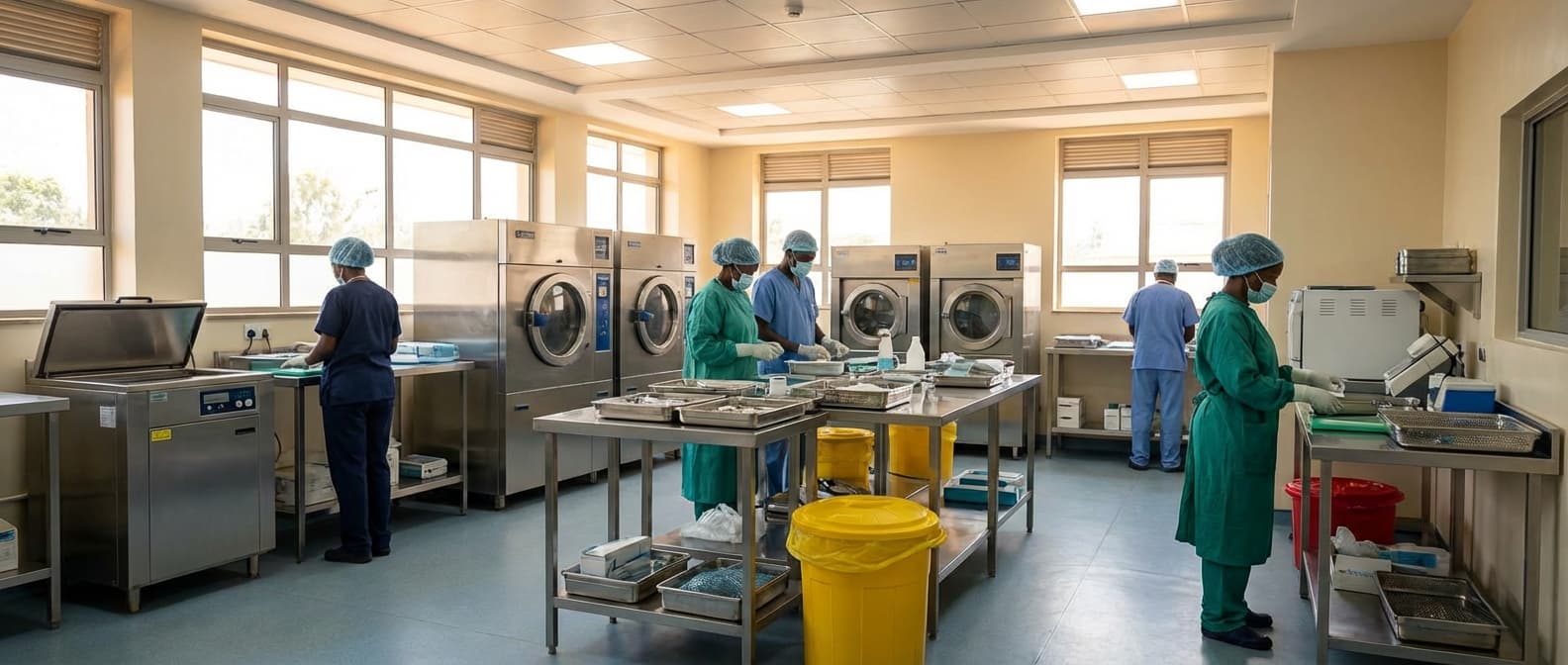
Medical Equipment Decontamination Service (Pre-Repair/Pre-Relocation) in Malawi
Engineering Excellence & Technical Support
Medical Equipment Decontamination Service (Pre-Repair/Pre-Relocation) High-standard technical execution following OEM protocols and local regulatory frameworks.
Enhanced Equipment Lifespan & Reliability
Our meticulous decontamination process removes bioburden, chemical residues, and particulate matter, safeguarding sensitive medical equipment from internal damage and corrosion. This preventative measure significantly extends operational lifespan and ensures consistent, reliable performance, reducing costly downtime for Malawian healthcare facilities.
Proactive Infection Prevention Protocols
Prior to repair or relocation, we implement stringent, multi-stage decontamination protocols specifically designed for Malawian healthcare environments. This minimizes the risk of cross-contamination and the spread of healthcare-associated infections (HAIs), protecting both patients and healthcare workers during critical equipment handling phases.
Regulatory Compliance & Peace of Mind
We adhere to international best practices and local health regulations for medical equipment decontamination in Malawi. Our certified service provides auditable documentation, ensuring your facility meets essential safety and quality standards, giving you complete peace of mind when preparing equipment for vital repairs or relocation.
What Is Medical Equipment Decontamination Service (Pre-repair/pre-relocation) In Malawi?
Medical Equipment Decontamination Service (Pre-Repair/Pre-Relocation) in Malawi refers to the systematic process of cleaning, disinfecting, and/or sterilizing medical devices and equipment prior to their transport for repair or relocation. This service is crucial for ensuring the safety of repair technicians, transport personnel, and subsequent users of the equipment by eliminating or significantly reducing bioburden (microorganisms, blood, tissue, and other potentially infectious materials). The scope of decontamination adheres to established protocols and relevant Malawian health regulations and guidelines for medical waste management and infection control.
| Who Needs the Service | Typical Use Cases | |||
|---|---|---|---|---|
| Healthcare Facilities in Malawi (Hospitals, Clinics, Diagnostic Laboratories, Dental Practices): Responsible for ensuring the safety of their own staff and external service providers. | Sending diagnostic imaging equipment (e.g., X-ray machines, ultrasound probes) for off-site repair or recalibration. | Preparing surgical instruments for relocation between departments or to another facility. | Transporting endoscopes or other reusable medical devices that require stringent decontamination before repair. | Moving patient monitoring systems or ventilators that may have come into contact with bodily fluids. |
| Medical Equipment Manufacturers and Service Providers (Operating in Malawi or Servicing Malawian Equipment): Require decontaminated equipment to prevent occupational exposure and cross-contamination. | Receiving equipment from Malawian healthcare facilities for warranty or non-warranty repairs. | Performing routine maintenance on medical devices that have been in use. | Testing and servicing refurbished medical equipment before redeployment. | |
| Logistics and Transport Companies: Handling the movement of medical equipment within Malawi or internationally. | Ensuring their personnel are not exposed to infectious agents during equipment handling and transport. | Meeting contractual obligations for safe handling of medical assets. |
Key Components of Medical Equipment Decontamination Service (Pre-Repair/Pre-Relocation)
- Initial Assessment and Categorization: Evaluating the type of equipment and the nature of contamination (e.g., gross contamination, low-level bioburden) to determine appropriate decontamination methods.
- Pre-Cleaning: Removal of gross particulate matter and visible contaminants using approved cleaning agents and procedures.
- Disinfection/Sterilization: Application of validated chemical disinfectants (e.g., high-level, intermediate-level) or sterilization methods (e.g., autoclaving, ethylene oxide) as per equipment manufacturer recommendations and regulatory standards.
- Rinsing and Drying: Thorough rinsing to remove residual cleaning/disinfecting agents, followed by meticulous drying to prevent microbial regrowth.
- Packaging and Labeling: Secure packaging of decontaminated equipment to maintain sterility or cleanliness during transit, with clear labeling indicating decontamination status.
- Documentation: Comprehensive record-keeping of the decontamination process, including date, method, chemicals used, and personnel involved.
- Biohazard Waste Disposal: Proper segregation and disposal of all contaminated materials and waste generated during the decontamination process in accordance with national biohazard waste management guidelines.
Who Needs Medical Equipment Decontamination Service (Pre-repair/pre-relocation) In Malawi?
Medical equipment decontamination service prior to repair or relocation is a critical, often overlooked, step in ensuring the safety and efficiency of healthcare operations in Malawi. This service is essential for protecting the health of technicians, staff, patients, and the environment from potentially hazardous biological contaminants present on medical devices. Without proper decontamination, the risk of cross-contamination, transmission of infectious diseases, and exposure to harmful substances is significantly elevated during handling, repair, and relocation processes. This service plays a vital role in maintaining infection control standards and operational integrity within Malawian healthcare facilities.
| Target Customer Group | Relevant Departments/Units |
|---|---|
| Public Hospitals | Operating Theatres, Intensive Care Units (ICUs), Emergency Departments, Radiology/Imaging Departments, Central Sterile Supply Departments (CSSD), Pathology Laboratories, Medical Engineering/Biomedical Workshop, Outpatient Departments |
| Private Hospitals | Similar to Public Hospitals, with a focus on high-volume surgical and diagnostic areas. |
| Clinics and Health Centers | Minor Procedure Rooms, Maternity Wards, Diagnostic Testing Areas (e.g., basic lab equipment), Pharmacy (for compounding equipment). |
| Diagnostic Laboratories | Microbiology Labs, Hematology Labs, Biochemistry Labs, Histopathology Labs (for all equipment requiring servicing or relocation). |
| Specialized Medical Facilities | Physiotherapy Departments (for treatment equipment), Imaging Centers (e.g., Ultrasound, X-ray machines requiring maintenance), Endoscopy Units. |
| Medical Equipment Suppliers and Service Providers | Service and repair workshops, installation teams, logistics departments handling equipment transfers. |
| NGOs in Healthcare | Facilities and mobile clinics managed by NGOs, which may have diverse equipment needs. |
| Government Health Ministries | Central and regional offices responsible for overseeing public health infrastructure and equipment management. |
Target Customers and Departments for Medical Equipment Decontamination Service (Pre-Repair/Pre-Relocation) in Malawi
- Hospitals (Public and Private)
- Clinics and Health Centers
- Diagnostic Laboratories
- Specialized Medical Facilities (e.g., imaging centers, physiotherapy clinics)
- Medical Equipment Suppliers and Service Providers
- Non-Governmental Organizations (NGOs) involved in healthcare delivery
- Government Health Ministries and Regional Health Offices
Medical Equipment Decontamination Service (Pre-repair/pre-relocation) Process In Malawi
The Medical Equipment Decontamination Service (Pre-Repair/Pre-Relocation) in Malawi is a crucial process designed to ensure the safety of personnel and the environment when medical equipment requires maintenance or relocation. This service specifically targets equipment that may pose a biohazard risk, such as those contaminated with bodily fluids or pathogens. The workflow is structured to move from initial client contact to the final certification of decontamination, encompassing several key stages. It is vital for healthcare facilities and repair/relocation services to understand and adhere to this systematic process to prevent the spread of infections and comply with health regulations.
| Stage | Description | Key Activities | Responsible Party | Output/Deliverable |
|---|---|---|---|---|
| The process begins when a healthcare facility or repair/relocation company identifies a need for decontamination. | Client contacts decontamination service provider, describes equipment type and suspected contamination level, inquires about service availability and general pricing. | Client, Decontamination Service Provider | Initial understanding of service requirement. |
| Based on the initial assessment, a formal proposal is provided. | Decontamination service provider assesses specific equipment details (type, size, suspected biohazard), provides a detailed quotation including costs, scope of work, turnaround time, and terms of service. Client reviews and accepts the quotation, formalizing the agreement (e.g., through a Purchase Order or Service Agreement). | Decontamination Service Provider, Client | Formal quotation, agreed-upon Service Agreement. |
| Once the agreement is in place, the service is scheduled and logistics are arranged. | Decontamination service provider coordinates with the client for the optimal date and time for collection/access. Transport arrangements are confirmed (e.g., specialized transport, personnel required). | Decontamination Service Provider, Client | Confirmed schedule, finalized transport plan. |
| Preparation for safe transport of the equipment begins. | If on-site decontamination is not feasible, the equipment is prepared for transport. This may involve initial containment measures or packaging according to biohazard transport regulations. The decontamination team arrives at the client's facility if off-site decontamination is planned. | Client, Decontamination Service Provider | Equipment safely prepared for transport or accessible for on-site service. |
| The core decontamination procedures are carried out. | Equipment is transported to the decontamination facility (if off-site) or processed on-site. Decontamination methods are applied based on the equipment type and suspected contamination (e.g., chemical disinfection, steam sterilization, autoclaving, UV irradiation). Procedures follow established protocols and safety guidelines to eliminate or neutralize biohazards. | Decontamination Service Provider | Decontaminated medical equipment. |
| Ensuring the effectiveness of the decontamination process. | Where applicable, post-decontamination efficacy testing is performed (e.g., microbial sampling and analysis) to confirm the absence of harmful pathogens. Functional testing of the equipment may also be conducted to ensure it is operational after the process. | Decontamination Service Provider | Verification of decontamination efficacy, confirmation of equipment functionality. |
| Formalizing the completion of the decontamination process. | A Certificate of Decontamination is issued, detailing the equipment, the methods used, and the date of service. All relevant documentation, including test results and records of the process, is compiled. | Decontamination Service Provider | Certificate of Decontamination, comprehensive documentation package. |
| The decontaminated equipment is returned to the client or released for repair/relocation. | The decontaminated and certified equipment is returned to the client (if off-site service). The client accepts the decontaminated equipment. For repair/relocation, the equipment is released to the designated repair technician or relocation service, accompanied by the Certificate of Decontamination. | Decontamination Service Provider, Client, Repair/Relocation Service | Released and certified medical equipment ready for its next stage. |
Medical Equipment Decontamination Service (Pre-Repair/Pre-Relocation) Workflow in Malawi
- Inquiry and Initial Assessment
- Quotation and Agreement
- Scheduling and Logistics
- On-site Collection/Transport Preparation
- Decontamination Process Execution
- Post-Decontamination Verification and Testing
- Certification and Documentation
- Equipment Handover/Release
Medical Equipment Decontamination Service (Pre-repair/pre-relocation) Cost In Malawi
The cost of medical equipment decontamination services in Malawi, particularly for pre-repair or pre-relocation needs, is not as standardized as in many developed countries. It often depends on a combination of factors, leading to variable pricing. These services are crucial for ensuring the safety of both technicians and the wider environment, preventing the spread of biohazards. Estimating a precise range can be challenging due to the custom nature of many decontamination jobs, but understanding the influencing factors provides clarity.
| Equipment Category | Estimated Price Range (Malawian Kwacha - MWK) | Notes |
|---|---|---|
| Small Laboratory/Diagnostic Devices (e.g., microscopes, centrifuges, blood analyzers) | MWK 15,000 - 40,000 | Depending on size, complexity, and level of visible contamination. |
| Medium-Sized Medical Equipment (e.g., patient monitors, ECG machines, basic imaging units) | MWK 30,000 - 70,000 | Requires more thorough cleaning and potentially specialized disinfectants. |
| Large/Complex Medical Equipment (e.g., X-ray machines, ultrasound, basic dental chairs) | MWK 60,000 - 150,000+ | Significant factors include size, intricate components, and potential for deep contamination. |
| Highly Specialized/High-Risk Equipment (e.g., CT scanners, MRI machines, advanced surgical units - often requiring specialized external providers) | MWK 100,000 - 300,000+ | These often involve bespoke quotes due to extreme complexity and potential biohazard risks. May require specialist teams from outside Malawi for certain components. |
Key Pricing Factors for Medical Equipment Decontamination Services in Malawi:
- Type and Size of Equipment: Larger and more complex equipment, such as MRI machines, CT scanners, or large laboratory centrifuges, will naturally require more time, specialized chemicals, and potentially more personnel, thus increasing costs. Smaller, simpler devices like stethoscopes or blood pressure cuffs will be at the lower end.
- Level of Contamination: The extent and type of contamination are primary drivers of cost. Equipment that has been exposed to highly infectious agents, potent chemicals, or significant biological matter will necessitate more rigorous and potentially multi-stage decontamination processes, employing stronger disinfectants and longer contact times.
- Decontamination Method Required: Different contaminants require specific decontamination agents and methods. For example, viral inactivation might require different solutions and procedures than bacterial sterilization. Specialized methods like high-level disinfection or sterilization might incur higher costs due to the chemicals and equipment involved.
- Urgency of Service: Emergency or same-day decontamination services will typically command a premium due to the immediate resource allocation and potential disruption to the service provider's schedule.
- Location and Accessibility: The geographical location of the equipment within Malawi can influence costs. Remote areas may incur additional charges for travel time, fuel, and potentially accommodation for the decontamination team.
- Specific Client Requirements & Certification: Some clients may have specific decontamination protocols or require certifications that necessitate the use of particular approved agents or adherence to stringent procedural guidelines, which can impact pricing.
- Service Provider's Expertise and Reputation: Established decontamination companies with a proven track record, specialized training, and advanced equipment may charge more than less experienced or smaller operations.
- Consumables and Disposal: The cost of specialized disinfectants, cleaning agents, personal protective equipment (PPE) for staff, and the safe disposal of biohazardous waste are all factored into the overall service fee.
Affordable Medical Equipment Decontamination Service (Pre-repair/pre-relocation) Options
Ensuring medical equipment is properly decontaminated before repair or relocation is crucial for preventing the spread of infection and maintaining a sterile environment. Many facilities opt for professional decontamination services to guarantee thoroughness and compliance. This document outlines affordable options, focusing on value bundles and cost-saving strategies for pre-repair/pre-relocation medical equipment decontamination.
| Cost-Saving Strategy | Description | Impact on Affordability |
|---|---|---|
| Volume Discounts | Negotiate lower per-unit pricing when contracting for decontamination of multiple pieces of equipment simultaneously. | Significant reduction in overall cost per item. |
| Scheduled Service Contracts | Enter into recurring service agreements for regular decontamination needs, often with preferential rates. | Predictable budgeting and often lower long-term costs. |
| Off-Peak Scheduling | Schedule decontamination services during non-peak hours or days to potentially leverage lower hourly rates. | Reduced service fees, especially for urgent or time-sensitive needs. |
| Bundled Services (See 'Value-Added Bundles') | Combining decontamination with other services like minor cleaning or initial inspection can offer package discounts. | Higher perceived value and potential savings compared to individual service procurement. |
| In-House vs. Outsourced Assessment | Evaluate if certain basic decontamination tasks can be performed in-house to reduce reliance on external providers, then outsource specialized or critical procedures. | Cost-effective allocation of resources; saves on specialized labor and equipment for simpler tasks. |
| Clear Equipment Inventory & Prioritization | Provide a detailed and accurate inventory of equipment needing decontamination, prioritizing based on risk and urgency. | More accurate quoting, reduced turnaround times, and avoidance of unnecessary services. |
| Utilize Provider's Preferred Logistics | If the service provider offers integrated logistics for equipment pickup and delivery, this can be more cost-effective than arranging separate transport. | Streamlined process and potentially lower shipping/handling fees. |
| Early Booking & Lead Time | Book decontamination services well in advance to secure preferred time slots and potentially avoid rush fees. | Avoidance of premium pricing for last-minute requests. |
Value-Added Bundles for Decontamination Services
- {"title":"Tier 1: Essential Decontamination Package","description":"Covers basic, industry-standard decontamination procedures for non-complex equipment. Ideal for routine maintenance or standard relocation needs."}
- {"title":"Tier 2: Enhanced Decontamination & Verification Package","description":"Includes advanced decontamination methods for more critical equipment, along with basic visual inspection and verification of cleanliness. Suitable for equipment used in higher-risk patient care areas."}
- {"title":"Tier 3: Comprehensive Decontamination, Bioburden Testing & Documentation Package","description":"Offers the highest level of decontamination, including optional bioburden testing to confirm microbial reduction, and detailed documentation for compliance and traceability. Recommended for high-value, complex, or infection-sensitive equipment."}
- {"title":"Relocation Support Bundle","description":"Combines pre-relocation decontamination with specialized packaging and handling to ensure equipment safety and sterility during transit."}
- {"title":"Repair Prep Bundle","description":"Focuses on thorough decontamination specifically to facilitate efficient and safe repair processes, minimizing contamination risk for technicians."}
Verified Providers In Malawi
In Malawi's dynamic healthcare landscape, identifying truly reliable and ethical medical providers is paramount for individuals and organizations alike. Franance Health has emerged as a beacon of trust, consistently demonstrating a commitment to quality, transparency, and patient well-being. Their rigorous credentialing process and dedication to upholding the highest standards make them the premier choice for healthcare services in Malawi. This document outlines Franance Health's verification processes and elucidates why they represent the best option for your medical needs.
| Credentialing Component | Franance Health's Approach | Significance for Patients |
|---|---|---|
| Medical Licensure and Registration | Mandatory verification of current and valid medical licenses with the Medical Council of Malawi and relevant professional bodies. Regular checks are performed to ensure compliance. | Ensures providers are legally qualified and authorized to practice medicine, guaranteeing a baseline level of competence. |
| Educational and Professional Background | Thorough review of academic qualifications, specialized training, and previous work experience. Verification of diplomas, certificates, and professional references. | Confirms that healthcare professionals possess the necessary education and experience for their designated roles, leading to more accurate diagnoses and effective treatments. |
| Criminal Background Checks | Comprehensive checks are conducted to ensure providers have no history of criminal offenses, particularly those related to fraud, abuse, or patient harm. | Safeguards patients from potentially dangerous individuals and promotes a secure healthcare environment. |
| Professional Reputation and Peer Review | Actively solicits feedback from existing clients and, where applicable, from peer professionals. Investigates any reported concerns or disciplinary actions. | Provides assurance of a provider's ethical conduct and positive impact within the medical community. |
| Insurance and Malpractice Coverage | Verification of adequate and current malpractice insurance for all registered healthcare professionals. | Offers financial protection and recourse for patients in the unlikely event of medical negligence. |
| Adherence to Ethical Guidelines | Mandatory agreement and regular audits to ensure compliance with Franance Health's strict code of ethics, including patient confidentiality, non-discrimination, and informed consent. | Guarantees that patients will be treated with respect, dignity, and that their rights will be upheld throughout their medical journey. |
Why Franance Health Stands Out:
- Rigorous Provider Vetting
- Commitment to Ethical Practices
- Focus on Patient-Centric Care
- Transparency in Operations
- Comprehensive Service Offerings
Scope Of Work For Medical Equipment Decontamination Service (Pre-repair/pre-relocation)
This Scope of Work (SOW) outlines the requirements for the decontamination of medical equipment prior to repair or relocation. The service aims to ensure the safety of personnel, prevent cross-contamination, and maintain the integrity of the equipment during these processes. All decontamination activities will adhere to established safety protocols and industry best practices.
| Section | Description | Technical Deliverables | Standard Specifications |
|---|---|---|---|
| Initial inspection of the equipment to identify potential biohazards, visible contamination, and material compatibility with cleaning agents. | Written report detailing findings, identified biohazards, and recommended decontamination approach. | Assessment conducted by certified decontamination technician. Report includes equipment ID, date, technician name, and visual description of contamination. |
| Application of approved cleaning agents and disinfection methods based on the type of equipment and identified biohazards. | Cleaned and disinfected equipment surfaces free from visible contaminants and bioburden. | Use of EPA-registered, hospital-grade disinfectants appropriate for medical device surfaces. Follow manufacturer's instructions for use (IFU) for both equipment and disinfectants. Contact time and concentration of disinfectants will be verified. |
| Proper collection, containment, labeling, and disposal of all contaminated materials and waste generated during the decontamination process. | Segregated waste streams for biohazardous and general waste. Manifests for hazardous waste disposal. | Adherence to all local, state, and federal regulations for biohazardous waste disposal. Use of approved biohazard bags and containers. Disposal via licensed medical waste hauler. |
| Comprehensive documentation of all decontamination activities, including the agents used, procedures followed, and verification of effectiveness. | Certificate of Decontamination for each piece of equipment. Detailed service report. | Certificate includes equipment ID, date of service, technician name, list of cleaning agents and disinfectants used, confirmation of contact times, and statement of compliance. Service report includes assessment findings, procedures performed, waste disposal details, and any observations. |
| Implementation of strict safety protocols for decontamination personnel, including the use of appropriate Personal Protective Equipment (PPE). | Decontamination personnel equipped with and trained on the use of appropriate PPE (e.g., gloves, gowns, eye protection, respiratory protection as needed). | All personnel trained in OSHA Bloodborne Pathogens Standard and hazardous material handling. Regular safety briefings and adherence to site-specific safety plans. |
| Tailoring the decontamination process to the specific type of medical equipment (e.g., electronics, non-porous surfaces, sensitive components). | Methods that do not compromise the functionality or integrity of the equipment. | Use of low-residue, equipment-safe cleaning solutions. Avoidance of excessive moisture or harsh chemicals on sensitive electronic components. Follow equipment manufacturer's recommendations for cleaning where available. |
Key Objectives
- Render medical equipment safe for handling by repair technicians or during relocation.
- Minimize the risk of biohazardous material transfer.
- Ensure compliance with relevant health and safety regulations.
- Document all decontamination procedures and materials used.
Service Level Agreement For Medical Equipment Decontamination Service (Pre-repair/pre-relocation)
This Service Level Agreement (SLA) outlines the guaranteed response times and uptime for the Medical Equipment Decontamination Service provided by [Your Company Name] prior to repair or relocation of medical equipment. This agreement ensures minimal disruption to [Client Company Name]'s operations by prioritizing timely and effective decontamination.
1. Scope of Service:
This SLA covers the decontamination of specified medical equipment at the client's premises or a designated off-site location. The service includes visual inspection, cleaning, disinfection, and verification of decontamination efficacy for the equipment listed in the attached Schedule A.
2. Service Hours:
Standard service hours are Monday to Friday, 8:00 AM to 5:00 PM [Client's Time Zone], excluding national holidays.
3. Response Times:
Response times are defined as the time from when a service request is logged by [Client Company Name] to when a certified decontamination technician arrives on-site or initiates remote diagnostics (if applicable and agreed upon for initial assessment).
4. Uptime Guarantees:
Uptime guarantees, in this context, refer to the service availability and the successful completion of the decontamination process within the agreed-upon service windows. It does not directly guarantee the operational uptime of the equipment itself, but rather the availability of the decontamination service to enable subsequent repair or relocation processes.
5. Service Request Procedure:
[Client Company Name] shall initiate service requests by contacting [Your Company Name]'s service desk via [Phone Number] or [Email Address]. All requests will be logged and assigned a unique reference number. For urgent requests, the client must clearly indicate the urgency at the time of the call.
6. Definitions:
- Service Request: A formal request for decontamination service submitted by the client.
- On-Site Arrival: The time when a certified technician arrives at the agreed-upon location for service.
- Decontamination Completion: The point at which the decontamination process for the specified equipment is successfully completed and verified.
- Scheduled Downtime: Pre-arranged periods for maintenance or upgrades of the decontamination service equipment, communicated to the client in advance.
- Unscheduled Downtime: Any period where the decontamination service is unavailable due to unforeseen circumstances (e.g., equipment failure, natural disaster).
7. Penalties and Remedies:
Failure to meet the guaranteed response times or service availability may result in penalties as outlined in this SLA. Remedies aim to compensate for the disruption caused by service failures.
8. Review and Reporting:
[Your Company Name] will provide [Client Company Name] with monthly reports detailing service requests, response times, and service completion status. This SLA will be reviewed annually or as mutually agreed upon.
| Service Priority Level | Equipment Classification | Response Time Guarantee (On-Site Arrival) | Uptime Guarantee (Service Availability during Business Hours) | Remedy for Failure |
|---|---|---|---|---|
| Priority 1 (Urgent/Critical) | Critical Equipment (e.g., life support, surgical, diagnostic) | Within 4 hours of Service Request | 99.5% | 10% discount on the next decontamination service for each hour of delay beyond the guaranteed response time, capped at 50% of the service fee for the affected equipment. For significant downtime (exceeding 24 hours without proactive communication), a credit of the full service fee for the affected equipment will be issued. |
| Priority 2 (Standard/Important) | Important Equipment (e.g., patient monitoring, therapy) | Within 8 business hours of Service Request | 99.0% | 5% discount on the next decontamination service for each 4-hour block of delay beyond the guaranteed response time, capped at 25% of the service fee for the affected equipment. |
| Priority 3 (Routine/Non-Urgent) | Routine Equipment (e.g., non-invasive diagnostic, general patient care) | Within 24 business hours of Service Request | 98.5% | A service credit equivalent to 50% of the service fee for the affected equipment if the delay exceeds 48 business hours. |
| Scheduled Decontamination | Pre-booked for relocation or planned maintenance | Arrival within agreed-upon appointment window (e.g., +/- 30 minutes) | N/A (Service is pre-scheduled) | If [Your Company Name] is more than 1 hour late without prior notification, the client may reschedule without penalty, and a 10% discount will be applied to the rescheduled service. |
Key Performance Indicators (KPIs) for Medical Equipment Decontamination Service
- 1. Critical Equipment Decontamination: For equipment classified as critical (as defined in Schedule B), immediate decontamination is required to prevent further operational disruption. Response times are paramount for these items.
- 2. Standard Equipment Decontamination: For non-critical equipment, a prompt response is still expected to facilitate timely repair or relocation.
- 3. Remote Assessment (if applicable): Initial remote assessment may be offered for preliminary diagnosis and to determine the scope of on-site work, reducing on-site presence if possible.
- 4. On-Site Technician Availability: Ensuring a sufficient number of trained and certified technicians are available to meet demand.
- 5. Decontamination Efficacy: While not a direct response time metric, ensuring the decontamination process is effective is a critical outcome of the service.
- 6. Adherence to Scheduled Service Windows: For pre-scheduled decontamination appointments, strict adherence to the agreed-upon time slots.
- 7. Post-Decontamination Verification: Confirmation of successful decontamination prior to the equipment being released for repair or relocation.
Frequently Asked Questions

Ready when you are
Let's scope your Medical Equipment Decontamination Service (Pre-Repair/Pre-Relocation) in Malawi project in Malawi.

Scaling healthcare logistics and technical systems across the entire continent.