
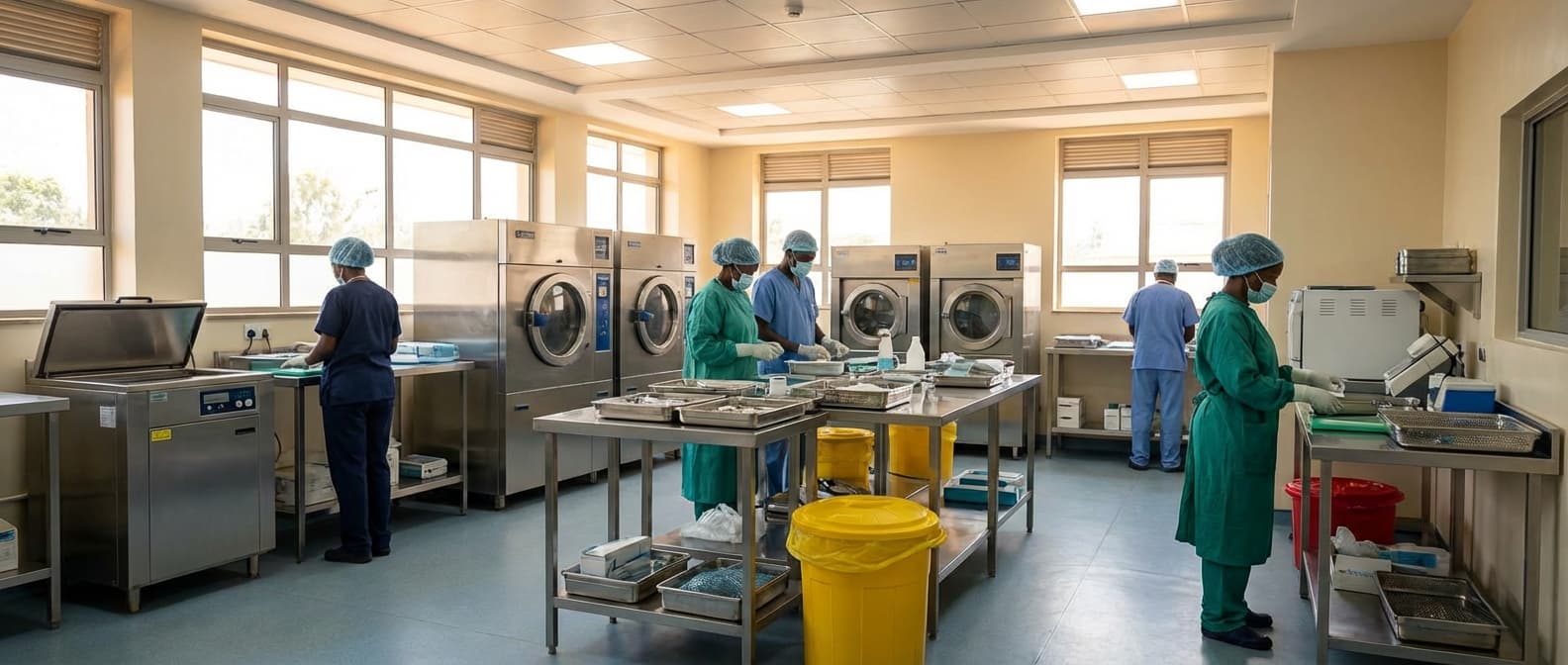
Infection-Control Readiness Support Service for Reusable Equipment in Malawi
Engineering Excellence & Technical Support
Infection-Control Readiness Support Service for Reusable Equipment High-standard technical execution following OEM protocols and local regulatory frameworks.
Sterilization Process Optimization
We implement and refine robust sterilization protocols for all reusable medical equipment, ensuring adherence to WHO guidelines and international best practices, thereby minimizing the risk of healthcare-associated infections (HAIs) across Malawian healthcare facilities.
Capacity Building & Training Programs
Our service delivers comprehensive, hands-on training modules to healthcare professionals in Malawi on proper equipment cleaning, disinfection, and sterilization techniques, empowering them with the knowledge and skills for effective infection prevention.
Equipment Maintenance & Quality Assurance
We provide specialized technical support for the maintenance and calibration of sterilization equipment, alongside rigorous quality assurance checks, guaranteeing the efficacy of sterilization processes and the safety of reusable medical devices.
What Is Infection-control Readiness Support Service For Reusable Equipment In Malawi?
Infection Control Readiness Support Service (ICRSS) for Reusable Equipment in Malawi is a specialized program designed to bolster the capacity of healthcare facilities to safely manage and reprocess reusable medical devices. This service ensures that equipment, critical for patient care, is rendered free from microbial contamination and is therefore safe for subsequent use. It encompasses a multi-faceted approach, addressing both the infrastructure and human resource elements crucial for effective infection prevention and control (IPC) in the context of reusable equipment reprocessing.
| Who Needs the Service | Typical Use Cases | ||||
|---|---|---|---|---|---|
| All public and private healthcare facilities in Malawi that utilize reusable medical equipment, including but not limited to: | Sterilization and disinfection of surgical instruments (e.g., scalpels, forceps, retractors). Reprocessing of diagnostic equipment (e.g., endoscopes, bronchoscopes). Management of reusable medical supplies in various departments (e.g., maternity, emergency, outpatient clinics). Ensuring the safety of maternal and child health services through properly reprocessed equipment. Addressing outbreaks and enhancing preparedness for future infectious disease events by maintaining robust reprocessing capabilities. | ||||
| Primary health centers. | District hospitals. | Tertiary referral hospitals. | Specialized clinics (e.g., dental clinics, eye care centers). | Non-governmental organization (NGO) health facilities. | Private medical practices. |
Components of Infection-Control Readiness Support Service for Reusable Equipment:
- Assessment of existing reprocessing practices and infrastructure against national and international guidelines.
- Development and implementation of Standard Operating Procedures (SOPs) for cleaning, disinfection, and sterilization of various reusable medical devices.
- Training and capacity building for healthcare personnel involved in equipment reprocessing, covering topics such as: - Principles of sterilization and disinfection. - Proper handling and segregation of contaminated equipment. - Use and maintenance of reprocessing equipment (e.g., autoclaves, washer-disinfectors). - Water quality monitoring for reprocessing. - Waste management associated with reprocessing.
- Guidance on the procurement, installation, and maintenance of appropriate reprocessing equipment and consumables.
- Development and implementation of quality assurance and monitoring systems for reprocessing processes, including biological and chemical indicators.
- Support for establishing and maintaining an inventory of reusable equipment and its reprocessing status.
- Dissemination of up-to-date information on IPC best practices related to reusable equipment.
- Mentorship and on-site support for troubleshooting and continuous improvement of reprocessing workflows.
Who Needs Infection-control Readiness Support Service For Reusable Equipment In Malawi?
This document outlines the critical need for infection-control readiness support services specifically for reusable medical equipment in Malawi. Effective management and sterilization of reusable equipment are paramount in preventing healthcare-associated infections (HAIs), ensuring patient safety, and maintaining the integrity of healthcare delivery. Without robust support, healthcare facilities in Malawi face significant risks.
| Department | Specific Needs & Responsibilities | Impact of Inadequate Readiness |
|---|---|---|
| Sterilization and Central Sterile Supply Department (CSSD) | Proper cleaning, disinfection, sterilization, packaging, storage, and distribution of reusable medical instruments and equipment. Adherence to international and national guidelines. Maintenance of sterilization equipment. | High risk of cross-contamination, transmission of pathogens, prolonged equipment downtime, compromised surgical outcomes, increased patient morbidity and mortality. |
| Operating Theaters / Surgical Wards | Ensuring all surgical instruments and equipment are properly sterilized and readily available for procedures. Understanding sterilization indicators and quality control measures. Safe handling of soiled instruments. | Surgical site infections (SSIs), delayed wound healing, need for repeat surgeries, patient suffering, increased healthcare costs, reputational damage to the facility. |
| Outpatient Departments (OPDs) | Disinfection and sterilization of reusable items used in examinations and minor procedures (e.g., speculums, curettes, syringes if reusable). Proper handling and storage. | Transmission of infections between patients, patient discomfort, potential for developing more severe infections. |
| Maternity Wards | Sterilization of instruments used during childbirth, including episiotomy scissors, forceps, and speculums. Ensuring hygienic practices for reusable perineal care items. | Postpartum infections, puerperal sepsis, neonatal infections, complications for mother and baby. |
| Dental Departments | Sterilization of dental instruments such as probes, explorers, scalers, forceps, and handpieces. Maintaining a sterile environment for dental procedures. | Transmission of blood-borne pathogens (e.g., Hepatitis B, Hepatitis C, HIV), oral infections, patient distrust. |
| Laboratories | Sterilization of reusable lab equipment like glassware, petri dishes, and certain instruments. Maintaining a sterile environment for diagnostic testing. | False positive or negative test results, contamination of samples, spread of laboratory-acquired infections. |
| Infection Prevention and Control (IPC) Committee/Unit | Developing and implementing IPC policies and procedures related to reusable equipment. Monitoring compliance, training staff, conducting risk assessments, and managing outbreaks. | Inability to effectively monitor and enforce standards, lack of a systematic approach to infection prevention, difficulty in responding to outbreaks. |
| Procurement and Supplies Department | Ensuring availability of appropriate cleaning agents, disinfectants, sterilants, and packaging materials. Sourcing and maintaining sterilization equipment. | Stockouts of essential supplies, use of substandard or inappropriate materials, equipment failure due to lack of maintenance or replacement parts. |
| Maintenance and Biomedical Engineering Department | Ensuring sterilization equipment (autoclaves, washer-disinfectors) is functional, calibrated, and regularly maintained. Troubleshooting equipment failures. | Equipment malfunction leading to ineffective sterilization, potential for patient harm, significant financial losses due to equipment downtime and repairs. |
| Nursing Staff (across all departments) | Proper cleaning, handling, and storage of reusable equipment before and after use, according to established protocols. Reporting any issues with equipment. | Compromised cleaning and disinfection, improper storage leading to recontamination, potential for transmission of infections if protocols are not followed. |
Target Customers and Departments
- Hospitals (both public and private)
- Health Centers
- Clinics
- Surgical Centers
- Dental Practices
- Laboratories
- Rehabilitation Centers
Infection-control Readiness Support Service For Reusable Equipment Process In Malawi
This document outlines the workflow for the Infection-Control Readiness Support Service for Reusable Equipment Processes in Malawi, guiding stakeholders from initial inquiry to successful execution. The service aims to enhance the safety and efficacy of reusable medical equipment by ensuring robust infection prevention and control (IPC) measures are in place throughout their lifecycle.
| Phase | Key Activities | Responsible Parties | Deliverables |
|---|---|---|---|
| 1: Inquiry and Needs Assessment | Facility identifies a need for support. Contact is made with the designated support service provider. Initial discussion to understand the scope of the need, specific equipment types, and current IPC practices related to reusable equipment. Preliminary identification of key stakeholders within the facility. | Healthcare Facility Management, IPC Focal Person, Support Service Provider (e.g., Ministry of Health IPC Unit, implementing partner) | Initial contact documentation, preliminary needs statement, stakeholder identification list. |
| 2: Service Proposal and Agreement | Support service provider develops a tailored proposal outlining the scope of work, methodologies, timeline, required resources, and expected outcomes. Proposal is reviewed and discussed with the facility. Formal agreement or Memorandum of Understanding (MoU) is signed, detailing roles, responsibilities, and commitment from both parties. | Support Service Provider, Healthcare Facility Management | Service proposal, signed agreement/MoU, detailed work plan (initial draft). |
| 3: Readiness Assessment and Gap Analysis | A comprehensive assessment of the facility's current reusable equipment processing practices against established IPC guidelines and standards. This includes evaluating infrastructure (e.g., dedicated areas for cleaning, disinfection, sterilization), equipment (e.g., autoclaves, washers), consumables (e.g., detergents, disinfectants), and human resources (e.g., training, staffing levels). Identification of specific gaps and challenges in the IPC process. | Support Service Provider (IPC experts, assessors), Facility IPC Committee, Relevant Staff (nurses, technicians, cleaners) | Baseline assessment report, gap analysis report, list of identified IPC deficiencies, stakeholder consultation notes. |
| 4: Intervention Planning and Implementation | Based on the gap analysis, a detailed intervention plan is developed collaboratively. This may include: training and capacity building for staff on cleaning, disinfection, and sterilization procedures; procurement and/or repair of essential equipment and supplies; development or revision of Standard Operating Procedures (SOPs); establishment of quality control mechanisms; and sensitization of staff and management. | Support Service Provider, Healthcare Facility Management, Facility Staff, Procurement Department (if applicable) | Detailed intervention plan, training materials, revised SOPs, updated equipment inventory, procurement requests (if applicable), conducted training sessions, implemented process changes. |
| 5: Monitoring, Evaluation, and Sustainability | Ongoing monitoring of the implemented interventions to ensure adherence to new procedures and sustained improvement. Periodic evaluations to assess the impact of the service on infection rates and patient safety. Development of strategies for long-term sustainability, including continued staff training, regular equipment maintenance, and integration of IPC practices into routine facility operations. Handover of responsibilities to the facility's IPC committee and designated personnel. | Support Service Provider, Healthcare Facility Management, Facility IPC Committee, Quality Assurance Department | Monitoring reports, evaluation reports, sustainability plan, documented handover protocols, recommendations for future improvements. |
Infection-Control Readiness Support Service Workflow
- Phase 1: Inquiry and Needs Assessment
- Phase 2: Service Proposal and Agreement
- Phase 3: Readiness Assessment and Gap Analysis
- Phase 4: Intervention Planning and Implementation
- Phase 5: Monitoring, Evaluation, and Sustainability
Infection-control Readiness Support Service For Reusable Equipment Cost In Malawi
Assessing the cost of an Infection-Control Readiness Support Service for Reusable Equipment in Malawi requires a comprehensive understanding of various pricing factors. These factors are influenced by the specific services offered, the scale of implementation, the type and quantity of reusable equipment, and the logistical complexities within the Malawian healthcare landscape. The service aims to ensure that reusable medical devices are properly cleaned, disinfected, and sterilized to prevent healthcare-associated infections (HAIs). Pricing will reflect the labor, materials, equipment, training, and ongoing support required. Local currency (Malawian Kwacha, MWK) will be used, with ranges indicative of variations based on the intensity and breadth of the support provided.
| Service Component | Description | Estimated Price Range (MWK) - Low | Estimated Price Range (MWK) - High | Notes |
|---|---|---|---|---|
| Initial Assessment & Needs Analysis | On-site evaluation of current practices, equipment, and infrastructure. | 50,000 | 250,000 | Covers site visits, interviews, and report generation. |
| Basic Training Package | Core training on cleaning, disinfection, and sterilization principles for a small team. | 300,000 | 1,000,000 | Per facility, depending on team size and duration. |
| Advanced Training & Skill Development | Specialized training for complex equipment (e.g., endoscopes, ultrasound probes). | 600,000 | 2,500,000 | Includes hands-on sessions and competency checks. |
| Supply of Consumables (Monthly) | Detergents, disinfectants, gloves, indicators for a moderate-sized facility. | 150,000 | 750,000 | Highly variable based on volume of equipment processed and specific product choices. |
| Equipment Maintenance & Calibration (Annual) | Service for autoclaves, washer-disinfectors, and other reprocessing equipment. | 200,000 | 1,500,000 | Depends on the number and type of equipment, and service provider. |
| Routine Audits & Quality Assurance (Quarterly) | On-site checks of processes, documentation, and staff adherence. | 100,000 | 500,000 | Covers site visits and feedback sessions. |
| Full CSSD Support Outsourcing (Monthly) | Complete management of a Central Sterile Services Department (CSSD) for a facility. | 1,500,000 | 10,000,000+ | Most comprehensive option, dependent on facility size, patient load, and staffing. |
| Consultancy & Protocol Development | Development of site-specific infection control policies and procedures. | 400,000 | 1,200,000 | Per project, depending on complexity and scope. |
Key Pricing Factors for Infection-Control Readiness Support Service in Malawi:
- Scope of Services:
- Level of Support (e.g., training only, equipment provision, full outsourcing of CSSD functions).
- Frequency of Support (e.g., daily, weekly, monthly audits and consultations).
- Complexity of Reusable Equipment:
- Types of equipment requiring reprocessing (e.g., surgical instruments, endoscopes, anesthesia equipment).
- Volume of reusable equipment to be managed.
- Need for specialized reprocessing techniques or equipment.
- Infrastructure and Equipment Requirements:
- Cost of supplying necessary cleaning, disinfection, and sterilization equipment (if not existing).
- Maintenance and calibration costs for equipment.
- Consumables (detergents, disinfectants, sterilization wraps, biological indicators).
- Laboratory Support:
- Costs associated with quality control testing and environmental monitoring.
- Training and Capacity Building:
- Development and delivery of training programs for healthcare staff.
- Ongoing mentorship and competency assessments.
- Personnel Costs:
- Salaries and benefits for infection control specialists, technicians, and trainers.
- Travel and accommodation expenses for support staff within Malawi.
- Logistical Considerations:
- Transportation of supplies and equipment to various health facilities.
- Security of supplies and equipment.
- Administrative overheads and management fees.
- Regulatory Compliance:
- Ensuring adherence to national and international infection control guidelines.
- Costs associated with documentation and reporting.
- Contract Duration and Volume Commitments:
- Longer-term contracts and higher volumes may offer economies of scale and reduced per-unit costs.
Affordable Infection-control Readiness Support Service For Reusable Equipment Options
Our Affordable Infection-Control Readiness Support Service for Reusable Equipment Options is designed to empower healthcare facilities with robust infection prevention protocols while optimizing operational costs. We understand the critical need to maintain the highest standards of cleanliness and safety for reusable medical devices, and we offer flexible solutions to meet diverse budgetary requirements. This service focuses on proactive strategies, comprehensive training, and efficient resource management to ensure your facility is always prepared to prevent and control infections.
| Cost-Saving Strategy | Description | Impact on Value |
|---|---|---|
| Preventive Maintenance & Monitoring | Regular checks and monitoring of reusable equipment to identify and address potential issues before they lead to costly failures or cross-contamination. | Reduces repair costs, extends equipment lifespan, and minimizes patient safety risks. |
| Optimized Sterilization Processes | Streamlining sterilization workflows and ensuring optimal cycle parameters to maximize efficiency and minimize waste of supplies and energy. | Lower utility bills, reduced consumable costs, and faster turnaround times for equipment. |
| Staff Training & Education | Comprehensive and ongoing training for staff on proper handling, cleaning, disinfection, and sterilization of reusable equipment. This reduces errors and improves compliance. | Decreases the likelihood of reprocessing errors, leading to fewer equipment recalls, reduced waste, and improved patient outcomes. |
| Consolidated Purchasing & Supply Chain Management | Leveraging our network to negotiate better pricing on cleaning agents, disinfectants, and sterilization consumables. Centralized management reduces administrative overhead. | Significant reduction in material costs and improved inventory control. |
| Data-Driven Insights & Performance Analytics | Utilizing data from cleaning and sterilization processes to identify areas for improvement, reduce waste, and optimize resource allocation. | Enables targeted interventions for maximum cost-effectiveness and continuous quality improvement. |
| On-Demand Support & Consulting | Access to infection control experts for timely advice and problem-solving, preventing minor issues from escalating into major expenses. | Avoids costly downtime, emergency repairs, and the potential for outbreaks. |
Value Bundles: Tailored Solutions for Every Need
- {"title":"Essential Readiness Bundle","description":"Our foundational offering, providing core infection control support for reusable equipment. Ideal for smaller facilities or those looking for a cost-effective entry point."}
- {"title":"Proactive Prevention Bundle","description":"An enhanced package that includes advanced training modules, enhanced monitoring tools, and pre-emptive risk assessments. Suited for facilities aiming for a higher level of preparedness."}
- {"title":"Comprehensive Compliance Bundle","description":"Our most complete solution, encompassing all aspects of infection control readiness for reusable equipment. Includes regular audits, personalized consulting, and custom protocol development. Best for larger organizations with complex needs or those facing stringent regulatory scrutiny."}
- {"title":"Customizable Options","description":"We offer the flexibility to mix and match services from different bundles or create entirely bespoke packages to precisely fit your facility's unique operational and financial constraints."}
Verified Providers In Malawi
In Malawi's evolving healthcare landscape, ensuring access to reliable and high-quality medical services is paramount. "Verified Providers" signifies a crucial distinction, indicating that healthcare facilities and practitioners have met stringent criteria for competence, safety, and ethical practice. Among these distinguished providers, Franance Health stands out as a beacon of excellence. This document outlines the credentials that make Franance Health the best choice for your healthcare needs in Malawi, emphasizing their commitment to patient well-being and adherence to international standards.
| Aspect | Franance Health's Commitment | Why it Matters to Patients |
|---|---|---|
| Licensing & Accreditation | Consistently meets and exceeds Ministry of Health standards; holds up-to-date certifications. | Guarantees legal operation and adherence to national healthcare regulations. |
| Staff Qualifications | Employs highly educated, certified, and experienced medical professionals; encourages continuous professional development. | Ensures access to competent and knowledgeable caregivers, leading to accurate diagnoses and effective treatments. |
| Treatment Protocols | Strictly follows evidence-based clinical guidelines and best practices. | Promotes standardized, high-quality care, reducing the likelihood of medical errors and improving patient outcomes. |
| Patient Safety | Implements robust infection control measures and prioritizes a safe healthcare environment. | Minimizes the risk of hospital-acquired infections and ensures a secure healing space. |
| Technology & Facilities | Invests in modern medical equipment and maintains up-to-date healthcare facilities. | Facilitates precise diagnostics and access to advanced treatment options, leading to better health results. |
| Patient Experience | Focuses on compassionate, respectful, and transparent patient interactions. | Builds trust, empowers patients, and ensures a comfortable and reassuring healthcare journey. |
Key Credentials and Why Franance Health Excels
- Accreditation and Licensing: Franance Health facilities undergo rigorous inspection and approval processes by the Malawian Ministry of Health and relevant regulatory bodies. This ensures they meet all legal and operational requirements for healthcare provision. Their consistent renewal of these accreditations demonstrates an ongoing commitment to excellence.
- Qualified and Certified Medical Professionals: The backbone of any reputable healthcare provider is its staff. Franance Health employs highly qualified doctors, nurses, specialists, and allied health professionals who hold recognized degrees, certifications, and licenses. Many possess international experience and specialized training, bringing global best practices to Malawi.
- Adherence to Clinical Protocols and Best Practices: Franance Health actively implements and adheres to evidence-based clinical guidelines and protocols. This standardized approach to care ensures that patients receive the most effective and up-to-date treatments, minimizing the risk of errors and maximizing positive outcomes.
- Patient Safety and Infection Control: Stringent infection control measures are a hallmark of verified providers. Franance Health invests in state-of-the-art sterilization equipment, robust hygiene protocols, and continuous staff training to create a safe environment for all patients, significantly reducing the risk of healthcare-associated infections.
- Modern Infrastructure and Equipment: Access to modern medical technology and well-maintained facilities is vital for accurate diagnosis and effective treatment. Franance Health consistently updates its infrastructure and invests in advanced medical equipment, ensuring that patients benefit from the latest diagnostic and therapeutic capabilities.
- Patient-Centered Care and Ethical Conduct: Beyond clinical expertise, Franance Health prioritizes a patient-centered approach. This includes open communication, respect for patient autonomy, confidentiality, and a commitment to ethical medical practices. Their staff are trained to provide compassionate and empathetic care, fostering trust and a positive patient experience.
- Transparency and Accountability: Verified providers are committed to transparency in their operations and are accountable to both patients and regulatory bodies. Franance Health maintains clear communication regarding services, costs, and patient rights, building a foundation of trust and reliability.
Scope Of Work For Infection-control Readiness Support Service For Reusable Equipment
This Scope of Work (SOW) outlines the requirements for Infection-Control Readiness Support Services specifically focused on reusable medical equipment. The objective is to ensure that healthcare facilities have robust processes, trained personnel, and appropriate documentation in place to effectively manage the infection control aspects of reusable equipment throughout its lifecycle, from acquisition to disposal. This SOW defines the technical deliverables and standard specifications required to achieve this readiness.
| Deliverable ID | Technical Deliverable | Description | Standard Specification/Guideline Reference |
|---|---|---|---|
| DEL-001 | Current State Assessment Report | A comprehensive report detailing the facility's existing policies, procedures, infrastructure, and staff competency related to reusable equipment infection control. Includes identification of gaps and areas for improvement. | Facility-specific assessment criteria, industry best practices, CDC Guidelines for Disinfection and Sterilization in Health-Care Facilities. |
| DEL-002 | Standard Operating Procedures (SOPs) Manual | A detailed manual containing clear, step-by-step SOPs for the entire lifecycle of reusable equipment reprocessing, including receiving, cleaning, inspection, disinfection, sterilization, storage, and distribution. SOPs should be specific to equipment types and reprocessing methods. | AAMI ST79: Comprehensive guide to sterilization, disinfection, and cleaning for all reusable medical devices; IS0 17665: Sterilization of health care products - Moist heat; Facility-specific risk assessment. |
| DEL-003 | Training Program and Competency Assessment Tools | Development of a comprehensive training program for all personnel involved in reusable equipment reprocessing, covering infection control principles, SOPs, equipment operation, and safety. Includes assessment tools (e.g., quizzes, practical evaluations) to verify competency. | Facility-specific training objectives, competency checklists aligned with SOPs and manufacturer instructions for use (IFUs), evidence-based adult learning principles. |
| DEL-004 | Equipment and Supply Recommendations | A report providing recommendations for acquisition or upgrade of cleaning, disinfection, and sterilization equipment, as well as appropriate cleaning agents, disinfectants, and sterilization supplies. Recommendations should consider workflow efficiency and cost-effectiveness. | Manufacturer IFUs, AAMI standards for equipment performance, EPA-registered disinfectant efficacy data, FDA clearance for medical devices and accessories. |
| DEL-005 | Process Validation Report | Documentation of validation activities for key reprocessing processes (e.g., washer-disinfector cycles, sterilizer efficacy testing). Includes protocols, executed results, and summary reports demonstrating that processes consistently achieve the intended level of decontamination. | AAMI TIR12: Designing, Installing, Operating, and Maintaining Processing Equipment for Medical Devices; Manufacturer IFUs for validation cycles; Facility-specific validation protocols. |
| DEL-006 | Documentation and Record-Keeping System Framework | A proposed framework for a robust documentation and record-keeping system, including templates for logs, traceability records, quality control checks, and maintenance records. Aims to ensure auditable trails for all reprocessing activities. | Regulatory requirements (e.g., FDA 21 CFR Part 820), Accreditation standards (e.g., The Joint Commission), AAMI ST79, Facility-specific data management policies. |
| DEL-007 | Regulatory Compliance Gap Analysis and Action Plan | An analysis identifying any gaps between current practices and relevant regulatory requirements (e.g., FDA, state health departments) and accreditation standards. Includes a prioritized action plan for remediation. | FDA 21 CFR Part 820 (Quality System Regulation), CDC Guidelines for Disinfection and Sterilization in Health-Care Facilities, Manufacturer IFUs, The Joint Commission standards. |
Key Areas of Focus
- Assessment of current reusable equipment infection control practices.
- Development and implementation of Standard Operating Procedures (SOPs) for cleaning, disinfection, and sterilization.
- Training and competency assessment for staff involved in reusable equipment reprocessing.
- Review and recommendation of appropriate equipment and supplies.
- Validation of reprocessing processes.
- Establishment of a robust documentation and record-keeping system.
- Guidance on regulatory compliance and accreditation preparedness.
Service Level Agreement For Infection-control Readiness Support Service For Reusable Equipment
This Service Level Agreement (SLA) outlines the guaranteed response times and uptime for the Infection-Control Readiness Support Service for Reusable Equipment. This service ensures that critical reusable equipment is maintained at the highest standards of cleanliness and sterility, minimizing the risk of healthcare-associated infections (HAIs).
| Service Component | Response Time Guarantee | Uptime Guarantee | Escalation Protocol |
|---|---|---|---|
| Routine Support Request (Non-Urgent): Issues identified during routine monitoring or reported by staff that do not pose an immediate threat to patient care. | 4 Business Hours | 98% | If resolution exceeds 8 business hours, escalation to senior technical support and facility management. |
| Urgent Support Request (Potential Patient Risk): Issues that may compromise patient safety or lead to potential infection transmission. | 2 Business Hours | 99% | If resolution exceeds 4 business hours, immediate escalation to senior technical support, facility management, and infection control department. |
| Critical Equipment Failure (Immediate Patient Impact): Complete equipment failure that directly prevents patient care or poses an immediate infection risk. | 1 Business Hour | 99.5% | Immediate escalation to senior technical support, facility management, infection control department, and executive leadership. Daily status updates required. |
| Preventative Maintenance: Proactive inspections and maintenance to prevent failures. | N/A (Scheduled in advance) | N/A (Contributes to overall uptime) | Scheduled maintenance will be communicated at least 7 days in advance. Any deviations require immediate notification. |
Service Scope and Definitions
- Infection-Control Readiness Support Service for Reusable Equipment: This service encompasses proactive monitoring, rapid response to identified issues, and preventative maintenance for all designated reusable medical equipment critical to patient care and infection control.
- Critical Reusable Equipment: Equipment designated by the facility as essential for patient safety and infection control, including but not limited to surgical instruments, endoscopes, respiratory therapy devices, and sterilization equipment.
- Response Time: The maximum time allowed from the initiation of a support request to the commencement of diagnostic assessment and troubleshooting by a qualified service technician.
- Uptime Guarantee: The percentage of time the supported reusable equipment is operational and deemed safe for use according to infection control protocols, excluding scheduled maintenance and planned downtime.
- Downtime: Any period during which the equipment is non-operational or potentially unsafe for use due to a failure, malfunction, or contamination issue.
- Scheduled Maintenance: Pre-planned maintenance activities conducted to ensure optimal equipment performance and longevity, which will be communicated in advance.
Frequently Asked Questions

Ready when you are
Let's scope your Infection-Control Readiness Support Service for Reusable Equipment in Malawi project in Malawi.

Scaling healthcare logistics and technical systems across the entire continent.