
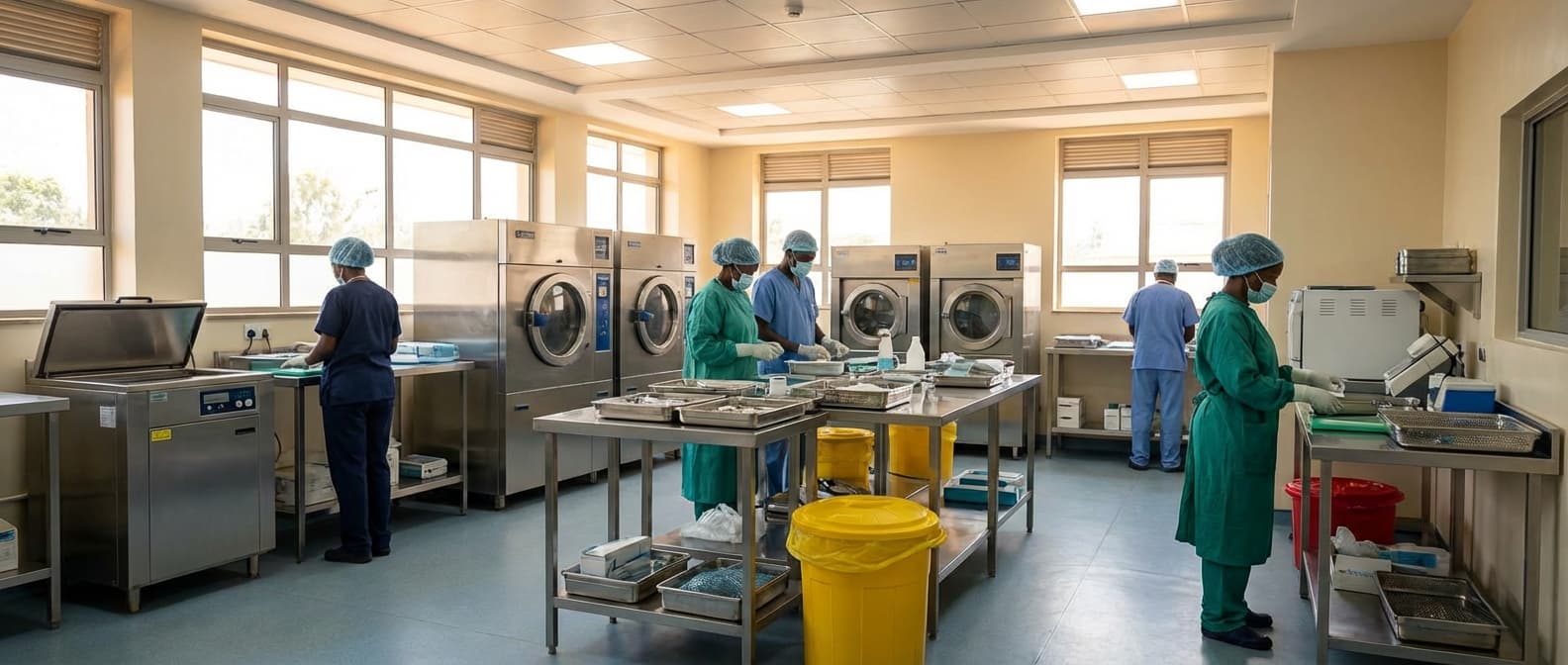
Autoclave Validation Support Service in Malawi
Engineering Excellence & Technical Support
Autoclave Validation Support Service High-standard technical execution following OEM protocols and local regulatory frameworks.
Comprehensive Autoclave Performance Testing
Our service in Malawi offers in-depth validation of your autoclaves, employing rigorous testing methodologies. We utilize biological and chemical indicators, temperature mapping, and pressure cycle analysis to ensure optimal sterilization effectiveness and compliance with international standards, safeguarding your critical processes.
Data-Driven Validation & Compliance Assurance
We provide detailed, data-driven reports for your autoclave validation in Malawi. Our expert analysis ensures your sterilization equipment meets all regulatory requirements, offering clear evidence of compliance and minimizing risks associated with non-conformity for your organization.
Customized Validation Protocols & Equipment Optimization
Understanding the unique operational needs in Malawi, we develop tailored autoclave validation protocols. Our service includes identifying potential equipment inefficiencies and providing actionable recommendations for optimization, ensuring your autoclaves operate at peak performance and longevity.
What Is Autoclave Validation Support Service In Malawi?
Autoclave validation support services in Malawi refer to specialized technical consultancy and operational assistance provided to ensure that steam sterilizers (autoclaves) consistently achieve and maintain the required efficacy for sterilization of medical devices, laboratory equipment, and other critical items. This validation process is crucial for complying with regulatory requirements, safeguarding patient safety, and ensuring the integrity of research and diagnostic processes. The service encompasses a range of activities designed to verify the performance of the autoclave against established international standards and manufacturer specifications.
| Who Needs Autoclave Validation Support? | Typical Use Cases |
|---|---|
| Healthcare Facilities: Hospitals, clinics, dental practices, and surgical centers that sterilize surgical instruments, medical devices, and reusable patient care items. | Sterilization of surgical tools, endoscopes, respiratory therapy equipment, and other critical medical supplies. |
| Diagnostic and Research Laboratories: Laboratories involved in microbiology, molecular biology, and clinical diagnostics that require sterile consumables, media, and glassware. | Sterilization of culture media, petri dishes, pipette tips, laboratory glassware, and biohazardous waste. |
| Pharmaceutical and Biotechnology Companies: Facilities involved in manufacturing, quality control, and research that require sterile environments and equipment. | Sterilization of manufacturing equipment, glassware, and consumables used in drug production and research. |
| Veterinary Clinics and Animal Research Facilities: Facilities that sterilize surgical instruments and equipment for animal care and research. | Sterilization of veterinary surgical instruments and laboratory equipment. |
| Regulatory Compliance Bodies: Facilities mandated by national or international health and safety regulations to ensure the efficacy of sterilization processes. | Meeting requirements set by the Ministry of Health, relevant regulatory agencies, and international standards (e.g., ISO 17025, EN 285). |
Key Components of Autoclave Validation Support Service
- Installation Qualification (IQ): Verifying that the autoclave has been correctly installed according to the manufacturer's specifications and relevant codes. This includes checking power supply, water supply, drainage, and mechanical integrity.
- Operational Qualification (OQ): Confirming that the autoclave operates within its designated operational parameters. This involves testing the control system, safety features, and monitoring devices across the specified range of operational settings (e.g., temperature, pressure, time).
- Performance Qualification (PQ): Demonstrating that the autoclave consistently and reproducibly sterilizes loads under worst-case conditions. This is typically achieved through a series of challenge studies using biological indicators (BIs) and chemical indicators (CIs) placed strategically within representative loads to prove microbial kill.
- Validation Protocol Development: Creating detailed, documented plans outlining the methodology, acceptance criteria, and testing procedures for IQ, OQ, and PQ.
- Calibration of Monitoring Devices: Ensuring that all temperature probes, pressure gauges, and timers used for validation are accurately calibrated against traceable standards.
- Load Testing and Optimization: Evaluating the effectiveness of sterilization for specific types of loads and recommending optimal loading patterns, cycle parameters, and packaging methods.
- Re-validation and Periodic Testing: Conducting validation studies after significant repairs, modifications, or at predetermined intervals to ensure continued compliance and performance.
- Documentation and Reporting: Providing comprehensive reports detailing the validation process, results, deviations, and recommendations, forming part of the facility's quality management system.
- Training and Consultancy: Offering expertise to facility personnel on the operation, maintenance, and quality control aspects of autoclaves.
Who Needs Autoclave Validation Support Service In Malawi?
Autoclave validation is a critical process for ensuring the effective sterilization of medical equipment and devices. In Malawi, various healthcare facilities and laboratories rely on autoclaves for maintaining hygiene and preventing the spread of infections. The need for autoclave validation support services is particularly pronounced in institutions where regulatory compliance, patient safety, and operational efficiency are paramount. This service ensures that autoclaves are functioning optimally, delivering consistent and reliable sterilization results.
| Customer Type | Key Departments Requiring Support | Primary Needs/Concerns |
|---|---|---|
| Hospitals | Central Sterile Supply Department (CSSD), Operating Theatres, Infection Prevention and Control Unit, Pharmacy, Laboratories | Ensuring patient safety, meeting regulatory standards, preventing hospital-acquired infections (HAIs), efficient turnaround of sterile instruments. |
| Clinics and Health Centers | Nursing Staff, Clinical Officers, Laboratory Technicians | Maintaining basic hygiene, preventing cross-contamination, providing safe patient care with limited resources. |
| Diagnostic Laboratories | Microbiology Department, Pathology Department, Research Laboratories | Reliable sterilization of media, glassware, and instruments for accurate test results, preventing contamination of samples. |
| Dental Practices | Dentists, Dental Assistants, Hygienists | Sterilization of dental instruments to prevent the transmission of blood-borne pathogens, patient confidence in safety. |
| Surgical Centers | Surgical Staff, CSSD Technicians | High-volume sterilization of specialized surgical instruments, immediate availability of sterile equipment, minimizing procedure delays. |
| Research Institutions | Researchers, Lab Technicians | Sterilization of laboratory equipment and materials for experimental integrity, preventing experimental bias due to contamination. |
| Pharmaceutical Manufacturing Facilities | Quality Control, Production Units | Sterilization of equipment and components used in drug manufacturing to ensure product purity and safety. |
| Veterinary Clinics and Hospitals | Veterinarians, Veterinary Nurses | Sterilization of surgical instruments for animal procedures, preventing the spread of zoonotic diseases. |
Target Customers and Departments Requiring Autoclave Validation Support Service in Malawi
- Hospitals (Governmental, Private, Mission-based)
- Clinics and Health Centers
- Diagnostic Laboratories (Medical and Veterinary)
- Dental Practices
- Surgical Centers
- Research Institutions
- Pharmaceutical Manufacturing Facilities (where applicable for sterilization)
- Veterinary Clinics and Hospitals
Autoclave Validation Support Service Process In Malawi
This document outlines the typical workflow for Autoclave Validation Support Services in Malawi, from the initial customer inquiry to the final execution and reporting. This process ensures that autoclaves meet the required regulatory and operational standards for sterilization, critical for healthcare, research, and manufacturing sectors.
| Stage | Description | Key Activities | Deliverables/Outcomes | Responsible Party |
|---|---|---|---|---|
| Initial contact from a client seeking autoclave validation services. | Client contacts service provider via phone, email, or website. Service provider gathers information on autoclave type, size, usage, existing documentation, and specific validation requirements (e.g., IQ, OQ, PQ). | Understanding of client's needs, scope of work defined. | Client, Service Provider |
| Formal proposal and contractual agreement for the validation services. | Service provider develops a detailed quotation based on the needs assessment, including scope, methodology, timeline, and cost. Client reviews and approves the quotation. Service agreement/contract is signed. | Formal agreement, pricing, and schedule confirmed. | Service Provider, Client |
| Planning and preparation for the on-site validation activities. | Service provider and client agree on the validation dates. Client ensures the autoclave is accessible, clean, and operational. Any required utilities (power, water) are confirmed. Pre-validation checks may be conducted by the client. | Scheduled validation date, site ready for validation. | Client, Service Provider |
| The core validation activities performed at the client's facility. | Installation Qualification (IQ): Verifying installation and physical parameters (e.g., utilities, safety features). Operational Qualification (OQ): Testing the autoclave's ability to operate within specified parameters (e.g., temperature, pressure, time cycles) under various conditions. Performance Qualification (PQ): Challenging the autoclave with biological indicators (BIs) and chemical indicators (CIs) to demonstrate effective sterilization efficacy under typical or worst-case operating conditions. | Raw validation data, calibration records, executed protocols. | Service Provider |
| Processing the collected data and compiling the validation report. | Service provider analyzes all collected data (e.g., temperature logs, pressure readings, BI/CI results). A comprehensive validation report is prepared, including methodology, results, analysis, deviations, and conclusions. The report will confirm if the autoclave meets the predefined acceptance criteria. | Comprehensive Validation Report, incl. IQ, OQ, PQ findings. | Service Provider |
| Formal sign-off and ongoing support. | The validation report is submitted to the client for review and approval. Upon approval, a validation certificate is issued. Service provider may offer ongoing support, revalidation scheduling, or maintenance recommendations. | Approved Validation Certificate, client satisfaction, potential for future services. | Service Provider, Client |
Autoclave Validation Support Service Process Flow
- Inquiry & Needs Assessment
- Quotation & Agreement
- Scheduling & Site Preparation
- On-site Execution of Validation Protocols
- Data Analysis & Report Generation
- Certification & Follow-up
Autoclave Validation Support Service Cost In Malawi
Autoclave validation is a critical process for ensuring the efficacy of sterilization equipment in healthcare and laboratory settings. In Malawi, the cost of this essential service can vary significantly due to several influencing factors. These factors range from the complexity of the validation process itself to the experience and reputation of the service provider. Understanding these elements is key for organizations to budget effectively for autoclave validation and maintain compliance with regulatory standards.
| Service Component | Estimated Cost Range (Malawian Kwacha - MWK) | Notes |
|---|---|---|
| Basic Autoclave Validation (Per Unit) | MWK 150,000 - MWK 400,000 | Covers routine physical, chemical, and basic biological monitoring. Varies by service provider and autoclave size. |
| Comprehensive Validation (Per Unit) | MWK 300,000 - MWK 750,000 | Includes full validation cycles (physical, chemical, biological), in-depth analysis, and detailed reporting. Higher end for larger/complex units. |
| Re-validation | MWK 100,000 - MWK 300,000 | Typically a reduced cost compared to initial validation, focused on specific parameters or issues. |
| Calibration (Per Autoclave) | MWK 50,000 - MWK 150,000 | If performed separately or as part of validation. Cost depends on the extent of calibration. |
| Travel & Accommodation (per technician, per day) | MWK 30,000 - MWK 70,000 | Applicable for services outside major urban centers like Lilongwe and Blantyre. |
| Urgent/Expedited Service | Additional 20% - 50% | On top of the base service cost. |
Key Pricing Factors for Autoclave Validation Support Services in Malawi
- Number of Autoclaves: The more autoclaves requiring validation within an institution, the higher the overall cost will be, typically billed per unit.
- Type and Size of Autoclave: Larger or more complex autoclaves (e.g., high-capacity surgical sterilizers) may require more specialized equipment and expertise, leading to higher validation fees.
- Validation Cycle Type: Different validation cycles (e.g., biological, chemical, physical) may have varying costs. A full validation encompassing all types will be more expensive than a single parameter check.
- Re-validation Requirements: If a re-validation is needed due to equipment malfunction, changes in usage, or regulatory changes, the cost will be incurred again.
- Service Provider's Expertise and Reputation: Established and certified validation service providers often command higher prices due to their proven track record, skilled technicians, and adherence to international standards.
- Geographical Location: Travel and accommodation costs for technicians can influence pricing, especially for remote locations within Malawi.
- Scope of Work: Whether the service includes just validation testing, or also calibration, preventative maintenance, or documentation support, will impact the final price.
- Urgency of Service: Expedited validation services may incur additional charges.
- Calibration Services: If autoclave calibration is required alongside validation, this will add to the overall cost.
- Certification and Documentation: The provision of detailed reports, certificates of validation, and other required documentation is usually included but can sometimes be itemized.
- Regulatory Compliance: Adherence to specific Malawian health regulations and international standards (e.g., ISO) might necessitate more rigorous testing and documentation, influencing cost.
Affordable Autoclave Validation Support Service Options
Maintaining the sterility of medical and laboratory equipment through proper autoclave validation is critical for patient safety and research integrity. Recognizing the financial constraints faced by many organizations, this guide outlines affordable autoclave validation support service options, emphasizing value bundles and cost-saving strategies.
| Service Bundle Tier | Included Services | Target Audience | Estimated Cost Savings (vs. à la carte) |
|---|---|---|---|
| Basic Validation Package | IQ, OQ, PQ (standard cycles) | Small clinics, labs with limited equipment | 10-15% |
| Comprehensive Validation & Calibration | IQ, OQ, PQ (customizable cycles), Annual Calibration (sensors) | Medium-sized hospitals, research institutions | 15-20% |
| Full-Service Maintenance & Validation Agreement | IQ, OQ, PQ (all cycles), Bi-annual Calibration, Preventative Maintenance, Priority Support, Discounted Repair | Large healthcare systems, contract research organizations (CROs) | 20-30%+ |
Understanding Autoclave Validation Support Services
- {"title":"Core Validation Services","description":"These typically include Installation Qualification (IQ), Operational Qualification (OQ), and Performance Qualification (PQ). IQ verifies proper installation, OQ confirms operational parameters, and PQ demonstrates consistent performance under typical load conditions."}
- {"title":"Calibration Services","description":"Regular calibration of temperature, pressure, and time sensors is essential for accurate validation and ongoing performance. This ensures the autoclave operates within specified parameters."}
- {"title":"Maintenance and Repair","description":"Proactive maintenance can prevent costly breakdowns and ensure validation cycles are not interrupted. Support services often include troubleshooting and repair."}
- {"title":"Documentation and Reporting","description":"Comprehensive, compliant documentation is a key deliverable. This includes detailed reports for regulatory bodies like the FDA or ISO."}
- {"title":"Consultation and Training","description":"Expert advice on validation protocols, regulatory requirements, and best practices can help optimize processes and avoid costly mistakes."}
Verified Providers In Malawi
Finding verified healthcare providers in Malawi is crucial for ensuring quality care and peace of mind. Franance Health stands out as a premier choice due to its rigorous credentialing process and unwavering commitment to patient well-being. This document outlines why Franance Health providers are a superior option for your healthcare needs.
| Credentialing Aspect | Franance Health Standard | Importance for Patients |
|---|---|---|
| Educational Verification | Confirmation of degrees and diplomas from accredited institutions. | Ensures foundational medical knowledge and competence. |
| Licensing Compliance | Up-to-date and valid professional licenses in Malawi. | Guarantees adherence to regulatory standards. |
| Professional Experience Review | Thorough assessment of past roles, responsibilities, and performance. | Indicates practical skills and suitability for practice. |
| Specialized Training & Certifications | Verification of advanced training and certifications in specific fields. | Confirms expertise in niche medical areas. |
| Background & Reference Checks | Comprehensive checks for any disciplinary actions or malpractice history; positive professional references. | Upholds ethical standards and patient trust. |
| Continuous Professional Development (CPD) | Encouragement and verification of ongoing learning and skill enhancement. | Ensures providers stay current with medical advancements. |
What Makes Franance Health Providers the Best Choice?
- Rigorous Verification Process: Franance Health employs a multi-stage credentialing process that goes beyond basic licensing. This includes background checks, verification of educational qualifications, confirmation of specialized training, and assessment of professional references.
- Commitment to Excellence: We partner with healthcare professionals who demonstrate a consistent track record of ethical practice, patient-centered care, and continuous professional development.
- Access to Specialized Expertise: Franance Health facilitates access to a wide network of specialists across various medical disciplines, ensuring you can find the right care for even the most complex conditions.
- Patient Safety Focus: Our verification protocols prioritize patient safety by thoroughly vetting providers for any history of malpractice or disciplinary actions.
- Transparency and Trust: We believe in empowering patients with information. Franance Health provides clear details about provider qualifications, allowing for informed decision-making.
- Streamlined Healthcare Navigation: By partnering with Franance Health, you gain access to a curated list of trusted professionals, simplifying the process of finding reliable healthcare in Malawi.
Scope Of Work For Autoclave Validation Support Service
This Scope of Work (SOW) outlines the services to be provided by [Service Provider Name] for Autoclave Validation Support. The objective is to ensure the autoclave system operates within its validated parameters, meeting regulatory requirements and ensuring product sterility. This includes IQ, OQ, and PQ testing, documentation, and reporting.
| Deliverable | Description | Standard Specifications/Acceptance Criteria | Format |
|---|---|---|---|
| Installation Qualification (IQ) Report | Confirms that the autoclave is installed according to manufacturer's specifications and relevant standards. | All components are correctly installed, wired, and functioning as designed. Manufacturer's documentation reviewed and verified. Safety features confirmed. Utilities meet requirements. | PDF, Hardcopy |
| Operational Qualification (OQ) Report | Verifies that the autoclave operates consistently within its defined operating ranges and parameters. | Successful completion of tests for critical parameters such as temperature, pressure, time, and sterilization cycles as per approved OQ protocol. System alarms and interlocks tested. Repeatability demonstrated across a defined range of setpoints. | PDF, Hardcopy |
| Performance Qualification (PQ) Report | Demonstrates that the autoclave consistently performs its intended function under normal operating conditions, achieving the required level of microbial kill. | Successful completion of a minimum number of validation runs (e.g., 3-5 consecutive runs) using a validated biological indicator (BI) system and/or chemical indicators (CIs). Acceptance criteria based on the log reduction of BIs or equivalent sterility assurance level (SAL) as defined in the PQ protocol. No product damage or compromise. | PDF, Hardcopy |
| Validation Master Plan (VMP) Contribution | Assistance in developing or reviewing sections of the VMP related to autoclave validation. | Alignment with company's overall validation strategy and regulatory expectations (e.g., FDA, EU GMP). Clear definition of validation approach, responsibilities, and timelines. | Word Document, PDF |
| Protocol Deviations Log | Records and documents any deviations encountered during the IQ, OQ, or PQ execution. | Each deviation clearly documented with impact assessment, root cause analysis, and corrective/preventive actions (CAPA) if applicable. All deviations must be justified and approved. | Excel Spreadsheet, PDF |
| Summary Report | Provides an overall summary of the validation activities, findings, and conclusions. | Includes a clear statement of validation status (validated or not validated) and any recommendations for ongoing monitoring or revalidation. | PDF, Hardcopy |
| Calibration Certificates for Test Equipment | Proof of calibration for all test equipment used during validation activities. | Certificates from accredited calibration laboratories, traceable to national/international standards, with valid calibration dates. | PDF, Hardcopy |
| Raw Data and Trend Analysis | All recorded data from IQ, OQ, and PQ runs, along with analysis of trends. | Data presented in a clear and organized manner. Trend analysis to identify any potential issues or drifts in performance over time. | Excel Spreadsheet, PDF |
| Final Validation Documentation Package | Consolidated and approved set of all validation documents. | All documents are complete, accurate, reviewed, and approved by authorized personnel, ready for regulatory submission or internal archival. | PDF, Hardcopy |
Technical Deliverables
- Installation Qualification (IQ) Report
- Operational Qualification (OQ) Report
- Performance Qualification (PQ) Report
- Validation Master Plan (VMP) Contribution (if applicable)
- Protocol Deviations Log
- Summary Report
- Calibration Certificates for Test Equipment
- Raw Data and Trend Analysis
- Final Validation Documentation Package
Service Level Agreement For Autoclave Validation Support Service
This Service Level Agreement (SLA) outlines the response times and uptime guarantees for the Autoclave Validation Support Service provided by [Your Company Name]. This SLA is intended to ensure the reliable and efficient operation of your autoclaves through prompt and effective support.
| Service Level | Description | Target Response Time | Target Resolution Time | Uptime Guarantee | Service Credit |
|---|---|---|---|---|---|
| Critical Incident | Complete system failure, impacting multiple autoclaves or critical validation processes. Immediate threat to operations. | 1 Hour (24/7) | 4 Business Hours | 99.5% | 10% of monthly service fee for each incident exceeding 4 hours resolution |
| Major Incident | Significant issue affecting one or more autoclaves or a key validation process, but not a complete system failure. Reduced operational efficiency. | 2 Business Hours (Mon-Fri, 9 AM - 5 PM [Your Time Zone]) | 8 Business Hours | 99.5% | 5% of monthly service fee for each incident exceeding 8 hours resolution |
| Minor Incident | Issue affecting a single autoclave or a non-critical validation process. Minor inconvenience, limited impact on operations. | 4 Business Hours (Mon-Fri, 9 AM - 5 PM [Your Time Zone]) | 2 Business Days | N/A | N/A (Escalation to Major Incident if resolution is delayed beyond 2 Business Days) |
| Feature Request/Inquiry | Questions regarding service features, general inquiries, or requests for minor enhancements. | 1 Business Day (Mon-Fri, 9 AM - 5 PM [Your Time Zone]) | N/A | N/A | N/A |
Key Service Metrics
- Scope of Service: This SLA covers all technical support and validation assistance related to the Autoclave Validation Support Service, including troubleshooting, configuration, and scheduled validation activities.
- Support Channels: Support can be accessed via phone ([Your Support Phone Number]), email ([Your Support Email Address]), and our online support portal ([Your Support Portal URL]).
- Response Time: The time taken to acknowledge a reported issue and begin investigation.
- Resolution Time: The time taken to provide a solution or workaround to a reported issue.
- Uptime Guarantee: The percentage of time the Autoclave Validation Support Service is available and functioning as expected.
- Service Credits: Compensation provided to the customer in case of failure to meet agreed-upon service levels.
Frequently Asked Questions

Ready when you are
Let's scope your Autoclave Validation Support Service in Malawi project in Malawi.

Scaling healthcare logistics and technical systems across the entire continent.