
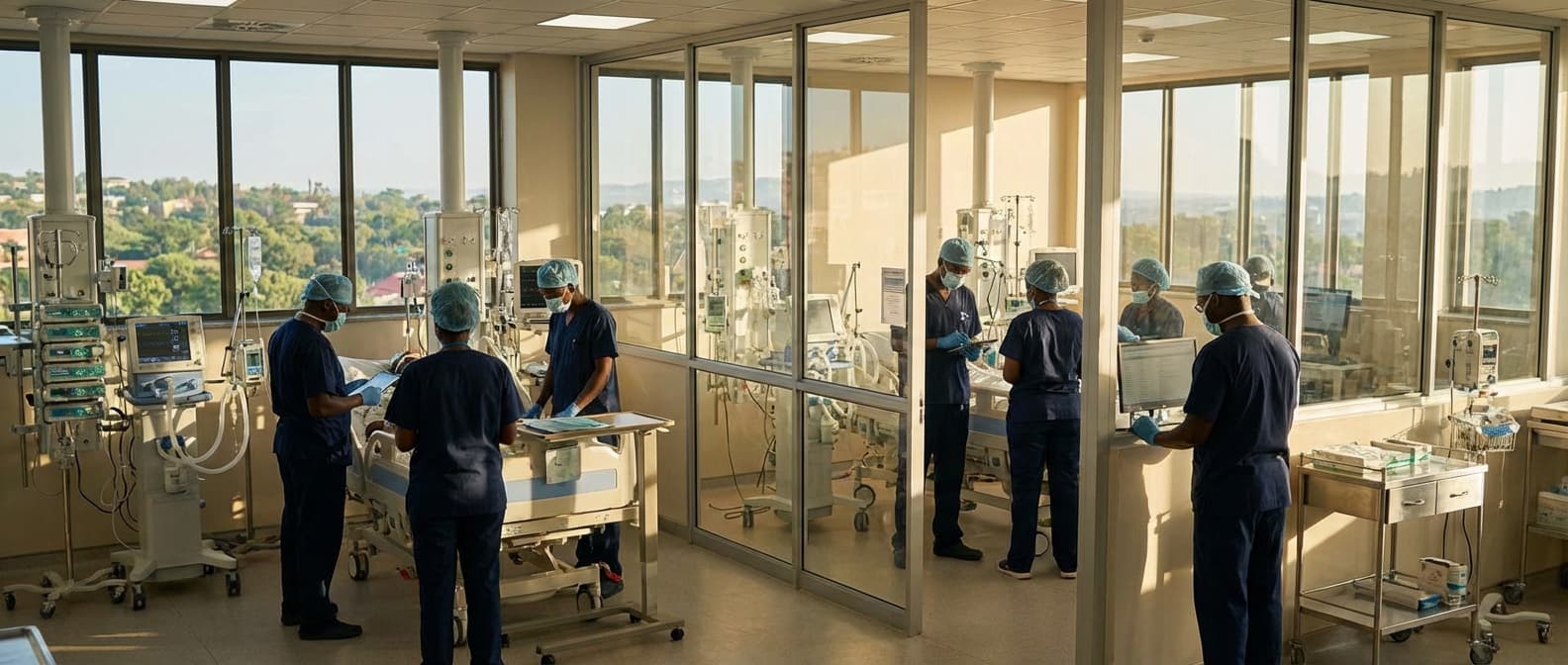
Ventilator Fleet Management & PM in Malawi
Engineering Excellence & Technical Support
Preventive maintenance and fleet management for ICU ventilators High-standard technical execution following OEM protocols and local regulatory frameworks.
Real-time Ventilator Fleet Visibility
Implementing a centralized, cloud-based platform providing real-time status updates, location tracking, and utilization metrics for the entire ventilator fleet across Malawi. This enables rapid deployment, proactive maintenance scheduling, and optimized resource allocation during critical health events.
Predictive Maintenance & Remote Diagnostics
Leveraging IoT sensors and advanced analytics to monitor ventilator performance parameters, predict potential failures before they occur, and enable remote diagnostic capabilities. This significantly reduces downtime, minimizes costly emergency repairs, and ensures consistent availability of life-saving equipment.
Optimized Preventive Maintenance Scheduling
Utilizing data-driven insights and AI-powered algorithms to optimize preventive maintenance schedules based on actual usage, environmental factors, and equipment history. This ensures scheduled maintenance is performed efficiently, extending equipment lifespan and reducing the overall cost of ownership for the national ventilator fleet.
What Is Ventilator Fleet Management & Pm In Malawi?
Ventilator Fleet Management & Preventive Maintenance (PM) in Malawi refers to the comprehensive, systematic, and proactive approach to overseeing and maintaining the nation's stock of mechanical ventilators. This service encompasses the entire lifecycle of ventilator equipment, from acquisition and deployment to regular servicing, calibration, repair, and eventual decommissioning. Its primary objective is to ensure the sustained operational readiness and optimal performance of ventilators, thereby safeguarding patient care and public health outcomes, particularly during periods of heightened demand such as pandemics or natural disasters. The service is critical for healthcare institutions and public health bodies responsible for providing critical respiratory support.
| Who Needs Ventilator Fleet Management & PM? | Typical Use Cases | |||||||
|---|---|---|---|---|---|---|---|---|
| Ministry of Health (MoH) and Public Health Agencies: Responsible for national health infrastructure, pandemic preparedness, and resource allocation. | National Emergency Management Agencies: Coordinating response to public health emergencies requiring widespread deployment of critical medical equipment. | District Health Offices (DHOs): Overseeing healthcare facilities within their jurisdiction and managing local equipment resources. | Central and Tertiary Hospitals: Major referral centers with significant ventilator capacity and complex patient needs. | District Hospitals: Facilities providing a range of acute care services, often with limited specialized technical support. | Rural and Remote Health Centers: Locations that may have a small number of ventilators but face challenges with access to maintenance and support. | Non-Governmental Organizations (NGOs) and International Aid Organizations: Involved in supporting healthcare systems, particularly during health crises or in underserved areas. | Biomedical Engineering Departments/Units: The primary technical service providers for equipment maintenance and repair. | |
| Routine Operational Readiness: Ensuring ventilators are consistently available for daily patient care needs in Intensive Care Units (ICUs) and High Dependency Units (HDUs). | Pandemic Preparedness and Response: Rapidly identifying, maintaining, and deploying ventilators to meet surge demand during epidemics or pandemics (e.g., COVID-19). | Disaster Response: Mobilizing ventilators to support mass casualty incidents or health crises caused by natural disasters (e.g., floods, droughts leading to respiratory illnesses). | Equipment Lifecycle Management: Planning for the acquisition, maintenance, and eventual replacement of ventilators to optimize investment and ensure technological relevance. | Quality Assurance and Patient Safety: Mitigating risks associated with equipment malfunction, ensuring accurate ventilation delivery, and improving patient outcomes. | Cost Optimization: Reducing costs associated with unexpected equipment failures, emergency repairs, and premature obsolescence through proactive maintenance. | Resource Planning and Budgeting: Informing procurement strategies and maintenance budgets based on historical data and projected needs. | Training and Skill Development: Ensuring a competent workforce capable of operating and maintaining a diverse range of ventilator technologies. | Compliance with Health Regulations: Meeting standards set by regulatory bodies regarding medical device functionality and safety. |
Key Components of Ventilator Fleet Management & PM in Malawi
- Inventory Management: Establishing and maintaining a centralized, up-to-date database of all ventilators, including their model, serial number, acquisition date, location, and current status.
- Deployment and Allocation: Strategizing and executing the efficient distribution of ventilators across healthcare facilities based on assessed needs, patient demographics, and surge capacity planning.
- Preventive Maintenance (PM): Implementing a scheduled program of routine inspections, cleaning, functional testing, and calibration to identify and address potential issues before they lead to equipment failure.
- Corrective Maintenance and Repair: Providing timely and effective repair services for ventilators that have malfunctioned, ensuring minimal downtime and prompt return to service.
- Calibration and Performance Verification: Regularly ensuring that ventilators meet manufacturer specifications and regulatory standards for airflow, pressure, and other critical parameters.
- Training and Competency Assessment: Educating and certifying biomedical engineers, technicians, and clinical staff on the proper operation, maintenance, and troubleshooting of specific ventilator models.
- Consumables and Spare Parts Management: Ensuring the availability and proper storage of essential consumables (e.g., filters, circuits) and critical spare parts to support maintenance and repair activities.
- Decommissioning and Disposal: Establishing protocols for the safe and environmentally responsible retirement and disposal of end-of-life ventilators.
- Data Logging and Reporting: Implementing systems to track maintenance activities, repair history, downtime, and costs for performance analysis and future planning.
- Regulatory Compliance: Ensuring adherence to national and international standards and guidelines related to medical device management and patient safety.
Who Needs Ventilator Fleet Management & Pm In Malawi?
Ventilator fleet management and preventative maintenance (PM) are crucial in Malawi, especially given the strain on healthcare infrastructure and the potential for medical device failure to have life-threatening consequences. Proactive management ensures that ventilators are available, operational, and safe for patient use, directly impacting the quality of care and patient outcomes. This includes optimizing resource allocation, reducing downtime, extending equipment lifespan, and ensuring compliance with safety standards. In Malawi, where resources can be stretched, efficient management of these critical assets is not a luxury but a necessity for saving lives and improving public health.
| Customer Type | Key Departments/Units | Specific Needs/Challenges | Impact of Fleet Management & PM |
|---|---|---|---|
| Ministry of Health (MoH) | Procurement, Planning, Health Infrastructure Departments | Nationwide allocation, budget constraints, standardization, regulatory oversight | Ensures equitable distribution, cost-effectiveness, and adherence to national health policies. Reduces national mortality rates due to equipment unavailability. |
| District Health Offices (DHOs) | District Hospitals, Health Centers | Limited technical expertise, localized resource management, urgent repair needs | Improves local patient care, reduces referral rates due to equipment failure, optimizes use of scarce resources within the district. |
| Public Hospitals (Central, District, Rural) | ICU, Operating Theatre, Emergency Department, Respiratory Therapy | High usage, diverse patient needs, skilled technician shortage, training requirements | Guarantees critical care availability, prevents unexpected patient harm, extends equipment lifespan, reduces costly emergency repairs. |
| NGOs & FBOs | Their respective healthcare facilities (clinics, hospitals) | Often operate in remote areas, reliance on external funding, unique operational models | Enhances service delivery in underserved areas, ensures consistent patient care, builds trust with communities through reliable equipment. |
| Tertiary/Referral Hospitals | ICU, Specialized Departments (e.g., Cardiac, Neurological) | Complex patient cases, high-tech equipment, need for continuous availability | Maintains capacity for advanced medical interventions, supports specialized training, ensures continuity of care for critically ill patients. |
Target Customers & Departments in Malawi for Ventilator Fleet Management & PM
- Ministry of Health (MoH)
- District Health Offices (DHOs)
- Public Hospitals (Central, District, Rural)
- Non-Governmental Organizations (NGOs) providing healthcare services
- Faith-Based Organizations (FBOs) with healthcare facilities
- Tertiary/Referral Hospitals
- Intensive Care Units (ICUs)
- Operating Theatres
- Emergency Departments
- Pediatric Wards
- Neonatal Intensive Care Units (NICUs)
Ventilator Fleet Management & Pm Process In Malawi
This document outlines the standard workflow for ventilator fleet management and preventative maintenance (PM) processes within Malawi. It details the steps involved from the initial inquiry for a ventilator or PM service through to the successful execution and documentation of the task. The objective is to ensure efficient resource allocation, timely service delivery, and proper record-keeping for the national ventilator fleet.
| Phase | Key Activities | Responsible Party | Inputs | Outputs | Key Considerations |
|---|---|---|---|---|---|
| Receive request for new ventilator acquisition or PM for existing ventilators. Gather initial details: type of request, urgency, location, specific ventilator model (if applicable). | Healthcare Facility (requesting), Ministry of Health (MoH) - Biomedical Engineering Unit (BEU) / Procurement Unit | Verbal or written request, identified need for new equipment or PM. | Formal request logged, initial request details captured. | Clear and concise request, accurate contact information, justification for request. |
| Review the request. For new ventilators: assess need, budget, and availability. For PM: confirm ventilator status, service history, and urgency. Prioritize based on critical care needs and equipment condition. | MoH - BEU, Hospital Biomedical Department | Logged request, ventilator inventory/database, clinical need assessment, PM schedule. | Prioritized list of requests, approval for acquisition/PM. | Clinical impact assessment, availability of funds, inventory status. |
| Assign technical personnel (biomedical engineers/technicians) for PM or installation. Allocate necessary parts, tools, and consumables. For acquisition, initiate procurement process. | MoH - BEU / Procurement Unit, Hospital Biomedical Department | Approved requests, availability of trained personnel, parts inventory, procurement budget. | Assigned technician(s), identified parts list, approved purchase orders (if applicable). | Technician availability and skill set, lead times for parts, procurement regulations. |
| Schedule the PM visit or installation. Coordinate with the requesting facility regarding dates, times, and access. Arrange for transportation of personnel, equipment, and parts. | MoH - BEU / Logistics Unit, Hospital Biomedical Department | Assigned resources, confirmed availability of facility personnel, transportation resources. | Confirmed schedule, travel plan, site access arrangements. | Facility operational hours, travel time and safety, communication with site contact. |
| Perform PM checks, calibration, repairs, or installation according to established protocols and manufacturer guidelines. Conduct functional and safety tests. Document all work performed. | Assigned Biomedical Engineer/Technician | Scheduled appointment, approved parts, tools, service manuals, safety equipment. | Serviced/installed ventilator, completed service report, replaced parts log. | Adherence to safety protocols, accurate diagnosis, proper use of tools and parts. |
| Complete the service report detailing all activities, parts used, test results, and recommendations. Update the central ventilator inventory and maintenance database. Submit report to MoH - BEU and facility. | Assigned Biomedical Engineer/Technician, MoH - BEU | Completed service report, parts used, test results, updated database. | Signed service report, updated inventory records, compliance documentation. | Timely submission, accuracy of data, completeness of records. |
| Follow up on any outstanding recommendations or issues. Conduct periodic reviews of service reports to ensure quality and identify recurring problems. Provide feedback to technicians and facilities. | MoH - BEU, Hospital Management | Service reports, inventory data, performance metrics. | Action plans for recurring issues, improved training needs identified, quality benchmarks met. | Continuous improvement, data-driven decision making, user satisfaction. |
Ventilator Fleet Management & PM Process Workflow
- Inquiry & Request Initiation
- Assessment & Prioritization
- Resource Allocation
- Scheduling & Logistics
- Execution of Service
- Documentation & Reporting
- Follow-up & Quality Assurance
Ventilator Fleet Management & Pm Cost In Malawi
Effective ventilator fleet management and preventative maintenance (PM) are crucial for ensuring the operational readiness of medical equipment in Malawi. This involves not only the initial procurement costs but also ongoing expenses for servicing, repairs, and replacement parts. Understanding the pricing factors and ranges in Malawian Kwacha (MWK) is essential for budgeting and resource allocation in healthcare facilities.
| Service/Item Category | Estimated Price Range (MWK) | Notes |
|---|---|---|
| Annual Preventative Maintenance (PM) Contract per Ventilator (Basic) | 150,000 - 400,000 MWK | Covers scheduled checks, cleaning, calibration. May exclude significant parts. |
| Annual Preventative Maintenance (PM) Contract per Ventilator (Advanced/ICU) | 300,000 - 800,000 MWK | Includes more comprehensive checks, software updates, and potentially some minor parts. Based on model complexity. |
| Unscheduled Repair Call-out Fee (including technician travel) | 75,000 - 250,000 MWK | Varies significantly based on distance, urgency, and technician availability. |
| Cost of Common Spare Parts (e.g., sensors, filters, batteries) | 20,000 - 200,000 MWK | Price depends on the specific part and ventilator model. Imported parts can be costly. |
| Major Component Replacement (e.g., compressor, circuit board) | 200,000 - 1,500,000+ MWK | Can be a substantial cost, potentially approaching the cost of a new unit for older ventilators. |
| Biomedical Technician Hourly Rate (if not on contract) | 30,000 - 70,000 MWK | For independent contractors or out-of-contract services. |
| Annual Service Contract (Comprehensive - PM, repairs, parts for a fleet of 5-10) | 2,000,000 - 8,000,000+ MWK | Negotiated based on fleet size, ventilator types, and service level agreement. May have a cap on repair costs. |
Key Pricing Factors for Ventilator Fleet Management & PM in Malawi
- Type and Complexity of Ventilators: Different ventilator models (e.g., basic transport ventilators, advanced ICU ventilators) have varying PM requirements and part costs. High-frequency oscillators or ventilators with advanced monitoring capabilities will generally be more expensive to maintain.
- Age and Condition of Ventilators: Older ventilators may require more frequent and extensive repairs, leading to higher PM costs. The overall condition of the equipment at the time of procurement or service contract initiation will influence pricing.
- Scope of Service Agreement: Comprehensive service contracts often include scheduled PM, unscheduled repairs, replacement parts, software updates, and sometimes training for biomedical technicians. The breadth of services covered directly impacts the overall cost.
- Availability and Cost of Spare Parts: The accessibility and pricing of original manufacturer parts versus generic alternatives in Malawi will significantly influence repair and maintenance expenses. Import duties and shipping costs for specialized parts can also be a factor.
- Biomedical Technician Expertise and Availability: The cost of employing or contracting skilled biomedical technicians with specific ventilator experience will vary. Shortages of specialized technicians can drive up labor costs.
- Location and Accessibility of Healthcare Facilities: For remote or hard-to-reach facilities, travel costs for technicians and logistics for parts may increase the overall PM expense.
- Contract Duration: Longer-term service contracts might offer some economies of scale or fixed pricing, while shorter-term contracts may be more flexible but potentially more expensive per unit of time.
- Volume of Fleet: Larger fleets might benefit from bulk discounts on service contracts or parts, though the overall expenditure will be higher.
- Manufacturer and Service Provider Reputation: Established manufacturers and reputable service providers may command higher prices due to perceived quality and reliability.
Affordable Ventilator Fleet Management & Pm Options
Optimizing your ventilator fleet's performance and ensuring their longevity doesn't have to strain your budget. This document outlines affordable fleet management and preventative maintenance (PM) options, focusing on value bundles and cost-saving strategies. By leveraging these approaches, healthcare facilities can achieve reliable equipment uptime, extended device lifespan, and reduced overall operational expenses.
| Cost-Saving Strategy | Description | Potential Benefits |
|---|---|---|
| Bundled PM Packages | Negotiate or select pre-defined PM schedules and services that cover multiple devices or a specific time period, often at a reduced per-unit cost. | Lower overall PM expenditure, simplified budgeting, predictable maintenance costs, assurance of consistent maintenance. |
| Preventative Maintenance Scheduling Optimization | Analyze usage patterns and manufacturer recommendations to create a data-driven PM schedule, avoiding unnecessary servicing and focusing on critical needs. | Reduced downtime, extended equipment lifespan, optimized resource allocation (technician time, parts). |
| Third-Party Biomedical Service Contracts | Engage specialized third-party providers who can offer competitive pricing for PM and repair services, leveraging their expertise and scale. | Potentially lower service costs, access to specialized skills, faster response times, reduced burden on in-house staff. |
| Remote Monitoring Solutions | Implement systems that allow for real-time performance tracking and early detection of anomalies, enabling proactive troubleshooting before major failures occur. | Reduced emergency repairs, minimized downtime, improved equipment reliability, optimized technician dispatch. |
| Fleet Standardization & Lifecycle Management | Standardize on fewer ventilator models to simplify PM procedures, reduce training requirements, and leverage bulk purchasing power for parts and service. | Streamlined maintenance processes, reduced inventory of spare parts, lower training costs, easier vendor management. |
| Used/Refurbished Equipment Acquisition (with warranty) | Consider purchasing certified refurbished ventilators from reputable vendors, which can be significantly less expensive than new units while still offering reliable performance. | Lower capital expenditure, cost-effective way to expand fleet capacity, access to advanced technology at a lower price point. |
| Training & Knowledge Transfer | Invest in training your in-house biomedical technicians to perform a wider range of PM and basic repairs, reducing reliance on external service providers for routine tasks. | Reduced service call fees, faster turnaround times for common issues, increased internal control over equipment maintenance. |
Key Components of Affordable Ventilator Fleet Management & PM
- Value Bundles: Pre-packaged service agreements offering a comprehensive suite of services at a discounted rate compared to individual service purchases.
- Tiered Service Levels: Offering different levels of PM and support to match the specific needs and budget of various departments or facilities.
- Remote Monitoring & Diagnostics: Utilizing technology to proactively identify potential issues, reducing the need for on-site technician visits.
- Certified Refurbished Equipment: Acquiring and maintaining certified pre-owned ventilators that meet stringent quality and performance standards.
- Extended Service Contracts: Investing in longer-term PM and repair agreements to lock in pricing and ensure predictable costs.
- Partnerships with Third-Party Service Providers: Collaborating with specialized biomedical service companies for efficient and cost-effective PM and repairs.
- In-House Training & Skill Development: Empowering your internal biomedical team with the necessary training to perform routine PM and minor repairs.
Verified Providers In Malawi
Finding reliable healthcare providers is paramount, and in Malawi, the importance of verified and credentialed professionals cannot be overstated. Franance Health has established itself as a trusted name, offering a platform that not only connects patients with skilled practitioners but also rigorously vets their qualifications and expertise. This commitment to verification ensures that individuals seeking medical assistance have access to the best possible care, minimizing risks and maximizing positive health outcomes. The meticulous credentialing process undertaken by Franance Health significantly differentiates them from general directories, offering a layer of assurance that directly benefits patients.
| Credentialing Aspect | Franance Health's Approach | Benefit to Patients |
|---|---|---|
| Medical Degrees and Qualifications | Verification of all accredited medical degrees and postgraduate qualifications. | Ensures providers possess the foundational knowledge and advanced training required for their practice. |
| Professional Licensing | Confirmation of current and valid professional licenses with relevant Malawian medical boards. | Guarantees that providers are legally authorized and comply with regulatory standards. |
| Specialty Certifications | Validation of any specialized certifications and fellowships held by practitioners. | Identifies providers with advanced expertise in specific medical disciplines. |
| Continuing Professional Development (CPD) | Inquiry into and encouragement of ongoing professional development activities. | Assures patients that providers are up-to-date with the latest medical advancements and best practices. |
| Background and Disciplinary Checks | Where applicable and permissible, checks for any disciplinary actions or professional misconduct. | Adds an extra layer of assurance regarding the provider's ethical standing and commitment to patient care. |
Why Franance Health Providers are the Best Choice:
- Rigorous Credentialing: Franance Health employs a stringent verification process for all listed healthcare professionals, ensuring they meet the highest educational, licensing, and ethical standards.
- Specialized Expertise: The platform facilitates access to specialists across a wide range of medical fields, allowing patients to find the most appropriate care for their specific needs.
- Patient Safety First: By prioritizing verified providers, Franance Health significantly enhances patient safety, reducing the likelihood of encountering unqualified or fraudulent practitioners.
- Convenient Access: Franance Health simplifies the process of finding trusted healthcare, saving patients time and reducing the stress associated with searching for reliable medical services.
- Reputation and Trust: The consistent delivery of high-quality, verified healthcare services has earned Franance Health a strong reputation for trust and reliability within Malawi.
Scope Of Work For Ventilator Fleet Management & Pm
This Scope of Work (SOW) outlines the requirements for a comprehensive Ventilator Fleet Management and Preventive Maintenance (PM) program. The objective is to ensure the optimal performance, reliability, and regulatory compliance of the entire ventilator fleet throughout its lifecycle. This includes all aspects from initial acquisition to decommissioning, with a strong emphasis on proactive maintenance and robust data management.
| Area | Description | Technical Deliverables | Standard Specifications/Requirements |
|---|---|---|---|
| Fleet Inventory and Asset Management | Establish and maintain a comprehensive, up-to-date inventory of all ventilators. Track key asset information. | Centralized digital asset registry with unique identifiers for each ventilator. Detailed asset profile including model, serial number, purchase date, warranty status, location, service history, and current operational status. | Must be accessible to authorized personnel. Data integrity and security are paramount. Integration with existing EAM/CMMS systems is preferred. Compliance with data privacy regulations (e.g., HIPAA where applicable). |
| Preventive Maintenance (PM) Program | Develop and execute a proactive PM schedule for all ventilators based on manufacturer recommendations and best practices. | Detailed PM checklists for each ventilator model. Scheduled PM work orders generated and tracked in the asset management system. Documentation of all PM activities performed. | PM frequency aligned with manufacturer guidelines (e.g., annual, bi-annual). Use of approved parts and consumables. Adherence to established safety protocols during PM. PM completion rates of >95%. |
| Corrective Maintenance and Repair Services | Respond to and resolve equipment malfunctions and failures promptly to minimize downtime. | Service Level Agreements (SLAs) for response and repair times. Diagnosis and repair reports for all corrective maintenance. Tracking of repair costs and parts used. | 24/7 availability for emergency repairs (if required). Use of manufacturer-authorized or equivalent replacement parts. Certified technicians for repairs. Mean Time To Repair (MTTR) targets to be defined and met. |
| Calibration and Performance Verification | Ensure all ventilators are calibrated and meet performance specifications regularly. | Calibration certificates for each unit after service. Documented verification of all critical performance parameters (e.g., pressure, flow, volume, alarms). | Calibration intervals as per manufacturer specifications or regulatory requirements. Use of NIST-traceable calibration equipment. Technicians must be certified for calibration on specific models. |
| Software and Firmware Updates | Manage and implement software and firmware updates to ensure optimal functionality and security. | Inventory of current software/firmware versions. Scheduled update plans. Documentation of all update activities. | Updates applied according to manufacturer recommendations and in a controlled environment to minimize disruption. Back-up procedures for software/firmware before updates. Validation of functionality post-update. |
| Parts and Consumables Management | Ensure availability of necessary parts and consumables for PM and repairs. | Managed inventory of critical spare parts and consumables. Just-in-Time (JIT) or strategic stock levels. Procurement process for parts. | Use of genuine OEM or equivalent high-quality parts. Minimum stock levels for critical components. Expiration date tracking for consumables. Cost-effective procurement strategies. |
| Training and Competency Development | Provide comprehensive training to biomedical staff on the operation, maintenance, and troubleshooting of ventilators. | Training modules and schedules. Competency assessments for technicians. Documentation of training records. | Training content aligned with manufacturer specifications and current clinical practices. Ongoing professional development. Certified trainers for specific ventilator models. |
| Reporting and Analytics | Provide regular reports on fleet performance, maintenance activities, and costs. | Monthly/quarterly performance reports including PM completion rates, repair logs, MTTR, equipment downtime, and cost analysis. Trend analysis for common issues and recurring failures. | Reports must be clear, concise, and actionable. Key Performance Indicators (KPIs) to be agreed upon. Data visualization for easy interpretation. Benchmarking against industry standards. |
| Regulatory Compliance and Documentation | Ensure all maintenance and service activities comply with relevant regulations and standards. | Comprehensive documentation of all maintenance, repair, calibration, and modification activities. Audit-ready records. | Adherence to FDA regulations (e.g., 21 CFR Part 820), local health authority requirements, and relevant industry standards. Proper labeling and traceability of parts. Quality management system integration. |
| End-of-Life Management and Decommissioning | Develop and implement a plan for the safe and compliant decommissioning and disposal of obsolete ventilators. | Decommissioning procedures. Certificates of destruction or transfer. Data sanitization protocols. | Compliance with environmental regulations for disposal of medical equipment. Secure data erasure of any stored patient information. Proper documentation of the decommissioning process. |
Key Areas of Scope of Work
- Fleet Inventory and Asset Management
- Preventive Maintenance (PM) Program
- Corrective Maintenance and Repair Services
- Calibration and Performance Verification
- Software and Firmware Updates
- Parts and Consumables Management
- Training and Competency Development
- Reporting and Analytics
- Regulatory Compliance and Documentation
- End-of-Life Management and Decommissioning
Service Level Agreement For Ventilator Fleet Management & Pm
This Service Level Agreement (SLA) outlines the terms and conditions for Ventilator Fleet Management and Preventative Maintenance (PM) services provided by [Provider Name] to [Client Name]. This SLA defines response times for critical issues and establishes uptime guarantees for the managed ventilator fleet.
| Service Component | Service Level Objective (SLO) | Measurement Method | Remedy for Non-Compliance |
|---|---|---|---|
| Response Time to Critical Alarms (e.g., System Failure, Safety Issue) | Within 15 minutes of notification | Timestamped incident logs, remote monitoring alerts | 10% discount on monthly service fee for each instance of exceeding the SLO |
| Response Time to Non-Critical Issues (e.g., Software glitches, minor performance degradation) | Within 4 business hours of notification | Timestamped incident logs, client confirmation of engagement | 5% discount on monthly service fee for each instance of exceeding the SLO |
| Scheduled Preventative Maintenance Completion Rate | 98% of scheduled PM tasks completed within the agreed-upon window | PM completion records, scheduling logs | Root cause analysis and corrective action plan for any missed PM; no direct financial remedy but focus on preventing recurrence. |
| Overall Ventilator Uptime | 99.5% uptime for the managed fleet, excluding scheduled downtime for PM | Aggregated uptime data from all managed ventilators, excluding planned PM | For every 0.5% decrease below the 99.5% target, a credit of 2% on the monthly service fee will be applied. |
Key Performance Indicators (KPIs)
- Response Time to Critical Alarms
- Response Time to Non-Critical Issues
- Scheduled Preventative Maintenance Completion Rate
- Overall Ventilator Uptime
Frequently Asked Questions

Ready when you are
Let's scope your Ventilator Fleet Management & PM in Malawi project in Malawi.

Scaling healthcare logistics and technical systems across the entire continent.