
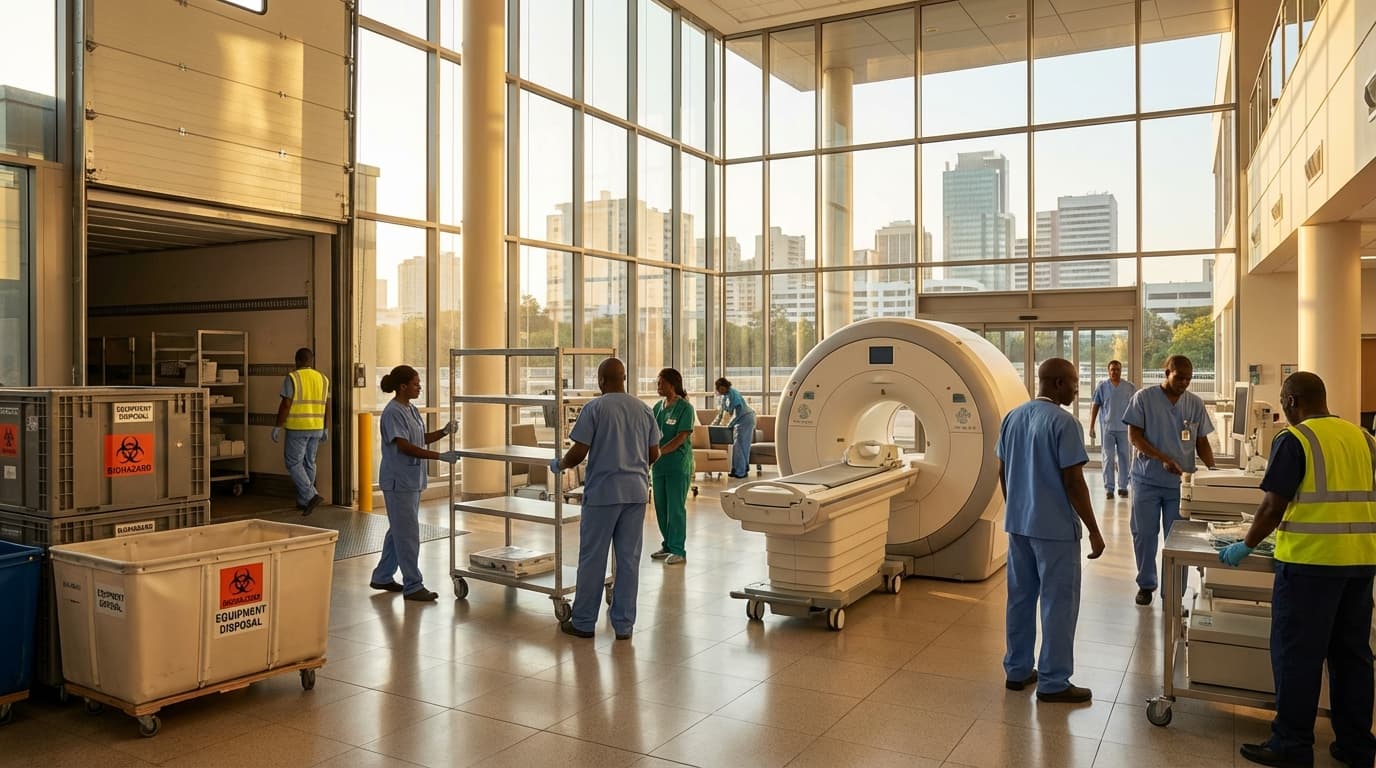
Site Restoration Service After Equipment Removal in Malawi
Engineering Excellence & Technical Support
Site Restoration Service After Equipment Removal High-standard technical execution following OEM protocols and local regulatory frameworks.
Ecological Footprint Reduction & Biodiversity Enhancement
We meticulously assess the impact of equipment removal on the local ecosystem. Our services focus on reducing the ecological footprint through targeted revegetation with native, drought-resistant species, promoting biodiversity, and restoring natural habitat corridors for local flora and fauna.
Hydro-Geological Integrity Restoration & Water Table Management
Site restoration includes comprehensive analysis and remediation of any hydro-geological disturbances caused by equipment operation. We implement strategies to restore natural drainage patterns, prevent soil erosion, and ensure the long-term health of groundwater tables and surface water bodies, crucial for Malawi's water security.
Soil Remediation & Agricultural Land Rehabilitation
Our team specializes in addressing soil compaction, contamination, and nutrient depletion resulting from heavy machinery. We employ advanced soil remediation techniques, including aeration, organic matter enrichment, and pH balancing, to rehabilitate agricultural land to its pre-disturbance productivity, supporting local livelihoods and food security.
What Is Site Restoration Service After Equipment Removal In Malawi?
Site Restoration Service After Equipment Removal in Malawi refers to the comprehensive process of returning a parcel of land to a safe, stable, and environmentally sound condition following the decommissioning and removal of industrial, commercial, or infrastructural equipment. This service is critical for mitigating long-term environmental impacts, ensuring land usability, and adhering to regulatory compliance within the Malawian context. It encompasses a range of technical activities aimed at rectifying any physical, chemical, or ecological disturbances caused by the presence and subsequent removal of machinery, structures, and associated materials.
| Who Needs Site Restoration? | Typical Use Cases in Malawi |
|---|---|
| Industries and Manufacturing Facilities | Decommissioning of old factories, processing plants (e.g., food processing, textile), and workshops. |
| Mining and Extractive Industries | Closure of mines, removal of processing equipment, and restoration of tailings storage facilities and mine sites. |
| Agricultural Operations (Large Scale) | Removal of large-scale irrigation systems, storage facilities, and processing machinery from plantations. |
| Infrastructure Projects | Removal of construction equipment, temporary structures, and associated materials after completion of roads, bridges, dams, or power infrastructure. |
| Energy Sector | Decommissioning and removal of components from power generation plants (e.g., diesel generators), substations, or fuel storage depots. |
| Commercial and Retail Developments | Removal of large-scale machinery from former commercial sites (e.g., large retail storage, workshops). |
Key Components of Site Restoration Service:
- Site Assessment and Characterization: Initial surveys to identify the extent of contamination (soil, groundwater), physical disturbances (excavations, compaction), and ecological impacts.
- Hazardous Materials Abatement: Identification, safe removal, and disposal of any hazardous substances (e.g., oils, fuels, chemicals) present in or around the removed equipment and infrastructure.
- Decontamination of Surfaces and Structures: Cleaning and remediation of residual contaminants on remaining structures, foundations, and surrounding soil.
- Soil Remediation: Techniques such as excavation and off-site disposal, in-situ treatment (e.g., bioremediation, chemical stabilization), or capping to address contaminated soil.
- Groundwater Remediation: If groundwater has been impacted, employing methods like pump-and-treat, in-situ treatment, or containment barriers.
- Demolition and Debris Removal: Safe dismantling and disposal of any remaining non-hazardous structures, concrete foundations, and associated debris.
- Grading and Earthworks: Re-contouring the land to restore natural drainage patterns, prevent erosion, and achieve a stable topography.
- Revegetation and Landscaping: Re-establishing native vegetation to promote ecological recovery, stabilize soil, and enhance aesthetic value.
- Monitoring and Verification: Post-restoration monitoring to confirm the effectiveness of remediation efforts and ensure compliance with regulatory standards.
Who Needs Site Restoration Service After Equipment Removal In Malawi?
Equipment removal, whether for upgrades, decommissioning, or site closure, often leaves behind a disturbed environment. Site restoration services are crucial for mitigating the environmental impact, ensuring regulatory compliance, and preparing the site for its next use. In Malawi, various sectors and organizations face the necessity of such services.
| Target Customer Group | Typical Departments Involved | Reasons for Equipment Removal & Restoration Need |
|---|---|---|
| Mining Companies | Environmental Management, Operations, Legal, Land Reclamation | End of mine life, upgrading equipment, regulatory compliance (environmental rehabilitation). |
| Manufacturing & Industrial Firms | Operations, Facilities Management, Environmental Health & Safety (EHS), Procurement, Finance | Plant modernization, relocation, closure, sale of assets, obsolescence. |
| Energy Companies (Power, Oil & Gas) | Engineering, Operations, Environmental Services, Asset Management, Legal | Decommissioning of aging facilities, site repurposing, asset retirement obligations, safety and environmental standards. |
| Large-Scale Agribusinesses | Farm Management, Operations, Facilities, Sustainability Departments | Upgrading machinery, closure of processing units, land consolidation or sale. |
| Telecommunications Providers | Network Operations, Infrastructure Management, Real Estate | Technology upgrades, site consolidation, removal of obsolete equipment. |
| Government Agencies (e.g., Ministry of Mines, Ministry of Environment, Municipal Councils) | Environmental Protection, Land Management, Public Works, Regulatory Compliance | Cleanup of abandoned government-owned sites, rehabilitation of former industrial zones, compliance with national environmental policies. |
| Real Estate Developers & Investment Firms | Acquisitions, Project Management, Legal, Finance | Acquisition of brownfield sites for redevelopment, due diligence on environmental liabilities, sale of restored land. |
Who Needs Site Restoration Service After Equipment Removal in Malawi?
- Mining and Extractive Industries: Post-operation rehabilitation of mines is legally mandated and environmentally critical. This includes removing old machinery, processing equipment, and associated infrastructure, followed by land contouring, revegetation, and water management.
- Industrial and Manufacturing Plants: As factories modernize or relocate, the removal of heavy machinery, tanks, pipelines, and chemical storage areas necessitates comprehensive site cleanup to address potential soil and groundwater contamination and prepare the land for redevelopment or sale.
- Energy Sector (Power Plants, Oil & Gas Facilities): Decommissioning of old power stations, oil refineries, or offshore platforms involves the removal of complex and often hazardous equipment. Site restoration ensures the land is safe and ecologically sound for future use.
- Agricultural and Agribusiness Operations: Large-scale agricultural ventures or food processing plants that undergo significant upgrades or closures may require removal of old machinery, silos, or processing units, followed by soil remediation and land restoration.
- Telecommunications and Broadcasting Companies: While often less intensive than heavy industry, the removal of old transmission towers, antenna arrays, or satellite dishes, along with their supporting structures, can still require site restoration to blend with the surrounding landscape.
- Government and Municipalities: Public sector projects, such as the decommissioning of old water treatment plants, waste management facilities, or abandoned industrial sites managed by the government, will invariably need professional restoration services.
- Construction and Infrastructure Projects: Even within construction, the removal of temporary or obsolete heavy equipment and site facilities from a completed project can necessitate some level of restoration before final handover.
- Financial Institutions and Real Estate Developers: When properties with formerly active industrial or commercial operations are acquired or redeveloped, the financial institutions or developers behind these ventures become responsible for ensuring the site is restored to an acceptable standard, often after equipment removal by previous owners.
Site Restoration Service After Equipment Removal Process In Malawi
This document outlines the standard workflow for site restoration services following equipment removal in Malawi. The process is designed to be comprehensive, ensuring that former equipment sites are returned to a safe, environmentally sound, and aesthetically pleasing state, meeting all relevant regulatory requirements and client specifications.
| Stage | Key Activities | Deliverables/Outcomes | Responsible Party/Parties | Timeline (Indicative) |
|---|---|---|---|---|
| Client contacts service provider with restoration needs. Discussion of project scope, site history, equipment removed, and desired restoration outcomes. Preliminary site visit may occur. | Understanding of client requirements, initial scope definition, preliminary feasibility assessment. | Client, Service Provider (Sales/Technical Team) | 1-3 Business Days |
| Detailed on-site inspection to identify existing conditions: soil type, topography, vegetation, presence of contaminants (e.g., oil, fuel spills), damaged infrastructure, and potential hazards. Geotechnical and environmental sampling may be conducted. | Comprehensive site condition report, identification of specific restoration challenges, baseline data collection. | Service Provider (Technical Team, Environmental Specialists, Surveyors) | 3-7 Business Days |
| Based on the site assessment, a detailed proposal is prepared, outlining the scope of work, methodology, restoration plan, timelines, required resources (personnel, equipment), safety protocols, and a cost quotation. | Detailed proposal, cost breakdown, project timeline, and terms of service. | Service Provider (Proposal Team, Estimators) | 5-10 Business Days |
| Client reviews and approves the proposal. Negotiation of terms and conditions, followed by signing of a formal service agreement or contract. | Signed contract, agreed-upon terms and conditions. | Client, Service Provider (Legal/Management) | 2-5 Business Days |
| Application for any necessary permits from local authorities (e.g., environmental agencies, local councils) for restoration activities, waste disposal, or land use changes. | Obtained permits and approvals from relevant regulatory bodies. | Service Provider (Permitting Specialists) | Variable (can be weeks to months, depending on regulatory process) |
| Mobilization of personnel, equipment, and materials to the site. Establishment of site access, safety zones, temporary fencing, and any necessary staging areas. Site clearing of debris and non-hazardous materials may commence. | Readied site for active restoration work, established safety measures. | Service Provider (Project Management Team, Site Supervisors) | 1-3 Business Days |
| Implementation of the agreed-upon restoration plan. This may include: excavation and removal of contaminated soil, grading and re-contouring of land, soil amendment, re-vegetation (planting indigenous species), repair of damaged infrastructure, and removal of foundations. | Site restored according to the approved plan and specifications. | Service Provider (Restoration Crew, Supervisors, Specialists) | Variable (dependent on scope and complexity, from days to months) |
| Proper segregation, transportation, and disposal of all waste materials (hazardous and non-hazardous) in accordance with Malawian environmental regulations and best practices. This includes soil, concrete, metals, and any residual contaminants. | Environmentally compliant disposal of all generated waste. | Service Provider (Waste Management Specialists, Licensed Haulers) | Integrated throughout execution |
| Post-restoration site inspection. Environmental monitoring (e.g., water quality, soil testing) to confirm successful remediation and compliance. Generation of a final restoration report detailing all activities, monitoring results, and compliance verification. | Confirmation of successful restoration, compliance documentation, final report. | Service Provider (Environmental Scientists, Project Managers) | 2-5 Business Days (after execution) |
| Presentation of the final report and discussion of results with the client. Formal handover of the restored site. Project closure and final invoicing. | Client acceptance of the restored site, completed project documentation, final payment. | Service Provider (Project Management, Client Relations) | 1-2 Business Days |
Site Restoration Service Workflow: Equipment Removal in Malawi
- Inquiry & Initial Consultation:
- Site Assessment & Survey:
- Proposal Development & Quotation:
- Contracting & Agreement:
- Permitting & Approvals:
- Mobilization & Site Preparation:
- Restoration Execution:
- Waste Management & Disposal:
- Post-Restoration Monitoring & Reporting:
- Client Handover & Closure:
Site Restoration Service After Equipment Removal Cost In Malawi
Restoring a site after equipment removal in Malawi involves a range of services to ensure the land is returned to a safe, usable, and often natural state. The cost of these services is influenced by several key factors, leading to a broad spectrum of pricing in local currency (Malawi Kwacha - MWK). This discussion will explore these pricing factors and provide estimated cost ranges.
| Service Component | Estimated Cost Range (MWK) |
|---|---|
| Initial Site Assessment & Planning | 50,000 - 250,000 |
| Equipment Dismantling & Removal (Basic) | 100,000 - 1,000,000+ |
| Heavy Machinery/Complex Equipment Removal | 500,000 - 5,000,000+ |
| Hazardous Material Handling & Disposal (per tonne/m³) | 200,000 - 1,500,000+ |
| Debris Haulage & Disposal (Standard, per truckload) | 75,000 - 300,000 |
| Soil Excavation & Remediation (per m³) | 30,000 - 150,000 |
| Grading & Site Leveling | 100,000 - 750,000 |
| Re-vegetation (Seeding/Planting) | 150,000 - 1,000,000+ |
| Landscaping & Minor Civil Works | 200,000 - 2,000,000+ |
| Permits & Regulatory Fees | 50,000 - 500,000 |
| Project Management & Supervision | 10% - 20% of total project cost |
| Total Estimated Range (Small to Medium Scale Project) | 500,000 - 10,000,000+ MWK |
| Total Estimated Range (Large or Complex Project) | 10,000,000 - 100,000,000+ MWK |
Key Pricing Factors for Site Restoration Services in Malawi:
- Scope of Work: The most significant determinant. This includes the extent of damage, the types of contaminants (if any), the volume of debris to be removed, and the level of landscaping or re-vegetation required.
- Site Accessibility: Difficult-to-reach locations, remote areas, or sites with challenging terrain will incur higher costs due to increased transportation, labor, and equipment deployment expenses.
- Type of Equipment Removed: The size, weight, and nature of the equipment (e.g., heavy machinery, industrial components, hazardous materials) impact the complexity and cost of removal and disposal. Specialized handling or disposal of hazardous waste will significantly increase prices.
- Environmental Conditions & Regulations: Presence of sensitive ecosystems, water bodies, or endangered species may necessitate stricter protocols and specialized techniques, driving up costs. Compliance with Malawian environmental regulations is paramount and can involve permit fees and specific disposal methods.
- Labor Costs: The availability and cost of skilled labor (e.g., heavy equipment operators, environmental technicians, general laborers) vary. Higher rates are often associated with specialized skills.
- Equipment & Machinery: The type and duration of use for heavy machinery (excavators, loaders, trucks), specialized tools, and safety equipment will contribute to the overall cost.
- Debris Disposal: Costs associated with transporting and disposing of removed equipment and any associated waste (soil, concrete, etc.) at designated landfill sites or recycling facilities. Fees for hazardous waste disposal are considerably higher.
- Re-vegetation/Landscaping: The extent of re-planting, soil remediation, grading, and landscaping required to restore the site to its original or desired state is a major cost driver.
- Permits & Fees: Obtaining necessary permits from local authorities or environmental agencies for demolition, excavation, waste disposal, and re-vegetation will add to the total cost.
- Project Duration & Urgency: Tighter deadlines or projects requiring continuous work (e.g., 24/7 operations) may incur premium charges.
- Location within Malawi: Costs can fluctuate based on the specific region or city within Malawi due to differences in local labor rates, transportation costs, and material availability.
Affordable Site Restoration Service After Equipment Removal Options
When equipment is removed from a site, it often leaves behind damage, debris, and an uneven landscape. Our affordable site restoration services aim to bring your property back to its optimal condition efficiently and cost-effectively. We understand that budget is a primary concern, which is why we've developed a range of value bundles and implemented smart cost-saving strategies to ensure you receive top-quality service without breaking the bank.
| Cost-Saving Strategy | Description | Benefit to You |
|---|---|---|
| Bundle Discounts | Purchasing services as a package offers significant savings compared to individual service rates. | Lower overall restoration cost. |
| Optimized Resource Allocation | We strategically deploy personnel and equipment to minimize travel time and maximize efficiency. | Reduced labor and operational costs. |
| Bulk Material Purchasing | Negotiating favorable rates for soil, seed, and other materials when purchasing in larger quantities. | Lower material expenses. |
| Phased Restoration Planning | Breaking down large projects into manageable phases can spread costs over time and allow for adjustments. | Improved cash flow and flexibility. |
| Reclaimed Material Utilization | Where appropriate and safe, we explore the use of reclaimed or recycled materials. | Reduced material costs and environmental benefit. |
| Efficient Debris Management | Proper sorting and disposal of debris can sometimes yield recyclable materials or reduce landfill fees. | Lower disposal costs. |
| Experienced & Skilled Workforce | Our trained professionals work efficiently, reducing the time and resources needed for each task. | Faster completion and reduced labor hours. |
Our Affordable Site Restoration Value Bundles
- {"title":"Basic Cleanup & Debris Removal","description":"Ideal for minor damage and limited debris. Includes removal of loose materials, basic grading, and site sweeping."}
- {"title":"Standard Restoration Package","description":"A comprehensive option for moderate damage. Includes debris removal, minor soil leveling, basic seeding, and patching of small holes."}
- {"title":"Premium Site Revitalization","description":"For significant impact and a desire for enhanced restoration. Includes extensive debris removal, professional grading, soil amendment, advanced seeding or sodding, and minor landscaping repairs."}
- {"title":"Custom Restoration Solutions","description":"Tailored to your specific needs and budget. We can create a unique package combining services for ultimate flexibility and cost control."}
Verified Providers In Malawi
In Malawi, finding healthcare providers you can trust is paramount. Franance Health stands out by meticulously vetting and credentialing its network of healthcare professionals. This commitment to verification ensures that patients receive high-quality, safe, and reliable medical care. Discover why Franance Health credentials represent the best choice for your health needs in Malawi.
| Provider Type | Key Franance Health Verification Points | Why This Matters to Patients |
|---|---|---|
| General Practitioners | Valid Medical License, Verified Educational Background, Good Standing with Medical Council | Access to reliable primary care and early diagnosis. |
| Specialist Physicians (e.g., Cardiologists, Pediatricians) | Board Certification in Specialty, Proven Clinical Experience, Membership in Professional Associations | Expert care for specific health conditions with confidence in their advanced knowledge. |
| Surgeons | Surgical Residency Completion, Fellowship Training (if applicable), Surgical Board Certification, Demonstrated Surgical Outcomes | Trustworthy surgical interventions and post-operative care from skilled practitioners. |
| Dentists | Dental Degree, Dental Council Registration, Specialization Certificates (if any) | Quality dental care and oral health services. |
| Pharmacists | Pharmacy Degree, Pharmacy Board Registration, Current Practice License | Accurate dispensing of medication and reliable pharmaceutical advice. |
What Franance Health Credentials Mean for You
- Rigorous Qualification Checks: Franance Health confirms that all listed providers hold valid medical licenses and have met all necessary educational and training requirements.
- Verified Experience: We ensure that providers possess demonstrable experience in their respective specializations.
- Commitment to Ethical Practice: Credentials include checks for adherence to professional ethical standards and patient care guidelines.
- Up-to-Date Information: Franance Health maintains an active process to ensure provider information, including specializations and contact details, is current.
- Patient Safety First: Our credentialing process is fundamentally designed to prioritize your safety and well-being by partnering with competent and trustworthy professionals.
Scope Of Work For Site Restoration Service After Equipment Removal
This Scope of Work (SOW) outlines the services required for the comprehensive restoration of a site following the removal of heavy equipment. The objective is to return the site to a safe, functional, and aesthetically acceptable condition, meeting all relevant regulatory requirements and industry best practices. This SOW details the technical deliverables and standard specifications that will govern the restoration process. The scope encompasses all activities from initial site assessment to final acceptance and handover.
| Task/Activity | Description | Technical Deliverables | Standard Specifications/References |
|---|---|---|---|
| Site Assessment and Planning | Conduct a thorough inspection of the site to identify all areas impacted by equipment operations. This includes assessing soil compaction, erosion, surface damage, and any potential contamination. Develop a detailed restoration plan based on findings. | Site assessment report including photographic documentation, identified impact areas, proposed remediation methods, and a detailed restoration plan. | ASTM D422 (Particle-Size Analysis of Soils), ASTM D2974 (Moisture Content of Soils), Site-specific environmental regulations, Client's site access and safety protocols. |
| Decontamination and Hazardous Material Abatement (if applicable) | Identify and safely remove any hazardous materials (e.g., oils, fuels, chemicals) that may have leaked or spilled during equipment operation. This includes proper containment, disposal, and soil remediation as per regulations. | Waste manifests, hazardous material disposal certificates, soil sample analysis reports (pre- and post-remediation), certificate of completion for abatement activities. | EPA RCRA regulations, OSHA HAZWOPER standards, Local environmental protection agency guidelines, Client's spill response plan. |
| Surface Preparation and Repair | Repair any damaged surfaces, including asphalt, concrete, gravel, or soil. This may involve patching, resurfacing, re-compacting, or replacing damaged materials. Remove debris and any residual equipment parts. | Repaired surface areas meeting specified flatness and load-bearing capacity, debris removal logs, material certification for repair components. | ASTM D1187 (Asphalt Cement for Use in Waterproofing), ASTM C309 (Water Retention of Concrete Curing Compounds), Client's material standards, Local building codes. |
| Grading and Drainage | Regrade the site to ensure proper drainage and prevent water pooling. This involves establishing positive slopes away from structures and towards designated drainage points. Address any soil erosion issues identified during the assessment. | Final grading plan, as-built grading drawings, erosion control plan implementation report, drainage system functionality verification report. | USDA NRCS National Engineering Handbook, Local storm water management regulations, Client's drainage design standards, Best Management Practices (BMPs) for erosion and sediment control. |
| Vegetation Establishment | Establish suitable vegetation in disturbed areas to stabilize soil and improve aesthetics. This may include topsoil spreading, seeding, sodding, or planting, depending on site conditions and client requirements. Implement initial and ongoing maintenance as specified. | Vegetation establishment plan, approved seed/plant mix specifications, topsoil testing reports, mulching specifications, post-establishment vegetation survival rates report. | Client's landscaping guidelines, local native plant species lists, ASTM D5070 (Plant Materials for Erosion Control), Seed certification standards (e.g., AOSCA). |
| Final Inspection and Reporting | Conduct a comprehensive final inspection with the client to ensure all SOW requirements have been met. Prepare a final report documenting all restoration activities, deliverables, and compliance with specifications. Obtain client sign-off. | Final site restoration report, photographic documentation of the restored site, certificate of completion, client acceptance form. | Client's acceptance criteria, quality assurance/quality control (QA/QC) checklist, contractual requirements. |
Key Phases of Site Restoration
- Site Assessment and Planning
- Decontamination and Hazardous Material Abatement (if applicable)
- Surface Preparation and Repair
- Grading and Drainage
- Vegetation Establishment
- Final Inspection and Reporting
Service Level Agreement For Site Restoration Service After Equipment Removal
This Service Level Agreement (SLA) outlines the response times and uptime guarantees for site restoration services provided by [Your Company Name] (hereinafter referred to as "Provider") after the removal of equipment from a client's site (hereinafter referred to as "Client"). This SLA is an addendum to the Master Service Agreement between the Provider and the Client.
| Service Level | Response Time Objective (RTO) | Uptime Guarantee | Notes |
|---|---|---|---|
| Emergency Site Restoration (e.g., structural damage, significant safety hazard) | Acknowledgement: Within 1 hour of Service Request | Commencement of Work: Within 4 business hours of Acknowledgement | The specific definition of "Emergency" will be detailed in the Master Service Agreement or a separate addendum. Uptime is contingent on the nature of the damage and availability of materials. |
| Standard Site Restoration (e.g., cosmetic repairs, minor electrical) | Acknowledgement: Within 4 business hours of Service Request | Commencement of Work: Within 2 business days of Acknowledgement | Standard restoration aims to return the site to its pre-equipment removal condition. Uptime is expected to be 100% upon successful completion of restoration tasks within the agreed timeframe. |
| Minor Cosmetic Restoration (e.g., touch-up paint, minor floor patching) | Acknowledgement: Within 1 business day of Service Request | Commencement of Work: Within 5 business days of Acknowledgement | Focuses on superficial repairs. Uptime is expected to be 100% upon completion. |
| Post-Restoration Quality Check & Minor Adjustments | Acknowledgement: Within 2 business days of Service Request | Commencement of Work: Within 3 business days of Acknowledgement | This is for any minor adjustments or clarifications after the initial restoration is considered complete. Uptime is maintained during this period. |
Definitions
- Site Restoration: The process of returning the Client's site to its agreed-upon condition after equipment removal, which may include but is not limited to, patching, painting, electrical repairs, and landscaping.
- Equipment Removal: The physical detachment and extraction of equipment from the Client's premises by the Provider or a designated third party.
- Service Request: A formal notification from the Client to the Provider requesting site restoration services.
- Acknowledgement: The Provider's confirmation of receipt of a Service Request.
- Commencement of Work: The point at which Provider personnel begin on-site restoration activities.
- Uptime Guarantee: Refers to the availability of the restored site to meet its intended operational or functional purpose as agreed upon in the initial contract or site plan.
- Scheduled Maintenance Window: Pre-approved times for non-urgent restoration tasks or minor adjustments, typically outside of core business hours.
Frequently Asked Questions

Ready when you are
Let's scope your Site Restoration Service After Equipment Removal in Malawi project in Malawi.

Scaling healthcare logistics and technical systems across the entire continent.