
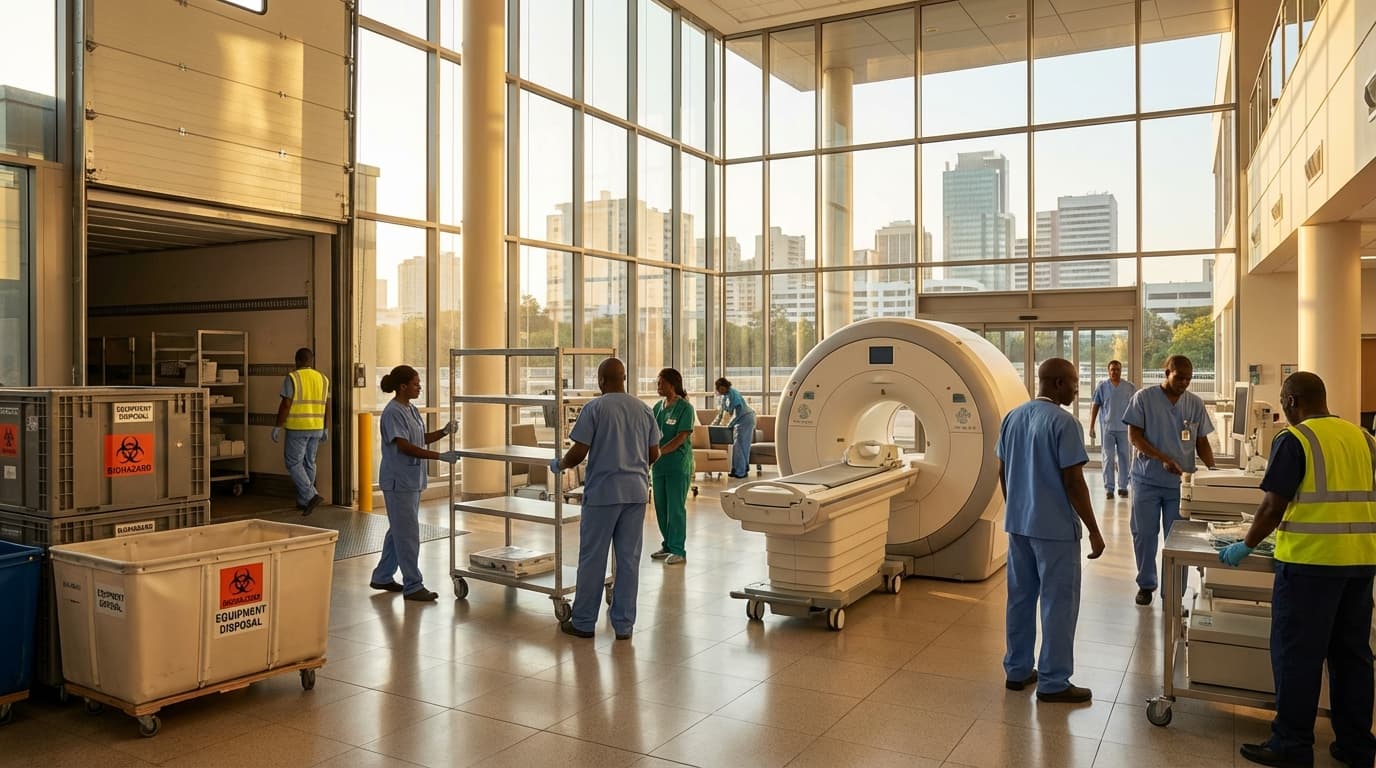
Medical E-Waste Handling & Recycling Coordination Service in Malawi
Engineering Excellence & Technical Support
Medical E-Waste Handling & Recycling Coordination Service High-standard technical execution following OEM protocols and local regulatory frameworks.
Blockchain-Secured Chain of Custody
Leveraging blockchain technology to provide an immutable and transparent record of medical e-waste from generation to final disposal. This ensures accountability, traceability, and compliance with stringent regulations, safeguarding against mishandling and unauthorized disposal.
IoT-Enabled Real-time Monitoring
Implementing Internet of Things (IoT) sensors for real-time tracking of waste collection vehicles and secure storage facilities. This proactive approach optimizes logistics, prevents delays, and provides immediate alerts for any deviations from the established handling protocols.
AI-Powered Waste Stream Analytics
Utilizing Artificial Intelligence (AI) to analyze medical e-waste streams, identify hazardous components, and optimize recycling processes. This data-driven approach maximizes material recovery, minimizes environmental impact, and informs strategic decision-making for enhanced sustainability.
What Is Medical E-waste Handling & Recycling Coordination Service In Malawi?
Medical e-waste handling and recycling coordination services in Malawi refer to a specialized sector focused on the systematic management, collection, transportation, dismantling, and environmentally sound disposal or recycling of discarded electrical and electronic equipment originating from healthcare facilities and related operations within the Republic of Malawi. This service is crucial for mitigating the significant environmental and health risks associated with hazardous materials present in medical electronic waste, such as heavy metals (lead, mercury, cadmium), flame retardants, and cathode ray tubes. It encompasses regulatory compliance, stakeholder engagement, and the development of sustainable resource recovery pathways for these complex waste streams.
| Who Needs This Service? | Typical Use Cases |
|---|---|
| Hospitals (Public and Private) | Disposal of end-of-life diagnostic imaging equipment (X-ray machines, CT scanners, MRI machines). |
| Clinics and Health Centers | Management of expired or broken medical monitoring devices (e.g., patient monitors, ECG machines). |
| Diagnostic Laboratories | Recycling of laboratory equipment containing electronic components (e.g., automated analyzers, centrifuges with digital controls). |
| Pharmaceutical Companies and Distributors (for medical devices) | Handling of returned or recalled medical devices with electronic components. |
| Government Health Ministries and Agencies | Safe disposal of electronic equipment from public health initiatives and administration. |
| Medical Equipment Suppliers and Manufacturers (operating in Malawi) | End-of-life management and take-back programs for medical electronics. |
| Research Institutions with Medical Departments | Disposal of electronic laboratory and diagnostic equipment. |
| Non-Governmental Organizations (NGOs) involved in healthcare delivery | Coordinated disposal of electronic medical equipment procured for their programs. |
| Waste Management Companies (seeking specialization) | Partnerships for the specific handling of regulated medical e-waste streams. |
| Infectious Disease Control Centers | Disposal of electronic equipment used in containment and diagnostic processes. |
Key Components of Medical E-Waste Handling & Recycling Coordination Service in Malawi:
- Regulatory Compliance and Permitting:
- Collection and Logistics Management:
- Sorting, Dismantling, and Segregation:
- Treatment and Disposal:
- Recycling and Resource Recovery:
- Data Management and Reporting:
- Stakeholder Training and Awareness:
Who Needs Medical E-waste Handling & Recycling Coordination Service In Malawi?
Medical e-waste, a growing concern in Malawi, poses significant environmental and health risks if not managed and disposed of properly. This includes discarded medical devices, electronic equipment from healthcare facilities, and associated components. A dedicated Medical E-Waste Handling & Recycling Coordination Service is crucial for establishing safe, compliant, and sustainable management practices across the nation. This service acts as a central hub, facilitating the collection, transportation, dismantling, and responsible recycling or disposal of hazardous medical electronic waste, ensuring that it does not end up in landfills or informal recycling sites where it can leach toxic substances into the environment and endanger public health. The service aims to connect generators of medical e-waste with specialized recyclers and disposal facilities, thereby streamlining the entire process and promoting a circular economy for medical electronics.
| Target Customer/Department | Specific Needs & Challenges Addressed by the Service | Departmental Responsibilities & Contributions |
|---|---|---|
| Public Hospitals & Clinics | Proper disposal of outdated medical equipment (e.g., imaging machines, monitors), compliance with environmental regulations, reduction of health risks from hazardous components, cost-effective waste management solutions. | Procurement (identifying and sourcing compliant disposal services), Facilities Management (segregation and storage of e-waste), Health & Safety (ensuring safe handling procedures). |
| Private Hospitals & Clinics | Reputational risk mitigation through responsible waste management, compliance with evolving environmental laws, efficient and reliable e-waste collection and recycling, access to certified recyclers. | Administration (budgeting for waste management), Operations (implementing e-waste handling protocols), Compliance Officers (ensuring adherence to regulations). |
| Medical Equipment Suppliers & Distributors | Extended Producer Responsibility (EPR) compliance, take-back programs for old equipment, responsible disposal of returned or damaged stock, environmental stewardship. | Sales & Marketing (informing clients about disposal options), Logistics (coordinating collection), Technical Support (dismantling or preparing for transport). |
| Ministry of Health | Development and enforcement of national e-waste policies and guidelines for healthcare, public health protection, environmental surveillance, capacity building for healthcare facilities, data collection on e-waste generation. | Environmental Health Unit (policy development and monitoring), Disease Control (assessing health risks), Health Infrastructure Department (standards and guidelines for facilities). |
| Ministry of Environment, Climate Change, and Tourism | Enforcement of environmental protection laws, regulation of hazardous waste management, promotion of sustainable waste management practices, licensing of e-waste recyclers, impact assessment of e-waste on ecosystems. | Waste Management Department (regulatory framework), Environmental Protection Agency (oversight and enforcement), Climate Change Unit (linking e-waste to broader environmental goals). |
| Ministry of Finance and Economic Planning | Budgetary allocations for e-waste management initiatives, assessment of economic benefits of recycling, potential for job creation in the e-waste sector, investment attraction for recycling facilities. | Budget Department (resource allocation), Economic Planning Unit (strategic development), Investment Promotion Agency (facilitating business). |
| Medical Research Institutions & Laboratories | Safe disposal of specialized electronic equipment used in research (e.g., analytical instruments, centrifuges), compliance with stringent waste handling protocols, data security for retired equipment. | Research Administration (waste management planning), Laboratory Management (segregation and initial handling), IT Department (data sanitization of electronic devices). |
| NGOs in Healthcare | Implementing e-waste management strategies in project areas, ensuring ethical and sustainable disposal of donated or project-funded medical equipment, community awareness on e-waste. | Project Management (integrating e-waste plans), Operations (coordinating logistics), Advocacy (raising awareness). |
Who Needs Medical E-Waste Handling & Recycling Coordination Service in Malawi?
- Healthcare Providers (Hospitals, Clinics, Health Centers)
- Medical Equipment Suppliers and Distributors
- Government Ministries and Departments
- Research Institutions and Laboratories
- Non-Governmental Organizations (NGOs) involved in healthcare
- Educational Institutions with medical programs
Medical E-waste Handling & Recycling Coordination Service Process In Malawi
This document outlines the workflow for the Medical E-Waste Handling & Recycling Coordination Service Process in Malawi, from the initial inquiry to the final execution of services. The service aims to ensure responsible and environmentally sound management of medical electronic waste generated within Malawi, adhering to national regulations and international best practices. This process emphasizes transparency, efficiency, and proper documentation at each stage.
| Stage | Activity | Description | Key Stakeholders Involved | Deliverables/Outcomes | Timeframe |
|---|---|---|---|---|---|
| Initial Contact | Prospective client (healthcare facility, government agency) contacts the service provider to inquire about medical e-waste handling and recycling. | Client, Service Provider | Understanding of client's needs, initial scope of service, basic waste types. | 1-3 Business Days |
| On-site/Remote Assessment | Service provider assesses the client's facility to understand the types, quantities, and current storage of medical e-waste. This may involve site visits or detailed questionnaires. | Client, Service Provider | Detailed waste profile, identification of specific e-waste streams (e.g., old medical devices, imaging equipment, laboratory equipment), risk assessment. | 3-7 Business Days |
| Proposal Generation | Based on the assessment, the service provider develops a detailed proposal outlining the scope of work, methodologies, timelines, costings, and expected outcomes. | Service Provider | Formal proposal document, including pricing, service level agreements (SLAs), and compliance assurances. | 5-10 Business Days |
| Contract Negotiation & Signing | Client reviews the proposal. Negotiations may occur, followed by the signing of a service agreement. | Client, Service Provider | Signed service agreement, outlining legal and operational responsibilities. | 7-14 Business Days |
| Detailed Inventory | Before collection, a more precise inventory and characterization of the specific medical e-waste items to be collected are performed. This ensures appropriate handling and recycling methods. | Client, Service Provider | Detailed manifest of e-waste items, including serial numbers, model numbers, and estimated quantities. | 1-2 Business Days (pre-collection) |
| Scheduling Collection | A collection schedule is agreed upon between the client and the service provider, considering the client's operational needs and waste generation patterns. | Client, Service Provider | Agreed collection schedule. | Variable (based on agreement) |
| Packaging and Segregation | Client segregates and packages the medical e-waste according to provided guidelines (e.g., secure containers, proper labeling). Service provider may offer assistance. | Client, Service Provider | Properly packaged and labeled medical e-waste ready for collection. | Pre-collection |
| Collection Execution | Trained personnel from the service provider collect the packaged medical e-waste from the client's premises using appropriate vehicles and equipment. | Service Provider | Collected medical e-waste, initial collection log. | 1-3 Business Days (per collection) |
| Secure Transportation | The collected medical e-waste is transported in secure, compliant vehicles to the designated processing facility. Real-time tracking may be employed. | Service Provider | Documented chain of custody, real-time tracking data (if applicable). | Variable (depending on distance) |
| Arrival at Facility | E-waste arrives at the approved processing/recycling facility. All documentation is verified. | Service Provider, Processing Facility | Confirmation of arrival, reconciled manifests. | Immediate upon arrival |
| Dismantling and Sorting | E-waste is carefully dismantled and sorted into various component streams (e.g., plastics, metals, circuit boards, hazardous materials). | Processing Facility | Separated material streams, identification of recoverable components. | Variable (based on volume and complexity) |
| Component Recycling/Disposal | Recoverable materials are sent for specialized recycling. Hazardous components are treated and disposed of in an environmentally compliant manner. | Processing Facility | Recycled materials, certified disposal of hazardous waste, reduced landfill volume. | Ongoing during processing |
| Waste Traceability Report | A comprehensive report is generated detailing the type, quantity, and final disposition of the collected medical e-waste. This includes certificates of destruction or recycling. | Service Provider, Processing Facility | Detailed traceability report, certificates of recycling/disposal. | 7-14 Business Days (post-processing) |
| Compliance Documentation | All necessary documentation for regulatory compliance in Malawi is provided to the client. | Service Provider | Copies of all compliance-related documents. | Concurrent with reporting |
| Invoicing | The service provider issues an invoice to the client based on the agreed-upon terms and services rendered. | Service Provider | Detailed invoice. | Post-reporting |
| Payment Processing | Client processes payment according to the invoice terms. | Client | Payment confirmation. | As per invoice terms |
| Service Completion | Once payment is received and all reporting is complete, the service engagement is considered closed. | Client, Service Provider | Formal closure of the service contract, potential for follow-up feedback. | Upon payment confirmation |
Key Stages of the Medical E-Waste Handling & Recycling Coordination Service Process
- Inquiry and Needs Assessment
- Proposal and Agreement
- Waste Characterization and Quantification
- Logistics and Collection
- Transportation and Tracking
- Processing and Recycling
- Data Reporting and Certification
- Payment and Closure
Medical E-waste Handling & Recycling Coordination Service Cost In Malawi
The cost of medical e-waste handling and recycling coordination services in Malawi is influenced by a variety of factors, leading to a range of pricing. These factors can be broadly categorized into the type and volume of waste, the geographical location within Malawi, the specific services required, and the operational costs of the service provider. Due to the nascent stage of formal medical e-waste management in Malawi, pricing can be less standardized than in more developed economies. Service providers often operate on a project-by-project basis or through service level agreements tailored to the needs of healthcare facilities.
| Service Component / Waste Category | Estimated Price Range (Malawian Kwacha - MWK) | Notes |
|---|---|---|
| Consultation & Waste Audit (per facility/site visit) | 150,000 - 400,000 MWK | Assessing waste streams, volume, and hazard levels. |
| Collection & Transportation (per kg or per collection) | 5,000 - 25,000 MWK/kg | Varies significantly based on distance, volume, and urgency. Includes specialized handling for hazardous items. |
| Segregation & Dismantling (per kg) | 7,000 - 30,000 MWK/kg | Manual or semi-automated process to separate components. Higher for complex or hazardous items. |
| Data Destruction (per device/unit) | 20,000 - 100,000 MWK | Secure erasure or physical destruction of storage media (e.g., hard drives, memory cards). |
| Recycling & Disposal (per kg) | 10,000 - 50,000 MWK/kg | Covers the process of breaking down components into raw materials or safe disposal. Higher for hazardous fractions. |
| Small Electronic Items (e.g., cables, small batteries, per kg) | 8,000 - 20,000 MWK/kg | General e-waste components. |
| Medium Electronic Items (e.g., monitors, printers, per unit) | 50,000 - 200,000 MWK/unit | Includes handling and initial processing. |
| Large Electronic Items (e.g., X-ray machines, large lab equipment, per unit) | 200,000 - 1,000,000+ MWK/unit | Highly specialized handling, potential for component recovery, and complex disposal. |
| Comprehensive Service Package (Monthly/Annual Agreement) | Negotiable, typically a bundled rate based on estimated waste volume and service frequency | Can offer cost savings compared to ad-hoc services. Often includes regular reporting. |
Key Pricing Factors for Medical E-Waste Handling & Recycling Coordination in Malawi
- Type of Medical E-Waste: Different electronic components have varying hazard levels and recycling complexities. For instance, devices containing mercury or lead might incur higher handling and disposal costs.
- Volume of Waste: Larger quantities of waste generally lead to a lower per-unit cost due to economies of scale in collection, transportation, and processing.
- Geographical Location: The proximity of the healthcare facility to the recycling facility significantly impacts transportation costs. Services in remote areas will likely be more expensive than those in urban centers like Lilongwe or Blantyre.
- Specific Services Required: This includes collection, transportation, segregation, dismantling, data destruction, and the actual recycling/disposal. More comprehensive service packages will naturally command higher prices.
- Hazardous Material Content: Medical e-waste can contain hazardous materials (e.g., heavy metals, batteries). Proper handling and disposal of these specific components add to the overall cost.
- Regulatory Compliance & Certification: Service providers who adhere to national and international environmental and safety regulations, and possess relevant certifications, may charge a premium for their expertise and assurance.
- Market Competition: The number of available service providers in a given region can influence pricing. A more competitive market might lead to lower prices.
- Condition of Equipment: Whether the e-waste is functional, repairable, or completely defunct can affect the value it might hold through refurbishment or component reuse, potentially reducing the net cost of disposal.
- Contract Duration & Frequency: Long-term contracts or frequent collection schedules may offer discounted rates.
- Reporting & Documentation: The level of detail and frequency of reporting on waste management processes can influence pricing.
Affordable Medical E-waste Handling & Recycling Coordination Service Options
Navigating the complexities of medical e-waste handling and recycling can be a significant challenge for healthcare organizations, often burdened by regulatory compliance, data security concerns, and escalating costs. Our service aims to alleviate these pressures by providing affordable, coordinated solutions for the responsible disposal and recycling of medical electronic waste. We understand that budget constraints are a critical factor, so we've developed flexible value bundles and implemented robust cost-saving strategies to ensure accessible and economically viable options for all healthcare providers.
| Cost-Saving Strategy | Description | Benefit to Healthcare Providers |
|---|---|---|
| Consolidated Pick-ups | By coordinating pick-ups for multiple clients in a geographical area, we reduce transportation costs and optimize routes. | Lower transportation fees, more predictable scheduling. |
| Bulk Processing Agreements | Our large-scale processing capabilities allow us to negotiate better rates with downstream recyclers and ensure maximum material recovery. | Reduced processing fees, higher recycling efficiency, potential for material rebates. |
| Optimized Resource Allocation | Leveraging technology for route planning, inventory management, and efficient sorting reduces operational overhead. | Lower overall service costs, streamlined operations. |
| Tiered Service Options | Our value bundles are designed to cater to different needs and budgets, allowing providers to select the level of service that best fits their requirements without overpaying for unnecessary features. | Cost-effective solutions, flexibility in choosing services. |
| Partnerships with Certified Recyclers | We maintain strong relationships with R2 and e-Stewards certified recyclers, ensuring compliance and environmental responsibility, while also benefiting from preferred pricing. | Guaranteed compliance, responsible disposal, competitive recycling rates. |
| Educational Resources & Best Practices | Providing clients with information on proper e-waste segregation and reduction can minimize their overall waste generation. | Reduced waste volume, potential for further cost savings. |
Value Bundles for Medical E-Waste Handling & Recycling
- {"title":"Basic Compliance Bundle","features":["Scheduled pick-up for defined e-waste volumes.","Certified data wiping or physical destruction of hard drives.","Basic documentation of disposal.","Access to a secure online portal for tracking and basic reporting."],"description":"Ideal for smaller practices or those with minimal e-waste, this bundle focuses on core regulatory compliance and secure data destruction for essential equipment. It ensures your basic needs are met with a streamlined process."}
- {"title":"Standard Efficiency Bundle","features":["More frequent pick-up options (e.g., bi-weekly, monthly).","Broader range of acceptable medical e-waste categories.","Advanced data destruction options (e.g., multiple passes, physical shredding).","Detailed certificates of destruction.","Enhanced reporting and audit trail capabilities.","Basic environmental impact reporting."],"description":"A comprehensive solution for mid-sized facilities, this bundle balances cost-effectiveness with enhanced services, including more frequent pick-ups and broader equipment coverage. It's designed for organizations seeking a reliable and efficient waste management system."}
- {"title":"Premium Sustainability Bundle","features":["On-demand and scheduled pick-up flexibility.","Inclusion of specialized and high-value medical equipment.","Maximized recycling and resource recovery through certified partners.","Customized environmental impact and sustainability reports.","Potential for revenue sharing or rebates on recycled materials.","On-site consultation for waste reduction strategies.","Priority customer support."],"description":"For larger institutions and those committed to advanced environmental stewardship, this bundle offers the most comprehensive services, including maximizing recycling rates, customized reporting, and potential rebates for valuable components. This option prioritizes sustainability and resource recovery."}
Verified Providers In Malawi
In Malawi's healthcare landscape, discerning trusted and verified providers is paramount. Franance Health stands out as a beacon of reliability, offering a comprehensive suite of services backed by stringent credentials. This document outlines why choosing Franance Health is the most advantageous decision for your health and well-being.
| Credential Type | Franance Health Verification | Benefit to Patient |
|---|---|---|
| Medical Licenses & Registrations | Verified with Malawi Medical Council & relevant professional bodies. | Ensures practitioners are legally authorized and meet basic competency standards. |
| Specialty Certifications | Confirmed for all specialists, ensuring advanced training and expertise. | Guarantees access to highly skilled professionals for complex conditions. |
| Continuing Professional Development (CPD) | Active participation and documented completion of CPD programs. | Ensures providers are up-to-date with the latest medical knowledge and techniques. |
| Clean Disciplinary Records | Thorough background checks and verification of no adverse findings. | Provides peace of mind and assures ethical and safe practice. |
| Institutional Affiliations | Partnerships with accredited and reputable healthcare institutions in Malawi. | Access to well-equipped facilities and a network of collaborative care. |
| Patient Feedback & Quality Assurance | Regularly reviewed patient satisfaction surveys and internal quality audits. | Drives continuous improvement in service delivery and patient experience. |
Why Franance Health is the Superior Choice:
- Unwavering Commitment to Quality: Franance Health adheres to the highest international standards of healthcare delivery.
- Rigorous Credentialing Process: All affiliated healthcare professionals undergo a meticulous vetting process, ensuring they possess the necessary qualifications, experience, and ethical standing.
- Patient-Centric Approach: From diagnosis to treatment and recovery, every aspect of care is designed with the patient's needs and comfort at the forefront.
- Access to Advanced Medical Technology: Franance Health partners with facilities equipped with modern diagnostic and treatment tools, facilitating accurate diagnoses and effective interventions.
- Transparent and Ethical Practices: We believe in fostering trust through open communication, clear billing, and unwavering ethical conduct in all our operations.
- Comprehensive Network of Specialists: Our network encompasses a wide range of medical specialties, ensuring you have access to the right expertise for any health concern.
- Continuously Improving Standards: We are dedicated to ongoing professional development and the adoption of new medical advancements to provide the best possible care.
Scope Of Work For Medical E-waste Handling & Recycling Coordination Service
This Scope of Work (SOW) outlines the requirements for a Medical E-Waste Handling & Recycling Coordination Service. The service aims to ensure the safe, compliant, and environmentally responsible collection, transportation, and recycling of medical electronic waste (e-waste) generated by healthcare facilities. The service provider will act as a central coordinator, managing multiple vendors and ensuring adherence to all relevant regulations and best practices. Key deliverables include detailed service plans, compliance documentation, tracking and reporting systems, and comprehensive recycling certifications. Standard specifications will cover waste categorization, packaging, transportation logistics, data security, and reporting metrics.
| Category | Specification/Standard | Description | Compliance Requirement |
|---|---|---|---|
| Waste Categorization | EPA Hazardous Waste Codes (if applicable) & Universal Waste Regulations | Precise identification and segregation of medical e-waste based on material composition (e.g., lead-containing CRTs, mercury switches, batteries) and potential hazardous components. | Strict adherence to federal, state, and local regulations for hazardous and universal waste. |
| Packaging & Labeling | DOT Hazardous Materials Regulations (49 CFR) & OSHA Standards | Use of approved, leak-proof, and puncture-resistant containers. Clear, indelible labeling with waste type, origin, hazard warnings, and generator information. | Compliance with all transportation regulations for hazardous and non-hazardous materials. Secure and tamper-evident packaging. |
| Transportation | EPA RCRA Manifest System & DOT Hazmat Regulations | Use of licensed and insured transport vehicles and trained personnel. Real-time tracking of shipments. Strict adherence to designated routes and schedules. | Ensured manifest completion and tracking. Secure transport to prevent diversion or damage. Verification of carrier's safety record. |
| Data Security & Destruction | HIPAA Security Rule & NIST SP 800-88 | On-site or off-site secure data destruction methods (shredding, degaussing, overwriting) for all data-bearing devices. Certified data destruction processes. | Complete and verifiable data erasure or destruction. Prevention of unauthorized access to sensitive patient information. |
| Recycling & Disposal | R2 Certified or e-Stewards Certified Recycling Facilities | Processing by accredited recycling facilities that adhere to strict environmental and health standards. Maximization of material recovery and responsible disposal of residuals. | Certification from recognized environmental standards bodies. Commitment to no export of hazardous e-waste to developing countries. Documentation of material recovery rates. |
| Reporting & Documentation | Client-specific reporting templates & Regulatory Audit Requirements | Regular, detailed reports on waste volumes, diversion rates, recycling percentages, costs, and compliance status. Maintenance of comprehensive records for a minimum of [Specify Duration, e.g., 5] years. | Transparency and accountability. Facilitation of regulatory audits. Continuous improvement tracking. |
Key Service Deliverables
- Detailed Medical E-Waste Management Plan (MEWMP) tailored to the client's specific needs and facility layout.
- Vendor qualification and management reports, including background checks, certifications, and performance reviews.
- Chain of custody documentation for all collected medical e-waste, from point of generation to final disposition.
- Compliance documentation package, including all permits, licenses, manifests, and regulatory approvals for waste handling and recycling.
- Secure data destruction and verification reports for devices containing sensitive information.
- Recycling certification reports from accredited recycling facilities, detailing the percentage of materials recovered and recycled.
- Regular performance reports, including waste volume, diversion rates, costs, and identified areas for improvement.
- Emergency response plan for spills, accidents, or breaches during collection and transportation.
- Training materials and conducted training sessions for client staff on proper medical e-waste segregation and handling.
- Post-recycling audit reports to verify vendor compliance and environmental impact.
- Final disposition reports for all processed medical e-waste.
Service Level Agreement For Medical E-waste Handling & Recycling Coordination Service
This Service Level Agreement (SLA) outlines the guaranteed response times and uptime for the Medical E-Waste Handling & Recycling Coordination Service. It ensures timely and efficient management of medical electronic waste throughout its lifecycle, from collection to responsible recycling or disposal.
| Service Component | Response Time Guarantee | Uptime Guarantee |
|---|---|---|
| Collection Request Acknowledgement | Within 2 business hours of submission | N/A (Event-driven) |
| Collection Scheduling Confirmation | Within 1 business day of acknowledgement | N/A (Event-driven) |
| Transportation Coordination & Status Update | Within 4 business hours of scheduled pickup | 99.5% (for coordination platform availability) |
| Recycling Partner Certification Verification | Within 2 business days of waste arrival at facility | N/A (Event-driven) |
| Regulatory Compliance Audit Support | Within 5 business days of request | 99.8% (for platform access to compliance documentation) |
| Reporting & Data Access | Monthly reports provided within 5 business days of month-end; Ad-hoc requests within 2 business days | 99.9% (for data platform availability) |
| Emergency Incident Response (e.g., spill, immediate disposal need) | Within 1 business hour of notification | N/A (Event-driven) |
Key Service Components
- Collection Scheduling and Coordination
- Transportation Logistics Management
- Certified Recycling Partner Network Oversight
- Regulatory Compliance Monitoring
- Data Tracking and Reporting
- Emergency Response for Unforeseen Events
Frequently Asked Questions

Ready when you are
Let's scope your Medical E-Waste Handling & Recycling Coordination Service in Malawi project in Malawi.

Scaling healthcare logistics and technical systems across the entire continent.