
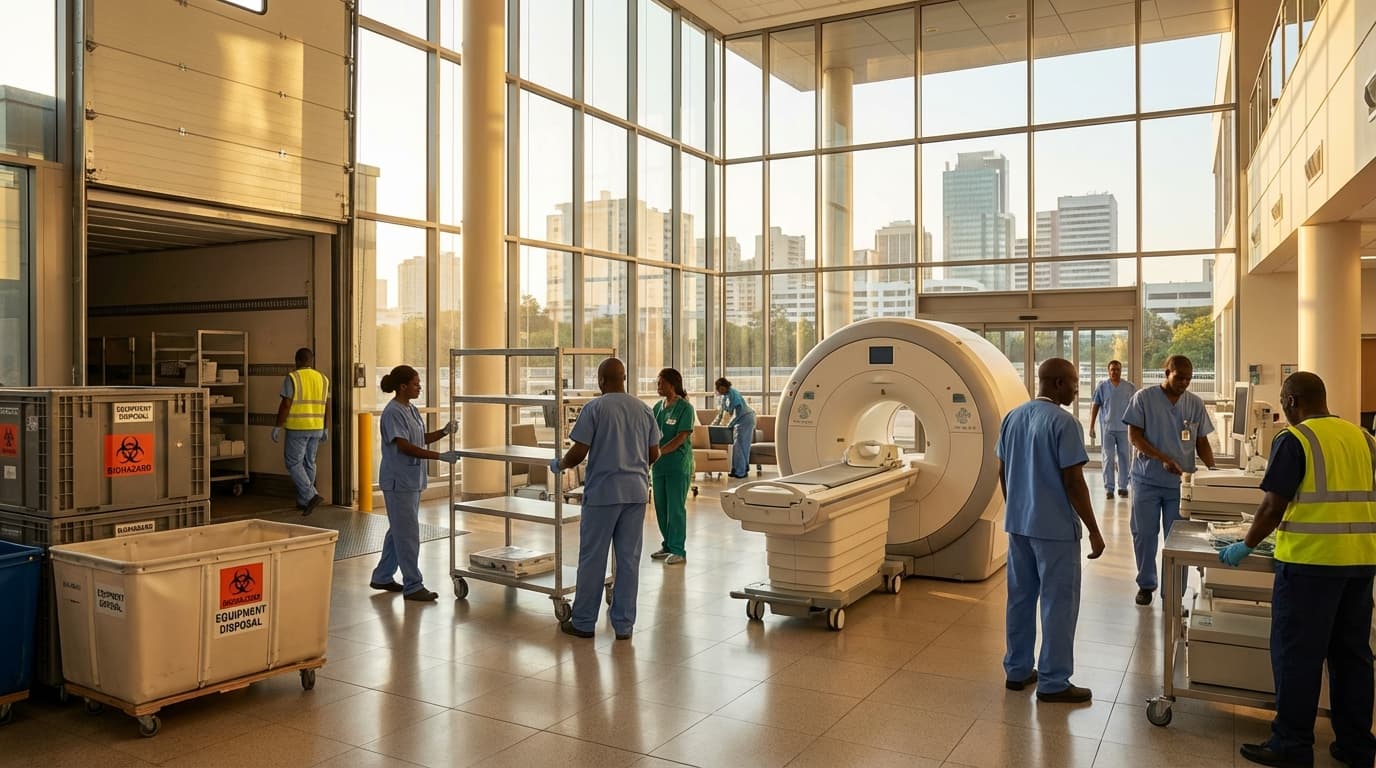
Decommissioning Service for Medical Devices in Malawi
Engineering Excellence & Technical Support
Decommissioning Service for Medical Devices High-standard technical execution following OEM protocols and local regulatory frameworks.
Secure Data Sanitization
Ensures all sensitive patient data is irrecoverably erased from medical devices before disposal, complying with global privacy regulations and protecting Malawian citizens' confidential information.
Environmentally Responsible Disposal
Implements certified processes for the safe and eco-friendly disposal or recycling of medical equipment, preventing hazardous materials from contaminating Malawian environments and minimizing landfill waste.
Expert Decommissioning & Compliance
Provides specialized technical expertise for the safe and compliant decommissioning of all medical device types, adhering to Ministry of Health guidelines and international best practices for medical waste management in Malawi.
What Is Decommissioning Service For Medical Devices In Malawi?
Decommissioning service for medical devices in Malawi refers to the systematic process of safely and compliantly retiring a medical device from its operational use. This encompasses the entire lifecycle from its removal from service to its ultimate disposal or repurposing, ensuring adherence to national regulations, ethical considerations, and environmental protection standards. The service is crucial for managing the end-of-life of medical equipment, which often involves sensitive patient data, biohazardous materials, and valuable or hazardous components.
| Who Needs Decommissioning Service? | Typical Use Cases |
|---|---|
| Hospitals and Healthcare Facilities: Public and private hospitals, clinics, and health centers that have reached the end of a device's useful life or are upgrading equipment. | Diagnostic Imaging Departments: MRI scanners, CT scanners, X-ray machines reaching obsolescence or requiring replacement due to technological advancements or irreparable damage. |
| Laboratories: Clinical, research, and pathology laboratories disposing of outdated or malfunctioning analytical instruments, centrifuges, or biosafety cabinets. | Surgical and Operating Room Units: Removal of anesthesia machines, surgical lights, patient monitors, and electrosurgical units due to wear and tear or technological obsolescence. |
| Medical Equipment Manufacturers and Suppliers: When recalling products, discontinuing models, or managing returned or refurbished devices before sale. | Rehabilitation and Physiotherapy Centers: Disposal of electrotherapy units, treadmills, and other specialized equipment that is no longer functional or safe for use. |
| Government Health Ministries and Agencies: Managing large-scale decommissioning projects for public health infrastructure or when implementing national equipment renewal programs. | Medical Device Repair and Servicing Companies: As part of their service offerings when a device is beyond economical repair or needs to be replaced. |
| Research Institutions and Universities: Decommissioning of specialized laboratory equipment used in medical research. | Dental Clinics and Practices: Disposal of dental chairs, X-ray units, autoclaves, and other specialized dental equipment. |
Key Components of Medical Device Decommissioning in Malawi
- Data Sanitization: Secure erasure or destruction of all patient and operational data stored on the device, in compliance with data privacy regulations (e.g., Malawi's Data Protection Act).
- Functional Assessment: Determining the device's condition for potential reuse, refurbishment, or donation, or if it requires complete destruction.
- Environmental Impact Assessment: Evaluating the presence of hazardous materials (e.g., mercury, batteries, radioactive isotopes) and planning for their safe removal and disposal according to environmental regulations.
- Disassembly and Segregation: Careful dismantling of the device to separate components for recycling, refurbishment, or disposal.
- Decontamination: Sterilization or disinfection of the device, especially if it has been in contact with infectious agents, prior to disposal or transfer.
- Documentation and Record-Keeping: Maintaining comprehensive records of the decommissioning process, including the device's serial number, decommissioning date, methods employed, and disposal certificates.
- Regulatory Compliance: Ensuring all decommissioning activities align with directives from the Ministry of Health, Environmental Protection Authority (EPA), and other relevant regulatory bodies.
- Secure Disposal/Recycling: Engaging certified service providers for the environmentally sound disposal or recycling of device components, including hazardous waste management.
Who Needs Decommissioning Service For Medical Devices In Malawi?
Decommissioning services for medical devices in Malawi are crucial for ensuring patient safety, environmental protection, and regulatory compliance. These services are essential when medical equipment reaches the end of its operational life, becomes obsolete, or is being replaced by newer technology. Proper decommissioning involves safe removal, data sanitization, and environmentally responsible disposal or recycling of the device. This process prevents the unauthorized use of old equipment, protects sensitive patient data, and minimizes the risk of hazardous materials entering the environment.
| Target Customers | Relevant Departments/Units |
|---|---|
| Public Hospitals (e.g., Kamuzu Central Hospital, Queen Elizabeth Central Hospital, Mzuzu Central Hospital) | Biomedical Engineering Department, Information Technology (IT) Department, Procurement Department, Administration, Environmental Health & Safety |
| Private Hospitals and Clinics | Clinical Engineering/Maintenance, IT Department, Administration, Operations Management |
| Government Ministry of Health (and its sub-departments) | Department of Medical Services, Biomedical Engineering Unit, Public Health Department, Procurement and Supplies Division, Environmental Health Department |
| Non-Governmental Organizations (NGOs) involved in healthcare delivery | Logistics and Operations, Program Management, Facilities Management |
| Medical Research Institutions and Universities with medical programs | Laboratory Management, Research Support Services, IT Department, Estates/Facilities Management |
| Medical Device Manufacturers and Distributors (local and international with presence) | Service and Maintenance Department, Compliance Department, Logistics Department, Product Stewardship |
| Diagnostic Laboratories (private and public) | Laboratory Management, Technical Services, IT Department |
| Specialized Health Centers (e.g., radiology centers, physiotherapy clinics) | Clinical Management, Technical Operations, Administration |
Who Needs Decommissioning Service for Medical Devices in Malawi?
- Healthcare facilities that are upgrading or replacing medical equipment.
- Organizations storing or managing retired medical devices.
- Government health agencies overseeing medical device lifecycle management.
- Research institutions with aging or specialized medical equipment.
- Manufacturers or distributors of medical devices requiring end-of-life management for their products.
Decommissioning Service For Medical Devices Process In Malawi
This document outlines the decommissioning service process for medical devices in Malawi, detailing the workflow from initial inquiry to final execution. The process ensures the safe, environmentally sound, and compliant disposal or repurposing of medical equipment.
| Step | Description | Key Activities | Responsible Parties | Deliverables | Timeline (Typical) |
|---|---|---|---|---|---|
| The process begins with a healthcare facility or organization expressing interest in decommissioning medical devices. | Contacting the service provider, initial discussion of needs, scope, and potential services. | Healthcare Facility, Service Provider | Initial understanding of requirements, tentative service proposal. | 1-3 business days |
| A thorough evaluation of the devices to be decommissioned and the facility's premises. | On-site visit, physical inspection of devices, creation of a detailed inventory (make, model, serial number, condition, location). | Service Provider (Technicians, Project Manager), Healthcare Facility (Biomedical Engineers, IT Staff) | Detailed inventory report, identification of special handling requirements, preliminary risk assessment. | 3-7 business days (depending on scale) |
| A comprehensive plan outlining the entire decommissioning process. | Defining decommissioning methods (disassembly, data sanitization, decontamination), waste streams, safety protocols, timelines, and resource allocation. | Service Provider (Project Manager, Technical Experts), Consultation with Healthcare Facility | Formal decommissioning plan document, including safety data sheets (SDS) if applicable. | 5-10 business days |
| Ensuring compliance with all relevant Malawian regulations and obtaining necessary permissions. | Identifying applicable environmental, health, and safety regulations, obtaining permits for transport/disposal, completing chain-of-custody documentation. | Service Provider (Compliance Officer, Project Manager), Healthcare Facility (Administration, Legal), Relevant Government Ministries (e.g., Ministry of Health, Environmental Protection Agency) | Approved permits, all necessary documentation in order. | Varies significantly based on regulatory requirements (can be weeks to months) |
| The physical process of preparing the devices for disposal or repurposing. | Performing data sanitization (if applicable), disinfection/decontamination, disassembly, and secure packaging of devices according to the plan. | Service Provider (Decommissioning Technicians, Certified Professionals) | Decommissioned devices, evidence of data sanitization (if applicable), chain-of-custody forms. | Varies based on the number and complexity of devices |
| Ensuring environmentally responsible and compliant handling of all waste materials. | Transporting devices to approved disposal sites (incineration, secure landfill), sending reusable components for refurbishment/donation, recycling materials where possible. | Service Provider (Logistics Team, Waste Management Partners), Healthcare Facility (Oversight) | Waste manifests, certificates of destruction/disposal from approved facilities, records of donated/refurbished equipment. | Varies based on disposal/repurposing route |
| Providing a comprehensive report of the entire decommissioning process to the client. | Summarizing all activities, including inventory, methods used, disposal records, regulatory compliance, and any certifications. | Service Provider (Project Manager, Reporting Team) | Final decommissioning report, certificates of completion/compliance. | 5-7 business days after execution completion |
| Maintaining detailed records of the decommissioning process for future reference and audits. | Securely storing all documentation (inventory, plans, permits, reports, manifests) for a specified period as per regulatory requirements. | Service Provider, Healthcare Facility (as per their internal policies) | Auditable records of the entire decommissioning process. | Ongoing archiving |
Decommissioning Service Workflow for Medical Devices in Malawi
- Inquiry & Initial Consultation
- Site Assessment & Inventory
- Decommissioning Plan Development
- Regulatory Approvals & Documentation
- Device Decommissioning Execution
- Waste Management & Disposal/Repurposing
- Final Reporting & Certification
- Record Keeping & Archiving
Decommissioning Service For Medical Devices Cost In Malawi
Decommissioning medical devices in Malawi is a critical step in ensuring proper disposal, environmental protection, and compliance with health and safety regulations. The cost of these services can vary significantly based on several factors. These factors influence the complexity of the decommissioning process, the type of equipment involved, and the service provider's operational costs.
| Device Category | Estimated Cost Range (MWK) | Notes |
|---|---|---|
| Small, Non-Hazardous Devices (e.g., basic diagnostic tools, minor lab equipment) | 10,000 - 30,000 | Includes basic dismantling and general waste disposal. |
| Medium-Sized Devices (e.g., patient monitors, basic X-ray units, some lab analyzers) | 30,000 - 150,000 | May involve more complex dismantling, potential hazardous material identification, and specialized disposal. |
| Large/Complex Devices (e.g., CT scanners, MRI machines, linear accelerators, anesthesia machines) | 150,000 - 1,000,000+ | Significant costs due to specialized dismantling, hazardous material management (e.g., refrigerants, mercury, radioactive components), data destruction, and specialized transportation/disposal. |
| Specialized Equipment (e.g., surgical robots, high-end laboratory equipment) | Custom Quoted (Likely 500,000+) | Requires highly specialized expertise, secure data sanitization, and often international compliance considerations. |
| Data Destruction (if separate service or for data-intensive devices) | 10,000 - 100,000+ | Dependent on the volume of data, method of destruction (software vs. physical), and certification of destruction. |
| Hazardous Material Disposal (per kg or per item) | Varies Widely (e.g., 5,000 - 50,000+ per kg/item) | Highly dependent on the specific hazardous material (e.g., mercury, refrigerants, radioactive isotopes) and approved disposal routes. |
Key Pricing Factors for Medical Device Decommissioning in Malawi
- Type and Complexity of Medical Device: Simple devices like basic examination tools will incur lower costs compared to complex imaging equipment (MRI, CT scanners), surgical robots, or laboratory analyzers. These advanced devices often require specialized knowledge, tools, and procedures for safe dismantling and data sanitization.
- Condition of the Device: Devices that are heavily contaminated, contain hazardous materials (e.g., mercury in older thermometers, radioactive isotopes), or are structurally compromised may necessitate more rigorous and costly decommissioning procedures.
- Dismantling and Disassembly Requirements: The extent to which a device needs to be taken apart for proper disposal or recycling directly impacts labor costs and the time required for the service.
- Hazardous Material Handling and Disposal: Devices containing hazardous substances (e.g., refrigerants, mercury, batteries, biohazardous materials) require specialized handling, containment, and disposal methods. This often involves certified waste management facilities and can significantly increase the overall cost.
- Data Sanitization/Destruction: For devices storing patient data (e.g., imaging machines, electronic health records systems), secure data sanitization or physical destruction is paramount to maintain patient confidentiality. The method used (software wiping, physical shredding) and the verification of destruction will affect the price.
- Transportation and Logistics: The distance to the disposal site, the size and weight of the equipment, and the need for specialized transportation (e.g., secure vehicles, lifting equipment) are direct cost drivers.
- Recycling and Material Recovery: The potential for recycling valuable components (metals, plastics) can sometimes offset disposal costs. Service providers who offer comprehensive recycling services may have different pricing structures.
- Regulatory Compliance and Documentation: Adherence to Malawian environmental and health regulations for medical waste disposal is mandatory. The service provider's ability to provide proper documentation, certificates of destruction, and waste manifests will be factored into the cost.
- Service Provider's Overhead and Expertise: Established decommissioning companies with specialized training, certifications, insurance, and overhead costs will generally charge more than smaller or less experienced providers. The level of expertise required for certain high-risk devices will also influence pricing.
- Volume of Decommissioning: For large-scale decommissioning projects (e.g., closing down a hospital wing or an entire facility), bulk discounts may be negotiated.
Affordable Decommissioning Service For Medical Devices Options
Decommissioning medical devices is a critical but often overlooked process, ensuring data security, regulatory compliance, and responsible asset management. Finding affordable options without compromising on essential services is a key concern for healthcare providers. This guide explores value bundles and cost-saving strategies for medical device decommissioning.
| Decommissioning Service Component | Typical Cost Drivers | Cost-Saving Strategies |
|---|---|---|
| Data Sanitization/Wiping | Method used (e.g., DoD 5220.22-M, NIST 800-88), device type, number of passes, verification. | Opt for NIST 800-88 Clear or Purge where appropriate, volume discounts, bundle with disposal. |
| Physical Destruction | Method (shredding, crushing, incineration), device size and material, security level. | Bundle with data sanitization, choose providers with efficient destruction capabilities, volume discounts. |
| Environmental Disposal/Recycling | Weight and material of device, transportation distance, hazardous material handling. | Partner with certified e-waste recyclers, negotiate bulk pickup, explore local recycling programs. |
| Asset Tracking and Reporting | Level of detail in reporting, serialization, audit trails. | Standardize reporting requirements, choose providers with efficient reporting systems, inquire about tiered reporting options. |
| Transportation and Logistics | Distance, number of devices, urgency, insurance requirements. | Schedule bulk pickups, optimize routes, explore local providers to reduce travel costs. |
| Certification and Documentation | Types of certificates required (e.g., data destruction certificate, environmental compliance certificate). | Ensure bundled services include necessary certifications, ask for digital documentation to reduce printing costs. |
Understanding Value Bundles and Cost-Saving Strategies
- Value Bundles: Service providers often offer bundled packages that combine multiple decommissioning tasks at a reduced overall cost compared to individual service rates. These bundles can include services like data sanitization, physical destruction, environmental disposal, and certification.
- Tiered Service Levels: Look for providers offering tiered service levels. Basic tiers might cover essential data wiping and disposal, while premium tiers include more comprehensive services like asset tracking, detailed reporting, and secure transport.
- Volume Discounts: Negotiate discounts based on the volume of devices to be decommissioned. Larger projects often qualify for better per-unit pricing.
- Long-Term Contracts: Committing to a long-term service agreement can lead to preferential pricing and guaranteed service availability.
- In-House vs. Outsourced: Evaluate the cost-effectiveness of performing some decommissioning tasks in-house (e.g., basic cleaning) versus outsourcing all services. Balance internal resource allocation and specialized expertise needs.
- Repurposing and Resale: Explore options for repurposing or reselling functional devices that are still valuable. This can offset decommissioning costs.
- Partnerships and Referrals: Ask for referrals or explore partnerships with other healthcare organizations that may be able to negotiate group rates with service providers.
- Preventative Maintenance: While not directly a decommissioning strategy, investing in regular maintenance for medical devices can extend their lifespan, reducing the frequency and overall cost of replacements and decommissioning over time.
- Standardized Processes: Implementing standardized decommissioning protocols across your organization can streamline the process, reduce errors, and potentially lower labor costs associated with ad-hoc approaches.
- Obtain Multiple Quotes: Always solicit bids from several reputable decommissioning service providers to compare pricing and service offerings.
- Focus on Compliance Essentials: Prioritize services that are non-negotiable for regulatory compliance (e.g., HIPAA-compliant data sanitization). Understand which services are mandatory and which are supplementary.
Verified Providers In Malawi
In Malawi, the accessibility of reliable and trustworthy healthcare providers is paramount for ensuring quality patient outcomes. Franance Health stands out as a leader in this regard, offering a network of verified professionals and facilities. This verification process signifies a commitment to excellence, adherence to regulatory standards, and a patient-centric approach, making Franance Health the optimal choice for individuals seeking dependable medical services.
| Provider Type | Franance Health Verification Benefits | Patient Advantage |
|---|---|---|
| Doctors & Specialists | Verified qualifications, proven experience, ethical conduct. | Access to competent and trustworthy medical professionals. |
| Hospitals & Clinics | Adherence to safety protocols, quality of facilities, trained staff. | Assurance of a safe and well-equipped healthcare environment. |
| Diagnostic Centers | Accuracy of testing, certified equipment, qualified technicians. | Reliable diagnostic results for accurate treatment. |
Why Franance Health Represents the Best Choice for Verified Providers in Malawi
- Rigorous Credentialing Process: Franance Health employs a stringent verification system that goes beyond basic licensing. This includes thorough background checks, professional reference validation, and verification of specialized training and certifications. This ensures that all listed providers possess the necessary expertise and ethical standing.
- Commitment to Quality Care: The verification by Franance Health is an indicator of a provider's commitment to delivering high-quality, patient-centered care. It signifies adherence to best practices, ethical conduct, and a dedication to continuous professional development.
- Enhanced Patient Safety and Trust: By choosing a Franance Health-verified provider, patients can have greater confidence in the safety and efficacy of the medical services they receive. The verification process mitigates risks and builds trust in the healthcare system.
- Access to a Comprehensive Network: Franance Health boasts a wide-ranging network of verified doctors, specialists, hospitals, and clinics across Malawi, offering patients convenient access to a diverse array of medical services and expertise.
- Streamlined Healthcare Navigation: Franance Health aims to simplify the process of finding and accessing quality healthcare. Their verified provider directory empowers patients to make informed decisions about their medical needs, saving them time and potential stress.
- Upholding International Standards: The verification standards upheld by Franance Health often align with or exceed national regulatory requirements, ensuring that providers are operating at a high professional level.
- Focus on Patient Feedback and Improvement: While not explicitly stated as part of the initial verification, the ongoing commitment to excellence implies an underlying mechanism for monitoring patient satisfaction and addressing any concerns, further solidifying trust.
Scope Of Work For Decommissioning Service For Medical Devices
This Scope of Work (SOW) outlines the technical deliverables and standard specifications for the decommissioning of medical devices. The service provider will be responsible for the safe, secure, and compliant removal, data sanitization, and disposal/recycling of specified medical equipment. This document aims to ensure a standardized approach and clear expectations for all parties involved.
| Deliverable Category | Specific Deliverable | Standard Specifications / Requirements | Verification Method |
|---|---|---|---|
| Planning & Assessment | Decommissioning Plan | Includes detailed steps, timelines, safety protocols, risk assessment, and site-specific considerations. Must be reviewed and approved by the client. | Client Approval Sign-off |
| Planning & Assessment | Equipment Inventory and Audit | Comprehensive list of all devices to be decommissioned, including make, model, serial number, location, and current status. Photographic evidence may be required. | Client Review and Confirmation |
| Decommissioning & Removal | Safe Disconnection and Power Down | All devices must be safely disconnected from power and ancillary systems (e.g., medical gases, network cables) following manufacturer guidelines and local regulations. | On-site Visual Inspection and Sign-off by Client Representative |
| Decommissioning & Removal | Physical Removal | Devices to be carefully dismantled (if necessary) and removed from the premises. Protective measures to prevent damage to the facility and other equipment must be employed. | On-site Visual Inspection and Sign-off by Client Representative |
| Data Sanitization | Data Erasure/Destruction Certificate | Certification confirming that all sensitive patient data has been irretrievably erased or destroyed in accordance with HIPAA (or equivalent) regulations and NIST 800-88 guidelines. | Issued Certificate; Sample Audit by Client (Optional) |
| Data Sanitization | Verification of Data Sanitization | Methodology for verification of data sanitization (e.g., diagnostic tools, visual inspection of storage media) must be documented and compliant with approved standards. | Documentation of Verification Process and Results |
| Disposal & Recycling | Waste Manifest / Certificate of Destruction | Document detailing the final disposition of each device, indicating whether it was recycled, disposed of, or returned to manufacturer. Must comply with environmental regulations (e.g., EPA, WEEE Directive). | Issued Certificate; Chain of Custody Documentation |
| Disposal & Recycling | Recycling Certificates (if applicable) | Proof of responsible recycling of components, particularly hazardous materials, from certified recycling partners. | Issued Certificates from Recycling Partners |
| Documentation & Reporting | Final Decommissioning Report | Comprehensive report summarizing the entire decommissioning process, including completed tasks, any deviations from the plan, final inventory, certificates, and disposal records. | Client Review and Acceptance |
| Documentation & Reporting | As-Built Documentation (if applicable) | Documentation of any modifications or removals that affect the facility's infrastructure or system configurations. | Client Review and Acceptance |
| General Specifications | Personnel Qualifications | All personnel involved must be trained in medical device handling, safety procedures, data security, and environmental regulations. | Resume/Certification Review; On-site Observation |
| General Specifications | Insurance | Provider must maintain adequate liability and insurance coverage for any damages or incidents occurring during the decommissioning process. | Proof of Insurance |
| General Specifications | Compliance | Adherence to all relevant local, state, and federal regulations pertaining to healthcare, data privacy, and environmental protection. | Auditable Documentation; On-site Inspections |
Key Stages of Decommissioning Service
- Site Assessment and Planning
- Pre-Decommissioning Preparations
- Physical Decommissioning and Removal
- Data Sanitization and Verification
- Environmental Compliance and Disposal/Recycling
- Documentation and Reporting
Service Level Agreement For Decommissioning Service For Medical Devices
This Service Level Agreement (SLA) outlines the response times and uptime guarantees for the Decommissioning Service for Medical Devices provided by [Your Company Name] (hereinafter referred to as "Provider") to [Client Company Name] (hereinafter referred to as "Client"). This SLA is an integral part of the Master Service Agreement (MSA) between the parties.
| Service Component | Response Time Guarantee (during Business Hours) | Uptime Guarantee (for scheduling and coordination) | Notes |
|---|---|---|---|
| Initial Request Acknowledgment (for scheduling decommissioning jobs) | Within 4 business hours | N/A | Applies to requests submitted via email to [support email] or through the client portal. |
| Technical Support for Scheduling/Logistics Issues | Within 2 business hours | N/A | Applies to issues preventing the scheduling or coordination of a decommissioning service appointment. |
| On-Site Decommissioning Execution (once scheduled) | N/A (Scheduled based on mutual agreement) | 100% of scheduled and confirmed appointment times | The guarantee applies to the availability of the decommissioning team at the agreed-upon time and location. |
| Reporting and Documentation Delivery | Within 2 business days of service completion | N/A | Ensures timely provision of all necessary decommissioning certificates and reports. |
| System for Requesting Service (e.g., Client Portal, Email) | N/A | 99.5% | This uptime refers to the availability of the system used by the Client to submit requests and track their status. |
Key Definitions
- Decommissioning Service: The process of safely and securely rendering medical devices unusable and disposing of them in accordance with all applicable regulations and industry best practices.
- Downtime: Any period during which the Decommissioning Service is unavailable to the Client, preventing the commencement or completion of scheduled decommissioning activities.
- Response Time: The maximum allowable time for the Provider to acknowledge a Client request or issue and begin working towards a resolution.
- Resolution Time: The maximum allowable time for the Provider to fully resolve a reported issue that prevents the Decommissioning Service from functioning as intended.
- Business Hours: [Specify Business Hours, e.g., Monday to Friday, 9:00 AM to 5:00 PM Local Time, excluding public holidays].
Frequently Asked Questions

Ready when you are
Let's scope your Decommissioning Service for Medical Devices in Malawi project in Malawi.

Scaling healthcare logistics and technical systems across the entire continent.