
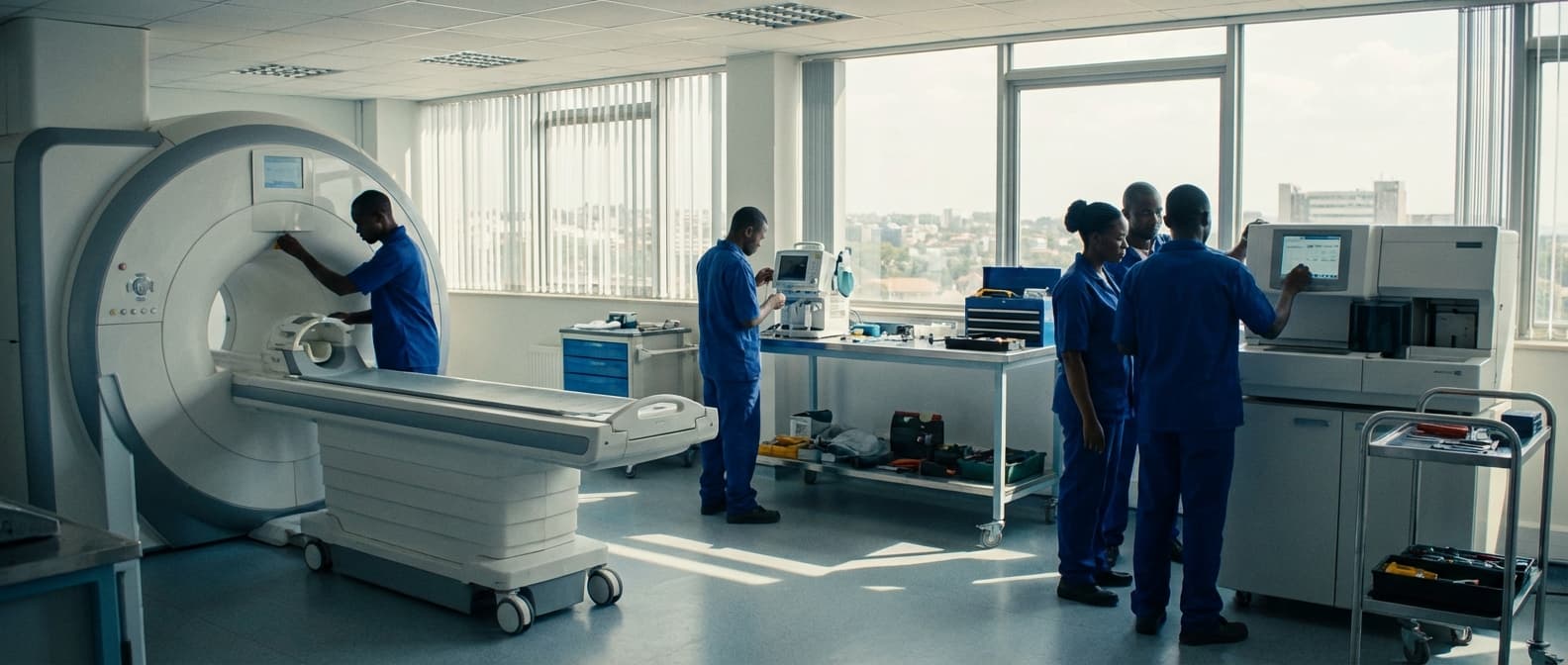
Uptime, Downtime & Root-Cause Analysis Reporting Service in Malawi
Engineering Excellence & Technical Support
Uptime, Downtime & Root-Cause Analysis Reporting Service High-standard technical execution following OEM protocols and local regulatory frameworks.
Real-time Uptime Monitoring
Proactive, 24/7 monitoring of your critical systems and applications across Malawi. Receive immediate alerts on performance degradation or outages, ensuring minimal disruption to your operations and maximizing service availability.
Swift Downtime Detection & Notification
Rapid identification of any downtime events, coupled with instant, actionable notifications to relevant stakeholders. Our service minimizes the impact of outages by facilitating a swift response and recovery process.
In-depth Root-Cause Analysis
Comprehensive post-incident analysis to pinpoint the exact root cause of downtime. Our detailed reports provide the insights needed to implement preventative measures, enhance system resilience, and avoid future occurrences.
What Is Uptime, Downtime & Root-cause Analysis Reporting Service In Malawi?
In Malawi, Uptime, Downtime & Root-Cause Analysis (RCA) Reporting Service refers to a specialized offering designed to monitor, document, and investigate the operational availability and unavailability of IT systems, infrastructure, and services. This service is crucial for organizations aiming to optimize performance, minimize disruptions, and enhance overall reliability. Uptime represents the period during which a system or service is fully operational and accessible. Downtime, conversely, signifies the duration when a system or service is unavailable or non-functional, impacting operations and potentially revenue. Root-Cause Analysis (RCA) is a systematic process of identifying the fundamental underlying reasons for a failure or incident, rather than just addressing the immediate symptoms. The reporting aspect involves the generation of comprehensive documentation detailing these metrics and the outcomes of RCA investigations.
| Typical Use Cases | Description |
|---|---|
| Service Level Agreement (SLA) Monitoring and Enforcement: | Quantifying uptime and downtime to ensure adherence to contractual agreements with clients or internal stakeholders. Reporting provides objective data for SLA compliance. |
| Performance Optimization: | Identifying recurring patterns of downtime or performance degradation to pinpoint system bottlenecks, hardware failures, or software bugs, enabling targeted improvements. |
| Incident Management and Resolution: | Documenting incidents, their duration, and impact. RCA helps in understanding the 'why' behind an incident, leading to more effective and permanent solutions, preventing recurrence. |
| Capacity Planning and Resource Allocation: | Analyzing historical uptime and downtime data to forecast future resource needs, identify under-provisioned or over-provisioned systems, and inform infrastructure investment decisions. |
| Security Incident Response: | Investigating downtime that may be attributed to security breaches or cyberattacks, enabling a swift and effective response and post-incident analysis. |
| Disaster Recovery and Business Continuity Planning: | Using downtime reports as a baseline to evaluate the effectiveness of DR/BCP strategies and identify areas for improvement in recovery time objectives (RTO) and recovery point objectives (RPO). |
| Cost Analysis and Budgeting: | Quantifying the financial impact of downtime (lost revenue, productivity, recovery costs) to justify IT investments and optimize operational budgets. |
| Compliance and Auditing: | Providing auditable records of system availability and incident resolution processes, essential for regulatory compliance in various sectors. |
Who Needs Uptime, Downtime & Root-Cause Analysis Reporting Service in Malawi?
- Businesses of all sizes: From large enterprises to Small and Medium Enterprises (SMEs) that rely heavily on digital infrastructure for their daily operations, sales, customer service, and internal communication.
- Telecommunications providers: Essential for monitoring network availability, service interruptions, and identifying factors affecting connectivity for their subscriber base.
- Financial institutions (Banks, Microfinance, Insurance): Given the critical nature of financial transactions and customer trust, downtime can lead to significant financial losses and reputational damage.
- Government agencies and Public Sector organizations: For critical services like e-government platforms, public utility management, and national security systems, continuous availability is paramount.
- Cloud Service Providers (CSPs) and Data Centers: To assure their clients of service level agreements (SLAs) and demonstrate their commitment to high availability.
- E-commerce platforms and Online Retailers: Direct correlation between website/application uptime and sales revenue; downtime translates to lost business.
- Healthcare providers: For critical systems like Electronic Health Records (EHR), diagnostic equipment, and communication platforms, downtime can have life-threatening consequences.
- Manufacturing and Industrial sectors: Monitoring of operational technology (OT) systems, SCADA, and industrial control systems to prevent production stoppages.
- IT Service Providers and Managed Service Providers (MSPs): To fulfill their contractual obligations to clients and proactively manage client infrastructure.
- Organizations with stringent regulatory compliance requirements: Industries where downtime could lead to non-compliance penalties and legal repercussions.
Who Needs Uptime, Downtime & Root-cause Analysis Reporting Service In Malawi?
In today's interconnected business environment, ensuring operational continuity is paramount for success. Uptime, Downtime, and Root-Cause Analysis Reporting services are crucial for businesses in Malawi seeking to minimize disruptions, optimize performance, and enhance customer satisfaction. These services provide invaluable insights into system availability, identify the causes of failures, and offer data-driven recommendations for preventing future incidents. This reporting is not just for large corporations; many types of organizations in Malawi can benefit significantly.
| Department | Key Benefits of Uptime, Downtime & RCA Reporting |
|---|---|
| IT Operations/Infrastructure Management | Proactive identification of performance bottlenecks, accurate incident resolution, improved system stability, and resource optimization. |
| Network Operations Center (NOC) | Real-time monitoring, rapid detection of outages, efficient troubleshooting, and reduced mean time to repair (MTTR). |
| Service Delivery Management | Ensuring adherence to Service Level Agreements (SLAs), improving customer satisfaction, and demonstrating service reliability. |
| Business Continuity & Disaster Recovery Planning | Data-driven insights to strengthen resilience strategies, identify critical failure points, and develop effective recovery plans. |
| Customer Support | Faster resolution of customer-reported issues, reduced complaint volume, and improved communication during outages. |
| Executive Management/C-Suite | Strategic overview of operational risks, informed decision-making regarding IT investments, and enhanced business performance. |
| Security Operations (SecOps) | Identifying potential security-related downtimes, correlating security events with system failures, and improving overall security posture. |
Target Customers in Malawi
- Telecommunications Companies: Essential for maintaining network availability, identifying call drops, and optimizing service delivery.
- Financial Institutions (Banks, Microfinance): Critical for ensuring the reliability of online banking, ATM networks, and transaction processing.
- Government Agencies & Public Services: Vital for the continuous operation of essential services like utilities (water, electricity), healthcare systems, and public administration platforms.
- E-commerce Businesses: Directly impacts sales and customer trust through the availability of online stores and payment gateways.
- Cloud Service Providers & Data Centers: Fundamental for guaranteeing service level agreements (SLAs) and maintaining client confidence.
- Manufacturing & Industrial Operations: Crucial for minimizing production line stoppages, optimizing machinery performance, and ensuring product quality.
- Healthcare Providers (Hospitals, Clinics): Essential for the uninterrupted functioning of patient management systems, diagnostic equipment, and life-support technologies.
- Transportation & Logistics Companies: Important for tracking shipments, managing fleets, and ensuring the smooth flow of goods and people.
- Small & Medium Enterprises (SMEs) with critical IT infrastructure: Even smaller businesses reliant on their IT systems for daily operations need to understand and address downtime.
Uptime, Downtime & Root-cause Analysis Reporting Service Process In Malawi
This document outlines the workflow for the Uptime, Downtime & Root-Cause Analysis Reporting Service, a critical process for ensuring the reliability and performance of IT infrastructure within Malawi. The service aims to systematically identify, document, and analyze disruptions to service availability (downtime), determine the underlying causes (root-cause analysis), and track recovery efforts to minimize future occurrences. This process is essential for maintaining business continuity and optimizing IT resource utilization.
| Stage | Description | Key Activities | Responsible Parties | Deliverables |
|---|---|---|---|---|
| The process begins when a user or automated monitoring system detects a potential service disruption or requests an analysis. | User reports downtime, monitoring alert triggers, formal service request submission. | End-Users, IT Operations Team, Monitoring Systems | Service Request Ticket/Record |
| The initial incoming request is assessed to understand the impact and urgency of the issue. | Confirming the reported downtime, assessing service impact, assigning priority (e.g., P1-P4), categorizing the incident (e.g., hardware failure, software bug, network issue). | IT Service Desk, Incident Manager | Categorized Incident Ticket with Priority |
| Gathering immediate information about the downtime event to establish a baseline for analysis. | Recording exact start and end times of downtime, affected services/users, symptoms observed, initial troubleshooting steps taken. | IT Operations Team, System Administrators | Initial Incident Report, Downtime Log Entry |
| A systematic investigation to identify the fundamental reason(s) for the downtime. | Data collection (logs, metrics, configuration changes), interviewing stakeholders, applying RCA methodologies (e.g., 5 Whys, Fishbone diagram), hypothesizing and testing potential causes. | Specialized Technical Teams (e.g., Network, Server, Application), RCA Lead | Root-Cause Analysis Report (draft) |
| Formalizing the findings of the RCA and proposing solutions to prevent recurrence. | Documenting the RCA findings, identifying contributing factors, proposing corrective and preventive actions, estimating effort and impact of recommendations. | RCA Lead, Technical Teams, IT Management | Formal RCA Report, Action Plan with Recommendations |
| Putting the recommended solutions into practice and confirming their effectiveness. | Implementing approved corrective actions, testing the implemented solutions, monitoring service stability post-implementation. | Technical Teams, Project Managers (if applicable) | Implemented Solutions, Verification Report |
| Formally closing the incident and incorporating lessons learned into the organization's knowledge base. | Confirming resolution with the reporter, updating the incident ticket, updating knowledge base articles, conducting post-incident review meetings (for major incidents). | Incident Manager, IT Service Desk, Knowledge Manager | Closed Incident Ticket, Updated Knowledge Base, Lessons Learned Document |
Workflow Stages
- Inquiry & Service Request
- Incident Triage & Categorization
- Initial Assessment & Documentation
- Root-Cause Analysis (RCA)
- Reporting & Recommendation
- Implementation & Verification
- Service Closure & Knowledge Management
Uptime, Downtime & Root-cause Analysis Reporting Service Cost In Malawi
Providing comprehensive Uptime, Downtime, and Root-Cause Analysis (RCA) reporting services in Malawi involves a nuanced pricing structure influenced by several key factors. These services are crucial for businesses seeking to understand, minimize, and resolve service disruptions, thereby enhancing operational efficiency and customer satisfaction. The cost can vary significantly based on the complexity of the IT infrastructure, the frequency and depth of reporting required, the level of customization, and the expertise of the service provider. Malawi's economic landscape, including the exchange rate of the Malawian Kwacha (MWK) against major currencies, also plays a role in determining the final cost, especially for services reliant on imported technology or specialized international expertise. Service providers often offer tiered packages, from basic monitoring and automated reports to in-depth, manual investigations and strategic recommendations. The specific industry, the criticality of the systems being monitored, and the Service Level Agreements (SLAs) agreed upon will further dictate the pricing. Businesses looking to procure these services should carefully evaluate their needs and engage with multiple local or regional IT service providers to obtain accurate and competitive quotes.
| Service Level | Description | Estimated Price Range (MWK per month) |
|---|---|---|
| Basic Monitoring & Automated Reporting | Includes uptime monitoring, basic performance metrics, and automated weekly/monthly downtime reports for a limited number of systems. | MWK 50,000 - MWK 150,000 |
| Standard Monitoring & Enhanced Reporting | Covers a broader range of systems, more detailed performance analysis, customizable alerts, and monthly RCA summaries for common issues. | MWK 150,000 - MWK 400,000 |
| Advanced Monitoring & Proactive RCA | Comprehensive infrastructure monitoring, real-time anomaly detection, predictive analytics, detailed monthly/quarterly RCA with actionable recommendations, and 24/7 support for critical incidents. | MWK 400,000 - MWK 1,000,000+ |
| Enterprise & Bespoke Solutions | Highly customized solutions for complex, mission-critical environments. Includes dedicated support teams, integration with existing enterprise tools, and in-depth, ongoing strategic RCA. | MWK 1,000,000 - MWK 5,000,000+ (dependent on scope) |
Key Pricing Factors for Uptime, Downtime & Root-Cause Analysis Reporting Services in Malawi
- Infrastructure Complexity: The number of systems, servers, applications, and network devices to be monitored. More complex environments require more resources and advanced tools.
- Reporting Frequency & Depth: Daily, weekly, monthly, or on-demand reports. The level of detail, including performance metrics, error logs, and historical trends, also impacts cost.
- Downtime Impact & Severity: Services that offer advanced anomaly detection, predictive analysis, and rapid incident response for critical systems will command higher prices.
- Root-Cause Analysis (RCA) Scope: Simple, automated RCA versus in-depth, manual investigations requiring expert analysis and recommendations.
- Service Level Agreements (SLAs): Uptime guarantees, response times for incidents, and resolution targets influence the pricing model.
- Customization Requirements: Tailoring reports, dashboards, and alerts to specific business needs.
- Technology & Tools Used: Proprietary software, cloud-based platforms, or specialized hardware can affect the cost structure.
- Provider Expertise & Reputation: Established providers with a proven track record and highly skilled engineers often charge a premium.
- Geographic Scope: Monitoring services across multiple locations within Malawi or internationally.
- Support & Maintenance: Ongoing support, system updates, and configuration changes.
- Data Storage & Retention: The amount of historical data to be stored and for how long.
- Integration with Existing Systems: Connecting reporting services with other IT management tools.
Affordable Uptime, Downtime & Root-cause Analysis Reporting Service Options
Businesses of all sizes are increasingly reliant on constant operational availability. Downtime, even for short periods, can lead to significant financial losses, reputational damage, and customer dissatisfaction. Our Uptime, Downtime & Root-Cause Analysis Reporting Service offers a comprehensive solution to monitor your systems, identify performance issues, and pinpoint the underlying causes of any outages. We understand that budget is a key consideration, so we've developed flexible value bundles and cost-saving strategies to ensure you receive the most effective and affordable monitoring and analysis for your organization.
| Strategy | Description | Benefit |
|---|---|---|
| Tiered Service Levels | Different monitoring depths and analysis complexity are offered across bundles, allowing you to pay for the level of detail you truly need. | Cost alignment with actual requirements, avoiding overspending on unused features. |
| Automated Root-Cause Analysis (RCA) | Leveraging AI and machine learning to automatically identify and report on the most probable causes of downtime, reducing manual investigation time and cost. | Faster resolution times, reduced operational overhead for IT teams. |
| Scalable Pricing | Our pricing scales with your infrastructure size and complexity, ensuring you only pay for what you use as your business grows. | Predictable costs, ability to expand service as needed without significant upfront investment. |
| Long-Term Commitment Discounts | Incentives for longer subscription terms, offering significant savings compared to monthly plans. | Reduced overall cost of service for businesses with a stable monitoring need. |
| Bundled Feature Advantages | Purchasing a bundle often provides a more cost-effective price than subscribing to individual services separately. | Greater value for money through integrated solutions. |
| Self-Service Reporting Options | For lower tiers, you can access pre-configured reports and dashboards, reducing the need for custom report generation services. | Empowerment of internal teams, reduction in billable hours for reporting tasks. |
Value Bundles Explained
- {"title":"Essentials Bundle","description":"Ideal for small businesses or startups. Focuses on core system uptime monitoring and basic downtime alerts. Provides foundational reporting for understanding availability trends."}
- {"title":"Growth Bundle","description":"A step up for growing businesses. Includes comprehensive uptime/downtime monitoring, automated root-cause analysis for common issues, and detailed historical performance reports. Supports integration with a wider range of services."}
- {"title":"Enterprise Bundle","description":"For large organizations with complex infrastructures. Offers advanced monitoring capabilities, sophisticated AI-driven root-cause analysis, custom reporting, SLA-driven alerts, and dedicated support. Includes proactive threat detection and performance optimization insights."}
- {"title":"Custom Bundle","description":"Tailored to your specific needs. We can mix and match features from different bundles to create a solution that precisely fits your technical requirements and budget."}
Verified Providers In Malawi
Navigating healthcare in Malawi can be challenging, with concerns about the quality and authenticity of medical services. This is where verified providers, and specifically those credentialed by Franance Health, emerge as a crucial element for individuals seeking reliable and high-quality healthcare. Franance Health is a leading organization dedicated to ensuring that healthcare providers meet stringent standards of professionalism, ethics, and clinical competence. Their rigorous credentialing process acts as a vital quality assurance mechanism, offering patients peace of mind and confidence in the care they receive.
| Category | Franance Health Credentialing Criteria | Benefits for Patients |
|---|---|---|
| Medical Qualifications | Verification of degrees, diplomas, and certifications from recognized institutions. | Ensures providers have the foundational knowledge and training. |
| Professional Licenses & Registration | Confirmation of valid and current licenses to practice from relevant regulatory bodies in Malawi. | Guarantees legal and ethical practice. |
| Clinical Experience | Thorough review of work history, previous employment, and practical experience. | Indicates practical application of knowledge and skills. |
| Professional Conduct & Ethics | Assessment of adherence to ethical guidelines and professional standards. | Promotes a patient-centered and trustworthy healthcare experience. |
| Continuing Professional Development (CPD) | Confirmation of ongoing training and upskilling to stay abreast of medical advancements. | Ensures providers are up-to-date with the latest treatments and technologies. |
Why Franance Health Credentials Matter
- Rigorous Vetting Process: Franance Health employs a comprehensive evaluation of healthcare professionals, including verification of academic qualifications, licenses, professional experience, and background checks.
- Commitment to Quality Care: Their credentialing ensures that providers adhere to established best practices in patient care, safety, and ethical conduct.
- Enhanced Patient Trust: By choosing a Franance Health-credentialed provider, patients are assured of a certain level of expertise and accountability.
- Access to Competent Professionals: The credentialing process identifies and promotes skilled practitioners, making it easier for patients to find the right healthcare professionals for their needs.
- Promoting Healthcare Standards: Franance Health's work actively contributes to raising the overall standard of healthcare delivery in Malawi.
Scope Of Work For Uptime, Downtime & Root-cause Analysis Reporting Service
This Scope of Work (SOW) outlines the requirements for a comprehensive Uptime, Downtime, and Root-Cause Analysis (RCA) Reporting Service. The service aims to provide our organization with detailed, actionable insights into system availability, incident management, and the underlying causes of disruptions, enabling proactive improvements and minimizing future occurrences.
| Deliverable | Description | Frequency | Format | Key Information | Standard Specifications |
|---|---|---|---|---|---|
| Uptime/Downtime Summary Report | Provides an overview of system availability for a defined period, highlighting key performance indicators. | Weekly, Monthly, Quarterly, Annually | PDF, Dashboard (real-time access) | Overall uptime percentage, total downtime hours, major outages, affected systems, performance trends. | Data accuracy within 0.1% of actual system status. Clear graphical representation of trends. Comparison against Service Level Agreements (SLAs). |
| Downtime Incident Report | Detailed documentation of individual downtime events, including impact and resolution. | As needed (per incident) | PDF, Digital ticketing system integration | Incident ID, start/end time, duration, affected services/users, impact assessment, initial diagnosis. | Timestamp accuracy to the second. Consistent incident categorization. Clear impact severity levels defined. |
| Root-Cause Analysis (RCA) Report | In-depth investigation into the underlying causes of downtime incidents, with recommendations for prevention. | As needed (for significant incidents, defined threshold) | PDF, Collaborative document platform | Incident summary, detailed timeline of events, identified root cause(s) (e.g., hardware failure, software bug, human error, network issue), contributing factors, preventative actions, ownership, and deadlines for corrective actions. | Utilizes industry-standard RCA methodologies (e.g., 5 Whys, Fishbone Diagram). Recommendations must be SMART (Specific, Measurable, Achievable, Relevant, Time-bound). Identification of potential risks and mitigation strategies. |
| Trend Analysis & Predictive Insights Report | Analysis of historical uptime/downtime data to identify recurring issues and predict potential future problems. | Monthly, Quarterly | PDF, Interactive dashboard | Identification of common failure points, recurring error types, correlation between incidents, recommendations for proactive maintenance and infrastructure upgrades. | Statistical significance in trend identification. Actionable recommendations tied to ROI or risk reduction. Predictive models based on historical data (if applicable). |
| Service Level Agreement (SLA) Compliance Report | Measures performance against contractual uptime and availability targets. | Monthly, Quarterly, Annually | Uptime percentage vs. SLA target, downtime exceeding SLA thresholds, penalties incurred (if applicable), detailed breakdown of SLA breaches. | Direct mapping of reported uptime/downtime to specific SLA clauses. Clear calculation methodology aligned with contractual agreements. |
Service Objectives
- Accurately track and report on system uptime and downtime across all critical infrastructure and applications.
- Conduct thorough root-cause analysis for all significant downtime events.
- Provide clear, concise, and actionable reports for various stakeholder levels.
- Identify trends and patterns in downtime to inform preventative maintenance and architectural improvements.
- Measure and improve the Mean Time Between Failures (MTBF) and Mean Time To Recovery (MTTR).
Service Level Agreement For Uptime, Downtime & Root-cause Analysis Reporting Service
This Service Level Agreement (SLA) outlines the guaranteed uptime, acceptable downtime, and root-cause analysis reporting for the [Service Name] service provided by [Your Company Name]. This SLA aims to ensure reliable service delivery and transparent communication regarding any service disruptions.
| Service Component | Guaranteed Uptime | Maximum Permitted Downtime (Monthly) | RCA Reporting Timeline |
|---|---|---|---|
| Core Service Availability | 99.9% | ~43.8 minutes | Within 4 business hours of resolution for Severity 1 incidents; Within 24 business hours for Severity 2 incidents. |
| API Access | 99.5% | ~1 hour 27 minutes | Within 8 business hours of resolution for Severity 1 incidents; Within 48 business hours for Severity 2 incidents. |
| User Interface Accessibility | 99.8% | ~1 hour 11 minutes | Within 4 business hours of resolution for Severity 1 incidents; Within 24 business hours for Severity 2 incidents. |
Key Definitions
- Uptime: The percentage of time the [Service Name] is operational and accessible to users.
- Downtime: The percentage of time the [Service Name] is unavailable or inaccessible to users due to planned maintenance or unplanned incidents.
- Scheduled Downtime: Planned maintenance periods announced in advance.
- Unscheduled Downtime: Unexpected service interruptions caused by hardware failures, software bugs, or external factors.
- Root-Cause Analysis (RCA): A systematic process to identify the fundamental reason for a service disruption.
Frequently Asked Questions

Ready when you are
Let's scope your Uptime, Downtime & Root-Cause Analysis Reporting Service in Malawi project in Malawi.

Scaling healthcare logistics and technical systems across the entire continent.