
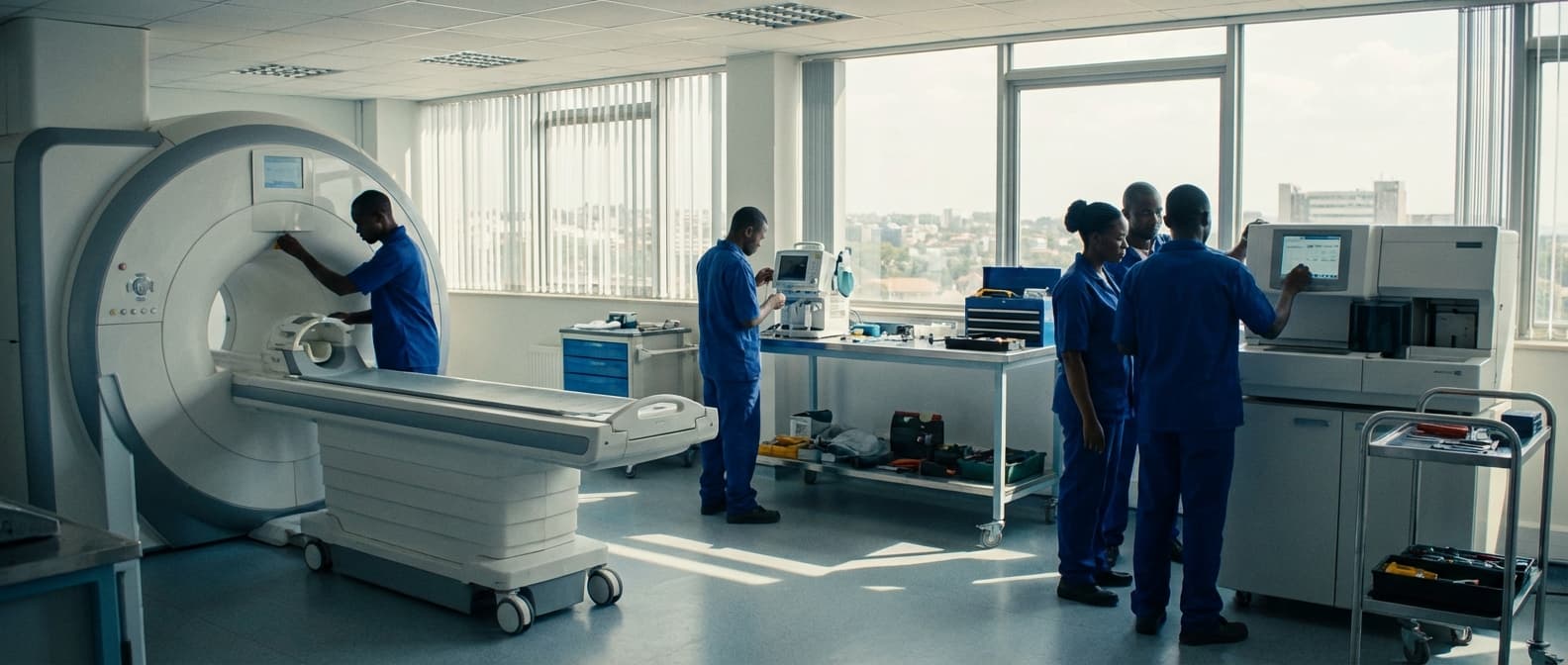
PPM Scheduling & Compliance Reporting Service in Malawi
Engineering Excellence & Technical Support
PPM Scheduling & Compliance Reporting Service High-standard technical execution following OEM protocols and local regulatory frameworks.
Real-time PPM Schedule Optimization
Leverage advanced scheduling algorithms to dynamically optimize Preventive Maintenance (PPM) plans in Malawi. Our service ensures optimal resource allocation, minimizes downtime, and synchronizes maintenance activities with operational demands across your Malawian assets.
Automated Compliance Auditing & Reporting
Gain instant visibility into PPM compliance across all Malawian sites. Our platform automates data collection and analysis, generating granular reports against regulatory standards and internal KPIs, flagging deviations for immediate corrective action.
Integrated Asset Performance Monitoring
Connect PPM schedules with real-time asset performance data from across Malawi. Predict potential failures, adjust maintenance priorities based on condition, and transform from reactive repairs to proactive, data-driven asset lifecycle management.
What Is Ppm Scheduling & Compliance Reporting Service In Malawi?
The PPM Scheduling & Compliance Reporting Service in Malawi refers to a specialized service focused on ensuring adherence to Public-Private Partnership (PPP) agreements and related regulatory frameworks. It involves the systematic planning, monitoring, and reporting of activities undertaken by private entities in fulfilling their contractual obligations to the government or public sector bodies. This service is crucial for maintaining transparency, accountability, and the successful delivery of public services through PPPs.
| Who Needs the Service | Typical Use Cases | ||||||||
|---|---|---|---|---|---|---|---|---|---|
| Government Ministries & Agencies: Overseeing PPP projects, ensuring public funds are utilized effectively, and that service delivery meets public expectations. | Public-Private Partnership Units (PPUs): Established within governments to manage and regulate PPPs, requiring robust monitoring and reporting capabilities. | Private Sector Concessionaires & Operators: Operating under PPP agreements, needing to demonstrate compliance and efficient project execution to their public sector counterparts. | Lenders & Financiers of PPP Projects: Requiring assurance of project viability and compliance for investment decisions and loan servicing. | Regulatory Bodies: Ensuring adherence to sector-specific regulations and the terms of PPP contracts. | Infrastructure Development Projects: (e.g., roads, airports, utilities) where private entities are contracted to build, operate, and maintain assets. | Public Service Delivery Outsourcing: (e.g., healthcare facilities, waste management, public transport) where private operators are responsible for service provision. | Energy & Power Projects: Including independent power producers (IPPs) and renewable energy projects. | ICT & Digital Infrastructure Development: PPPs for telecommunications, broadband deployment, and e-government services. | Water & Sanitation Infrastructure: Projects for water treatment plants, distribution networks, and wastewater management. |
Key Components of PPM Scheduling & Compliance Reporting Service
- Contractual Obligation Mapping: Deconstructing PPP agreements into granular, actionable tasks and deliverables with defined timelines and performance indicators.
- Schedule Development & Optimization: Creating detailed project schedules that align with contractual milestones, resource allocation, and interdependencies, often utilizing project management software.
- Performance Monitoring & Data Collection: Establishing mechanisms for real-time or periodic data collection on key performance indicators (KPIs) and compliance metrics as stipulated in the PPP agreement.
- Risk Assessment & Mitigation Planning: Proactively identifying potential risks to schedule adherence and compliance, and developing strategies to mitigate them.
- Compliance Auditing & Verification: Conducting regular audits and verifications to ensure that all activities and outputs meet the agreed-upon standards and regulatory requirements.
- Reporting & Documentation: Generating comprehensive and accurate reports for both the public and private sector stakeholders, detailing progress, compliance status, deviations, and any proposed corrective actions.
- Stakeholder Communication & Liaison: Facilitating clear and consistent communication between all parties involved in the PPP, including government agencies, the private partner, and regulatory bodies.
- Dispute Resolution Support: Providing documentation and evidence to support any necessary dispute resolution processes related to contractual performance or compliance.
Who Needs Ppm Scheduling & Compliance Reporting Service In Malawi?
In Malawi, the demand for robust PPM (Project, Portfolio, and Program Management) scheduling and compliance reporting services is growing across various sectors. These services are crucial for organizations aiming to deliver projects efficiently, manage their portfolios strategically, and adhere to regulatory and internal standards. Effective PPM scheduling ensures that projects stay on track, within budget, and meet their objectives, while compliance reporting builds trust with stakeholders, mitigates risks, and demonstrates accountability.
| Target Customer Type | Typical Departments Involved | Why PPM Scheduling & Compliance Reporting is Crucial |
|---|---|---|
| Large Corporations (e.g., Telecommunications, Mining, Manufacturing) | Project Management Office (PMO), Operations, Finance, Legal, Compliance, IT | Managing large capital projects, ensuring timely product launches, meeting industry regulations, financial reporting, and risk management. |
| Government Ministries and Agencies (e.g., Infrastructure Development, Health, Education) | Planning and Statistics Departments, Project Management Units, Finance, Auditing Departments, Legal and Regulatory Affairs | Overseeing public infrastructure projects, ensuring efficient use of taxpayer money, meeting procurement regulations, and providing transparent progress reports to citizens and international donors. |
| Development Banks and International Financial Institutions (IFIs) | Project Appraisal Teams, Monitoring and Evaluation Units, Compliance Departments, Finance | Ensuring funded projects adhere to international standards, environmental regulations, financial accountability, and deliver intended development outcomes. |
| Energy and Utilities Companies | Engineering, Operations, Project Management, Regulatory Affairs, Finance | Managing complex infrastructure projects (power plants, grids), ensuring compliance with safety and environmental regulations, and transparently reporting on service delivery. |
| Construction and Engineering Firms | Project Management, Site Management, Procurement, Finance, Quality Assurance, Health & Safety | Managing multiple construction projects simultaneously, adhering to strict timelines and budgets, ensuring compliance with building codes and safety standards, and providing progress reports to clients. |
| Non-Governmental Organizations (NGOs) | Program Management, Project Implementation Teams, Monitoring & Evaluation, Finance, Donor Relations | Effectively managing development programs, ensuring projects are delivered on time and within budget, meeting donor reporting requirements, and demonstrating impact and accountability to beneficiaries and funders. |
Who Needs PPM Scheduling & Compliance Reporting Service in Malawi?
- Organizations undertaking complex, multi-faceted projects.
- Entities subject to strict regulatory oversight.
- Companies seeking to optimize resource allocation and project delivery.
- Businesses aiming to improve transparency and accountability in their operations.
- Government agencies managing public sector projects and infrastructure development.
- Non-governmental organizations (NGOs) delivering development projects and programs.
Ppm Scheduling & Compliance Reporting Service Process In Malawi
This document outlines the workflow for the PPM (Performance, Planning, and Monitoring) Scheduling & Compliance Reporting Service Process in Malawi. This service is crucial for ensuring that development projects adhere to their approved plans, timelines, and regulatory requirements, facilitating effective oversight and accountability.
| Phase | Stage/Step | Description | Key Activities | Responsible Parties | Output/Deliverable | Timeline (Indicative) |
|---|---|---|---|---|---|---|
| 1: Inquiry & Initial Consultation | Initial Contact | Prospective client (e.g., government ministry, NGO, donor) expresses interest in PPM Scheduling & Compliance Reporting services. | Receive inquiry, acknowledge receipt, schedule initial meeting. | Client, Service Provider (e.g., Ministry department, consulting firm) | Meeting confirmed, understanding of client's general needs. | 1-3 Business Days |
| 1: Inquiry & Initial Consultation | Needs Assessment Meeting | Detailed discussion to understand the client's specific project(s), objectives, and existing challenges related to scheduling and compliance. | Discuss project details, identify key stakeholders, understand reporting requirements, assess current processes. | Client Representatives, Service Provider Team Lead | Summary of client needs, preliminary scope of work. | 1-2 Weeks |
| 2: Project Scope Definition & Data Gathering | Scope Finalization | Formalize the scope of services based on the needs assessment. | Draft and agree on the Statement of Work (SOW), including specific projects, reporting frequencies, and compliance areas. | Client, Service Provider | Signed Statement of Work (SOW). | 1 Week |
| 2: Project Scope Definition & Data Gathering | Information Gathering | Collect all relevant project documentation and data required for scheduling and compliance analysis. | Gather project proposals, approved work plans, budgets, timelines, stakeholder lists, legal/regulatory frameworks, previous reports. | Client, Service Provider | Comprehensive project documentation package. | 2-4 Weeks |
| 3: Schedule Development & Baseline Setting | Activity Breakdown | Deconstruct project objectives into manageable activities and tasks. | Create a Work Breakdown Structure (WBS) for each project. | Service Provider (PPM Specialists) | Work Breakdown Structure (WBS). | 1-2 Weeks |
| 3: Schedule Development & Baseline Setting | Duration & Dependency Estimation | Estimate the duration of each activity and identify interdependencies. | Utilize expert judgment, historical data, and established project management methodologies. | Service Provider (PPM Specialists) | Estimated activity durations and dependencies. | 1-2 Weeks |
| 3: Schedule Development & Baseline Setting | Schedule Creation & Baseline | Develop a project schedule and establish it as the baseline for tracking progress. | Use project management software (e.g., MS Project, Primavera) to create Gantt charts, network diagrams, and define critical path. | Service Provider (PPM Specialists) | Approved Project Schedule (Baseline). | 2-3 Weeks |
| 4: Compliance Framework Design | Identify Compliance Requirements | Determine all relevant regulatory, legal, and contractual obligations for the project(s). | Review national laws, sector-specific regulations, donor guidelines, grant agreements, and internal policies. | Service Provider (Compliance Experts), Client | List of identified compliance requirements. | 1-2 Weeks |
| 4: Compliance Framework Design | Develop Compliance Checklist/Matrix | Create a structured tool for tracking adherence to compliance requirements. | Design checklists, matrices, or scorecards tailored to the project and its regulatory environment. | Service Provider (Compliance Experts) | Compliance Checklist/Matrix. | 1 Week |
| 5: Data Collection & Monitoring | Establish Reporting Mechanisms | Set up systems and processes for regular data collection on project progress and compliance. | Define data sources, reporting templates, data submission deadlines, and communication channels. | Service Provider, Client Project Teams | Established data collection and reporting protocols. | 1 Week |
| 5: Data Collection & Monitoring | Regular Data Collection | Gather performance and compliance data from project sites and responsible parties at agreed-upon intervals. | Site visits, interviews, review of project records, submission of progress reports. | Client Project Teams, Service Provider (Field Staff) | Raw project progress and compliance data. | Ongoing (e.g., Weekly, Monthly) |
| 6: Performance Analysis & Reporting | Progress Tracking | Compare actual project progress against the established baseline schedule. | Analyze schedule variances, identify delays, and assess impact on milestones. | Service Provider (PPM Analysts) | Progress variance analysis. | Ongoing (e.g., Weekly, Monthly) |
| 6: Performance Analysis & Reporting | Compliance Verification | Assess adherence to identified compliance requirements using the developed checklist/matrix. | Review collected data against compliance criteria, identify non-compliance issues. | Service Provider (Compliance Analysts) | Compliance status assessment. | Ongoing (e.g., Monthly, Quarterly) |
| 6: Performance Analysis & Reporting | Generate Reports | Compile comprehensive reports detailing project performance and compliance status. | Prepare status reports, compliance audit reports, variance analysis reports, risk assessments. | Service Provider (Reporting Team) | Draft Performance & Compliance Reports. | Ongoing (e.g., Monthly, Quarterly) |
| 7: Review & Feedback | Report Submission | Submit generated reports to the client for review. | Deliver reports to designated client representatives. | Service Provider | Submitted Performance & Compliance Reports. | As per reporting schedule |
| 7: Review & Feedback | Client Review & Feedback | Client reviews the reports and provides feedback, queries, or requests for clarification. | Internal review by client stakeholders, discussions with service provider. | Client | Client feedback and requests. | 1-2 Weeks |
| 8: Corrective Actions & Follow-up | Identify Deviations | Analyze identified variances and non-compliance issues to pinpoint root causes. | Investigate reasons for schedule delays and compliance breaches. | Service Provider, Client Project Teams | Root cause analysis of deviations. | Ongoing |
| 8: Corrective Actions & Follow-up | Develop Action Plans | Collaborate with the client to develop and implement corrective action plans. | Define specific steps, responsibilities, and timelines for addressing identified issues. | Service Provider, Client Project Teams | Corrective Action Plans. | Ongoing |
| 8: Corrective Actions & Follow-up | Monitor Implementation of Actions | Track the progress and effectiveness of implemented corrective actions. | Regular follow-up on action plan execution, impact assessment. | Service Provider | Progress updates on corrective actions. | Ongoing |
| 9: Archiving & Closure | Final Report Generation | Prepare a final comprehensive report summarizing the project's performance and compliance over its lifecycle. | Compile all relevant data, analysis, and lessons learned. | Service Provider | Final Project Performance & Compliance Report. | End of Project/Contract |
| 9: Archiving & Closure | Project Archiving | Securely archive all project-related documentation and reports. | Organize and store digital and physical records according to organizational policy and client requirements. | Service Provider | Archived project records. | End of Project/Contract |
| 9: Archiving & Closure | Service Closure | Formally close the service engagement with the client. | Finalize payments, conduct a post-service review, and obtain client sign-off. | Service Provider, Client | Signed service closure document. | End of Project/Contract |
PPM Scheduling & Compliance Reporting Service Process Workflow
- Phase 1: Inquiry & Initial Consultation
- Phase 2: Project Scope Definition & Data Gathering
- Phase 3: Schedule Development & Baseline Setting
- Phase 4: Compliance Framework Design
- Phase 5: Data Collection & Monitoring
- Phase 6: Performance Analysis & Reporting
- Phase 7: Review & Feedback
- Phase 8: Corrective Actions & Follow-up
- Phase 9: Archiving & Closure
Ppm Scheduling & Compliance Reporting Service Cost In Malawi
The cost of PPM (Project Portfolio Management) scheduling and compliance reporting services in Malawi is influenced by several factors. These include the complexity and scale of the projects being managed, the specific features and functionalities required from the PPM software or service provider, the level of customization needed, and the duration of the contract. Consulting fees for implementation, training, and ongoing support also play a significant role. Due to the relatively niche nature of specialized PPM services in Malawi, pricing can vary considerably between providers and may not always be publicly advertised. It's essential to obtain detailed quotes based on specific requirements.
| Service Component | Estimated Price Range (Malawian Kwacha - MWK) | Notes |
|---|---|---|
| Basic PPM Software Subscription (per user/month) | MWK 5,000 - MWK 25,000 | Covers core scheduling and basic reporting. May be less feature-rich. |
| Mid-Tier PPM Software Subscription (per user/month) | MWK 25,000 - MWK 75,000 | Includes advanced features like resource optimization, risk management, and more detailed compliance reporting. |
| Enterprise-Grade PPM Software Subscription (per user/month) | MWK 75,000+ | For large organizations with complex portfolios, advanced analytics, and extensive customization needs. |
| Implementation & Setup Fees (one-time) | MWK 100,000 - MWK 1,000,000+ | Varies greatly based on complexity, data migration, and integration requirements. |
| Consulting & Training Services (hourly/daily) | MWK 15,000 - MWK 50,000 per hour/day | For implementation support, custom configuration, and user training. |
| Custom Report Development | MWK 20,000 - MWK 150,000 per report | For highly specific or complex compliance reports not covered by standard templates. |
| Ongoing Support & Maintenance (annual fee, % of license cost) | Typically 15% - 25% of annual software license cost | Covers software updates, bug fixes, and technical assistance. |
Key Pricing Factors for PPM Scheduling & Compliance Reporting Services in Malawi
- Project Portfolio Size and Complexity
- Required PPM Software Features (e.g., resource management, risk assessment, financial tracking)
- Level of Customization and Integration
- Duration of Service/Software License Agreement
- Implementation and Setup Fees
- Training and User Adoption Support
- Ongoing Maintenance and Support Costs
- Provider Expertise and Reputation
- Data Volume and Reporting Frequency
Affordable Ppm Scheduling & Compliance Reporting Service Options
Navigating the complexities of Pesticide Property Management (PPM) scheduling and ensuring compliance with regulatory reporting can be a significant challenge for many organizations. This service aims to alleviate that burden by offering affordable solutions that combine efficient scheduling with robust compliance reporting. We understand that budget constraints are a reality, so our focus is on delivering high value through intelligently designed service bundles and proactive cost-saving strategies. This approach ensures you meet all your PPM obligations without breaking the bank.
| Service Bundle | Included Features | Target Audience | Estimated Monthly Cost Range | Value Proposition |
|---|---|---|---|---|
| Basic PPM Essentials | Standardized scheduling templates, quarterly compliance report generation, basic notification system. | Small businesses, facilities with low pest risk. | $150 - $300 | Cost-effective solution for fundamental PPM needs and basic reporting. |
| Proactive PPM Management | Customizable scheduling, monthly compliance report generation, advanced notification system, incident tracking. | Medium-sized businesses, facilities with moderate pest risk, multi-site operations. | $300 - $750 | Enhanced control and proactive management with more frequent reporting and detailed tracking. |
| Comprehensive PPM Compliance | Full-service scheduling integration, bi-weekly or custom reporting cycles, automated data validation, dedicated compliance advisor, risk assessment tools. | Large enterprises, facilities with high pest risk, highly regulated industries, organizations requiring robust audit support. | $750 - $1500+ | End-to-end solution for maximum compliance assurance, risk mitigation, and expert support. |
Key Benefits of Our Affordable PPM Scheduling & Compliance Reporting Services
- Streamlined scheduling for optimized pest control operations.
- Automated compliance reporting to minimize manual effort and errors.
- Reduced risk of penalties and fines associated with non-compliance.
- Improved documentation and audit trail for transparency.
- Enhanced operational efficiency and resource allocation.
- Access to expert knowledge in PPM regulations and best practices.
Verified Providers In Malawi
In Malawi, navigating the healthcare landscape can be challenging. Ensuring you're accessing quality medical services from reputable sources is paramount for your well-being. This is where verified providers, and specifically Franance Health, come into play. Franance Health distinguishes itself through its rigorous credentialing process, commitment to ethical practices, and dedication to patient-centered care. Choosing a Franance Health-affiliated provider means opting for reliability, expertise, and a commitment to positive health outcomes.
| Aspect | Franance Health Verified Provider Advantage | Standard Provider (Unverified) |
|---|---|---|
| Qualification Verification | Thoroughly vetted academic and professional credentials. | May or may not have their qualifications independently verified. |
| Licensing and Certification | Ensured possession of valid and up-to-date medical licenses and certifications. | Licensing status might be ambiguous or unconfirmed. |
| Adherence to Standards | Commitment to recognized national and international medical best practices. | No guaranteed adherence to specific quality benchmarks. |
| Patient Trust | Built on a foundation of verified competence and ethical conduct. | Trust relies solely on personal recommendation or anecdotal evidence. |
| Risk of Malpractice | Significantly minimized due to rigorous screening. | Potentially higher risk due to lack of prior verification. |
| Specialization Expertise | Access to a network of demonstrably skilled specialists. | Expertise may be self-declared without formal verification. |
Why Franance Health Credentials Matter
- Rigorous Vetting: Franance Health employs a stringent verification process for all affiliated healthcare professionals and facilities. This includes checking qualifications, licenses, certifications, and adherence to established medical standards.
- Commitment to Quality: Their credentials signify a dedication to providing high-quality medical services, ensuring that patients receive care that is both effective and safe.
- Ethical Practices: Franance Health promotes and upholds the highest ethical standards in healthcare delivery. This means you can expect transparency, respect, and integrity from their verified providers.
- Patient-Centric Approach: Verified providers are known for prioritizing the patient's needs and well-being. They focus on clear communication, personalized treatment plans, and fostering a trusting relationship.
- Access to Expertise: By choosing a Franance Health verified provider, you gain access to a network of skilled and experienced medical professionals across various specializations.
- Reduced Risk: Partnering with credentialed providers significantly reduces the risk of receiving substandard care or encountering fraudulent practices.
- Peace of Mind: Knowing that your healthcare provider has undergone thorough verification offers invaluable peace of mind, allowing you to focus on your recovery and health.
Scope Of Work For Ppm Scheduling & Compliance Reporting Service
This document outlines the Scope of Work (SOW) for the Provision of PPM Scheduling & Compliance Reporting Services. It details the technical deliverables and standard specifications required to ensure effective planning, execution, and reporting of Planned Preventive Maintenance (PPM) activities. The service aims to enhance asset reliability, minimize downtime, and ensure adherence to regulatory and contractual compliance requirements.
| Category | Deliverable | Description | Standard Specifications / Requirements | Frequency / Timeline |
|---|---|---|---|---|
| PPM Scheduling | PPM Master Schedule | A comprehensive schedule detailing all planned preventive maintenance activities for designated assets. | Includes asset ID, task description, required skills, estimated duration, recommended frequency, criticality level, and responsible team/personnel. Must be developed and maintained in a mutually agreed-upon CMMS or scheduling software. Schedule shall be reviewed and updated at least quarterly, or upon significant asset changes. | Ongoing (updated quarterly) |
| PPM Scheduling | Task Breakdown & Procedures | Detailed breakdown of individual PPM tasks, including step-by-step procedures and required safety precautions. | Procedures must be clear, concise, and readily accessible to technicians. Must include relevant checklists, safety data sheets (SDS), and any necessary permits. Procedures shall be reviewed and updated annually, or as needed based on incident reviews or changes in best practice. | Ongoing (updated annually) |
| PPM Scheduling | Resource Planning | Identification and allocation of necessary resources (personnel, tools, equipment, spare parts) for each PPM task. | Resource requirements must be clearly defined within the PPM task procedures. A mechanism for proactive spare parts management should be established to ensure availability. | As per schedule requirements |
| PPM Execution | PPM Work Orders | Generation and assignment of work orders for scheduled PPM tasks. | Work orders must contain all necessary information for execution, including task description, location, safety notes, required parts, and expected completion date. Must be issued electronically or in a clear, legible format. | As per schedule requirements |
| PPM Execution | PPM Task Completion Records | Documentation of completed PPM tasks, including date of completion, technician details, and any deviations or findings. | Records must be signed off by the performing technician and their supervisor. Must include details of any parts used, time spent, and any observed issues or recommendations for corrective maintenance. Records shall be uploaded to the CMMS within 48 hours of completion. | Upon completion of each task |
| Compliance Reporting | PPM Compliance Report | A report detailing the adherence to the PPM schedule and regulatory requirements. | Includes metrics such as schedule attainment percentage, overdue tasks, reasons for overdue tasks, and any identified non-compliance issues. Reports must be presented in a clear, actionable format, highlighting key performance indicators (KPIs). | Monthly |
| Compliance Reporting | Asset Health & Performance Report | An overview of the health and performance of key assets based on PPM data and observations. | Includes trends in maintenance needs, potential failure indicators identified during PPM, and recommendations for asset lifecycle management. This report will leverage data from completed PPM task records. | Quarterly |
| Compliance Reporting | Regulatory Compliance Audit Support | Provision of documentation and data to support internal and external compliance audits. | All records and reports must be readily accessible and verifiable. Assistance in responding to audit queries related to PPM activities. | As required by audits |
| Technical Standards | Data Integrity & Accuracy | Ensuring the accuracy and completeness of all data entered into the scheduling and reporting systems. | Strict adherence to data entry protocols. Regular data validation checks to identify and rectify inaccuracies. | Ongoing |
| Technical Standards | System Integration | Compatibility and seamless integration with existing client systems (e.g., CMMS, ERP) where applicable. | Defined APIs or data exchange protocols. Ensured security and privacy of data during integration. | Upon initial setup and for ongoing maintenance |
| Technical Standards | Reporting Format & Dashboard | Standardized reporting formats and potentially an interactive dashboard for real-time monitoring. | Reports should be customizable to meet specific stakeholder needs. Dashboard should provide key metrics and visual representations of PPM status and compliance. | As agreed upon |
Objectives of the Service
- To establish and maintain a robust PPM schedule aligned with asset criticality, manufacturer recommendations, and regulatory mandates.
- To ensure timely and accurate execution of all scheduled PPM tasks.
- To provide comprehensive and timely compliance reports to relevant stakeholders.
- To identify and address potential risks and inefficiencies in the PPM process.
- To optimize resource allocation for PPM activities.
- To contribute to the overall operational efficiency and asset longevity.
Service Level Agreement For Ppm Scheduling & Compliance Reporting Service
This Service Level Agreement (SLA) outlines the agreed-upon service levels for the PPM (Project Portfolio Management) Scheduling & Compliance Reporting Service. It defines response times for critical issues and uptime guarantees to ensure the reliability and availability of the service for all users.
| Severity Level | Definition | Target Response Time | Target Resolution Time |
|---|---|---|---|
| Critical (Severity 1) | Service is completely unavailable or a critical functionality is non-operational, impacting all users. | 15 minutes | 4 hours |
| High (Severity 2) | Significant degradation of service or a major feature is unusable, impacting a substantial portion of users. | 1 hour | 8 business hours |
| Medium (Severity 3) | Partial loss of functionality or performance degradation affecting a limited number of users, but a workaround exists. | 4 business hours | 2 business days |
| Low (Severity 4) | Minor issue, cosmetic defect, or a question about functionality that does not impact usability. | 1 business day | 5 business days |
Key Service Level Objectives
- Service Availability: The PPM Scheduling & Compliance Reporting Service will strive for a minimum uptime of 99.9% per calendar month, excluding scheduled maintenance windows.
- Response Times: The following response times will be adhered to for reported incidents, categorized by severity level.
- Scheduled Maintenance: Planned maintenance will be communicated at least 48 hours in advance and will typically occur during off-peak hours (e.g., weekends, late evenings).
Frequently Asked Questions

Ready when you are
Let's scope your PPM Scheduling & Compliance Reporting Service in Malawi project in Malawi.

Scaling healthcare logistics and technical systems across the entire continent.