
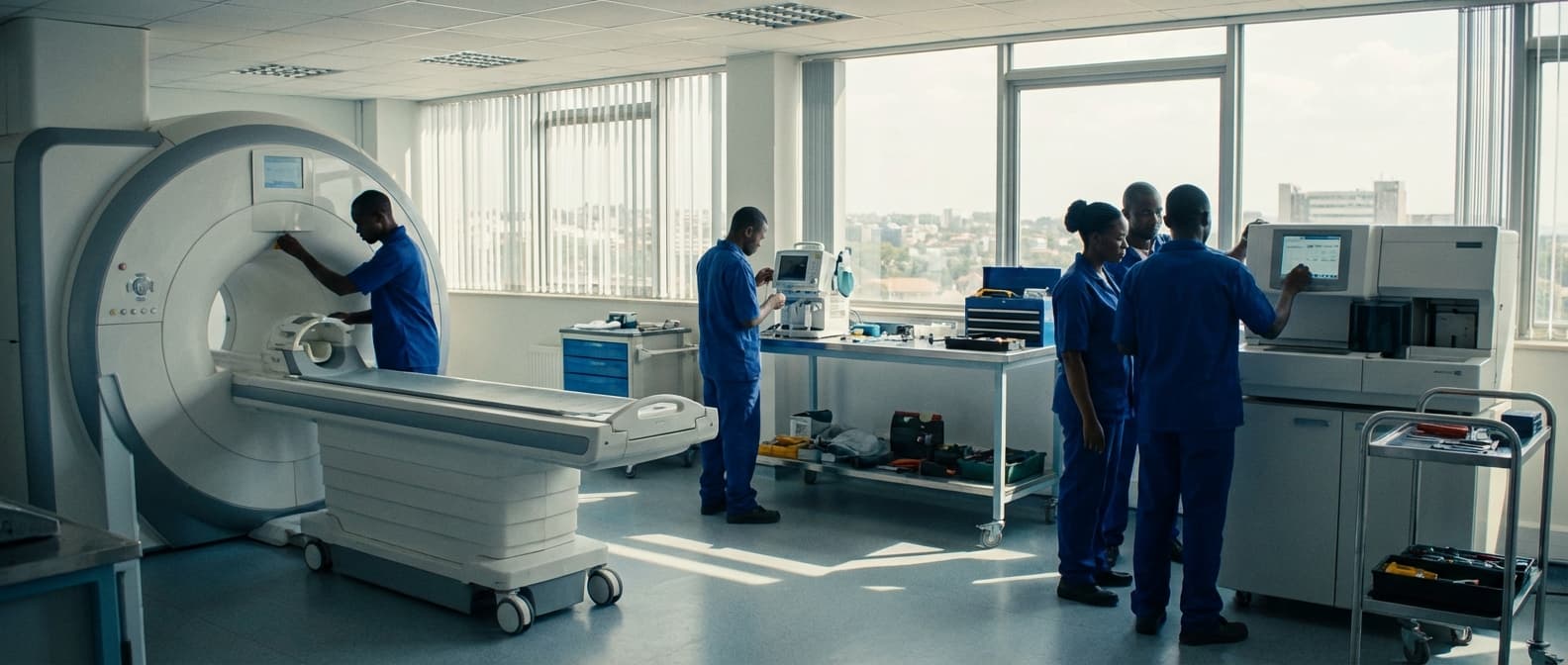
Planned Shutdown Coordination Service for Critical Equipment in Malawi
Engineering Excellence & Technical Support
Planned Shutdown Coordination Service for Critical Equipment High-standard technical execution following OEM protocols and local regulatory frameworks.
Optimized Scheduling for Uninterrupted Operations
Leveraging advanced predictive analytics and real-time equipment health monitoring, our service meticulously plans shutdowns to minimize production downtime. We identify optimal windows, considering historical performance, operational demands, and regulatory compliance, ensuring your critical equipment in Malawi remains operational for maximum periods, boosting overall output and revenue.
Resource & Skill Alignment for Efficient Execution
Our service goes beyond scheduling. We ensure the precise allocation of specialized technicians, necessary parts, and specialized tools required for planned maintenance and repairs of your critical equipment in Malawi. This proactive resource management guarantees that every shutdown is executed efficiently, safely, and within budget, reducing unforeseen delays and cost overruns.
Integrated Risk Mitigation & Contingency Planning
We integrate comprehensive risk assessments into every shutdown plan. Our service identifies potential failure points, develops robust contingency plans, and establishes communication protocols with all stakeholders in Malawi. This meticulous approach to risk mitigation ensures swift and effective responses to any unforeseen challenges, safeguarding your operations and assets during critical maintenance periods.
What Is Planned Shutdown Coordination Service For Critical Equipment In Malawi?
The Planned Shutdown Coordination Service for Critical Equipment in Malawi is a specialized operational and maintenance management framework designed to meticulously orchestrate the scheduled deactivation, maintenance, inspection, and recommissioning of essential industrial and infrastructure assets. This service prioritizes minimizing disruption to essential services and operational continuity by employing rigorous planning, resource allocation, and risk mitigation strategies during periods when critical equipment must be taken offline for maintenance or upgrade purposes. The objective is to ensure that these planned outages are executed efficiently, safely, and with minimal impact on productivity, public safety, or service delivery across Malawi.
| Who Needs the Service | Typical Use Cases |
|---|---|
| Energy Sector: Power generation plants (hydro, thermal, solar), transmission and distribution networks. | Major overhauls of turbines, transformers, and switchgear. Scheduled maintenance of boilers, cooling systems, and control systems. Replacement of aged infrastructure components. |
| Water and Sanitation: Water treatment plants, pumping stations, wastewater treatment facilities, distribution networks. | Cleaning and inspection of reservoirs and treatment tanks. Repair and replacement of pumps and filtration systems. Maintenance of pipelines and distribution infrastructure. |
| Mining and Manufacturing: Large-scale industrial facilities with continuous process equipment, heavy machinery, and complex operational chains. | Scheduled maintenance of crushers, conveyor belts, and processing machinery. Overhauls of smelters, kilns, and chemical reactors. Upgrades or replacement of production line components. |
| Telecommunications: Critical network infrastructure, data centers, and transmission towers. | Hardware upgrades and system patching requiring network downtime. Maintenance of power supply and cooling systems in data centers. Inspection and repair of transmission equipment. |
| Transport and Logistics: Airports (air traffic control, baggage handling), ports (cranes, material handling equipment), railway networks (signaling systems). | Maintenance of air traffic control systems and radar equipment. Overhaul of port cranes and automated handling systems. Upgrades to railway signaling and communication infrastructure. |
| Government and Public Services: Hospitals (medical equipment, utility systems), critical government data centers, national security infrastructure. | Maintenance of life-support systems in hospitals. Data center hardware refreshes and system upgrades. Maintenance of essential command and control systems. |
Key Components of Planned Shutdown Coordination Service
- Scope Definition and Planning: Establishing clear objectives, timelines, and resource requirements for the shutdown. This includes identifying all affected systems, equipment, and personnel.
- Detailed Work Package Development: Creating comprehensive task lists for maintenance, repair, or upgrade activities, including specific procedures, safety protocols, and required materials.
- Resource Management: Securing and allocating all necessary personnel (technicians, engineers, supervisors), specialized tools, equipment, and materials.
- Risk Assessment and Mitigation: Identifying potential hazards and operational risks associated with the shutdown and implementing strategies to prevent accidents, equipment damage, or service interruptions.
- Scheduling and Sequencing: Developing a detailed chronological plan for all activities, ensuring dependencies are managed and the critical path is optimized.
- Permitting and Approvals: Obtaining all necessary internal and external permits and regulatory approvals for the shutdown and associated work.
- Communication and Stakeholder Management: Establishing clear communication channels with all relevant internal departments, external vendors, regulatory bodies, and affected stakeholders to provide timely updates and manage expectations.
- Execution Oversight: Supervising the shutdown activities in real-time to ensure adherence to the plan, safety standards, and quality control.
- Recommissioning and Testing: Developing and executing procedures for safely bringing equipment back online, including comprehensive testing and performance verification.
- Post-Shutdown Review and Reporting: Conducting a thorough review of the shutdown process, documenting lessons learned, and generating comprehensive reports on performance, costs, and any deviations from the plan.
Who Needs Planned Shutdown Coordination Service For Critical Equipment In Malawi?
Planned shutdown coordination services are essential for organizations in Malawi that rely on critical equipment for their operations. These services ensure that essential maintenance, upgrades, or repairs to vital machinery are performed efficiently and with minimal disruption to business continuity. This proactive approach helps prevent unexpected failures, extends equipment lifespan, and maintains regulatory compliance. Essentially, any entity where the downtime of specific equipment has significant financial, operational, or safety consequences is a prime candidate for this service.
| Target Customer Type | Primary Departments Involved | Reasons for Needing the Service |
|---|---|---|
| Manufacturing Plants | Operations, Maintenance, Production Planning, Engineering | Preventing production loss, ensuring safety of complex machinery, timely installation of new equipment. |
| Mining Operations | Mine Operations, Engineering, Maintenance, Safety, Environmental | Minimizing downtime of heavy machinery, ensuring safe working conditions during shutdowns, compliance with environmental regulations. |
| Power Generation Facilities | Operations, Maintenance, Engineering, Safety | Ensuring continuous power supply, safe maintenance of turbines and generators, compliance with energy sector regulations. |
| Water and Wastewater Treatment Plants | Operations, Maintenance, Engineering, Environmental Health & Safety | Maintaining water quality and supply, preventing service disruptions, ensuring compliance with public health standards. |
| Telecommunications Providers | Network Operations, Engineering, IT Infrastructure, Field Operations | Minimizing service outages, ensuring network reliability, seamless upgrades to critical infrastructure. |
| Hospitals and Healthcare Facilities | Facility Management, Biomedical Engineering, IT, Operations | Ensuring uninterrupted patient care, maintenance of life-support equipment, data security of patient records. |
| Large-Scale Agricultural Operations | Farm Management, Maintenance, Operations | Ensuring continuity of critical machinery (e.g., irrigation systems, processing plants) during peak seasons. |
| Transportation Hubs (Airports, Ports) | Operations, Engineering, Maintenance, Safety & Security | Minimizing disruptions to passenger and cargo flow, maintenance of critical control systems, ensuring safety. |
| Financial Institutions with Critical Data Centers | IT Operations, Infrastructure Management, Risk Management | Preventing data loss, ensuring system uptime, maintaining security and compliance with financial regulations. |
| Major Retail Chains with Distribution Centers | Logistics & Supply Chain, Operations, Maintenance | Ensuring timely delivery of goods, maintenance of automated warehousing and logistics systems. |
Target Customers in Malawi Needing Planned Shutdown Coordination Service for Critical Equipment
- Manufacturing Plants
- Mining Operations
- Power Generation Facilities
- Water and Wastewater Treatment Plants
- Telecommunications Providers
- Hospitals and Healthcare Facilities
- Large-Scale Agricultural Operations
- Transportation Hubs (Airports, Ports)
- Financial Institutions with Critical Data Centers
- Major Retail Chains with Distribution Centers
Planned Shutdown Coordination Service For Critical Equipment Process In Malawi
This document outlines the workflow for the Planned Shutdown Coordination Service for Critical Equipment in Malawi. The service aims to ensure efficient, safe, and minimally disruptive planned shutdowns of critical equipment across various industries. The process begins with an inquiry from a client and culminates in a post-shutdown review.
| Stage | Description | Key Activities | Deliverables/Outcomes | Responsible Parties | Timeline (Example) |
|---|---|---|---|---|---|
| Inquiry and Initial Assessment | Client contacts the service provider with a need for a planned equipment shutdown. | Receive and acknowledge inquiry, gather initial information about equipment, scope, and desired timeframe, conduct preliminary feasibility assessment. | Confirmation of inquiry receipt, initial understanding of project scope, indication of service feasibility. | Client, Service Provider (Business Development/Sales Team) | 1-3 Business Days |
| Proposal and Agreement | Based on the initial assessment, a detailed proposal is prepared and submitted to the client. | Develop detailed scope of work, methodology, resource requirements, timelines, cost estimation, risk identification, and mitigation strategies. Present proposal, negotiate terms, finalize and sign contract/agreement. | Formal Proposal Document, Signed Service Agreement/Contract. | Service Provider (Technical Team, Commercial Team), Client (Procurement, Technical Management) | 5-10 Business Days |
| Planning and Scheduling | Detailed planning and scheduling of all shutdown activities are undertaken in close collaboration with the client. | Form dedicated project team, conduct detailed site surveys, confirm exact shutdown window, develop detailed work breakdown structure (WBS), create master schedule, identify interdependencies, establish communication protocols, define roles and responsibilities. | Detailed Project Plan, Master Shutdown Schedule, Communication Plan, Roles & Responsibilities Matrix. | Service Provider (Project Manager, Planners, Technical Leads), Client (Operations, Maintenance, Safety Teams) | 1-4 Weeks (depending on complexity) |
| Pre-Shutdown Preparations | All necessary preparations are made before the actual shutdown commencement. | Procure materials and spare parts, mobilize personnel and equipment, obtain necessary permits and approvals, conduct safety inductions and pre-shutdown briefings, prepare work permits, ensure site readiness, pre-assembly of components if applicable. | All required materials, personnel, and equipment on-site, valid permits, confirmed site readiness, briefed personnel. | Service Provider (Project Team, Procurement, Logistics), Client (Site Access, Safety Approvals) | 1-3 Weeks (concurrent with planning) |
| Shutdown Execution | The planned shutdown activities are carried out according to the approved schedule and safety procedures. | Isolate and de-energize equipment, perform planned maintenance, repairs, inspections, or upgrades, conduct testing and commissioning, manage waste and environmental impact, ensure strict adherence to safety protocols. | Completed maintenance/repair/upgrade tasks, functional and tested equipment, safety compliance records. | Service Provider (Execution Teams, Supervisors, Safety Officers), Client (Operations Oversight, QA/QC) | Variable (Days to Weeks, depending on scope) |
| Post-Shutdown Activities | Activities immediately following the completion of the physical shutdown work. | Remove isolation and re-energize equipment, conduct final checks and performance verification, clean up work areas, demobilize personnel and equipment, handover documentation. | Re-energized and operational equipment, site cleanup completion, demobilization confirmation, initial handover documentation. | Service Provider (Execution Teams, Project Manager), Client (Operations, Maintenance) | 1-3 Business Days (post-execution) |
| Review and Reporting | A comprehensive review of the shutdown is conducted, and a final report is submitted. | Hold post-shutdown review meeting with client, analyze performance against schedule and budget, identify lessons learned, compile final shutdown report including progress, issues, corrective actions, safety records, and recommendations for future shutdowns. | Post-Shutdown Review Minutes, Final Shutdown Report, Invoices. | Service Provider (Project Manager, Senior Management), Client (Management, Operations, Maintenance) | 1-2 Weeks (post-execution) |
Workflow Stages
- Inquiry and Initial Assessment
- Proposal and Agreement
- Planning and Scheduling
- Pre-Shutdown Preparations
- Shutdown Execution
- Post-Shutdown Activities
- Review and Reporting
Planned Shutdown Coordination Service For Critical Equipment Cost In Malawi
Coordinating planned shutdowns for critical equipment in Malawi involves a range of services designed to minimize disruption and ensure safety. The cost of such a service is influenced by several factors, including the complexity of the shutdown, the type and quantity of equipment involved, the duration of the shutdown, the required expertise, and the geographical location within Malawi. Factors influencing pricing include the need for specialized technical skills (e.g., for electrical, mechanical, or instrumentation systems), the extent of planning and scheduling required, the mobilization of personnel and resources, and the implementation of safety protocols and environmental considerations. Additional costs can arise from the need for advanced diagnostic tools, temporary power solutions, or specialized lifting equipment. Service providers often offer tiered pricing based on the scope and duration of the project, with longer and more complex shutdowns incurring higher costs.
| Service Component | Typical Cost Range (Malawian Kwacha - MWK) - Low | Typical Cost Range (Malawian Kwacha - MWK) - High | Notes |
|---|---|---|---|
| Initial Planning & Risk Assessment | 150,000 | 500,000 | Depends on detail and specialist input. |
| Detailed Shutdown Scheduling & Logistics | 200,000 | 700,000 | Varies with number of interfaces and dependencies. |
| On-site Coordination & Supervision (Daily Rate per Coordinator) | 50,000 | 150,000 | Higher for senior or specialized coordinators. |
| Specialized Technical Support (per day) | 75,000 | 250,000 | For highly skilled technicians (e.g., high voltage, PLC programming). |
| Safety Officer Services (per day) | 40,000 | 100,000 | Mandatory for compliance and risk management. |
| Mobilization & Demobilization (Personnel & Equipment) | 100,000 | 750,000 | Highly dependent on distance and volume. |
| Emergency Response & Contingency Planning | 50,000 | 300,000 | Can be a retainer or per-incident fee. |
| Post-Shutdown Reporting & Analysis | 100,000 | 400,000 | Includes performance review and lessons learned. |
| Project Management Fee (Percentage of Total Project Cost) | 5% | 15% | Common for larger, more complex projects. |
| Total Estimated Project Cost (Small Scale Shutdown) | 500,000 | 2,500,000 | Example for a relatively simple, short shutdown. |
| Total Estimated Project Cost (Medium to Large Scale Shutdown) | 3,000,000 | 15,000,000+ | For extensive shutdowns involving multiple critical systems. |
Key Pricing Factors for Planned Shutdown Coordination Services in Malawi:
- Scope and Complexity of the Shutdown
- Type and Quantity of Critical Equipment
- Duration of the Planned Shutdown
- Required Technical Expertise and Skill Level
- Geographical Location within Malawi
- Mobilization of Personnel and Resources
- Safety and Environmental Management Requirements
- Need for Specialized Tools and Equipment
- Contractual Agreements and Service Level Agreements (SLAs)
- Risk Assessment and Mitigation Strategies
Affordable Planned Shutdown Coordination Service For Critical Equipment Options
Our Affordable Planned Shutdown Coordination Service is designed to minimize downtime and maximize efficiency for your critical equipment maintenance. We offer flexible value bundles and implement strategic cost-saving measures to ensure your operations remain cost-effective during scheduled shutdowns. Our service focuses on proactive planning, resource optimization, and risk mitigation to deliver a seamless and budget-friendly shutdown experience.
| Value Bundle | Description | Cost-Saving Strategies Integrated | Estimated Price Range (Illustrative) |
|---|---|---|---|
| Essential Shutdown Support | Core planning, scheduling, and on-site oversight for standard maintenance. Ideal for single-site or smaller operations. | Optimized resource allocation, standardized checklists, early vendor booking discounts. | $X,XXX - $XX,XXX |
| Proactive Maintenance Management | Includes Essential Support plus advanced risk assessment, predictive maintenance integration, and detailed pre-shutdown diagnostics. | Reduced unexpected failures, minimized overtime, just-in-time parts ordering, bulk purchasing power. | $XX,XXX - $XXX,XXX |
| Comprehensive Operational Resilience | Full-spectrum service covering all aspects of planned shutdowns, including emergency preparedness, advanced analytics, and post-shutdown performance optimization. Best for complex, multi-site, or highly critical operations. | Minimized production loss, extended equipment lifespan, optimized labor utilization, negotiated long-term vendor contracts, leverage of shared resources. | $XXX,XXX+ |
Key Features and Benefits
- Comprehensive shutdown planning and scheduling.
- On-site coordination and supervision.
- Vendor and contractor management.
- Risk assessment and mitigation strategies.
- Post-shutdown reporting and analysis.
- Customizable service packages to fit your needs.
Verified Providers In Malawi
Navigating the landscape of healthcare providers in Malawi can be challenging. Ensuring you are engaging with trusted and credentialed professionals is paramount for receiving quality care. Franance Health stands out as a leader in this regard, boasting a rigorous credentialing process that ensures their network of providers meets the highest standards of expertise, ethical practice, and patient safety. This commitment to verification not only safeguards patients but also builds a foundation of trust and reliability within the Malawian healthcare system.
| Credential Type | Verification Method | Importance for Patients |
|---|---|---|
| Medical Licenses | Cross-referencing with national medical councils and licensing bodies. | Ensures providers are legally authorized to practice medicine in Malawi. |
| Educational Qualifications | Verification of degrees and certifications from accredited institutions. | Confirms providers have received formal and recognized medical training. |
| Professional Experience | Reference checks and review of work history. | Assesses practical skills and the ability to apply theoretical knowledge. |
| Disciplinary Records | Checks with relevant regulatory bodies for any past misconduct. | Protects patients from engaging with providers with a history of ethical breaches. |
| Specialty Certifications | Validation of advanced training and expertise in specific medical fields. | Guarantees access to specialists with proven proficiency. |
Key Credentials and Benefits of Choosing Franance Health Verified Providers:
- Rigorous Verification Process: Franance Health employs a multi-faceted approach to verify the credentials of all its partner providers. This includes extensive background checks, validation of educational qualifications and licenses, and assessment of professional experience.
- Commitment to Ethical Practice: Beyond technical skills, Franance Health prioritizes providers who demonstrate a strong commitment to ethical conduct and patient-centered care. This involves checking for disciplinary actions and ensuring adherence to professional codes of conduct.
- Continuous Professional Development: Verified providers are often encouraged or required by Franance Health to engage in ongoing training and education, ensuring they are up-to-date with the latest medical advancements and best practices.
- Patient Safety and Quality Assurance: The credentialing process directly contributes to enhanced patient safety and improved quality of care. Patients can have greater confidence in the competence and reliability of providers associated with Franance Health.
- Access to a Trusted Network: By choosing Franance Health, patients gain access to a curated network of healthcare professionals who have been meticulously vetted, reducing the risk of encountering unqualified practitioners.
- Improved Health Outcomes: The assurance of working with verified and competent providers is instrumental in achieving positive health outcomes and fostering a healthier Malawi.
Scope Of Work For Planned Shutdown Coordination Service For Critical Equipment
This document outlines the Scope of Work (SOW) for a Planned Shutdown Coordination Service for Critical Equipment. The service aims to ensure the safe, efficient, and timely execution of planned maintenance, inspection, and repair activities on critical equipment within the facility. This includes detailed planning, scheduling, resource allocation, risk management, communication, and post-shutdown analysis. Technical deliverables will encompass comprehensive shutdown plans, risk assessments, resource manifests, communication matrices, and post-shutdown reports. Standard specifications will adhere to industry best practices and relevant safety regulations.
| Technical Deliverable | Description | Standard Specification/Reference |
|---|---|---|
| Detailed Shutdown Plan | A comprehensive document outlining all activities, timelines, dependencies, responsible parties, and required resources for the planned shutdown. Includes scope of work for each equipment, isolation points, and re-commissioning procedures. | Project Management Institute (PMI) PMBOK Guide, facility-specific maintenance procedures, OEM manuals. |
| Risk Assessment Report | Identifies potential hazards and risks associated with shutdown activities, including safety, operational, and environmental risks. Outlines mitigation strategies and contingency plans. | ISO 31000:2018 Risk Management – Guidelines, OSHA Process Safety Management (PSM) standards, HAZOP studies. |
| Resource Manifest | A detailed list of all personnel (internal and external), tools, equipment, spare parts, and materials required for the shutdown, with their respective availability and delivery schedules. | Facility inventory management systems, supplier lead times, internal resource scheduling. |
| Communication Matrix | Defines communication channels, reporting lines, frequency of updates, and key stakeholders for the duration of the shutdown. Ensures timely and accurate information dissemination. | Facility-specific communication protocols, stakeholder engagement plans. |
| Permit-to-Work (PTW) Register | A system for managing and tracking all permits issued for work during the shutdown, ensuring all safety prerequisites are met before work commences. | Facility-specific PTW procedures, relevant legislative requirements (e.g., confined space entry, hot work permits). |
| Daily/Shift Briefings & Reports | Conducting regular briefings to communicate progress, address issues, and ensure adherence to the plan. Generating daily/shift reports summarizing activities, achievements, deviations, and upcoming tasks. | Facility-specific reporting templates, project management software. |
| Post-Shutdown Analysis Report | A comprehensive report detailing the execution of the shutdown, including actual vs. planned timelines, any deviations, root cause analysis of issues, safety incident review, cost analysis, and recommendations for future shutdowns. | ISO 9001:2015 Quality Management Systems, lessons learned documentation best practices. |
| As-Built Drawings/Documentation (if applicable) | Updates to facility drawings and documentation to reflect any changes made during the shutdown activities. | Facility-specific CAD standards, document control procedures. |
Key Service Components
- Comprehensive Shutdown Planning & Scheduling
- Risk Assessment & Mitigation Strategy Development
- Resource Management & Allocation (Personnel, Equipment, Materials)
- Communication & Stakeholder Management
- On-site Coordination & Supervision
- Safety & Environmental Compliance Oversight
- Permit-to-Work System Integration
- Post-Shutdown Analysis & Reporting
- Continuous Improvement & Lessons Learned
Service Level Agreement For Planned Shutdown Coordination Service For Critical Equipment
This Service Level Agreement (SLA) outlines the terms and conditions for the Planned Shutdown Coordination Service for Critical Equipment. It specifies the response times for critical issues and guarantees the uptime of the coordination platform during scheduled maintenance windows.
| Service Component | Uptime Guarantee | Response Time (Critical Incident) | Resolution Time (Critical Incident) |
|---|---|---|---|
| Planned Shutdown Coordination Platform Availability (during Service Window) | 99.9% Uptime | N/A (Platform is expected to be available) | N/A (Platform is expected to be available) |
| Critical Incident: Coordination Platform Unavailability | N/A (Focus is on response and resolution) | 15 minutes | 4 hours |
| Critical Incident: Data Integrity Issue within Platform | N/A (Focus is on response and resolution) | 30 minutes | 8 hours |
| Critical Incident: Failure to Send Critical Notifications | N/A (Focus is on response and resolution) | 15 minutes | 2 hours |
Key Definitions
- Critical Equipment: Equipment designated as essential for the continuous operation of key business processes. Failure or unplanned downtime of this equipment will result in significant financial or operational impact.
- Planned Shutdown: A pre-scheduled and approved period of interruption to the operation of critical equipment for the purpose of maintenance, upgrades, or other planned activities.
- Coordination Platform: The software and infrastructure used to manage and communicate planned shutdown activities, including scheduling, notification, and resource allocation.
- Service Window: The period during which the Coordination Platform is expected to be available for use.
- Downtime: The period during which the Coordination Platform is unavailable or not functioning as expected, preventing users from accessing its core functionalities.
- Response Time: The maximum allowable time from the initiation of a reported incident to the first substantive action taken by the service provider.
- Resolution Time: The maximum allowable time from the initiation of a reported incident to its complete resolution.
Frequently Asked Questions

Ready when you are
Let's scope your Planned Shutdown Coordination Service for Critical Equipment in Malawi project in Malawi.

Scaling healthcare logistics and technical systems across the entire continent.