
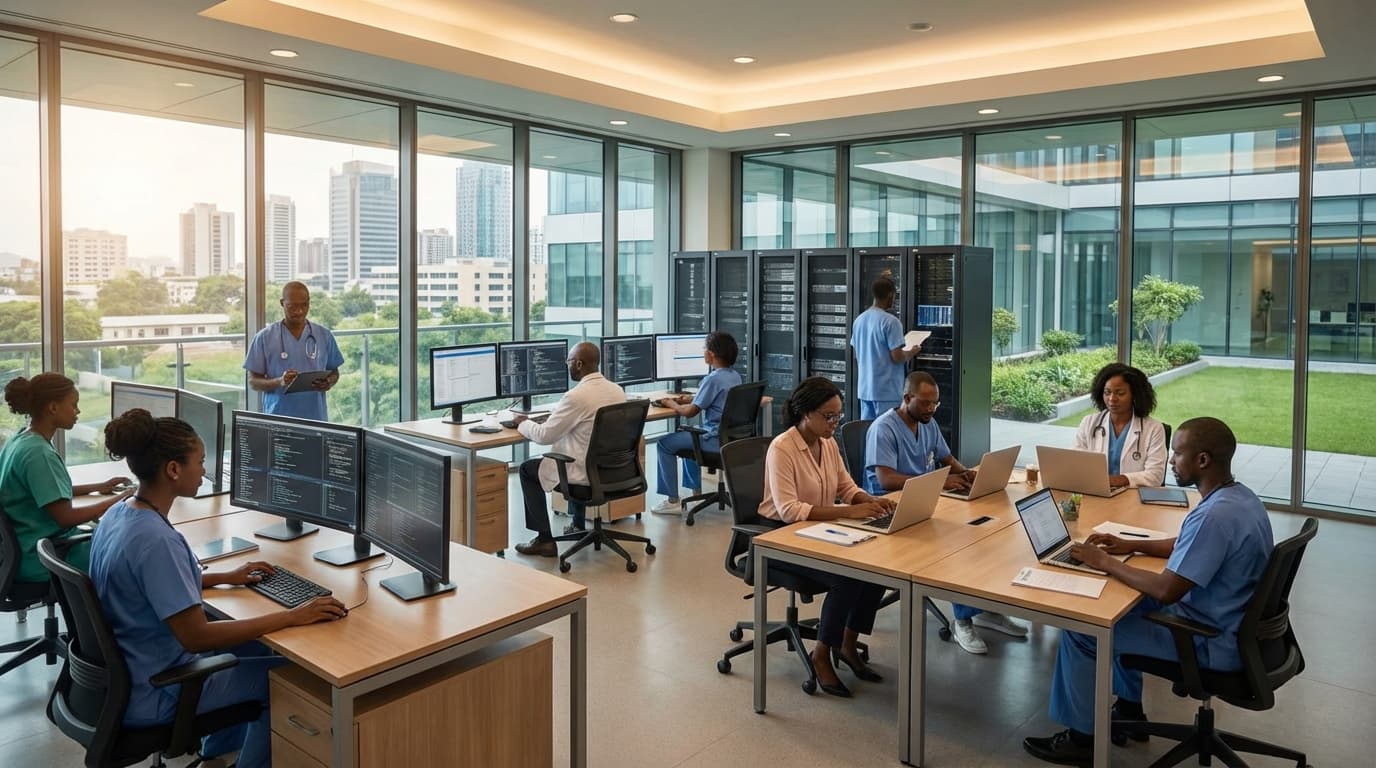
Radiology Reader & Reporting Support in Malawi
Engineering Excellence & Technical Support
Remote radiology reading and reporting services High-standard technical execution following OEM protocols and local regulatory frameworks.
AI-Powered Image Analysis
Leveraging advanced machine learning algorithms to pre-screen medical images, identify potential abnormalities, and flag urgent cases for radiologists, significantly reducing turnaround times and improving diagnostic accuracy in resource-limited settings.
Cloud-Based Reporting Platform
Providing a secure, cloud-based platform for radiologists to access patient imaging data, dictate reports remotely, and collaborate with referring physicians across distributed healthcare facilities, enhancing accessibility and efficiency of radiology services in Malawi.
Interactive Reporting Templates
Developing standardized, interactive reporting templates with built-in guidance and quality checks to ensure consistent and comprehensive report generation by radiologists and support staff, facilitating knowledge transfer and improving report quality.
What Is Radiology Reader & Reporting Support In Malawi?
Radiology Reader & Reporting Support in Malawi refers to a specialized service that provides expert interpretation of medical imaging studies and the generation of comprehensive, actionable reports. This service is crucial for augmenting local diagnostic capabilities, particularly in regions facing a shortage of trained radiologists. It leverages advanced tele-radiology platforms and a network of qualified, often international, radiologists to offer real-time or near real-time reading of various imaging modalities, including X-ray, CT, MRI, and ultrasound. The service aims to improve the accuracy and timeliness of diagnoses, thereby facilitating prompt and effective patient management.
| Typical Use Cases | Description |
|---|---|
| Emergency Department (ED) Support | Rapid interpretation of critical imaging studies such as head CTs for stroke or trauma, chest X-rays for pulmonary embolism, and abdominal CTs for acute surgical conditions, enabling timely intervention. |
| Oncology Imaging | Staging, treatment response assessment, and follow-up imaging for cancer patients, requiring specialized interpretation of CT, MRI, and PET scans. |
| Neurology & Neurosurgery Consultations | Interpretation of brain MRI/CT for neurological deficits, tumors, and vascular abnormalities to guide medical and surgical management. |
| Cardiovascular Imaging | Analysis of cardiac CT, MRI, and echocardiograms for diagnosis and management of heart disease. |
| Musculoskeletal Imaging | Interpretation of X-rays, CT, and MRI for fractures, sports injuries, degenerative conditions, and joint pathologies. |
| Pediatric Radiology | Specialized interpretation of imaging studies in neonates and children, requiring expertise in developmental anatomy and common pediatric pathologies. |
| Teleradiology for Underserved Areas | Providing diagnostic imaging services to remote or rural locations that lack permanent radiology staffing, bridging the geographical gap in healthcare access. |
| Second Opinion Services | Offering independent expert review of complex or contentious cases to confirm diagnoses or provide alternative interpretations. |
Key Components and Beneficiaries of Radiology Reader & Reporting Support
- Service Components:
- Image Acquisition & Transmission: Facilities capture and securely transmit digital medical images (DICOM format) to a central platform.
- Expert Interpretation: Board-certified radiologists, potentially located remotely, analyze the images.
- Report Generation: A detailed, structured diagnostic report is generated, including findings, impressions, and recommendations.
- Secure Communication Platform: A robust and compliant IT infrastructure for image transfer, report dissemination, and physician-to-physician communication.
- Quality Assurance: Protocols for peer review and ongoing performance monitoring of reporting radiologists.
- Who Needs This Service in Malawi?
- Public Hospitals & Tertiary Referral Centers: Overburdened departments with insufficient radiologist staffing.
- District Hospitals & Rural Health Centers: Facilities lacking on-site radiology expertise.
- Private Healthcare Providers: Clinics and hospitals seeking to expand their diagnostic service offerings or manage peak workloads.
- Specialized Medical Centers: Centers focusing on specific disciplines (e.g., oncology, cardiology) requiring specialized imaging interpretation.
- Medical Training Institutions: Facilities engaged in training healthcare professionals who require access to expert diagnostic opinions.
Who Needs Radiology Reader & Reporting Support In Malawi?
Radiology reader and reporting support services are crucial in Malawi to address the significant shortage of qualified radiologists. These services are vital for improving diagnostic accuracy, reducing turnaround times for reports, and ultimately enhancing patient care across various healthcare settings. The demand stems from a need to leverage existing imaging equipment more effectively and to ensure that complex cases receive expert interpretation, even in remote or underserved areas.
| Department/Facility Type | Primary Need | Impact of Support |
|---|---|---|
| Emergency Departments (Public & Private) | Rapid interpretation of critical findings (trauma, stroke, acute abdomen) | Faster treatment decisions, reduced morbidity and mortality |
| General Medical Wards (Public & Private) | Diagnosis of common conditions (pneumonia, fractures, gastrointestinal issues) | Improved patient management, appropriate referrals |
| Surgical Departments (Public & Private) | Pre-operative assessment, post-operative monitoring, complication detection | Safer surgical outcomes, efficient resource utilization |
| Paediatric Departments (Public & Private) | Diagnosis of congenital anomalies, infections, and injuries in children | Early intervention and improved long-term health for children |
| Oncology Units (Public & Private) | Staging of cancers, monitoring treatment response, detecting recurrence | Optimized cancer treatment plans, improved survival rates |
| Outpatient Departments (Public & Private) | Diagnosis of chronic and acute conditions requiring imaging | Efficient patient flow, reduced waiting times for diagnostic reports |
| Radiology Departments (with limited staff) | Workload management, subspecialty interpretation, quality assurance | Reduced radiologist burnout, consistent report quality, broader range of diagnostic services |
Target Customers and Departments for Radiology Reader & Reporting Support in Malawi
- Public Hospitals (District and Central): These facilities often have limited or no in-house radiology expertise, relying heavily on general practitioners or visiting specialists for interpretations. They are a primary target for support to handle a high volume of diverse cases.
- Mission Hospitals and Private Clinics: While sometimes better resourced than public district hospitals, these entities still face challenges in retaining or accessing specialized radiology skills, especially for complex or rare conditions.
- Tertiary/Referral Centers: Even larger hospitals can benefit from supplementary reader and reporting support, particularly for subspecialty interpretations or to manage backlogs during periods of staff leave or overload.
- Mobile Diagnostic Units/Outreach Programs: Organizations providing mobile X-ray or ultrasound services in rural or remote areas require remote reporting capabilities to ensure their captured images are interpreted by qualified professionals.
- Educational Institutions (Medical Schools/Training Programs): Support can be invaluable for training junior radiologists, providing real-time feedback, and ensuring consistent quality in diagnostic imaging education.
Radiology Reader & Reporting Support Process In Malawi
This document outlines the standard workflow for the Radiology Reader & Reporting Support Process in Malawi, from the initial inquiry to the final execution and archiving of reports. This process is designed to ensure efficient and accurate interpretation of radiological images and the timely delivery of comprehensive reports to referring physicians and relevant stakeholders.
| Step | Description | Key Activities | Responsible Parties | Output/Outcome | Tools/Systems Used |
|---|---|---|---|---|---|
| The process begins when a referring clinician or healthcare facility identifies the need for a radiological examination and initiates a request for imaging services. | Patient assessment, clinical history gathering, determination of appropriate imaging modality, completion of imaging request form. | Referring Clinician/Healthcare Facility | Completed imaging request form with clinical information. | Paper-based request forms, Electronic Health Record (EHR) system (if available). |
| Upon patient arrival at the radiology department, the request is received, and patient data is verified against the request form and hospital records. Images are then acquired. | Patient registration, verification of demographic and clinical information, acquisition of radiological images (X-ray, CT, Ultrasound, MRI etc.). | Radiology Department Staff (Radiographers/Technologists, Registration Clerks) | Acquired radiological images, verified patient data linked to images. | PACS (Picture Archiving and Communication System) if available, RIS (Radiology Information System) if available, manual patient registration system, imaging equipment. |
| The acquired images and associated clinical information are reviewed by a senior radiographer or designated administrator to assign the case to an available and appropriate radiologist. Prioritization is based on urgency. | Review of new cases, assessment of urgency (e.g., emergency, routine), assignment of case to a radiologist based on expertise and workload. | Senior Radiographer/Radiology Administrator | Case assigned to a specific radiologist. | RIS, Manual assignment sheet, PACS viewer. |
| The assigned radiologist meticulously reviews the radiological images, integrating them with the provided clinical history to identify abnormalities and formulate a diagnosis. | Systematic review of all image series, comparison with previous studies (if available), identification of findings, formulation of differential diagnoses. | Radiologist | Preliminary findings and diagnostic interpretation. | PACS workstation, DICOM viewer software. |
| The radiologist dictates their findings, conclusions, and recommendations into a voice recording system or directly into a reporting template. | Verbal dictation of the radiological report, including findings, impression, and recommendations. | Radiologist | Dictated audio file or draft report text. | Digital voice recorder, Speech recognition software (if available), Reporting templates. |
| A medical transcriber or the radiologist themselves transcribes the dictated audio into a written report. The report is then reviewed for accuracy, clarity, and completeness. | Transcription of dictated audio into written text, proofreading for grammatical errors, spelling mistakes, and factual inaccuracies. | Medical Transcriber/Radiologist | Draft written report. | Word processing software, Transcription equipment. |
| A senior radiologist or the reporting radiologist performs a final review of the transcribed report to ensure it accurately reflects the imaging findings and clinical context, and then approves it. | Review of the transcribed report for accuracy, consistency with images, and adherence to reporting standards, final approval and signature. | Senior Radiologist/Reporting Radiologist | Approved and finalized radiological report. | PACS/RIS integrated reporting module, Electronic signature capability (if available). |
| The approved report is disseminated to the referring clinician and other relevant parties. The images and report are then securely archived for future reference and legal purposes. | Sending the report to the referring physician (electronically or physically), filing of the report and associated images. | Radiology Department Staff | Disseminated report, Archived images and reports. | PACS, RIS, EHR, Secure filing cabinets, Cloud storage (if available). |
| Periodic reviews are conducted to assess the quality of interpretations, reporting turnaround times, and overall process efficiency. Feedback mechanisms are in place for continuous improvement. | Auditing of reports, analysis of turnaround times, collection of feedback from referring physicians, implementation of corrective actions. | Radiology Department Management, Quality Assurance Team | Improved reporting quality, reduced errors, enhanced efficiency. | Auditing tools, Performance metrics dashboards, Feedback forms. |
Radiology Reader & Reporting Support Process in Malawi
- Inquiry & Request Initiation
- Image Transmission & Patient Data Verification
- Case Assignment & Prioritization
- Image Review & Interpretation
- Report Generation & Dictation
- Report Transcription & Editing
- Report Review & Approval
- Report Dissemination & Archiving
- Quality Assurance & Feedback
Radiology Reader & Reporting Support Cost In Malawi
Estimating radiology reader and reporting support costs in Malawi involves several factors. These include the complexity and modality of the imaging study, the availability of qualified radiologists and technologists, the location of the service (urban vs. rural), and the specific service provider (public hospital, private clinic, or teleradiology service). Reporting support often encompasses the administrative and technical infrastructure required to deliver accurate and timely reports. Given the developing economic landscape, pricing can vary significantly. It's important to note that formal, publicly available price lists for these specific services are uncommon, and costs are often negotiated or determined on a case-by-case basis.
| Imaging Modality/Service | Estimated Price Range (Malawian Kwacha - MWK) | Notes |
|---|---|---|
| Basic X-ray Reading (e.g., Chest, Bone) | MWK 150 - 400 | Represents a rough estimate for a single view or a simple examination. May include basic report generation. |
| Complex X-ray Interpretation (e.g., Skeletal Survey) | MWK 300 - 700 | Requires more detailed analysis and a more comprehensive report. |
| Ultrasound (Abdomen, Pelvis, etc.) | MWK 250 - 600 | Includes interpretation and a descriptive report. |
| CT Scan Interpretation | MWK 500 - 1,500 | Costs can vary significantly based on the area scanned (e.g., head, chest, abdomen). |
| MRI Scan Interpretation | MWK 800 - 3,000+ | Generally the most expensive modality due to equipment and expertise requirements. |
| Teleradiology Reading Fee (per study) | MWK 300 - 1,000+ | Varies based on modality, complexity, and provider. May include report generation. |
| Reporting Support Staff (per month, estimated) | MWK 500 - 2,000+ | This is a speculative range for administrative and technical support for a small to medium-sized facility, not a direct per-reading cost. |
Key Pricing Factors for Radiology Reader & Reporting Support in Malawi
- Modality of Imaging: X-rays are generally less expensive to read than CT scans or MRIs due to their complexity and the volume of images.
- Complexity of the Study: A routine chest X-ray will have a lower reading cost than a complex orthopedic or neurological scan requiring detailed analysis.
- Radiologist Availability & Expertise: The scarcity of highly specialized radiologists in Malawi can drive up costs. The experience and sub-specialization of the reader are also factors.
- Technologist Support: The cost of qualified radiology technologists to acquire and prepare the images for reading is an implicit component.
- Geographic Location: Services in major cities like Lilongwe or Blantyre may have slightly higher operational costs compared to more remote areas.
- Service Provider: Public healthcare facilities might offer subsidized rates or rely on government funding, while private clinics and teleradiology providers will typically charge market-driven rates.
- Teleradiology vs. On-site Reading: Teleradiology can sometimes be more cost-effective for remote areas, but it involves infrastructure for data transmission and potentially international expertise costs.
- Reporting Turnaround Time: Urgent or STAT (immediate) reporting often incurs a premium fee.
- Volume Discounts: For facilities that consistently send a high volume of studies, negotiated bulk rates may be available.
- Ancillary Services: Costs for PACS (Picture Archiving and Communication System) integration, IT support, and administrative staff for report generation are often bundled or accounted for.
Affordable Radiology Reader & Reporting Support Options
Radiology departments and imaging centers are constantly seeking ways to optimize costs while maintaining high-quality diagnostic services. Affordable radiology reader and reporting support options can significantly impact operational efficiency and financial health. This section explores various value bundles and cost-saving strategies to help achieve these goals.
| Strategy/Service Model | Description | Cost-Saving Potential | Value Proposition |
|---|---|---|---|
| Teleradiology Partnerships | Outsourcing preliminary or final reads to remote radiologists, often offshore or in lower-cost regions. Can be 24/7 coverage. | Significantly reduces overhead (salaries, benefits, office space). Leverages economies of scale. | Provides immediate access to expertise, reduces turnaround times, offers extended coverage without increasing in-house staff. |
| Hybrid Teleradiology Models | Combining in-house reading for routine cases with outsourced reads for subspecialty or off-hours coverage. Prioritizes local physician involvement. | Optimizes in-house radiologist time for complex cases. Reduces the need for broad in-house subspecialty coverage. | Balances local physician familiarity with access to diverse expertise. Cost-effective for specific needs. |
| AI-Assisted Workflow Solutions | Utilizing AI for initial image analysis, anomaly detection, quantification, or automated report generation. Radiologists review and finalize reports. | Reduces radiologist time per study by pre-screening and highlighting potential findings. Increases efficiency. | Improves accuracy by reducing human error. Accelerates reporting. Allows radiologists to focus on interpretation rather than routine tasks. |
| Value-Based Bundles | Negotiating service packages based on volume, case complexity, or specific modalities, rather than per-dictation fees. May include quality metrics. | Predictable costs. Potential for volume discounts. Incentivizes efficiency and quality from the provider. | Streamlined billing. Aligns provider incentives with payer/provider goals. Long-term cost predictability. |
| On-Demand Reporting Services | Accessing a pool of radiologists available for urgent or overflow reads as needed, often with flexible pricing structures. | Avoids fixed overhead for fluctuating demand. Pay only for services utilized. | Provides immediate support during peak times or staff shortages. Maintains timely reporting without permanent staff increases. |
| Subspecialty Outsourcing | Engaging external radiologists for specific subspecialties (e.g., neuro, MSK, breast imaging) that may not be cost-effective to maintain in-house. | Avoids hiring and retaining expensive subspecialists. Utilizes expert resources efficiently. | Ensures high-quality diagnostics for complex cases. Enhances diagnostic breadth and depth. |
Key Considerations for Affordable Radiology Reader & Reporting Support
- Defining Service Level Agreements (SLAs): Clearly outlining turnaround times, accuracy standards, and communication protocols is crucial for managing expectations and ensuring consistent quality.
- Scalability and Flexibility: Solutions should adapt to fluctuating workloads and evolving needs, avoiding over-commitment of resources.
- Technology Integration: Seamless integration with existing PACS, RIS, and EHR systems is essential for workflow efficiency and data integrity.
- Data Security and Compliance: Ensuring HIPAA compliance and robust data protection measures is paramount.
- Physician Quality and Experience: Prioritizing credentialed, experienced radiologists with subspecialty expertise for accurate diagnoses.
- Communication and Collaboration: Establishing clear channels for radiologist-referring physician communication to facilitate patient care.
Verified Providers In Malawi
In Malawi's healthcare landscape, identifying truly verified providers is crucial for ensuring quality and trustworthy medical services. Franance Health stands out as a leading entity, meticulously vetting and credentialing healthcare professionals and facilities. This rigorous process guarantees that all Franance Health-affiliated providers meet stringent standards for expertise, ethical practice, and patient care. Choosing a Franance Health verified provider means opting for a healthcare experience defined by professionalism, competence, and a commitment to your well-being.
| Provider Type | Franance Health Verification Benefit | What it Means for You |
|---|---|---|
| Doctors (Specialists & General Practitioners) | Verifies medical degrees, specialist certifications, and active licensing. | Access to highly qualified and legitimate medical expertise. |
| Nurses & Midwives | Confirms nursing qualifications, registration with regulatory bodies, and specialized training. | Reliable and skilled nursing care, including vital maternal health services. |
| Pharmacies | Ensures proper licensing, dispensing accuracy, and adherence to pharmaceutical regulations. | Confidence in receiving safe and genuine medication. |
| Hospitals & Clinics | Assesses facility standards, equipment, hygiene protocols, and the qualifications of their medical staff. | Access to well-equipped and professionally managed healthcare facilities. |
| Diagnostic Laboratories | Verifies equipment calibration, quality control measures, and the expertise of lab technicians. | Accurate and reliable diagnostic results for informed treatment. |
Why Franance Health Credentials Matter:
- Uncompromising Quality Assurance: Franance Health's verification process involves in-depth checks of medical licenses, qualifications, and ongoing professional development.
- Ethical Practice Standards: Providers are assessed for their adherence to ethical guidelines and patient-centered care principles.
- Evidence-Based Medicine: Verified professionals are committed to employing up-to-date, evidence-based treatment protocols.
- Patient Safety Focus: The credentialing ensures that providers maintain safe practices and adhere to health regulations.
- Streamlined Access to Reliable Care: A Franance Health badge signifies a trusted partner in your healthcare journey, reducing the burden of individual research and risk.
Scope Of Work For Radiology Reader & Reporting Support
This Scope of Work (SOW) outlines the requirements for Radiology Reader & Reporting Support services. The objective is to provide qualified radiologists to interpret medical images and generate comprehensive reports, ensuring timely and accurate diagnostic information for patient care. This SOW details the technical deliverables and standard specifications for these services.
| Deliverable | Description | Technical Specifications & Standards | Performance Metrics |
|---|---|---|---|
| Radiology Image Interpretation Services | Interpretation of various medical imaging modalities (X-ray, CT, MRI, Ultrasound, Nuclear Medicine, etc.) by qualified radiologists. | DICOM (Digital Imaging and Communications in Medicine) compliance for all image data. Utilization of high-resolution medical displays meeting established visual acuity standards. Adherence to ACR (American College of Radiology) guidelines for image acquisition and interpretation. | Turnaround Time (TAT) for critical findings (e.g., < 1 hour), routine findings (e.g., < 24 hours). Accuracy rate (e.g., > 98%). |
| Diagnostic Report Generation | Creation of clear, concise, and actionable diagnostic reports detailing findings, impressions, and recommendations. | Standardized report templates aligned with clinical specialty and modality. Inclusion of relevant patient demographics, clinical history, imaging parameters, findings, and conclusions. HL7 (Health Level Seven) v2.x or FHIR (Fast Healthcare Interoperability Resources) compliance for report data exchange. | Report completeness (e.g., 100%). Report clarity and conciseness scoring (e.g., average score > 4/5). Number of report revisions required (e.g., < 2% of reports). |
| Quality Assurance & Peer Review | Implementation of a robust QA program including peer review of reports and image concordance checks. | Random sampling of reports for peer review (e.g., 5-10% of total reports). Documentation of peer review findings and corrective actions. Adherence to CAP (College of American Pathologists) or ACR QA guidelines. | Rate of discrepancy identified during peer review (e.g., < 3%). Timeliness of QA review completion (e.g., within 7 days of report finalization). |
| Data Management & Archiving | Secure management and archiving of all interpreted images and reports. | Compliance with HIPAA (Health Insurance Portability and Accountability Act) and relevant data privacy regulations. Data retention policies adhering to institutional and legal requirements. Secure, encrypted storage solutions. | Data integrity (e.g., 99.99%). Data accessibility (e.g., retrieval within minutes). Audit trail of data access and modifications. |
| System Integration & Interoperability | Seamless integration with existing hospital PACS (Picture Archiving and Communication System), RIS (Radiology Information System), and EMR (Electronic Medical Record) systems. | API (Application Programming Interface) integration using industry-standard protocols (e.g., DICOM, HL7, FHIR). Secure data transfer protocols (e.g., SFTP, HTTPS). Compliance with interoperability standards like IHE (Integrating the Healthcare Enterprise) profiles. | Successful data exchange rate (e.g., > 99%). System uptime and availability (e.g., > 99.9%). |
| Training & Support | Provision of training to hospital staff on the use of reporting software and workflows. Ongoing technical support for readers and reporting systems. | Standardized training materials and modules. Availability of tiered technical support (e.g., Level 1, Level 2). Response time for critical support issues (e.g., < 30 minutes). | User satisfaction with training (e.g., average score > 4/5). Resolution rate of support tickets (e.g., > 95%). |
Key Deliverables
- Radiology Image Interpretation Services
- Diagnostic Report Generation
- Quality Assurance & Peer Review
- Data Management & Archiving
- System Integration & Interoperability
- Training & Support
Service Level Agreement For Radiology Reader & Reporting Support
This Service Level Agreement (SLA) outlines the performance expectations and guarantees for the Radiology Reader & Reporting Support service. It defines response times for critical issues and uptime guarantees for the reporting platform.
| Service Component | Uptime Guarantee | Response Time (Critical Issue) | Response Time (Standard Issue) |
|---|---|---|---|
| Radiology Reporting Platform Availability | 99.9% | N/A (Platform is expected to be available) | N/A (Platform is expected to be available) |
| Report Generation Completion (within SLA study turnaround times) | N/A | N/A | N/A |
| Technical Support - Critical Platform Issues (e.g., system down, unable to log in) | N/A | 15 minutes | N/A |
| Technical Support - Standard Platform Issues (e.g., minor UI glitches, feature requests) | N/A | N/A | 2 business hours |
| Radiologist Availability for Urgent Read Requests (as per pre-defined protocols) | N/A | 30 minutes | N/A |
Scope of Service
- On-demand radiology image interpretation by certified radiologists.
- Generation of comprehensive radiology reports.
- Support for Picture Archiving and Communication Systems (PACS) and Electronic Health Records (EHR) integration for report delivery.
- Technical support for the reporting platform.
Frequently Asked Questions

Ready when you are
Let's scope your Radiology Reader & Reporting Support in Malawi project in Malawi.

Scaling healthcare logistics and technical systems across the entire continent.