
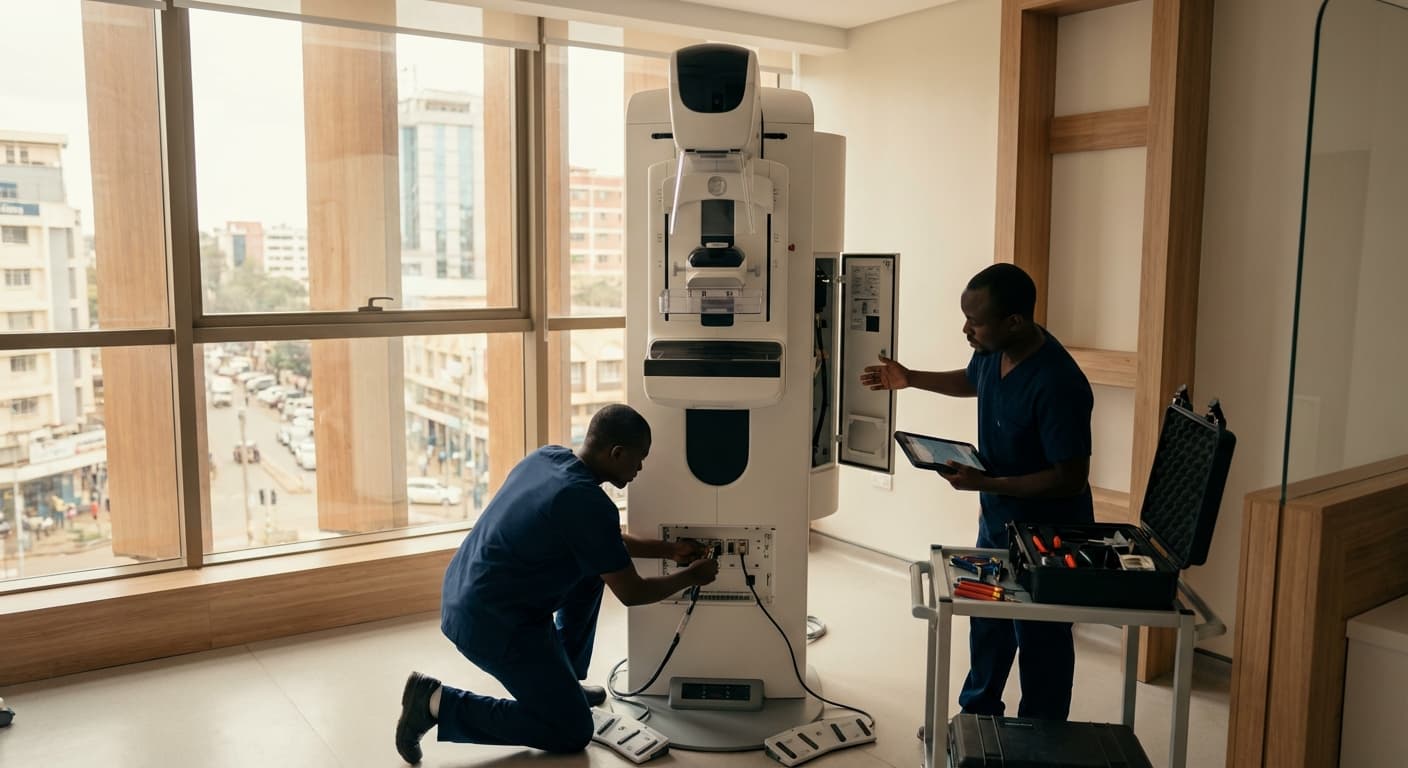
Mammography Installation Service in Malawi
Engineering Excellence & Technical Support
Mammography Installation Service High-standard technical execution following OEM protocols and local regulatory frameworks.
Nationwide Installation Expertise
Our certified technicians offer comprehensive mammography unit installations across all regions of Malawi, ensuring adherence to international standards and local regulations for optimal performance and safety. We manage every step from site assessment to final calibration.
Advanced Equipment Integration
We specialize in the seamless integration of state-of-the-art mammography equipment with existing hospital IT infrastructure, including PACS and RIS systems. Our focus is on delivering reliable, high-throughput imaging solutions tailored to Malawi's healthcare needs.
Rigorous Quality Assurance & Training
Post-installation, we conduct thorough quality assurance checks and provide comprehensive training to your medical staff. This ensures proper operation, maintenance, and image interpretation, empowering healthcare providers to deliver accurate and timely diagnoses for early breast cancer detection.
What Is Mammography Installation Service In Malawi?
Mammography Installation Service in Malawi refers to the specialized process of setting up, calibrating, and commissioning mammography equipment within healthcare facilities across Malawi. This service ensures that X-ray imaging systems designed for breast screening and diagnosis are installed according to manufacturer specifications, regulatory standards, and local health infrastructure requirements. The primary objective is to establish a fully functional and reliable mammography unit capable of producing high-quality diagnostic images for the early detection and management of breast abnormalities.
| Who Needs Mammography Installation Service in Malawi? | Typical Use Cases | ||
|---|---|---|---|
| Public Hospitals: Central, district, and rural hospitals requiring diagnostic imaging capabilities for breast health. | Establishment of new breast imaging departments or screening centers. | Replacement or upgrade of existing mammography equipment. | Expansion of healthcare services to include advanced diagnostic imaging. |
| Private Healthcare Facilities: Clinics and diagnostic centers aiming to offer specialized breast imaging services. | Implementing mammography services for the first time. | Upgrading to newer, more advanced mammography technology (e.g., digital mammography, tomosynthesis). | Ensuring compliance with updated healthcare regulations for imaging equipment. |
| Non-Governmental Organizations (NGOs) and International Aid Organizations: Projects focused on improving women's health and cancer screening programs. | Setting up mobile mammography units or fixed screening sites in underserved areas. | Facilitating large-scale breast cancer screening initiatives. | |
| Ministry of Health and Government Health Agencies: Responsible for overseeing and equipping public healthcare infrastructure. | National mammography program rollouts. | Standardizing imaging equipment across the public health sector. | Ensuring equitable access to diagnostic services. |
Key Components of Mammography Installation Service:
- Site Assessment and Preparation: Evaluating the designated room for structural integrity, radiation shielding, power supply, ventilation, and network connectivity.
- Equipment Delivery and Unpacking: Safely transporting and unboxing the mammography system and associated components.
- Physical Installation: Assembling the mammography unit, including the X-ray tube, detector, compression paddle, and control console.
- Electrical and Network Connectivity: Connecting the equipment to the facility's power grid and, if applicable, to a Picture Archiving and Communication System (PACS) or hospital information system (HIS).
- Radiation Shielding Verification: Ensuring that protective measures (e.g., lead-lined walls, doors) are adequate to prevent radiation leakage.
- System Calibration and Performance Testing: Fine-tuning equipment parameters to achieve optimal image quality and adherence to diagnostic standards. This includes tests for radiation output, focal spot size, beam alignment, and image resolution.
- Quality Assurance (QA) and Quality Control (QC) Setup: Implementing initial QA/QC protocols and training staff on their execution.
- User Training: Providing comprehensive training to radiographers, technologists, and potentially maintenance personnel on the operation, basic troubleshooting, and safety procedures for the new mammography system.
- Documentation and Certification: Providing installation reports, test results, and necessary documentation for regulatory compliance and facility records.
- Post-Installation Support: Offering initial technical assistance and troubleshooting after the equipment is operational.
Who Needs Mammography Installation Service In Malawi?
Installing mammography equipment in Malawi is a crucial undertaking that requires specialized expertise. This service is essential for healthcare facilities aiming to enhance their diagnostic capabilities for breast cancer screening and detection. The need for professional installation is driven by the complexity of the technology, regulatory compliance, and the requirement for optimal performance to ensure accurate patient care. This service is not just about physical placement but also involves calibration, testing, and integration with existing hospital IT infrastructure, ensuring the equipment is fully operational and safe.
| Department/Unit | Key Responsibilities | Why Mammography Installation is Crucial |
|---|---|---|
| Radiology Department | Imaging interpretation, diagnostic procedures, image archiving | Core department for mammography operations, requiring accurate and reliable equipment. |
| Oncology Department | Cancer diagnosis, treatment planning, patient monitoring | Relies on radiology for precise diagnosis and staging of breast cancer. |
| Obstetrics & Gynecology (OB/GYN) Department | Women's health screening, routine check-ups | Often initiates screening referrals and plays a role in follow-up care. |
| Surgical Department (General and Breast Surgeons) | Surgical diagnosis and treatment planning | Needs accurate imaging for pre-operative assessment and surgical guidance. |
| Quality Assurance/Medical Engineering Department | Equipment maintenance, calibration, safety checks | Ensures the installed mammography unit meets all technical and safety standards. |
Target Customers and Departments Requiring Mammography Installation Service in Malawi
- {"title":"Government Hospitals","description":"These are the primary healthcare providers serving the majority of the population. Upgrading or establishing new mammography services in these facilities is vital for widespread public health initiatives."}
- {"title":"Referral Hospitals","description":"Larger hospitals that receive patients from smaller clinics and health centers. They often have the highest volume of complex cases and require advanced diagnostic tools like mammography."}
- {"title":"Private Hospitals and Clinics","description":"These facilities cater to a segment of the population that can afford private healthcare. They often invest in state-of-the-art technology to offer comprehensive services and attract patients."}
- {"title":"Non-Governmental Organizations (NGOs) with Health Programs","description":"NGOs focusing on women's health, cancer awareness, or general healthcare provision may procure and install mammography units as part of their outreach and service delivery."}
- {"title":"Medical Training and Research Institutions","description":"Institutions involved in training medical professionals or conducting research will require functional mammography equipment for educational purposes and clinical studies."}
Mammography Installation Service Process In Malawi
This document outlines the comprehensive workflow for mammography installation services in Malawi, guiding clients from their initial inquiry to the successful execution and handover of the installed equipment. The process is designed to be transparent, efficient, and tailored to the specific needs of healthcare facilities in Malawi.
| Stage | Key Activities | Responsible Party | Typical Duration |
|---|---|---|---|
| Inquiry & Consultation | Initial contact, needs assessment, understanding facility requirements. | Client & Service Provider | 1-3 days |
| Site Assessment & Planning | Physical site evaluation, infrastructure checks, developing installation plan. | Service Provider | 2-5 days |
| Equipment Procurement & Logistics | Sourcing, purchasing, shipping, customs clearance, delivery to site. | Service Provider | Varies (depends on equipment availability and shipping times, can be weeks to months) |
| Pre-Installation Preparations | Facility prepares room, power, networking, obtains permits. | Client | Varies (depends on facility readiness and permit acquisition) |
| On-Site Installation & Configuration | Physical setup, wiring, software installation, system integration. | Service Provider (Installation Team) | 3-7 days |
| Calibration & Quality Assurance | System calibration, image quality checks, radiation safety verification. | Service Provider (Technical Specialists) | 1-2 days |
| Staff Training & Familiarization | Training on operation, software, safety protocols for relevant staff. | Service Provider (Trainers) | 2-3 days |
| Testing & Commissioning | Full system testing, performance validation, client acceptance. | Service Provider & Client | 1-2 days |
| Handover & Documentation | Formal transfer, provision of all manuals and certificates, service agreement finalization. | Service Provider | 1 day |
| Post-Installation Support | Ongoing technical assistance, maintenance, and spare parts availability. | Service Provider | Ongoing |
Mammography Installation Service Process in Malawi: Workflow Breakdown
- Inquiry & Consultation: The process begins with a healthcare facility expressing interest in mammography installation. This triggers an initial consultation to understand their specific requirements, including existing infrastructure, anticipated patient load, budget, and desired equipment specifications.
- Site Assessment & Planning: Following the initial consultation, a thorough site assessment is conducted. This involves evaluating the physical space, power supply, radiation shielding requirements, ventilation, and any necessary structural modifications. Based on this assessment, a detailed installation plan, including timelines, resource allocation, and potential challenges, is developed.
- Equipment Procurement & Logistics: Once the equipment specifications are finalized and approved, the procurement process is initiated. This includes sourcing the mammography unit, any ancillary equipment (e.g., PACS, printers), and necessary accessories. Our team manages all logistics, including shipping, customs clearance, and transportation to the installation site in Malawi.
- Pre-Installation Preparations: Before the arrival of the installation team, the facility must ensure that all pre-installation requirements outlined in the plan are met. This typically includes preparing the designated installation room, ensuring power and networking infrastructure are in place, and obtaining any necessary permits or regulatory approvals from Malawian health authorities.
- On-Site Installation & Configuration: The specialized installation team arrives at the facility to begin the physical installation of the mammography equipment. This involves precise assembly, connection of power and data cables, and integration with existing IT infrastructure. The system is then configured according to the facility's specific protocols and workflow needs.
- Calibration & Quality Assurance: Crucial calibration procedures are performed to ensure the mammography unit meets stringent diagnostic imaging standards. This includes checks on image quality, radiation output, and overall system performance. Rigorous quality assurance testing is conducted to verify that the equipment is functioning optimally and safely.
- Staff Training & Familiarization: Comprehensive training is provided to the facility's radiologists, radiographers, and IT personnel. This training covers the operation of the mammography unit, software usage, basic troubleshooting, and adherence to safety protocols. The goal is to ensure staff are competent and confident in using the new equipment.
- Testing & Commissioning: Following installation and training, the entire system undergoes final testing and commissioning. This involves running simulated diagnostic procedures and verifying that all components work harmoniously. The facility's technical and clinical staff participate in this stage to confirm their satisfaction.
- Handover & Documentation: Upon successful commissioning and client approval, the mammography installation is formally handed over. This includes providing all relevant documentation, such as user manuals, service records, warranties, and calibration certificates. A service agreement for ongoing maintenance and support is also typically finalized at this stage.
- Post-Installation Support: Our commitment extends beyond installation. We offer ongoing technical support, routine maintenance, and access to spare parts to ensure the long-term reliability and performance of the mammography equipment.
Mammography Installation Service Cost In Malawi
The cost of mammography installation services in Malawi can vary significantly due to a multitude of factors. These include the complexity of the chosen mammography unit, the vendor providing the service, the location of the healthcare facility, and any necessary infrastructural modifications. It's crucial for healthcare providers to obtain detailed quotes from multiple reputable suppliers and installers to ensure competitive pricing and understand the full scope of the project. Factors influencing the price include the type of mammography machine (e.g., digital vs. analog, 2D vs. 3D), the need for specialized rooms, radiation shielding, power upgrades, and ongoing maintenance agreements. Installation typically involves not just the physical placement of the equipment but also calibration, testing, and training of personnel.
| Service Component | Estimated Price Range (Malawian Kwacha - MWK) | Notes |
|---|---|---|
| Mammography Unit Purchase (New, Digital) | MWK 50,000,000 - MWK 250,000,000+ | This is a broad estimate and depends heavily on brand, features (e.g., AI capabilities), and whether it's a single or dual-detector system. |
| Installation & Commissioning | MWK 2,000,000 - MWK 10,000,000 | Covers physical setup, calibration, testing, and initial functional checks. May be bundled with the equipment purchase. |
| Infrastructural Modifications (Room preparation, shielding, electrical) | MWK 5,000,000 - MWK 30,000,000+ | Highly variable depending on the existing facility. Radiation shielding is a significant cost factor. |
| User Training | MWK 500,000 - MWK 2,000,000 | Essential for radiographers and technicians to operate the equipment effectively and safely. |
| Extended Warranty/Service Contract (Annual) | MWK 1,000,000 - MWK 5,000,000 | Crucial for ensuring uptime and access to expert technical support. Often a percentage of the equipment cost. |
| Project Management & Consultancy | MWK 1,000,000 - MWK 5,000,000 | If specialized project management is required to oversee the entire installation process. |
Key Pricing Factors for Mammography Installation in Malawi:
- Type of Mammography Equipment (Digital, 3D Tomosynthesis, etc.)
- Vendor and Manufacturer Reputation
- Facility Location (Urban vs. Rural)
- Required Infrastructural Modifications (Room size, shielding, power)
- Included Ancillary Services (Training, calibration, initial maintenance)
- Warranty and Service Level Agreements (SLAs)
- Import Duties and Taxes (if applicable)
Affordable Mammography Installation Service Options
Securing affordable mammography installation services is crucial for healthcare facilities to ensure access to vital diagnostic imaging without breaking the budget. This involves understanding the different types of service packages available and implementing smart cost-saving strategies. Value bundles often combine installation with ongoing maintenance, training, and sometimes even initial calibration, offering a comprehensive solution at a potentially reduced overall cost compared to individual service purchases. Cost-saving strategies can range from negotiating bundled service contracts and exploring refurbished equipment options to understanding the total cost of ownership and leveraging government or vendor-specific discounts.
| Service Component | Typical Cost Range (USD) | Cost-Saving Strategies |
|---|---|---|
| Basic Installation (Mechanical Setup) | $3,000 - $8,000 | Negotiate as part of a larger equipment purchase; compare independent installers. |
| Full Installation (Setup, Calibration, Testing) | $5,000 - $15,000 | Bundle with a service contract; inquire about phased calibration options. |
| Initial Operator Training | $1,000 - $5,000 | Evaluate in-house training; leverage vendor deals for bundled training. |
| Extended Service Contract (1-3 Years) | $8,000 - $25,000+ | Negotiate discount for multi-year commitment; compare comprehensive vs. parts-only coverage. |
| Refurbished Mammography Unit Purchase | $20,000 - $100,000+ | Often includes installation; compare warranty and service plans on refurbished units. |
Key Considerations for Affordable Mammography Installation
- Understanding Service Tiers: Installation services can be basic (mechanical setup only) or comprehensive (including calibration, testing, and initial operator training).
- Value Bundles Explained: These packages typically integrate multiple services (installation, maintenance, software updates, training) into a single contract, aiming for cost efficiency and simplified vendor management.
- Cost-Saving Strategies:
- Negotiate Bundled Contracts: Inquire about discounts for combining installation with long-term service agreements.
- Explore Refurbished Equipment: Consider certified pre-owned mammography units, which can significantly reduce upfront costs, often including installation as part of the package.
- Compare Vendor Quotes: Obtain detailed quotes from multiple reputable installation and service providers.
- Phased Installation: If budget is a major constraint, discuss the possibility of a phased installation with basic setup followed by advanced calibration at a later date.
- In-house Training vs. Vendor Training: Evaluate the cost-effectiveness of vendor-provided training versus training your own staff on basic installation oversight or maintenance.
- Understand Total Cost of Ownership (TCO): Beyond the initial installation fee, factor in ongoing maintenance, parts, and potential upgrade costs.
- Leverage Vendor Programs: Some manufacturers offer special financing or bundled installation deals for their equipment.
- Government & Grant Opportunities: Investigate if your facility qualifies for any grants or government programs that subsidize medical equipment installation.
Verified Providers In Malawi
In Malawi, ensuring you are accessing healthcare services from Verified Providers is paramount. This not only guarantees the quality and legitimacy of the care you receive but also protects you from fraudulent or substandard practices. Franance Health stands out as a beacon of trust and excellence in this regard. Their rigorous credentials and commitment to ethical healthcare delivery make them the best choice for individuals seeking reliable medical services in Malawi. This document outlines why Franance Health's verified status and operational standards are unparalleled.
| Verification Aspect | Franance Health's Approach | Benefit to Patients |
|---|---|---|
| Licensing and Registration | Mandatory verification of all medical licenses and registrations with relevant Malawian authorities. | Ensures providers are legally qualified to practice. |
| Professional Qualifications | Scrutiny of educational background, specialized training, and professional affiliations. | Guarantees access to experienced and skilled healthcare professionals. |
| Ethical Standards and Conduct | Adherence to a strict code of ethics, with mechanisms for reporting and addressing misconduct. | Promotes patient safety, trust, and respectful treatment. |
| Facility Standards | Evaluation of healthcare facilities for hygiene, equipment, and overall infrastructure. | Ensures a safe and conducive environment for treatment. |
| Patient Feedback Mechanisms | Active collection and analysis of patient feedback to maintain service quality. | Allows for continuous improvement and responsiveness to patient needs. |
Why Franance Health is the Best Choice for Verified Healthcare in Malawi:
- Unwavering Commitment to Verification: Franance Health goes above and beyond to ensure all its partner providers are not only licensed but also meet stringent quality and ethical standards. This means every practitioner you interact with through Franance Health has undergone thorough vetting.
- Accredited Partnerships: They actively seek and maintain partnerships with institutions and healthcare professionals that hold recognized accreditations and certifications, ensuring adherence to national and international best practices.
- Patient-Centric Approach: Verification at Franance Health isn't just about credentials; it's about ensuring providers offer compassionate, effective, and accessible care. Their focus is on the patient's well-being and positive health outcomes.
- Transparency and Accountability: Franance Health operates with a high degree of transparency. Patients can be confident about the qualifications and experience of the providers recommended, fostering trust and accountability within the healthcare system.
- Comprehensive Service Offerings: Through their network of verified providers, Franance Health offers a wide spectrum of medical services, covering general health, specialized treatments, and preventative care, all delivered with the highest level of professionalism.
- Continuous Quality Assurance: Franance Health doesn't rest on its laurels. They implement ongoing monitoring and evaluation processes to ensure their verified providers consistently maintain their high standards of care.
Scope Of Work For Mammography Installation Service
This Scope of Work (SOW) outlines the requirements for the installation of a new mammography system. It details the technical deliverables, standard specifications, and the responsibilities of both the vendor and the client. The objective is to ensure a safe, efficient, and compliant installation that integrates seamlessly with existing hospital infrastructure and workflows.
| Deliverable | Description | Standard Specifications | Acceptance Criteria |
|---|---|---|---|
| Site Survey Report | Detailed assessment of the installation site, including dimensions, power requirements, environmental conditions, and network connectivity. | Compliance with manufacturer's site planning guide; identification of any potential installation impediments. | Signed acceptance by both client and vendor confirming site readiness. |
| Installation Plan | A comprehensive plan detailing the installation schedule, resource allocation, dependencies, and risk mitigation strategies. | Adherence to manufacturer's installation procedures; inclusion of all necessary safety protocols. | Client approval of the installation plan prior to commencement. |
| Mammography System Installation | Physical installation of the mammography unit, including all components, detectors, workstations, and associated peripherals. | Compliance with manufacturer's installation manual; proper alignment and secure mounting of all components. | Successful physical assembly and visual inspection, free from damage. |
| Electrical and Network Cabling | Installation and termination of all required electrical power and network (LAN/WAN) cabling according to industry standards and manufacturer specifications. | IEEE 802.3 standards for networking; adherence to local electrical codes; proper shielding and grounding. | Successful network connectivity tests; power supply within specified voltage and frequency tolerances. |
| Software Installation and Configuration | Installation and configuration of the mammography system software, PACS integration software, and any necessary drivers. | Latest stable version of system software; correct configuration of DICOM parameters for PACS integration. | Successful boot-up and functional verification of all software modules; successful DICOM connectivity test with PACS. |
| System Testing and Calibration | Performance of comprehensive system tests, including image quality assessments, dose measurements, and calibration procedures. | All tests performed according to manufacturer's QA protocols; calibration traceable to national standards. | Achieve acceptance image quality scores; documented calibration results meeting manufacturer specifications. |
| User Training | Training for radiographers, technologists, and relevant IT personnel on the operation, basic maintenance, and troubleshooting of the mammography system. | Training delivered by certified vendor personnel; curriculum covers all system functions and safety features. | Attendance records; post-training competency assessment. |
| As-Built Drawings and Documentation | Provision of updated site drawings reflecting the final installation, including cable routes and equipment placement, along with the full system documentation package. | Accurate representation of the installed system; includes user manuals, service manuals, and warranty information. | Client review and sign-off on all provided documentation. |
| Final Acceptance Certificate | Formal document signed by both parties signifying successful completion of all installation and testing activities as per the SOW. | Confirmation that all deliverables have been met and all acceptance criteria satisfied. | Signed and dated certificate by authorized representatives of both the client and the vendor. |
Key Project Phases and Activities
- Site Preparation and Readiness Assessment
- Equipment Delivery and Unpacking
- System Installation and Cabling
- Electrical and Network Integration
- System Testing and Calibration
- User Training and Handover
- Post-Installation Support and Documentation
Service Level Agreement For Mammography Installation Service
This Service Level Agreement (SLA) outlines the guaranteed response times and uptime for Mammography Installation Services provided by [Your Company Name]. This agreement is designed to ensure the efficient and reliable deployment of mammography equipment, minimizing disruption to healthcare providers.
| Service Component | Response Time Guarantee (Business Hours) | Uptime Guarantee | Notes |
|---|---|---|---|
| Initial Contact/Scheduling Confirmation | Within 4 business hours of request confirmation | N/A | Applies to confirmation of scheduled installation date and time. |
| On-Site Technician Arrival (Scheduled Installation) | Within 30 minutes of scheduled arrival time | N/A | Assumes no unforeseen external delays (e.g., extreme weather, site access issues). |
| Critical Installation Issue Resolution (On-Site) | Within 2 business hours of identification | N/A | For issues preventing the core installation process from proceeding. |
| Non-Critical Installation Issue Resolution (On-Site) | Within 4 business hours of identification | N/A | For issues that do not halt the primary installation. |
| Post-Installation Verification Completion | Within 1 business hour of final testing | N/A | Ensures all functional checks are completed. |
| System Availability (Post-Successful Installation) | N/A | 99.5% during operational hours (defined as [Specify Hours, e.g., Monday-Friday, 8 AM - 6 PM]) | This guarantee pertains to the operational readiness of the installed system. Downtime for routine maintenance or upgrades excluded. |
Key Service Components
- Installation Scheduling: Timely booking and confirmation of installation appointments.
- On-Site Installation: Professional and efficient installation of mammography equipment by certified technicians.
- System Testing & Calibration: Comprehensive testing and calibration to ensure optimal performance and diagnostic accuracy.
- Technician Support: Availability of technical support for troubleshooting and issue resolution during the installation process.
- Documentation & Training: Provision of necessary documentation and basic operational training for site personnel.
- Post-Installation Verification: Confirmation of successful installation and functionality.
- Escalation Procedures: Clear steps for escalating critical issues.
Frequently Asked Questions

Ready when you are
Let's scope your Mammography Installation Service in Malawi project in Malawi.

Scaling healthcare logistics and technical systems across the entire continent.