
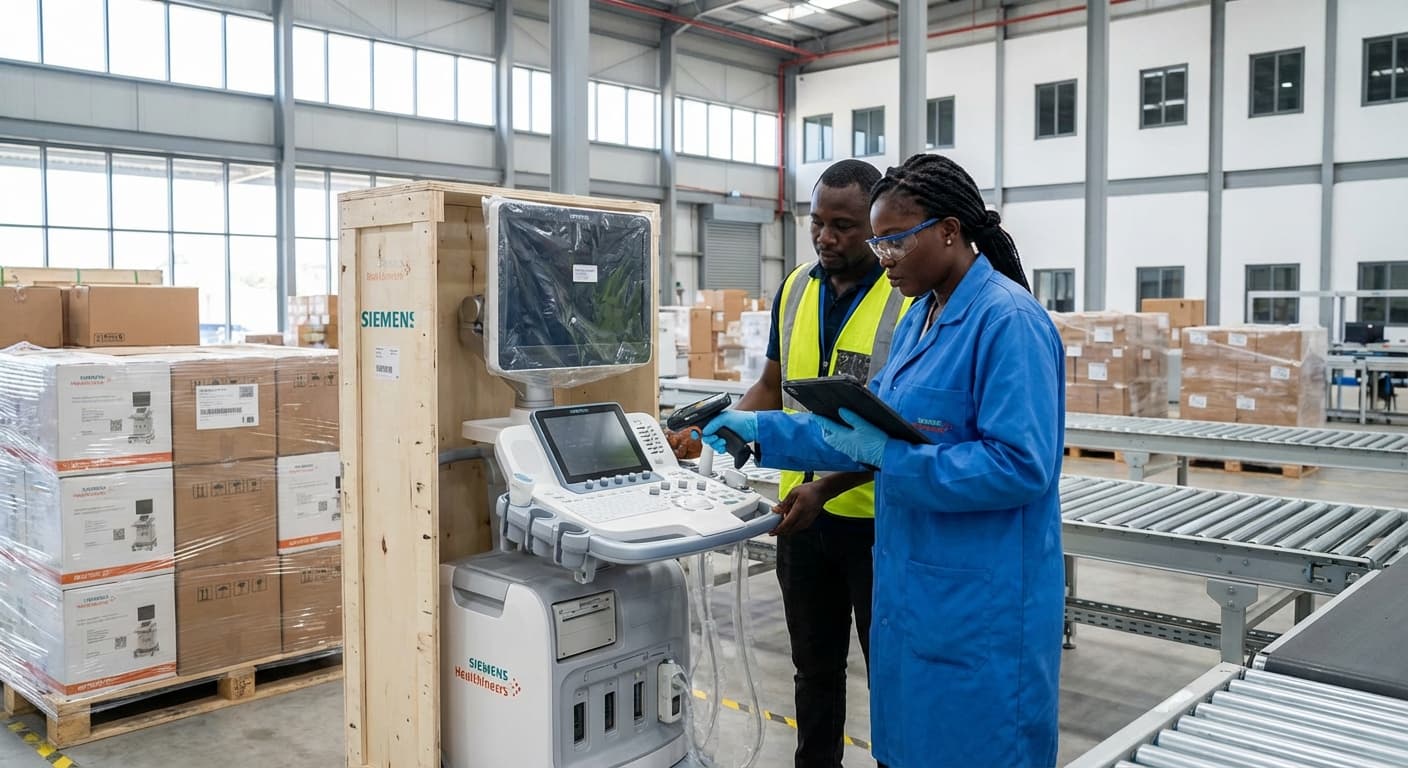
Warehouse Receiving Inspection Service (Medical Equipment) in Malawi
Engineering Excellence & Technical Support
Warehouse Receiving Inspection Service (Medical Equipment) High-standard technical execution following OEM protocols and local regulatory frameworks.
Advanced Barcode & Serial Number Verification
Our service employs state-of-the-art barcode scanners and optical character recognition (OCR) technology to ensure 100% accuracy in verifying equipment serial numbers and lot information against purchase orders and manifest documents. This minimizes the risk of misidentification and counterfeit products entering the Malawian healthcare supply chain.
Environmental Condition Monitoring
We integrate real-time temperature and humidity logging throughout the receiving process for sensitive medical equipment. This ensures that devices, particularly those requiring specific storage conditions, have not been compromised during transit or initial handling, safeguarding their integrity and efficacy upon arrival in Malawi.
Comprehensive Visual & Functional Inspection Suite
Our trained technicians conduct thorough visual inspections for any signs of damage, tampering, or defects. Where applicable, preliminary functional checks are performed to verify basic operational parameters, providing immediate feedback on equipment readiness and identifying any issues that require prompt attention or corrective action within Malawi's healthcare infrastructure.
What Is Warehouse Receiving Inspection Service (Medical Equipment) In Malawi?
Warehouse Receiving Inspection Service (Medical Equipment) in Malawi refers to a formalized quality assurance process conducted upon the arrival of medical equipment at a designated warehouse or storage facility within Malawi. This service aims to verify that the received medical equipment conforms to established specifications, quality standards, regulatory requirements, and contractual agreements prior to its acceptance into inventory. The inspection process is critical for ensuring the safety, efficacy, and proper functioning of medical devices and supplies intended for healthcare delivery within the Malawian context. It serves as a crucial gatekeeping mechanism to prevent the introduction of substandard, damaged, or non-compliant equipment into the healthcare supply chain, thereby safeguarding patient well-being and optimizing resource allocation.
| Stakeholder Group | Requirement for Service | Typical Use Cases |
|---|---|---|
| Ministry of Health (Malawi) | Ensuring the quality, safety, and regulatory compliance of all medical equipment procured by or for public health facilities. | Inspection of newly acquired medical devices, pharmaceuticals, and consumables for national health programs, emergency procurements, and donor-funded projects. |
| Public Hospitals and Health Facilities | Validating that procured medical equipment meets specified standards and is fit for purpose before deployment. | Receiving inspections for equipment purchased through tenders, direct procurement, or through third-party logistics providers for hospital wards, operating theaters, and diagnostic units. |
| Non-Governmental Organizations (NGOs) and International Aid Agencies | Verifying the quality and suitability of medical equipment donated or procured for humanitarian health initiatives. | Inspection of medical supplies and equipment intended for distribution to remote clinics, community health centers, and disaster relief operations. |
| Private Healthcare Providers (Hospitals, Clinics, Pharmacies) | Confirming the integrity and compliance of medical equipment purchased from local or international suppliers. | Receiving new diagnostic equipment, surgical instruments, and laboratory consumables for private sector healthcare facilities. |
| Medical Equipment Manufacturers and Suppliers (Operating in Malawi) | Ensuring that their supplied products meet contractual obligations and regulatory requirements upon delivery to Malawian clients. | Pre-shipment inspections (by client) or receiving inspections (by recipient) of medical devices and equipment delivered to Malawian healthcare entities. |
| Warehouse and Logistics Providers (handling Medical Equipment) | Fulfilling contractual obligations to clients by ensuring proper quality control at the point of receipt. | Providing a dedicated inspection service as part of their third-party logistics (3PL) offering for medical equipment stored and distributed within Malawi. |
Key Components of Warehouse Receiving Inspection Service for Medical Equipment in Malawi:
- Identity Verification: Confirmation that the received equipment matches the order, including make, model, serial numbers, and specifications as per purchase orders or requisitions.
- Condition Assessment: Visual and functional inspection to identify any signs of damage incurred during transit, manufacturing defects, or degradation.
- Documentation Review: Verification of accompanying documentation, such as certificates of origin, compliance certificates, user manuals, warranty information, and import permits.
- Quantity Verification: Cross-referencing received items against shipping manifests and purchase orders to ensure accurate quantities.
- Compliance Checks: Ensuring that the equipment meets Malawian regulatory standards, including those set by the Ministry of Health and relevant medical regulatory bodies (e.g., Malawi Health Sciences Council).
- Functional Testing (where applicable): Basic operational checks to confirm the equipment's immediate functionality, if feasible at the receiving stage.
- Traceability Establishment: Assigning unique internal identifiers and recording key data for inventory management and future recall purposes.
- Reporting: Generation of detailed inspection reports documenting findings, discrepancies, and recommendations (e.g., acceptance, rejection, re-inspection).
- Quarantine and Segregation: Procedures for isolating non-conforming items pending further investigation or disposition.
Who Needs Warehouse Receiving Inspection Service (Medical Equipment) In Malawi?
Warehouse Receiving Inspection Service for Medical Equipment in Malawi is a critical process designed to ensure the quality, safety, and compliance of medical devices and supplies upon arrival at a warehouse. This service verifies that the received equipment matches the order, is free from damage, functions as intended, and meets all relevant regulatory standards before it is stored and distributed. This meticulous approach is essential for maintaining the integrity of the medical supply chain, preventing the introduction of faulty or substandard equipment, and ultimately safeguarding patient care.
| Target Customer | Key Departments Involved |
|---|---|
| Hospitals and Healthcare Facilities | Procurement/Purchasing Department, Biomedical Engineering Department, Pharmacy, Central Sterile Supply Department (CSSD), Stores/Warehouse Management |
| Medical Equipment Suppliers and Distributors | Quality Assurance (QA) Department, Warehouse Management, Logistics Department, Sales and Operations |
| Government Health Ministries and Agencies | Procurement and Logistics Unit, Quality Assurance Directorate, Medical Stores Department, Regulatory Affairs |
| Non-Governmental Organizations (NGOs) involved in healthcare | Logistics and Procurement Team, Program Management, Monitoring and Evaluation (M&E) |
| Research Institutions and Laboratories | Laboratory Management, Procurement Officer, Technical Staff |
| Pharmaceutical Companies with medical device divisions | Quality Control (QC) Department, Supply Chain Management, Regulatory Affairs, Warehouse Operations |
| Third-Party Logistics (3PL) Providers handling medical equipment | Operations Management, Quality Control, Warehouse Staff, Client Account Management |
Who Needs Warehouse Receiving Inspection Service (Medical Equipment) in Malawi?
- Hospitals and Healthcare Facilities
- Medical Equipment Suppliers and Distributors
- Government Health Ministries and Agencies
- Non-Governmental Organizations (NGOs) involved in healthcare
- Research Institutions and Laboratories
- Pharmaceutical Companies with medical device divisions
- Third-Party Logistics (3PL) Providers handling medical equipment
Warehouse Receiving Inspection Service (Medical Equipment) Process In Malawi
This document outlines the typical workflow for a Warehouse Receiving Inspection Service for medical equipment in Malawi, from the initial inquiry to the final execution of the inspection.
| Stage | Description | Key Activities | Responsible Parties | Deliverables/Outcomes |
|---|---|---|---|---|
| Inquiry & Requirement Gathering | The client (e.g., Ministry of Health, NGO, hospital) expresses interest in the inspection service for incoming medical equipment. | Client contacts inspection service provider. Provider seeks details on the type and quantity of equipment, origin, shipment specifics, required inspection standards, and desired timeline. | Client, Inspection Service Provider (Sales/Business Development) | Understanding of client's needs, initial scope of work. |
| Quotation & Agreement | The inspection service provider prepares and submits a formal proposal outlining the scope, methodology, timeline, and cost. | Provider assesses complexity and resources. Develops detailed quotation. Client reviews quotation and negotiates terms. Upon agreement, a formal contract or service agreement is signed. | Inspection Service Provider (Sales/Operations), Client (Procurement/Logistics) | Formal quotation, signed service agreement/contract. |
| Pre-Inspection Planning | Detailed planning to ensure the inspection is efficient and effective. | Inspector(s) assigned. Review of equipment specifications, relevant standards (e.g., WHO, local regulations), and client's specific requirements. Coordination with the warehouse and client regarding access, personnel, and equipment availability. Preparation of checklists and reporting templates. | Inspection Service Provider (Operations/Lead Inspector), Client (Warehouse Manager) | Inspection plan, checklists, trained inspectors, scheduled inspection date. |
| On-Site Inspection Execution | The physical inspection of the medical equipment at the receiving warehouse. | Arrival at the warehouse. Verification of shipment contents against shipping documents (e.g., Bill of Lading, packing list). Visual inspection for damage, defects, and completeness. Verification of correct model, serial numbers, and accessories. Functional testing (if specified and feasible). Sampling and testing (if required). Documentation of findings through photographs and notes. | Inspection Service Provider (Inspector(s)), Client (Warehouse Staff) | Documented inspection findings, photographic evidence, initial observations. |
| Reporting & Documentation | Compilation and submission of a comprehensive inspection report to the client. | Inspector(s) compile all data, findings, and evidence. Report is reviewed and finalized by the inspection provider. Report includes details of equipment inspected, conformity to specifications, any deviations or damages, recommendations, and a clear conclusion. Report is submitted to the client within the agreed timeframe. | Inspection Service Provider (Inspector(s)/Reporting Department), Client | Formal Inspection Report, supporting documentation (photos, checklists). |
| Follow-up & Closure | Addressing any queries from the client and formally closing the service engagement. | Client reviews the report and may have follow-up questions. Provider addresses queries and provides clarifications. If corrective actions are recommended, the provider may offer support or further inspection. Once the client is satisfied, the service is considered complete. Invoicing and payment processing. | Inspection Service Provider (Operations/Client Relations), Client (Procurement/Logistics) | Resolved queries, final payment, client satisfaction, completion of service. |
Key Stages in the Warehouse Receiving Inspection Process:
- Inquiry & Requirement Gathering
- Quotation & Agreement
- Pre-Inspection Planning
- On-Site Inspection Execution
- Reporting & Documentation
- Follow-up & Closure
Warehouse Receiving Inspection Service (Medical Equipment) Cost In Malawi
The cost of warehouse receiving inspection services for medical equipment in Malawi can vary significantly based on several key factors. These services are crucial for ensuring the quality, integrity, and compliance of medical devices upon arrival at a warehouse, preventing potential issues down the line. Understanding these pricing determinants is essential for accurate budgeting and vendor selection.
| Inspection Type/Scope | Estimated Cost Range (MWK) - Per Unit/Shipment | Notes |
|---|---|---|
| Basic Visual & Documentation Check (Low Complexity Equipment) | 5,000 - 15,000 MWK | Covers simple items, good for high volume, routine deliveries. |
| Standard Inspection (Moderate Complexity Equipment) | 15,000 - 40,000 MWK | Includes basic functional checks, more detailed documentation review. |
| Comprehensive Inspection (High Complexity Equipment) | 40,000 - 150,000+ MWK | For specialized devices requiring technical expertise, possibly partial functional tests. Price is highly variable. |
| Per Shipment Fee (for smaller, infrequent deliveries) | 25,000 - 75,000 MWK | May apply if volume is too low for per-unit pricing to be viable for the provider. |
| Urgent/Expedited Service Surcharge | +25% - +50% of base cost | Applied on top of the standard inspection fee for quick turnaround. |
| Travel Surcharge (for remote locations) | Variable (e.g., 10,000 - 30,000 MWK) | Depends on distance and logistics. Often negotiated separately. |
Key Pricing Factors for Warehouse Receiving Inspection Services (Medical Equipment) in Malawi:
- {"title":"Scope of Inspection","description":"The depth and breadth of the inspection are primary drivers of cost. This includes: \n* Visual inspection: Checking for external damage, correct labeling, and packaging integrity.\n* Documentation review: Verifying purchase orders, invoices, packing lists, certificates of origin, and other required paperwork.\n* Functional testing (basic): For some equipment, basic operational checks might be included.\n* Quantity verification: Confirming the number of units received against the documentation.\n* Brand/Model Specific Checks: Specialized checks for particular medical equipment can increase complexity and cost."}
- {"title":"Volume and Frequency of Shipments","description":"Larger volumes of equipment or more frequent inspections often lead to economies of scale, potentially resulting in lower per-unit costs for the service provider. Conversely, infrequent, small shipments might incur higher per-item charges due to fixed overheads for the inspector."}
- {"title":"Type and Complexity of Medical Equipment","description":"Inspecting simple medical supplies (e.g., gloves, bandages) will be less time-consuming and costly than inspecting complex medical devices (e.g., MRI machines, ventilators). The technical expertise required, specialized tools, and time spent on each item will directly influence the price."}
- {"title":"Location of the Warehouse","description":"Geographical location within Malawi can impact costs due to travel time and expenses for inspectors. Warehouses located in major cities like Lilongwe or Blantyre may have more competitive pricing due to a higher concentration of service providers, while remote locations could incur additional travel surcharges."}
- {"title":"Turnaround Time (TAT) / Urgency","description":"Expedited inspection services required within a short timeframe will generally command a premium price compared to standard turnaround times. This is due to the need for prioritizing resources and potentially re-allocating personnel."}
- {"title":"Service Provider's Reputation and Expertise","description":"Established inspection firms with a strong track record, certified inspectors, and a comprehensive understanding of medical equipment regulations and standards will typically charge higher rates. This premium reflects the reliability and quality of their services."}
- {"title":"Additional Services","description":"Costs can increase if the service includes additional features such as: \n* *Sample testing (laboratory).\n *Calibration verification.\n *Installation supervision.\n *Regulatory compliance checks (e.g., specific Malawian health regulations).\n **Detailed reporting and digital documentation."}
- {"title":"Contractual Agreements","description":"Long-term contracts or service level agreements (SLAs) can often secure more favorable pricing due to guaranteed business for the inspection service provider."}
Affordable Warehouse Receiving Inspection Service (Medical Equipment) Options
Finding an affordable warehouse receiving inspection service for medical equipment is crucial for ensuring compliance, patient safety, and efficient inventory management. This service involves a thorough examination of incoming medical equipment to verify its condition, specifications, and compliance with regulatory standards before it's accepted into your facility's inventory. We'll explore various options, including value bundles and cost-saving strategies.
| Service Offering | Description | Potential Value Bundle Components | Cost-Saving Strategies |
|---|---|---|---|
| Basic Receiving Inspection | Visual inspection for external damage, verification of documentation (PO, packing slip), basic identification check (model/serial number). | Limited to a set number of items per shipment or per inspection. | Focus on high-volume, low-risk equipment for basic checks. Negotiate per-item rates for high volumes. |
| Standard Receiving Inspection | Includes basic inspection plus functional testing (if applicable and non-invasive), verification of accessories and components, and initial documentation review against specifications. | Includes pre-defined checklists for common equipment types. Integrates with your existing inventory management system (IMS). | Standardize inspection procedures to reduce variability. Bundle inspections for multiple shipments from the same vendor or delivery day. |
| Comprehensive Receiving Inspection | Includes standard inspection plus detailed functional testing, calibration verification (where applicable), assessment of packaging integrity, and detailed documentation audit against purchase orders and manufacturer specifications. | Includes full traceability reporting, defect categorization, and photographic evidence. On-site inspection services for remote locations. | Long-term contracts with discounted rates. Prioritize comprehensive inspections for high-value or critical equipment. Outsource to specialized third-party providers for specialized equipment. |
| Value-Added Bundles (Example 1: 'Starter Kit') | Combines basic receiving inspection with basic inventory data entry and initial asset tagging. | Ideal for smaller organizations or those starting to implement formal receiving processes. | Leverage technology for automated data capture (e.g., barcode scanners). |
| Value-Added Bundles (Example 2: 'Compliance Focus') | Bundles standard receiving inspection with basic regulatory compliance checks and initial documentation archiving. | Designed for organizations with strict compliance requirements. | Batch processing of inspections for efficiency. |
| Value-Added Bundles (Example 3: 'Full Service') | Integrates comprehensive receiving inspection with detailed reporting, preliminary calibration checks (if specified), and direct integration with your IMS for immediate inventory updates. | A holistic solution for large healthcare systems or those with complex supply chains. | Negotiate tiered pricing based on volume and service level agreements (SLAs). |
Key Benefits of Warehouse Receiving Inspection for Medical Equipment
- Ensures compliance with regulatory bodies (e.g., FDA, ISO).
- Prevents damaged or non-compliant equipment from entering inventory, avoiding costly returns or replacements.
- Verifies correct model, serial number, and configuration against purchase orders.
- Identifies potential defects or damage incurred during shipping.
- Supports accurate inventory records and financial reconciliation.
- Enhances patient safety by ensuring only safe and functional equipment is deployed.
Verified Providers In Malawi
In Malawi's healthcare landscape, identifying trustworthy and qualified medical providers is paramount for individuals seeking reliable health services. Franance Health stands out as a leading platform dedicated to connecting patients with verified and credentialed healthcare professionals. This commitment to quality assurance ensures that users can access care with confidence, knowing they are engaging with practitioners who meet rigorous standards.
| Credential | Verification Step | Importance for Patients |
|---|---|---|
| Medical License | Confirmation with the Medical Council of Malawi (or equivalent body). | Ensures the provider is legally authorized to practice medicine. |
| Educational Qualifications | Validation of degrees and certifications from recognized institutions. | Confirms the provider has received the necessary academic training. |
| Professional Accreditations | Checking for membership in relevant professional medical associations. | Indicates adherence to professional standards and ongoing professional development. |
| Work Experience | Review of previous employment and practice history. | Provides insight into the provider's practical experience and expertise. |
| Background Checks | May include checks for disciplinary actions or malpractice claims. | Further enhances patient safety and trust. |
Why Franance Health Providers are the Best Choice in Malawi:
- Rigorous Verification Process: Franance Health implements a multi-stage credentialing system that thoroughly vets each provider. This includes verifying medical licenses, educational qualifications, professional accreditations, and good standing within their respective medical bodies.
- Commitment to Patient Safety: By prioritizing verified providers, Franance Health places patient safety at the forefront. This ensures that individuals receive care from competent and ethically practicing medical professionals, minimizing risks associated with unqualified practitioners.
- Access to Specialized Expertise: The platform aims to offer a diverse range of verified specialists across various medical disciplines. This allows patients to find the right expertise for their specific health needs, from general practitioners to surgeons and consultants.
- Transparency and Trust: Franance Health fosters transparency by providing detailed profiles of their verified providers. This includes information on their qualifications, experience, and areas of specialization, enabling informed decision-making for patients.
- Enhanced Patient Experience: The ease of finding and booking appointments with credentialed doctors through Franance Health simplifies the healthcare journey. This reduces the stress and uncertainty often associated with searching for reliable medical care.
- Contribution to Healthcare Quality: By promoting and highlighting verified providers, Franance Health contributes to raising the overall standard of healthcare delivery in Malawi, encouraging best practices and accountability within the medical community.
Scope Of Work For Warehouse Receiving Inspection Service (Medical Equipment)
This Scope of Work (SOW) defines the services to be provided for the inspection of incoming medical equipment at the designated warehouse facility. The objective is to ensure that all received medical equipment meets the specified technical standards, quality requirements, and contractual obligations before being accepted into inventory.
| Technical Deliverable | Description | Standard Specification / Requirement | Acceptance Criteria |
|---|---|---|---|
| Inspection Report | Comprehensive report detailing the results of each inspection, including visual and technical findings, photographs of any defects, and recommended actions. | ISO 9001:2015 Quality Management System, internal SOPs for inspection. | Report submitted within 24 hours of completion of inspection for each shipment. All required fields completed accurately. Findings clearly documented with supporting evidence. |
| Discrepancy Notification | Formal notification of any identified discrepancies between received goods and order documentation or technical specifications. | Established communication protocols with Procurement and Logistics departments. | Notification submitted within 4 hours of discovery of a discrepancy. Includes item number, quantity, nature of discrepancy, and supporting evidence. |
| Certificate of Conformance (if applicable) | Documentation from the manufacturer verifying that the equipment meets all specified standards and requirements. | Manufacturer's quality certifications, product specifications. | Certificate provided with each shipment. Verifies compliance with stated specifications. |
| Visual Inspection Checklist | A standardized checklist used to document the results of visual inspections, covering aspects like packaging integrity, labeling, physical damage, and completeness of accessories. | Manufacturer's product specifications, industry best practices for medical equipment handling. | Checklist completed accurately and signed by the inspector. All items checked as per the checklist. |
| Technical Performance Verification | Testing and verification of key functional parameters of the medical equipment as per manufacturer's specifications and relevant medical device regulations. | Manufacturer's operating manuals, relevant medical device standards (e.g., IEC 60601 series), FDA regulations (if applicable). | All critical performance parameters tested and verified to be within specified tolerances. Results documented with specific readings. |
| Calibration Status Verification | Confirmation that the equipment requiring calibration has a valid calibration certificate and is within its calibration period. | Manufacturer's specifications, ISO/IEC 17025 accredited calibration laboratories. | Valid calibration certificate present and within the specified due date. Certificate details match equipment serial number. |
| Lot/Serial Number Traceability | Verification and recording of lot numbers and serial numbers for all received equipment to ensure traceability. | Purchase order, packing list, manufacturer's documentation. | All lot/serial numbers accurately recorded and match provided documentation. No missing or duplicate entries. |
Key Activities and Responsibilities
- Receipt and verification of incoming medical equipment shipments against purchase orders and packing lists.
- Performing visual inspections to identify any physical damage, defects, or cosmetic issues.
- Conducting technical inspections to verify functionality, performance, and adherence to technical specifications.
- Documenting all inspection findings, including any discrepancies, damages, or non-conformities.
- Initiating corrective actions for identified issues in coordination with relevant stakeholders.
- Maintaining accurate records of all inspection activities and results.
- Ensuring compliance with all relevant regulatory standards and internal quality procedures.
Service Level Agreement For Warehouse Receiving Inspection Service (Medical Equipment)
This Service Level Agreement (SLA) outlines the performance standards for Warehouse Receiving Inspection Service for Medical Equipment. It defines the response times and uptime guarantees provided by [Service Provider Name] (hereinafter referred to as "Provider") to [Client Name] (hereinafter referred to as "Client"). This SLA aims to ensure the efficient and reliable inspection of incoming medical equipment, maintaining data integrity and supporting regulatory compliance.
| Service Component | Response Time Guarantee | Uptime Guarantee | Measurement & Reporting |
|---|---|---|---|
| Initial Notification of Incoming Shipment | Within 1 hour of notification from Client (via agreed-upon communication channel). | N/A (This is a notification-based service, not continuous operation.) | Provider logs notification receipt time. Client may independently verify. |
| Commencement of Inspection (for standard shipments) | Within 4 business hours of shipment arrival at the designated receiving area. | 99.5% availability of inspection personnel and resources during Client's standard business hours (defined as [Start Time] to [End Time], [Days of Week]). | Provider logs inspection start time. Uptime tracked via automated system logs and periodic manual checks. Monthly reports will detail availability. |
| Completion of Inspection (for standard shipments) | Within 8 business hours of commencement of inspection, or by end of Client's business day, whichever is later. | N/A (Time-bound service delivery, not continuous uptime.) | Provider logs inspection completion time. Client may independently verify. |
| Reporting of Inspection Results | Within 2 business hours of inspection completion. | N/A (Time-bound service delivery, not continuous uptime.) | Provider timestamps and archives all inspection reports. Reports are delivered via [Agreed-upon method: e.g., secure portal, email]. |
| Handling of Expedited/Urgent Shipments | Upon mutual agreement between Client and Provider, with response times to be specifically defined in a separate amendment or work order. | N/A (Specific arrangements required.) | Defined on a case-by-case basis for each expedited request. |
| System Availability (for reporting/documentation portal, if applicable) | N/A | 99.9% availability of the Provider's inspection reporting portal during Client's standard business hours. | Uptime monitored via third-party tools. Monthly reports will detail availability and any planned/unplanned downtime. |
Scope of Service
- Inspection of all inbound medical equipment shipments at the designated warehouse facility.
- Verification of received quantities against purchase orders and packing lists.
- Visual inspection for damage, defects, and compliance with packaging standards.
- Identification and segregation of non-conforming items.
- Documentation of inspection results, including photographic evidence where necessary.
- Reporting of inspection outcomes to designated Client personnel.
Frequently Asked Questions

Ready when you are
Let's scope your Warehouse Receiving Inspection Service (Medical Equipment) in Malawi project in Malawi.

Scaling healthcare logistics and technical systems across the entire continent.