
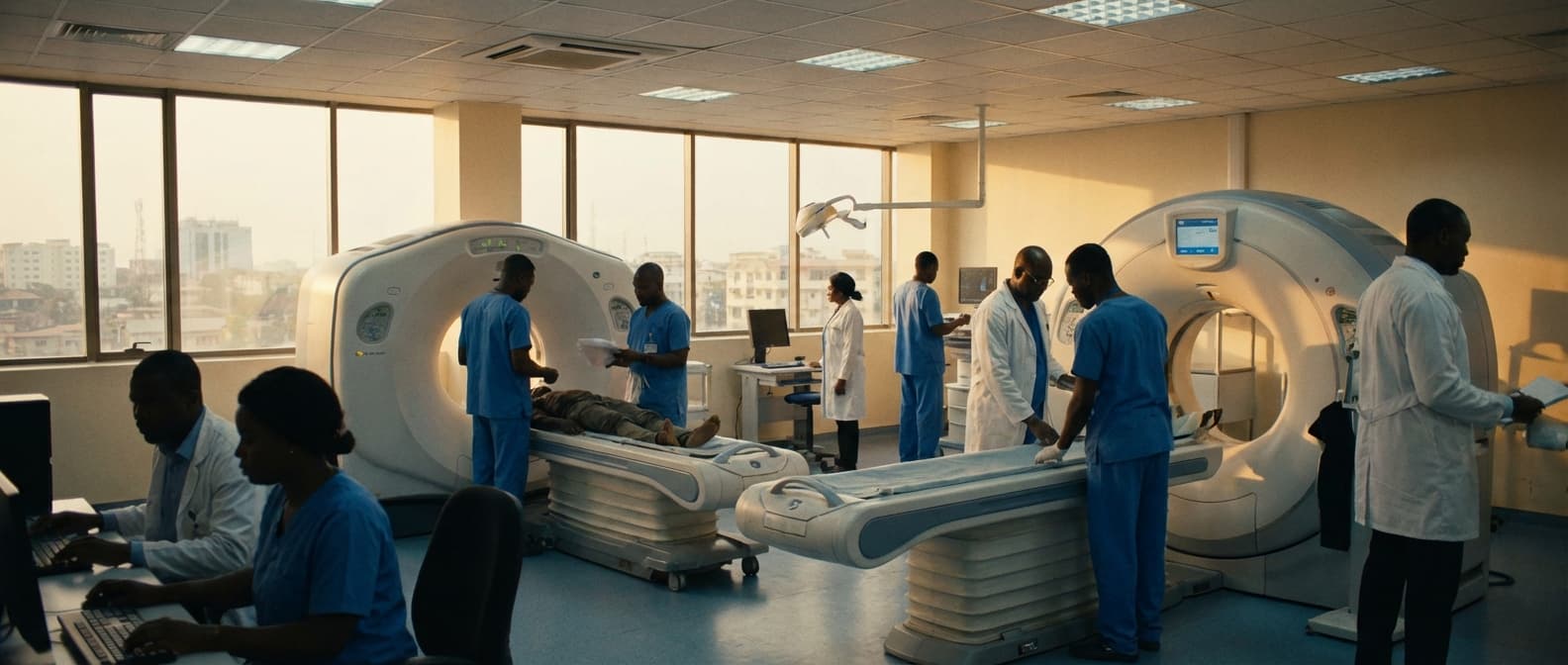
Imaging Acceptance Testing & QA in Malawi
Engineering Excellence & Technical Support
Commissioning and periodic QA for CT/MRI/X‑ray/US/Mammo. High-standard technical execution following OEM protocols and local regulatory frameworks.
Advanced Image Quality Assurance Framework
Developed and implemented a comprehensive Image Quality Assurance (IQA) framework tailored for Malawi's healthcare context, incorporating international best practices and local specificities. This framework includes standardized protocols for image acquisition, processing, and display, ensuring diagnostic accuracy and adherence to established imaging standards across various modalities (X-ray, Ultrasound, CT).
Streamlined Acceptance Testing Workflows
Designed and deployed efficient acceptance testing workflows for new imaging equipment and software in Malawian medical facilities. This involves establishing clear validation criteria, automating routine checks where possible, and developing user-friendly test scripts to reduce downtime and accelerate the integration of new technologies, ensuring readiness for clinical use.
Empowering Local QA Expertise
Implemented targeted training programs and knowledge transfer initiatives to build sustainable in-house technical expertise for imaging acceptance testing and QA within Malawian healthcare institutions. This empowers local biomedical engineers and technicians to conduct independent, rigorous evaluations, ensuring long-term equipment reliability and patient safety.
What Is Imaging Acceptance Testing & Qa In Malawi?
Imaging Acceptance Testing (IAT) and Quality Assurance (QA) in Malawi refers to the systematic verification and validation processes employed to ensure that medical imaging equipment and associated systems perform according to established specifications, regulatory requirements, and clinical operational needs. This service encompasses a broad range of activities aimed at confirming the functionality, reliability, safety, and diagnostic efficacy of imaging modalities (e.g., X-ray, CT, MRI, Ultrasound, Mammography) and Picture Archiving and Communication Systems (PACS), as well as other integrated medical imaging information systems. The objective is to guarantee that deployed imaging technology meets the defined performance benchmarks prior to full clinical integration and ongoing operational use, thereby safeguarding patient care and diagnostic accuracy.
| Stakeholder/Entity | Need for IAT & QA | Typical Use Cases |
|---|---|---|
| Public and Private Healthcare Facilities (Hospitals, Clinics): | To ensure new or upgraded imaging equipment functions correctly, delivers accurate diagnostic images, operates safely, and integrates seamlessly into existing clinical workflows. Crucial for patient safety, diagnostic confidence, and optimal resource utilization. | Deployment of new MRI scanners, installation of a new PACS, upgrade of CT scanners, commissioning of digital radiography (DR) systems, procurement of ultrasound machines. |
| Ministry of Health (Malawi): | To ensure that publicly funded imaging equipment meets national standards, regulatory requirements, and contributes to the overall public health infrastructure. Supports procurement due diligence and national health technology management. | Verification of equipment purchased through national tenders, auditing of existing imaging services, establishment of national imaging guidelines and quality benchmarks. |
| Medical Equipment Vendors and Suppliers: | To meet contractual obligations, ensure successful product deployment, and satisfy customer expectations. Facilitates the handover of fully functional and validated systems. | Pre-installation site surveys, installation verification, post-installation testing prior to final acceptance by the client. |
| Third-Party Service Providers (e.g., Biomedical Engineering Firms): | To provide independent verification and validation services for healthcare facilities, ensuring impartiality and adherence to best practices. Supports maintenance contracts and quality improvement initiatives. | Performing independent acceptance testing, conducting periodic QA assessments, troubleshooting and validating repairs. |
| Regulatory Bodies (if applicable): | To ensure compliance with national medical device regulations and safety standards, particularly concerning radiation-emitting equipment and data privacy. | Review of vendor documentation, verification of safety test results, and assurance of compliance with local legislation. |
Key Components of Imaging Acceptance Testing & QA in Malawi
- Functional Testing: Verification of all hardware and software functionalities, including image acquisition parameters, user interface responsiveness, data transfer protocols, and system startup/shutdown procedures.
- Performance Testing: Evaluation of system speed, image acquisition time, processing throughput, and overall system stability under simulated clinical workloads.
- Image Quality Assessment: Objective and subjective evaluation of image resolution, contrast, signal-to-noise ratio (SNR), artifact levels, and geometric accuracy against established standards and phantom studies.
- Safety Testing: Confirmation that the equipment adheres to all relevant electrical, radiation (for relevant modalities), and mechanical safety standards and regulations.
- Integration Testing: Validation of interoperability and data exchange between different components of the imaging chain, including modalities, PACS, Electronic Health Records (EHR), and other clinical information systems.
- User Acceptance Testing (UAT): Involvement of end-users (radiologists, technologists, IT personnel) to validate that the system meets their operational requirements and workflow expectations.
- Documentation Review: Verification of the accuracy and completeness of vendor-provided technical manuals, service guides, and regulatory compliance documentation.
- Calibration and Configuration: Ensuring that the equipment is correctly calibrated and configured according to manufacturer specifications and local clinical protocols.
Who Needs Imaging Acceptance Testing & Qa In Malawi?
Imaging Acceptance Testing & QA are crucial for ensuring the reliability, accuracy, and safety of medical imaging equipment and systems in Malawi. This process validates that the installed or upgraded systems meet defined specifications and perform as expected before they are used for patient diagnosis and treatment. Neglecting this can lead to misdiagnoses, delayed treatment, equipment malfunction, and significant financial implications for healthcare providers.
| Target Customer/Department | Key Imaging Modalities Involved | Primary Needs for Acceptance Testing & QA |
|---|---|---|
| Public Hospitals (e.g., Kamuzu Central Hospital, Queen Elizabeth Central Hospital) | X-ray, CT Scanners, MRI Scanners, Ultrasound Machines, Mammography Units, Fluoroscopy | Ensuring diagnostic accuracy for a high volume of diverse patient cases, adherence to national health standards, cost-effectiveness in equipment performance, patient safety. |
| Private Hospitals & Clinics (e.g., in Lilongwe, Blantyre) | X-ray, CT Scanners, MRI Scanners, Ultrasound Machines, Digital Radiography (DR), PACS Systems | Maintaining high standards for competitive service delivery, patient satisfaction, minimizing downtime, ensuring efficient workflow, compliance with private healthcare regulations. |
| Diagnostic Imaging Centers | CT Scanners, MRI Scanners, Ultrasound Machines, Mammography, Digital X-ray | High throughput and accuracy for specialized diagnostic services, speed of reporting, image quality for complex interpretations, reliability of systems. |
| Ministry of Health & Regional Health Offices | All imaging modalities deployed across the public health system | Standardization of imaging services, verification of procured equipment performance, data integrity for public health reporting, equitable access to quality diagnostics, national safety regulations compliance. |
| NGOs & International Aid Organizations (e.g., WHO, USAID-funded projects) | Often focus on basic X-ray, portable ultrasound, and potentially mobile CT units in remote or underserved areas. | Verification of donated equipment's functionality and suitability for intended use, ensuring sustainable operation and maintenance, impact assessment of imaging interventions. |
| Medical Equipment Vendors & Service Providers | All types of imaging equipment they install and service. | Demonstrating successful installation and calibration, meeting contractual obligations, ensuring client satisfaction, minimizing post-installation issues, compliance with manufacturer specifications. |
Who Needs Imaging Acceptance Testing & QA in Malawi? Target Customers and Departments
- Hospitals (Public and Private): The primary users of medical imaging technology, requiring robust testing for all installed modalities.
- Diagnostic Imaging Centers: Facilities dedicated to providing imaging services, where accuracy and efficiency are paramount.
- Government Health Ministries & Regional Health Offices: Responsible for oversight, procurement, and ensuring quality standards across public healthcare facilities.
- Non-Governmental Organizations (NGOs) & International Aid Organizations: Involved in funding, equipping, and supporting healthcare initiatives, requiring assurance of the quality of donated or implemented technology.
- Medical Equipment Vendors & Service Providers: Companies that sell, install, and maintain imaging equipment, needing to demonstrate that their offerings meet regulatory and client requirements.
- Training Institutions & Universities: For teaching and research purposes, ensuring that students and researchers are working with calibrated and functional equipment.
Imaging Acceptance Testing & Qa Process In Malawi
This document outlines the typical workflow for Imaging Acceptance Testing (AT) and Quality Assurance (QA) processes in Malawi. This workflow ensures that imaging equipment and systems meet predefined standards and perform reliably for clinical use. The process typically begins with an inquiry from a healthcare facility or procurement department and concludes with the successful commissioning and ongoing monitoring of the imaging solution.
| Phase | Key Activities | Responsible Parties | Deliverables/Outcomes |
|---|---|---|---|
| Inquiry & Requirements | Identify need, define specs, budget, timelines. | Healthcare Facility, Ministry of Health, Stakeholders. | Needs Assessment Report, Technical Specifications. |
| Vendor Selection & Procurement | Tendering, evaluation, contract negotiation. | Procurement Department, Technical Committee, Legal. | Award Letter, Signed Contract, Purchase Order. |
| Site Preparation | Assess and upgrade infrastructure (power, space, shielding, network). | Biomedical Engineering, Facilities Management, IT Department, Vendor (consultation). | Site Readiness Report, Completed Infrastructure Upgrades. |
| Installation | Physical setup and connection of equipment. | Vendor's Installation Team, Biomedical Engineering (oversight). | Installed Imaging System. |
| Pre-Acceptance Testing (Vendor) | Basic functional checks by the vendor. | Vendor's Technical Team. | Preliminary Test Results. |
| Acceptance Testing (Client/QA) | Comprehensive tests against specifications (technical, clinical, safety). | Client QA Team (Radiologists, Radiographers, Biomedical Engineers, IT), Vendor (support). | Acceptance Test Protocol, Test Results, Punch List (issues to resolve). |
| User Training | Operator and maintenance training. | Vendor Trainers, Designated Hospital Trainers. | Trained Staff, Training Manuals. |
| Formal Acceptance | Sign-off on successful AT and issue resolution. | Head of Department, Hospital Administrator, QA Lead. | Signed Acceptance Certificate. |
| Commissioning & Go-Live | Official start of clinical operation. | Clinical Staff, Biomedical Engineering, IT. | Operational Imaging System. |
| Post-Acceptance QA & Monitoring | Routine performance checks, audits, image quality assessment. | Client QA Team, Radiographers, Medical Physicists. | QA Reports, Performance Metrics, Audit Trails. |
| Maintenance & Support | Preventive and corrective maintenance. | Vendor Service Team, Local Service Provider, Biomedical Engineering. | Maintenance Logs, Service Reports, Equipment Uptime. |
Imaging Acceptance Testing & QA Process Workflow in Malawi
- Inquiry/Requirement Gathering: Initiated by a healthcare facility or governing body identifying a need for new imaging equipment or a system upgrade. This phase involves defining technical specifications, clinical requirements, budget, and timelines.
- Vendor Selection & Procurement: Based on the gathered requirements, potential vendors are identified. A tendering process (e.g., Request for Proposals - RFP) is conducted, followed by evaluation, selection, and contract negotiation.
- Site Preparation & Infrastructure Assessment: Before equipment delivery, the intended installation site is assessed for necessary infrastructure. This includes power supply stability, radiation shielding (if applicable), ventilation, network connectivity, space, and environmental controls. Remedial work is undertaken as needed.
- Equipment Delivery & Installation: The procured imaging equipment and associated systems are delivered to the site. Trained technicians from the vendor or authorized third party perform the installation according to manufacturer guidelines and agreed-upon specifications.
- **Pre-Acceptance Testing (Vendor): ** The vendor conducts initial tests to verify that the equipment is installed correctly and functioning at a basic level. This often includes powering on, system checks, and basic image acquisition simulation.
- **Acceptance Testing (Client/QA Team): ** This is a critical phase where the healthcare facility's designated QA team, often comprising radiologists, radiographers, biomedical engineers, and IT personnel, performs comprehensive tests. These tests verify that the equipment meets all technical and clinical specifications outlined in the procurement contract.
- User Training: Simultaneous with or immediately following AT, end-users (radiographers, technicians, etc.) receive comprehensive training on the operation, maintenance, and basic troubleshooting of the new imaging equipment.
- **Formal Acceptance Sign-off: ** Upon successful completion of AT and resolution of any identified issues, the healthcare facility formally accepts the equipment. This is documented through a signed acceptance certificate.
- **Commissioning & Go-Live: ** The equipment is officially commissioned and made available for clinical use. This marks the transition from installation and testing to routine operation.
- Post-Acceptance QA & Ongoing Monitoring: After go-live, a period of post-acceptance monitoring is crucial. This involves routine performance checks, calibration, and adherence to quality standards. Regular QA checks, including phantom imaging, dose monitoring, and image quality assessments, are scheduled.
- Maintenance & Support: A service level agreement (SLA) with the vendor or a local service provider is activated. This ensures scheduled preventive maintenance and prompt corrective maintenance services to keep the equipment in optimal working condition.
- Decommissioning & Replacement Planning: As equipment ages or becomes obsolete, a process for decommissioning and planning for replacement is initiated, following similar procurement and AT/QA cycles.
Imaging Acceptance Testing & Qa Cost In Malawi
Imaging Acceptance Testing & QA is a critical process for ensuring the quality, accuracy, and reliability of medical imaging equipment and systems. In Malawi, as in many developing economies, the cost of these services can be influenced by a variety of factors, leading to a range of pricing. These factors include the complexity of the imaging modality being tested (e.g., X-ray, Ultrasound, CT, MRI), the specific tests required (performance, safety, image quality, dose verification), the qualifications and experience of the testing personnel, the location of the facility, and the vendor offering the services. Local currency pricing in Malawi is primarily in Malawian Kwacha (MWK).
| Imaging Modality | Estimated Testing & QA Cost (MWK - Low End) | Estimated Testing & QA Cost (MWK - High End) | Notes |
|---|---|---|---|
| Basic X-ray (Stationary) | 150,000 | 350,000 | Includes basic performance checks, safety surveys, and initial image quality assessment. |
| Mobile X-ray | 200,000 | 450,000 | Similar to stationary X-ray, with added checks for mobility and power consistency. |
| Ultrasound (Basic Diagnostic) | 180,000 | 400,000 | Focuses on probe functionality, image resolution, depth penetration, and basic Doppler performance. |
| Mammography | 300,000 | 700,000 | Requires specialized phantoms for resolution, contrast, and dose measurements. |
| CT Scanner (Basic) | 600,000 | 1,500,000 | Involves complex tests for spatial resolution, contrast-to-noise ratio, beam alignment, and dose. |
| MRI Scanner (Basic) | 800,000 | 2,000,000+ | Highly complex testing for magnetic field homogeneity, gradient performance, signal-to-noise ratio, and artifacts. Costs can vary significantly based on magnet strength and sequences tested. |
| DR/CR System Integration & QA | 250,000 | 600,000 | Tests the digital acquisition system, image processing, and network connectivity. |
Key Pricing Factors for Imaging Acceptance Testing & QA in Malawi
- Type of Imaging Modality: More complex and advanced equipment (e.g., CT, MRI) will generally incur higher testing costs than simpler modalities (e.g., basic X-ray, Ultrasound).
- Scope of Testing: The number and depth of tests performed directly impact the overall cost. Comprehensive acceptance testing and routine QA will be more expensive than a basic pre-installation check.
- Personnel Expertise & Certification: Technicians or engineers with specialized training, certifications, and extensive experience may command higher fees.
- Travel & Logistics: If the testing facility is remote or requires significant travel for the QA team, these costs will be factored into the price.
- Equipment Calibration & Tools: The availability and calibration status of specialized phantom objects and measurement tools used for QA can influence costs.
- Vendor's Overhead & Profit Margin: Different service providers will have varying operational costs and profit expectations.
- Urgency of Service: Rush or emergency testing requests might incur premium charges.
- Reporting & Documentation Requirements: The level of detail and formality required in the final QA report can also affect the cost.
Affordable Imaging Acceptance Testing & Qa Options
Acceptance Testing and Quality Assurance (QA) for imaging systems are crucial to ensure functionality, reliability, and compliance. However, these processes can be expensive, especially for smaller organizations or those with limited budgets. This document outlines affordable imaging acceptance testing and QA options, focusing on value bundles and cost-saving strategies.
| Value Bundle Strategy | Description | Cost-Saving Benefit |
|---|---|---|
| Phased Testing & QA | Breaking down the testing process into smaller, manageable phases (e.g., unit, integration, system, user acceptance). | Allows for incremental budget allocation and identification of issues early, reducing costly rework later. |
| Template-Driven Test Suites | Developing standardized, reusable test cases and scripts based on common imaging modalities and workflows. | Reduces the effort required to create new test plans, saving time and resources. |
| Remote Testing & Monitoring | Leveraging remote access tools and cloud-based platforms to conduct testing and monitoring without physical presence. | Significantly reduces travel and associated expenses, especially for geographically dispersed teams. |
| Risk-Based Testing Prioritization | Focusing testing efforts on high-risk functionalities and critical workflows, rather than exhaustive testing of every feature. | Optimizes resource allocation by prioritizing areas with the greatest potential impact on system performance and patient safety. |
| Integrated QA & Training | Combining QA activities with end-user training sessions, allowing users to validate workflows while learning the system. | Reduces the need for separate user acceptance testing phases and streamlines the overall go-live process. |
| Partnership with Vendors/Consultants | Negotiating bundled QA services as part of the system acquisition contract or engaging specialized QA consultants for specific project phases. | Can provide access to expertise and resources at a potentially lower cost than building an in-house team from scratch. Look for tiered service levels. |
Key Cost Drivers in Imaging Acceptance Testing & QA
- Labor costs (internal and external personnel)
- Software licensing and maintenance
- Hardware and equipment calibration
- Travel and per diem expenses
- Time delays and project overruns
- Lack of standardized processes
Verified Providers In Malawi
In Malawi, accessing reliable and high-quality healthcare is paramount. When it comes to finding verified providers, especially those with strong credentials in finance and health services, Franance Health stands out. This document outlines why Franance Health's credentials make them the optimal choice for your healthcare needs in Malawi.
| Credential Area | Franance Health's Strengths | Impact on Patients |
|---|---|---|
| Medical Expertise & Certifications | All practitioners hold recognized medical degrees and certifications. Ongoing professional development is mandatory. | Access to highly skilled doctors and specialists, ensuring accurate diagnoses and effective treatments. |
| Financial Management & Transparency | Proven track record in managing healthcare finances efficiently. Clear, itemized billing and flexible payment plans. | Reduced financial stress for patients. Trustworthy financial dealings and predictable healthcare costs. |
| Regulatory Compliance & Accreditation | Adherence to all Malawian Ministry of Health regulations and relevant international healthcare standards. | Assurance of safe and ethical healthcare practices. Protection of patient rights and data confidentiality. |
| Patient Satisfaction & Feedback | Consistently high patient satisfaction scores. Proactive approach to addressing patient concerns and feedback. | A healthcare experience that is responsive to individual needs and prioritizes comfort and dignity. |
| Technological Integration | Investment in modern medical equipment and health information systems. | Improved diagnostic accuracy, faster service delivery, and enhanced patient record management. |
Why Franance Health is the Best Choice:
- Unwavering Commitment to Quality: Franance Health prioritizes patient well-being through rigorous quality control measures and adherence to international healthcare standards.
- Expertise at the Forefront: Their team comprises highly qualified and experienced healthcare professionals, continuously updated on the latest medical advancements.
- Financial Accessibility & Transparency: Franance Health is dedicated to making quality healthcare affordable and understandable, offering transparent pricing and flexible financial solutions.
- Holistic Patient Care: They adopt a comprehensive approach, addressing not just immediate medical needs but also long-term health and financial wellness.
- Community Trust and Recognition: Franance Health has built a strong reputation within Malawian communities for its ethical practices and dependable service.
- Innovation in Healthcare Delivery: They are at the forefront of implementing innovative technologies and methodologies to enhance patient outcomes and operational efficiency.
Scope Of Work For Imaging Acceptance Testing & Qa
This document outlines the Scope of Work for Imaging Acceptance Testing & Quality Assurance (QA). It details the technical deliverables required and the standard specifications to be adhered to throughout the testing process. The goal is to ensure the imaging system meets all functional, performance, and usability requirements before final acceptance.
| Deliverable | Description | Format | Acceptance Criteria Standard | Responsibility |
|---|---|---|---|---|
| Test Plan | Comprehensive document detailing the testing strategy, scope, objectives, resources, schedule, and test approach. | Word Document / PDF | Aligned with project requirements and industry best practices (e.g., IEEE 829). | QA Lead |
| Test Cases | Detailed steps for executing tests, including input data, expected results, and pass/fail criteria for each scenario. | Excel Spreadsheet / Test Management Tool | Traceable to requirements, covering all functional and non-functional aspects. | QA Testers |
| Test Data Set | Representative data (images, metadata, patient records) used for testing various functionalities and edge cases. | DICOM files, CSV, SQL dump | Sufficient volume and variety to simulate real-world scenarios. | Data Management Team / QA Testers |
| Test Execution Logs | Records of each test case execution, including date, time, tester, actual results, and pass/fail status. | Test Management Tool / Excel Spreadsheet | Accurate and complete capture of execution details. | QA Testers |
| Defect/Bug Reports | Detailed documentation of identified issues, including severity, priority, steps to reproduce, and expected resolution. | Defect Tracking System (e.g., Jira, Bugzilla) | Clear, concise, and actionable reporting. | QA Testers |
| Performance Test Results | Metrics on system response times, throughput, and resource utilization under load. | Reports from performance testing tools (e.g., LoadRunner, JMeter) | Within specified performance benchmarks (e.g., response time < X seconds for Y concurrent users). | Performance Testers |
| Usability Test Report | Findings from user acceptance testing, focusing on ease of use, intuitiveness, and workflow efficiency. | Word Document / PDF | Identification of usability issues and proposed improvements. | Usability Testers / End Users |
| Security Test Report | Results of security vulnerability assessments and penetration testing. | Word Document / PDF | No critical or high-severity security vulnerabilities identified. | Security Testers |
| Final Test Summary Report | A comprehensive overview of the entire testing process, including testing scope, activities performed, summary of results, defect analysis, and recommendation for acceptance. | Word Document / PDF | Covers all testing phases and provides a clear go/no-go recommendation. | QA Lead |
Key Objectives of Imaging Acceptance Testing & QA
- Verify that the imaging system meets all specified functional requirements.
- Assess the performance of the imaging system under various operational conditions.
- Ensure the imaging system's usability and adherence to user workflow requirements.
- Identify and document any defects or deviations from the specifications.
- Confirm the system's stability and reliability.
- Validate data integrity and security measures.
Service Level Agreement For Imaging Acceptance Testing & Qa
This Service Level Agreement (SLA) outlines the performance and availability commitments for Imaging Acceptance Testing and Quality Assurance (QA) services. It defines the expected response times for critical issues and the guaranteed uptime for the testing environment.
| Issue Severity | Guaranteed Response Time | Target Resolution Time | Guaranteed Uptime |
|---|---|---|---|
| Critical Issue | 1 Hour | 4 Business Hours | 99.9% |
| Major Issue | 4 Business Hours | 1 Business Day | 99.5% |
| Minor Issue | 8 Business Hours | 3 Business Days | 99.0% |
Key Service Level Objectives
- Scope: This SLA applies to the Imaging Acceptance Testing and QA services provided by [Your Company/Department] to [Client/User Department].
- Definitions:
- Critical Issue: An issue that renders the imaging acceptance testing environment unusable or prevents critical testing functions from being performed, resulting in a complete halt of acceptance testing progress.
- Major Issue: An issue that significantly impacts testing functionality but allows for partial or workaround solutions. This includes issues that affect a specific set of tests or a significant portion of the testing environment.
- Minor Issue: An issue that causes minor inconvenience or affects non-critical functionality, with minimal impact on the overall testing progress. This could include cosmetic bugs or minor performance degradations.
- Uptime: The percentage of time the imaging acceptance testing environment is operational and accessible for its intended use.
- Response Time: The maximum time allowed for [Your Company/Department] to acknowledge and begin working on a reported issue.
- Resolution Time: The maximum time allowed for [Your Company/Department] to resolve a reported issue. (Note: Resolution times are targets and may depend on the complexity of the issue and the involvement of external parties.)
Frequently Asked Questions

Ready when you are
Let's scope your Imaging Acceptance Testing & QA in Malawi project in Malawi.

Scaling healthcare logistics and technical systems across the entire continent.