
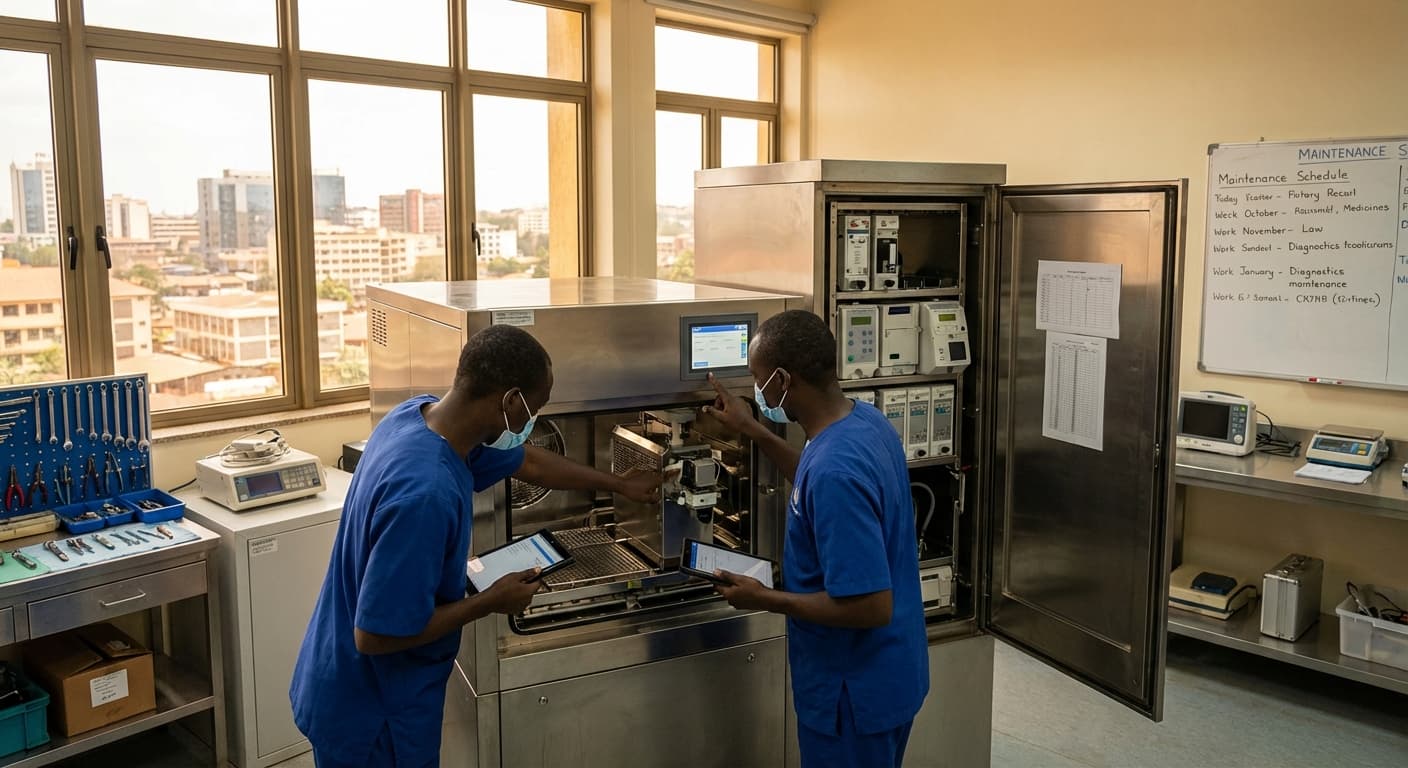
Total Cost of Ownership (TCO) & Lifecycle Budgeting Service in Malawi
Engineering Excellence & Technical Support
Total Cost of Ownership (TCO) & Lifecycle Budgeting Service High-standard technical execution following OEM protocols and local regulatory frameworks.
Strategic Lifecycle Costing for Infrastructure Projects
Empower Malawian organizations with precise TCO analyses for long-term infrastructure investments. We quantify capital expenditure, operational costs, maintenance, and end-of-life disposal to ensure optimal resource allocation and mitigate future financial risks. Leverage data-driven insights for sustainable development.
Optimized Asset Management & Procurement
Reduce operational inefficiencies and procurement overspend in Malawi. Our TCO services provide a clear framework for evaluating asset performance throughout their lifecycle, guiding strategic acquisition, maintenance planning, and replacement cycles. Achieve greater control over your asset budget and enhance profitability.
Sustainable Budgeting for Public & Private Sector Initiatives
Drive economic resilience in Malawi with our expert TCO and lifecycle budgeting for diverse projects. From energy infrastructure to public services, we provide comprehensive financial foresight, enabling stakeholders to make informed decisions that balance immediate needs with long-term sustainability and budgetary prudence.
What Is Total Cost Of Ownership (Tco) & Lifecycle Budgeting Service In Malawi?
Total Cost of Ownership (TCO) and Lifecycle Budgeting Services in Malawi represent a comprehensive financial management framework focused on evaluating the true economic impact of an asset or project throughout its entire lifespan, from acquisition to disposal. This service is critical for making informed strategic procurement and investment decisions within the Malawian context, characterized by specific economic conditions, regulatory environments, and operational realities.
TCO extends beyond the initial purchase price to encompass all direct and indirect costs incurred over the asset's or project's useful life. These include acquisition costs, operational expenditures (e.g., energy, labor, maintenance, consumables), training, financing, and eventual decommissioning or disposal costs. Lifecycle Budgeting, a key component of TCO, involves projecting and managing these costs across distinct phases of an asset's or project's existence, ensuring financial planning aligns with operational realities and strategic objectives.
In Malawi, these services are particularly vital for public sector entities, large private corporations, and international development organizations operating within the country. The rationale stems from a need to optimize resource allocation, mitigate financial risks associated with long-term commitments, and ensure sustainable project delivery and asset management in an often resource-constrained environment. Understanding the full spectrum of costs allows for the selection of solutions that offer the greatest long-term value, rather than prioritizing only the lowest upfront price.
| Phase | Description | Typical Costs Included |
|---|---|---|
| Acquisition | The initial procurement of the asset or initiation of the project. | Purchase price, taxes, import duties, delivery, installation, initial setup, and customization. |
| Operation | The period during which the asset is used for its intended purpose or the project is actively running. | Energy consumption, labor (operators, supervisors), routine maintenance, consumables (e.g., fuel, lubricants, filters), software licenses, data storage, and communication costs. |
| Maintenance & Support | Activities aimed at ensuring the asset's continued functionality and performance. | Scheduled preventative maintenance, unscheduled repairs, spare parts, technical support contracts, warranty management, and system upgrades. |
| Upgrade/Enhancement | Improvements or modifications made to the asset to extend its life or enhance its capabilities. | Hardware upgrades, software updates, capacity expansion, and re-training of personnel. |
| Decommissioning & Disposal | The process of retiring the asset from service and managing its end-of-life. | Dismantling, removal, transportation, environmental remediation, recycling fees, disposal costs, and data sanitization. |
Who Needs TCO & Lifecycle Budgeting Services in Malawi?
- Government Ministries and Agencies: For major infrastructure projects (roads, power, water), public procurement of vehicles, IT systems, and other capital assets.
- State-Owned Enterprises (SOEs): For strategic asset acquisition, operational efficiency improvements, and long-term financial planning of core services.
- Large Private Sector Corporations: Particularly those with significant capital investments in plant, machinery, fleets, or IT infrastructure. This includes sectors like agriculture, manufacturing, telecommunications, and mining.
- Non-Governmental Organizations (NGOs) and International Development Partners: For project funding, asset management of field equipment, vehicles, and program infrastructure, ensuring program sustainability and financial accountability.
- Financial Institutions: For evaluating loan portfolios related to capital assets and providing financial advisory services to clients on TCO principles.
- Educational Institutions and Healthcare Providers: For managing the lifecycle costs of specialized equipment, facilities, and technology infrastructure.
Who Needs Total Cost Of Ownership (Tco) & Lifecycle Budgeting Service In Malawi?
In Malawi, a robust understanding and application of Total Cost of Ownership (TCO) and Lifecycle Budgeting are crucial for organizations seeking to optimize their financial resources, improve operational efficiency, and make informed strategic decisions. These services are not just for large corporations; they benefit a wide range of entities facing significant capital expenditures and long-term operational commitments. By considering all costs from acquisition to disposal, businesses and government bodies can avoid hidden expenses, extend asset life, and achieve greater value for their investments. This approach is particularly relevant in a developing economy like Malawi, where resource allocation is often constrained and maximizing the return on investment is paramount.
| Target Customer/Sector | Key Departments/Roles Involved | Specific Applications of TCO/Lifecycle Budgeting |
|---|---|---|
| Government & Public Sector | Procurement Department, Finance Ministry, Public Works, Sector-specific Agencies (e.g., Water Utility, Roads Authority) | Procurement of vehicles, IT systems, infrastructure (roads, bridges, water treatment plants), building maintenance, energy efficiency upgrades. |
| Manufacturing & Industrial | Operations Management, Engineering, Finance, Procurement, Maintenance Department | Capital equipment acquisition, production line upgrades, energy consumption, waste management, planned maintenance, equipment replacement strategies. |
| Telecommunications & Utilities | Network Operations, Engineering, Finance, Asset Management, Procurement | Infrastructure deployment (towers, cables, power grids), IT systems, customer service equipment, energy generation and distribution assets, network upgrades. |
| Agribusiness | Farm Management, Operations, Finance, Procurement, Maintenance | Tractors, harvesters, irrigation systems, processing machinery, storage facilities, vehicle fleets, energy for operations. |
| Mining | Mine Operations, Engineering, Finance, Procurement, Environmental Health & Safety | Heavy machinery (excavators, haul trucks), processing plants, exploration equipment, site remediation, energy, water usage. |
| Transportation & Logistics | Fleet Management, Operations, Finance, Procurement, Maintenance | Trucks, buses, delivery vans, warehousing equipment, fuel efficiency, maintenance schedules, vehicle replacement cycles. |
| Education & Healthcare | Administration, Finance, Facilities Management, IT Department, Procurement | Building construction and maintenance, medical equipment, IT infrastructure, vehicles, energy consumption, resource allocation for service continuity. |
Target Customers & Departments in Malawi Requiring TCO & Lifecycle Budgeting Services
- {"title":"Government and Public Sector Agencies","description":"Essential for public procurement, infrastructure projects, and managing government assets to ensure fiscal responsibility and long-term sustainability of public services."}
- {"title":"Large Manufacturing and Industrial Companies","description":"Critical for evaluating and managing the costs of heavy machinery, production lines, and plant infrastructure, impacting operational efficiency and profitability."}
- {"title":"Telecommunications and Utilities Providers","description":"Vital for managing the extensive and long-term investments in network infrastructure, power generation, and distribution systems."}
- {"title":"Agricultural and Agribusiness Enterprises","description":"Important for assessing the costs of farm machinery, irrigation systems, processing facilities, and other long-lived assets in a key sector of Malawi's economy."}
- {"title":"Mining and Extractive Industries","description":"Crucial for evaluating the significant capital investments in exploration, extraction equipment, processing plants, and environmental remediation over the life of a mine."}
- {"title":"Transportation and Logistics Companies","description":"Necessary for optimizing the acquisition, operation, maintenance, and eventual replacement of fleets of vehicles, vessels, or aircraft."}
- {"title":"Educational Institutions and Hospitals","description":"Beneficial for managing the lifecycle costs of buildings, specialized medical equipment, IT infrastructure, and other significant assets to ensure continued service delivery."}
- {"title":"Financial Institutions (Banks, Insurance Companies)","description":"Relevant for their own operational infrastructure, IT systems, and potentially for assessing TCO of assets they finance or insure."}
- {"title":"Real Estate Developers and Property Management Firms","description":"Essential for understanding the full cost of developing, maintaining, and managing properties over their entire lifespan."}
Total Cost Of Ownership (Tco) & Lifecycle Budgeting Service Process In Malawi
This document outlines the typical workflow for a Total Cost of Ownership (TCO) & Lifecycle Budgeting service process in Malawi, from initial inquiry to final execution. This process ensures a comprehensive understanding of all costs associated with an asset or project over its entire lifespan, enabling informed decision-making and optimized resource allocation.
| Stage | Key Activities | Deliverables | Responsible Parties | Typical Duration (Malawi Context) |
|---|---|---|---|---|
| Inquiry & Initial Consultation | Client contact, understanding objectives, preliminary scope discussion. | Meeting minutes, preliminary service proposal outline. | Client, Service Provider. | 1-3 business days |
| Needs Assessment & Scope Definition | Detailed requirement gathering, asset identification, lifecycle definition, cost category identification. | Scope of Work (SOW) document, Project charter. | Service Provider, Client representatives. | 3-7 business days |
| Data Collection & Validation | Requesting and gathering financial records, operational data, vendor quotes, historical maintenance logs. | Validated dataset, data gap analysis report. | Client (providing data), Service Provider (collecting and validating). | 1-4 weeks (highly dependent on client data availability) |
| TCO Model Development | Designing the TCO framework, inputting data, defining cost drivers, applying appropriate methodologies. | Draft TCO model spreadsheet/software, initial cost breakdown. | Service Provider (analysts, consultants). | 1-2 weeks |
| Lifecycle Budgeting & Forecasting | Developing future cost projections, factoring inflation, technological obsolescence, maintenance schedules. | Draft lifecycle budget, financial forecast tables. | Service Provider (financial analysts). | 1-2 weeks |
| Risk Assessment & Sensitivity Analysis | Identifying potential cost overruns, operational disruptions, and their financial impact. Running 'what-if' scenarios. | Risk register, sensitivity analysis report. | Service Provider (risk analysts). | 3-5 business days |
| Analysis & Reporting | Interpreting model outputs, identifying cost optimization opportunities, formulating recommendations. | Comprehensive TCO and Lifecycle Budgeting report, executive summary. | Service Provider (analysts, reporting specialists). | 1-2 weeks |
| Presentation & Discussion | Formal presentation of findings, Q&A session, clarification of technical and financial aspects. | Presentation slides, meeting minutes. | Service Provider (presenters), Client (attendees). | 1-2 business days |
| Refinement & Finalization | Incorporating client feedback, making final adjustments to the report and budget. | Final TCO and Lifecycle Budgeting report, approved lifecycle budget. | Service Provider, Client (approval). | 3-5 business days |
| Implementation Support (Optional) | Assisting with the adoption of recommendations, budget tracking, performance monitoring. | Progress reports, updated budget forecasts. | Service Provider (consultants), Client (implementation team). | Ongoing (as per agreement) |
| Post-Execution Review (Optional) | Evaluating the impact of implemented strategies, updating TCO and lifecycle budget based on actual performance. | Post-implementation review report, revised TCO/budget. | Service Provider, Client. | As scheduled (e.g., 6-12 months post-implementation) |
Service Workflow Stages
- Inquiry & Initial Consultation: The client expresses interest in TCO & Lifecycle Budgeting services. This stage involves understanding the client's specific needs, the scope of the project or assets, and setting initial expectations.
- Needs Assessment & Scope Definition: A detailed analysis of the client's requirements. This involves identifying the assets/projects to be analyzed, the time horizon for the lifecycle, and the specific cost categories to be included (e.g., acquisition, operation, maintenance, disposal).
- Data Collection & Validation: Gathering all relevant financial and operational data. This includes historical costs, vendor quotes, operational data, maintenance records, and projected future costs. Data is rigorously validated for accuracy and completeness.
- TCO Model Development: Constructing a comprehensive TCO model based on the collected data and defined scope. This involves identifying all direct and indirect costs, including tangible and intangible expenses.
- Lifecycle Budgeting & Forecasting: Projecting costs over the defined lifecycle. This includes creating a detailed budget that accounts for inflation, technological advancements, and potential changes in operational requirements.
- Risk Assessment & Sensitivity Analysis: Identifying potential risks that could impact TCO and lifecycle costs. Sensitivity analysis is performed to understand the impact of various scenarios on the overall budget.
- Analysis & Reporting: Analyzing the developed TCO model and lifecycle budget to provide actionable insights. A comprehensive report is prepared, detailing findings, recommendations, and key performance indicators.
- Presentation & Discussion: Presenting the findings and recommendations to the client. This stage facilitates discussion, clarification, and feedback to ensure full understanding and alignment.
- Refinement & Finalization: Incorporating client feedback and making necessary adjustments to the TCO model and lifecycle budget. The final report and budget are then formally presented and approved.
- Implementation Support (Optional): Providing ongoing support to the client in implementing the recommendations, which may include financial tracking, budget monitoring, and strategic advice for cost optimization.
- Post-Execution Review (Optional): Conducting a review at a later stage to assess the effectiveness of the implemented strategies and to update the TCO and lifecycle budget as needed.
Total Cost Of Ownership (Tco) & Lifecycle Budgeting Service Cost In Malawi
The Total Cost of Ownership (TCO) and Lifecycle Budgeting service cost in Malawi is a critical consideration for businesses and organizations looking to understand the true financial impact of acquiring and operating assets over their entire lifespan. This includes not just the initial purchase price but also ongoing expenses like maintenance, repairs, energy consumption, consumables, training, and eventual disposal or replacement. Accurately budgeting for these lifecycle costs helps in making informed purchasing decisions, optimizing operational efficiency, and preventing unexpected financial burdens.
The pricing of TCO and Lifecycle Budgeting services in Malawi is influenced by several key factors, leading to a range of costs. These factors often interact, making a fixed price difficult. Service providers will typically conduct an initial assessment to understand the complexity of the assets, the scope of the analysis, and the desired level of detail. The more complex the asset or system, and the more in-depth the analysis required, the higher the cost will be.
Key Pricing Factors:
- Complexity and Type of Assets: Analyzing a single piece of machinery will be less expensive than evaluating an entire fleet of vehicles, a complex IT infrastructure, or a large-scale construction project. The number and variety of assets significantly impact the time and expertise required.
- Scope and Depth of Analysis: This includes the number of lifecycle stages to be considered (e.g., acquisition, operation, maintenance, disposal), the granularity of data collection, and the inclusion of intangible costs (e.g., downtime, risk). A basic TCO analysis will be cheaper than a comprehensive lifecycle cost assessment with detailed scenario planning.
- Data Availability and Quality: The ease with which reliable data can be collected for each cost element is crucial. If historical data is readily available and well-organized, the service provider's effort is reduced. Conversely, extensive data collection, verification, and estimation will increase costs.
- Provider's Expertise and Reputation: Established consulting firms with specialized expertise in TCO and lifecycle budgeting, particularly those with experience in the Malawian market, will generally command higher fees than smaller, less specialized providers.
- Customization and Reporting Requirements: The need for highly customized reports, specific analytical tools, or integration with existing financial systems will influence the pricing. Standardized reporting is typically less expensive.
- Geographic Reach and Site Visits: If the assets are geographically dispersed across Malawi, or if site visits are required for data collection and validation, travel and accommodation expenses will be added to the overall cost.
- Duration of the Project: Longer-term projects, involving continuous monitoring or multiple review cycles, will naturally incur higher total costs.
- Included Services: Some providers may offer additional value-added services like risk assessment, optimization recommendations, or implementation support, which will impact the overall price.
| Pricing Factor | Impact on Cost | Typical Cost Range (MWK) |
|---|---|---|
| Asset Complexity (Single vs. Multiple/Integrated) | High | 50,000 - 5,000,000+ |
| Scope of Analysis (Basic TCO vs. Full Lifecycle) | High | 50,000 - 5,000,000+ |
| Data Availability (Good vs. Poor) | Medium | 50,000 - 3,000,000+ |
| Provider Expertise (Local Generalist vs. Specialized Consultant) | High | 100,000 - 5,000,000+ |
| Customization & Reporting Needs | Medium | 50,000 - 2,000,000+ |
| Geographic Scope & Site Visits | Medium | 50,000 - 1,500,000+ |
| Project Duration (One-off vs. Ongoing) | High | 50,000 - 5,000,000+ (annualized for ongoing) |
Typical Pricing Ranges (in Malawian Kwacha - MWK)
- Small-scale projects (e.g., single asset TCO analysis for basic equipment): MWK 50,000 - MWK 250,000
- Medium-scale projects (e.g., fleet TCO analysis, IT infrastructure lifecycle budgeting): MWK 250,000 - MWK 1,000,000
- Large-scale and complex projects (e.g., extensive infrastructure lifecycle budgeting, multi-asset portfolio analysis): MWK 1,000,000 - MWK 5,000,000+
- Retainer-based services for ongoing lifecycle management: Negotiable, often MWK 100,000 - MWK 500,000+ per month, depending on scope.
Affordable Total Cost Of Ownership (Tco) & Lifecycle Budgeting Service Options
Our Affordable Total Cost of Ownership (TCO) and Lifecycle Budgeting services are designed to empower organizations to make informed financial decisions throughout the entire lifespan of their assets and projects. We go beyond initial purchase prices to account for all associated costs, from acquisition and operation to maintenance, upgrades, and eventual disposal. By understanding and optimizing TCO, businesses can unlock significant cost savings, improve resource allocation, and enhance long-term profitability.
| Cost-Saving Strategy | Description | TCO Impact |
|---|---|---|
| Predictive Maintenance | Utilizing data analytics and sensors to forecast potential equipment failures and perform maintenance proactively, preventing costly breakdowns and downtime. | Reduces unexpected repair costs, minimizes production losses, extends asset lifespan. |
| Energy Efficiency Optimization | Implementing energy-saving technologies and practices (e.g., LED lighting, smart thermostats, efficient machinery) to lower utility bills. | Significantly reduces operational expenses over the asset's life. |
| Standardization and Consolidation | Adopting standardized equipment and software across the organization to simplify maintenance, reduce inventory, and leverage bulk purchasing power. | Lowers acquisition costs, reduces training and support expenses, simplifies spare parts management. |
| Leasing vs. Purchasing Analysis | Evaluating the financial benefits of leasing equipment versus outright purchase, considering depreciation, financing costs, and the need for frequent upgrades. | Can defer capital expenditure and offer flexibility for technology-intensive assets. |
| Negotiation of Service Level Agreements (SLAs) | Securing favorable terms and conditions with suppliers and service providers, including guaranteed uptime and performance metrics. | Ensures reliable service, minimizes downtime, and controls ongoing operational costs. |
| Strategic Sourcing and Vendor Management | Developing long-term relationships with reliable suppliers and negotiating competitive pricing for consumables, parts, and services. | Drives down procurement costs and ensures quality. |
| End-of-Life Planning & Responsible Disposal | Developing a plan for the responsible and cost-effective disposal or recycling of assets, considering environmental regulations and potential resale value. | Minimizes disposal fees, potential environmental fines, and may generate residual value. |
Key Value Bundles
- Strategic TCO Analysis Package: Comprehensive assessment of existing assets or proposed projects, identifying hidden costs and providing actionable recommendations for optimization.
- Lifecycle Budgeting & Planning Service: Development of robust, long-term financial plans that encompass all stages of an asset's or project's life, ensuring predictable budgeting and preventing unexpected expenditures.
- Cost Reduction & Optimization Program: Targeted strategies and implementation support to minimize operational expenses, maintenance costs, and energy consumption throughout the lifecycle.
- Risk Management & Contingency Planning: Integration of potential risks and their financial implications into TCO models, building in necessary contingencies for unforeseen events.
- Technology Refresh & Obsolescence Management: Proactive planning for asset upgrades and replacements, minimizing the financial impact of technological advancements and obsolescence.
Verified Providers In Malawi
Finding reliable and qualified healthcare providers is crucial for individuals and families in Malawi. Franance Health has established itself as a leading platform dedicated to verifying and showcasing the credentials of healthcare professionals. This commitment to transparency and quality assurance makes Franance Health the go-to resource for anyone seeking trustworthy medical services. Their rigorous vetting process ensures that all listed providers meet high standards of expertise, ethical conduct, and professional development. By choosing a provider through Franance Health, you are opting for assurance, competence, and a commitment to your well-being.
| Provider Attribute | Franance Health Verification Standard | Benefit to Patients |
|---|---|---|
| Medical Licenses & Certifications | Confirmed and up-to-date | Ensures providers are legally qualified to practice and possess specialized training. |
| Professional Experience | Documented and reviewed | Provides confidence in the provider's practical skills and historical performance. |
| Ethical Conduct & Reputation | Background checks and reference verification | Guarantees adherence to medical ethics and a positive track record. |
| Continuing Professional Development | Evidence of ongoing training and education | Confirms providers are up-to-date with the latest medical advancements and best practices. |
| Specialized Skills | Verified through certifications and experience | Allows patients to find experts in specific medical fields. |
Why Franance Health Providers are the Best Choice:
- Rigorous Verification Process: Franance Health employs a stringent vetting system to confirm the qualifications, licenses, and certifications of all healthcare professionals.
- Commitment to Excellence: Providers listed on Franance Health are dedicated to upholding the highest standards of medical care and patient service.
- Transparency and Trust: Their platform prioritizes open access to provider credentials, fostering trust and informed decision-making for patients.
- Access to Top Talent: Franance Health connects you with a network of skilled and experienced healthcare professionals across various specializations.
- Patient-Centric Approach: Verified providers on Franance Health are committed to putting patient needs and well-being first.
Scope Of Work For Total Cost Of Ownership (Tco) & Lifecycle Budgeting Service
This document outlines the Scope of Work (SOW) for a Total Cost of Ownership (TCO) and Lifecycle Budgeting (LCB) service. The service aims to provide a comprehensive understanding of all costs associated with an asset, system, or project from acquisition through disposal. This includes initial purchase, operation, maintenance, upgrades, and eventual decommissioning. The objective is to inform strategic decision-making, optimize resource allocation, and identify opportunities for cost reduction over the entire lifespan.
| Phase | Activity Description | Key Deliverables | Standard Specifications/Considerations |
|---|---|---|---|
| Define project scope, objectives, key stakeholders, and analytical boundaries. Establish data collection methodologies and reporting templates. | Project Charter, Stakeholder Register, Data Collection Plan, Reporting Framework. | Clear definition of what is included/excluded in the TCO. Identification of critical success factors. Agreement on assumptions and analytical approaches. Timeline and resource allocation. |
| Gather all direct and indirect cost data for each lifecycle phase from various sources (e.g., financial systems, vendor quotes, operational logs, maintenance records). Validate data accuracy and completeness. | Comprehensive Cost Database, Data Validation Report. | Categorization of costs (e.g., CAPEX, OPEX, indirect). Consideration of inflation, discount rates, and salvage values. Identification of data gaps and required estimations. Documentation of data sources and methodologies. |
| Develop a TCO model that quantifies all identified costs across the asset's/system's/project's lifecycle. Perform sensitivity analysis and scenario planning. | TCO Model (spreadsheet/software), TCO Analysis Report, Sensitivity Analysis Report. | Standardized TCO calculation methodology. Inclusion of all relevant cost categories. Application of appropriate discount rates for Net Present Value (NPV) calculations. Scenario modeling for different operational or market conditions. |
| Translate TCO findings into a detailed lifecycle budget, forecasting expenditures and potential savings over defined periods. Integrate with existing budgeting processes. | Lifecycle Budget Plan, Financial Forecasts, Budget Variance Analysis Framework. | Alignment with organizational budgeting cycles and policies. Forecast of annual/quarterly expenditures. Identification of budget risks and mitigation strategies. Support for capital planning and resource allocation. |
| Present TCO and LCB findings to stakeholders through clear, concise reports and presentations. Provide actionable recommendations for cost optimization, risk management, and strategic decision-making. | Final TCO/LCB Report, Executive Summary, Presentation Deck, Recommendations Document. | Clear visualization of cost trends and comparisons. Benchmarking against industry standards (where applicable). Prioritized recommendations with estimated impact. Documentation of assumptions and limitations. |
| Periodically review the TCO model against actual expenditures. Provide ongoing support for budget management and re-forecasting as needed. | Performance Monitoring Reports, Updated TCO Models, Budget Revision Recommendations. | Establishment of key performance indicators (KPIs) for cost management. Regular updates to the TCO model based on actual performance. Support for ad-hoc financial analysis. |
Key Objectives of TCO & Lifecycle Budgeting Service
- To establish a baseline for all relevant costs associated with an asset/system/project.
- To forecast future expenditures and revenue impacts over the entire lifecycle.
- To compare the TCO of alternative solutions for informed procurement and investment decisions.
- To identify cost drivers and areas for potential optimization and risk mitigation.
- To support strategic planning, capital allocation, and budgeting processes.
- To provide a framework for performance monitoring and value realization.
Service Level Agreement For Total Cost Of Ownership (Tco) & Lifecycle Budgeting Service
This Service Level Agreement (SLA) outlines the guaranteed response times and uptime for the Total Cost of Ownership (TCO) & Lifecycle Budgeting Service. This service aims to provide clients with accurate, timely, and reliable data and insights for strategic financial planning and asset management. The following sections detail the performance metrics and associated remedies.
| Issue Category | Definition | Initial Response Time | Resolution Target |
|---|---|---|---|
| Critical | Service is completely unavailable or core functionality is non-operational, preventing any significant use. | 1 Hour | 4 Business Hours |
| Major | Significant functionality is impaired, affecting a substantial portion of users or critical reporting, but a workaround may exist. | 4 Business Hours | 8 Business Hours |
| Minor | Cosmetic issues, minor functional deviations, or requests for information/enhancements that do not impact current operations. | 1 Business Day | 3 Business Days |
Service Level Objectives (SLOs)
- Availability: The service will be available 99.9% of the time, measured on a monthly basis.
- Response Time - Critical Issues: Support tickets categorized as 'Critical' (impacting core TCO/Lifecycle Budgeting functionality, preventing user access or critical data processing) will receive an initial response within 1 hour.
- Response Time - Major Issues: Support tickets categorized as 'Major' (impacting significant functionality but not preventing core operations, affecting multiple users or important reporting) will receive an initial response within 4 business hours.
- Response Time - Minor Issues: Support tickets categorized as 'Minor' (cosmetic issues, feature requests, or questions not impacting core functionality) will receive an initial response within 1 business day.
- Data Refresh Frequency: Core TCO and Lifecycle Budgeting data will be refreshed on a scheduled basis, with a maximum acceptable delay of 24 hours from the scheduled refresh time.
- Report Generation Time: Standard TCO and Lifecycle Budgeting reports will be generated within 15 minutes of request, provided the underlying data is available and refreshed.
Frequently Asked Questions

Ready when you are
Let's scope your Total Cost of Ownership (TCO) & Lifecycle Budgeting Service in Malawi project in Malawi.

Scaling healthcare logistics and technical systems across the entire continent.