
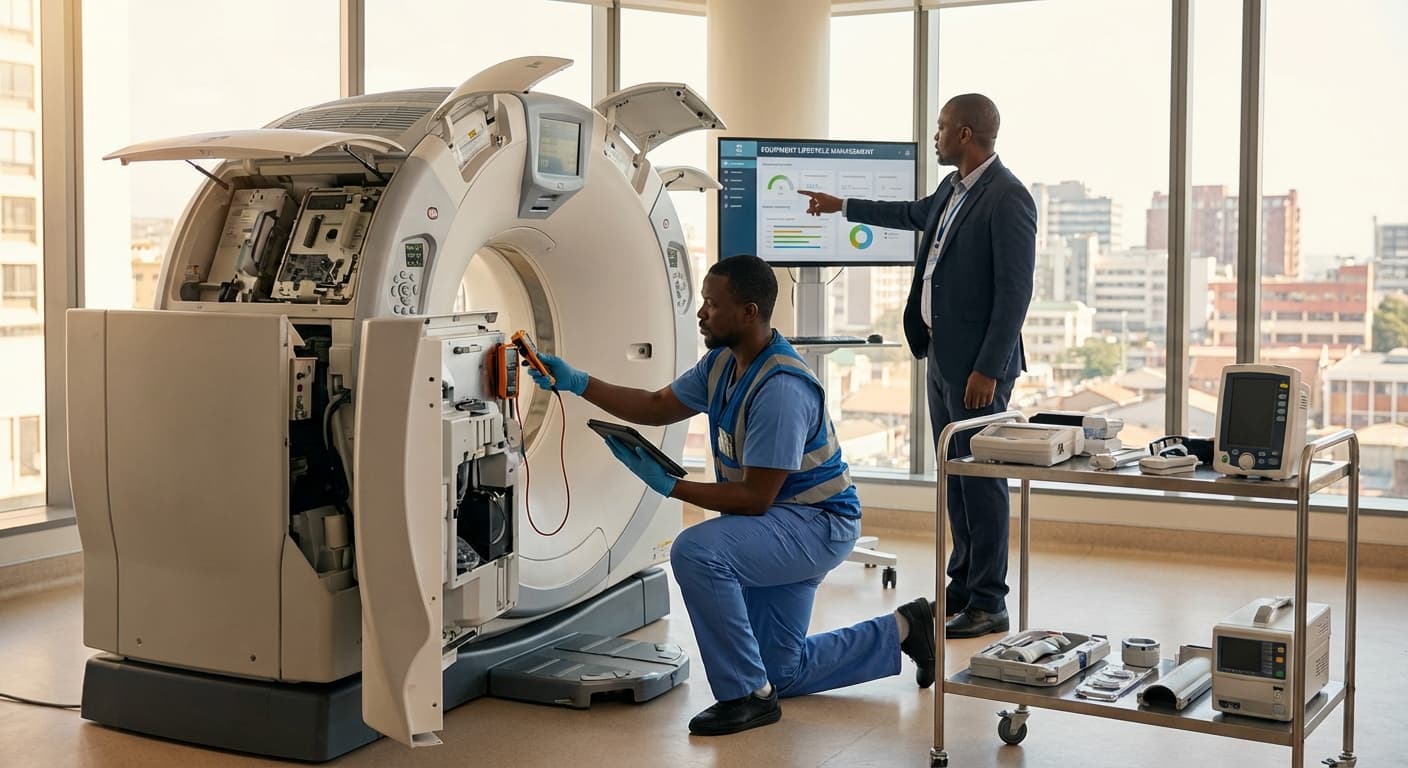
Equipment Replacement Planning & Obsolescence Strategy Service in Malawi
Engineering Excellence & Technical Support
Equipment Replacement Planning & Obsolescence Strategy Service High-standard technical execution following OEM protocols and local regulatory frameworks.
Proactive Obsolescence Forecasting
Leverage advanced analytics to predict equipment end-of-life and obsolescence risks, enabling timely replacement decisions and minimizing operational disruptions in Malawi's unique infrastructure environment.
Optimized Capital Expenditure (CAPEX)
Develop tailored replacement plans that align with budgetary constraints and long-term asset management goals, ensuring maximum return on investment for critical equipment throughout Malawi.
Risk Mitigation & Business Continuity
Implement robust obsolescence strategies to safeguard against supply chain vulnerabilities and maintain operational resilience, ensuring uninterrupted service delivery for businesses and communities across Malawi.
What Is Equipment Replacement Planning & Obsolescence Strategy Service In Malawi?
Equipment Replacement Planning & Obsolescence Strategy Service in Malawi refers to a specialized consulting engagement designed to assist organizations in proactively managing their asset lifecycle. This service focuses on developing and implementing robust strategies for the timely and cost-effective replacement of aging or obsolete equipment, thereby mitigating operational risks, optimizing capital expenditure, and ensuring continued technological relevance. It involves a systematic evaluation of an organization's asset portfolio, considering factors such as performance degradation, maintenance costs, technological advancements, regulatory compliance, and strategic business objectives.
| Who Needs This Service? | Typical Use Cases in Malawi | ||||||||||||||
|---|---|---|---|---|---|---|---|---|---|---|---|---|---|---|---|
| Industries heavily reliant on physical assets, such as manufacturing, mining, energy, telecommunications, transportation, and agriculture. | Organizations facing escalating maintenance costs for older machinery. | Businesses looking to upgrade to more energy-efficient or technologically advanced equipment to improve productivity and sustainability. | Companies operating in sectors with rapid technological evolution and a need to stay competitive. | Public sector entities managing critical infrastructure and public service delivery assets. | Organizations subject to stringent regulatory compliance requirements related to equipment safety and performance. | Companies planning significant capital investment programs and seeking to optimize their asset acquisition and disposal cycles. | Businesses experiencing performance bottlenecks or production downtime due to aging equipment. | Organizations aiming to enhance operational efficiency, reduce downtime, and improve asset utilization. | Manufacturers seeking to modernize production lines to meet evolving market demands or quality standards. | Mining and quarrying operations requiring reliable and high-performance heavy machinery. | Power generation and distribution companies managing aging power plants and grid infrastructure. | Telecommunication providers upgrading network infrastructure to support new technologies like 5G. | Agricultural enterprises investing in modern farming equipment for improved yields and efficiency. | Government agencies responsible for maintaining national infrastructure (e.g., roads, bridges, public transport). | Any organization where the failure or obsolescence of critical equipment poses a significant business risk. |
Key Components of the Service:
- Asset Inventory and Condition Assessment: Comprehensive cataloging of existing equipment, including age, condition, maintenance history, and performance metrics.
- Obsolescence Risk Analysis: Identification and quantification of risks associated with outdated equipment, including performance limitations, lack of spare parts, security vulnerabilities, and difficulty in obtaining support.
- Life Cycle Costing (LCC) Analysis: Evaluation of the total cost of ownership for equipment throughout its life cycle, including acquisition, operation, maintenance, and disposal.
- Replacement Forecasting and Prioritization: Development of models to predict optimal replacement timelines based on LCC, risk assessment, and business needs, along with a prioritization framework.
- Technology Scouting and Roadmapping: Research into emerging technologies and their potential impact on future operational requirements and equipment needs.
- Capital Expenditure (CAPEX) Planning: Integration of replacement strategies into long-term financial and capital budgeting processes.
- Risk Mitigation and Contingency Planning: Development of strategies to address potential disruptions caused by equipment failure or obsolescence.
- Vendor Management and Procurement Strategy: Optimization of procurement processes for new equipment and strategic engagement with suppliers.
- End-of-Life (EOL) Management: Planning for responsible and compliant disposal or decommissioning of obsolete assets.
Who Needs Equipment Replacement Planning & Obsolescence Strategy Service In Malawi?
In Malawi, businesses across various sectors are increasingly recognizing the critical need for proactive Equipment Replacement Planning & Obsolescence Strategy Services. This is driven by a growing emphasis on operational efficiency, cost management, regulatory compliance, and maintaining a competitive edge. Organizations that fail to plan for the end-of-life of their equipment and the inevitable obsolescence of technology risk significant disruptions, unexpected capital expenditures, and a decline in productivity. Such services are essential for ensuring business continuity, maximizing asset lifespan, and making informed investment decisions.
| Customer Segment | Key Departments Involved | Primary Needs Addressed |
|---|---|---|
| Manufacturing | Operations, Maintenance, Engineering, Finance, Procurement | Preventing production downtime due to aging machinery, optimizing maintenance budgets, ensuring access to spare parts, planning for technological upgrades to improve efficiency and product quality. |
| Mining & Extractive | Operations, Maintenance, Engineering, Health & Safety, Finance, Procurement | Managing high-value, specialized equipment, ensuring safety and compliance, forecasting large capital expenditures for replacements, mitigating risks of production halts due to equipment failure or obsolescence. |
| Energy & Utilities | Operations, Engineering, Maintenance, Asset Management, Finance, Regulatory Compliance | Ensuring reliable service delivery, planning for long-term infrastructure upgrades, managing the lifecycle of critical power generation and distribution equipment, complying with national and international standards. |
| Telecommunications | Network Operations, Engineering, IT, Finance, Procurement, Strategic Planning | Keeping pace with rapidly evolving technology, managing the obsolescence of network infrastructure, planning for 5G and future network expansions, ensuring service quality and customer satisfaction. |
| Healthcare Institutions | Biomedical Engineering, IT, Operations, Finance, Procurement, Quality Assurance | Maintaining the functionality of life-saving medical equipment, managing the lifecycle of diagnostic and imaging systems, ensuring patient safety, complying with healthcare regulations, budgeting for timely replacements. |
| Government Ministries & Agencies | Public Works, Transport, Health, Education, Finance, Procurement, IT | Managing public assets and infrastructure, ensuring service delivery to citizens, optimizing public spending, planning for the replacement of critical government equipment and IT systems, adhering to procurement regulations. |
Target Customers in Malawi
- Manufacturing Companies
- Mining and Extractive Industries
- Energy and Utilities Sector (Power Generation, Water Supply)
- Telecommunications Providers
- Transportation and Logistics Companies
- Healthcare Institutions (Hospitals, Clinics)
- Agricultural Cooperatives and Large-Scale Farms
- Construction and Infrastructure Development Firms
- Government Ministries and Agencies (responsible for public infrastructure and services)
- Financial Institutions (with significant IT infrastructure)
- Educational Institutions (universities, technical colleges)
- Food and Beverage Processors
Equipment Replacement Planning & Obsolescence Strategy Service Process In Malawi
This document outlines the workflow for an Equipment Replacement Planning & Obsolescence Strategy Service in Malawi, detailing the process from initial inquiry to the successful execution of the service. The service aims to help organizations in Malawi proactively manage their equipment lifecycle, identify potential obsolescence, and develop cost-effective replacement strategies to ensure operational continuity and efficiency.
| Phase | Stage | Description | Key Activities | Deliverables | Responsible Parties | Malawi Context Considerations |
|---|---|---|---|---|---|---|
| 1 | Inquiry & Needs Assessment | The client expresses interest and the service provider understands their specific needs regarding equipment management and obsolescence. | Initial consultation, understanding client objectives, defining service scope, preliminary risk identification. | Service proposal, Non-Disclosure Agreement (NDA), agreed scope of work. | Client (Management, Procurement, Operations), Service Provider (Consultant, Account Manager) | Understanding local industry needs, regulatory environment (if any), and common equipment types. |
| 2 | Data Gathering & Inventory | Collection of comprehensive data on existing equipment assets. | Asset inventory compilation, condition assessment, maintenance history review, operational usage data collection, procurement records, warranty information. | Detailed equipment inventory, condition assessment report, maintenance logs, usage data summary. | Client (Asset Management, IT, Operations), Service Provider (Data Analyst, Technical Consultant) | Accessibility of remote sites, data reliability and accuracy challenges, local language considerations for data collection. |
| 3 | Obsolescence Analysis & Risk Assessment | Analyzing collected data to identify equipment at risk of obsolescence and its potential impact. | Life cycle analysis, vendor support evaluation, technology trend forecasting, failure rate analysis, spare parts availability check, financial impact assessment. | Obsolescence risk matrix, failure prediction models, impact assessment report. | Service Provider (Obsolescence Specialist, Risk Analyst), Client (Technical Experts) | Availability of local technical expertise for specialized equipment, local import/export regulations for spare parts. |
| 4 | Replacement Strategy Development | Formulating tailored strategies for equipment replacement and lifecycle management. | Developing replacement scenarios (e.g., phased replacement, immediate replacement), identifying suitable replacement technologies, cost-benefit analysis of replacement options, developing procurement strategies, defining end-of-life disposal plans. | Equipment replacement roadmap, capital expenditure (CAPEX) plan, procurement strategy, disposal plan. | Service Provider (Strategy Consultant, Financial Analyst), Client (Procurement, Finance, Operations) | Local supplier availability and reliability, financing options and interest rates in Malawi, environmental regulations for disposal. |
| 5 | Implementation & Execution | Putting the developed strategy into action. | Procurement of new equipment, installation and commissioning, decommissioning and disposal of old equipment, staff training on new equipment, project management. | New equipment installed, old equipment disposed, training records, project completion report. | Client (Procurement, Operations, IT, HR), Service Provider (Project Manager, Technical Advisors), Vendors | Logistics and transportation challenges within Malawi, customs clearance for imported equipment, availability of qualified local technicians for installation. |
| 6 | Monitoring, Review & Optimization | Ongoing tracking of equipment performance and strategy effectiveness. | Performance monitoring of new equipment, review of operational efficiency, post-implementation cost analysis, updating obsolescence strategy based on new data and market changes, knowledge transfer to client team. | Performance review reports, updated obsolescence strategy, lessons learned documentation. | Client (Operations, Asset Management), Service Provider (Consultant) | Establishing local partnerships for ongoing support and maintenance, long-term economic stability influencing future planning. |
Service Workflow: Equipment Replacement Planning & Obsolescence Strategy
- Phase 1: Initial Inquiry & Scoping
- Phase 2: Data Collection & Assessment
- Phase 3: Analysis & Strategy Development
- Phase 4: Recommendation & Planning
- Phase 5: Execution & Implementation
- Phase 6: Monitoring & Review
Equipment Replacement Planning & Obsolescence Strategy Service Cost In Malawi
Estimating the cost of Equipment Replacement Planning & Obsolescence Strategy services in Malawi requires understanding several key pricing factors. These services are crucial for businesses to proactively manage their asset lifecycle, minimize downtime, reduce unexpected expenditures, and ensure compliance with evolving technological standards. The local economic landscape, the complexity of the client's operations, and the specific scope of work all significantly influence the final price. Malawi's currency, the Malawian Kwacha (MWK), is subject to exchange rate fluctuations and inflation, which can impact the cost of imported expertise or tools, and therefore, the pricing of these services.
| Service Scope/Complexity | Estimated Price Range (MWK) |
|---|---|
| Basic Equipment Audit & Recommendations (Small Business, Few Assets): | 3,000,000 - 7,000,000 MWK |
| Mid-Level Assessment (Medium Enterprise, Moderate Asset Portfolio): | 7,000,000 - 15,000,000 MWK |
| Comprehensive Strategy Development (Large Enterprise, Extensive & Complex Assets): | 15,000,000 - 40,000,000+ MWK |
| Ongoing Monitoring & Strategy Updates (Annual Contract): | 5,000,000 - 20,000,000+ MWK (depending on scope) |
| Specialized Obsolescence Analysis (e.g., IT Infrastructure, Specialized Machinery): | Included in above, or an additional 2,000,000 - 10,000,000 MWK per specialized area |
Key Pricing Factors for Equipment Replacement Planning & Obsolescence Strategy Services in Malawi
- {"title":"Scope of Services","description":"The breadth and depth of the service offering are primary drivers. This can range from a basic assessment of a few critical assets to a comprehensive, enterprise-wide lifecycle management program covering all equipment categories."}
- {"title":"Number and Complexity of Assets","description":"The quantity of equipment to be assessed, along with their technical sophistication and interdependencies, directly affects the time and resources required for analysis and strategy development."}
- {"title":"Data Availability and Quality","description":"Access to accurate and complete data on equipment age, maintenance history, performance metrics, and original purchase costs is vital. Poor data quality necessitates additional effort for data collection and validation, increasing costs."}
- {"title":"Consultant's Expertise and Reputation","description":"Highly experienced consultants or firms with a proven track record in asset management and obsolescence strategies will command higher fees. Their specialized knowledge and industry insights are valuable."}
- {"title":"Project Duration and Timeline","description":"The length of the engagement, dictated by the complexity and scope, will directly impact labor costs. Urgent or accelerated timelines may also incur premium charges."}
- {"title":"Geographical Location and Travel","description":"If the consultant needs to travel extensively within Malawi or internationally for site visits or client meetings, travel and accommodation expenses will be added to the total cost."}
- {"title":"Technology and Tools Used","description":"The use of advanced asset management software, simulation tools, or specialized obsolescence forecasting platforms can influence pricing, either through licensing fees or by enabling more efficient analysis."}
- {"title":"Deliverables Required","description":"The nature and format of the final deliverables (e.g., detailed reports, strategic roadmaps, software implementation plans, training materials) will affect the effort involved."}
- {"title":"Client's Internal Resources","description":"The extent to which the client can provide internal resources for data gathering, site access, and collaboration can reduce the consultant's workload and hence the cost."}
- {"title":"Market Demand and Competition","description":"The availability of specialized service providers in Malawi and the general demand for such services can influence pricing. A more competitive market might lead to more favorable rates."}
Affordable Equipment Replacement Planning & Obsolescence Strategy Service Options
Our Affordable Equipment Replacement Planning & Obsolescence Strategy service empowers businesses to proactively manage their asset lifecycle, minimize downtime, and optimize capital expenditure. We offer flexible value bundles designed to address varying needs and budgets, ensuring you receive tailored support for effective equipment management and long-term cost savings.
| Cost-Saving Strategy | Description | How Our Service Delivers Value |
|---|---|---|
| Extended Asset Lifespan: | Implementing proactive maintenance and early identification of potential issues can prolong the useful life of existing equipment. | Our obsolescence strategy helps identify equipment nearing end-of-life, allowing for planned, cost-effective replacements rather than emergency purchases. We also advise on optimal maintenance schedules. |
| Optimized Capital Expenditure: | Avoiding rushed, unplanned purchases by strategically planning replacements based on actual need and market conditions. | Our planning models forecast future replacement needs, enabling better budgeting and allowing for bulk purchasing or negotiation of better terms when acquiring new equipment. |
| Reduced Downtime & Lost Productivity: | Minimizing unexpected equipment failures that disrupt operations and lead to lost revenue. | By identifying critical equipment at risk of obsolescence or failure, we help implement phased replacements and preventative maintenance, significantly reducing unplanned downtime. |
| Leveraging Technology Advancements: | Strategically upgrading to newer, more efficient equipment that offers better performance and lower operating costs. | Our service analyzes the total cost of ownership, including energy efficiency and maintenance, for both current and potential replacement equipment, ensuring you invest in technologies that offer the best long-term value. |
| Negotiation Power: | Achieving better pricing and terms with vendors through informed purchasing decisions. | With a clear understanding of your replacement needs and timelines, we empower you with data to negotiate favorable contracts and pricing with equipment manufacturers and suppliers. |
Value Bundles & Service Tiers
- Essential Planning Bundle: Ideal for businesses seeking foundational support. Includes initial asset assessment, basic obsolescence risk identification, and a simplified replacement schedule template.
- Proactive Strategy Bundle: Our most popular option, offering a comprehensive approach. Combines detailed asset audits, advanced obsolescence forecasting, scenario planning for replacements, and initial vendor negotiation support.
- Integrated Management Bundle: For organizations requiring continuous oversight and optimization. Encompasses all Proactive Strategy Bundle features plus ongoing monitoring, performance analysis, risk mitigation strategies, and customized budget forecasting for replacement cycles.
- Customized Solutions: We understand that every business is unique. Contact us to design a bespoke package tailored to your specific operational requirements, industry regulations, and budget constraints.
Verified Providers In Malawi
Finding reliable and trustworthy healthcare providers is crucial for your well-being. In Malawi, 'Verified Providers' signifies a commitment to quality, ethical practices, and patient-centered care. Franance Health stands out as a leading platform that rigorously vets its network of healthcare professionals, ensuring that every provider listed meets the highest standards. This verification process involves a multi-faceted approach, guaranteeing that patients receive safe, effective, and compassionate medical services. By choosing Franance Health's verified providers, you are opting for peace of mind and access to the best possible healthcare in Malawi.
| Verification Aspect | Franance Health Standard | Benefit to Patient |
|---|---|---|
| Licensing and Qualifications | Mandatory verification of all relevant medical licenses and educational degrees. | Ensures providers possess the fundamental knowledge and legal authorization to practice. |
| Professional Experience | Thorough review of practice history and areas of expertise. | Connects patients with providers who have proven experience in their specific medical needs. |
| Ethical Conduct | Background checks and assessment of adherence to professional codes of conduct. | Guarantees a safe and trustworthy healthcare environment, free from malpractice concerns. |
| Patient Feedback and Reviews | Consideration of patient testimonials and satisfaction ratings (where applicable). | Provides insights into the provider's bedside manner and overall patient experience. |
| Continuing Medical Education (CME) | Encouragement and, in some cases, verification of ongoing professional development. | Ensures providers are up-to-date with the latest medical knowledge and techniques. |
Why Franance Health Verified Providers are the Best Choice:
- Rigorous Vetting Process: Franance Health employs a stringent credentialing process that goes beyond basic licensing. This includes background checks, verification of qualifications and experience, and assessment of ethical conduct.
- Commitment to Quality Care: Verified providers are committed to delivering high-quality medical services, adhering to best practices and clinical guidelines.
- Patient-Centric Approach: These professionals prioritize patient needs, ensuring clear communication, respect, and a supportive healthcare experience.
- Access to Diverse Specialties: Franance Health's network encompasses a wide range of medical specialties, allowing you to find the right expert for your specific health concerns.
- Transparency and Trust: The verification badge instills confidence, assuring patients that they are engaging with reputable and skilled healthcare practitioners.
- Continuous Improvement: Verified providers are often part of ongoing professional development programs, staying up-to-date with the latest advancements in medicine.
Scope Of Work For Equipment Replacement Planning & Obsolescence Strategy Service
This Scope of Work (SOW) outlines the services to be provided for Equipment Replacement Planning and Obsolescence Strategy. The objective is to develop a comprehensive and proactive strategy that minimizes disruption, optimizes lifecycle costs, and ensures continued operational efficiency through timely and strategic equipment replacement.
| Deliverable Name | Description | Standard Specifications/Format | Phase |
|---|---|---|---|
| Current Equipment Inventory & Condition Report | Detailed listing of all critical equipment, including manufacturer, model, serial number, installation date, maintenance history, current condition, and operational status. | Excel spreadsheet or database format. Includes fields for all listed information. Standardized naming conventions for equipment types. | Phase 1 |
| Obsolescence Risk Matrix | Identifies equipment at risk of obsolescence based on manufacturer support, part availability, component lifecycles, and technological advancements. Categorizes risk levels (e.g., High, Medium, Low). | Excel spreadsheet or dashboard visualization. Columns for Equipment, Manufacturer, Model, Risk Factor, Risk Level, and Mitigation Recommendations. | Phase 2 |
| Lifecycle Cost Analysis (LCCA) Framework | Establishes a methodology for evaluating the total cost of ownership for equipment, including acquisition, operation, maintenance, and disposal costs. To be applied during replacement decisions. | Document outlining LCCA methodology, including key cost categories and calculation formulas. Can be a standardized template for future analysis. | Phase 2 |
| Prioritized Equipment Replacement List | A ranked list of equipment requiring replacement, based on criticality, obsolescence risk, maintenance costs, and operational impact. Includes recommended replacement timelines. | Excel spreadsheet or database. Columns for Equipment, Priority Level, Justification, Recommended Replacement Year, Estimated Cost Range. | Phase 3 |
| Obsolescence Mitigation Strategy Document | Outlines proactive measures to address identified obsolescence risks, including strategies for sourcing alternative parts, extending equipment life, or planning for early retirement. | Formal document (e.g., PDF or Word). Sections include Executive Summary, Current State Analysis, Obsolescence Risks, Mitigation Strategies (categorized by risk), and Recommended Actions. | Phase 4 |
| Equipment Replacement Roadmap | A multi-year plan detailing planned equipment replacements, including timelines, budget estimates, and resource requirements. Aligned with the prioritized replacement list and mitigation strategies. | Gantt chart or project management software export (e.g., MS Project, Asana). Visual representation of replacement activities over time. Includes key milestones and dependencies. | Phase 4 |
| Performance Monitoring Dashboard (Template) | A template for a dashboard that tracks key performance indicators (KPIs) related to equipment reliability, maintenance costs, and replacement plan adherence. (Client to implement) | Digital dashboard template (e.g., Tableau, Power BI, Excel). Defines key metrics, data sources, and visualization types. | Phase 5 |
| Final Project Report & Recommendations | A comprehensive report summarizing the findings of the project, the developed strategy, and recommendations for ongoing management of equipment lifecycle and obsolescence. | Formal document (e.g., PDF). Includes executive summary, methodology, key findings, implemented strategies, roadmap, and future recommendations. | Phase 5 |
Key Service Components
- Phase 1: Discovery and Assessment
- Phase 2: Obsolescence Analysis and Risk Assessment
- Phase 3: Replacement Planning and Prioritization
- Phase 4: Strategy Development and Roadmap Creation
- Phase 5: Implementation Support and Monitoring
Service Level Agreement For Equipment Replacement Planning & Obsolescence Strategy Service
This Service Level Agreement (SLA) outlines the guaranteed response times and uptime for the Equipment Replacement Planning & Obsolescence Strategy Service. This service is designed to proactively identify and manage the lifecycle of equipment, ensuring timely replacement and mitigation of obsolescence risks.
| Service Component | Response Time Guarantee | Uptime Guarantee |
|---|---|---|
| Initial Equipment Assessment & Data Ingestion | Within 4 business hours of receiving complete equipment inventory data. | N/A (One-time or scheduled activity) |
| Obsolescence Risk Alert Notification (Critical) | Within 2 business hours of identification by the system. | 99.9% for the alert notification system. |
| Obsolescence Risk Alert Notification (High) | Within 4 business hours of identification by the system. | 99.9% for the alert notification system. |
| Request for Replacement Strategy Review Meeting | Within 8 business hours to confirm meeting availability, with meeting scheduled within 3 business days. | 99.9% for the scheduling and communication platform. |
| Delivery of Draft Replacement Roadmap (per agreed milestone) | As per agreed project timeline and milestones. | 99.9% for the delivery platform (e.g., secure portal). |
| Ad-hoc Consultation / Query Response | Within 8 business hours for standard queries, 4 business hours for urgent queries (defined as impacting immediate operational continuity). | 99.9% for the support portal and communication channels. |
| System Availability (for accessing reports, dashboards, and strategy documents) | N/A | 99.9% during standard business hours (defined as Monday-Friday, 9:00 AM - 5:00 PM in the client's primary time zone). |
Service Scope and Objectives
- Proactive identification of end-of-life and end-of-support for critical equipment.
- Development and maintenance of a strategic equipment replacement roadmap.
- Analysis of obsolescence trends and their potential impact on operations.
- Recommendations for phased upgrades, replacements, and technology refreshes.
- Support for business case development for equipment modernization initiatives.
Frequently Asked Questions

Ready when you are
Let's scope your Equipment Replacement Planning & Obsolescence Strategy Service in Malawi project in Malawi.

Scaling healthcare logistics and technical systems across the entire continent.