
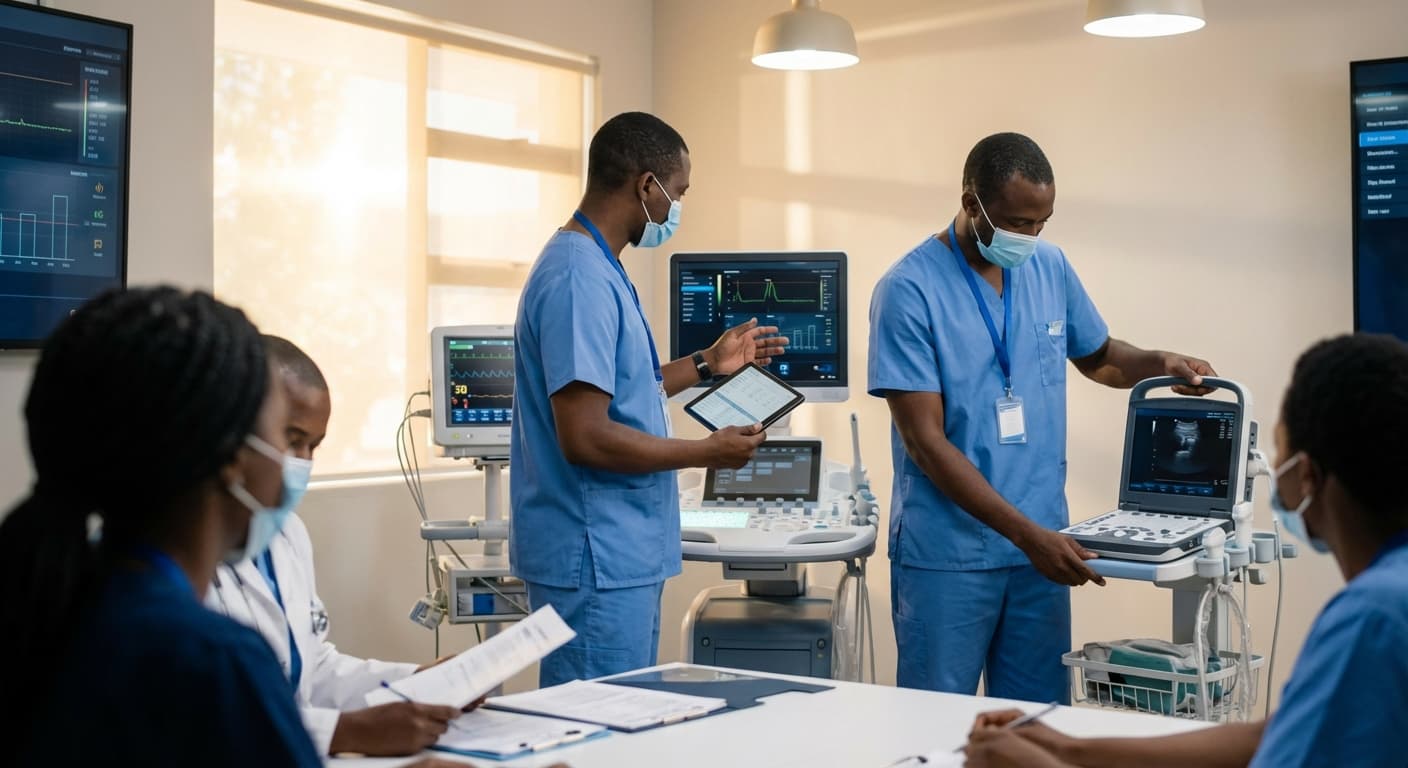
Clinical Needs Assessment for Medical Equipment in Malawi
Engineering Excellence & Technical Support
Clinical Needs Assessment for Medical Equipment High-standard technical execution following OEM protocols and local regulatory frameworks.
Community-Centric Needs Identification
Leveraging mobile health (mHealth) platforms and trained local health workers to gather real-time data on patient demographics, disease prevalence, and existing equipment utilization at the health facility and community levels. This granular approach ensures that equipment procurement aligns with the most pressing health needs and accessibility challenges faced by Malawian populations.
Epidemiological Data Integration & Predictive Modeling
Integrating national and sub-national epidemiological data with facility-level equipment status to identify critical gaps and predict future demands. This involves analyzing disease burden trends, seasonal variations, and population growth to proactively recommend equipment suitable for both current and projected health service delivery requirements.
Infrastructure & Sustainability Assessment
Conducting thorough assessments of existing healthcare infrastructure, including power supply stability, water access, and maintenance capacity, prior to recommending specific medical equipment. This technical highlight emphasizes the procurement of equipment that is not only technologically appropriate but also sustainable within the Malawian context, factoring in local repair capabilities and spare parts availability to ensure long-term operational viability.
What Is Clinical Needs Assessment For Medical Equipment In Malawi?
A Clinical Needs Assessment for Medical Equipment in Malawi is a systematic process designed to identify, evaluate, and prioritize the essential medical equipment required to effectively deliver healthcare services within a specific facility, district, or the entire national health system. It is a crucial component of health system strengthening, ensuring that scarce resources are allocated judiciously to procure equipment that aligns with current and projected clinical demands, disease burdens, and service delivery models. The assessment considers factors such as population demographics, epidemiological profiles, existing infrastructure, healthcare worker capacity, maintenance capabilities, and the national health policy framework. The ultimate goal is to ensure that healthcare providers have access to appropriate, functional, and sustainable medical equipment to diagnose, treat, and manage patient conditions, thereby improving health outcomes and equitable access to care.
| Who Needs Clinical Needs Assessment for Medical Equipment? | Typical Use Cases |
|---|---|
| Ministry of Health (MoH) National Level: For national health infrastructure planning, policy development, resource allocation, and developing national medical equipment procurement strategies. | Developing national essential medical equipment lists (e.g., for primary healthcare centers, district hospitals). Developing national procurement frameworks and tenders. Identifying equipment needs for national health campaigns or disease eradication programs. Planning for national health infrastructure development and upgrades. |
| District Health Offices (DHOs): To assess and prioritize equipment needs within their assigned districts, ensuring alignment with local health priorities and service delivery plans. | Developing district-level equipment procurement plans. Allocating and managing equipment budgets at the district level. Identifying equipment gaps for newly established or upgraded district facilities. Monitoring equipment utilization and maintenance within the district. |
| Individual Healthcare Facilities (Hospitals, Health Centers): To identify specific equipment deficits and justify procurement requests based on direct clinical needs and service delivery capacity. | Formulating specific equipment procurement lists for annual budgeting and proposals. Justifying the need for specific equipment upgrades or replacements. Assessing requirements for new service lines or specialized units within the facility. Developing maintenance and service plans for existing and new equipment. |
| Non-Governmental Organizations (NGOs) and Development Partners: When implementing health projects or providing support to the Malawian health sector, to ensure procured equipment is appropriate and sustainable. | Determining the most impactful equipment to donate or fund for specific projects. Ensuring sustainability of equipment through training and maintenance plans. Aligning project-specific equipment needs with national health priorities. Conducting pre-procurement assessments to avoid duplication or inappropriate acquisition. |
| Healthcare Training Institutions: To identify equipment required for training healthcare professionals to meet current and future service demands. | Developing curriculum-relevant equipment lists for medical and nursing schools. Ensuring graduates are trained on modern and essential medical equipment. Upgrading training facilities to reflect current clinical practice. |
Key Components of a Clinical Needs Assessment for Medical Equipment in Malawi:
- Facility Profiling: Detailed analysis of the healthcare facility's structure, services offered (primary, secondary, tertiary care), patient flow, and existing equipment inventory.
- Service Gap Analysis: Identifying discrepancies between the services intended to be provided and those that can currently be delivered due to equipment limitations.
- Clinical Demand Forecasting: Estimating the volume and type of procedures, diagnostic tests, and treatments required based on patient demographics, disease prevalence, and incidence rates.
- Equipment Benchmarking: Comparing the current equipment inventory against established national or international standards and best practices for similar facilities and service levels.
- Technological Appropriateness: Evaluating the suitability of proposed equipment in terms of its complexity, ease of use, maintenance requirements, and compatibility with the local context (e.g., power supply, consumables availability).
- Infrastructure and Utility Assessment: Verifying that the facility's infrastructure (e.g., electrical, plumbing, space) can support the installation, operation, and maintenance of proposed equipment.
- Human Resource Capacity Evaluation: Assessing the availability of trained personnel to operate and maintain the identified equipment.
- Maintenance and Serviceability Analysis: Determining the availability and cost of spare parts, qualified technicians, and service contracts for the lifespan of the equipment.
- Budgetary and Funding Considerations: Estimating the capital expenditure, operational costs, and identifying potential funding sources for procurement, installation, training, and maintenance.
- Prioritization Framework: Developing a system for ranking equipment needs based on urgency, impact on patient outcomes, cost-effectiveness, and strategic alignment with national health priorities.
Who Needs Clinical Needs Assessment For Medical Equipment In Malawi?
Clinical needs assessment for medical equipment is a crucial process in Malawi, ensuring that healthcare facilities procure the right tools to effectively deliver patient care. This assessment identifies existing gaps in equipment, anticipates future demands based on disease prevalence and population growth, and ensures that procured equipment is appropriate for the local context in terms of usability, maintenance, and cost-effectiveness. By conducting thorough clinical needs assessments, Malawi can optimize its limited healthcare resources, improve the quality of medical services, and ultimately enhance health outcomes for its population. The focus is on aligning medical equipment investments with actual clinical requirements and strategic health priorities.
| Department | Key Needs Addressed by Assessment | Examples of Equipment Areas |
|---|---|---|
| General Outpatient Department (OPD) | Basic diagnostic and treatment tools for common ailments. | Stethoscopes, blood pressure monitors, thermometers, examination couches, basic wound care supplies. |
| Maternity and Neonatal Care | Equipment for safe delivery, maternal monitoring, and newborn care. | Delivery tables, fetal dopplers, infant incubators, radiant warmers, suction machines, resuscitation equipment. |
| Surgical Services (Operating Theatres) | Instruments and equipment for a range of surgical procedures. | Surgical instrument sets, anesthesia machines, electrocautery units, surgical lights, operating tables, sterilization equipment. |
| Emergency and Trauma Care | Rapid assessment and stabilization tools for critical patients. | Cardiac monitors, defibrillators, ventilators, infusion pumps, trauma kits, stretchers. |
| Laboratory Services | Equipment for diagnostic testing and sample analysis. | Microscopes, centrifuges, hematology analyzers, chemistry analyzers, refrigerators for sample storage. |
| Radiology and Imaging | Equipment for diagnostic imaging to identify internal conditions. | X-ray machines, ultrasound machines, CT scanners (where applicable), film processors (or digital equivalents). |
| Internal Medicine / Medical Wards | Monitoring and treatment equipment for chronic and acute medical conditions. | Patient monitors, oxygen concentrators, nebulizers, wheelchairs, rehabilitation equipment. |
| Pediatrics | Equipment specifically designed for children's health needs. | Pediatric stethoscopes, infant scales, specialized thermometers, pediatric ventilators. |
| Pharmacy | Equipment for dispensing, storage, and compounding of medications. | Counting trays, pill cutters, weighing scales, refrigerators, laminar flow cabinets (for sterile preparations). |
| Rehabilitation Services | Tools for physical therapy, occupational therapy, and speech therapy. | Exercise equipment, gait training aids, specialized therapy tables, adaptive equipment. |
Target Customers and Departments for Clinical Needs Assessment in Malawi
- Ministry of Health (MoH): The primary customer, responsible for national health policy, planning, and resource allocation. The MoH utilizes needs assessments to inform national procurement strategies, budget allocations, and infrastructure development plans.
- District Health Offices (DHOs): Responsible for overseeing healthcare delivery within specific districts. DHOs use needs assessments to prioritize equipment for their district facilities, manage local procurement, and ensure equitable distribution.
- Central and District Hospitals: These are major healthcare providers with diverse departments. Needs assessments are vital for each hospital to identify specific equipment shortfalls and plan for upgrades or replacements.
- Rural Health Centers and Community Clinics: Facilities serving remote populations often have the most significant equipment needs. Assessments help prioritize essential equipment for primary healthcare services.
- Specialized Medical Institutions (e.g., National Cancer Center, Cardiac Units): Facilities focusing on specific diseases require targeted needs assessments to acquire advanced and specialized equipment.
- Training Institutions (e.g., medical schools, nursing colleges): While not direct patient care providers, these institutions need up-to-date equipment for training future healthcare professionals. Assessments ensure they have the necessary tools for effective education.
- Non-Governmental Organizations (NGOs) and Faith-Based Organizations (FBOs) involved in healthcare: Many NGOs and FBOs operate healthcare facilities and require needs assessments to guide their own procurement and project planning, often in collaboration with the MoH.
- International Donor Agencies and Development Partners: These entities often fund medical equipment procurement. Needs assessments provide the evidence base for them to direct their resources effectively and ensure sustainability.
Clinical Needs Assessment For Medical Equipment Process In Malawi
This document outlines the typical workflow for a Clinical Needs Assessment for Medical Equipment in Malawi, from the initial inquiry to the final execution and implementation. The process is designed to ensure that healthcare facilities receive appropriate, functional, and sustainable medical equipment aligned with their clinical needs and the broader health system priorities.
| Stage | Key Activities | Responsible Parties | Outputs/Deliverables | Timeline (Typical) |
|---|---|---|---|---|
| 1. Inquiry/Request | Receipt of a request for medical equipment needs assessment from a healthcare facility, Ministry of Health (MoH) department, or implementing partner. | Receiving Unit (e.g., MoH, Biomedical Engineering Department, specific program) | Formal request/Terms of Reference (ToR) for the assessment. | 1-2 weeks |
| 2. Scoping and Planning | Defining the scope of the assessment (specific facility, department, or equipment category). Identifying stakeholders. Developing a detailed work plan, including methodology, timeline, and budget. | Assessment Team Lead, MoH Representatives, Facility Management, Relevant Specialists | Approved Work Plan, Stakeholder Engagement Strategy. | 2-3 weeks |
| 3. Site Visit and Data Collection | On-site assessment of existing infrastructure, patient load, available services, current equipment inventory, and functional status. Interviews with clinicians, biomedical engineers, administrators, and patients. | Assessment Team (Biomedical Engineers, Clinical Officers, Public Health Specialists) | Needs Assessment Questionnaire, Interview Guides, Site Observation Forms, Existing Equipment Inventory Data, Infrastructure Assessment Reports. | 2-6 weeks (depending on scale and number of facilities) |
| 4. Data Analysis and Gap Identification | Analyzing collected data to identify critical equipment needs based on clinical priorities, service delivery gaps, and current utilization. Comparing needs against existing resources and national guidelines. | Assessment Team, Data Analysts | Gap Analysis Report, List of identified equipment needs. | 2-4 weeks |
| 5. Prioritization and Equipment Specification | Prioritizing identified equipment needs based on urgency, impact, cost-effectiveness, and sustainability. Developing detailed technical specifications for each required piece of equipment. | Assessment Team, Clinical Specialists, Procurement Department | Prioritized Equipment List with Justification, Technical Specifications for each item, Draft Budget. | 2-3 weeks |
| 6. Report Generation and Validation | Compiling a comprehensive needs assessment report including findings, recommendations, prioritized equipment list, and budget. Presenting the report to stakeholders for review and validation. | Assessment Team, Report Writer | Draft Needs Assessment Report, Final Needs Assessment Report, Stakeholder Validation Minutes. | 2-3 weeks |
| 7. Procurement Planning and Approval | Submission of the validated report to the relevant authorities for budget allocation and procurement approval. Developing tender documents based on approved specifications. | MoH Procurement Unit, Ministry of Finance, Tender Committee | Approved Budget, Tender Documents (RFPs/ITTs). | 4-8 weeks (can vary significantly) |
| 8. Procurement Process | Issuing tenders, evaluating bids, awarding contracts to suppliers, and placing orders for the selected medical equipment. | MoH Procurement Unit, Tender Committee, Suppliers | Signed Procurement Contracts, Purchase Orders. | 8-16 weeks (can vary significantly) |
| 9. Logistics and Installation | Overseeing the transportation, delivery, and installation of medical equipment at the designated healthcare facilities. Conducting initial inspection and functionality tests. | Logistics Providers, Suppliers, Biomedical Engineering Department, Facility Staff | Delivery Notes, Installation Reports, Initial Functionality Test Reports. | 4-12 weeks (depending on customs clearance and delivery logistics) |
| 10. Training and Commissioning | Providing comprehensive training to healthcare professionals and biomedical technicians on the operation, maintenance, and troubleshooting of the newly installed equipment. Formal commissioning of the equipment. | Suppliers, Biomedical Engineering Department, Clinical Trainers, Facility Staff | Training Materials, Training Attendance Records, Commissioning Certificates. | 2-4 weeks per site/equipment type |
| 11. Post-Installation Support and Monitoring | Providing initial post-installation support, addressing any immediate issues. Establishing a routine maintenance and service schedule. Monitoring equipment utilization and performance. | Biomedical Engineering Department, Facility Management, Suppliers (warranty period) | Service and Maintenance Plans, Utilization Reports, Performance Monitoring Data. | Ongoing |
| 12. Evaluation and Feedback | Conducting periodic evaluations of the impact of the new equipment on service delivery and patient outcomes. Gathering feedback from users for future assessments. | MoH Monitoring and Evaluation Unit, Facility Management, Assessment Team | Impact Evaluation Reports, Feedback Forms, Lessons Learned Document. | 6-12 months post-installation and periodically thereafter |
Clinical Needs Assessment Workflow for Medical Equipment in Malawi
- Phase 1: Initiation and Planning
- Phase 2: Data Collection and Analysis
- Phase 3: Prioritization and Recommendation
- Phase 4: Procurement and Installation
- Phase 5: Training and Maintenance
- Phase 6: Monitoring and Evaluation
Clinical Needs Assessment For Medical Equipment Cost In Malawi
This report outlines a clinical needs assessment for medical equipment costs in Malawi, focusing on identifying key pricing factors and providing estimated cost ranges in Malawian Kwacha (MWK). The assessment aims to inform procurement strategies, budget allocation, and resource planning for healthcare facilities across the country. Understanding the local economic landscape, import duties, logistical challenges, and the specific nature of the equipment are crucial for accurate cost estimation and effective acquisition of vital medical supplies. The data presented here is based on general market research, supplier quotations, and anecdotal evidence from healthcare professionals and procurement officers within Malawi.
| Medical Equipment Category | Estimated Cost Range (MWK) | Notes |
|---|---|---|
| Basic Diagnostic Tools (e.g., Stethoscope, Sphygmomanometer, Thermometer) | 5,000 - 50,000 | Generally readily available, cost varies by brand and quality. |
| Laboratory Consumables (e.g., Glassware, Reagents, Syringes) | 10,000 - 500,000 (per batch/kit) | Highly dependent on the specific reagents and volume. Bulk purchase is recommended. |
| Basic Laboratory Equipment (e.g., Microscope, Centrifuge, Hot Plate) | 100,000 - 1,000,000 | Cost increases with magnification (microscope) and features (centrifuge). |
| Diagnostic Imaging (e.g., X-ray Machine - basic, Ultrasound Machine) | 5,000,000 - 50,000,000+ | New X-ray machines are significantly more expensive. Ultrasound costs vary by probe type and functionality. Installation and shielding for X-ray are additional. |
| Surgical Instruments (Basic Sets) | 50,000 - 500,000 | Depends on the number and type of instruments in the set. High-quality stainless steel is more expensive. |
| Patient Monitoring Systems (Basic) | 200,000 - 2,000,000 | Includes vital signs monitors. More advanced multi-parameter monitors are higher. |
| Anesthesia Machines (Basic) | 2,000,000 - 15,000,000 | Cost varies with features like ventilators and vaporizers. |
| Sterilizers (Autoclaves - small to medium) | 300,000 - 3,000,000 | Electric or steam-powered. Size is a key determinant of cost. |
| Dental Chairs and Equipment | 1,000,000 - 10,000,000+ | Includes chair, delivery unit, light, and basic instruments. High-end dental units are very costly. |
| Hospital Beds (Manual, basic) | 50,000 - 200,000 | Electric hospital beds are significantly more expensive. |
| Oxygen Concentrators (Portable/Home Use) | 100,000 - 500,000 | Higher flow rate concentrators and medical-grade units are more expensive. |
| Defibrillators (AEDs) | 500,000 - 2,500,000 | Automated External Defibrillators are generally less complex and cheaper than manual ones. |
Key Pricing Factors for Medical Equipment in Malawi
- Equipment Type and Complexity: The fundamental cost is determined by the type of equipment, its intended use, and its technological sophistication. Basic consumables will be significantly cheaper than advanced diagnostic or surgical machinery.
- Brand and Manufacturer Reputation: Well-established international brands with a reputation for quality and reliability often command higher prices. However, local availability of spare parts and after-sales service should also be considered.
- New vs. Refurbished/Used Equipment: New equipment generally incurs a higher upfront cost but offers a longer lifespan and warranty. Refurbished or used equipment can offer substantial savings, but requires careful inspection and consideration of residual lifespan and potential maintenance needs.
- Import Duties and Taxes: Malawi imposes import duties and taxes on medical equipment, which significantly contribute to the final landed cost. These rates can vary depending on the specific equipment classification.
- Logistics and Transportation: Costs associated with shipping, customs clearance, inland transportation from ports (e.g., Dar es Salaam, Beira) to healthcare facilities, and insurance are substantial, especially for large or sensitive equipment.
- Supplier and Distributor Markup: Local distributors and suppliers add their own markups to cover operational costs, profit margins, and local support services.
- Installation and Training: Many sophisticated medical devices require specialized installation and on-site training for healthcare personnel. These services are often bundled with the equipment cost or charged separately.
- After-Sales Service and Maintenance Contracts: The availability and cost of ongoing maintenance, repairs, and spare parts are critical for the long-term functionality of equipment. Service contracts can add to the initial investment but may prevent larger future costs.
- Currency Fluctuations: The Malawian Kwacha (MWK) can experience fluctuations against major international currencies (USD, EUR), impacting the cost of imported equipment. Procurement planning should account for potential exchange rate variations.
- Bulk Purchasing Discounts: For larger orders or government procurement initiatives, there is often scope for negotiating volume-based discounts.
- Local Availability and Supply Chain: Equipment readily available through local suppliers or those with robust supply chains may have more predictable pricing compared to items that require extensive import lead times.
- Regulatory Approvals and Certifications: Ensuring equipment meets Malawian regulatory standards may involve additional costs for testing or certification.
Affordable Clinical Needs Assessment For Medical Equipment Options
Ensuring a healthcare facility has the right medical equipment is crucial for patient care and operational efficiency. An affordable clinical needs assessment (CNA) is the foundational step to identify these requirements without overspending. This process systematically evaluates patient demographics, current treatment protocols, projected service demands, and existing equipment utilization to determine which new or upgraded equipment will offer the most significant clinical benefit and return on investment. Beyond simply listing items, a strategic CNA focuses on understanding the 'why' behind each equipment need, linking it directly to improved patient outcomes, reduced errors, enhanced staff workflow, and long-term cost savings. This thorough analysis prevents unnecessary purchases and helps prioritize investments in technology that truly aligns with the facility's mission and financial constraints.
| Value Bundle Concept | Description | Cost-Saving Strategy Example |
|---|---|---|
| Integrated Systems | Bundling related equipment that works synergistically to improve workflow and data management. This can include patient monitoring systems connected to EMRs, or imaging devices integrated with PACS. | Purchasing a comprehensive monitoring system with built-in EMR connectivity often costs less than acquiring separate devices and implementing manual data transfer solutions. |
| Service & Training Packages | Negotiating equipment acquisition with included maintenance contracts, extended warranties, and staff training. This ensures long-term operational readiness and skilled staff utilization. | A vendor offering a discounted 'all-inclusive' package with 5-year service and comprehensive training can be more cost-effective than paying for these separately after purchase. |
| Consumables & Accessories Deals | Securing favorable pricing on essential consumables and accessories that are specific to the purchased equipment, often through volume discounts or bundled agreements. | Negotiating a reduced price on biopsy needles and procedural kits when purchasing a new ultrasound machine, rather than buying them at standard retail prices. |
| Refurbished & Certified Pre-Owned Options | Considering high-quality, certified refurbished equipment that meets stringent performance standards, often at a significantly lower price point than brand-new units. | Acquiring a fully functional and warrantied refurbished MRI scanner can save a facility hundreds of thousands of dollars compared to a new model. |
| Leasing & Subscription Models | Exploring flexible leasing agreements or 'equipment-as-a-service' models, which can offer lower upfront costs and predictable operational expenses, especially for rapidly evolving technologies. | Leasing a new, high-end endoscope with an annual service plan provides access to the latest technology without a large capital outlay, and costs can be managed through predictable monthly payments. |
Key Components of an Affordable Clinical Needs Assessment
- Patient Population Analysis: Understanding the age, health conditions, and volume of patients served.
- Current Treatment Protocols Review: Identifying equipment used in existing and planned procedures.
- Staff Workflow Assessment: Evaluating how equipment impacts efficiency and potential bottlenecks.
- Existing Equipment Audit: Assessing the condition, utilization, and potential for upgrade or replacement.
- Technology Trend Research: Staying abreast of innovations that offer better clinical efficacy or cost-effectiveness.
- Budgetary Constraints Integration: Aligning equipment needs with available financial resources.
- Future Service Demand Projection: Anticipating growth and evolving healthcare needs.
Verified Providers In Malawi
In Malawi's healthcare landscape, identifying reliable and competent healthcare providers is paramount for ensuring quality care. Franance Health stands out as a beacon of trust, offering a comprehensive network of verified providers who meet stringent credentialing standards. This commitment to verification not only safeguards patients but also elevates the overall standard of healthcare services available. Understanding Franance Health's credentialing process and the benefits it offers reveals why they represent the best choice for accessing dependable medical expertise in Malawi.
| Credentialing Aspect | Franance Health's Approach | Benefit to Patients |
|---|---|---|
| Licensing and Registration | Mandatory verification of current and valid medical licenses and registrations with relevant Malawian authorities. | Ensures providers are legally permitted to practice and meet foundational regulatory requirements. |
| Educational Qualifications | Thorough review of degrees, diplomas, and certifications from accredited institutions. | Confirms providers have received appropriate formal medical education and training. |
| Professional Experience | Verification of practice history, including previous work environments and duration of service. | Assesses practical experience and exposure to different clinical settings. |
| Clinical Competence & Peer Review | May involve peer recommendations, reviews, or assessment of clinical outcomes. | Provides an indication of a provider's skill level and reputation among their colleagues. |
| Background Checks | Screening for any disciplinary actions, malpractice claims, or criminal records. | Safeguards patients by identifying potentially problematic practitioners. |
| Specialty Certification | Confirmation of board certifications or equivalent credentials for specialists. | Guarantees that specialists possess the required expertise in their chosen field. |
Why Franance Health Providers are the Best Choice:
- Rigorous Vetting Process: Franance Health employs a multi-faceted credentialing process that goes beyond basic licensing. This includes thorough background checks, verification of educational qualifications, professional experience, and peer reviews.
- Commitment to Quality: By partnering exclusively with verified providers, Franance Health ensures that all affiliated healthcare professionals adhere to high standards of clinical practice, patient care, and ethical conduct.
- Access to Specialized Expertise: The network encompasses a diverse range of medical specialists and general practitioners, ensuring patients can find the right provider for their specific needs, from routine check-ups to complex medical conditions.
- Patient Safety and Trust: The verification process instills confidence in patients, assuring them that they are receiving care from qualified and reputable healthcare professionals, minimizing the risk of unqualified practitioners.
- Streamlined Healthcare Navigation: Franance Health simplifies the process of finding and accessing quality healthcare. Their verified network acts as a trusted directory, saving patients time and effort in their search for care.
- Continuous Professional Development: Franance Health often encourages or requires its providers to engage in ongoing education and training, ensuring they remain up-to-date with the latest medical advancements and best practices.
Scope Of Work For Clinical Needs Assessment For Medical Equipment
This Scope of Work (SOW) outlines the requirements for a comprehensive clinical needs assessment to identify and prioritize medical equipment for [Hospital/Clinic Name] (hereinafter referred to as "the Client"). The objective is to ensure that the Client's medical equipment inventory aligns with current clinical practices, patient care standards, technological advancements, and future strategic goals. The assessment will inform procurement decisions, budget allocation, and operational planning.
| Phase | Activities | Deliverables | Timeline (Weeks) |
|---|---|---|---|
| Phase 1: Project Initiation & Planning | Define project scope, objectives, and stakeholders. Develop detailed project plan and communication strategy. Establish data collection methods and tools. Secure necessary resources and approvals. | Project Charter. Detailed Project Plan. Stakeholder Register. Communication Plan. | 2 |
| Phase 2: Data Collection & Analysis (Existing Equipment) | Inventory existing medical equipment (type, model, serial number, purchase date, location, service history). Assess equipment condition, functionality, and maintenance status. Analyze utilization data and user feedback. Identify immediate replacement/upgrade needs due to obsolescence or failure. | Comprehensive Inventory of Existing Medical Equipment. Condition Assessment Report. Utilization Analysis Report. | 4 |
| Phase 3: Data Collection & Analysis (Clinical Needs) | Review current clinical services and patient demographics. Interview clinical staff (physicians, nurses, technicians) to understand current practices and unmet needs. Analyze patient outcome data and quality improvement initiatives. Research emerging medical technologies and best practices relevant to the Client's services. Identify service expansion plans and their equipment implications. | Clinical Workflow Analysis Report. Staff Interview Summaries. Needs Gap Analysis Report. Technology Trend Analysis. | 6 |
| Phase 4: Prioritization & Recommendation Development | Develop a prioritization framework (e.g., clinical impact, safety, cost, strategic alignment). Rank identified equipment needs based on the prioritization framework. Research potential equipment solutions and vendors. Develop preliminary technical specifications for prioritized equipment. Estimate costs (acquisition, installation, training, maintenance). | Prioritization Matrix. Prioritized List of Medical Equipment Needs. Preliminary Technical Specifications. Cost Estimates. | 4 |
| Phase 5: Report Generation & Presentation | Compile all findings and recommendations into a comprehensive report. Develop detailed technical specifications for recommended equipment. Outline proposed procurement strategies, including potential vendor evaluation criteria. Develop recommendations for training and lifecycle management. Present findings and recommendations to Client stakeholders. | Final Clinical Needs Assessment Report. Detailed Technical Specifications for Recommended Equipment. Procurement Strategy Recommendations. Training and Lifecycle Management Recommendations. Final Presentation. | 2 |
Key Objectives
- To identify all existing medical equipment, including its current condition, utilization rates, and maintenance history.
- To assess the current clinical workflows and identify any gaps or inefficiencies that can be addressed by new or upgraded medical equipment.
- To determine the future medical equipment needs based on projected patient volume, service expansion, technological obsolescence, and emerging clinical best practices.
- To prioritize equipment needs based on clinical impact, patient safety, cost-effectiveness, and alignment with strategic objectives.
- To develop a detailed list of recommended medical equipment, including technical specifications, estimated costs, and implementation timelines.
- To provide recommendations for equipment maintenance, training, and lifecycle management.
- To ensure compliance with relevant regulatory standards and accreditation requirements.
Service Level Agreement For Clinical Needs Assessment For Medical Equipment
This Service Level Agreement (SLA) outlines the guaranteed response times and uptime for the Clinical Needs Assessment service provided for medical equipment. This SLA is between [Your Company Name] and [Client Name] and is effective as of [Effective Date].
| Service Component | Guaranteed Response Time | Uptime Guarantee | Notes |
|---|---|---|---|
| Initial Acknowledgment of Service Request | Within 4 Business Hours | N/A | Acknowledgement will be sent via email. |
| Initiation of Clinical Needs Assessment (for standard requests) | Within 2 Business Days | N/A | Assumes timely provision of required information by the client. |
| Initiation of Clinical Needs Assessment (for complex/specialized requests) | Within 5 Business Days | N/A | May require further consultation to define scope. |
| Availability of CNA Service Portal (for submitting requests and tracking progress) | N/A | 99.5% Uptime (measured monthly) | Excludes scheduled maintenance. |
| Scheduled Maintenance | N/A | N/A | Will be communicated at least 48 hours in advance and performed outside of Business Hours. |
Definitions
- Clinical Needs Assessment (CNA): The process of evaluating the clinical requirements for specific medical equipment, including user needs, workflow integration, and expected patient outcomes.
- Service Request: A formal request submitted by the client for a CNA, initiated through the designated portal or email.
- Response Time: The maximum time allowed from the acknowledgment of a Service Request to the initiation of engagement by [Your Company Name]'s clinical specialist.
- Uptime: The percentage of time the CNA service is available and accessible to the client for initiating requests and receiving updates.
- Downtime: The period during which the CNA service is unavailable or inaccessible.
- Business Hours: Monday to Friday, 9:00 AM to 5:00 PM [Client's Time Zone], excluding public holidays.
Frequently Asked Questions

Ready when you are
Let's scope your Clinical Needs Assessment for Medical Equipment in Malawi project in Malawi.

Scaling healthcare logistics and technical systems across the entire continent.