
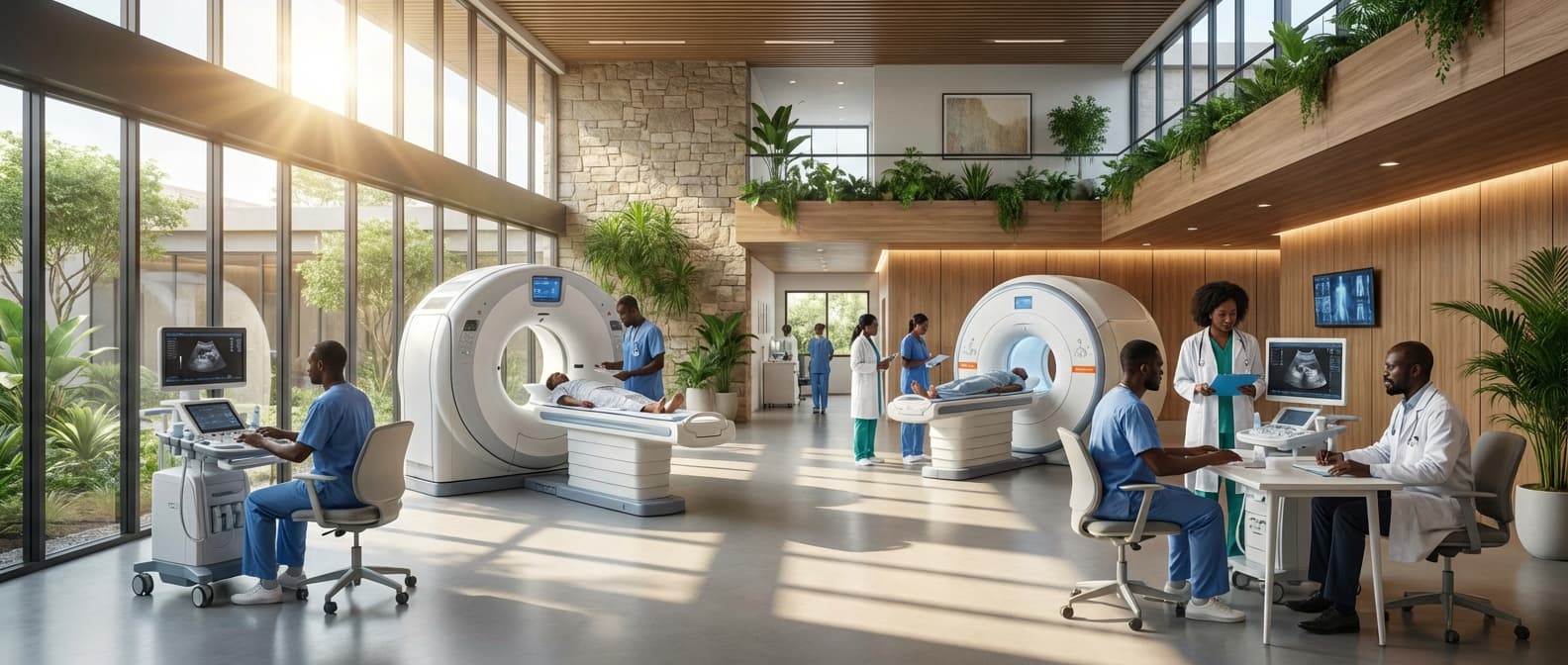
Endoscopy Solutions in Malawi
Engineering Excellence & Technical Support
Advanced endoscopic equipment delivering superior visualization and diagnostic precision for minimally invasive procedures. High-standard technical execution following OEM protocols and local regulatory frameworks.
Advanced Diagnostic Endoscopy Suites
Establish state-of-the-art endoscopy suites equipped with high-definition imaging systems and advanced visualization technologies. This enables precise diagnosis of gastrointestinal conditions, leading to earlier detection and improved patient outcomes across Malawi.
Minimally Invasive Therapeutic Endoscopy
Implement minimally invasive therapeutic endoscopy procedures such as polypectomy, stricture dilation, and hemostasis. This reduces the need for traditional surgery, minimizing patient recovery time and hospital stays, and expanding access to advanced GI care.
Specialized Endoscopy Training & Capacity Building
Develop and deliver comprehensive training programs for Malawian healthcare professionals in endoscopy techniques and best practices. This builds local expertise, ensuring sustainable and high-quality endoscopic services are available nationwide.
What Is Endoscopy Solutions In Malawi?
Endoscopy solutions in Malawi refer to the provision of diagnostic and therapeutic procedures utilizing endoscopes to visualize internal organs and structures. These solutions encompass the equipment, trained personnel, and associated services necessary for performing these minimally invasive examinations. The objective is to facilitate accurate diagnosis, enable targeted interventions, and improve patient outcomes by offering less invasive alternatives to traditional surgical approaches. This field in Malawi is developing, aiming to increase accessibility to advanced gastrointestinal, respiratory, and urological diagnostic capabilities, thereby reducing the burden of undiagnosed or poorly managed conditions.
| Who Needs Endoscopy Solutions | Typical Use Cases | Clinical Indications | ||
|---|---|---|---|---|
| Patients presenting with upper gastrointestinal (GI) symptoms such as persistent heartburn, difficulty swallowing (dysphagia), unexplained weight loss, or suspected peptic ulcer disease. | Diagnostic esophagogastroduodenoscopy (EGD) for evaluation of the esophagus, stomach, and duodenum. | Screening for and surveillance of esophageal or gastric cancers. | Diagnosis and management of Helicobacter pylori infection. | Removal of foreign bodies from the upper GI tract. |
| Patients experiencing lower GI symptoms including chronic diarrhea, constipation, rectal bleeding, abdominal pain, or significant changes in bowel habits. | Diagnostic colonoscopy for evaluation of the colon and rectum. | Screening for colorectal cancer and polyps. | Diagnosis and monitoring of inflammatory bowel diseases (e.g., Crohn's disease, ulcerative colitis). | Removal of colonic polyps (polypectomy). |
| Patients with chronic cough, hemoptysis (coughing up blood), unexplained pneumonia, or suspected lung masses. | Diagnostic bronchoscopy for examination of the airways and lungs. | Obtaining tissue samples (biopsies, brushings) for diagnosis of lung cancer or infections. | Management of airway obstruction or bleeding. | |
| Patients presenting with urinary symptoms such as blood in the urine (hematuria), recurrent urinary tract infections, or suspected bladder abnormalities. | Diagnostic cystoscopy for visualization of the bladder and urethra. | Evaluation of bladder tumors or stones. | Assessment of prostate enlargement. | |
| Individuals with a family history of GI cancers or polyps. | Surveillance endoscopy following previous polyp removal or treatment for GI malignancies. | |||
| Patients requiring therapeutic interventions such as dilation of strictures, stenting, or hemostasis for bleeding. | Therapeutic endoscopy to address bleeding from ulcers or varices. | Placement of feeding tubes (e.g., PEG tubes). |
Key Components of Endoscopy Solutions in Malawi
- Endoscopic Equipment: Procurement, maintenance, and sterilization of various endoscopes (e.g., gastroscopes, colonoscopes, bronchoscopes, cystoscopes), video processors, light sources, insufflators, and endoscopic accessories (biopsy forceps, snares, retrieval devices).
- Skilled Personnel: Training and ongoing professional development for gastroenterologists, pulmonologists, urologists, endoscopists, and specialized nursing staff in performing endoscopic procedures and managing patient care pre-, intra-, and post-procedure.
- Infrastructure: Dedicated endoscopy suites with appropriate ventilation, patient preparation areas, recovery bays, and waste disposal systems.
- Ancillary Services: Availability of sedation and anesthesia services, pathology services for specimen analysis, and imaging modalities for pre- and post-endoscopic assessment.
- Quality Assurance: Implementation of standardized protocols for infection control, procedural quality, and patient safety to ensure optimal clinical outcomes.
Who Needs Endoscopy Solutions In Malawi?
Endoscopy solutions are crucial for diagnosing and treating a wide range of gastrointestinal and respiratory conditions in Malawi. These advanced medical technologies play a vital role in providing accurate diagnoses, enabling minimally invasive procedures, and improving patient outcomes. The demand for these solutions stems from the need for better healthcare services, particularly in managing conditions like ulcers, gastritis, colon cancer, and various lung diseases.
| Department | Key Needs and Applications | Types of Endoscopy Solutions |
|---|---|---|
Target Customers and Departments for Endoscopy Solutions in Malawi
- {"item":"Government Hospitals","description":"Major referral hospitals and district hospitals within the public healthcare system are key consumers. They serve a large patient population and require comprehensive diagnostic and therapeutic endoscopy capabilities."}
- {"item":"Private Hospitals and Clinics","description":"A growing number of private healthcare facilities are investing in advanced medical equipment to offer specialized services and cater to patients seeking private care. This includes diagnostic endoscopy, therapeutic endoscopy, and minimally invasive surgeries."}
- {"item":"University Teaching Hospitals","description":"These institutions are vital for medical education and research. They require state-of-the-art endoscopy equipment for training future healthcare professionals and for conducting advanced clinical research."}
- {"item":"Non-Governmental Organizations (NGOs) and International Aid Organizations","description":"Organizations focused on improving healthcare in Malawi often procure and donate medical equipment, including endoscopy solutions, to underserved areas or for specific health initiatives."}
Endoscopy Solutions Process In Malawi
This document outlines the typical workflow for endoscopy solutions in Malawi, from the initial inquiry to the successful execution of the procedure. The process is designed to ensure patient safety, procedural efficiency, and access to necessary resources.
| Stage | Key Activities | Responsible Parties | Key Considerations/Outputs |
|---|---|---|---|
| Inquiry and Initial Consultation | Patient or referring physician contacts the endoscopy unit/facility. Initial discussion about symptoms, medical history, and potential need for endoscopy. Information provided on the procedure, risks, benefits, and alternatives. | Patient, Referring Physician, Endoscopy Unit Staff (Nurse/Doctor) | Understanding of patient's condition, Initial suitability for endoscopy confirmed, Patient's informed consent process begins. |
| Patient Assessment and Preparation | Detailed medical history and physical examination. Review of existing medical conditions (e.g., heart, lung, kidney disease, bleeding disorders). Pre-procedure investigations (blood tests, ECG if necessary). Dietary and medication instructions (e.g., fasting, cessation of certain medications). Bowel preparation instructions (for lower endoscopy). | Physician/Gastroenterologist, Nurse, Anesthetist (if sedation is planned) | Patient deemed fit for procedure, All necessary investigations completed, Patient fully informed and prepared. |
| Procedure Scheduling and Logistics | Booking a date and time for the endoscopy procedure. Ensuring availability of endoscopy suite, equipment, and necessary consumables. Confirmation of medical team availability (endoscopist, nurse, anesthetist). Arrangement for patient transport if needed. | Endoscopy Unit Administrator/Coordinator, Endoscopy Team Lead | Scheduled procedure, Resources allocated, Patient informed of appointment details. |
| Procedure Execution | Patient arrival at the endoscopy unit and final checks. Administration of sedation or anesthesia as planned. Performance of the endoscopic examination. Biopsy collection, polypectomy, or other interventions as required. Documentation of findings and any interventions. | Endoscopist, Anesthetist, Endoscopy Nurse | Successful completion of the procedure, Biopsy/tissue samples collected (if applicable), Immediate post-procedure observations. |
| Post-Procedure Care and Follow-up | Recovery period under observation until sedation/anesthesia wears off. Monitoring for complications (e.g., bleeding, perforation). Provision of post-procedure instructions (diet, activity, potential symptoms to watch for). Discussion of preliminary findings with the patient. Arrangement for definitive pathology results and follow-up appointment. | Endoscopy Nurse, Physician/Gastroenterologist | Patient stable and discharged safely, Clear post-procedure instructions provided, Pathology report obtained, Follow-up plan established. |
Endoscopy Solutions Process in Malawi: Workflow
- Inquiry and Initial Consultation
- Patient Assessment and Preparation
- Procedure Scheduling and Logistics
- Procedure Execution
- Post-Procedure Care and Follow-up
Endoscopy Solutions Cost In Malawi
Endoscopy procedures are crucial diagnostic tools in Malawi, offering insights into various internal conditions. However, the cost of these procedures can vary significantly, influenced by a range of factors. Understanding these factors is essential for patients and healthcare providers alike to navigate the financial aspects of endoscopy care in Malawi. The pricing is typically quoted in the Malawian Kwacha (MWK).
| Procedure Type | Estimated Cost Range (MWK) | Notes |
|---|---|---|
| Gastroscopy (Upper Endoscopy) | 30,000 - 100,000 MWK | Includes examination of esophagus, stomach, and duodenum. Costs can rise with biopsy. |
| Colonoscopy (Lower Endoscopy) | 40,000 - 150,000 MWK | Covers examination of the colon. Higher end for polyp removal or extensive examination. |
| Flexible Sigmoidoscopy | 25,000 - 70,000 MWK | Examination of the lower part of the colon. Generally less complex and costly than a full colonoscopy. |
| Bronchoscopy | 50,000 - 180,000 MWK | Used for examining airways. Cost increases with need for biopsies or interventions. |
| Polypectomy (during endoscopy) | 10,000 - 50,000 MWK (additional) | This is often an add-on cost to the primary endoscopy procedure. |
| Biopsy Collection (during endoscopy) | 5,000 - 20,000 MWK (additional) | Fee for taking tissue samples for analysis. |
Key Pricing Factors for Endoscopy Solutions in Malawi
- Type of Endoscopy: Different endoscopic procedures, such as gastroscopy (upper endoscopy), colonoscopy (lower endoscopy), and bronchoscopy (lung endoscopy), have distinct costs associated with their complexity and the equipment required.
- Facility Type: The cost can differ between public hospitals, private clinics, and specialized diagnostic centers. Private facilities generally command higher prices due to overheads and perceived higher service standards.
- Geographic Location: Major cities like Lilongwe and Blantyre may have slightly different pricing structures compared to smaller towns or rural areas, influenced by local economic conditions and availability of specialized services.
- Complexity of the Procedure: If the endoscopy requires a more extensive examination, involves biopsies, or necessitates therapeutic interventions (e.g., polyp removal, stenting), the cost will naturally increase.
- Anesthesia/Sedation: The type and duration of sedation or anesthesia administered during the procedure will impact the overall cost. Local anesthesia is generally less expensive than general anesthesia or conscious sedation.
- Pre- and Post-Procedure Care: This includes the cost of consultations, blood tests, diagnostic imaging, and any follow-up appointments or medication prescribed.
- Medical Professional's Fees: The experience and specialization of the gastroenterologist or surgeon performing the procedure can influence their fees.
- Equipment and Consumables: The cost of sterile equipment, disposable accessories, and the maintenance of advanced endoscopic machinery are factored into the overall price.
- Insurance Coverage: While still developing, the availability and extent of health insurance coverage can significantly affect the out-of-pocket expenses for patients.
Affordable Endoscopy Solutions Options
Navigating the costs associated with medical procedures, including endoscopies, can be a significant concern for many individuals. Fortunately, several affordable endoscopy solutions and cost-saving strategies exist to make this essential diagnostic tool more accessible. These options often focus on maximizing value, optimizing care pathways, and leveraging available resources. Understanding these strategies can empower patients to make informed decisions and reduce their out-of-pocket expenses.
| Strategy | Description | Potential Savings | Considerations |
|---|---|---|---|
| Value Bundles | Pre-packaged services at a discounted lump sum price. | Moderate to significant savings compared to unbundled services. | Ensure all necessary components are included; compare to unbundled costs. |
| Outpatient Surgery Centers | Facilities specializing in same-day procedures, generally with lower overhead. | 10-30% reduction in facility fees compared to hospitals. | Verify accreditations and physician affiliations. |
| HSAs/FSAs | Using pre-tax dollars for medical expenses. | Savings based on your individual tax bracket (e.g., 20-30%). | Requires setting up an account; funds can only be used for qualified medical expenses. |
| Payment Plans | Spreading the cost over multiple installments. | Improves affordability and cash flow. | May involve interest charges or administrative fees; confirm terms. |
| In-Network Providers | Utilizing healthcare providers and facilities contracted with your insurance. | Significant reduction in out-of-pocket costs (co-pays, deductibles). | Always verify network status with your insurance provider and the facility. |
| Transparent Pricing | Receiving a detailed cost estimate before the procedure. | Enables informed comparison and budgeting. | May still have potential for unexpected costs; ask about billing policies. |
Affordable Endoscopy Solutions & Cost-Saving Strategies
- Value Bundles: These are often offered by healthcare providers, hospitals, or specialized clinics. They package multiple services related to an endoscopy procedure into a single, often discounted, price. This can include the physician's fee, facility charges, anesthesia (if applicable), and sometimes even pre-procedure consultations or post-procedure follow-up appointments.
- Transparent Pricing: Many facilities are now moving towards more transparent pricing models. This means providing patients with a clear breakdown of costs before the procedure, allowing for better budgeting and comparison shopping.
- Outpatient Surgery Centers: Endoscopies are frequently performed in outpatient surgery centers, which generally have lower overhead costs than hospitals. This can translate into significant savings for patients.
- Negotiating Prices: While not always possible, in some cases, patients can negotiate the cost of a procedure, especially if paying out-of-pocket or if they have a high deductible.
- Health Savings Accounts (HSAs) & Flexible Spending Accounts (FSAs): Utilizing pre-tax dollars through HSAs or FSAs can significantly reduce the net cost of an endoscopy, as these funds are not subject to income tax.
- Payment Plans: Many healthcare providers offer flexible payment plans, allowing patients to spread the cost of the procedure over several months, making it more manageable.
- Exploring In-Network Providers: Ensure your chosen facility and physician are in-network with your insurance plan to minimize co-pays, deductibles, and co-insurance.
- Comparing Multiple Providers: Don't hesitate to get quotes from several different healthcare facilities or clinics. Prices can vary significantly.
- Telehealth for Consultations: For pre- or post-procedure consultations, inquire about telehealth options, which can sometimes be more cost-effective than in-person visits.
- Generic Medications: If any medications are prescribed as part of the procedure or recovery, discuss the possibility of using generic alternatives with your doctor.
- Community Health Clinics & Non-Profits: Some community health clinics or non-profit organizations may offer discounted or sliding-scale pricing for medical procedures for eligible individuals.
- Clinical Trials: While not a direct cost-saving strategy, participating in a clinical trial for a new procedure or device might offer the procedure at no cost or a reduced cost.
Verified Providers In Malawi
Finding verified healthcare providers in Malawi is crucial for ensuring quality and trustworthy medical care. Franance Health stands out as a premier choice due to its rigorous credentialing process and commitment to patient well-being. Their network comprises highly qualified and licensed medical professionals across various specialties, all meticulously vetted to meet the highest standards of practice.
| Provider Type | Franance Health Verification Includes | Key Benefits for Patients |
|---|---|---|
| General Practitioners | Valid medical license, recognized medical degree, proof of current practice, background check. | Access to trusted primary care, early diagnosis, and referral to specialists. |
| Specialists (e.g., Cardiologists, Pediatricians, Surgeons) | Board certification, specialized training, extensive clinical experience, peer reviews. | Expertise in specific medical areas, advanced treatments, and improved health outcomes. |
| Nurses and Allied Health Professionals | Professional registration, relevant certifications, background checks, adherence to scope of practice. | Comprehensive care and support, from routine check-ups to post-operative recovery. |
| Hospitals and Clinics | Accreditation by relevant health bodies, adherence to safety standards, quality management systems. | Safe and well-equipped facilities with qualified medical teams. |
Why Franance Health is the Best Choice for Verified Providers in Malawi:
- Rigorous Vetting Process: Franance Health employs a multi-stage credentialing procedure that includes verification of medical licenses, academic qualifications, professional experience, and ethical standing.
- Commitment to Quality: They prioritize providers who demonstrate a strong commitment to evidence-based medicine, patient safety, and continuous professional development.
- Comprehensive Network: Franance Health offers access to a wide range of specialists, general practitioners, and healthcare facilities, ensuring that patients can find the care they need.
- Patient-Centric Approach: The platform is designed to empower patients by providing transparent information about provider credentials, facilitating informed decision-making.
- Adherence to Ethical Standards: All Franance Health providers are expected to uphold the highest ethical and professional conduct, ensuring a trustworthy patient-provider relationship.
Scope Of Work For Endoscopy Solutions
This Scope of Work outlines the technical deliverables and standard specifications required for the successful implementation and operation of endoscopy solutions. It aims to define the functional and non-functional requirements for the chosen endoscopy system, ensuring it meets the clinical needs, integration capabilities, and regulatory compliance standards.
| Category | Specification | Details/Requirements | Standard/Compliance |
|---|---|---|---|
| Image Quality | Resolution | Minimum 1920x1080 (Full HD); Preferred 4K UHD | DICOM 3.0 (for imaging standards) |
| Image Quality | Color Reproduction | Accurate and consistent color rendition, white balance adjustment | Clinical acceptability standards |
| Image Quality | Illumination | Variable intensity LED or Xenon light source, color temperature control | Safety standards (e.g., IEC 60601) |
| Endoscope Design | Insertion Tube Diameter | Variable based on procedure (e.g., <10mm for gastroscopy, <7mm for colonoscopy) | ISO 13485 |
| Endoscope Design | Working Channel | Sufficient diameter for instrument passage and irrigation/suction | Manufacturer specifications |
| Endoscope Design | Articulation | 4-way or more, precise and smooth control | Ergonomic design principles |
| Video Processing | Frame Rate | Minimum 30 fps, smooth motion capture | Real-time processing standards |
| Video Processing | Image Enhancement | Noise reduction, contrast enhancement, digital zoom | Clinical effectiveness |
| Data Management | Storage Capacity | Sufficient for long-term archiving of images and videos | PACS integration requirements |
| Data Management | File Format | DICOM for images, standard video codecs (e.g., H.264) for videos | DICOM 3.0, ISO/IEC standards |
| Integration | EHR/PACS Connectivity | HL7 for EHR, DICOM for PACS | HL7 v2.x, DICOM 3.0 |
| Integration | Network Interface | Gigabit Ethernet, Wi-Fi (secure) | IEEE 802.3, IEEE 802.11n/ac |
| Security | Data Encryption | Encryption at rest and in transit | HIPAA, GDPR, NIST guidelines |
| Security | Access Control | Role-based access, user authentication | ISO 27001 principles |
| Ergonomics | User Interface | Intuitive, easy-to-navigate graphical user interface (GUI) | Human-computer interaction principles |
| Ergonomics | System Weight and Balance | Comfortable for extended use | Occupational health and safety standards |
| Sterilization/Disinfection | Compatibility | Compatible with recommended sterilization/disinfection methods | Manufacturer guidelines, ISO 17665, AAMI ST40 |
Technical Deliverables
- Endoscopy System Hardware (e.g., endoscope, light source, camera head, video processor, monitor, recorder)
- Software for Image Acquisition, Processing, and Storage
- Integration Modules for Electronic Health Records (EHR) and Picture Archiving and Communication Systems (PACS)
- Network Connectivity and Data Transfer Protocols
- User Manuals and Training Materials
- Calibration and Validation Reports
- Maintenance and Support Plans
- Security Features and Compliance Documentation (e.g., HIPAA, GDPR)
Service Level Agreement For Endoscopy Solutions
This Service Level Agreement (SLA) outlines the performance standards and commitments for the Endoscopy Solutions provided by [Your Company Name]. It defines the response times for technical support and the guaranteed uptime for the associated software and hardware components. This SLA is effective as of [Start Date].
| Service Component | Severity Level | Response Time Target | Uptime Guarantee |
|---|---|---|---|
| Endoscopy Software Platform (Image Management, Reporting, PACS) | Critical | 1 Business Hour | 99.9% |
| Endoscopy Software Platform (Image Management, Reporting, PACS) | Major | 2 Business Hours | 99.9% |
| Endoscopy Software Platform (Image Management, Reporting, PACS) | Minor | 8 Business Hours | N/A (Focus on resolution) |
| Endoscope Hardware (Camera, Light Source, Processor) | Critical | 2 Business Hours (Remote Diagnosis) | 99.5% |
| Endoscope Hardware (Camera, Light Source, Processor) | Major | 4 Business Hours (Remote Diagnosis) | 99.5% |
| Endoscope Hardware (Camera, Light Source, Processor) | Minor | Next Business Day (Remote Diagnosis) | N/A (Focus on resolution) |
Key Definitions
- Endoscopy Solutions: Refers to the complete suite of hardware (endoscopes, light sources, cameras, recorders) and software (image management, reporting, PACS integration) used for endoscopic procedures.
- Downtime: Refers to the period during which the Endoscopy Solutions are unavailable for use, excluding Scheduled Maintenance.
- Scheduled Maintenance: Pre-announced periods of downtime for system updates, upgrades, or routine maintenance. Notice of Scheduled Maintenance will be provided at least [Number] days in advance.
- Response Time: The maximum time allowed for [Your Company Name] technical support to acknowledge and begin working on a reported issue.
- Resolution Time: The target time for resolving an issue. While efforts will be made to meet these targets, they are not guaranteed due to the complexity of certain issues.
- Critical Issue: A malfunction or failure of the Endoscopy Solutions that renders the entire system or a significant portion thereof unusable, preventing all endoscopic procedures.
- Major Issue: A malfunction or failure of the Endoscopy Solutions that impairs functionality but does not completely prevent endoscopic procedures, or significantly impacts reporting/image management.
- Minor Issue: A non-critical problem that does not significantly impact the core functionality of the Endoscopy Solutions and can be worked around.
Frequently Asked Questions

Ready when you are
Let's scope your Endoscopy Solutions in Malawi project in Malawi.

Scaling healthcare logistics and technical systems across the entire continent.