
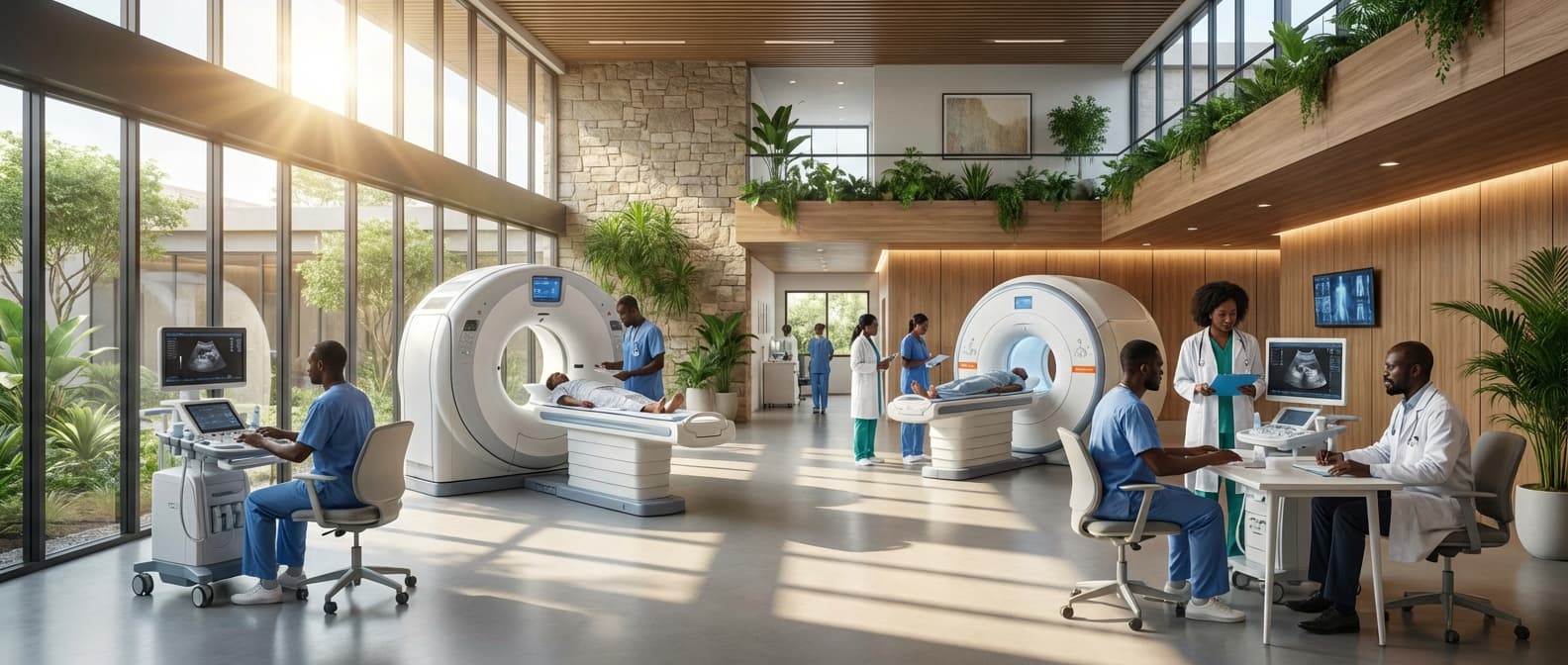
Diagnostic Imaging in Malawi
Engineering Excellence & Technical Support
High-resolution imaging systems including CT scanners, MRI, X-ray, and ultrasound technology for accurate clinical diagnosis. High-standard technical execution following OEM protocols and local regulatory frameworks.
Mobile X-ray Units for Rural Outreach
Deployment of portable X-ray machines to remote and underserved areas in Malawi, enabling crucial diagnostic imaging for early detection and treatment of conditions like tuberculosis and pneumonia, overcoming geographical barriers to healthcare access.
AI-Powered Ultrasound for Maternal Health
Implementation of artificial intelligence algorithms on ultrasound devices to assist healthcare workers in Malawi with rapid and accurate prenatal screenings, improving the identification of potential complications and enhancing maternal and neonatal outcomes.
Tele-Radiology Network Expansion
Establishment and expansion of a tele-radiology network connecting district hospitals in Malawi to specialized radiologists for remote interpretation of medical images, bridging the gap in expert radiology services and improving diagnostic accuracy for complex cases.
What Is Diagnostic Imaging In Malawi?
Diagnostic imaging in Malawi refers to the use of medical imaging technologies to visualize the internal structures of the human body for the purpose of diagnosis, staging, and monitoring of diseases and injuries. This non-invasive or minimally invasive modality plays a crucial role in modern healthcare by providing objective anatomical and physiological information that often cannot be obtained through physical examination alone. The service involves the acquisition of images using various equipment, followed by interpretation by trained radiologists or other medical professionals. The interpretation process typically involves identifying abnormalities, characterizing their nature, and correlating findings with clinical presentations to guide patient management. The availability and accessibility of diagnostic imaging services in Malawi are influenced by resource constraints, infrastructure development, and the availability of trained personnel, making efficient and appropriate utilization paramount.
| Who Needs Diagnostic Imaging? | Typical Use Cases | |
|---|---|---|
| Patients presenting with symptoms suggestive of internal pathology (e.g., pain, swelling, neurological deficits, respiratory distress, abdominal discomfort). | Evaluation of trauma and suspected fractures. | Investigation of suspected infections (e.g., pneumonia, appendicitis, abscesses). |
| Patients undergoing pre-operative assessment to plan surgical interventions. | Monitoring the progression or regression of known diseases (e.g., tumors, chronic inflammatory conditions). | Screening for certain conditions in high-risk populations (though less common in Malawi due to resource limitations for broad screening programs). |
| Patients with suspected congenital abnormalities. | Assessment of vascular abnormalities (e.g., blockages, aneurysms). | Guiding interventional procedures (e.g., biopsies, drainages). |
| Individuals with a history of certain chronic diseases requiring regular follow-up. | Neurological assessments for conditions like stroke, brain tumors, or degenerative diseases. |
Key Components of Diagnostic Imaging Services in Malawi
- Image Acquisition: Utilizing various medical imaging modalities.
- Image Interpretation: Analysis of acquired images by qualified professionals.
- Reporting: Generation of comprehensive reports detailing findings and their clinical implications.
- Quality Assurance: Ensuring the accuracy and reliability of imaging procedures and equipment.
- Technology Management: Maintenance and calibration of imaging equipment.
Who Needs Diagnostic Imaging In Malawi?
This document outlines the key target customers and departments for diagnostic imaging services in Malawi. Understanding these segments is crucial for optimizing resource allocation, service delivery, and strategic planning within the Malawian healthcare system.
| Department/Facility | Primary Need for Diagnostic Imaging | Key Imaging Modalities Required | Typical Patient Demographics |
|---|---|---|---|
| Public Hospitals (Central & District) | Diagnosis of acute and chronic illnesses, trauma management, pre-operative assessment, disease screening, monitoring of treatment response. | X-ray, Ultrasound, CT Scan (in larger facilities), potentially MRI (in limited central hospitals). | General population, patients from public health facilities, emergency cases, patients referred from rural areas. |
| Rural Health Centers/Clinics | Basic diagnostic capabilities for common conditions, referral point for more complex cases. | Primarily X-ray and Ultrasound (often mobile or basic units). | Rural communities, general population with limited access to advanced facilities. |
| Private Hospitals & Clinics | Comprehensive diagnostic services for a fee, catering to patients seeking faster access and potentially higher-end imaging. | X-ray, Ultrasound, CT Scan, MRI (in larger private facilities). | Patients with private insurance, self-paying individuals, expatriates. |
| Specialty Clinics (e.g., Oncology, Cardiology, Neurology) | Detailed imaging for specific disease diagnosis, staging, treatment planning, and follow-up. | CT Scan, MRI, Ultrasound (specialized probes), potentially PET-CT (very limited, likely outside Malawi). | Patients with specific chronic or complex conditions requiring specialized diagnosis. |
| Tertiary Referral Centers/University Teaching Hospitals | Complex diagnoses, advanced imaging for research, training of radiologists and technicians, rare disease investigations. | Advanced CT and MRI, interventional radiology capabilities, potentially other specialized modalities. | Complex cases referred from lower-level facilities, medical students, residents, researchers. |
| Maternal and Child Health Programs | Antenatal screening (ultrasound), diagnosis of pediatric conditions. | Ultrasound (obstetric and pediatric), X-ray (pediatric). | Pregnant women, infants, and children. |
| Infectious Disease Control Programs (e.g., TB, HIV) | Diagnosis and monitoring of specific infectious diseases. | X-ray (chest for TB), Ultrasound (for opportunistic infections). | Patients with suspected or confirmed infectious diseases. |
Target Customers & Departments for Diagnostic Imaging in Malawi
- Patients: The ultimate beneficiaries of diagnostic imaging, encompassing individuals presenting with a wide range of medical conditions requiring accurate diagnosis and monitoring.
- Healthcare Professionals: Doctors, specialists, nurses, and other allied health professionals who refer patients for imaging and utilize the diagnostic information to guide treatment decisions.
- Government Health Ministries/Departments: Responsible for public health policy, resource allocation, and ensuring equitable access to essential healthcare services, including diagnostic imaging.
- Non-Governmental Organizations (NGOs) & International Aid Organizations: Play a significant role in supporting healthcare infrastructure, training, and service delivery, often focusing on underserved populations and specific health programs.
- Private Healthcare Providers: Hospitals, clinics, and imaging centers operating within the private sector, catering to patients who can afford private healthcare services.
- Academic & Research Institutions: Involved in medical education, training of healthcare professionals, and conducting research that may require diagnostic imaging facilities and expertise.
Diagnostic Imaging Process In Malawi
The diagnostic imaging process in Malawi, while striving for efficiency, often navigates resource constraints. The workflow generally begins with a clinician's request, driven by patient symptoms or the need for diagnostic clarification. This request initiates a series of steps, from patient registration and scheduling to the actual imaging procedure and subsequent report generation. Access to advanced imaging modalities can vary significantly across different facilities and regions within the country.
| Stage | Key Activities | Potential Challenges in Malawi | Responsible Personnel |
|---|---|---|---|
| Inquiry/Referral | Clinician identifies need for imaging, fills out request form. | Lack of awareness of available imaging services, insufficient diagnostic information on referral forms. | Referring Clinician |
| Registration & Scheduling | Patient registered, appointment scheduled based on availability and urgency. | Long waiting times due to high patient load, limited equipment availability, unreliable communication for scheduling. | Receptionist/Administrative Staff, Radiology Department Secretary |
| Patient Preparation | Instructions given to patient regarding fasting, clothing, or contrast media administration. | Poor patient understanding due to literacy barriers, lack of readily available contrast media. | Radiology Nurse/Technician, Referring Clinician |
| Imaging Procedure | Patient positioned, imaging modality (X-ray, Ultrasound, CT, MRI) performed. | Equipment malfunction or breakdown, shortage of consumables (e.g., film, contrast media), limited availability of specialized modalities (CT/MRI in some areas), power outages. | Radiology Technologist/Radiographer |
| Image Processing & Interpretation | Images are processed (digitally or manually), and a radiologist reviews them. | Shortage of qualified radiologists, outdated processing equipment, limited PACS (Picture Archiving and Communication System) implementation. | Radiology Technologist/Radiographer, Radiologist |
| Report Generation & Dissemination | Radiologist dictates or writes a report summarizing findings and recommendations. Report sent back to referring clinician. | Delays in report turnaround time, lost reports, difficulty in transmitting reports to remote areas, lack of standardized reporting templates. | Radiologist, Administrative Staff |
| Follow-up | Referring clinician uses the report to guide patient management. | Poor communication between departments, lack of follow-up systems, patient inability to access subsequent care due to cost or distance. | Referring Clinician, Other Healthcare Providers |
Diagnostic Imaging Workflow in Malawi
- Patient referral by a clinician
- Initial patient registration and record keeping
- Scheduling of the diagnostic imaging appointment
- Patient preparation (if required for specific modalities)
- Imaging procedure execution
- Image processing and interpretation
- Report generation by a radiologist/specialist
- Report dissemination to the referring clinician
- Follow-up and further management based on findings
Diagnostic Imaging Cost In Malawi
Diagnostic imaging plays a crucial role in healthcare, aiding in disease detection, diagnosis, and monitoring. In Malawi, the cost of these essential services can vary significantly due to a number of factors. These include the type of imaging modality used (e.g., X-ray, Ultrasound, CT scan, MRI), the complexity of the examination, the specific medical condition being investigated, the location of the healthcare facility (public vs. private, urban vs. rural), and the consumables and expertise required for each procedure. Additionally, the availability of advanced equipment and the training of radiographers and radiologists can influence pricing. While public healthcare facilities generally offer subsidized rates, private institutions, often equipped with more advanced technology, tend to have higher costs. It's important to note that these are approximate ranges and can fluctuate based on the specific provider and current economic conditions in Malawi.
| Imaging Modality | Typical Range (MWK) - Public Facilities (Subsidized) | Typical Range (MWK) - Private Facilities (Market Rates) | Notes/Common Uses |
|---|---|---|---|
| X-ray (e.g., Chest X-ray, Limb X-ray) | 1,500 - 5,000 | 3,000 - 10,000 | Fractures, pneumonia, TB screening |
| Ultrasound (e.g., Abdominal, Pelvic, Obstetric) | 3,000 - 8,000 | 6,000 - 15,000 | Gallstones, kidney stones, pregnancy monitoring, fibroids |
| CT Scan (e.g., Head, Chest, Abdomen) | 20,000 - 50,000 | 40,000 - 100,000+ | Stroke assessment, tumor detection, trauma evaluation, complex organ imaging |
| MRI (e.g., Brain, Spine, Joints) | 50,000 - 150,000 | 100,000 - 300,000+ | Neurological disorders, spinal cord injuries, ligament tears, detailed soft tissue evaluation |
| Mammography | 5,000 - 15,000 | 10,000 - 25,000 | Breast cancer screening and diagnosis |
Diagnostic Imaging Modalities and General Cost Ranges in Malawi (Malawian Kwacha - MWK)
- X-ray (Plain Radiography): Simple and widely available, used for bone fractures, chest infections, etc.
- Ultrasound (Sonography): Non-invasive imaging using sound waves, common for abdominal, pelvic, and obstetric scans.
- CT Scan (Computed Tomography): Provides detailed cross-sectional images, used for complex bone injuries, internal organ assessment, and cancer staging.
- MRI (Magnetic Resonance Imaging): Uses magnetic fields to create highly detailed images, particularly useful for soft tissues, brain, and spine conditions. This is generally the most expensive modality.
- Mammography: Specialized X-ray for breast imaging, screening and diagnosis of breast cancer.
Affordable Diagnostic Imaging Options
Navigating the healthcare system can be complex, especially when it comes to diagnostic imaging. Fortunately, there are increasingly affordable options available. Value bundles and strategic approaches can significantly reduce out-of-pocket expenses for essential imaging services. Understanding these options empowers patients to make informed decisions and control their healthcare costs.
| Imaging Service | Typical In-Network Cost (Estimated) | Potential Value Bundle/Discounted Cost (Estimated) | Key Cost-Saving Strategy |
|---|---|---|---|
| MRI (e.g., Knee) | $1,000 - $4,000+ | $500 - $1,500+ | Compare independent imaging center prices, inquire about cash discounts, look for bundled services if multiple scans are needed. |
| CT Scan (e.g., Abdomen/Pelvis) | $800 - $3,000+ | $400 - $1,000+ | Shop around at different imaging centers, ask about self-pay rates, consider if a bundled package for related scans is available. |
| X-ray (e.g., Chest) | $150 - $500+ | $75 - $200+ | Often more affordable at local clinics or urgent care centers, inquire about multi-view discounts if more than one X-ray is ordered. |
| Ultrasound (e.g., Pelvic) | $300 - $1,000+ | $150 - $400+ | Check with independent imaging facilities for lower prices than hospitals, explore if part of a larger diagnostic package. |
| Mammogram | $200 - $800+ | $100 - $300+ | Many facilities offer special pricing for self-pay patients or cash discounts, look for community screening events or discounts offered during breast cancer awareness months. |
Understanding Diagnostic Imaging Cost-Saving Strategies
- Value Bundles: These are pre-negotiated packages that combine multiple related imaging procedures at a set price. They often offer a discount compared to paying for each service individually. For example, a 'cardiac bundle' might include an EKG, echocardiogram, and stress test.
- Out-of-Network Advantages: While in-network providers are often preferred, exploring out-of-network options can sometimes lead to lower prices, especially with facilities that specialize in self-pay patients or have transparent pricing.
- Direct-to-Consumer Imaging Centers: Independent imaging centers often have lower overhead costs than hospital-affiliated facilities, allowing them to offer competitive pricing for common scans like MRIs, CTs, and X-rays.
- Price Transparency Tools: Many insurance companies and independent websites provide tools to compare costs for specific imaging procedures at different facilities in your area.
- Negotiating Cash Prices: If you don't have insurance or are facing a high deductible, inquire about the 'cash price' or 'self-pay discount.' Many facilities are willing to negotiate significant reductions for upfront payment.
- Understanding Your Insurance Benefits: Familiarize yourself with your deductible, co-pays, and co-insurance for diagnostic imaging. Knowing these figures will help you anticipate costs and identify the most cost-effective options.
- Second Opinions (for non-emergent situations): For complex or elective imaging, obtaining a second opinion at a different facility can sometimes reveal more affordable alternatives without compromising quality.
- Telehealth Consultations: In some cases, a preliminary consultation with a radiologist or specialist via telehealth may help determine if imaging is truly necessary, potentially saving you the cost of an unnecessary scan.
- Employer-Sponsored Health Savings Accounts (HSAs) or Flexible Spending Accounts (FSAs): Utilize pre-tax dollars from these accounts to pay for diagnostic imaging, reducing your overall tax burden.
Verified Providers In Malawi
In Malawi's healthcare landscape, identifying genuinely verified and trustworthy healthcare providers is paramount. Franance Health stands out as a leading organization committed to ensuring the highest standards of care. Their rigorous credentialing process and dedication to patient well-being make them the best choice for accessing quality healthcare services.
| Credential Aspect | Franance Health's Approach | Benefit to Patients |
|---|---|---|
| Licensing and Registration | Thorough checks against national and professional regulatory bodies. | Ensures providers are legally permitted to practice and adhere to professional guidelines. |
| Educational Background | Verification of academic qualifications from accredited institutions. | Confirms foundational knowledge and training in their respective fields. |
| Clinical Experience | Assessment of past work history and areas of practice. | Indicates practical application of knowledge and ability to handle various medical scenarios. |
| Professional References | Contacting peers and supervisors to gauge professional conduct and competence. | Provides insights into the provider's reputation and teamwork abilities. |
| Criminal Background Checks (where applicable) | Screening for any relevant legal or ethical issues. | Further enhances patient safety and trust in the provider's integrity. |
Why Franance Health Credentials Matter
- Rigorous Verification: Franance Health employs a multi-faceted verification process that scrutinizes the qualifications, licenses, and experience of all healthcare professionals within their network. This ensures that only competent and legitimate practitioners are listed.
- Patient Safety Focus: The primary goal of Franance Health's credentialing is to guarantee patient safety. By confirming the expertise and ethical standing of providers, they minimize risks and promote positive health outcomes.
- Access to Quality Care: Their network comprises healthcare professionals who meet stringent criteria, offering patients confidence in the quality of treatment and services they will receive.
- Transparency and Trust: Franance Health promotes transparency by clearly outlining their verification standards. This builds trust between patients and providers, fostering a more positive healthcare experience.
- Continuous Monitoring: Beyond initial verification, Franance Health often engages in ongoing monitoring of their network providers to ensure continued adherence to quality standards and best practices.
- Specialized Expertise: Franance Health's credentialing often identifies providers with specialized skills and experience, allowing patients to find the right expert for their specific medical needs.
Scope Of Work For Diagnostic Imaging
This document outlines the Scope of Work for Diagnostic Imaging services, detailing the technical deliverables and standard specifications required for their successful execution. It serves as a comprehensive guide for providers and recipients of these critical healthcare services.
| Service Category | Technical Deliverables | Standard Specifications | Quality Assurance Metrics |
|---|---|---|---|
| X-ray (Radiography) | Digital radiographic images (DICOM format), radiologist's interpretation report. | Minimum resolution: 300 DPI. Radiation dose ALARA principle adherence. Detector efficiency > 95%. Image acquisition time < 5 seconds. | Image clarity, absence of artifacts, concordance between image and report, turnaround time for reports (e.g., < 24 hours for routine exams). |
| Computed Tomography (CT) | Axial, sagittal, coronal reconstructions (DICOM format), 3D rendered images (optional), radiologist's interpretation report. | Slice thickness: configurable, typically 0.5mm - 5mm. Spatial resolution: < 0.5 mm. CTDIvol within established safety guidelines. Contrast media administration protocol adherence. | Image noise levels, lesion detection accuracy, contrast enhancement uniformity, reporting accuracy and completeness, scan time efficiency. |
| Magnetic Resonance Imaging (MRI) | Multi-planar images (DICOM format) with various pulse sequences, radiologist's interpretation report. | Signal-to-noise ratio (SNR) > 100. Spatial resolution: < 1mm. Scan time optimization. Gradient performance specifications. Acoustic noise reduction measures. | Image artifact reduction, correct sequence selection, detail visualization, report detail and accuracy, patient comfort and safety. |
| Ultrasound (Sonography) | Real-time images and cine loops (DICOM format or equivalent), doppler studies (if applicable), radiologist's interpretation report. | Transducer frequency range: appropriate for anatomical region. Spatial resolution: < 1mm. Frame rate: > 20 fps for real-time imaging. Doppler sensitivity and accuracy. | Image homogeneity, artifact suppression, color Doppler visualization, measurement accuracy, report clarity and comprehensiveness. |
| Nuclear Medicine (PET/CT, SPECT/CT) | Functional and anatomical fused images (DICOM format), radiotracer uptake quantification, radiologist's interpretation report. | System sensitivity and resolution specifications. SUV calculation accuracy. Image reconstruction algorithms. Patient preparation and radiotracer administration protocols. | Image quality, quantitative accuracy, lesion detection rate, fusion accuracy of PET/CT or SPECT/CT, turnaround time for reports. |
| Mammography | Digital mammographic images (DICOM format), radiologist's interpretation report. | Spatial resolution: < 50 microns. Dynamic range. Contrast resolution. Compression force consistency. Reduced scatter radiation. | Detection of microcalcifications, mass visualization, architectural distortion detection, report concordance with findings, patient positioning accuracy. |
| PACS Integration | Seamless integration with the hospital's Picture Archiving and Communication System (PACS) for image storage, retrieval, and viewing. | Compliance with DICOM standards (version 3.0 or later). HL7 integration for patient and study data. Secure data transmission protocols. Data integrity and backup procedures. | Image availability within PACS, report accessibility, system uptime and reliability, data security and HIPAA compliance. |
Key Objectives of Diagnostic Imaging Services
- Accurate and timely diagnosis of medical conditions.
- Guidance for treatment planning and monitoring.
- Assistance in surgical intervention planning.
- Early detection of disease and anomalies.
- Patient safety and optimal image quality.
Service Level Agreement For Diagnostic Imaging
This Service Level Agreement (SLA) outlines the performance standards and guarantees for Diagnostic Imaging services provided by [Your Company Name] to [Client Name]. It covers response times for critical services and uptime guarantees for imaging equipment and PACS (Picture Archiving and Communication System).
| Service Component | SLA Target | Measurement Period | Remedy for Failure |
|---|---|---|---|
| Critical Imaging Request Response Time (e.g., STAT CT/MRI) | 95% of requests responded to within 15 minutes | Monthly | 10% discount on monthly service fee for the affected service component. |
| Routine Imaging Request Response Time | 90% of requests responded to within 60 minutes | Monthly | 5% discount on monthly service fee for the affected service component. |
| Imaging Modality Uptime (e.g., CT Scanner, MRI) | 98% uptime | Monthly | 15% discount on monthly service fee for the affected modality. |
| PACS/RIS Uptime | 99.5% uptime | Monthly | 20% discount on monthly service fee for PACS/RIS services. |
| Data Backup Success Rate | 100% successful backups | Daily | Root cause analysis and corrective action plan submitted within 24 hours. |
| Data Recovery Time Objective (RTO) | Within 4 hours for critical data | Per incident | Waived fees for recovery services exceeding RTO. |
Key Service Commitments
- Response times for critical imaging requests.
- Uptime guarantees for imaging modalities.
- Uptime guarantees for PACS and RIS (Radiology Information System).
- Data backup and recovery procedures.
- Notification procedures for outages.
- Dispute resolution process.
Frequently Asked Questions

Ready when you are
Let's scope your Diagnostic Imaging in Malawi project in Malawi.

Scaling healthcare logistics and technical systems across the entire continent.