
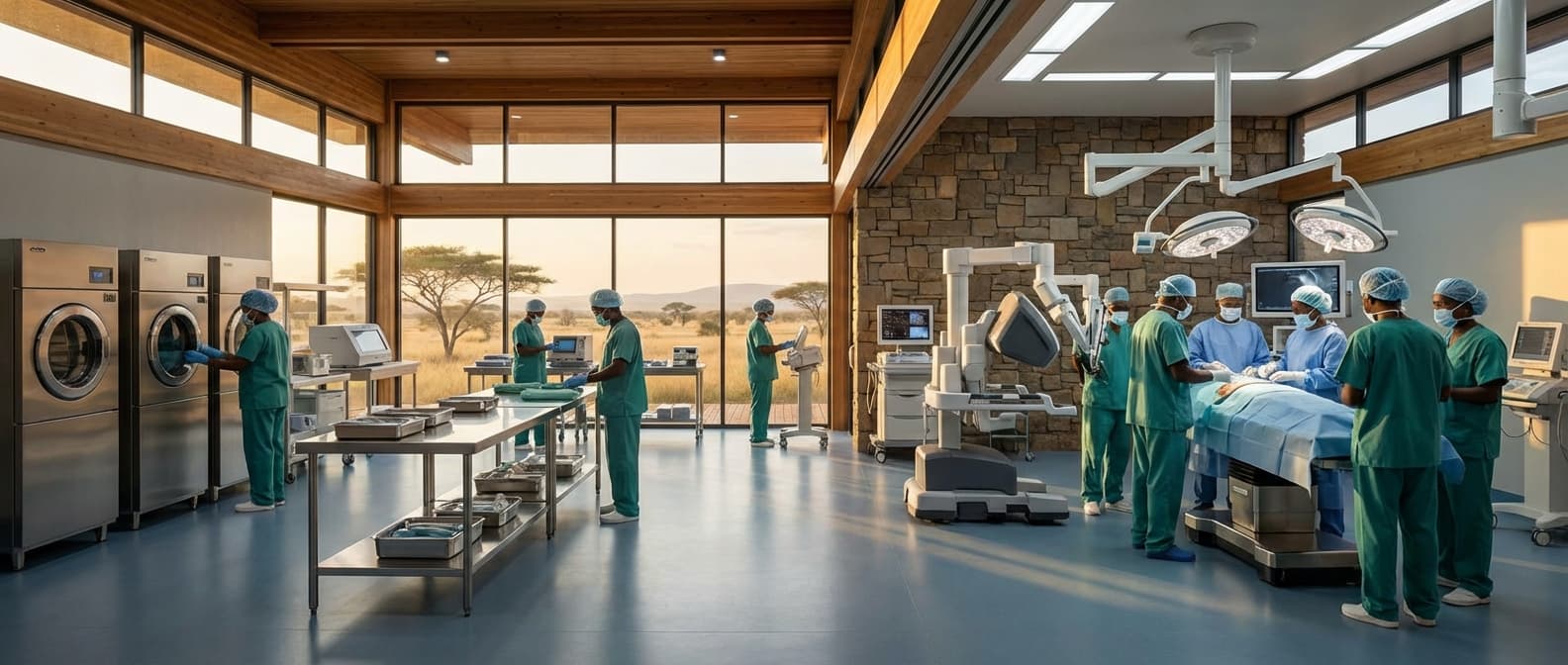
CSSD Design & Validation in Malawi
Engineering Excellence & Technical Support
CSSD workflow design, validation and process development High-standard technical execution following OEM protocols and local regulatory frameworks.
Sterilization Efficacy Validation
We design and validate sterilization cycles (autoclave, ethylene oxide) to meet ISO 17665 and ISO 11135 standards, ensuring the highest level of microbial inactivation for medical devices and instruments in Malawian healthcare facilities.
CSSD Process Flow Optimization
Our expertise in CSSD layout and workflow design, adhering to HTM 01-01 and AAMI ST79 principles, focuses on creating efficient, safe, and contamination-controlled environments for Central Sterile Supply Departments across Malawi.
Regulatory Compliance & Quality Assurance
We provide comprehensive CSSD design consultation and validation services that ensure full compliance with local Malawian health regulations and international best practices for sterile processing, safeguarding patient safety.
What Is Cssd Design & Validation In Malawi?
Central Sterile Services Department (CSSD) design and validation in Malawi is a comprehensive process focused on establishing and verifying the functionality, safety, and efficacy of facilities and systems responsible for the decontamination, sterilization, and aseptic storage of medical devices. This service ensures that CSSD operations meet stringent international standards and regulatory requirements, mitigating the risk of healthcare-associated infections (HAIs) and ensuring patient safety. It encompasses the architectural layout, equipment selection and integration, workflow optimization, environmental controls, and the subsequent rigorous testing and documentation to confirm that all processes consistently deliver sterile products. The validation phase confirms that the designed systems perform as intended under real-world operating conditions and that all personnel are adequately trained to operate and maintain them effectively.
| Aspect | Involvement | Typical Use Cases |
|---|---|---|
| Facility Design & Layout | Optimizing workflow from dirty to clean processing areas, ensuring negative/positive air pressure differentials, appropriate material flow, and segregation of activities to prevent cross-contamination. | Designing a new hospital wing, renovating an existing CSSD, or expanding surgical capacity. |
| Equipment Selection & Integration | Specifying appropriate sterilizers (e.g., steam, low-temperature), washer-disinfectors, ultrasonic cleaners, packaging systems, and monitoring equipment based on anticipated workload, device types, and regulatory compliance. | Acquiring new sterilization equipment for a busy surgical department or upgrading outdated systems. |
| Process Design & Workflow | Establishing Standard Operating Procedures (SOPs) for receiving, cleaning, disinfection, inspection, packaging, sterilization, storage, and distribution of sterile medical devices. Focus on minimizing manual handling and maximizing efficiency. | Developing standardized protocols for processing surgical instruments, endoscopes, or anesthesia equipment. |
| Environmental Controls & Monitoring | Designing and validating HVAC systems for appropriate temperature, humidity, and air changes per hour. Implementing environmental monitoring for microbial counts and particulate matter. | Ensuring a controlled environment for aseptic storage of sterile packs to maintain their integrity. |
| Validation of Sterilization Processes | Performing prospective and concurrent validation of sterilization cycles (e.g., steam penetration, dry heat efficacy, chemical indicator performance) to confirm efficacy according to international standards (e.g., ISO 17665, ISO 11135). | Commissioning a new steam sterilizer to ensure it consistently achieves sterilization parameters for all loads. |
| Validation of Equipment Performance | Conducting Installation Qualification (IQ), Operational Qualification (OQ), and Performance Qualification (PQ) for all critical equipment to verify they operate within defined specifications and consistently perform their intended functions. | Testing and documenting the performance of a newly installed washer-disinfector to ensure it effectively removes bioburden. |
| Training & Competency Assessment | Developing and delivering comprehensive training programs for CSSD staff on SOPs, equipment operation, safety protocols, and quality assurance. Assessing competency through written and practical evaluations. | Training new hires on decontamination procedures or refresher training for existing staff on advanced sterilization techniques. |
| Regulatory Compliance & Documentation | Ensuring all design, installation, validation, and operational activities comply with relevant Malawian health regulations and international standards. Maintaining meticulous records for traceability and audit purposes. | Preparing for an audit by the Ministry of Health or an international accreditation body regarding CSSD operations. |
Who Needs CSSD Design & Validation in Malawi?
- Hospitals (Public and Private)
- Specialty Clinics (e.g., Surgical Centers, Dental Clinics)
- Diagnostic Laboratories requiring sterile instruments
- Outpatient Surgical Facilities
- Any healthcare facility performing procedures that require sterile instrumentation.
Who Needs Cssd Design & Validation In Malawi?
Central Sterile Supply Departments (CSSDs) are the backbone of infection prevention and control in healthcare facilities. Proper design and rigorous validation are not just best practices; they are essential for ensuring patient safety and the efficient operation of healthcare services. In Malawi, as the healthcare system strives for higher standards and improved patient outcomes, understanding who requires and benefits from expert CSSD design and validation services is crucial. This encompasses a range of healthcare institutions and specific departments within them that rely heavily on sterile equipment and supplies.
| Customer Type | Key Departments Benefiting from CSSD Design & Validation | Why it's Crucial for Them |
|---|---|---|
| Public Hospitals (Central, District, and Referral) | Operating Theatres, Intensive Care Units (ICUs), Emergency Departments, Maternity Wards, Outpatient Departments (OPDs), Specialized Clinics (e.g., Oncology, Cardiology) | High patient volumes necessitate robust sterilization processes to prevent healthcare-associated infections (HAIs). Optimized design improves workflow, reduces turnaround time for instruments, and ensures compliance with national/international standards for critical care and surgery. |
| Private Hospitals and Clinics | Surgical Suites, Diagnostic Imaging Departments, Maternity Units, General Wards | Reputation and patient trust are paramount. Effective CSSD design and validation are key to maintaining high standards of care, minimizing risks, and ensuring client satisfaction. Often cater to specific surgical needs requiring specialized instrument sterilization. |
| NGO Healthcare Facilities | Mobile Clinics, Rural Health Centers, Specialized Treatment Centers (e.g., for HIV/AIDS, Tuberculosis) | Often operate with limited resources in challenging environments. Well-designed and validated CSSDs are critical for ensuring the safety of procedures, especially in remote areas where access to sterile supplies might be inconsistent. Design can optimize space and resource utilization. |
| Mission Hospitals | Operating Rooms, Maternity Wards, General Wards, Rehabilitation Centers | Serve diverse communities, often with a focus on providing accessible healthcare. Proper CSSD infrastructure supports the delivery of safe surgical and medical procedures, contributing to the overall health and well-being of the population they serve. |
| Specialized Surgical Centers | Orthopedic Surgery, Cardiothoracic Surgery, Neurosurgery Units | Require highly specialized and complex instrumentation. CSSD design and validation are critical for handling and sterilizing these delicate instruments correctly, ensuring their functionality and preventing cross-contamination, which is vital for successful surgical outcomes. |
| Dental Clinics (Larger Facilities) | Dental Treatment Rooms, Sterilization Bays | While smaller clinics might have simpler needs, larger dental practices with multiple chairs and complex procedures require efficient and validated sterilization of dental instruments to prevent the transmission of infections between patients. |
| Reprocessing Centers for Medical Devices | Centralized Sterilization Hubs | These facilities are specifically designed for reprocessing reusable medical devices. Expert design and validation are the core of their operation, ensuring compliance with regulatory requirements and the safe and effective reprocessing of a wide range of medical equipment for multiple healthcare providers. |
Target Customers for CSSD Design & Validation in Malawi
- Public Hospitals (Central, District, and Referral)
- Private Hospitals and Clinics
- Non-Governmental Organization (NGO) Healthcare Facilities
- Mission Hospitals
- Specialized Surgical Centers
- Dental Clinics (larger facilities)
- Reprocessing Centers for Medical Devices
Cssd Design & Validation Process In Malawi
Designing and validating a Central Sterile Supply Department (CSSD) in Malawi involves a structured workflow, ensuring that the facility meets international standards and the specific needs of healthcare delivery in the Malawian context. This process is crucial for infection prevention and control, safeguarding patient safety. The workflow typically spans from the initial expression of interest to the final operational validation.
| Phase | Key Activities | Responsible Parties | Deliverables |
|---|---|---|---|
| Phase 1: Planning & Design | Inquiry, Needs Assessment, Feasibility Study, Site Assessment, Conceptual Design, Detailed Design, Regulatory Approvals | Healthcare Facility Management, Ministry of Health, Architects, Engineers, CSSD Consultants | Feasibility Report, Site Assessment Report, Conceptual Design Drawings, Detailed Design Drawings, Approved Permits |
| Phase 2: Construction & Installation | Procurement of Equipment, Construction/Renovation, Equipment Installation, Commissioning | Contractors, Suppliers, Engineers, Project Managers | Constructed/Renovated Facility, Installed & Commissioned Equipment |
| Phase 3: Validation & Training | Validation Protocol Development, Performance Qualification (PQ), Operational Qualification (OQ), Training | Validation Specialists, CSSD Staff, Manufacturers' Representatives, Quality Assurance Team | Validation Protocols, PQ/OQ Reports, Trained Staff, Training Records |
| Phase 4: Operation & Maintenance | Operational Readiness, Final Review, Ongoing Monitoring, Revalidation, Record Keeping | CSSD Staff, Facility Management, Ministry of Health, Maintenance Technicians | Operational CSSD, Quality Control Records, Revalidation Schedule, Maintenance Logs |
CSSD Design & Validation Process Workflow in Malawi
- Inquiry & Needs Assessment: Initial contact from a healthcare facility or governing body expressing the need for a new or upgraded CSSD.
- Feasibility Study & Site Assessment: Evaluating the suitability of the proposed location, existing infrastructure, and resource availability.
- Conceptual Design & Space Planning: Developing preliminary layouts, defining functional zones (decontamination, preparation, sterilization, storage), and estimating space requirements.
- Detailed Design & Engineering: Creating comprehensive architectural, mechanical, electrical, and plumbing (MEP) drawings, specifying equipment, materials, and finishes.
- Regulatory Approvals & Compliance: Submitting designs for review and approval by Malawian health authorities and adherence to relevant national and international standards (e.g., ISO, WHO guidelines).
- Procurement & Construction: Sourcing and purchasing equipment, and overseeing the construction or renovation of the CSSD facility.
- Installation & Commissioning: Installing all CSSD equipment, including sterilizers, washer-disinfectors, and instrumentation, and testing their basic functionality.
- Validation Planning & Protocol Development: Creating detailed validation protocols for all critical equipment and processes, outlining test methods, acceptance criteria, and personnel responsibilities.
- Performance Qualification (PQ) & Operational Qualification (OQ): Executing the validation protocols to confirm that equipment and processes perform as intended under normal operating conditions and meet predefined specifications.
- Training & Staff Competency: Providing comprehensive training to CSSD staff on equipment operation, sterilization cycles, infection control practices, and documentation procedures.
- Documentation & Record Keeping: Establishing robust systems for documenting all design, installation, commissioning, and validation activities, as well as ongoing operational records.
- Final Review & Approval: A final assessment by stakeholders and regulatory bodies to confirm that the CSSD is ready for operation.
- Ongoing Monitoring & Revalidation: Implementing a schedule for routine maintenance, quality control checks, and periodic revalidation of equipment and processes.
Cssd Design & Validation Cost In Malawi
Designing and validating a Central Sterile Supply Department (CSSD) in Malawi involves a complex interplay of factors that influence the overall cost. These costs can vary significantly based on the scale of the facility, the level of technology adopted, the specific validation protocols required, and the expertise of the consultants engaged. It's crucial to understand that there isn't a single fixed price, but rather a range influenced by several key elements. Pricing is typically quoted in Malawian Kwacha (MWK).
| Cost Component | Typical Range (MWK) | Notes |
|---|---|---|
| CSSD Design Consultancy Fees (Initial) | 2,000,000 - 8,000,000+ | Varies by consultant experience and project scope. May be a fixed fee or hourly. |
| Equipment Procurement (Mid-range sterilizers, washers, etc.) | 15,000,000 - 50,000,000+ | Highly dependent on the number, type, and brand of equipment. This is a major cost driver. |
| Validation Consultancy Fees (IQ/OQ/PQ) | 3,000,000 - 10,000,000+ | Includes testing, documentation, and reporting. Can increase with more complex validation needs. |
| Infrastructure Modifications/Upgrades | 5,000,000 - 25,000,000+ | Depends on the existing building's condition and required upgrades (plumbing, electrical, HVAC). |
| Consumables & Testing Materials for Validation | 500,000 - 2,000,000 | Biological indicators, chemical indicators, etc. |
| Permits and Approvals | 200,000 - 1,000,000 | Costs associated with obtaining necessary regulatory approvals. |
| Contingency (10-15%) | Variable | Recommended for unforeseen expenses. |
Key Pricing Factors for CSSD Design & Validation in Malawi:
- Facility Size and Scope: The square footage and operational capacity of the CSSD are primary drivers. Larger departments require more extensive design work, more equipment, and more complex validation processes.
- Equipment Selection and Sophistication: The choice of sterilization equipment (e.g., autoclaves, washer-disinfectors, ultrasonic cleaners), instrument processing systems, and associated technologies (e.g., tracking systems) significantly impacts cost. Higher-end, automated systems are more expensive.
- Consultancy Fees: Experienced CSSD designers and validation specialists, whether local or international, command varying fees based on their reputation, expertise, and the duration of their engagement.
- Validation Protocol Complexity: The extent and rigor of validation required, including initial installation qualification (IQ), operational qualification (OQ), and performance qualification (PQ), will influence costs. This may involve extensive testing, documentation, and specialized personnel.
- Infrastructure Requirements: Costs associated with necessary modifications or upgrades to the existing building, including HVAC systems, plumbing, electrical supply, and waste management, will be factored in.
- Regulatory Compliance: Adherence to national and international standards (e.g., WHO guidelines, local Ministry of Health regulations) may necessitate specific design features and validation procedures that add to the cost.
- Training and Staffing: While not strictly design/validation, the cost of training staff on new equipment and processes, and the personnel required for validation activities, can be an indirect cost consideration.
- Geographical Location within Malawi: While less significant than other factors, transportation and logistical costs for consultants and equipment may have minor variations depending on the project's specific location within the country.
Affordable Cssd Design & Validation Options
Designing and validating a Central Sterile Services Department (CSSD) is crucial for patient safety and operational efficiency. This involves careful planning of workflows, equipment selection, and rigorous testing to ensure sterilization processes are effective. However, the costs associated with CSSD design and validation can be significant. This document outlines affordable CSSD design and validation options, focusing on value bundles and cost-saving strategies to make these essential services more accessible.
| Cost-Saving Strategy | Description | Impact on CSSD Design/Validation |
|---|---|---|
| Prioritize Essential Services | Focus on the core functions of sterile processing that directly impact patient safety and regulatory compliance. Avoid 'nice-to-have' features in the initial phase. | Reduces initial capital expenditure on equipment and space. Simplifies design complexity and validation scope. |
| Modular Equipment Selection | Choose equipment that can be upgraded or expanded incrementally rather than purchasing oversized, feature-rich units upfront. | Lower initial investment. Allows for scaling as patient volume or service offerings grow. Easier to maintain and replace individual modules if needed. |
| Leverage Existing Infrastructure | Where possible, adapt and optimize existing spaces and utilities rather than building new facilities from scratch. | Significantly reduces construction and renovation costs. Requires careful planning to ensure compliance with airflow, drainage, and material flow requirements. |
| Standardize Processes and Equipment | Adopt widely accepted industry standards for workflows and select commonly used, reliable equipment models. This simplifies training and validation. | Reduces the learning curve for staff. Validation protocols are often pre-defined or well-documented for standard equipment. Easier to find service and parts. |
| Phased Implementation and Budgeting | Break down the CSSD project into manageable phases, aligning with available budget cycles. | Spreads capital expenditure over a longer period. Allows for learning and adjustments between phases. Reduces the financial burden at any single point in time. |
| Outsource Specialized Validation Tasks | Engage third-party validation specialists for specific complex validation requirements instead of maintaining in-house expertise for rare tasks. | Cost-effective for infrequent or highly specialized validation needs. Ensures access to up-to-date expertise and equipment. |
| Utilize Open-Source or Affordable Design Software | Explore free or low-cost CAD software for initial layout and workflow planning, if internal expertise exists. | Reduces software licensing costs. Requires skilled personnel to utilize effectively. |
| Negotiate Bulk Discounts and Package Deals | When procuring equipment or services, actively negotiate for better pricing through bulk purchases or bundled service agreements. | Directly reduces the overall cost of equipment and validation services. Requires strong negotiation skills and comparison shopping. |
| Invest in Robust Training and SOPs | Thorough training of staff on correct procedures and adherence to Standard Operating Procedures (SOPs) can prevent errors that lead to re-processing or failed validations. | Minimizes waste and rework. Reduces the need for repeated or extensive validation due to human error. |
Value Bundles for CSSD Design & Validation
- {"title":"Essential Design Package","description":"Includes core layout planning, workflow optimization based on best practices, and essential equipment specification. Focuses on fundamental requirements for a functional and safe CSSD, minimizing scope creep and unnecessary features."}
- {"title":"Standard Validation & Training Bundle","description":"Covers essential validation protocols for sterilizers (e.g., IQ, OQ, PQ), instrument reprocessing validation, and basic staff training on standard operating procedures (SOPs). This bundle ensures compliance with fundamental regulatory requirements."}
- {"title":"Modular Design & Phased Implementation","description":"Offers a flexible approach where the CSSD can be designed and equipped in phases. This allows for initial setup of essential functions with the option to expand and upgrade as budget and needs evolve, spreading costs over time."}
- {"title":"Integrated Design, Equipment & Validation Service","description":"A comprehensive package that combines initial design consultation, procurement support for cost-effective equipment, and streamlined validation services. This bundle can offer discounts through a single provider and simplified project management."}
- {"title":"Remote Design Consultation & Virtual Validation Support","description":"Leverages technology to reduce on-site consultancy fees. This bundle includes remote design reviews, virtual workflow analysis, and remote guidance during validation processes, significantly cutting travel and accommodation costs."}
Verified Providers In Malawi
Navigating the healthcare landscape in Malawi can be challenging. Ensuring you are receiving care from qualified and reputable professionals is paramount. Franance Health stands out as a leading organization committed to identifying and promoting verified healthcare providers across Malawi. Their rigorous credentialing process and dedication to quality make them the best choice for patients seeking reliable medical services.
| Provider Type | Verification Criteria | Benefits for Patients |
|---|---|---|
| Doctors | Valid Medical Council Registration, Accredited Medical Degree, Postgraduate Qualifications (where applicable), Clean Disciplinary Record | Access to competent and ethically sound medical diagnosis and treatment. |
| Nurses | Registered Nurse/Midwife License, Recognized Nursing Education, Continuing Professional Development (CPD) Compliance | Receiving safe and compassionate nursing care from qualified professionals. |
| Specialists (e.g., Surgeons, Pediatricians) | All criteria for Doctors plus relevant specialist certifications and demonstrable experience | Expert medical advice and specialized treatment from highly skilled practitioners. |
| Pharmacists | Pharmacy Council Registration, Accredited Pharmacy Degree, Good Standing with Regulatory Bodies | Ensured access to safe and correctly dispensed medications. |
| Diagnostic Laboratories | Accreditation from relevant health authorities, Qualified Technologists, Quality Control Measures | Reliable and accurate diagnostic test results for informed medical decisions. |
Why Franance Health is the Best Choice for Verified Providers in Malawi:
- Uncompromising Verification Standards: Franance Health employs a stringent vetting process for all providers. This includes verifying medical licenses, educational qualifications, professional certifications, and clean disciplinary records. This meticulous approach ensures that only genuinely qualified and ethical practitioners are endorsed.
- Commitment to Patient Safety and Quality Care: The core mission of Franance Health is to elevate the standard of healthcare in Malawi. By partnering with and promoting verified providers, they directly contribute to improved patient outcomes and enhanced safety within the healthcare system.
- Access to a Trusted Network: Patients can confidently access a network of healthcare professionals who have undergone Franance Health's thorough evaluation. This saves individuals the time and stress of independently researching provider credentials, offering peace of mind.
- Promoting Transparency and Accountability: Franance Health champions transparency in the healthcare sector. Their verification system fosters accountability among providers, encouraging them to maintain the highest professional standards and ethical conduct.
- Driving Excellence in Healthcare: By consistently endorsing and promoting verified providers, Franance Health actively contributes to the growth and excellence of the Malawian healthcare industry, encouraging best practices and continuous improvement.
Scope Of Work For Cssd Design & Validation
This document outlines the Scope of Work (SOW) for the Design & Validation of a Central Sterile Supply Department (CSSD). It details the technical deliverables and standard specifications required to ensure a functional, safe, and compliant CSSD facility. The SOW covers all phases from initial conceptualization through to final validation and handover.
| Technical Deliverable | Description | Standard Specifications / References | Responsibility |
|---|---|---|---|
| CSSD Layout Drawings | Detailed floor plans indicating workflow, equipment placement, sterile storage, soiled holding, decontamination areas, packaging areas, etc. | AAMI ST79, ISO 13485, Local Building Codes, Ergonomic Design Principles | Design Consultant / Architect |
| Equipment Specifications | Detailed technical specifications for all CSSD equipment including washers, disinfectors, sterilizers (steam, low-temperature), drying cabinets, packaging machines, ultrasonic cleaners, etc. | Manufacturer Specifications, AAMI standards, FDA requirements (if applicable), CE Marking | Equipment Supplier / Design Consultant |
| HVAC Design Report | Detailed design for air handling units, filtration systems (HEPA), pressure differentials between zones (positive for sterile, negative for soiled/decontamination), temperature, and humidity control. | ASHRAE Standards, ISO 14644 (Cleanrooms), Hospital HVAC Guidelines | MEP Engineer |
| Plumbing & Drainage Design | Specifications for water quality, backflow prevention, point-of-use connections, waste disposal, and drainage systems to prevent contamination. | Local Plumbing Codes, Water Quality Standards (e.g., AAMI TIR34), Hospital Plumbing Guidelines | MEP Engineer |
| Electrical Design | Power requirements for all equipment, emergency power provisions, lighting specifications (appropriate lux levels for different zones), and electrical safety measures. | NFPA 70 (NEC), Local Electrical Codes, Equipment Manuals | Electrical Engineer |
| Material & Finishes Schedule | Selection and specification of durable, non-porous, and easily cleanable materials for walls, floors, ceilings, and work surfaces in all CSSD areas. | ASTM Standards for flooring, wall coatings; recommendations from infection control guidelines | Interior Designer / Architect |
| Workflow Diagrams & SOPs | Development of detailed process flow diagrams and Standard Operating Procedures for all CSSD activities (receiving, cleaning, disinfection, packaging, sterilization, storage, distribution). | AAMI ST79, ISO 13485, Manufacturer's Instructions for Use (IFU) | CSSD Manager / Infection Control Specialist |
| Validation Master Plan (VMP) | Comprehensive plan outlining the strategy and scope of validation activities for the CSSD facility and its equipment. | ISPE Guidelines, FDA Guidelines, IQ/OQ/PQ protocols | Validation Specialist / Project Manager |
| Installation Qualification (IQ) Protocol | Document detailing checks to ensure equipment is installed correctly according to manufacturer's specifications and design requirements. | Manufacturer's Installation Manuals, Design Drawings | Validation Specialist / Supplier |
| Operational Qualification (OQ) Protocol | Document detailing tests to verify that equipment operates within specified parameters under normal and failure conditions. | Manufacturer's Operating Manuals, Design Specifications | Validation Specialist / Manufacturer |
| Performance Qualification (PQ) Protocol | Document detailing tests to confirm that the CSSD system consistently performs as intended with actual workload and under routine operating conditions. | AAMI Standards, Load Configurations, Biological Indicators | Validation Specialist / CSSD Staff |
| Cleaning Validation Report | Documentation of validation studies to ensure effective cleaning processes for reusable medical devices. | AAMI ST79, Manufacturer's IFU, Analytical testing methods | Validation Specialist / Microbiologist |
| Sterilization Validation Report | Documentation of validation studies (including biological and chemical indicators) to confirm the efficacy of sterilization processes. | AAMI ST79, ISO 11135 (Ethylene Oxide), ISO 17665 (Steam), Manufacturer's IFU | Validation Specialist / Microbiologist |
| Training Materials | Development of comprehensive training programs and materials for CSSD staff on equipment operation, safety, infection control, and SOPs. | Manufacturer's Manuals, CSSD SOPs, Infection Control Guidelines | CSSD Manager / Training Department |
| As-Built Drawings | Updated drawings reflecting the final constructed state of the CSSD facility and all installed systems. | Original Design Drawings, Site Modifications | Contractor / Design Consultant |
Key Project Phases and Activities
- Phase 1: Conceptualization & Needs Assessment
- Phase 2: Detailed Design & Engineering
- Phase 3: Procurement & Construction Oversight
- Phase 4: Installation & Commissioning
- Phase 5: Validation & Qualification
- Phase 6: Training & Handover
Service Level Agreement For Cssd Design & Validation
This Service Level Agreement (SLA) outlines the agreed-upon response times and uptime guarantees for the CSSD (Central Sterile Supply Department) Design & Validation services. It is intended to ensure a high level of service availability and prompt support for critical CSSD operational needs.
| Issue Priority | Response Time Target | Resolution Target (Best Effort) | Uptime Guarantee |
|---|---|---|---|
| Critical Issue | 1 Hour (24/7) | 4-8 Business Hours | 99.9% (Annual) |
| High-Priority Issue | 2 Business Hours | 1 Business Day | 99.9% (Annual) |
| Medium-Priority Issue | 4 Business Hours | 3 Business Days | 99.9% (Annual) |
| Low-Priority Issue | 1 Business Day | 5 Business Days | N/A (Managed as part of ongoing service improvements) |
Service Level Objectives
- Response Time: Refers to the time taken by the service provider to acknowledge and begin addressing a reported issue or request.
- Uptime Guarantee: Refers to the guaranteed percentage of time the CSSD design and validation platform/tools are available and operational for use.
- Critical Issue: An issue that renders the CSSD design or validation process non-operational or significantly impairs its functionality, posing a direct risk to patient safety or regulatory compliance.
- High-Priority Issue: An issue that causes significant inconvenience or reduces the efficiency of the CSSD design or validation process but does not immediately render it non-operational.
- Medium-Priority Issue: An issue that causes minor inconvenience or has a limited impact on the CSSD design or validation process.
- Low-Priority Issue: A general query, request for enhancement, or non-critical informational request.
Frequently Asked Questions

Ready when you are
Let's scope your CSSD Design & Validation in Malawi project in Malawi.

Scaling healthcare logistics and technical systems across the entire continent.