
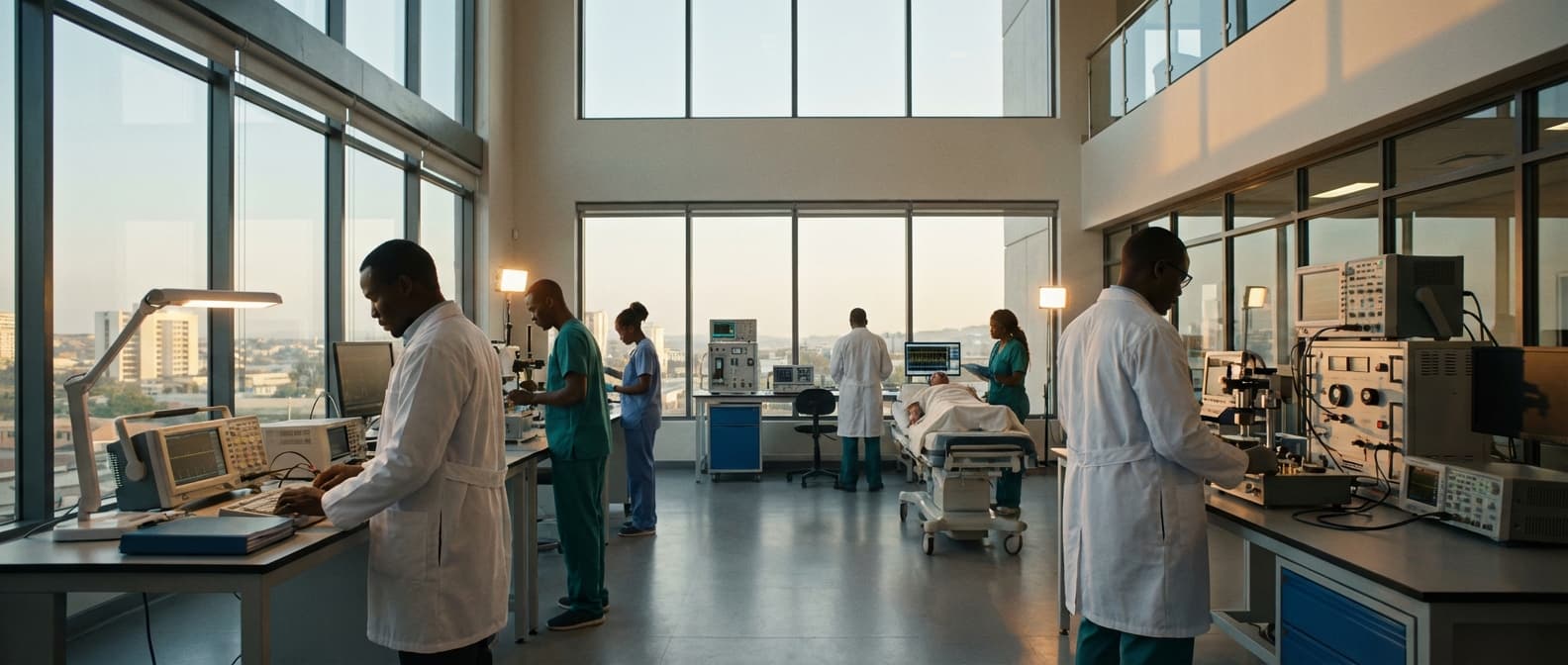
Medical Thermometer Calibration Service in Malawi
Engineering Excellence & Technical Support
Medical Thermometer Calibration Service High-standard technical execution following OEM protocols and local regulatory frameworks.
Traceable Calibration to International Standards
Ensuring your medical thermometers meet rigorous international standards (e.g., ISO 17025) for accurate temperature readings. We provide certificates of calibration traceable to national metrology institutes, vital for patient safety and regulatory compliance in Malawi.
Advanced Calibration Equipment & Expertise
Utilizing state-of-the-art calibration baths, infrared calibrators, and precision thermometers. Our certified technicians possess extensive knowledge of various thermometer technologies, guaranteeing precise and reliable calibration services tailored for the Malawian healthcare sector.
Rapid Turnaround & On-Site Services
Minimize downtime and disruption to your critical healthcare operations. We offer efficient laboratory calibration and flexible on-site services across Malawi, ensuring your medical thermometers are calibrated quickly and conveniently, meeting your operational demands.
What Is Medical Thermometer Calibration Service In Malawi?
Medical thermometer calibration service in Malawi refers to the systematic process of verifying and adjusting medical thermometers against a traceable and accurate reference standard. This ensures that the device provides consistent and reliable temperature measurements within its specified tolerance limits. The service is critical for maintaining the diagnostic accuracy and clinical efficacy of thermometers used in healthcare settings. Calibration involves comparing the thermometer's readings to those of a certified reference thermometer under controlled environmental conditions. If deviations are detected, adjustments are made to bring the thermometer within acceptable accuracy parameters. This process is essential for patient safety and the integrity of clinical data.
| Who Needs Medical Thermometer Calibration Service? | Typical Use Cases and Importance |
|---|---|
| Healthcare Facilities (Hospitals, Clinics, Health Centers): Essential for routine patient care, diagnosis, and treatment monitoring. | Monitoring patient body temperature for fever detection in emergency rooms, intensive care units, and general wards. |
| Diagnostic Laboratories: Crucial for processes requiring precise temperature control. | Incubating samples at specific temperatures or monitoring environmental conditions for sensitive biological assays. |
| Public Health Programs and Outreach Services: Ensuring the reliability of temperature monitoring in mobile clinics or vaccination drives. | Accurate temperature checks during mass immunization campaigns to maintain vaccine efficacy. |
| Medical Device Manufacturers and Repair Services: For quality control and post-repair verification. | Ensuring newly manufactured or repaired thermometers meet accuracy standards before deployment. |
| Regulatory Bodies and Quality Assurance Departments: For compliance and oversight. | Auditing healthcare providers to ensure adherence to medical device standards and patient safety protocols. |
| Research Institutions: For experiments requiring precise temperature measurements. | Conducting physiological studies or pharmacological trials where accurate temperature data is critical. |
| Veterinary Clinics and Animal Health Services: For accurate diagnosis and treatment of animals. | Monitoring animal body temperature for signs of illness or during post-operative care. |
Key Components of Medical Thermometer Calibration Service
- Verification of Accuracy: Comparing the thermometer's readings against a certified reference standard (e.g., platinum resistance thermometer or liquid-in-glass thermometer with traceable certification).
- Tolerance Assessment: Evaluating the thermometer's performance against manufacturer specifications and established medical accuracy standards (e.g., ISO 80601-2-56).
- Adjustment/Correction: If the thermometer's readings fall outside acceptable tolerances, adjustments are made to the device's internal settings or a calibration certificate is issued indicating the deviation.
- Environmental Control: Conducting calibrations in a controlled environment with stable temperature and humidity to minimize external influences on the measurement.
- Documentation and Certification: Providing a detailed calibration certificate that includes test results, reference standards used, calibration dates, uncertainty of measurement, and accreditation details (if applicable).
- Traceability: Ensuring that the reference standards used for calibration are traceable to national or international metrology institutes.
- Regular Maintenance: Recommending recalibration intervals based on device type, usage frequency, and regulatory requirements.
Who Needs Medical Thermometer Calibration Service In Malawi?
Ensuring the accuracy of medical thermometers is paramount for effective patient care and diagnosis. In Malawi, like any nation, the reliability of temperature readings directly impacts treatment decisions, disease monitoring, and public health initiatives. Medical thermometer calibration is a specialized service that verifies and adjusts these devices against a traceable standard, guaranteeing their precision. This service is not just a regulatory requirement for many healthcare settings, but a fundamental component of quality assurance. Ignoring calibration can lead to misdiagnosis, inappropriate treatments, and potentially compromised patient outcomes, making it a critical concern for a range of healthcare providers and institutions across the country.
| Target Customer/Department | Specific Needs & Why Calibration is Crucial |
|---|---|
| Hospitals (All Departments) | General Wards, Pediatrics, ICUs, Emergency Rooms: Accurate temperature is the first indicator of infection, fever, or hypothermia. Misreadings can lead to delayed or incorrect treatment, especially critical in vulnerable patient groups. Calibration ensures reliable fever detection and monitoring of treatment efficacy. |
| Clinics and Health Centers | Outpatient Care, Primary Healthcare: These facilities are often the first point of contact for patients. Precise temperature readings are vital for diagnosing common illnesses and making informed referral decisions. Calibration ensures frontline healthcare providers have trustworthy data. |
| Maternity Homes and Birthing Centers | Neonatal Care, Post-natal Care: Monitoring infant and maternal temperature is crucial for detecting postpartum infections or neonatal sepsis. Accurate readings are essential for timely intervention to prevent complications. |
| Diagnostic Laboratories | Sample Handling and Storage: While not directly for patient readings, laboratories may use thermometers to monitor the temperature of samples and reagents, ensuring their integrity and accuracy. Calibration is necessary for maintaining the cold chain and the reliability of diagnostic tests. |
| Research Institutions | Clinical Trials, Epidemiological Studies: Research relies on precise data. Inaccurate temperature readings can invalidate study results, leading to flawed conclusions and misinformed public health strategies. Calibration guarantees the scientific rigor of research. |
| Pharmaceutical Companies and Distributors | Quality Control, Cold Chain Management: Ensuring the efficacy of medicines often depends on maintaining specific temperature ranges during manufacturing, storage, and transport. Calibration of thermometers used in these processes is critical for drug safety and effectiveness. |
| Government Health Agencies and Ministries | Disease Surveillance, Public Health Programs: National health monitoring and response to outbreaks depend on aggregated, accurate data from healthcare facilities. Calibration contributes to the overall reliability of public health information, informing policy and resource allocation. |
| NGOs in Healthcare | Field Operations, Remote Health Services: NGOs often operate in challenging environments where access to advanced diagnostics is limited. Reliable basic equipment like calibrated thermometers is fundamental for providing essential healthcare services and disease management in remote or underserved areas. |
| Schools and Universities (Health Services) | Student Health, Monitoring Illnesses: Institutions with on-site health services need to accurately assess students' health, particularly during outbreaks of infectious diseases. Calibrated thermometers ensure timely identification and management of fevers. |
| Mines and Industrial Sites (Medical Facilities) | Occupational Health, First Aid: These sites often have on-site medical personnel to manage worker health. Accurate temperature readings are part of diagnosing and treating common work-related ailments and injuries. |
| Emergency Medical Services (Ambulance Services) | Pre-hospital Care: Paramedics and EMTs rely on accurate vital signs, including temperature, to make critical decisions en route to the hospital. Calibrated thermometers ensure they have reliable patient data from the outset of care. |
Who Needs Medical Thermometer Calibration Service in Malawi?
- Hospitals (Public and Private)
- Clinics and Health Centers
- Maternity Homes and Birthing Centers
- Diagnostic Laboratories
- Research Institutions
- Pharmaceutical Companies and Distributors
- Government Health Agencies and Ministries
- Non-Governmental Organizations (NGOs) involved in healthcare
- Schools and Universities with health services
- Mines and Industrial Sites with on-site medical facilities
- Emergency Medical Services (Ambulance Services)
Medical Thermometer Calibration Service Process In Malawi
This document outlines the standard workflow for the Medical Thermometer Calibration Service Process in Malawi. The process ensures that medical thermometers used within healthcare facilities are accurately calibrated, meeting national and international standards. This is crucial for reliable patient temperature readings and effective diagnosis and treatment. The service typically involves accredited laboratories or designated service providers.
| Stage | Description | Responsible Party | Key Activities | Documents/Outputs |
|---|---|---|---|---|
| The healthcare facility identifies the need for calibration and initiates contact with the service provider. | Healthcare Facility, Service Provider | Contacting service provider, requesting calibration services, providing details of thermometers (type, quantity, serial numbers), obtaining quotation. | Inquiry form, Quotation, Service agreement (if applicable) |
| Arrangements are made for the thermometers to be transported to the calibration laboratory. | Healthcare Facility, Service Provider/Courier | Scheduling collection, secure packaging of thermometers, transportation to the laboratory, acknowledgment of receipt. | Collection manifest, Chain of custody form |
| Upon arrival, thermometers undergo a visual and basic functional check. | Calibration Laboratory Technician | Visual inspection for damage, verification of model and serial numbers against request, initial functional test (if applicable). | Inspection report, Incoming goods log |
| This is the core of the service, where the thermometer's accuracy is measured against a traceable reference standard. | Calibration Laboratory Technician | Setting up calibration environment (controlled temperature), comparing thermometer readings to reference standard at various points, adjusting if necessary (for adjustable thermometers), performing necessary tests based on thermometer type (e.g., immersion, contact). | Calibration data sheets, Calibration logs |
| The collected calibration data is reviewed, and a formal certificate is issued. | Calibration Laboratory Quality Manager, Technician | Review of calibration data for accuracy and completeness, uncertainty calculation, generation of Calibration Certificate including metrological traceability, uncertainty statement, and compliance status. | Calibration Certificate, Quality control checklist |
| The calibrated thermometers are returned to the healthcare facility, along with the calibration certificates. | Service Provider/Courier, Healthcare Facility | Secure packaging of calibrated thermometers, transportation back to the facility, handover of thermometers and certificates, confirmation of receipt. | Delivery note, Signed acknowledgment of receipt |
| Both the service provider and the facility maintain records of the calibration for future reference and compliance. | Calibration Laboratory, Healthcare Facility | Archiving calibration certificates and related data, updating asset management systems, scheduling future calibrations based on recommended intervals. | Calibration records, Asset register, Reminder notifications |
Key Stages of the Medical Thermometer Calibration Service Process
- Inquiry and Request Submission
- Logistics and Sample Collection
- Initial Inspection and Verification
- Calibration Procedure
- Quality Control and Final Report Generation
- Delivery and Reintegration
- Record Keeping and Follow-up
Medical Thermometer Calibration Service Cost In Malawi
The cost of medical thermometer calibration services in Malawi can vary significantly based on several factors. These factors influence the pricing structure offered by calibration laboratories, whether they are government-affiliated, private, or mobile services. Understanding these elements is crucial for healthcare facilities and individuals seeking to ensure the accuracy and reliability of their thermometers for patient care. The pricing is generally quoted in Malawian Kwacha (MWK).
| Thermometer Type | Estimated Price Range (MWK per unit, Standard Service) |
|---|---|
| Digital Thermometers (Oral/Axillary) | 5,000 - 15,000 |
| Mercury-in-Glass Thermometers | 7,000 - 18,000 |
| Infrared Forehead Thermometers | 10,000 - 25,000 |
| Ear Thermometers | 12,000 - 28,000 |
| Bulk Discount (e.g., 10+ units) | Negotiable, typically 10-20% reduction per unit |
Key Pricing Factors for Medical Thermometer Calibration in Malawi:
- Type of Thermometer: Digital, mercury-in-glass, infrared, and ear thermometers all have different calibration complexities and may incur varying costs.
- Number of Thermometers: Bulk calibration for a large number of devices often comes with discounted per-unit pricing.
- Calibration Laboratory Accreditation: Laboratories with international accreditations (e.g., ISO 17025) may charge more due to the rigorous standards and quality assurance processes they adhere to.
- Turnaround Time: Expedited calibration services for urgent needs will typically be more expensive than standard turnaround times.
- Location of Service: Whether the calibration is performed at the laboratory's premises or if a mobile calibration service is required (requiring travel and logistics) can impact the overall cost.
- Inclusion of Certificates: The provision of traceable calibration certificates, often required for regulatory compliance, usually adds to the cost.
- Additional Services: Services like minor repairs or cleaning of the thermometer during calibration may incur extra charges.
Affordable Medical Thermometer Calibration Service Options
Maintaining accurate medical thermometer readings is crucial for effective patient care and diagnosis. Calibration ensures your thermometers are performing within their specified tolerances. While professional calibration services can be an investment, there are several affordable options and cost-saving strategies available. Understanding value bundles and exploring different service providers can significantly reduce the overall expense of maintaining your calibration needs.
| Value Bundle/Strategy | Description | Potential Cost Savings | Considerations |
|---|---|---|---|
| Scheduled Calibration Packages | Bundling calibration for multiple thermometers or across different device types (e.g., thermometers, blood pressure monitors) into a single service agreement. | Often includes volume discounts, reduced administrative overhead, and predictable budgeting. | Requires upfront commitment; ensure you have a consistent need for calibration across the bundled items. |
| Annual Calibration Contracts | A contract for regular, scheduled calibration of your thermometers over a year or longer period. | Typically offers lower per-calibration rates than ad-hoc services. Can simplify scheduling and ensure compliance. | Best for facilities with a consistent and predictable volume of calibration needs. |
| Bundled Maintenance and Calibration | Combining calibration services with other maintenance tasks such as cleaning, minor repairs, or performance checks. | Reduces the number of service calls, potentially lowers overall maintenance costs, and minimizes downtime. | Ensure the service provider has the expertise for all bundled services. |
| In-House Training & Equipment (for high volume) | Purchasing calibration equipment and training staff to perform calibrations internally. | Eliminates per-unit external calibration fees after initial investment. Provides greater control over scheduling. | Requires significant upfront investment in equipment, training, and ongoing quality control measures. |
| Off-Peak or Mail-In Services | Utilizing calibration services that offer discounts for less urgent turnaround times or by shipping thermometers to their facility. | Can be significantly cheaper than expedited on-site services. May involve longer downtime for devices. | Assess the impact of device downtime on your operations. |
| Accredited vs. Non-Accredited Comparison | Actively comparing quotes from both accredited and non-accredited labs for your specific needs. | Non-accredited services are generally less expensive, but understand if they meet your regulatory or internal quality requirements. | Prioritize accuracy and compliance over just cost. Accredited services offer greater peace of mind. |
Affordable Medical Thermometer Calibration Service Options
- Manufacturer Calibration: Many thermometer manufacturers offer their own calibration services. This can be a good option for specific models and often ensures the highest level of compatibility and expertise for your devices.
- Third-Party Calibration Labs: Independent calibration laboratories offer calibration for a wide range of medical devices, including thermometers. These labs often compete on price and may offer more flexible scheduling or faster turnaround times.
- In-House Calibration (for large organizations): For facilities with a significant number of thermometers, investing in in-house calibration equipment and training can be a long-term cost-saving strategy. This requires an initial investment but can eliminate per-unit calibration costs.
- Accredited vs. Non-Accredited Services: Accredited calibration services adhere to strict quality standards (e.g., ISO 17025) and provide certificates traceable to national or international standards. While often slightly more expensive, they offer greater assurance of accuracy and are often required for regulatory compliance. Non-accredited services can be cheaper but may not meet all requirements.
- Remote Calibration/Verification: For some basic thermometer types, remote verification or self-calibration kits might be available, though these are less common for critical medical applications and may not replace full calibration.
- Bulk Discounts and Annual Contracts: Many service providers offer discounts for calibrating multiple thermometers at once or for signing up for annual calibration contracts. This can significantly reduce the per-unit cost.
Verified Providers In Malawi
In Malawi's evolving healthcare landscape, distinguishing reliable and high-quality healthcare providers is paramount. Franance Health stands out as a beacon of excellence, built upon a foundation of rigorous credentialing and an unwavering commitment to patient well-being. This commitment translates into a demonstrable advantage for those seeking medical services. Franance Health's credentialing process is not merely a formality; it's a multi-faceted evaluation designed to ensure that every practitioner and facility associated with them meets the highest standards of competence, ethical practice, and patient safety. This meticulous approach offers peace of mind and guarantees that patients receive care from qualified and trustworthy professionals. Their dedication to transparency and quality assurance makes Franance Health the superior choice for healthcare in Malawi.
| Credential Type | Franance Health Verification Process | Benefit to Patient |
|---|---|---|
| Medical Degrees & Licenses | Verification with relevant Malawian medical boards and educational institutions. | Ensures providers are legally qualified and possess foundational medical knowledge. |
| Specialist Certifications | Confirmation of board certifications and recognized specialist training. | Guarantees expertise in specific medical fields, leading to more accurate diagnoses and treatments. |
| Clinical Experience | Reference checks and documented work history reviews. | Provides confidence in the provider's practical skills and ability to handle diverse medical situations. |
| Professional Conduct | Background checks and adherence to a strict code of ethics. | Protects patients from unethical practices and ensures a safe, respectful healthcare experience. |
| Facility Standards | Assessment of infrastructure, equipment, hygiene, and emergency preparedness. | Ensures a safe and well-equipped environment for medical procedures and patient care. |
Why Franance Health's Credentials Matter:
- Rigorous Qualification Checks: Franance Health meticulously verifies the academic qualifications, licenses, and certifications of all affiliated healthcare professionals.
- Experience Verification: Their process includes validating the practical experience and areas of specialization for each provider.
- Continuous Professional Development: Franance Health ensures providers are engaged in ongoing training and education to stay abreast of the latest medical advancements.
- Ethical Practice Review: A thorough background check and review of disciplinary records are conducted to uphold ethical standards.
- Patient Feedback Integration: Franance Health actively incorporates patient feedback to monitor and improve service quality.
- Facility Accreditation: Beyond individual practitioners, Franance Health also assesses and accredits healthcare facilities for adherence to safety and operational standards.
Scope Of Work For Medical Thermometer Calibration Service
This Scope of Work (SOW) outlines the requirements for professional medical thermometer calibration services. The objective is to ensure the accuracy, reliability, and traceability of medical thermometers used in clinical and healthcare settings, adhering to stringent industry standards. This SOW details the technical deliverables, standard specifications, and general requirements for the calibration process.
| Category | Technical Deliverable | Standard Specification | Notes |
|---|---|---|---|
| Calibration Certificate | Calibration Certificate | ISO 17025 compliant or equivalent, including: Unique ID, Instrument details (model, serial number), Calibration date, Due date, Environmental conditions during calibration, Measurement uncertainty, Traceability statement, Name and signature of authorized personnel, Calibration results (as-found and as-left, if applicable). | Must be provided for each calibrated thermometer. |
| Calibration Procedure | Documented Calibration Procedure | Adherence to recognized national/international standards (e.g., ASTM E287, relevant ISO standards, manufacturer's recommended procedures). Clearly defined steps for verification and adjustment. | Procedure must be readily available upon request. |
| Calibration Equipment | Traceable Calibration Equipment | All reference standards and measuring equipment used for calibration must be: Calibrated by an accredited laboratory, Traceable to national or international standards (e.g., NIST, NPL). | Calibration status of equipment must be current. |
| Accuracy Verification | Accuracy Verification Report | Comparison of thermometer readings with traceable reference standards at specified test points (e.g., 35°C, 37°C, 40°C). Tolerance limits as per relevant standards or manufacturer specifications. | Report to detail actual readings and deviations. |
| Measurement Uncertainty | Statement of Measurement Uncertainty | Reported for each key measurement, following established guidelines (e.g., BIPM/JCGM). | Crucial for assessing the reliability of the calibration. |
| Environmental Conditions | Record of Environmental Conditions | Temperature, humidity, and barometric pressure recorded during the calibration process. These conditions must be within the operational limits of the thermometer and calibration equipment. | Essential for ensuring valid calibration results. |
| Temperature Points | Specified Calibration Temperature Points | As per manufacturer's specifications or relevant industry standards. Typically includes points relevant to physiological temperatures. | Examples: 35.0°C, 37.0°C, 40.0°C, or as specified. |
| Calibration Frequency | Recommended Calibration Frequency | As per manufacturer's recommendations, regulatory requirements, or organizational policy. Typically annually or bi-annually. | To be agreed upon with the client. |
| Traceability | Metrological Traceability Statement | Clear statement linking the calibration results to national or international measurement standards. | Ensures the validity of the measurement. |
| Data Logging and Archiving | Calibration Data Records | Secure storage and archiving of all calibration data, certificates, and related documentation for a defined period (e.g., 5 years or as per regulations). | Facilitates audits and historical trend analysis. |
| Compliance | Adherence to Regulatory Standards | Compliance with all applicable local, national, and international regulations and standards governing medical devices and metrology. | Examples: FDA, CE Marking, ISO 13485. |
Key Objectives of Medical Thermometer Calibration
- To verify and document the accuracy of medical thermometers against traceable standards.
- To ensure compliance with relevant national and international metrology regulations and standards.
- To provide confidence in the readings of medical thermometers for patient safety and diagnostic integrity.
- To identify and report any deviations from specified tolerances.
- To ensure the continued safe and effective use of medical devices.
Service Level Agreement For Medical Thermometer Calibration Service
This Service Level Agreement (SLA) outlines the performance standards and guarantees for the Medical Thermometer Calibration Service provided by [Your Company Name] (hereinafter referred to as "Provider") to [Client Company Name] (hereinafter referred to as "Client"). This SLA aims to ensure the reliability and responsiveness of the calibration services, critical for maintaining accurate medical diagnoses and patient safety.
| Parameter | Definition | Service Commitment | Measurement Metric | Remedy for Non-Compliance |
|---|---|---|---|---|
| Response Time for Service Request | The time taken for the Provider to acknowledge and begin addressing a new calibration service request from the Client. | Provider shall acknowledge and initiate the service request process within 4 business hours of receipt. | Time from Client submission of request to Provider's confirmation and assignment. | 10% discount on the next calibration service for each instance of delay beyond 4 business hours. |
| Calibration Turnaround Time | The total time taken from the Provider's receipt of the medical thermometer to its return to the Client after calibration. | Standard calibration turnaround time will be 5 business days for up to 10 thermometers. For orders exceeding 10 thermometers, a revised turnaround time will be communicated within 24 hours of receipt. | Time from Provider's receipt of thermometer(s) to Provider's shipment back to Client. | For each day the turnaround time exceeds the commitment, the Client will receive a credit of 2% of the calibration fee for the delayed thermometer(s). |
| Uptime Guarantee for Calibration Portal/System (if applicable) | The percentage of time the Provider's online portal or system, used for requesting and tracking calibration services, is available and operational. | 99.5% uptime during Service Hours. | Percentage of time the portal is accessible and functional during agreed Service Hours, excluding scheduled maintenance. | If uptime falls below 99.5% in a given month, Client will receive a credit of 5% of the monthly service fee (if a retainer/subscription is in place) for each 1% drop in uptime. |
| Accuracy of Calibration | The assurance that the calibration performed meets or exceeds the specified accuracy standards for medical thermometers. | All calibrations will meet or exceed the accuracy tolerances defined by [Relevant Standard, e.g., ISO 80601-2-56] or client-provided specifications. | Post-calibration verification by a mutually agreed-upon third-party or re-testing by the Client upon receipt. | If a thermometer fails post-calibration verification due to Provider error, the Provider will re-calibrate the thermometer free of charge and cover any reasonable shipping costs incurred by the Client. A full refund for the calibration service may be issued if re-calibration is not feasible or fails again. |
| Data Security & Confidentiality | The protection of any data or information related to the client's thermometers and calibration records. | Provider will maintain strict confidentiality and implement appropriate security measures to protect client data. | Audits of Provider's security protocols by the Client (with prior notice) or incident reports. | Breach of confidentiality or security will result in immediate termination of the SLA and potential legal action. Provider will cover any damages or losses incurred by the Client due to the breach. |
Key Service Parameters
- Service Scope: This SLA covers the calibration of medical thermometers as per industry standards and client specifications. This includes, but is not limited to, accuracy checks, temperature sensor verification, and functional testing.
- Service Hours: Standard service hours are Monday to Friday, 9:00 AM to 5:00 PM [Client's Time Zone], excluding public holidays.
- Exclusions: This SLA does not cover damage due to misuse, accidents, or unauthorized modifications of the medical thermometers.
- Governing Law: This SLA shall be governed by and construed in accordance with the laws of [Jurisdiction].
Frequently Asked Questions

Ready when you are
Let's scope your Medical Thermometer Calibration Service in Malawi project in Malawi.

Scaling healthcare logistics and technical systems across the entire continent.