
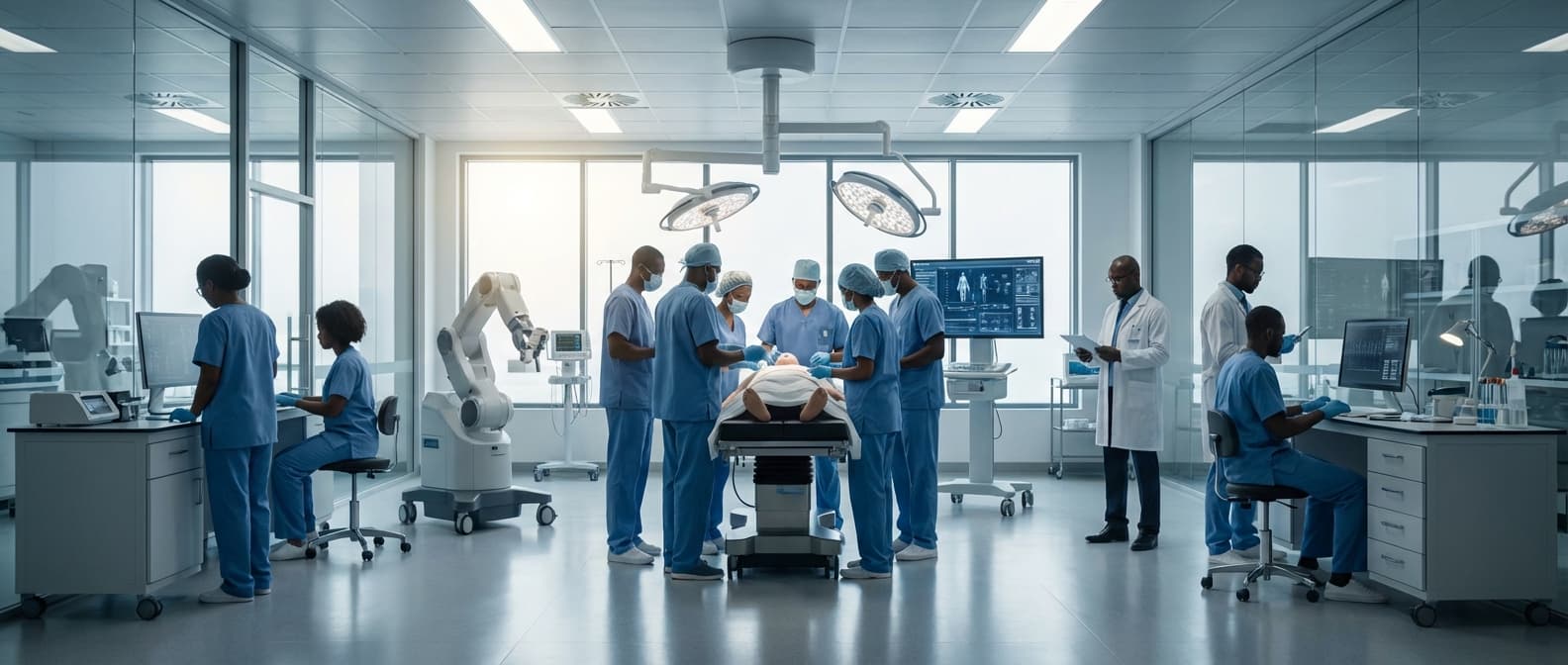
Managed Equipment Service (MES) in Malawi
Engineering Excellence & Technical Support
Long‑term equipment provision with uptime SLAs and lifecycle management. High-standard technical execution following OEM protocols and local regulatory frameworks.
Expert Biomedical Engineering & Maintenance
Our certified biomedical engineers in Malawi provide comprehensive preventative maintenance, calibration, and rapid repair services for a wide range of medical equipment. We ensure optimal performance and minimize downtime, guaranteeing reliable patient care.
Streamlined Spare Parts & Logistics
Leveraging our robust local network and global sourcing capabilities, we guarantee timely access to critical spare parts and consumables for medical equipment across Malawi. Our efficient logistics minimize delays and ensure your equipment is always operational.
Capacity Building & End-User Training
We empower Malawian healthcare professionals through tailored training programs on equipment operation, basic maintenance, and safety protocols. This fosters local ownership and enhances the long-term sustainability of medical equipment utilization.
What Is Managed Equipment Service (Mes) In Malawi?
Managed Equipment Service (MES) in Malawi refers to a comprehensive outsourcing model for the procurement, installation, maintenance, and eventual replacement of medical equipment for healthcare facilities. This service shifts the capital expenditure burden and operational responsibility from the healthcare provider to a specialized third-party vendor. The vendor typically assumes ownership of the equipment and provides it to the facility on a usage-based or fixed-fee basis, often integrated with training, consumables, and ancillary services. The primary objective is to ensure continuous availability and optimal performance of essential medical technology, thereby improving diagnostic capabilities, treatment efficacy, and patient outcomes, while enabling healthcare providers to focus on their core medical functions.
| Who Needs MES? | Typical Use Cases | ||||||
|---|---|---|---|---|---|---|---|
| Public Hospitals and Health Centers: Especially those with limited capital budgets, technical expertise, or capacity for in-house maintenance. | Establishment of new diagnostic centers or specialized treatment units (e.g., imaging departments, intensive care units). | Upgrading of existing medical equipment to incorporate newer technologies and improve service delivery. | Rural and remote healthcare facilities facing challenges in accessing specialized maintenance and repair services. | Non-governmental organizations (NGOs) and faith-based organizations operating healthcare facilities with constrained resources. | Private healthcare providers seeking to optimize operational costs, guarantee equipment uptime, and access advanced technology without significant upfront investment. | Facilities aiming to standardize equipment across multiple sites for consistent service quality and streamlined maintenance. | |
| Radiology Departments: X-ray machines, CT scanners, MRI machines, ultrasound machines. | Laboratory Services: Hematology analyzers, chemistry analyzers, PCR machines, microscopes. | Surgical Theaters: Anesthesia machines, surgical lights, patient monitors, electrosurgical units. | Intensive Care Units (ICUs): Ventilators, defibrillators, infusion pumps, specialized patient monitoring systems. | Emergency Medical Services: Ambulance equipment, advanced life support systems. | Sterilization and CSSD equipment. | Diagnostic imaging equipment for specialized fields (e.g., cardiology, ophthalmology). | Rehabilitation and physiotherapy equipment. |
Key Components of Managed Equipment Service (MES) in Malawi
- Equipment Procurement & Selection: Collaborative identification of facility needs and procurement of appropriate medical devices.
- Installation & Commissioning: Professional setup, calibration, and initial testing of all equipment.
- Routine Maintenance & Servicing: Scheduled preventative maintenance to minimize downtime and ensure optimal performance.
- Breakdown Maintenance & Repair: Rapid response to equipment malfunctions with qualified technicians and spare parts.
- Training & Capacity Building: On-site training for healthcare professionals on equipment operation and basic maintenance.
- Consumables & Accessories Management: Supply and management of necessary consumables and accessories.
- Quality Assurance & Performance Monitoring: Ongoing assessment of equipment utilization, performance metrics, and adherence to service level agreements (SLAs).
- End-of-Life Management & Replacement: Planning and execution of equipment upgrades and replacements as per contractual terms.
Who Needs Managed Equipment Service (Mes) In Malawi?
Managed Equipment Service (MES) in Malawi offers a comprehensive solution for organizations to procure, maintain, and upgrade essential equipment without the burden of direct ownership and operational complexities. This service is particularly beneficial for entities facing budget constraints, requiring specialized technical expertise, or operating in environments where efficient and reliable equipment is critical for service delivery. By outsourcing equipment management, organizations can focus on their core mission and benefit from advanced technology and predictable operational costs.
| Target Customer Segment | Key Departments/Areas Benefiting from MES | ||||||
|---|---|---|---|---|---|---|---|
| Healthcare Sector (Hospitals, Clinics, Diagnostic Centers) | Radiology Departments (X-ray, CT, MRI machines) | Laboratory Services (Diagnostic equipment, analyzers) | Surgical Departments (Operating theater equipment) | Maternity and Neonatal Units (Incubators, monitors) | General Wards (Patient monitoring, specialized beds) | Pharmacy Departments (Automated dispensing systems) | IT and Administration (High-end computing, network infrastructure) |
| Education Sector (Universities, Colleges, Technical Schools) | Science and Technology Departments (Laboratory equipment, research instruments) | Engineering Faculties (Specialized machinery, testing equipment) | Computer Laboratories (High-performance workstations, servers) | Medical Training Institutions (Simulation equipment, anatomical models) | Administration and IT (Server rooms, network infrastructure) | ||
| Government Agencies (Public Health, Agriculture, Infrastructure) | Ministry of Health (Essential medical equipment for public facilities) | Ministry of Agriculture (Agricultural research equipment, processing machinery) | Roads and Public Works Departments (Construction and maintenance equipment) | Disaster Management Agencies (Communication and emergency response equipment) | Statistics Offices (Data processing and analysis hardware) | ||
| Non-Governmental Organizations (NGOs) | Field Operations (Mobile clinics, water purification equipment) | Research and Development (Specialized scientific equipment) | Program Delivery (IT infrastructure, communication devices) | Administrative Offices (Office equipment, IT support) | |||
| Large Commercial Enterprises (Mining, Manufacturing, Telecommunications) | Industrial Operations (Heavy machinery, automation equipment) | Research and Development Labs (Advanced scientific instruments) | IT and Data Centers (Servers, networking, storage) | Logistics and Warehousing (Automated systems, material handling equipment) | Specialized Projects requiring cutting-edge technology |
Who Needs Managed Equipment Service (MES) in Malawi? Target Customers and Departments
- Healthcare Sector
- Education Sector
- Government Agencies
- Non-Governmental Organizations (NGOs)
- Large Commercial Enterprises
Managed Equipment Service (Mes) Process In Malawi
The Managed Equipment Service (MES) process in Malawi is a comprehensive framework designed to ensure the effective acquisition, deployment, maintenance, and eventual replacement of medical equipment in public health facilities. It aims to overcome challenges related to funding, technical expertise, and spare parts availability, thereby improving the quality of healthcare services. The workflow typically begins with an inquiry from a health facility or a regional health office, leading through a series of defined stages to the successful execution and ongoing management of the equipment.
| Stage | Description | Key Activities | Key Stakeholders |
|---|---|---|---|
| Initiation of the MES process driven by a recognized need for specific medical equipment. | Health facility identifies equipment gaps, submits a request, and initial needs assessment is conducted. | Health Facility, District Health Office, Ministry of Health (MoH) - Policy and Planning Department |
| Determining the urgency and strategic importance of requested equipment. | Needs are assessed against national health priorities, existing infrastructure, and budget availability. Equipment lists are compiled and prioritized. | MoH - Policy and Planning, MoH - Procurement Unit, Health Facility Management, Technical Working Groups |
| Formal process for identifying and selecting a service provider for MES. | Development of tender documents, advertisement, bid submission, evaluation of technical and financial proposals by a Tender Committee. | MoH - Procurement Unit, Tender Committee, Ministry of Finance and Economic Planning, Potential MES Providers |
| Finalizing the agreement with the selected MES provider. | Negotiation of contract terms, service level agreements (SLAs), pricing, and performance metrics. Contract award to the successful bidder. | MoH - Legal Department, MoH - Procurement Unit, Selected MES Provider, Ministry of Justice |
| Acquisition and delivery of the specified medical equipment. | The MES provider procures the equipment according to contract specifications. Handling of customs clearance and importation logistics. | Selected MES Provider, MoH - Procurement Unit, Malawi Revenue Authority (MRA), Clearing Agents |
| Setting up and verifying the functionality of the equipment. | Installation of equipment at the designated health facilities, followed by comprehensive testing and commissioning to ensure it meets specifications and is operational. | Selected MES Provider (Technicians), Health Facility Staff, MoH - Biomedical Engineering Department |
| Ensuring staff can effectively operate and maintain the equipment. | Training of healthcare professionals on the use of new equipment. Training of biomedical technicians on routine maintenance and basic troubleshooting. | Selected MES Provider (Trainers), Health Facility Staff (Clinical), MoH - Biomedical Engineering Department (Technicians) |
| Ongoing upkeep and servicing of the equipment. | Scheduled preventative maintenance, timely response to repair requests, and provision of spare parts by the MES provider as per the contract. | Selected MES Provider (Maintenance Team), Health Facility Staff, MoH - Biomedical Engineering Department (Oversight) |
| Assessing the performance of the MES and the equipment. | Regular monitoring of equipment uptime, service delivery, and impact on healthcare outcomes. Periodic performance reviews and reporting to the MoH. | MoH - Biomedical Engineering Department, MoH - Planning and Monitoring Unit, Selected MES Provider, Health Facility Management |
| Ensuring the continued relevance and functionality of the equipment over its lifecycle. | Planning for the eventual upgrade or replacement of equipment based on technological advancements, wear and tear, and evolving healthcare needs, often as part of a new MES cycle. | MoH - Policy and Planning, MoH - Biomedical Engineering Department, Selected MES Provider, Health Facility Management |
Managed Equipment Service (MES) Process Workflow in Malawi
- Inquiry and Needs Assessment
- Equipment Prioritization and Planning
- Tender Process and Supplier Selection
- Contract Negotiation and Award
- Procurement and Importation
- Installation and Commissioning
- Training and Capacity Building
- Routine Maintenance and Repairs
- Monitoring, Evaluation, and Reporting
- Equipment Upgrade and Replacement
Managed Equipment Service (Mes) Cost In Malawi
Managed Equipment Service (MES) plays a crucial role in ensuring healthcare facilities in Malawi have access to functional and up-to-date medical equipment. The cost of MES in Malawi is influenced by a variety of factors, leading to a range of pricing that can vary significantly. These factors include the type and volume of equipment managed, the level of service required, the duration of the contract, and the provider's operational costs and profit margins. The Malawian Kwacha (MWK) is the local currency, and pricing is typically quoted and paid in MWK, although international providers might also present figures in USD, which are then converted.
| Equipment Category (Example) | Estimated Annual MES Cost Range (MWK) | Notes |
|---|---|---|
| Basic Patient Monitoring Devices (e.g., Vital Signs Monitors, ECG Machines) | MWK 200,000 - MWK 800,000 per unit | Covers routine maintenance, minor repairs, and potentially some spare parts. Higher end for more advanced features or higher volume. |
| Laboratory Equipment (e.g., Hematology Analyzers, Biochemistry Analyzers) | MWK 500,000 - MWK 2,000,000 per unit | Includes preventative maintenance, calibration, troubleshooting, and replacement of common consumables/reagents if part of the scope. Complexity and throughput are key. |
| Diagnostic Imaging Equipment (e.g., X-ray Machines, Ultrasound Machines) | MWK 1,500,000 - MWK 10,000,000+ per unit | Significant variation based on modality (X-ray vs. Ultrasound vs. CT/MRI), age, and features. Includes comprehensive PM, repairs, and potentially tube/detector replacements. CT/MRI are at the highest end. |
| Surgical Equipment (e.g., Anesthesia Machines, Ventilators) | MWK 400,000 - MWK 3,000,000 per unit | Focus on critical components, calibration, and safety checks. Higher costs for advanced ventilators and anesthesia machines. |
| Full Hospital/Facility MES Package (Comprehensive Service) | Highly Variable (e.g., MWK 50,000,000 - MWK 500,000,000+ per annum) | This represents a large-scale contract covering a wide range of equipment, potentially including asset management, upgrades, and full operational support. Often negotiated on a case-by-case basis and dependent on the size and complexity of the facility. |
Key Pricing Factors for MES in Malawi
- Type and Quantity of Equipment: Managing a diverse range of high-value diagnostic imaging equipment (e.g., MRI, CT scanners) will incur higher costs than managing basic patient monitoring devices or laboratory equipment. The sheer volume of items also directly impacts the service fee.
- Service Level Agreements (SLAs): The scope of services included in the MES contract is a primary driver of cost. This can range from basic preventative maintenance and repairs to comprehensive solutions including asset management, upgrades, replacements, consumables, and even staff training.
- Equipment Age and Condition: Older or poorly maintained equipment may require more frequent and intensive servicing, leading to higher operational costs for the MES provider and thus a higher price.
- Contract Duration: Longer-term contracts often allow for better financial planning and risk mitigation for the MES provider, potentially leading to more favorable pricing. Conversely, short-term or ad-hoc services are usually more expensive per unit of time or equipment.
- Geographic Location: While Malawi has a relatively small geographic area compared to larger nations, the remoteness of some health facilities can increase logistical costs (travel, transportation of parts) for maintenance teams, impacting the overall price.
- Provider's Business Model and Overhead: The internal operational costs, including staff salaries, training, administrative expenses, and profit margins of the MES provider, are factored into their pricing.
- Technology and Innovation: Contracts that include provisions for technology upgrades and adoption of newer, more advanced equipment will naturally be priced higher than those focused solely on maintaining existing assets.
- Risk Sharing and Performance Guarantees: MES contracts may include performance guarantees (e.g., uptime targets). If the provider shoulders significant risk for downtime, this can be reflected in the pricing.
- Consumables and Spare Parts Management: The inclusion of consumables (e.g., reagents, disposables) and the management of spare parts inventory within the MES contract will significantly influence the cost.
Affordable Managed Equipment Service (Mes) Options
Managed Equipment Service (MES) offers a comprehensive solution for organizations to outsource the management of their critical equipment. This can lead to significant cost savings and improved operational efficiency. The key to affordable MES lies in understanding and leveraging value bundles and implementing effective cost-saving strategies.
| Value Bundle Component | Description | Cost-Saving Impact |
|---|---|---|
| Basic Support Package | Includes scheduled preventative maintenance, remote monitoring, and essential technical support. | Reduces unplanned downtime, extends equipment lifespan, minimizes emergency repair costs. |
| Proactive Performance Bundle | Builds on Basic Support with advanced diagnostics, performance tuning, and proactive issue identification. | Optimizes energy consumption, improves operational throughput, prevents costly failures. |
| Comprehensive Asset Management | Encompasses all aspects of the equipment lifecycle, including procurement advice, installation, maintenance, repair, and eventual disposal. | Streamlines procurement, minimizes replacement costs, ensures regulatory compliance, reduces waste. |
| On-Demand Emergency Services | Provides guaranteed rapid response and on-site support for critical equipment failures. | Minimizes business disruption, reduces lost revenue due to downtime. |
Key Components of Affordable MES
- Proactive Maintenance Schedules
- Remote Monitoring & Diagnostics
- On-site Technical Support
- Parts & Consumables Management
- Software Updates & Patching
- Performance Optimization
- Equipment Lifecycle Management
Verified Providers In Malawi
When seeking healthcare services in Malawi, identifying verified and reputable providers is paramount for ensuring quality care and peace of mind. Franance Health stands out as a leading platform that meticulously vets and credentials healthcare facilities and individual practitioners. This rigorous credentialing process by Franance Health ensures that patients have access to a network of trusted and competent healthcare professionals, making them the best choice for your medical needs in Malawi.
| Credentialing Aspect | Franance Health's Standard | Patient Benefit |
|---|---|---|
| Professional Licenses | Verification of current and valid professional licenses for all practitioners. | Ensures providers are legally qualified and authorized to practice. |
| Educational Background | Confirmation of degrees, diplomas, and certifications from accredited institutions. | Guarantees that providers have received foundational medical education. |
| Clinical Experience | Assessment of practical experience and demonstrated competency in their respective fields. | Provides assurance of hands-on expertise and problem-solving skills. |
| Reputation and References | Checks for professional standing and patient feedback where applicable. | Offers an additional layer of confidence in the provider's reliability and quality of service. |
| Adherence to Ethical Guidelines | Confirmation of commitment to medical ethics and patient confidentiality. | Protects patient rights and ensures responsible medical practice. |
Why Franance Health Providers are the Best Choice:
- Rigorous Vetting Process: Franance Health employs a comprehensive evaluation of all listed providers, scrutinizing their qualifications, experience, and adherence to professional standards.
- Commitment to Quality: By partnering exclusively with credentialed providers, Franance Health guarantees a high standard of medical care, from diagnostics to treatment.
- Patient Safety First: Their verification process prioritizes patient safety, ensuring that providers meet stringent ethical and operational guidelines.
- Enhanced Trust and Transparency: Franance Health provides a transparent platform where patients can confidently choose providers knowing they have been thoroughly vetted.
- Access to Specialists: The network includes a wide range of specialists, making it easier to find the right expert for specific health concerns.
- Improved Healthcare Accessibility: By highlighting verified providers, Franance Health simplifies the search for reliable healthcare, especially in remote or underserved areas.
Scope Of Work For Managed Equipment Service (Mes)
This document outlines the Scope of Work (SOW) for Managed Equipment Service (MES), detailing the technical deliverables and standard specifications required for the successful implementation and ongoing management of a comprehensive equipment service solution. The MES aims to ensure optimal performance, reliability, and lifecycle management of all designated equipment within the client's operational environment. This SOW covers the entire lifecycle of the managed equipment, from initial setup and deployment through to maintenance, repair, and eventual decommissioning and replacement. The objective is to provide a seamless, cost-effective, and efficient equipment service, allowing the client to focus on their core business operations.
| Technical Deliverable | Description | Standard Specifications / Requirements | Verification Method |
|---|---|---|---|
| Equipment Inventory Database | A comprehensive and up-to-date database of all managed equipment, including serial numbers, model numbers, purchase dates, warranty information, and location. | Centralized, accessible database (e.g., cloud-based CMMS/ITSM tool). Data accuracy of 99%. Regular audits (quarterly). | Database review, audit reports. |
| Installation & Configuration Report | Detailed documentation of the installation and configuration process for each piece of equipment, including network settings, software setup, and user access. | Standardized templates for reporting. Compliance with client's IT policies and security standards. Successful system integration. | Installation checklists, configuration verification scripts, site acceptance forms. |
| Preventive Maintenance Schedule & Reports | A clearly defined schedule for all preventive maintenance tasks, along with detailed reports of completed activities. | Adherence to manufacturer recommendations and best practices. Timely execution as per schedule (e.g., 95% on-time completion). | Scheduled maintenance logs, completed task reports, adherence metrics. |
| Corrective Maintenance Response & Resolution | Defined response and resolution times for equipment failures, including troubleshooting and repair procedures. | Service Level Agreements (SLAs) for response (e.g., <4 hours for critical) and resolution (e.g., <24 hours for critical). Use of qualified technicians. Documentation of all repairs. | Ticket resolution times, repair logs, customer satisfaction surveys. |
| Remote Monitoring & Alerting System | Implementation of a system to remotely monitor equipment health, performance, and potential issues, with automated alerts for critical events. | Coverage for 95% of managed equipment. Configurable alert thresholds. Proactive identification of at least 80% of potential failures before impact. | Monitoring dashboards, alert logs, system uptime reports. |
| Spare Parts Inventory Management Plan | A strategy for managing spare parts, including stocking levels, procurement, and inventory tracking to minimize downtime. | Identification of critical spare parts. Minimum stock levels defined for key components. Real-time inventory tracking. | Inventory reports, parts usage analysis, stockout frequency metrics. |
| Software Update & Patching Procedure | A documented procedure for managing software updates and security patches for all relevant equipment. | Regular review of vendor advisories. Testing of updates before deployment. Deployment within agreed timelines (e.g., critical patches within 72 hours). | Update logs, compliance reports, vulnerability scan results. |
| Decommissioning & Disposal Plan | A plan for the secure and environmentally responsible decommissioning and disposal of end-of-life equipment. | Compliance with all relevant environmental regulations. Secure data erasure procedures. Certified disposal partners. | Decommissioning reports, waste disposal certificates, data destruction confirmations. |
| Monthly Performance Reports | Regular reports detailing equipment uptime, maintenance activities, costs, and adherence to SLAs/KPIs. | Standardized report template. Delivered by the 5th business day of the following month. Includes trend analysis and recommendations. | Report review, KPI achievement tracking. |
| Security Configuration Standards | Defined security configurations and hardening standards for all managed equipment to mitigate risks. | Compliance with industry best practices (e.g., CIS benchmarks). Regular security audits. Documentation of all security settings. | Security audit reports, compliance checklists, penetration test results. |
Key Areas Covered by the MES Scope of Work
- Equipment Inventory and Asset Management
- Installation, Configuration, and Deployment
- Preventive Maintenance and Scheduled Servicing
- Corrective Maintenance and Break/Fix Services
- Remote Monitoring and Diagnostics
- Spare Parts Management and Logistics
- Software Updates and Patch Management
- End-of-Life Management and Decommissioning
- Reporting and Performance Analysis
- Service Level Agreements (SLAs) and Key Performance Indicators (KPIs)
- Security Management and Compliance
Service Level Agreement For Managed Equipment Service (Mes)
This Service Level Agreement (SLA) outlines the response times and uptime guarantees for the Managed Equipment Service (MES) provided by [Your Company Name] to [Client Company Name]. This SLA is an integral part of the Master Services Agreement (MSA) between the parties.
| Service Element | Response Time (Critical) | Response Time (High) | Response Time (Medium) | Uptime Guarantee |
|---|---|---|---|---|
| Critical Incident (Complete Service Outage) | Within 1 Hour | N/A | N/A | 99.9% Monthly |
| High Incident (Significant Functionality Impaired, but core operations possible) | N/A | Within 2 Business Hours | N/A | 99.9% Monthly |
| Medium Incident (Minor Functionality Impaired, user impact limited) | N/A | N/A | Within 4 Business Hours | 99.9% Monthly |
| Preventive Maintenance | Scheduled and completed as per the agreed maintenance schedule. | N/A | N/A | N/A |
Scope of Service
- This SLA applies to all equipment designated as part of the Managed Equipment Service (MES) as detailed in Exhibit A of the MSA.
- The MES includes proactive monitoring, preventive maintenance, incident response, and repair services for the specified equipment.
- This SLA does not cover consumables, software issues unrelated to hardware malfunction, or damage caused by misuse, neglect, or unauthorized modifications.
Frequently Asked Questions

Ready when you are
Let's scope your Managed Equipment Service (MES) in Malawi project in Malawi.

Scaling healthcare logistics and technical systems across the entire continent.