
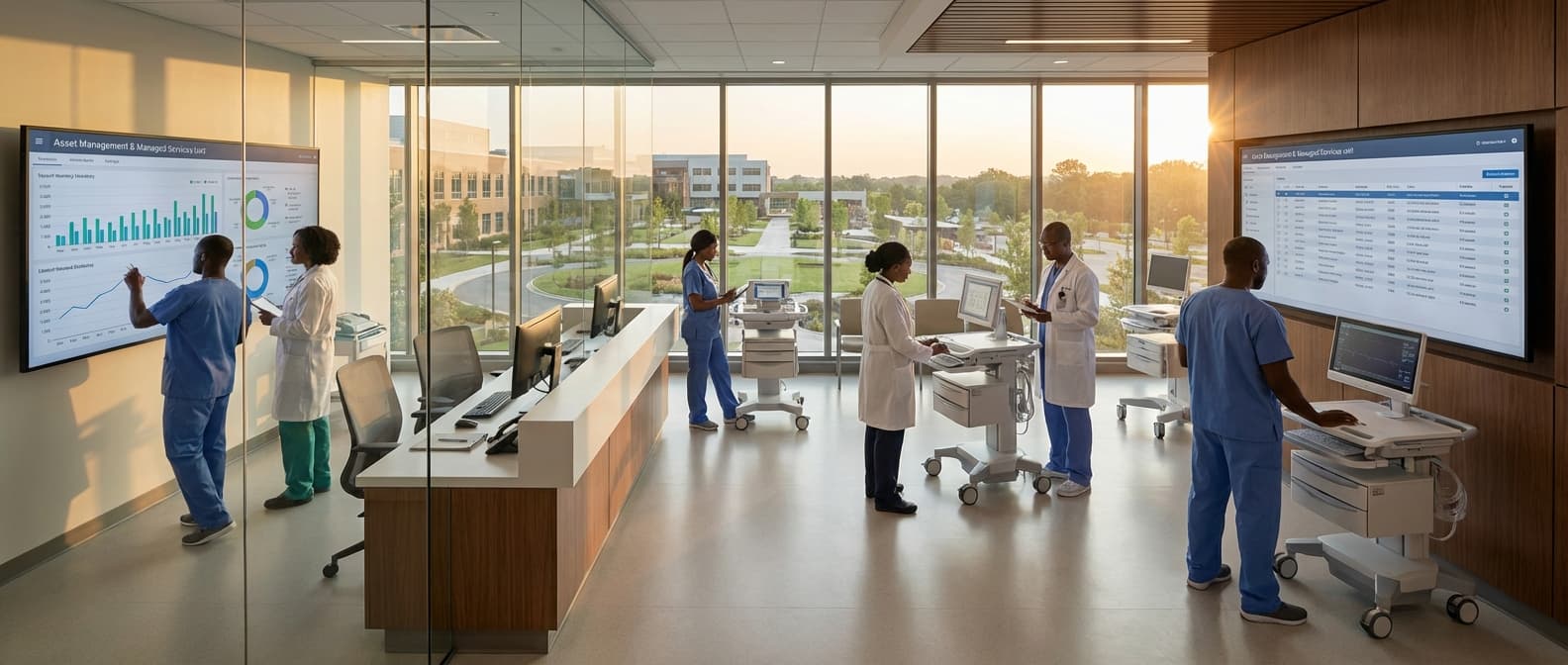
Maintenance KPI Reporting Service (Uptime/MTBF/MTTR) in Malawi
Engineering Excellence & Technical Support
Maintenance KPI Reporting Service (Uptime/MTBF/MTTR) High-standard technical execution following OEM protocols and local regulatory frameworks.
Enhance Asset Uptime with Proactive Maintenance Insights
Our service leverages real-time data from your Malawian operations to pinpoint potential failure points before they impact production. By delivering accurate Uptime KPIs, we empower you to optimize maintenance schedules, minimize unplanned downtime, and maximize the operational availability of your critical assets.
Reduce Mean Time Between Failures (MTBF) for Consistent Operations
Gain a deep understanding of your equipment's reliability in the Malawian context. Our reporting service meticulously tracks and analyzes Mean Time Between Failures (MTBF), providing actionable insights to identify root causes of recurring issues and implement targeted preventative strategies, leading to more consistent and predictable operational performance.
Accelerate Mean Time To Repair (MTTR) with Streamlined Incident Response
Minimize the impact of inevitable equipment failures. Our comprehensive KPI reporting identifies bottlenecks in your repair processes, helping you to reduce Mean Time To Repair (MTTR). This allows for quicker diagnostics, efficient resource allocation, and faster restoration of service, ultimately saving valuable production time and resources across Malawi.
What Is Maintenance Kpi Reporting Service (Uptime/mtbf/mttr) In Malawi?
Maintenance KPI Reporting Service (Uptime/MTBF/MTTR) in Malawi refers to a specialized offering that focuses on the systematic collection, analysis, and presentation of Key Performance Indicators (KPIs) related to the operational availability and reliability of physical assets and systems. This service leverages data from various sources, including Computerized Maintenance Management Systems (CMMS), sensor networks, and manual logs, to generate actionable insights. The core objective is to provide stakeholders with a clear and quantifiable understanding of asset performance, enabling informed decision-making for maintenance strategies, operational improvements, and capital expenditure planning. The service is characterized by its quantitative approach, employing established metrics to benchmark performance, identify trends, and predict potential failures. In Malawi, as in other economies, the efficient management of infrastructure, machinery, and critical systems is paramount for economic growth and service delivery. This service directly addresses that need by providing a data-driven framework for optimizing maintenance operations.
| Who Needs It | Typical Use Cases |
|---|---|
| Industrial Manufacturers: Companies operating factories, processing plants, and production lines (e.g., food and beverage, textiles, mining, chemicals). | Optimizing production uptime and minimizing costly unplanned downtime. Identifying critical equipment for proactive maintenance interventions to prevent bottlenecks. Improving OEE to enhance manufacturing efficiency and competitiveness. Forecasting spare parts requirements based on MTBF data. |
| Power Generation and Utilities: Electricity providers, water treatment plants, and telecommunications companies managing extensive infrastructure. | Ensuring continuous service availability and minimizing disruptions to consumers. Predicting asset failure in critical infrastructure (e.g., turbines, transformers, transmission lines) to prevent widespread outages. Optimizing maintenance schedules for power generation equipment to maximize energy output. Tracking the reliability of telecommunications networks. |
| Transportation and Logistics: Airlines, railway operators, shipping companies, and fleet management organizations. | Maximizing asset availability (aircraft, trains, vehicles) for operational schedules. Reducing the frequency and duration of service disruptions due to equipment malfunction. Implementing predictive maintenance for engines, braking systems, and other critical components. Optimizing fleet maintenance costs. |
| Mining and Extractive Industries: Companies involved in the extraction of natural resources, operating heavy machinery and complex processing facilities. | Ensuring continuous operation of heavy-duty mining equipment (e.g., excavators, haul trucks, crushers). Minimizing downtime in processing plants to maintain throughput. Improving the reliability of pumps, conveyors, and other material handling systems. Forecasting maintenance needs in remote or challenging operational environments. |
| Infrastructure Management: Government agencies and private entities responsible for roads, bridges, buildings, and public facilities. | Monitoring the structural integrity and operational readiness of public infrastructure. Scheduling routine maintenance to prevent degradation and costly repairs. Assessing the lifecycle of assets and planning for replacements. Ensuring the availability of critical facilities like hospitals and emergency services. |
| Facilities Management: Organizations managing large commercial or residential properties, including hospitals, universities, and corporate campuses. | Ensuring the reliable operation of HVAC systems, elevators, electrical systems, and other building services. Minimizing occupant disruption due to equipment failures. Optimizing preventive maintenance plans for building systems. Tracking energy consumption and identifying areas for efficiency improvements. |
What the Service Involves
- Data Acquisition and Integration: Establishing robust mechanisms for collecting raw data from diverse sources such as SCADA systems, IoT sensors, CMMS databases, field technician reports, and ERP systems. This often involves data cleansing, validation, and transformation to ensure accuracy and consistency.
- KPI Calculation and Analysis: Implementing algorithms and statistical methods to compute key reliability and maintainability metrics: * Uptime: The percentage of time an asset or system is operational and available for its intended purpose. This is typically calculated as (Total Operational Time - Downtime) / Total Operational Time * 100%. * Mean Time Between Failures (MTBF): The average time elapsed between one failure and the next for a repairable system. Calculated as Total Uptime / Number of Failures. * Mean Time To Repair (MTTR): The average time it takes to repair a failed asset and return it to operational status. Calculated as Total Downtime / Number of Failures. * Other relevant KPIs: Such as Mean Time Between Maintenance (MTBM), Availability, Reliability, Overall Equipment Effectiveness (OEE), Preventive Maintenance (PM) compliance, and Maintenance Backlog.
- Reporting and Visualization: Developing comprehensive reports and dashboards that present the calculated KPIs in an easily digestible format. This includes trend analysis, performance benchmarking against historical data or industry standards, and the identification of root causes for poor performance. Advanced visualization techniques (e.g., charts, graphs, heatmaps) are employed to highlight key findings.
- Actionable Insights and Recommendations: Translating data analysis into concrete, actionable recommendations for maintenance teams and management. This may involve suggesting adjustments to preventive maintenance schedules, recommending spare parts inventory optimization, identifying training needs for technicians, or proposing capital investment for asset replacement or upgrades.
- System Monitoring and Alerting: Implementing systems that continuously monitor asset performance and trigger alerts when KPIs deviate from acceptable thresholds or when predictive failure indicators are detected.
- Benchmarking and Performance Improvement: Facilitating performance comparison against internal historical data, industry averages (where available), or best-in-class organizations to identify areas for improvement and track progress over time.
Who Needs Maintenance Kpi Reporting Service (Uptime/mtbf/mttr) In Malawi?
Businesses and organizations in Malawi that rely heavily on the operational availability of their physical assets and equipment can significantly benefit from a Maintenance KPI Reporting Service focused on Uptime, Mean Time Between Failures (MTBF), and Mean Time To Repair (MTTR). This service provides critical data insights for optimizing maintenance strategies, reducing costly downtime, and improving overall operational efficiency. By understanding these key performance indicators, businesses can make informed decisions about preventative maintenance schedules, spare parts inventory, technician training, and resource allocation. This ultimately leads to increased productivity, reduced operational costs, and enhanced customer satisfaction.
| Target Customer Segment | Specific Industries/Sectors | Key Departments Benefiting |
|---|---|---|
| Manufacturing & Industrial | Food & Beverage Processing, Textiles, Cement Production, Metal Fabrication, Automotive Assembly (if present), Agricultural Processing | Production Management, Operations, Maintenance Engineering, Reliability Engineering, Plant Management, Quality Assurance |
| Mining & Extractive Industries | Coal Mining, Mineral Processing, Gemstone Extraction | Mine Operations, Maintenance & Reliability, Engineering, Plant Management |
| Utilities & Energy | Electricity Generation & Distribution, Water Treatment & Supply, Waste Management | Operations, Asset Management, Maintenance, Engineering, Infrastructure Management |
| Transportation & Logistics | Aviation (MRO departments), Rail Freight, Large Fleet Operators (trucking, bus companies) | Fleet Management, Operations, Maintenance, Engineering, Logistics Management |
| Agriculture & Agribusiness | Large-scale Farming Operations with mechanized equipment, Agrochemical Production, Fertilizer Plants | Farm Management, Operations, Maintenance, Supply Chain Management |
| Telecommunications & IT Infrastructure | Mobile Network Operators (for tower maintenance), Data Centers | Network Operations, Infrastructure Management, Maintenance, Technical Operations |
| Healthcare Facilities | Hospitals and large clinics with complex medical equipment (e.g., MRI machines, surgical equipment) | Facility Management, Biomedical Engineering, Operations, Technical Services |
| Commercial Real Estate & Hospitality | Large hotels and commercial complexes with extensive HVAC, elevators, and building systems | Property Management, Facility Management, Engineering, Operations |
Target Customers and Departments in Malawi for Maintenance KPI Reporting Service (Uptime/MTBF/MTTR)
- Industries heavily reliant on continuous operations
- Organizations with aging or complex machinery
- Businesses facing increasing competition and pressure to reduce costs
- Companies looking to improve asset lifecycle management
Maintenance Kpi Reporting Service (Uptime/mtbf/mttr) Process In Malawi
This document outlines the workflow for the Maintenance KPI Reporting Service (Uptime/MTBF/MTTR) in Malawi, detailing the process from initial inquiry to the final execution and reporting of key performance indicators related to asset maintenance. This service aims to provide clients with actionable insights into their equipment reliability and maintainability.
| Stage | Description | Key Activities | Deliverables | Responsible Party |
|---|---|---|---|---|
| Inquiry & Needs Assessment | Understanding client requirements for maintenance KPI reporting. | Initial contact, discussion of needs, scope definition, site visits (if applicable). | Understanding of client's maintenance objectives, identified assets, and data sources. | Client, Service Provider Sales/Consulting Team |
| Proposal Development & Contract | Formalizing the service offering and agreement. | Developing detailed proposal, cost estimation, negotiation, contract signing. | Formal Service Proposal, Signed Contract. | Service Provider Sales/Consulting Team, Client Procurement |
| Onboarding & System Setup | Preparing for data collection and analysis. | Kick-off meeting, system integration planning, user training (if needed), defining reporting templates. | Onboarding plan, Integrated systems (if applicable), Defined reporting framework. | Service Provider Implementation/Technical Team, Client IT/Maintenance Department |
| Data Collection & Validation | Gathering raw maintenance and operational data. | Automated data capture, manual data entry, sensor data acquisition, data cleaning and validation. | Validated raw data sets. | Service Provider Data Analysts, Client Maintenance Staff |
| KPI Calculation & Analysis | Computing and interpreting key maintenance metrics. | Calculating Uptime, MTBF, MTTR; trend analysis, root cause analysis of failures. | Calculated KPI values, preliminary analysis findings. | Service Provider Data Analysts/Engineers |
| Reporting & Delivery | Presenting findings to the client. | Generating comprehensive reports (dashboards, summary reports), scheduling report review meetings, electronic/hardcopy delivery. | Final Maintenance KPI Report, Presentation materials. | Service Provider Reporting Team, Client Management |
| Consultation & Action Planning | Assisting clients in leveraging insights for improvement. | Discussing report findings, identifying areas for improvement, collaborative development of action plans. | Action plan for maintenance optimization, recommendations for improvement. | Service Provider Consultants, Client Maintenance/Operations Management |
| Ongoing Monitoring & Support | Continuous improvement and sustained service. | Regular data monitoring, periodic reporting, ongoing consultation, system maintenance (if applicable). | Updated KPI reports, continuous performance monitoring, sustained client satisfaction. | Service Provider Technical/Support Team, Client Maintenance Department |
Process Overview
- The service begins with an initial client inquiry regarding their need for maintenance KPI reporting.
- Upon receiving an inquiry, a detailed needs assessment is conducted to understand the client's specific assets, reporting requirements, and existing data collection methods.
- A customized proposal is developed, outlining the scope of work, methodology, deliverables, timelines, and costs.
- Once the proposal is accepted and a contract is signed, the onboarding phase commences.
- Data collection strategies are defined and implemented, which may involve integrating with existing client systems or establishing new data gathering mechanisms.
- Data is continuously collected, validated, and processed according to the agreed-upon methodology.
- Key Performance Indicators (KPIs) such as Uptime, Mean Time Between Failures (MTBF), and Mean Time To Repair (MTTR) are calculated.
- Comprehensive reports are generated, presenting the calculated KPIs along with analysis and recommendations.
- These reports are then delivered to the client through their preferred channel.
- Follow-up consultations are provided to discuss the report findings and assist the client in implementing improvement strategies.
- The service continues with ongoing data monitoring, reporting, and support as per the service agreement.
Maintenance Kpi Reporting Service (Uptime/mtbf/mttr) Cost In Malawi
Estimating the cost of a Maintenance KPI Reporting Service (Uptime, MTBF, MTTR) in Malawi requires a nuanced understanding of various pricing factors. These services are typically offered by specialized IT and operations consultancies or software providers. The 'cost' isn't usually a simple per-report fee but rather a recurring subscription or project-based engagement, depending on the scope and depth of analysis. Malawi's economic context, including the availability of skilled personnel, local operational costs, and the general market demand for such specialized services, will influence pricing.
| Service Component | Typical Pricing Range (Malawian Kwacha - MWK) | Notes |
|---|---|---|
| Basic KPI Reporting (Monthly, Standard Metrics) | MWK 15,000 - MWK 50,000 | For smaller operations with straightforward data sources and minimal customization. May be a template-based report. |
| Standard KPI Reporting with Data Integration (Monthly) | MWK 40,000 - MWK 150,000 | Includes integration with 1-2 systems, standard dashboards, and regular report generation. Suitable for medium-sized businesses. |
| Advanced KPI Reporting & Analytics (Monthly) | MWK 100,000 - MWK 350,000+ | Involves complex data integration, advanced analytics, root cause analysis, predictive insights, and dedicated analyst support. For larger enterprises or critical infrastructure. |
| Project-Based Implementation (Initial Setup) | MWK 50,000 - MWK 500,000+ | Covers initial system setup, data integration architecture, custom dashboard development, and one-time configuration. Highly dependent on complexity. |
| Consultancy & Advisory Services (Per Hour/Day) | MWK 1,000 - MWK 5,000+ (per hour) | For specific problem-solving, strategy development, or in-depth audits beyond regular reporting. Rate varies by consultant's seniority and specialization. |
| Software Licensing (if applicable, annual/monthly) | Varies Widely (may be bundled in service) | If the provider uses a SaaS platform, licensing costs are typically absorbed into the service fee, but can be a separate component for larger, self-hosted solutions. |
Key Pricing Factors for Maintenance KPI Reporting Services in Malawi
- Scope of Services: The breadth and depth of the reporting are paramount. This includes the number of KPIs tracked (Uptime, MTBF, MTTR being the core, but potentially others like MTTF, Failure Rate, etc.), the granularity of data collected (e.g., individual asset level vs. system level), and the frequency of reporting (daily, weekly, monthly, quarterly).
- Data Sources and Integration: The complexity of integrating with existing systems (e.g., SCADA, ERP, CMMS, IoT sensors) to extract data will significantly impact costs. If significant custom integration or data cleansing is required, expect higher fees.
- Software Platform/Tools: Some providers use proprietary software, while others leverage existing industry-standard platforms. The licensing costs, development, and maintenance of these platforms are factored into the service price.
- Level of Analysis and Insights: Basic reporting will be cheaper than services that offer advanced analytics, root cause analysis, predictive maintenance insights, and actionable recommendations. The expertise of the analysts performing these tasks is a key cost driver.
- Customization and Configuration: Tailoring reports to specific business needs, dashboards, and alert mechanisms will increase the cost. Generic templates are less expensive than bespoke solutions.
- Support and Training: The level of ongoing support, including troubleshooting, user training, and account management, will influence pricing. Different tiers of support (e.g., standard, premium) often exist.
- Provider's Expertise and Reputation: Established providers with a proven track record, extensive experience in relevant industries within Malawi, and strong case studies may command higher fees.
- Service Delivery Model: Whether the service is delivered remotely, on-site, or a hybrid model can affect costs. Travel and accommodation expenses for on-site work are significant factors.
- Contract Duration: Longer-term contracts may offer discounted rates compared to short-term engagements.
- Malawi's Economic Conditions: Exchange rates (if paying international providers), local inflation, and the general cost of doing business in Malawi will inevitably play a role in the final pricing, even for local providers.
Affordable Maintenance Kpi Reporting Service (Uptime/mtbf/mttr) Options
This document outlines affordable Maintenance KPI Reporting Service options focusing on Uptime, Mean Time Between Failures (MTBF), and Mean Time To Repair (MTTR). We present value bundles and cost-saving strategies to help organizations optimize their maintenance operations without significant upfront investment. Our service leverages existing data sources and provides actionable insights to improve reliability, reduce downtime, and enhance efficiency. This approach ensures that even smaller businesses or those with limited budgets can benefit from data-driven maintenance.
| Bundle Name | Key KPIs Included | Reporting Frequency | Key Features | Target Audience | Estimated Monthly Cost (USD) |
|---|---|---|---|---|---|
| Essential Uptime Package | Uptime | Weekly | Basic Uptime calculation, trend dashboard | Startups, small businesses, initial KPI adoption | $150 - $300 |
| Reliability Essentials Bundle | Uptime, MTBF | Monthly | Uptime/MTBF reports, basic failure categorization | SMEs focused on basic reliability improvements | $300 - $600 |
| Performance Optimization Suite | Uptime, MTBF, MTTR | Bi-weekly | Detailed reports, trend analysis, basic improvement recommendations | Mid-sized companies seeking operational efficiency | $600 - $1,200 |
| Proactive Maintenance Accelerator | Uptime, MTBF, MTTR (detailed) | Weekly & Monthly | Real-time monitoring, root cause trending, strategic recommendations, optional alerts | Large enterprises, organizations with complex operations | $1,200 - $2,500+ |
Value Bundles
- {"title":"Essential Uptime Package","description":"Focuses on basic Uptime calculation and reporting. Ideal for organizations new to KPI tracking or with simpler operational needs. Includes weekly Uptime reports and a dashboard visualization of key trends."}
- {"title":"Reliability Essentials Bundle","description":"Combines Uptime reporting with foundational MTBF analysis. Helps understand the frequency of equipment failures and identify recurring issues. Includes monthly Uptime and MTBF reports, with basic failure cause categorization."}
- {"title":"Performance Optimization Suite","description":"A comprehensive package including Uptime, MTBF, and MTTR reporting. Provides deep insights into both failure frequency and the efficiency of repair processes. Includes bi-weekly detailed reports, trend analysis, and basic recommendations for improvement."}
- {"title":"Proactive Maintenance Accelerator","description":"The most advanced bundle, offering real-time Uptime monitoring, in-depth MTBF analysis with root cause trending, and granular MTTR breakdown by repair type and technician. Includes weekly and monthly executive summaries, predictive maintenance alerts (if applicable to data), and strategic improvement recommendations. Requires closer integration with client systems."}
Verified Providers In Malawi
In Malawi's evolving healthcare landscape, identifying truly verified providers is paramount. Franance Health stands out as a leading platform dedicated to connecting individuals with credible and high-quality healthcare services. Their rigorous credentialing process ensures that all listed providers meet stringent standards, offering peace of mind and facilitating access to reliable medical care. Choosing Franance Health means opting for transparency, accountability, and a commitment to your well-being.
| Franance Health's Verification Process | Key Assurance for Patients |
|---|---|
| Thorough background checks on medical licenses and certifications. | Confirms providers are legally qualified and competent. |
| Verification of professional affiliations and accreditations. | Ensures providers meet industry-recognized standards of excellence. |
| Review of patient testimonials and feedback mechanisms. | Provides insights into provider's reputation and patient experience. |
| Ongoing monitoring of provider performance and adherence to ethical guidelines. | Guarantees continued quality and trustworthiness. |
| Partnerships with reputable medical associations and regulatory bodies. | Leverages established expertise for robust credentialing. |
Why Franance Health Represents the Best Choice for Verified Providers in Malawi:
- Unparalleled Credential Verification: Franance Health employs a multi-layered verification system to confirm the legitimacy of all listed healthcare professionals and facilities.
- Comprehensive Provider Directory: Access a wide range of specialists, general practitioners, clinics, and hospitals, all thoroughly vetted.
- Patient-Centric Approach: Prioritizing your safety and satisfaction, Franance Health focuses on connecting you with providers known for their ethical practices and patient care.
- Streamlined Access: Easily find and book appointments with verified providers, saving you time and reducing the uncertainty of searching for reliable healthcare.
- Commitment to Quality: Franance Health actively promotes adherence to best practices and ethical standards within the Malawian healthcare sector.
Scope Of Work For Maintenance Kpi Reporting Service (Uptime/mtbf/mttr)
This Scope of Work (SOW) outlines the requirements for a Maintenance KPI Reporting Service, focusing on Uptime, Mean Time Between Failures (MTBF), and Mean Time To Repair (MTTR). The service aims to provide accurate, timely, and actionable reporting to enable informed decision-making for maintenance operations. The technical deliverables will include standardized report formats, data integration specifications, and performance metrics.
| Deliverable | Description | Standard Specifications | Format | Frequency |
|---|---|---|---|---|
| Uptime Report | Detailed report on the operational availability of specified assets or systems. | Calculated as (Total Uptime / (Total Uptime + Total Downtime)) * 100%. Data sourced from CMMS/EAM, SCADA, or IoT sensors. Definition of 'operational' and 'downtime' to be clearly agreed upon. Exclusion of planned maintenance. | PDF, Excel, or interactive dashboard (e.g., Power BI, Tableau) | Daily, Weekly, Monthly |
| MTBF Report | Analysis of the reliability of repairable assets, indicating average time between breakdowns. | Calculated as Total Uptime / Number of Failures. Failures to be clearly defined (e.g., unplanned downtime exceeding X minutes). Historical data of at least 12 months preferred. | PDF, Excel, or interactive dashboard | Monthly, Quarterly, Annually |
| MTTR Report | Measurement of the efficiency of repair processes, showing average time to restore service. | Calculated as Total Downtime / Number of Repairs. Downtime should include all time from failure identification to full operational status. Categorization of repair types (e.g., minor, major) is desirable. | PDF, Excel, or interactive dashboard | Monthly, Quarterly, Annually |
| Data Integration Specification | Document detailing the methods and requirements for accessing and processing data from source systems. | API documentation (RESTful, SOAP), database connection strings, SFTP/CSV file transfer protocols. Data validation rules, cleansing procedures, and data mapping are essential. Security protocols for data transfer (e.g., TLS/SSL). | Document (e.g., Word, PDF) | One-time initial setup, with ongoing updates as required |
| Reporting Dashboard (Optional) | Interactive visualization of KPIs for real-time monitoring and trend analysis. | Web-based access with role-based permissions. Drill-down capabilities from aggregate KPIs to individual asset performance. Alerting mechanisms for KPI breaches. | Web-based platform | Real-time / On-demand |
| Root Cause Analysis (RCA) Summary Integration (Optional) | Linkage of repair events to documented root causes for proactive improvement. | Integration of RCA reports from maintenance management system. Categorization of failure modes. Trend analysis of recurring root causes. | Included within MTBF/MTTR reports or separate summary | Monthly, Quarterly |
Key Performance Indicators (KPIs)
- Uptime: The percentage of time a system or asset is available and operational.
- Mean Time Between Failures (MTBF): The average time elapsed between inherent failures of a repairable system during normal system operation.
- Mean Time To Repair (MTTR): The average time required to repair a failed component or system.
Service Level Agreement For Maintenance Kpi Reporting Service (Uptime/mtbf/mttr)
This Service Level Agreement (SLA) defines the performance standards, response times, and uptime guarantees for the Maintenance KPI Reporting Service. This service provides clients with access to real-time and historical data for key maintenance performance indicators, including Uptime, Mean Time Between Failures (MTBF), and Mean Time To Repair (MTTR).
| Service Component | Uptime Guarantee (Monthly) | Response Time for Critical Issues | Response Time for General Inquiries |
|---|---|---|---|
| Reporting Platform Availability | 99.9% | 1 hour | 4 business hours |
| Data Feed Accuracy & Timeliness | N/A (Focus on data integrity) | 4 business hours (for reporting anomalies) | 8 business hours (for data availability checks) |
| Technical Support | N/A (Focus on responsiveness) | 1 hour | 4 business hours |
Scope of Service
- Provision of access to a web-based platform for viewing maintenance KPI reports.
- Real-time data feeds for Uptime, MTBF, and MTTR.
- Historical data storage and retrieval for a defined period (e.g., 12 months).
- Automated generation of standard performance reports.
- Secure data access and user authentication.
- Technical support for reporting platform issues.
Frequently Asked Questions

Ready when you are
Let's scope your Maintenance KPI Reporting Service (Uptime/MTBF/MTTR) in Malawi project in Malawi.

Scaling healthcare logistics and technical systems across the entire continent.