
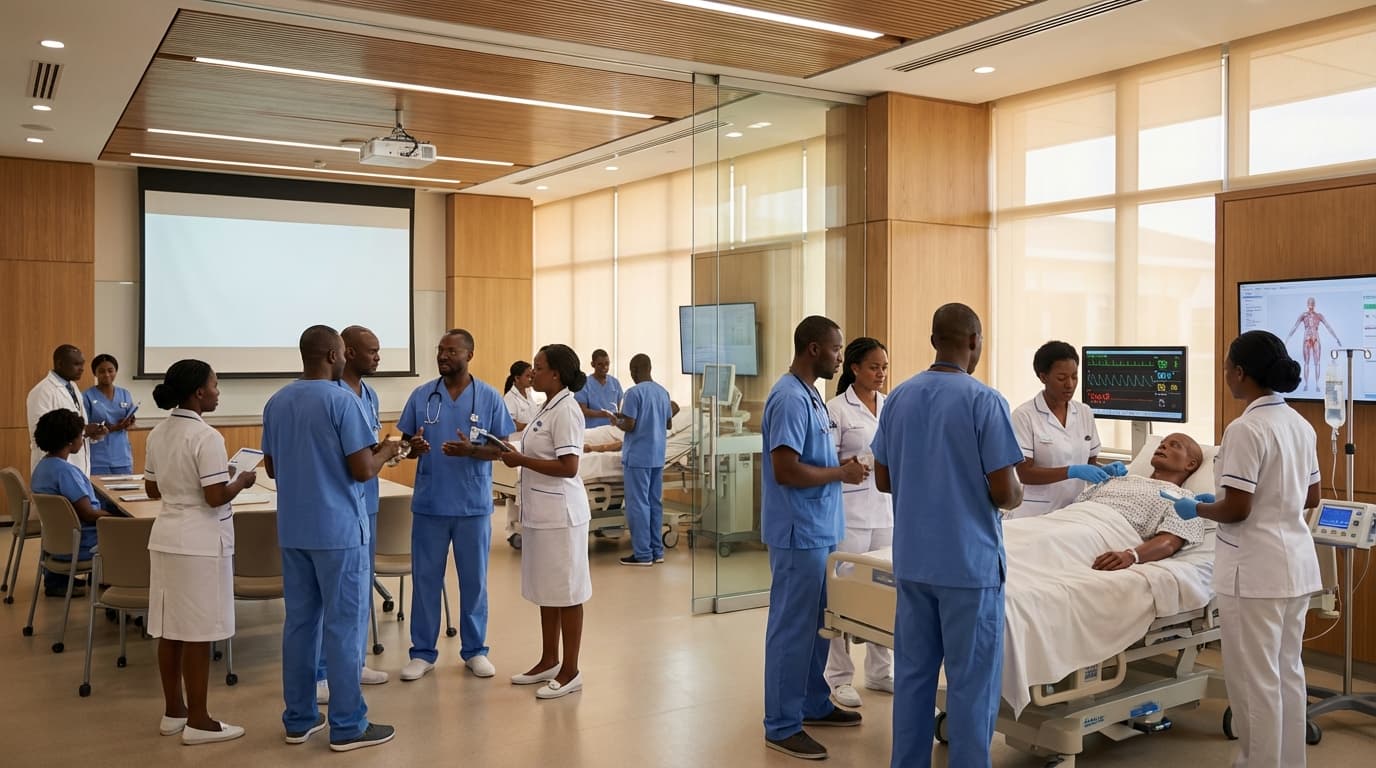
Equipment Training & Education in Madagascar
Engineering Excellence & Technical Support
Comprehensive equipment training and certification programs High-standard technical execution following OEM protocols and local regulatory frameworks.
Digital Skills for Artisans
Empowering Madagascar's artisans with digital literacy and specialized equipment training (e.g., 3D printing, CNC machining) to enhance product design, quality, and market access through online platforms.
Renewable Energy Equipment Maintenance
Providing hands-on training in the installation, operation, and maintenance of solar panels, wind turbines, and biogas digesters to support Madagascar's transition to sustainable energy infrastructure and create local technical jobs.
Agricultural Mechanization & Sustainability
Delivering comprehensive training on the safe and efficient use of modern agricultural machinery (e.g., tractors, irrigation systems) and sustainable farming equipment to boost crop yields and improve food security for Malagasy farmers.
What Is Equipment Training & Education In Madagascar?
Equipment training and education in Madagascar refers to the organized and systematic provision of knowledge, skills, and competencies required for the safe, efficient, and effective operation, maintenance, and repair of various types of equipment. This service is critical for ensuring the longevity and optimal performance of machinery across diverse sectors, thereby enhancing productivity, reducing operational costs, and mitigating risks. The scope encompasses theoretical instruction, practical hands-on sessions, and ongoing professional development.
| Who Needs Equipment Training & Education? | Typical Use Cases & Industries | ||||||
|---|---|---|---|---|---|---|---|
| Machine Operators: Individuals directly responsible for the day-to-day use of machinery. | Maintenance Technicians & Engineers: Personnel tasked with the upkeep, repair, and troubleshooting of equipment. | Supervisors & Managers: Those overseeing operations and responsible for team productivity and equipment asset management. | New Employees: Onboarding individuals into roles requiring interaction with specific equipment. | Specialized Personnel: Technicians focusing on particular equipment types (e.g., medical equipment specialists, agricultural machinery mechanics). | Regulatory Bodies & Inspectors: To understand equipment capabilities and compliance standards. | ||
| Agriculture: Tractors, harvesters, irrigation systems, processing machinery (e.g., for vanilla, coffee, cocoa). | Mining & Extractive Industries: Excavators, loaders, drilling rigs, crushing and screening plants, conveyor systems. | Construction: Cranes, bulldozers, concrete mixers, power tools, scaffolding. | Healthcare: Medical imaging devices (X-ray, MRI), laboratory equipment, surgical instruments, patient monitoring systems. | Manufacturing & Industry: Assembly line machinery, CNC machines, packaging equipment, industrial ovens, welding apparatus. | Energy Sector: Generators, turbines, solar panel installation and maintenance equipment, electrical distribution systems. | Information Technology: Server hardware, networking equipment, data center infrastructure. | Transportation & Logistics: Forklifts, warehouse management systems, vehicle maintenance equipment. |
Key Components of Equipment Training & Education
- Operational Proficiency: Training on the correct procedures for starting, operating, and shutting down equipment, including understanding control panels, interfaces, and safety interlocks.
- Preventive Maintenance: Education on routine checks, lubrication, cleaning, and minor adjustments to prevent premature wear and unexpected failures.
- Troubleshooting & Diagnostics: Skill development in identifying common issues, interpreting error codes, and performing basic diagnostic tests to pinpoint problems.
- Repair & Servicing: Instruction on the disassembly, repair, and reassembly of components, often involving the use of specialized tools and following manufacturer specifications.
- Safety Protocols: Comprehensive training on hazard identification, personal protective equipment (PPE) usage, emergency procedures, and adherence to regulatory safety standards relevant to the specific equipment and industry.
- Documentation & Record Keeping: Training on how to interpret technical manuals, log maintenance activities, and report equipment status and issues accurately.
- Technology Integration: For advanced equipment, training may cover software updates, calibration procedures, and the integration with other digital systems.
Who Needs Equipment Training & Education In Madagascar?
In Madagascar, comprehensive equipment training and education are vital for a wide range of individuals and organizations to ensure safety, efficiency, and productivity across various sectors. This investment empowers users to operate machinery correctly, perform basic maintenance, and understand safety protocols, ultimately reducing accidents, minimizing downtime, and maximizing the lifespan of expensive equipment.
| Sector/Industry | Key Departments/Roles | Types of Equipment Requiring Training |
|---|---|---|
| Agriculture | Farmers, Cooperatives, Machine Operators, Extension Officers | Tractors, harvesters, irrigation systems, processing machinery |
| Construction | Site Managers, Operators, Mechanics, Safety Officers | Excavators, bulldozers, cranes, concrete mixers, scaffolding systems |
| Mining | Operators, Technicians, Supervisors, Geologists | Drilling rigs, haul trucks, loaders, crushers, conveyor systems |
| Healthcare | Biomedical Engineers, Maintenance Staff, Medical Professionals | MRI machines, X-ray equipment, ventilators, laboratory analyzers |
| Energy | Technicians, Engineers, Operators | Turbines, generators, solar panels, electrical substations, drilling equipment |
| Manufacturing | Operators, Maintenance Teams, Supervisors | Assembly line machinery, CNC machines, packaging equipment, forklifts |
| Transportation & Logistics | Drivers, Fleet Managers, Mechanics | Heavy-duty trucks, buses, forklifts, warehouse automated systems |
| Telecommunications | Field Technicians, Network Engineers | Antenna installation equipment, fiber optic splicing tools, network test equipment |
| Public Works | Equipment Operators, Engineers | Road construction machinery, waste management vehicles, water treatment equipment |
Target Customers and Departments for Equipment Training & Education in Madagascar
- Agriculture: Farmers, agricultural cooperatives, agricultural machinery operators, and extension officers.
- Construction: Construction site managers, heavy machinery operators (excavators, bulldozers, cranes), mechanics, and safety officers.
- Mining: Mine operators, equipment maintenance technicians, geologists, and safety supervisors.
- Healthcare: Biomedical engineers, hospital maintenance staff, and medical equipment users (nurses, doctors) for specialized equipment.
- Energy (Oil, Gas, and Renewables): Technicians, engineers, and operators involved in the installation, maintenance, and operation of energy generation and distribution equipment.
- Manufacturing & Industry: Factory floor operators, production line supervisors, maintenance teams, and quality control personnel.
- Transportation & Logistics: Drivers of heavy-duty vehicles, fleet managers, mechanics, and warehouse equipment operators (forklifts).
- Telecommunications: Field technicians responsible for installing and maintaining communication infrastructure and associated equipment.
- Public Works & Municipal Services: Operators of public maintenance equipment (road sweepers, water pumps), and municipal engineers.
- Vocational Training Centers & Educational Institutions: Instructors and students of technical and vocational programs.
Equipment Training & Education Process In Madagascar
This document outlines the standard workflow for equipment training and education processes in Madagascar, from the initial inquiry to the successful execution of training. The process is designed to ensure that clients receive appropriate and effective training on the equipment they acquire.
| Stage | Description | Key Activities | Responsible Parties | Deliverables/Outputs |
|---|---|---|---|---|
| Inquiry & Needs Assessment | The client expresses interest in training for specific equipment. The vendor gathers detailed information about the client's needs. | Receive inquiry, identify equipment, understand client's technical level, assess training objectives and desired outcomes. | Client, Sales Representative, Technical Support | Understanding of client's training requirements, identified equipment and its complexity. |
| Proposal & Quotation Generation | Based on the needs assessment, a tailored training proposal and quotation are prepared. | Develop training curriculum outline, estimate duration and resources, calculate costs, prepare formal proposal document and quotation. | Sales Representative, Training Department | Formal training proposal, detailed quotation, training syllabus outline. |
| Contract Agreement | The client reviews and accepts the proposal, leading to a formal agreement. | Client review of proposal and quotation, negotiation (if applicable), signing of training contract/service agreement. | Client, Sales Representative, Legal Department (if applicable) | Signed training contract/service agreement. |
| Training Schedule Development | A mutually agreeable date, time, and location for the training are established. | Coordinate with client for preferred dates, confirm trainer availability, book training venue (if off-site), finalize training schedule. | Training Coordinator, Client Representative | Confirmed training schedule (date, time, location). |
| Trainer Assignment | An appropriately qualified and experienced trainer is assigned to deliver the training. | Identify suitable trainer based on equipment expertise and client's industry, confirm trainer's availability and readiness. | Training Manager, Project Manager | Assigned trainer identified and confirmed. |
| Pre-Training Preparation | All necessary materials and logistics are prepared before the training commences. | Prepare training manuals and handouts, set up training equipment (if applicable), organize travel and accommodation for trainer (if needed), communicate pre-training instructions to participants. | Trainer, Training Coordinator, Logistics Department | Training materials ready, equipment prepared, logistics confirmed, participant pre-briefing complete. |
| Training Execution | The actual training is delivered to the participants. | Deliver theoretical and practical sessions, facilitate hands-on exercises, answer participant questions, monitor progress and understanding. | Trainer, Participants | Delivered training sessions, participant engagement, hands-on practice. |
| Post-Training Evaluation | The effectiveness of the training is assessed, and feedback is collected. | Administer post-training tests/assessments, collect participant feedback forms, trainer's observation and assessment of participant competency. | Trainer, Participants, Training Coordinator | Assessment results, participant feedback, trainer's evaluation report. |
| Certification & Follow-up | Upon successful completion, participants receive certification, and ongoing support is offered. | Issue training certificates, provide summary report of training, offer post-training support (e.g., Q&A, additional resources), gather client satisfaction feedback. | Training Department, Sales Representative | Training certificates, final training report, client satisfaction confirmation. |
Equipment Training & Education Process Workflow
- Inquiry & Needs Assessment
- Proposal & Quotation Generation
- Contract Agreement
- Training Schedule Development
- Trainer Assignment
- Pre-Training Preparation
- Training Execution
- Post-Training Evaluation
- Certification & Follow-up
Equipment Training & Education Cost In Madagascar
Equipment training and education in Madagascar can vary significantly in cost due to several factors. These include the complexity of the equipment, the duration and depth of the training program, the qualifications and experience of the instructors, the location of the training (e.g., on-site at a company's premises versus at a dedicated training center), and the specific needs of the trainees (e.g., introductory, advanced, or specialized skills). Furthermore, the currency fluctuations and local economic conditions in Madagascar (Malagasy Ariary - MGA) play a crucial role in determining the final pricing. Providers may also offer customized packages, which can influence the overall cost. When considering costs, it's important to factor in potential travel and accommodation expenses if the training is not conducted locally.
| Training Category | Typical Duration | Estimated Cost Range (MGA - Malagasy Ariary) | Notes |
|---|---|---|---|
| Basic Equipment Operation (e.g., office equipment, simple tools) | 1-2 Days | 150,000 - 500,000 MGA per person | Often group-based, introductory level. |
| Intermediate Technical Equipment (e.g., specific machinery, IT hardware) | 3-5 Days | 400,000 - 1,200,000 MGA per person | May involve practical sessions and troubleshooting. |
| Advanced Industrial/Specialized Equipment (e.g., manufacturing, medical, complex software) | 5-10 Days or Modular | 800,000 - 3,000,000+ MGA per person | Highly specialized, often includes certification, tailored curriculum. |
| On-site Training (Company Specific) | Variable (per day/project) | Negotiable (can be higher due to instructor travel, setup) | Costs are often quoted as a package for the company. |
| Certification Courses | Variable | 500,000 - 2,500,000+ MGA per person | Includes assessment and official certification, often recognized internationally. |
Key Pricing Factors for Equipment Training & Education in Madagascar
- Equipment Complexity and Technology
- Training Duration and Intensity
- Instructor Expertise and Credentials
- Training Delivery Method (On-site vs. Off-site)
- Customization of Curriculum
- Number of Participants
- Geographical Location within Madagascar
- Inclusion of Practical/Hands-on Sessions
- Certification or Assessment Fees
- Provision of Training Materials and Resources
Affordable Equipment Training & Education Options
Investing in proper equipment training is crucial for safety, efficiency, and maximizing the lifespan of your machinery. Fortunately, there are numerous affordable options available, ranging from online courses to practical workshops. Understanding value bundles and employing smart cost-saving strategies can make professional development accessible to individuals and businesses of all sizes. This guide explores these avenues to ensure you get the most bang for your buck when it comes to equipment education.
| Strategy | Description | Benefit |
|---|---|---|
| Value Bundles | Purchasing multiple training modules or courses together at a discounted price. | Reduces the per-unit cost of education and encourages comprehensive skill development. |
| Early Bird Discounts | Registering for courses or workshops well in advance of the deadline. | Secures a spot and offers a lower registration fee. |
| Group Discounts | Enrolling multiple employees from the same organization. | Significant savings per individual, fostering a team-wide upskilling initiative. |
| Free Online Resources | Utilizing free tutorials, webinars, and articles from reputable sources. | Provides foundational knowledge and supplementary learning at no financial cost. |
| Subscription Models | Accessing a library of training content for a recurring fee. | Cost-effective for continuous learning and staying updated on multiple equipment types. |
| Government Grants & Subsidies | Exploring programs offered by government agencies to support workforce development. | Can significantly reduce or even cover the cost of training. |
| Cross-Training Employees | Training existing staff on multiple pieces of equipment. | Reduces the need for external training for each new machine and enhances workforce flexibility. |
| Utilizing Open-Source Platforms | Leveraging free and open-source educational materials and software. | Access to a wide range of learning content without licensing fees. |
Key Affordable Equipment Training & Education Options
- Online Courses & Webinars
- Manufacturer-Provided Training
- Community College & Vocational School Programs
- Industry Association Workshops
- Apprenticeship Programs
- On-the-Job Training (OJT) with Mentorship
- E-books & Digital Resources
Verified Providers In Madagascar
Navigating healthcare services in a foreign country can be challenging. When seeking medical assistance in Madagascar, ensuring the credibility and quality of healthcare providers is paramount. This is where verified providers, particularly those with recognized credentials like Franance Health, stand out as the optimal choice. Franance Health's rigorous verification process and commitment to upholding high standards mean that their affiliated providers offer a superior level of care, reliability, and patient safety. Choosing a Franance Health-verified provider offers peace of mind, knowing you are receiving services from practitioners who have met stringent criteria for expertise, ethical practice, and adherence to international best practices.
| Credential Type | Verification Standard | Benefit for Patients |
|---|---|---|
| Franance Health Certification | Rigorous review of qualifications, experience, and practice ethics. | Confirms providers meet high standards of medical competence and patient care. |
| Medical Council Registration (Madagascar) | Mandatory registration with the national medical authority. | Confirms legal authorization to practice medicine within Madagascar. |
| Specialty Board Certification | Certification from recognized national or international specialty boards. | Indicates advanced training and expertise in a specific medical field. |
| Continuing Medical Education (CME) | Proof of ongoing professional development and updated knowledge. | Ensures providers are current with the latest medical advancements and techniques. |
Why Franance Health Credentials Matter for Providers in Madagascar
- Ensures adherence to international medical standards and best practices.
- Guarantees a higher level of patient safety and quality of care.
- Provides access to practitioners with proven expertise and qualifications.
- Offers reliability and trustworthiness in medical services.
- Facilitates a smoother and more reassuring healthcare experience for patients.
Scope Of Work For Equipment Training & Education
This Scope of Work (SOW) outlines the requirements for comprehensive training and education services related to the operation, maintenance, and troubleshooting of specified equipment. The objective is to ensure that personnel are proficient in safely and effectively utilizing the equipment, minimizing downtime, and maximizing its lifespan. This SOW details the technical deliverables, standard specifications for training materials and delivery, and the expected outcomes.
| Deliverable | Description | Standard Specifications | Acceptance Criteria |
|---|---|---|---|
| Training Curriculum Development | Creation of detailed training modules covering equipment theory, operation, routine maintenance, and basic troubleshooting. | Curriculum must be modular, adaptable, and include learning objectives, content outlines, and assessment methods. Content must be technically accurate and up-to-date. | Approved training curriculum submitted for review and acceptance by the client. |
| Training Materials | Development of high-quality training materials including presentations, handouts, visual aids, and e-learning modules (if applicable). | Materials must be clear, concise, visually engaging, and use appropriate technical language. All materials to be provided in digital format (e.g., PDF, PPT) and potentially printed copies as specified. | All training materials reviewed and approved by the client. Proof of high-resolution imagery and readable text. |
| Instructor-Led Training Sessions | Delivery of interactive training sessions by qualified instructors. | Sessions to include theoretical explanations, demonstrations, practical exercises, and Q&A. A minimum instructor-to-trainee ratio must be maintained as per industry standards or client requirement. | Documented attendance records for all sessions. Post-training feedback forms completed by trainees. |
| Hands-on Practical Training | Provision of opportunities for trainees to operate and maintain the equipment under supervision. | Training should be conducted on actual equipment or realistic simulators. Safety protocols must be strictly adhered to during all practical sessions. | Demonstrated trainee proficiency in performing key operational and maintenance tasks. Supervisor sign-off on trainee practical assessments. |
| User Manuals & Technical Documentation | Creation or update of comprehensive user manuals, operation guides, and maintenance procedures. | Documentation must be accurate, easy to understand, and include diagrams, schematics, and troubleshooting flowcharts. Format to be specified (e.g., searchable PDF, online portal). | Final user manuals and technical documentation submitted and approved by the client. Compliance with specified formatting and content requirements. |
| Competency Assessment Reports | Individual reports detailing each trainee's performance and competency level. | Reports to include results of written tests, practical evaluations, and any observations. Recommendations for further training or support should be included. | All competency assessment reports submitted to the client within a specified timeframe after training completion. |
| Post-Training Support Plan | A plan outlining the provision of ongoing support and access to resources after the initial training. | Includes mechanisms for technical queries, access to updated documentation, and potential for refresher courses or advanced training. | Approved post-training support plan outlining communication channels, response times, and resource availability. |
Key Training Objectives
- Develop and deliver tailored training programs for various user roles (e.g., operators, maintenance technicians, supervisors).
- Provide hands-on practical training sessions to reinforce theoretical knowledge.
- Develop comprehensive user manuals, troubleshooting guides, and quick reference materials.
- Assess trainee competency through practical exercises, written tests, and on-the-job observation.
- Establish a system for ongoing technical support and refresher training.
- Ensure all training aligns with relevant safety regulations and industry best practices.
Service Level Agreement For Equipment Training & Education
This Service Level Agreement (SLA) outlines the commitment of [Training Provider Name] (hereinafter referred to as 'Provider') to [Client Name] (hereinafter referred to as 'Client') regarding the provision of equipment training and educational services. This SLA focuses on key performance indicators related to response times for support requests and uptime guarantees for delivered training sessions and learning platforms.
| Service Component | Service Level Objective (SLO) | Measurement Method | Remedy for Non-Compliance |
|---|---|---|---|
| Support Request Response Time (Technical Issues) | 95% of critical support requests (e.g., inability to access platform, session failure) responded to within 1 business hour. | Tracking of all support tickets opened via designated channels (email, portal). | For each critical support request exceeding the 1-hour response time, provide a 15% discount on the next training session of equivalent value. |
| Support Request Response Time (General Inquiries) | 90% of general training inquiries (e.g., scheduling, content questions) responded to within 4 business hours. | Tracking of all support tickets opened via designated channels. | For each general inquiry exceeding the 4-hour response time, provide a 5% discount on the next training session of equivalent value. |
| Training Platform/LMS Uptime | 99.5% uptime for the training platform/LMS during scheduled training hours. | Monitoring of platform availability via third-party tools and Provider's internal systems. | For every 30 minutes of unplanned downtime exceeding the allowed threshold within a calendar month, provide a pro-rata credit equivalent to 1/100th of the monthly platform access fee. |
| Scheduled Live Training Session Availability | 100% availability of scheduled live training sessions, barring Force Majeure events. | Confirmation of session commencement at the scheduled time. | If a scheduled live training session is cancelled or significantly delayed by the Provider (more than 30 minutes) due to reasons within Provider's control, reschedule the session at the Client's earliest convenience and offer a complimentary 1-hour Q&A session. |
Scope of Service
- Live Instructor-Led Training Sessions (On-site and Remote)
- Online Self-Paced Learning Modules
- Access to Training Platform/Learning Management System (LMS)
- Technical Support for Training Delivery and Platform Access
- Post-Training Q&A Sessions
Frequently Asked Questions

Ready when you are
Let's scope your Equipment Training & Education in Madagascar project in Madagascar.

Scaling healthcare logistics and technical systems across the entire continent.