
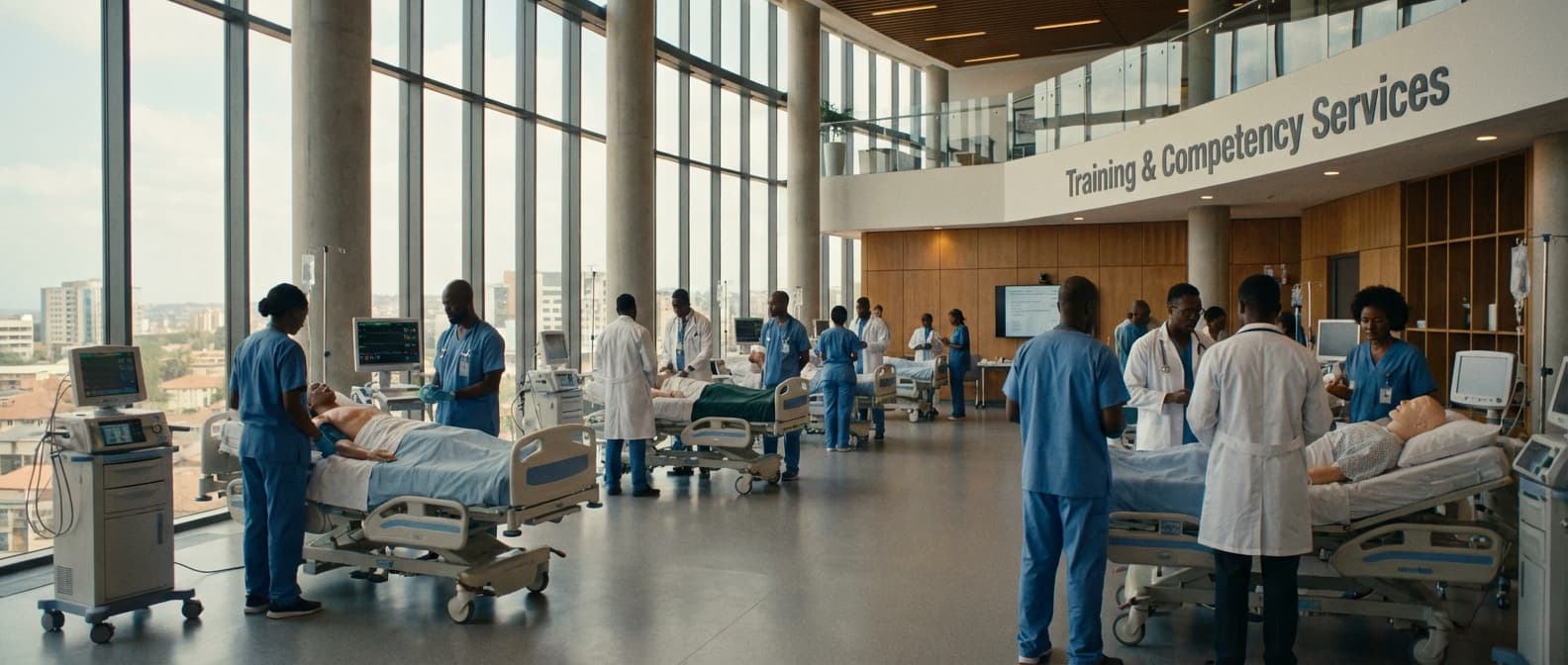
Ultrasound Application Training Service (Protocol-Based) in Madagascar
Engineering Excellence & Technical Support
Ultrasound Application Training Service (Protocol-Based) High-standard technical execution following OEM protocols and local regulatory frameworks.
Protocol-Driven Lung Ultrasound Proficiency
Master essential lung ultrasound protocols like the standard B-line assessment and pleural sliding sign, crucial for rapid diagnosis of respiratory conditions prevalent in Madagascar, such as pneumonia and pleural effusions. Our training emphasizes standardized acquisition and interpretation, ensuring consistent and reliable diagnostic capabilities for healthcare professionals.
Focused Cardiac Ultrasound for Emergency Care
Gain proficiency in point-of-care cardiac ultrasound (POCUS) protocols vital for assessing hemodynamic status in emergency and critical care settings. Learn to identify key echocardiographic views and parameters to evaluate for conditions like cardiac tamponade, pulmonary hypertension, and heart failure, enabling faster and more informed clinical decision-making in resource-limited environments.
Standardized Obstetric & Gynecological Ultrasound
Enhance obstetric and gynecological ultrasound skills with our protocol-based training. Focus on core modules for routine antenatal scans, gestational dating, fetal biometry, and detection of common pathologies like ectopic pregnancies and adnexal masses, empowering healthcare providers in Madagascar to deliver safer maternal and reproductive healthcare.
What Is Ultrasound Application Training Service (Protocol-based) In Madagascar?
Ultrasound Application Training Service (Protocol-Based) in Madagascar refers to a specialized educational program designed to equip healthcare professionals with the skills and knowledge necessary to perform and interpret ultrasound examinations according to established, evidence-based protocols. This service focuses on structured, systematic approaches to image acquisition and interpretation, ensuring consistency, accuracy, and diagnostic efficacy across various clinical scenarios. The 'protocol-based' aspect emphasizes adherence to standardized procedures, often incorporating specific probe manipulations, patient positioning, and image optimization techniques relevant to the targeted anatomical region or pathology. This training is crucial for enhancing diagnostic capabilities, improving patient care outcomes, and standardizing ultrasound practice within the Malagasy healthcare system, which may face challenges related to access to advanced medical imaging and specialized expertise.
| Target Audience | Need for Service | Typical Use Cases |
|---|---|---|
| Radiologists and Radiographers/Sonographers | To standardize ultrasound practice, improve diagnostic accuracy, and ensure proficiency in a wide range of applications. Addresses potential gaps in formal postgraduate training and continuous professional development. Crucial for areas with limited access to senior expert guidance. | Abdominal Ultrasound: Assessment of liver, gallbladder, spleen, pancreas, kidneys, and aorta for conditions like gallstones, hepatomegaly, renal masses, and ascites. Obstetric Ultrasound: Monitoring fetal growth and development, assessing placental function, and detecting congenital anomalies throughout pregnancy. Gynecological Ultrasound: Evaluation of the uterus, ovaries, and fallopian tubes for conditions such as fibroids, ovarian cysts, and ectopic pregnancies. Vascular Ultrasound: Assessment of peripheral arteries and veins for stenosis, thrombosis, and aneurysms. Pediatric Ultrasound: Examination of neonatal brain, abdomen, and hips to detect congenital abnormalities and common pediatric conditions. Point-of-Care Ultrasound (POCUS): Training for non-radiologists to integrate ultrasound into immediate clinical decision-making in emergency departments, intensive care units, and primary healthcare settings. |
| Physicians in various specialties (e.g., Internal Medicine, Obstetrics & Gynecology, Emergency Medicine, Pediatrics, Surgery) | To enable these professionals to perform focused ultrasound examinations relevant to their clinical practice, leading to faster diagnoses and improved patient management, particularly in resource-limited settings. Facilitates POCUS adoption. | Emergency Medicine: FAST scans for trauma, evaluation of shortness of breath, cardiac assessment, and DVT screening. Obstetrics & Gynecology: Bedside assessment of fetal well-being, assessment of pelvic pain, and intra-uterine device placement verification. Internal Medicine: Evaluation of ascites, pleural effusions, and guiding procedures. Pediatrics: Assessment of intussusception, pyloric stenosis, and fluid status in neonates. |
| Healthcare Administrators and Policymakers | To understand the benefits of standardized ultrasound training for improving healthcare quality, resource allocation, and the development of national imaging guidelines. Supports the integration of ultrasound technology into the national health strategy. | Capacity Building Initiatives: Planning and implementing training programs to address national deficits in skilled ultrasound personnel. Quality Improvement Programs: Establishing benchmarks for ultrasound practice and patient outcomes. Resource Management: Optimizing the use of ultrasound equipment and personnel. |
Key Components of Ultrasound Application Training Service (Protocol-Based) in Madagascar
- Theoretical Instruction: Comprehensive coverage of ultrasound physics, principles of image formation, artifacts, and safety guidelines.
- Anatomical Review: Detailed study of relevant anatomy and pathophysiology for each ultrasound application.
- Protocol Development and Implementation: Training on standardized ultrasound protocols for specific organ systems (e.g., abdominal, obstetric, gynecological, vascular, musculoskeletal, pediatric).
- Image Acquisition Techniques: Hands-on instruction on optimal probe handling, patient positioning, and systematic scanning to achieve diagnostic-quality images.
- Image Interpretation and Diagnosis: Guidance on identifying normal and abnormal ultrasound findings, correlating them with clinical information, and generating accurate reports.
- Quality Assurance and Quality Control: Emphasis on maintaining image quality, instrument calibration, and adherence to ethical considerations.
- Case-Based Learning: Utilization of real-world clinical scenarios and case studies to reinforce learning and develop problem-solving skills.
- Competency Assessment: Formal evaluation of trainees' skills through practical examinations and written assessments.
Who Needs Ultrasound Application Training Service (Protocol-based) In Madagascar?
This document outlines the essential need for Ultrasound Application Training Service (Protocol-Based) in Madagascar. Such training is crucial for enhancing diagnostic accuracy, improving patient care, and empowering healthcare professionals across various medical disciplines. The targeted audience comprises individuals and institutions actively involved in medical imaging and patient diagnosis where ultrasound plays a pivotal role. By adhering to standardized protocols, the training ensures consistent, reliable, and high-quality ultrasound examinations.
| Customer Type | Typical Departments Involved | Specific Needs & Benefits of Protocol-Based Training |
|---|---|---|
| Public Hospitals | Radiology, Obstetrics & Gynecology, Cardiology, Emergency Medicine, ICU, Pediatrics, Surgery | Standardized interpretation across multiple facilities, improved diagnostic yield, capacity building for remote areas, cost-effectiveness through reduced repeat scans. |
| Private Clinics & Diagnostic Centers | Radiology, OB/GYN, Cardiology, General Practice | Enhanced service quality, competitive advantage, adherence to international standards, specialized examination protocols (e.g., fetal anomaly scans, cardiac assessments). |
| Medical Training Institutions | Radiology, Medical Imaging, Obstetrics, Internal Medicine, Surgery | Curriculum development, standardized teaching methodologies, hands-on protocol-driven practice for future professionals, faculty development. |
| NGOs & Humanitarian Organizations | General Medicine, Maternal & Child Health, Emergency Response Units | Effective deployment of ultrasound in resource-limited settings, rapid diagnosis and management of critical conditions, standardized training for diverse medical personnel. |
| Specialized Medical Centers | Cardiology, Vascular Surgery, Urology, Anesthesiology | In-depth training on advanced protocols for specific organ systems or procedures (e.g., echocardiography, Doppler studies, nerve blocks, prostate imaging). |
Target Customers for Ultrasound Application Training Service (Protocol-Based) in Madagascar
- Radiology Departments in Public Hospitals
- Radiology Departments in Private Clinics
- Obstetrics and Gynecology Departments
- Cardiology Departments
- Emergency Medicine Departments
- Intensive Care Units (ICUs)
- Pediatric Departments
- General Surgery Departments
- Vascular Surgery Departments
- Urology Departments
- Anesthesiology Departments (for interventional procedures)
- Training Institutions and Medical Schools
- Non-Governmental Organizations (NGOs) providing healthcare services
- Veterinary Clinics and Hospitals (for specific applications)
Ultrasound Application Training Service (Protocol-based) Process In Madagascar
This document outlines the workflow for an Ultrasound Application Training Service (Protocol-Based) in Madagascar, from initial inquiry to the successful execution of the training. The service aims to equip healthcare professionals with the necessary skills to perform specific ultrasound examinations following established protocols.
| Stage | Key Activities | Responsible Parties | Key Deliverables/Outcomes | Estimated Timeline (Example) |
|---|---|---|---|---|
| Initial contact from client (e.g., hospital, clinic, NGO) regarding ultrasound training needs. Discussion to understand specific applications, target audience (doctors, nurses, technicians), existing skill levels, and desired learning outcomes. Identification of relevant protocols (e.g., FAST scan, obstetric ultrasound, abdominal ultrasound). | Client, Training Provider (Sales/Consultation Team) | Understanding of training requirements, identification of potential training modules. | 1-2 Weeks |
| Based on the needs assessment, the Training Provider develops a detailed proposal outlining the training objectives, curriculum, methodology, duration, venue requirements, required equipment (ultrasound machines, phantoms), trainer qualifications, and pricing. Proposal may be customized based on client feedback. | Training Provider (Technical Team, Curriculum Developers) | Detailed Training Proposal. | 1-2 Weeks |
| Formal agreement (contract/Memorandum of Understanding) is signed. Joint planning for logistics: scheduling of training dates, confirmation of venue, participant registration process, travel and accommodation arrangements for trainers and participants (if applicable), and procurement/verification of training equipment. | Client, Training Provider (Project Management, Administration) | Signed Agreement, Confirmed Training Schedule, Logistics Plan. | 2-4 Weeks |
| Distribution of pre-training materials (e.g., reading materials, overview of protocols, questionnaires). Finalizing training agenda, preparing presentation slides, case studies, and practical simulation exercises. Confirmation of all logistical arrangements. | Training Provider (Trainers, Administrative Staff), Client (Participant Communication) | Pre-training materials distributed, Training materials finalized, Participants informed. | 1-2 Weeks before training |
| On-site or remote delivery of the protocol-based ultrasound training. This includes theoretical lectures, demonstration of techniques, hands-on practice sessions using simulators or supervised real-patient scans (where ethically and practically feasible), case discussions, and knowledge assessments (quizzes, practical evaluations). | Training Provider (Lead Trainer, Assistant Trainers) | Delivered Training Sessions, Participant Engagement, Real-time Feedback. | Duration varies (e.g., 3-5 days per module) |
| Post-training assessment of learning (e.g., written exams, practical competency assessments). Distribution of certificates of completion. Collection of feedback from participants and client for service improvement. Provision of limited post-training support (e.g., Q&A via email, access to online resources). Reporting on training outcomes. | Training Provider (Trainers, Project Management), Client (Participant Feedback) | Certificates of Completion, Training Evaluation Report, Feedback Summary. | 2-4 Weeks after training |
Workflow Stages
- Inquiry and Needs Assessment
- Proposal Development and Customization
- Agreement and Logistics Planning
- Pre-Training Preparations
- Training Execution
- Post-Training Follow-up and Evaluation
Ultrasound Application Training Service (Protocol-based) Cost In Madagascar
This document outlines the cost considerations for Ultrasound Application Training Services (Protocol-Based) in Madagascar. These services are crucial for medical professionals to accurately and effectively utilize ultrasound equipment for diagnostic purposes, adhering to established medical protocols. The pricing is influenced by several factors, leading to a range of costs in the local Malagasy Ariary (MGA).
| Training Type | Estimated Cost Range (MGA) | Notes |
|---|---|---|
| Basic Ultrasound Applications (e.g., Abdominal, Pelvic - 2-3 Days, In-Person) | 400,000 - 800,000 MGA per participant | Covers fundamental protocols, hands-on practice. Price can vary based on instructor and location. |
| Intermediate Ultrasound Applications (e.g., Obstetrics, Gynecology - 3-5 Days, In-Person) | 700,000 - 1,500,000 MGA per participant | Includes more complex scanning techniques and protocol adherence. May involve specialized equipment. |
| Advanced/Specialized Ultrasound Applications (e.g., Echocardiography, Vascular - 5+ Days, In-Person) | 1,200,000 - 2,500,000+ MGA per participant | Requires highly specialized instructors and potentially advanced equipment simulation. Cost highly variable. |
| Online/Blended Learning Modules (per module/course) | 150,000 - 500,000 MGA per participant | More affordable option, often for theoretical components or refresher courses. Practical components may still require in-person sessions. |
| Group Discounts (for 5+ participants) | Negotiable, typically 10-20% reduction | Standard practice for larger groups to incentivize participation. |
| On-site Training at Healthcare Facility (includes travel/accommodation) | Adds 200,000 - 600,000 MGA to base cost per day | Logistical costs for bringing training to the institution. |
Key Pricing Factors for Ultrasound Application Training in Madagascar
- Training Modality: Whether the training is delivered in-person, online, or a blended approach significantly impacts cost. In-person training incurs travel, accommodation, and instructor fees, making it generally more expensive.
- Duration and Depth of Training: The number of days or hours dedicated to the training, and the complexity of the ultrasound applications covered (e.g., basic abdominal vs. advanced obstetric or cardiac), will directly affect the price.
- Instructor Expertise and Credentials: Highly experienced instructors with specialized certifications or extensive clinical practice often command higher fees.
- Number of Participants: Group training sessions can often be more cost-effective on a per-participant basis compared to individual training.
- Location of Training: Training conducted in major cities like Antananarivo might have different pricing than more remote areas due to logistical considerations and local market rates.
- Equipment Provision: If the training provider supplies ultrasound equipment for hands-on practice, this cost will be factored into the overall price.
- Training Materials and Certification: The inclusion of detailed manuals, case studies, and official certificates upon completion will also influence the final cost.
- Provider Reputation and Accreditation: Established training institutions with recognized accreditations may charge a premium for their quality assurance and perceived value.
- Customization of Curriculum: Tailoring the training content to specific needs or existing skill sets of the trainees can incur additional development costs.
Affordable Ultrasound Application Training Service (Protocol-based) Options
This document outlines affordable ultrasound application training services, focusing on protocol-based learning. We offer flexible value bundles and cost-saving strategies to make high-quality ultrasound education accessible to individuals and institutions. Our protocol-based approach ensures a standardized, efficient, and effective learning experience, mimicking real-world clinical practice.
| Value Bundle | Description | Included Modules/Applications | Cost-Saving Strategies Applied | Price (USD) |
|---|---|---|---|---|
| Foundation Essentials Bundle | Covers fundamental ultrasound physics, knobology, and basic scanning techniques. | Ultrasound Physics & Safety, Basic Abdominal Scanning Protocols, Basic Musculoskeletal (MSK) Scanning Protocols | Group discounts, early bird registration, bundled content discounts | $450 |
| Abdominal Focus Bundle | Deep dive into common abdominal ultrasound examinations. | Advanced Abdominal Protocols (Liver, Gallbladder, Pancreas, Spleen, Kidneys), Doppler Principles in Abdominal Imaging | Module-specific discounts, extended access to online materials | $600 |
| Vascular Essentials Bundle | Introduction to vascular ultrasound principles and common protocols. | Introduction to Vascular Ultrasound, Carotid Doppler Protocols, Peripheral Arterial Doppler Protocols | Introductory pricing for new customers, referral discounts | $550 |
| Comprehensive Clinical Applications Bundle | A broad range of essential clinical ultrasound applications for general practitioners and sonographers. | Foundation Essentials Bundle + Abdominal Focus Bundle + Basic OB/GYN Protocols | Significant discount compared to purchasing individual modules, extended learning support | $1200 |
| Institution Package (Customizable) | Tailored training programs for hospitals, clinics, and educational institutions. | Based on institutional needs (e.g., specific departments, new technologies) | Volume discounts, on-site training options (reduced travel costs), Train-the-Trainer programs | Contact for Quote |
Key Features of Our Training Service
- Protocol-Driven Curriculum: Learn ultrasound scanning using established, evidence-based protocols for various applications.
- Hands-on Practice Opportunities: Simulated scanning sessions with expert feedback.
- Flexible Learning Formats: Online modules, in-person workshops, and blended learning options.
- Expert Instructors: Experienced sonographers and radiologists guiding your learning journey.
- Certification Opportunities: Earn certificates of completion or prepare for credentialing exams.
- Continuous Support: Access to resources and Q&A sessions post-training.
Verified Providers In Madagascar
When seeking healthcare in Madagascar, it's crucial to identify providers who offer both quality care and a commitment to ethical practices. Franance Health stands out in this regard, having established a rigorous vetting process that ensures their network consists of highly qualified and trusted medical professionals. Their credentialing emphasizes not only clinical expertise but also adherence to international standards of patient care and safety. This dedication makes Franance Health providers a superior choice for individuals and families prioritizing reliable and excellent healthcare services in Madagascar.
| Credentialing Aspect | Franance Health Focus | Benefit for Patients |
|---|---|---|
| Medical Education & Training | Verification of accredited institutions and specialized training. | Ensures providers have a strong foundational and advanced medical education. |
| Professional Licenses & Certifications | Thorough checks of current and valid licenses and certifications. | Confirms providers are legally qualified and recognized in their specialties. |
| Clinical Experience | Assessment of practical experience in relevant medical fields. | Guarantees providers have hands-on experience in treating various conditions. |
| Reputation & Peer Review | Consideration of professional references and any peer feedback. | Provides insight into a provider's standing within the medical community and patient trust. |
| Adherence to Ethical Guidelines | Confirmation of commitment to patient privacy, informed consent, and professional conduct. | Assures patients will receive respectful, transparent, and ethical treatment. |
Why Franance Health Providers are the Best Choice:
- Rigorous Vetting Process: Franance Health employs a comprehensive evaluation of medical professionals.
- Focus on Clinical Expertise: Providers are selected based on their proven medical knowledge and skills.
- Adherence to International Standards: Commitment to global benchmarks in patient care and safety.
- Ethical Practice Verification: Ensuring providers uphold the highest ethical principles.
- Patient-Centric Approach: Emphasis on compassionate and responsive care delivery.
Scope Of Work For Ultrasound Application Training Service (Protocol-based)
This document outlines the Scope of Work for a Protocol-Based Ultrasound Application Training Service. It details the objectives, methodology, deliverables, and standard specifications for providing comprehensive ultrasound application training focused on established protocols. The service aims to equip ultrasound technicians, sonographers, and healthcare professionals with the necessary skills and knowledge to perform ultrasound examinations accurately and efficiently according to industry-recognized protocols.
| Phase | Activities | Technical Deliverables | Standard Specifications |
|---|---|---|---|
| Analyze existing skill levels, identify specific training gaps, and define learning objectives. Develop a customized training curriculum based on chosen ultrasound protocols (e.g., ACR, AIUM, specific departmental protocols). | Training Needs Assessment Report, Customized Curriculum Outline, Learning Objectives Matrix. | Assessment tools validated for accuracy and relevance. Curriculum aligned with recognized professional standards and evidence-based practice. Defined learning outcomes for each module. |
| Deliver lectures, presentations, and discussions on ultrasound physics, instrumentation, safety, and detailed protocol explanations for specific applications (e.g., Abdomen, Pelvis, OB/GYN, Vascular, MSK). | Presentation slides, Lecture notes, Handouts, Quizzes, Theoretical knowledge assessments. | Content presented in clear, concise language. Visual aids optimized for understanding. Assessments designed to measure comprehension of theoretical concepts and protocol details. Minimum passing score defined. |
| Provide hands-on training using ultrasound simulators and/or phantoms. Demonstrate proper transducer manipulation, scanning techniques, image optimization, and protocol adherence for each defined application. | Demonstration videos, Simulator access, Phantom scanning sessions, Image acquisition exercises, Practical skills checklists. | High-fidelity simulators or realistic phantoms. Competency-based practical sessions. Clear step-by-step guidance on protocol execution. Objective assessment of scanning skills and image quality. |
| Present and discuss real or simulated patient cases aligned with the training protocols. Focus on image interpretation, identification of normal and abnormal findings, and reporting within the context of the protocol. | Case study library (images/videos), Case study analysis worksheets, Interpretation exercises, Reporting templates. | Case studies representative of common and challenging scenarios. Accurate diagnostic information for case studies. Standardized reporting formats to align with protocol expectations. |
| Conduct comprehensive assessments including theoretical exams, practical scanning evaluations, and case study interpretations. Upon successful completion, issue a certificate of proficiency. | Final theoretical examination, Practical examination with standardized scoring rubric, Case study interpretation evaluation, Certificate of Proficiency. | Assessment tools designed to measure attainment of learning objectives. Objective and consistent scoring. Certification awarded based on pre-defined competency levels. Certificate includes participant name, training dates, and scope of training. |
| Provide ongoing support through Q&A sessions, access to online resources, or follow-up mentoring. | Access to online learning portal, Scheduled Q&A sessions, Mentoring reports (if applicable). | Resources available for a defined period. Support channels clearly defined. Mentoring tailored to individual needs. |
Key Objectives
- To impart a thorough understanding of fundamental ultrasound principles and physics.
- To train participants in the correct application of established ultrasound protocols for specific anatomical regions and clinical indications.
- To develop proficiency in image acquisition, optimization, and interpretation according to protocol standards.
- To enhance diagnostic accuracy and consistency in ultrasound examinations.
- To ensure compliance with relevant regulatory and accreditation standards.
- To provide hands-on experience with simulated and/or real patient scenarios.
- To foster critical thinking and problem-solving skills in ultrasound practice.
Service Level Agreement For Ultrasound Application Training Service (Protocol-based)
This Service Level Agreement (SLA) outlines the performance expectations and guarantees for the Ultrasound Application Training Service, specifically focusing on protocol-based training. It defines the response times for support requests and the minimum uptime for the training platform.
| Service Metric | Severity Level | Target Response Time | Uptime Guarantee |
|---|---|---|---|
| Support Request Acknowledgement | Critical (System Outage, Training Unavailability) | 15 Minutes | 99.9% (Monthly) |
| Support Request Acknowledgement | High (Major Functionality Impaired, Significant Training Disruption) | 1 Hour | 99.9% (Monthly) |
| Support Request Acknowledgement | Medium (Minor Functionality Impaired, Affecting a few users) | 4 Business Hours | 99.9% (Monthly) |
| Support Request Acknowledgement | Low (General Inquiry, Feature Request, Documentation Clarification) | 8 Business Hours | 99.9% (Monthly) |
| Training Platform Availability | All Users | N/A | 99.9% (Monthly) |
Key Service Metrics
- Response Time: The time taken by the support team to acknowledge and begin addressing a reported issue.
- Uptime Guarantee: The percentage of time the Ultrasound Application Training Service platform is available and accessible to users.
Frequently Asked Questions

Ready when you are
Let's scope your Ultrasound Application Training Service (Protocol-Based) in Madagascar project in Madagascar.

Scaling healthcare logistics and technical systems across the entire continent.