
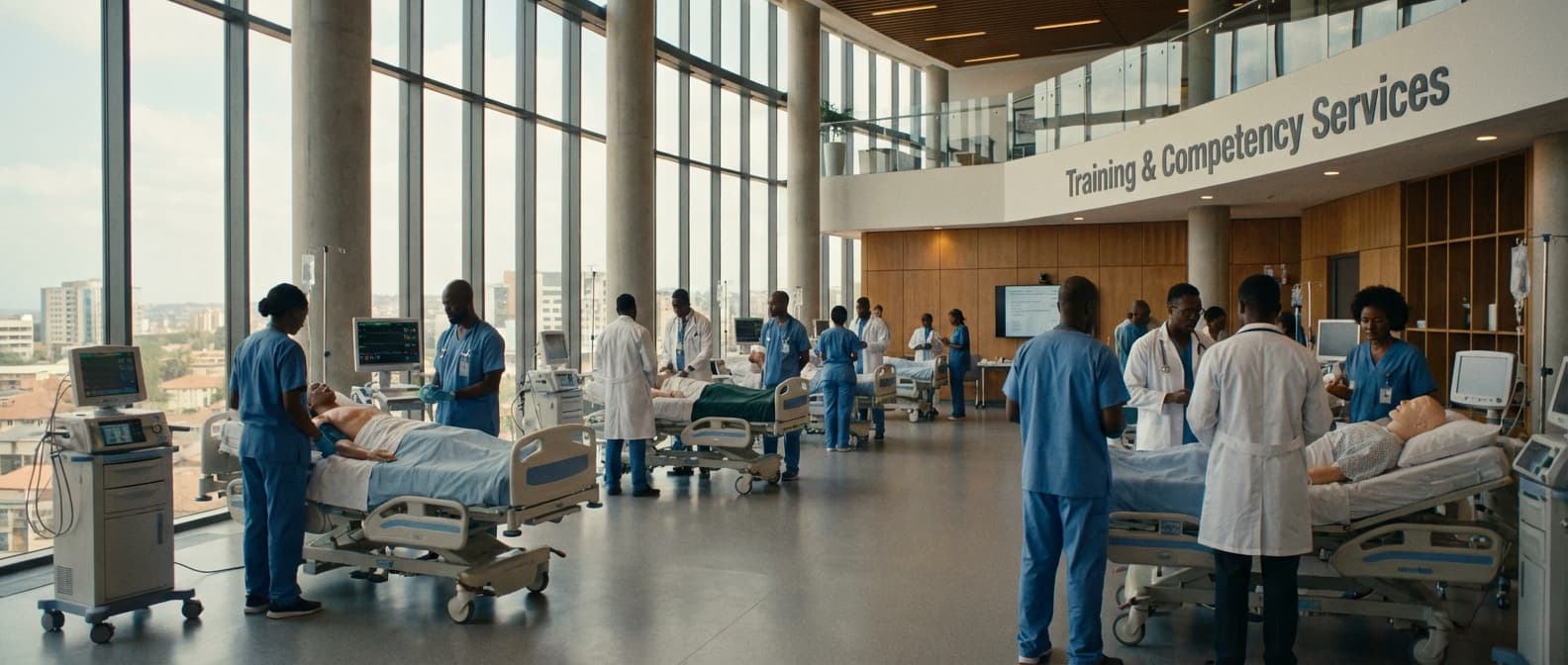
MRI Operator Training Service (Radiographers) in Madagascar
Engineering Excellence & Technical Support
MRI Operator Training Service (Radiographers) High-standard technical execution following OEM protocols and local regulatory frameworks.
Advanced MRI Protocols & AI Integration
Master cutting-edge MRI protocols and learn to leverage AI-powered tools for enhanced image acquisition, reconstruction, and initial diagnostic insights, improving efficiency and accuracy in Madagascar's healthcare landscape.
Patient Safety & Comfort in MRI
Develop expert skills in ensuring patient safety during MRI scans, including contraindication assessment, artifact reduction techniques, and creating a comfortable and anxiety-free environment, crucial for diverse patient populations in Madagascar.
Quality Assurance & Troubleshooting
Gain comprehensive knowledge in MRI quality assurance procedures, image optimization, and effective troubleshooting for common technical challenges, ensuring reliable diagnostic imaging services across Madagascar's healthcare facilities.
What Is Mri Operator Training Service (Radiographers) In Madagascar?
MRI Operator Training Service (Radiographers) in Madagascar refers to specialized educational programs designed to equip qualified radiographers with the knowledge and practical skills necessary to safely and effectively operate Magnetic Resonance Imaging (MRI) equipment. This service is crucial for healthcare facilities in Madagascar seeking to establish or enhance their MRI diagnostic capabilities, ensuring adherence to international standards of practice and patient safety protocols.
| Target Audience | Rationale for Need | Typical Use Cases |
|---|---|---|
| Newly graduated radiographers in Madagascar. | To bridge the gap between theoretical education and practical MRI operation, ensuring competence from the outset. | Initial certification and skill acquisition for operating new MRI installations. |
| Existing radiographers seeking specialization in MRI. | To enhance career prospects, acquire advanced diagnostic imaging skills, and meet the demands of modern healthcare. | Transitioning from other modalities (e.g., X-ray, CT) to MRI operation. |
| Radiographers in facilities acquiring new MRI technology. | To ensure proper operation, maintenance, and utilization of expensive advanced imaging equipment, maximizing return on investment. | Onboarding of staff for new MRI scanner installations in hospitals and specialized diagnostic centers. |
| Radiographers seeking to improve diagnostic accuracy and patient throughput. | To refine technical skills, optimize imaging protocols, and contribute to higher quality diagnostic outcomes. | Continuing professional development and refresher courses for experienced MRI operators. |
Key Components of MRI Operator Training Service
- Theoretical foundation in MRI physics, principles of image formation, and understanding of magnetic fields and radiofrequency pulses.
- Patient preparation and safety protocols, including screening for contraindications (e.g., ferromagnetic implants, claustrophobia) and the administration of contrast agents.
- Detailed understanding of MRI scanner operation, including system controls, imaging sequences, parameter optimization, and artifact reduction techniques.
- Image acquisition protocols for various anatomical regions and pathologies.
- Post-processing and basic image manipulation techniques.
- Quality assurance and quality control procedures specific to MRI.
- Radiation safety principles (though MRI is non-ionizing, magnet safety is paramount).
- Emergency procedures and management of adverse events.
Who Needs Mri Operator Training Service (Radiographers) In Madagascar?
MRI Operator Training Service in Madagascar is crucial for enhancing the quality and accessibility of advanced medical imaging across the nation. While MRI technology is vital for diagnosis and treatment planning, its effective utilization hinges on skilled radiographers. This training service aims to equip these professionals with the necessary expertise to operate MRI machines safely and efficiently, interpret scans accurately, and adhere to international best practices. This, in turn, will lead to improved patient care, reduced diagnostic errors, and better health outcomes for the Malagasy population.
| Department/Role | Specific Needs Addressed by Training | Impact on Patient Care |
|---|---|---|
| Radiology Departments | Advanced MRI protocol optimization, image acquisition techniques, patient positioning, radiation safety (for specific MRI sequences involving ionizing radiation sources if applicable in hybrid systems), troubleshooting equipment malfunctions. | More accurate diagnoses, reduced need for repeat scans, faster turnaround times for results, improved diagnostic confidence for referring physicians. |
| Neurology Departments | Specialized MRI sequences for brain imaging (e.g., fMRI, diffusion tensor imaging), understanding of neurological pathologies and their MRI manifestations, contrast agent administration and monitoring. | Precise diagnosis and characterization of neurological conditions like stroke, tumors, multiple sclerosis, and epilepsy, leading to more targeted treatment strategies. |
| Orthopedics Departments | Musculoskeletal MRI protocols, joint imaging, understanding of soft tissue injuries, cartilage evaluation, and bone marrow edema. | Improved diagnosis of sports injuries, degenerative joint diseases, and other orthopedic conditions, enabling better surgical planning and conservative management. |
| Oncology Departments | Oncological MRI applications, tumor staging, treatment response assessment (e.g., RECIST criteria), contrast enhancement patterns, and MRI-guided biopsies. | Accurate assessment of cancer extent and response to therapy, contributing to personalized treatment plans and improved patient outcomes. |
| Cardiology Departments (for cardiac MRI) | Cardiac MRI protocols, assessment of ventricular function, myocardial viability, congenital heart disease, and cardiac masses. | Enhanced diagnostic capabilities for complex cardiac conditions, aiding in the management of heart failure and other cardiovascular diseases. |
| Pediatric Departments (for pediatric MRI) | Pediatric-specific MRI protocols, sedation and anesthesia considerations, child-friendly approaches to imaging, and understanding of pediatric pathologies. | Safe and effective MRI examinations for children, minimizing distress and obtaining high-quality diagnostic images for a range of pediatric conditions. |
Target Customers and Departments for MRI Operator Training Service in Madagascar
- {"title":"Hospitals (Public and Private)","description":"Hospitals are the primary facilities housing MRI machines. Training is essential for their radiographers to maximize the utilization of these expensive and complex diagnostic tools."}
- {"title":"Specialized Medical Imaging Centers","description":"Dedicated imaging centers, often equipped with multiple MRI scanners, require a highly skilled workforce to maintain operational efficiency and offer a broad range of diagnostic services."}
- {"title":"University Medical Faculties/Teaching Hospitals","description":"To train the next generation of radiographers and medical professionals, institutions involved in medical education need to ensure their staff are proficient in the latest MRI techniques and technologies."}
- {"title":"Government Health Ministry (for public sector capacity building)","description":"The Ministry of Health, responsible for public healthcare infrastructure, can partner with training providers to upskill radiographers in government-run hospitals and clinics, improving national healthcare standards."}
- {"title":"Non-Governmental Organizations (NGOs) involved in healthcare","description":"NGOs operating medical facilities or supporting healthcare initiatives in remote or underserved areas may require training for their staff to introduce or enhance MRI services."}
Mri Operator Training Service (Radiographers) Process In Madagascar
This document outlines the typical workflow for an MRI Operator Training Service for Radiographers in Madagascar, from initial inquiry to successful execution. The process is designed to be comprehensive, ensuring that participants receive high-quality, practical, and theoretically sound training tailored to the Malagasy healthcare context.
| Stage | Activities | Responsible Party | Key Outputs/Deliverables | Timeline (Indicative) |
|---|---|---|---|---|
| Initial contact from healthcare facility or individual radiographer. Discussion of training needs, specific MRI modalities, desired skill levels, participant numbers, and existing infrastructure. Site visit (if applicable) to assess current capabilities and available equipment. | Prospective Client (Hospital/Clinic/Radiographer), Training Provider | Understanding of training requirements, participant profile, and logistical considerations. | 1-2 Weeks |
| Development of a detailed training proposal outlining curriculum, learning objectives, training methodologies, duration, trainer qualifications, and logistical arrangements. Preparation of a comprehensive quotation including all costs (tuition, materials, trainer fees, travel, accommodation if applicable). | Training Provider | Formal training proposal, detailed quotation. | 1-3 Weeks |
| Review of proposal and quotation by the client. Negotiation of terms, payment schedule, and any specific customization requests. Signing of a formal training agreement/contract. | Prospective Client, Training Provider | Signed training agreement/contract. | 1-2 Weeks |
| Logistical arrangements: booking venues, arranging equipment access (if on-site), scheduling trainers, and confirming participant lists. Development of training materials (presentations, handouts, case studies) – tailored to MRI machines available in Madagascar and common pathologies. Communication of pre-reading materials and any pre-assessment questionnaires to participants. | Training Provider, Client | Confirmed schedule, accessible training materials, registered participants, pre-training information sent. | 2-4 Weeks prior to training |
| Theoretical sessions: lectures, discussions, case study reviews focusing on MRI physics, safety, pulse sequences, image interpretation, and common pathologies. Practical sessions: hands-on training on MRI scanners, protocol optimization, patient positioning, image acquisition, and troubleshooting. Live demonstrations and supervised practice. Assessment of learning through quizzes, practical evaluations, and case study discussions. | Training Provider (Trainers), Participants | Delivered training modules, practical skill acquisition, participant engagement, ongoing formative assessments. | Duration varies (e.g., 1-4 weeks, depending on depth and scope) |
| Formal evaluation of training effectiveness through participant feedback surveys. Assessment of participant competency through summative evaluations (e.g., final practical exam, knowledge test). Provision of post-training support: answering questions, offering remote assistance, and providing access to training resources. | Training Provider, Participants | Participant feedback report, evaluation results, post-training support mechanism. | Immediately following training, ongoing |
| Issuance of certificates of completion to participants who meet the required standards. Follow-up with the client to assess the impact of the training on their operations and to identify any further training needs. Potential for advanced or refresher training. | Training Provider, Client | Certificates of completion, follow-up reports, potential for future engagements. | 1-2 Weeks post-evaluation, ongoing |
Key Stages in MRI Operator Training Process
- Inquiry & Needs Assessment
- Proposal Development & Quotation
- Contract Negotiation & Agreement
- Pre-Training Preparations
- Training Delivery & Execution
- Post-Training Evaluation & Support
- Certification & Follow-up
Mri Operator Training Service (Radiographers) Cost In Madagascar
The cost of MRI operator training services for radiographers in Madagascar can vary significantly based on several factors. These include the training provider's reputation and expertise, the duration and intensity of the training program, the level of certification offered, and the specific modules covered (e.g., basic MRI physics, advanced imaging techniques, patient care, safety protocols). Additional costs may arise for practical training sessions, examination fees, and any necessary materials or equipment access. Geographical location within Madagascar and whether the training is delivered in-person or online can also influence pricing.
| Training Type/Duration | Estimated Cost Range (MGA - Malagasy Ariary) | Notes |
|---|---|---|
| Basic MRI Principles & Operation (e.g., 1-2 weeks) | 500,000 - 1,500,000 MGA | Covers fundamental concepts, basic scanner operation, and safety. May be introductory. |
| Comprehensive MRI Operator Certification (e.g., 4-6 weeks) | 1,500,000 - 4,000,000 MGA | Includes in-depth theoretical and practical training, covering various sequences, artifacts, and patient management. Leads to a recognized certification. |
| Specialized MRI Modalities/Advanced Techniques (e.g., 1 week) | 800,000 - 2,500,000 MGA | Focuses on specific areas like neuroimaging, musculoskeletal MRI, or contrast agent administration. Often an add-on to basic training. |
| Refresher/Continuing Education Courses (e.g., 1-3 days) | 200,000 - 800,000 MGA | Updates existing knowledge, covers new protocols or technological advancements. Shorter duration. |
| On-site Training (per day/group) | Negotiable (can range from 1,000,000 - 5,000,000+ MGA) | Costs depend on the number of trainees, duration, and the training provider's package. May include travel and accommodation for trainers. |
Key Pricing Factors for MRI Operator Training in Madagascar:
- Training Provider's Reputation and Expertise
- Duration and Intensity of the Program
- Level of Certification Achieved
- Specific Training Modules and Content
- Practical Training and Equipment Access
- Examination and Assessment Fees
- Training Format (In-person vs. Online)
- Geographical Location of Training
Affordable Mri Operator Training Service (Radiographers) Options
This document outlines affordable MRI operator training services tailored for radiographers, focusing on value bundles and cost-saving strategies to maximize your investment. We understand the budgetary constraints healthcare facilities often face and aim to provide high-quality, comprehensive training without compromising on essential skills and certifications.
| Training Package | Description | Typical Duration | Cost-Saving Strategies | Value Proposition |
|---|---|---|---|---|
| Foundational MRI Operator Package | Covers essential MRI physics, safety, basic protocol acquisition, and patient handling. | 2-3 days (intensive) | Group discounts, early bird registration, bundled with introductory simulation hours. | Provides a solid understanding of MRI principles for new operators, ensuring safety and basic competency. |
| Comprehensive MRI Radiographer Program | Includes foundational training plus advanced techniques, image interpretation basics, and regulatory aspects. | 5-7 days (intensive) | On-site training for larger groups, remote learning options for theoretical modules, customized curriculum to focus on specific modalities. | Develops well-rounded MRI operators capable of handling a wider range of examinations and understanding quality control. |
| Specialty MRI Module Add-on | Focused training on specific areas like neuroimaging, musculoskeletal MRI, or cardiac MRI protocols. | 1-2 days per module | Micro-credentialing for individual modules, discounted rates when bundled with a comprehensive program, train-the-trainer options. | Allows for specialization and skill enhancement in high-demand MRI areas, increasing operator versatility. |
| Recertification & Refresher Courses | Designed for existing MRI operators to update their knowledge on new technologies, safety standards, and protocols. | 1 day (intensive) | Online refresher modules, bulk enrollment discounts for departments, modular approach allowing focus on specific areas of need. | Ensures continued competency and compliance with evolving MRI practices, maintaining certification and quality. |
Key Components of Affordable MRI Operator Training
- Core MRI Physics & Safety Training
- Advanced Imaging Techniques & Protocols
- Patient Care & Communication in MRI
- Image Interpretation Fundamentals
- Regulatory Compliance & Quality Assurance
- Hands-on Practical Scanning Experience (simulated or supervised)
- Certification Preparation & Exam Support
Verified Providers In Madagascar
Finding reliable and accredited healthcare providers is paramount for ensuring quality medical care, especially in a country like Madagascar where navigating the healthcare landscape can be challenging. This guide highlights Verified Providers in Madagascar, with a specific focus on Franance Health credentials, explaining why they represent the best choice for your health needs.
| Credential Type | Significance for Patients | Franance Health Verification Aspect |
|---|---|---|
| Medical License Renewal | Ensures practitioners are up-to-date with regulations and have maintained their right to practice. | Confirms active and valid professional licensing. |
| Specialist Board Certification | Indicates advanced training and expertise in a specific medical field. | Validates specialized qualifications and competency. |
| Hospital/Clinic Accreditation | Confirms that the facility meets established standards for quality, safety, and patient care. | Verifies adherence to national and international healthcare quality benchmarks. |
| Continuing Medical Education (CME) | Demonstrates a commitment to ongoing learning and staying current with medical knowledge. | Confirms participation in approved professional development programs. |
| Patient Satisfaction Surveys | Provides insights into the patient experience and service quality. | Can be a component of verification to gauge patient feedback. |
Why Choose Verified Providers with Franance Health Credentials?
- Unwavering Commitment to Quality: Franance Health credentials signify that a provider has met rigorous standards for medical expertise, patient care, and facility management. This ensures you receive treatment from highly qualified professionals in a safe and equipped environment.
- Enhanced Patient Safety: Accreditation processes, often a component of Franance Health verification, involve strict adherence to safety protocols, infection control measures, and emergency preparedness. This minimizes risks and prioritizes your well-being.
- Trust and Transparency: Verified providers offer a level of transparency regarding their qualifications and practices. This builds trust and empowers you to make informed decisions about your healthcare.
- Access to Modern Practices: Providers holding Franance Health credentials are typically at the forefront of medical advancements and best practices, ensuring you benefit from the latest treatments and technologies available.
- Peace of Mind: Knowing you are receiving care from a verified and accredited institution provides invaluable peace of mind, allowing you to focus on your recovery.
- Streamlined Healthcare Experience: Verified providers often have more efficient administrative processes and a clearer understanding of patient needs, leading to a smoother and more positive healthcare experience.
Scope Of Work For Mri Operator Training Service (Radiographers)
This Scope of Work (SOW) outlines the requirements for providing MRI Operator Training Services specifically tailored for Radiographers. The training will cover theoretical knowledge and practical application of MRI operation, ensuring participants can safely and effectively conduct MRI examinations according to established protocols and best practices. This document details the technical deliverables and standard specifications for the training program.
| Deliverable | Description | Standard Specification / Acceptance Criteria | Format |
|---|---|---|---|
| Comprehensive Training Curriculum | A detailed curriculum covering all listed modules with learning objectives, theoretical content, and practical exercises. | Curriculum must be aligned with current industry standards (e.g., ARRT, IMRT) and cover all SOW objectives. | Digital Document (PDF/Word) |
| Instructor-Led Training Sessions | Delivery of theoretical and practical training by qualified and experienced MRI radiographers/physicists. | Minimum of 10 hours per participant (flexible based on module depth). Sessions to be interactive with Q&A. | In-person or Live Virtual Sessions |
| Practical Simulation/Hands-on Training | Supervised hands-on experience with an actual MRI scanner or advanced simulator. | Minimum of 8 hours per participant, covering patient positioning, console operation, sequence selection, and image acquisition. | On-site at Client's Facility or Designated Training Center |
| Training Materials | Participant handbooks, presentation slides, case studies, and supplementary reading materials. | Materials to be clear, concise, and visually engaging. Must be updated to reflect current technology and practices. | Digital and/or Printed Copies |
| Assessment and Evaluation | Written examinations and practical assessments to evaluate participant comprehension and skill acquisition. | Pass mark of 80% for written exam. Practical assessment to evaluate competency in core operational tasks. Feedback provided to each participant. | Written Exam (Multiple Choice/Short Answer), Practical Observation Checklist |
| Certificate of Completion | Official certificate awarded to participants who successfully complete the training and assessments. | Certificate to include participant name, course title, date of completion, and issuing organization's details. | Digital and/or Printed Certificate |
| Post-Training Support | Limited follow-up support for technical queries related to the training content. | Availability via email/phone for up to 2 weeks post-training. | Email/Phone Support |
| Training Report | A summary report detailing training conducted, participant attendance, assessment results, and recommendations. | Report to be submitted within 7 days of training completion. | Digital Document (PDF) |
Key Training Modules and Objectives
- {"item":"MRI Physics Fundamentals","description":"Understand the principles of magnetic resonance imaging, including signal generation, image formation, and basic pulse sequences."}
- {"item":"MRI Safety and Protocols","description":"Master patient screening procedures, contraindications, ferromagnetic detection, and emergency protocols to ensure patient and staff safety."}
- {"item":"MRI Equipment Operation","description":"Gain proficiency in operating the MRI scanner console, selecting appropriate sequences, and managing scan parameters for various body regions."}
- {"item":"Image Acquisition and Optimization","description":"Learn techniques for optimizing image quality, reducing artifacts, and achieving diagnostic-standard images."}
- {"item":"Contrast Agent Administration","description":"Understand the administration of MRI contrast agents, including indications, contraindications, and post-administration monitoring."}
- {"item":"Common MRI Protocols and Applications","description":"Familiarize with standard MRI protocols for neurological, musculoskeletal, abdominal, and pelvic imaging, as well as common pathologies."}
- {"item":"PACS Integration and Image Archiving","description":"Learn to interface with Picture Archiving and Communication Systems (PACS) for efficient image management and archiving."}
Service Level Agreement For Mri Operator Training Service (Radiographers)
This Service Level Agreement (SLA) outlines the response times and uptime guarantees for the MRI Operator Training Service provided to Radiographers. This SLA is an addendum to the Master Service Agreement (MSA) between [Your Company Name] (Provider) and [Client Company Name] (Client).
| Service Component | Response Time Target | Uptime Guarantee | Measurement Period |
|---|---|---|---|
| Technical Support (for training platform/system) | 1 Business Hour (for critical issues), 4 Business Hours (for non-critical issues) | 99.5% | Monthly |
| Trainer Availability (scheduled sessions) | 15 Minutes prior to scheduled session start | 100% (for scheduled sessions) | Per scheduled session |
| Access to Online Training Portal/Materials | Immediate access upon login | 99.8% | Monthly |
| Post-Training Inquiry Response | 1 Business Day | N/A | N/A |
Service Scope
- Comprehensive MRI operator training for certified Radiographers.
- On-site and remote training options.
- Access to training materials and resources.
- Post-training support and Q&A sessions.
Frequently Asked Questions

Ready when you are
Let's scope your MRI Operator Training Service (Radiographers) in Madagascar project in Madagascar.

Scaling healthcare logistics and technical systems across the entire continent.