
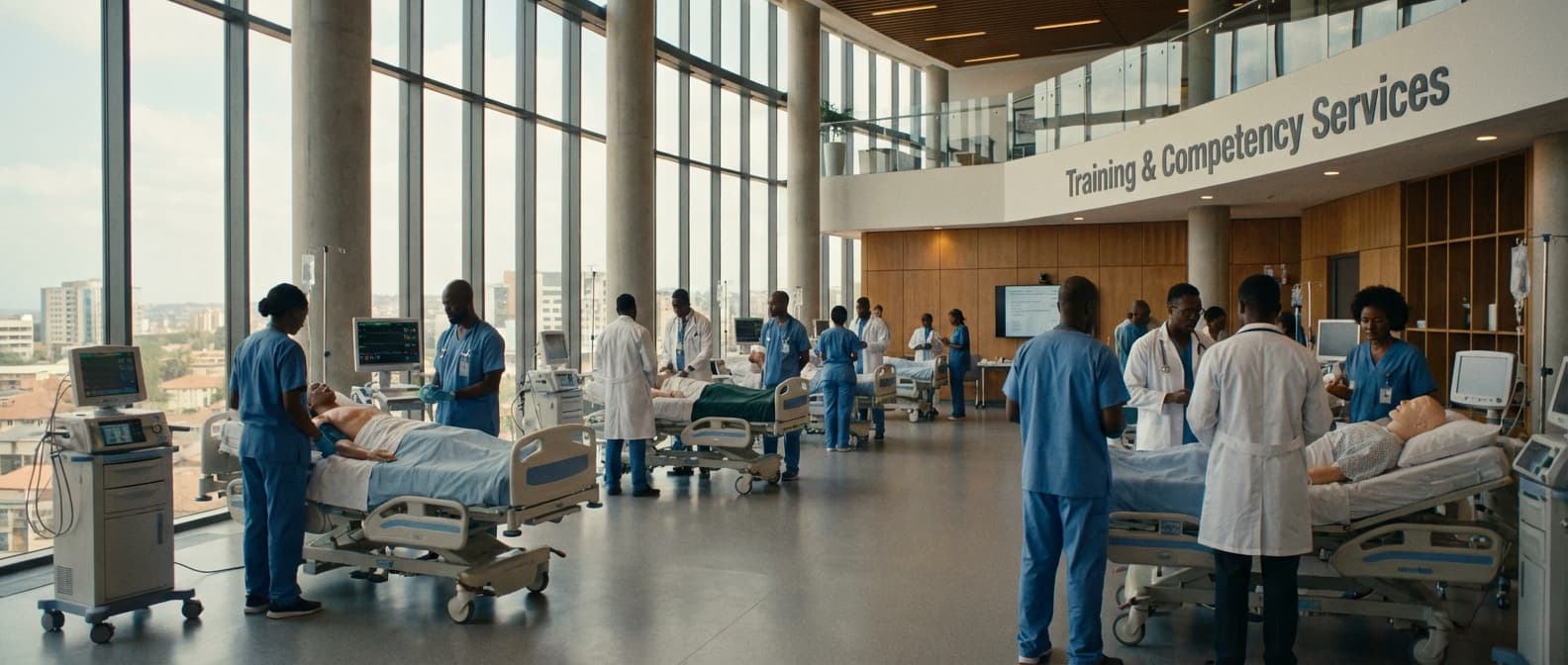
CT Operator Training Service (Radiographers) in Madagascar
Engineering Excellence & Technical Support
CT Operator Training Service (Radiographers) High-standard technical execution following OEM protocols and local regulatory frameworks.
Enhancing Diagnostic Accuracy with Advanced CT Techniques
Our training equips Radiographers in Madagascar with hands-on expertise in advanced CT protocols, including contrast optimization and multi-detector CT (MDCT) imaging. This ensures superior image quality, leading to more precise diagnoses and improved patient outcomes for a wide range of conditions.
Mastering CT Image Acquisition and Reconstruction for Optimal Workflow
This program focuses on the critical aspects of CT image acquisition parameters and reconstruction algorithms. Radiographers will gain proficiency in optimizing scan parameters for various anatomies and pathologies, as well as understanding reconstruction techniques to minimize artifacts and maximize diagnostic information, leading to greater efficiency and reduced retakes.
Prioritizing Patient and Staff Safety in CT Procedures
Safety is paramount. Our training emphasizes radiation dose reduction strategies, patient positioning for optimal comfort and image quality, and adherence to international safety standards. Radiographers in Madagascar will learn best practices to ensure a safe and effective CT imaging environment for all.
What Is Ct Operator Training Service (Radiographers) In Madagascar?
CT Operator Training Service (Radiographers) in Madagascar refers to specialized educational programs designed to equip radiographers with the necessary knowledge and practical skills to operate Computed Tomography (CT) scanners effectively and safely. This service focuses on the acquisition, processing, and interpretation of CT imaging data, adhering to established radiological principles and best practices. The training aims to ensure competency in patient positioning, scanner parameter selection, image quality optimization, artifact reduction, radiation safety protocols, and basic troubleshooting.
| Who Needs CT Operator Training? | Typical Use Cases | ||||||
|---|---|---|---|---|---|---|---|
| Newly graduated radiographers entering CT departments. | Initial acquisition of new CT scanner technologies in hospitals and imaging centers. | Radiographers transitioning from other imaging modalities (e.g., X-ray, Ultrasound) to CT. | Existing CT operators requiring recertification or advanced training. | Radiographers working in facilities with evolving imaging protocols or equipment. | Healthcare professionals involved in the clinical implementation of new CT applications. | ||
| Routine diagnostic imaging for a wide range of medical conditions. | Trauma assessment and management. | Oncological staging and treatment monitoring. | Vascular imaging (CT angiography). | Interventional procedures guidance (e.g., biopsies, drainages). | Surgical planning and post-operative evaluation. | Screening programs (e.g., lung cancer screening). | Research and development in advanced CT imaging techniques. |
Key Components of CT Operator Training Service:
- Theoretical knowledge of CT physics, principles of image formation, and scanner technology.
- Practical training on specific CT scanner models, including hardware and software operation.
- Patient preparation and management protocols for CT examinations.
- Advanced techniques such as contrast media administration and administration protocols.
- Image acquisition parameters optimization for various anatomical regions and pathologies.
- Image processing, reconstruction algorithms, and windowing techniques.
- Artifact identification, analysis, and mitigation strategies.
- Radiation dose optimization and patient safety (ALARA principle).
- Basic quality assurance and quality control procedures for CT scanners.
- Introduction to common CT pathologies and their imaging characteristics.
- Emergency procedures and troubleshooting common operational issues.
- Ethical considerations and professional conduct in medical imaging.
Who Needs Ct Operator Training Service (Radiographers) In Madagascar?
CT Operator Training Service (Radiographers) in Madagascar is crucial for enhancing the quality and accessibility of diagnostic imaging services. This training is essential for professionals involved in operating Computed Tomography (CT) scanners, ensuring they possess the necessary skills for safe, effective, and efficient patient care. The demand for such services is driven by the need to improve diagnostic accuracy, reduce radiation exposure, and keep pace with technological advancements in medical imaging.
| Customer Type | Primary Departments Requiring Training | Key Needs Addressed |
|---|---|---|
| Public Hospitals | Radiology Department, Emergency Department, Surgical Wards, Intensive Care Units (ICUs) | Upgrading skills of existing radiographers, training new personnel, standardizing protocols, ensuring compliance with national health guidelines. |
| Private Hospitals | Radiology Department, Outpatient Clinics, specialized departments (e.g., Cardiology, Gastroenterology) | Maintaining high service quality, adopting new CT technologies, competitive advantage, efficient patient throughput. |
| Diagnostic Imaging Centers | Radiology Department | Specialized CT scanning services, catering to a broad range of medical referrals, advanced imaging techniques. |
| Specialized Clinics (e.g., Oncology, Neurology) | Radiology Department (if applicable), Clinician support staff needing to understand CT outputs | Specific protocols for oncological staging, neuroimaging interpretation support, advanced applications of CT. |
| Medical Research Institutions | Research-focused Radiology Departments, Biomedical Engineering | Acquiring skills for advanced research protocols, understanding image acquisition for specific research studies, data integrity. |
| Government Health Ministries/Agencies | Public Health Departments, Training and Education Units, Regulatory Bodies | Developing national training standards, ensuring equitable access to quality diagnostic services, capacity building for healthcare workforce. |
Target Customers and Departments for CT Operator Training in Madagascar
- Hospitals (Public and Private)
- Diagnostic Imaging Centers
- Specialized Clinics (e.g., Oncology, Neurology)
- Medical Research Institutions
- Government Health Ministries/Agencies
Ct Operator Training Service (Radiographers) Process In Madagascar
This document outlines the workflow for the CT Operator Training Service for Radiographers in Madagascar, detailing the process from initial inquiry to the successful execution of the training program. The service aims to equip radiographers with the necessary skills and knowledge to operate CT scanners effectively and safely, adhering to international standards and local regulations.
| Phase | Key Steps | Description | Responsible Party | Key Deliverables |
|---|---|---|---|---|
| Inquiry & Initial Consultation | Receive Inquiry | Potential clients (hospitals, clinics, government health bodies) express interest in CT operator training. | Service Provider | Acknowledged inquiry |
| Initial Consultation | Discuss training needs, objectives, desired outcomes, and available resources. | Service Provider & Client | Understanding of client's requirements | |
| Needs Assessment & Proposal Development | Conduct Detailed Needs Assessment | Evaluate existing radiographer skill levels, current CT equipment, and specific training requirements. | Service Provider | Training needs analysis report |
| Develop Training Proposal | Outline the proposed training program, including curriculum, duration, methodology, trainers, and costs. | Service Provider | Formal training proposal | |
| Contracting & Agreement | Proposal Review & Negotiation | Client reviews the proposal, and negotiations take place regarding terms and conditions. | Client & Service Provider | Agreement on proposal terms |
| Contract Finalization | Sign a formal training agreement outlining responsibilities, payment terms, and service level agreements. | Client & Service Provider | Signed training contract | |
| Curriculum Customization & Planning | Customize Curriculum | Adapt the standard CT operator training curriculum to align with the client's specific equipment and operational context. | Service Provider | Tailored training curriculum |
| Develop Training Schedule | Create a detailed schedule for theoretical and practical training sessions. | Service Provider | Detailed training schedule | |
| Logistics & Resource Allocation | Arrange Trainer Mobilization | Confirm trainer availability, travel, and accommodation if required. | Service Provider | Confirmed trainer logistics |
| Secure Training Facilities & Equipment | Ensure access to suitable training rooms, CT scanners (or simulators), and necessary learning materials. | Client & Service Provider | Ready training environment | |
| Participant Registration | Client provides a list of participants for the training program. | Client | Participant list | |
| Training Delivery | Theoretical Sessions | Conduct classroom-based lectures on CT physics, anatomy, pathology, image acquisition, safety protocols, and quality control. | Trainer | Knowledge transfer |
| Practical/Hands-on Sessions | Provide supervised practical training on CT scanner operation, patient positioning, protocol selection, and image review. | Trainer | Skill development | |
| Case Study Analysis | Engage participants in analyzing real-world CT cases to enhance diagnostic interpretation skills. | Trainer | Enhanced analytical skills | |
| Assessment & Evaluation | Formative Assessments | Conduct quizzes and practical exercises throughout the training to monitor progress and identify areas for improvement. | Trainer | Continuous feedback |
| Summative Assessment | Administer a comprehensive written and practical examination to evaluate the overall competency of the trainees. | Trainer & Service Provider | Performance evaluation report | |
| Client Feedback | Gather feedback from the client regarding the training effectiveness and delivery. | Service Provider | Client satisfaction report | |
| Certification & Post-Training Support | Issue Certificates | Award certificates of completion to trainees who successfully pass the assessments. | Service Provider | Certificates of completion |
| Post-Training Support | Offer ongoing technical support, refresher courses, or advanced training as per the contract. | Service Provider | Continued learning opportunities | |
| Program Review | Conduct a post-training review with the client to discuss outcomes and future training needs. | Service Provider & Client | Lessons learned and future recommendations |
CT Operator Training Service Workflow
- Inquiry & Initial Consultation
- Needs Assessment & Proposal Development
- Contracting & Agreement
- Curriculum Customization & Planning
- Logistics & Resource Allocation
- Training Delivery
- Assessment & Evaluation
- Certification & Post-Training Support
Ct Operator Training Service (Radiographers) Cost In Madagascar
Providing accurate cost estimates for CT Operator Training (Radiographers) in Madagascar requires an understanding of several key pricing factors. These include the duration and intensity of the training, the qualifications and experience of the instructors, the specific curriculum covered (e.g., basic CT, advanced techniques, specific modalities), the location of the training (on-site at a facility vs. off-site at a training center), the size of the training cohort, and any associated materials or equipment usage fees. Due to the developing nature of specialized medical training in Madagascar, the availability of dedicated training centers can be limited, potentially influencing costs upwards if specialized external instructors or facilities are required. Furthermore, currency fluctuations and local economic conditions will play a role in the final pricing.
Given these variables, the cost for CT Operator Training (Radiographers) in Madagascar can range significantly. However, based on typical training structures and potential local provider rates, a general estimate can be provided. It's crucial to note that these figures are indicative and subject to negotiation and specific provider quotations.
Estimated Cost Ranges (in Malagasy Ariary - MGA):
- Basic CT Operator Training (e.g., 1-2 weeks): MGA 1,500,000 - MGA 4,000,000 per radiographer.
- Intermediate/Advanced CT Operator Training (e.g., 2-4 weeks, specialized techniques): MGA 3,000,000 - MGA 8,000,000 per radiographer.
- Comprehensive CT Operator Training (e.g., 4+ weeks, covering multiple aspects): MGA 6,000,000 - MGA 15,000,000+ per radiographer.
These ranges often include theoretical instruction, hands-on practice (potentially simulated or on-site with existing equipment), and assessment. Additional costs might apply for travel, accommodation, and specialized learning materials not included in the base fee.
| Training Level/Duration | Estimated Cost Range (MGA) |
|---|---|
| Basic CT Operator Training (1-2 weeks) | 1,500,000 - 4,000,000 |
| Intermediate/Advanced CT Operator Training (2-4 weeks) | 3,000,000 - 8,000,000 |
| Comprehensive CT Operator Training (4+ weeks) | 6,000,000 - 15,000,000+ |
Key Factors Influencing CT Operator Training Costs in Madagascar
- Training Duration and Intensity
- Instructor Qualifications and Experience
- Curriculum Specificity (Basic vs. Advanced/Specialized)
- Training Location (On-site vs. Off-site)
- Cohort Size
- Inclusion of Training Materials and Equipment Usage
- Availability of Local Training Infrastructure
- Currency Fluctuations and Economic Conditions
Affordable Ct Operator Training Service (Radiographers) Options
This document outlines affordable CT operator training service options for radiographers, focusing on value bundles and cost-saving strategies to maximize your training investment. We understand the critical need for skilled CT operators and the budgetary constraints healthcare facilities often face. Our aim is to provide accessible, high-quality training that ensures competency and compliance without breaking the bank.
| Cost-Saving Strategy | Description | Potential Benefits |
|---|---|---|
| Group Discounts | Registering multiple radiographers from the same facility for a training program. | Reduced per-person cost, fostering team-wide competency and consistent practice. |
| Early Bird Registration | Enrolling and paying for training significantly in advance of the course start date. | Significant percentage discount on the standard course fee. |
| Online & Blended Learning Options | Utilizing online modules, webinars, and virtual simulations alongside limited in-person sessions. | Lower tuition fees due to reduced overhead, flexibility for participants to learn at their own pace, and reduced travel expenses. |
| Customized Training Packages | Tailoring training content to the specific needs and equipment of your facility. | Eliminates redundant training, focusing resources on essential skills, and potentially reducing overall training duration and cost. |
| Subscription-Based Access | Purchasing an annual subscription that grants access to a library of courses and resources. | Cost-effective for facilities with ongoing training needs or a high turnover of CT operators. Predictable annual budgeting. |
| Train-the-Trainer Programs | Investing in a few key personnel to become internal CT trainers. | Significant long-term cost savings by leveraging internal expertise for ongoing training and mentorship. |
| Bundled Services | Combining training with other services like equipment calibration or protocol development. | Potential for package discounts and streamlined service delivery. |
Understanding Value Bundles
- Core CT Essentials Bundle: This foundational package covers the fundamental principles of CT imaging, patient positioning, image acquisition protocols, and basic artifact recognition. It's ideal for new CT operators or those needing a refresher.
- Advanced Protocols & Optimization Bundle: Geared towards experienced operators, this bundle delves into specialized CT applications (e.g., CT angiography, cardiac CT, low-dose CT), advanced protocol development, and image post-processing techniques for enhanced diagnostic yield.
- Compliance & Safety Bundle: Focuses on radiation safety principles, dose monitoring, regulatory requirements, and quality assurance in CT. Essential for ensuring patient and staff safety and meeting accreditation standards.
- Comprehensive CT Skill Development Bundle: A holistic package combining elements from the Core, Advanced, and Compliance bundles, offering a complete training solution for operators at all experience levels.
- On-Demand Learning & Refresher Bundle: Provides access to a library of self-paced online modules and short refresher courses, perfect for continuous professional development and addressing specific skill gaps as needed.
Verified Providers In Madagascar
Navigating the healthcare landscape in any country can be challenging, and Madagascar is no exception. For those seeking reliable and high-quality medical services, identifying verified providers is crucial. Franance Health stands out as a leader in this regard, offering a network of credentialed professionals and facilities that prioritize patient well-being and adhere to rigorous standards. Their commitment to transparency and excellence makes them the best choice for individuals and families in Madagascar.
| Credentialing Aspect | Franance Health's Standard | Benefit to Patients |
|---|---|---|
| Medical Licenses and Certifications | Verified and up-to-date with Malagasy and relevant international authorities. | Ensures providers possess the fundamental qualifications and legal authorization to practice. |
| Professional Experience and Education | Thorough review of academic backgrounds, specialized training, and years of practical experience. | Guarantees that patients are treated by skilled and knowledgeable healthcare professionals. |
| Reputation and Peer Review | Inclusion of feedback mechanisms and potential peer endorsements. | Provides an additional layer of assurance regarding the quality of care and ethical conduct. |
| Adherence to Ethical Guidelines | Commitment to patient confidentiality, informed consent, and professional integrity. | Fosters trust and ensures patients are treated with respect and dignity. |
| Facility Standards (for clinics/hospitals) | Assessment of hygiene, equipment, and operational protocols. | Ensures a safe and conducive environment for diagnosis and treatment. |
Why Franance Health is the Premier Choice for Verified Healthcare in Madagascar:
- Uncompromising Credentialing Process: Franance Health implements a stringent vetting procedure for all its associated providers, ensuring they meet and exceed established medical and ethical benchmarks.
- Focus on Patient Safety and Quality: Every provider within the Franance Health network is committed to delivering safe, effective, and patient-centered care, adhering to international best practices.
- Comprehensive Range of Services: From general practitioners to specialized medical professionals and diagnostic centers, Franance Health connects you with a wide spectrum of healthcare needs.
- Accessibility and Convenience: Franance Health simplifies the process of finding trusted healthcare, offering a user-friendly platform and readily available support.
- Commitment to Continuous Improvement: Franance Health actively monitors and evaluates its providers to maintain the highest standards of care and adapt to evolving healthcare needs.
Scope Of Work For Ct Operator Training Service (Radiographers)
This Scope of Work (SOW) outlines the requirements for a comprehensive Computed Tomography (CT) Operator Training Service specifically designed for Radiographers. The objective is to equip radiographers with the necessary theoretical knowledge and practical skills to safely and effectively operate CT scanners, acquire high-quality diagnostic images, and adhere to all relevant protocols and radiation safety standards. This SOW details the technical deliverables, standard specifications, and evaluation criteria for the training program.
| Section | Topic Area | Standard Specifications / Content Requirements | Learning Objectives | Assessment Methods |
|---|---|---|---|---|
| 1.0 | Introduction to CT Technology | Principles of X-ray generation and detection, CT gantry components, data acquisition systems, reconstruction algorithms (e.g., filtered back projection, iterative reconstruction). | Understand the fundamental physics behind CT imaging. | Written quiz on CT principles. |
| 2.0 | CT Scanner Operation and Safety | Console operation, patient positioning techniques, scan parameter selection (kVp, mAs, pitch, slice thickness), contrast media administration protocols (optional, depending on scope), radiation safety principles (ALARA, shielding, dose monitoring), emergency procedures. | Safely operate the CT scanner and minimize radiation dose to patients and staff. | Practical demonstration of scanner operation and safety checks. |
| 3.0 | Image Acquisition Protocols | Standard protocols for various anatomical regions (e.g., head, chest, abdomen, pelvis), advanced imaging techniques (e.g., CTA, dual-energy CT, low-dose protocols), protocol optimization for specific clinical indications. | Select and optimize appropriate scan protocols for diagnostic imaging. | Case study analysis of protocol selection. |
| 4.0 | Image Quality and Artifact Management | Factors affecting image quality (spatial resolution, contrast resolution, noise), identification and causes of common CT artifacts (e.g., beam hardening, motion, metal), strategies for artifact reduction. | Recognize and mitigate factors affecting image quality. | Image review and identification of artifacts. |
| 5.0 | Post-Processing and Image Management | Basic image manipulation (windowing, leveling), 3D rendering techniques (MPR, MIP, VR), PACS integration, DICOM standards, data archival and retrieval. | Perform basic image post-processing and manage CT data. | Practical exercise in image manipulation and viewing. |
| 6.0 | Quality Assurance and Control | Routine QA procedures for CT scanners, performance testing, calibration, maintenance schedules, troubleshooting common operational issues. | Understand and implement basic QA/QC procedures. | Discussion of QA scenarios. |
| 7.0 | Ethical and Professional Conduct | Patient confidentiality, informed consent, interdisciplinary collaboration, professional development. | Adhere to ethical and professional standards in CT imaging. | Scenario-based discussion on ethical dilemmas. |
Technical Deliverables
- Comprehensive Training Curriculum (Modularized)
- Training Manuals and Handouts (Digital and/or Print)
- Practical Simulation Scenarios and Case Studies
- Competency Assessment Tools (Quizzes, Practical Exams, Simulation Evaluations)
- Certification of Completion
- Post-Training Support Resources (e.g., FAQ, troubleshooting guides)
- Training Delivery Platform (if applicable, e.g., LMS, virtual classroom)
Service Level Agreement For Ct Operator Training Service (Radiographers)
This Service Level Agreement (SLA) outlines the response times and uptime guarantees for the CT Operator Training Service provided to radiographers. It defines the expected performance levels and the remedies for any breaches.
| Service Component | Service Level Objective (SLO) | Measurement Metric | Remedy for Breach |
|---|---|---|---|
| CT Operator Training Platform Access (Online Modules) | 99.5% Uptime | Percentage of time the training platform is accessible and functional during scheduled training hours. | 10% service credit on the monthly training subscription fee for every 1% or portion thereof that uptime falls below 99.5% in a given month. Maximum service credit capped at 50% of monthly fee. |
| Technical Support for Training Platform Issues | 4-Business Hour Initial Response | Time taken from submission of a support ticket to an initial acknowledgement and assessment by the support team. | For each incident where the initial response time exceeds 4 business hours, a 5% service credit on the monthly training subscription fee will be applied. Maximum service credit capped at 25% of monthly fee per month. |
| Scheduled Live/Virtual Training Session Availability | 99.9% Availability | Percentage of scheduled live or virtual training sessions that commence and are conducted as planned without significant technical disruptions preventing participation. | For each scheduled session that is canceled or significantly disrupted (lasting more than 15 minutes) due to provider technical issues, a pro-rata refund for the missed session's value will be provided. If more than 2 sessions are impacted in a month, an additional 5% service credit on the monthly training subscription fee will be applied. |
| CT Simulation Software Access (if applicable) | 99.0% Uptime | Percentage of time the CT simulation software is accessible and operational during designated access periods for trainees. | 5% service credit on the monthly training subscription fee for every 1% or portion thereof that uptime falls below 99.0% in a given month. Maximum service credit capped at 40% of monthly fee. |
Key Performance Indicators (KPIs)
- Response Time to Support Tickets
- System Uptime Guarantee
- Training Session Availability
Frequently Asked Questions

Ready when you are
Let's scope your CT Operator Training Service (Radiographers) in Madagascar project in Madagascar.

Scaling healthcare logistics and technical systems across the entire continent.