
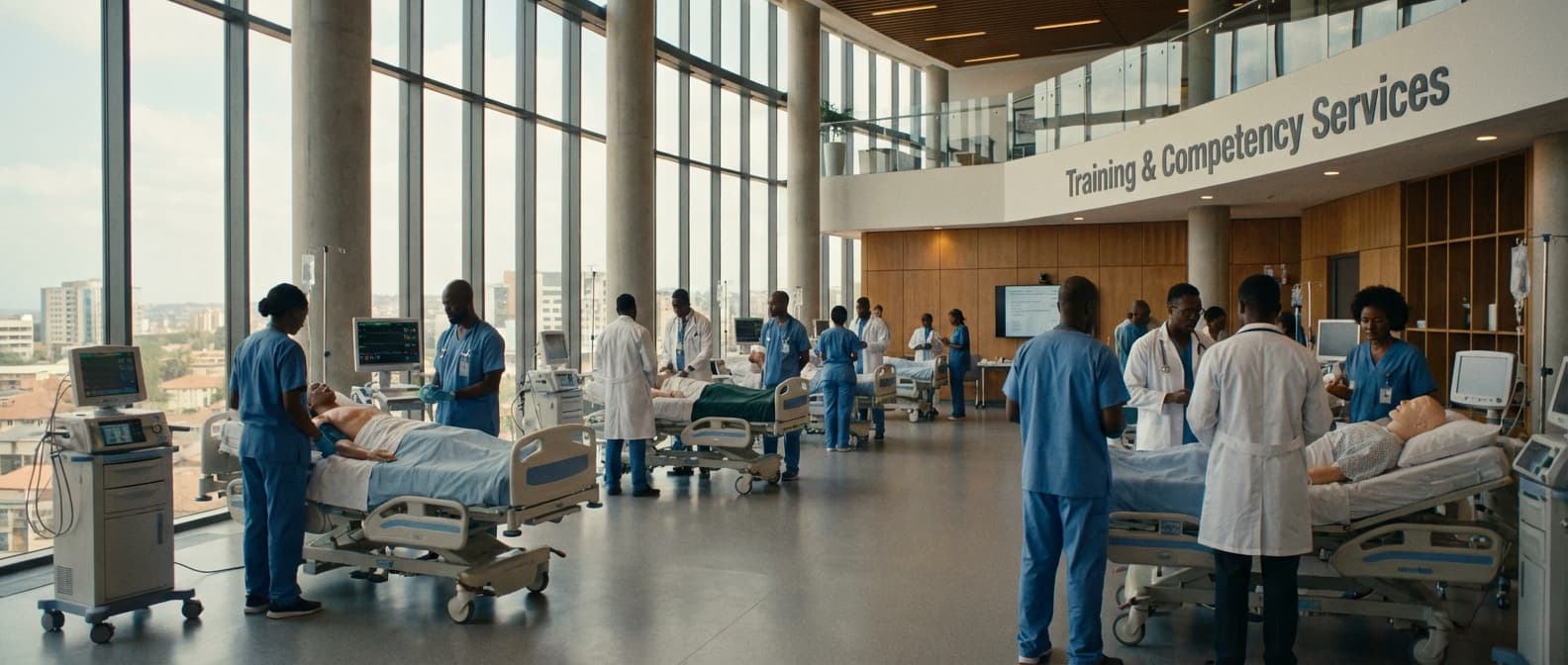
Biomedical Engineering First-Line Support Training Service in Madagascar
Engineering Excellence & Technical Support
Biomedical Engineering First-Line Support Training Service High-standard technical execution following OEM protocols and local regulatory frameworks.
Device Diagnostics & Calibration Mastery
Empower your first-line support team with in-depth training on common biomedical equipment diagnostics, troubleshooting methodologies, and precision calibration techniques. This module ensures rapid identification and resolution of technical issues, minimizing downtime and maximizing patient care continuity in Madagascan healthcare facilities.
Essential Spares & Inventory Management
Equip your Madagascan support staff with the knowledge to effectively manage critical spare parts inventory. Training covers identification of essential components, proper storage, and basic replacement procedures for a range of biomedical devices, ensuring quick access to necessary parts and reducing reliance on external services for common repairs.
Preventive Maintenance & Safety Protocols
Instill a strong understanding of routine preventive maintenance schedules and critical safety protocols for biomedical equipment. This training emphasizes early detection of potential failures, safe operational practices, and adherence to international safety standards, crucial for maintaining reliable medical device performance and ensuring patient and staff well-being in Madagascar.
What Is Biomedical Engineering First-line Support Training Service In Madagascar?
Biomedical Engineering First-Line Support Training Service in Madagascar refers to a structured educational program designed to equip individuals with the fundamental knowledge and practical skills necessary to perform initial troubleshooting, maintenance, and basic repair of medical equipment within healthcare facilities in Madagascar. This service aims to enhance the operational availability and reliability of medical devices by empowering local personnel to address common technical issues promptly, thereby reducing downtime and improving patient care. The training emphasizes safety protocols, diagnostic procedures, and the use of basic tools and test equipment relevant to a range of biomedical devices.
| Target Audience | Needs Addressed | Typical Use Cases |
|---|---|---|
| Healthcare Facility Technicians/Engineers (Junior/Entry-Level): Individuals already employed in healthcare settings with limited prior biomedical training. | Lack of skilled personnel to perform immediate troubleshooting and maintenance on medical equipment. High equipment downtime due to reliance on distant or unavailable specialized support. Inability to perform routine preventive maintenance, leading to accelerated equipment degradation. Limited budget for extensive external service contracts. | Performing daily equipment checks and functionality tests. Troubleshooting common issues with patient monitors (e.g., sensor connectivity, alarm silencing). Replacing disposable components on infusion pumps or ventilators. Performing basic cleaning and disinfection of medical devices. Conducting scheduled visual inspections and battery checks. Documenting minor repairs and maintenance actions. |
| Biomedical Engineering Students/Graduates: Individuals seeking to enter the biomedical engineering field with practical, hands-on skills. | Bridging the gap between theoretical knowledge and practical application. Gaining entry-level employability in hospital biomedical departments. Developing confidence and proficiency in handling diverse medical equipment. Understanding the critical role of first-line support in healthcare delivery. | Assisting senior biomedical engineers in more complex repair tasks. Learning by doing under supervision. Contributing to the maintenance backlog reduction. Developing a foundational understanding of real-world equipment challenges. Preparing for national certification or further specialization. |
| Ministry of Health Personnel/Hospital Administrators: Decision-makers responsible for the procurement, deployment, and upkeep of medical infrastructure. | Ensuring cost-effective management of medical equipment lifecycles. Improving the return on investment for medical device purchases. Enhancing the overall reliability and availability of essential medical technologies. Reducing operational costs associated with equipment failures. Strengthening the capacity of the national healthcare system. | Evaluating the training needs of their technical staff. Allocating resources for equipment maintenance programs. Implementing standardized maintenance protocols across facilities. Monitoring equipment performance and uptime metrics. Justifying investments in training and local support capabilities. |
Key Components of Biomedical Engineering First-Line Support Training
- Introduction to Biomedical Equipment: Overview of common medical device categories (e.g., diagnostic imaging, patient monitoring, surgical instruments), their principles of operation, and basic functionality.
- Safety Standards and Regulations: Training on electrical safety, infection control, and adherence to national and international standards for medical device handling and maintenance.
- Preventive Maintenance (PM) Fundamentals: Education on scheduled inspection, cleaning, lubrication, and functional testing procedures to prevent equipment failure.
- Troubleshooting Methodologies: Instruction in systematic approaches to identify and isolate the root cause of equipment malfunctions, utilizing diagnostic tools and schematics.
- Basic Repair Techniques: Hands-on training in simple repair tasks, such as component replacement, cable repair, and calibration adjustments for common devices.
- Documentation and Record Keeping: Emphasis on accurate recording of maintenance activities, repairs, parts used, and equipment history for traceability and quality management.
- Use of Test Equipment: Familiarization with and practical application of common test and measurement instruments (e.g., multimeters, oscilloscopes, electrical safety analyzers) for diagnostic purposes.
- Parts Management and Inventory: Basic principles of managing spare parts, identifying part numbers, and ordering procedures.
Who Needs Biomedical Engineering First-line Support Training Service In Madagascar?
This document outlines the critical need for first-line support training services in biomedical engineering within Madagascar. The objective is to enhance the operational capacity and longevity of medical equipment across the nation's healthcare infrastructure, ultimately improving patient care. The training will empower local technicians with the skills to perform essential maintenance, troubleshooting, and minor repairs, reducing reliance on external expertise and minimizing equipment downtime.
| Target Customer Type | Specific Departments/Roles | Key Needs/Impact |
|---|---|---|
| Hospitals (Public) | Biomedical Engineering Department, Maintenance Teams, Clinical Engineering Units | Addressing a critical shortage of skilled technicians for routine maintenance and troubleshooting of essential medical devices (e.g., X-ray machines, anesthesia machines, laboratory equipment), leading to increased patient access to diagnostic and treatment services. |
| Hospitals (Private) | Biomedical Engineering Department, Technical Support Staff | Ensuring the efficient operation of advanced medical equipment, maintaining service quality, and reducing costs associated with prolonged equipment downtime and outsourcing repairs. |
| Health Centers and Clinics | General Maintenance Staff, Healthcare Professionals with Technical Aptitude | Providing basic troubleshooting and preventative maintenance for simpler medical devices (e.g., blood pressure monitors, thermometers, basic laboratory equipment) in remote or underserved areas, improving primary healthcare delivery. |
| Medical Training Institutions | Biomedical Engineering Departments, Technical Instructors | Enhancing the practical skills of future biomedical engineers and technicians, ensuring they are well-equipped for the specific challenges of the Malagasy healthcare system. This also facilitates the use and maintenance of training equipment. |
| Non-Governmental Organizations (NGOs) | Project Managers, Field Technicians, Equipment Officers | Supporting the sustainability of medical equipment deployed in humanitarian and development projects, ensuring long-term impact and effective utilization of donated or purchased medical devices. |
| Ministry of Health | Department of Health Infrastructure, Planning and Logistics Units, Regional Health Directorates | Strengthening national capacity for medical equipment management, developing standardized maintenance protocols, and informing policy decisions regarding equipment procurement and maintenance strategies. |
Target Customers and Departments
- Hospitals (Public and Private)
- Health Centers and Clinics
- Medical Training Institutions
- Non-Governmental Organizations (NGOs) involved in healthcare
- Ministry of Health and its regional branches
Biomedical Engineering First-line Support Training Service Process In Madagascar
The Biomedical Engineering First-Line Support Training Service process in Madagascar outlines the structured workflow for providing essential training to frontline personnel responsible for the initial maintenance and troubleshooting of biomedical equipment. This service aims to enhance equipment reliability, minimize downtime, and ensure patient safety by empowering local technicians with fundamental engineering skills. The process begins with an inquiry, progresses through assessment and curriculum development, and culminates in the execution of the training program, followed by feedback and ongoing support.
| Phase | Description | Key Activities | Responsible Parties | Deliverables |
|---|---|---|---|---|
| The initial stage where potential clients (hospitals, clinics, Ministry of Health) express their need for first-line biomedical engineering support training. A thorough assessment is conducted to understand specific training requirements, target audience, and existing skill levels. | Initial contact, information gathering, on-site assessment (if feasible), identification of training needs and gaps, preliminary equipment inventory. | Client (Hospital/Clinic/MoH), Training Provider (Biomedical Engineering Department/External Firm) | Needs assessment report, list of identified training gaps, preliminary scope of work. |
| Based on the needs assessment, the training provider develops a comprehensive proposal outlining the training objectives, curriculum, methodology, duration, budget, and expected outcomes. Upon agreement, a formal contract is established. | Proposal development, budget estimation, negotiation, contract finalization, agreement signing. | Training Provider, Client | Training proposal, signed service agreement/contract. |
| The training content is developed or customized to address the specific equipment types, common issues, and operational context in Madagascar. This ensures the training is relevant and practical for the frontline support personnel. | Curriculum design, module creation (theory & practical), content adaptation, development of training materials (manuals, presentations, practical exercises). | Training Provider (Curriculum Developers, Subject Matter Experts) | Training curriculum, training modules, trainee manuals, instructor guides, assessment tools. |
| This phase involves all practical arrangements for the training, including identifying suitable training venues, scheduling dates and times, arranging for necessary equipment and consumables, and confirming participant attendance. | Venue selection and booking, equipment procurement/rental, scheduling of training sessions, participant registration and confirmation, travel and accommodation arrangements (if applicable). | Training Provider, Client (for participant coordination) | Training schedule, confirmed participant list, logistical plan, confirmed venue and equipment availability. |
| The actual delivery of the training program. This includes theoretical sessions, hands-on practical demonstrations, troubleshooting exercises, and assessments to gauge participant understanding and skill acquisition. | Delivery of theoretical lectures, practical demonstrations, hands-on practice sessions, simulation exercises, Q&A sessions, formative assessments. | Training Provider (Instructors/Trainers), Participants | Completed training sessions, practical skills demonstrated by participants, on-going participant engagement. |
| Following the training, participants' comprehension and skill acquisition are formally evaluated. Feedback is collected from participants and stakeholders to assess the effectiveness of the training and identify areas for improvement. | Post-training assessments (written/practical), participant feedback surveys, instructor evaluation, stakeholder feedback. | Training Provider, Participants, Client | Training evaluation report, participant assessment results, feedback summary, recommendations for future training. |
| This phase focuses on providing ongoing support to the trained personnel. This can include follow-up consultations, access to technical resources, refresher courses, or a dedicated helpdesk for complex issues. | Follow-up consultations, provision of technical documentation, troubleshooting assistance, establishment of communication channels, potential for advanced training modules. | Training Provider, Client, Trained Personnel | Ongoing technical support, improved equipment maintenance, reduced response times for technical issues, increased equipment uptime. |
Biomedical Engineering First-Line Support Training Service Workflow in Madagascar
- Inquiry & Needs Assessment
- Proposal & Agreement
- Curriculum Development & Customization
- Logistics & Scheduling
- Training Execution
- Evaluation & Feedback
- Post-Training Support
Biomedical Engineering First-line Support Training Service Cost In Madagascar
The cost of first-line biomedical engineering support training services in Madagascar can vary significantly based on several key factors. These include the provider's reputation and experience, the specific curriculum covered, the duration and intensity of the training, the location of the training (e.g., urban versus remote areas), and whether the training is conducted on-site at a facility or at a dedicated training center. Additional costs might arise from instructor travel, accommodation, and the provision of training materials and equipment. The economic landscape of Madagascar also plays a role, with general inflation and the availability of skilled trainers influencing pricing.
| Training Service Type | Estimated Price Range (MGA - Malagasy Ariary) | Notes |
|---|---|---|
| Basic First-Line Support Workshop (1-2 days) | 150,000 - 400,000 MGA | Covers fundamental troubleshooting and preventive maintenance for common medical devices. May include group discounts. |
| Intermediate Biomedical Equipment Maintenance Course (3-5 days) | 350,000 - 800,000 MGA | More in-depth training on specific equipment types or common malfunctions. May include hands-on practical sessions. |
| Specialized Equipment Training (e.g., radiology, anesthesia) (5+ days) | 700,000 - 1,500,000+ MGA | Highly specific training, often delivered by manufacturers or specialized training centers. Price depends heavily on the complexity of the equipment. |
| Customized On-site Training (per day/per group) | 200,000 - 600,000+ MGA | Price is highly variable based on customization, number of participants, and location. Excludes travel and accommodation for trainers. |
| Certification Exam Fees (if applicable) | 50,000 - 200,000 MGA | Cost associated with formal certification, often separate from training fees. |
Key Pricing Factors for Biomedical Engineering First-Line Support Training in Madagascar
- Provider Reputation and Experience
- Training Curriculum Scope (e.g., general principles vs. specific equipment)
- Training Duration and Intensity (e.g., short workshops vs. comprehensive courses)
- Location of Training (accessibility, logistics)
- On-site vs. Off-site Training Delivery
- Instructor Travel and Accommodation Expenses
- Provision of Training Materials and Equipment
- Market Demand and Availability of Skilled Trainers
- Economic Conditions (inflation, currency exchange rates)
Affordable Biomedical Engineering First-line Support Training Service Options
This document outlines affordable options for biomedical engineering first-line support training, focusing on value bundles and cost-saving strategies to equip new technicians with essential skills for equipment maintenance, troubleshooting, and basic repair. Effective first-line support is crucial for minimizing equipment downtime, ensuring patient safety, and optimizing hospital operational efficiency.
| Training Service Option | Description | Value Bundle Components | Cost-Saving Strategies | Estimated Cost Range (USD) |
|---|---|---|---|---|
| Online Self-Paced Courses | Pre-recorded modules accessible anytime, anywhere. Ideal for flexible learning. | Core competency modules, downloadable resources, online assessments. | Leverage existing IT infrastructure, reduce travel costs, group discounts for multiple users. | $50 - $250 per user per course |
| Blended Learning Programs | Combines online modules with live virtual or in-person workshops. | Online theory, hands-on simulation, Q&A sessions with instructors. | Reduced instructor travel, optimized facility usage, focus on practical skills. | $300 - $800 per user |
| Train-the-Trainer Programs | Empowers experienced hospital staff to deliver in-house training. | Curriculum development guides, instructor manuals, train-the-trainer workshops. | Scalable training, long-term cost reduction, customized content. | $1,500 - $5,000 per program (depending on scope) |
| Vendor-Specific Training (Entry-Level) | Focuses on the basic maintenance and troubleshooting of specific medical devices from a manufacturer. | Device-specific modules, hands-on practice on demo units, basic repair guides. | Negotiate bundled training with equipment purchases, leverage manufacturer's online resources. | Often included with equipment, or $200 - $600 per module |
| Partnerships with Community Colleges/Vocational Schools | Collaborate with educational institutions offering relevant technical programs. | Customized curriculum, access to labs and instructors, potential for internships. | Leverage existing student pool, share training infrastructure costs, explore grant opportunities. | Varies significantly based on partnership agreement |
| Open-Source & Community-Driven Resources | Utilize free online platforms, forums, and documentation shared by the biomedical community. | Technical forums, shared manuals, open-source troubleshooting guides. | Zero direct training cost, requires strong internal knowledge curation and verification. | $0 (excluding internal time for resource management) |
Key Training Areas for First-Line Biomedical Support
- Basic principles of biomedical equipment operation and function.
- Common troubleshooting methodologies and diagnostic techniques.
- Safe use and handling of biomedical devices.
- Introduction to preventive maintenance procedures.
- Documentation and reporting best practices.
- Regulatory compliance basics (e.g., FDA, HIPAA).
- Understanding of medical terminology and workflows.
- Soft skills: communication, teamwork, and customer service.
Verified Providers In Madagascar
When seeking healthcare services in Madagascar, the assurance of quality and reliability is paramount. Verified providers, particularly those with recognized credentials like those offered by Franance Health, offer a significant advantage. These credentials signify a commitment to rigorous standards, ethical practices, and a dedication to patient well-being. Choosing a Franance Health-verified provider means opting for transparency, accountability, and access to competent medical professionals who adhere to best practices. This not only enhances the safety of medical interventions but also fosters trust and confidence in the Malagasy healthcare system.
| Credential Type | Verification Process | Benefits for Patients |
|---|---|---|
| Franance Health Certification | Rigorous evaluation of facilities, equipment, staff qualifications, and patient safety protocols. | Access to high-quality, safe, and ethical healthcare. Enhanced patient satisfaction and trust. |
| Specialty Accreditations | Peer review and validation of specific medical departments or services (e.g., cardiology, maternity). | Ensures expertise in specialized fields, leading to better outcomes for complex conditions. |
| Practitioner Licensing and Registration | Verification of current medical licenses and registration with Malagasy regulatory bodies. | Confirms that healthcare professionals are legally qualified and authorized to practice. |
| Continuous Professional Development (CPD) Tracking | Monitoring of ongoing training and education for medical staff. | Guarantees that providers are up-to-date with the latest medical advancements and techniques. |
Why Franance Health Credentials Matter:
- Demonstrates adherence to internationally recognized healthcare standards.
- Ensures providers have undergone thorough background checks and competency assessments.
- Promotes ethical medical practices and patient-centered care.
- Facilitates access to a network of trusted and reliable healthcare professionals.
- Provides peace of mind for patients seeking quality medical services.
Scope Of Work For Biomedical Engineering First-line Support Training Service
This Scope of Work (SOW) outlines the requirements for a Biomedical Engineering First-Line Support Training Service. The service aims to equip designated personnel with the foundational knowledge and practical skills necessary to effectively manage and troubleshoot common issues with biomedical equipment. This training will empower first-line support staff to provide immediate assistance, resolve basic problems, and identify when escalation to specialized biomedical engineering teams is required, thereby improving equipment uptime and patient care.
| Category | Standard Specification | Description | Example |
|---|---|---|---|
| Target Audience | Clearly Defined | Specifies the roles and experience level of the intended trainees. | Clinical Technicians, Biomedical Support Staff, IT personnel with assigned biomedical device responsibilities. |
| Training Duration | Variable (e.g., 3-5 days) | Total time allocated for the training program, including lectures, practicals, and assessments. | A 4-day intensive training program. |
| Training Modalities | Blended Learning (e.g., online modules + in-person workshops) | The combination of delivery methods used for the training. | Pre-course online modules covering basic theory, followed by a 3-day in-person workshop for hands-on practice. |
| Equipment Scope | Categorized and Prioritized | Defines the specific types and categories of biomedical equipment covered in the training. | Basic patient monitoring systems, infusion pumps, vital signs monitors, defibrillators (non-invasive). |
| Core Competencies | Measurable and Verifiable | Key skills and knowledge participants are expected to gain. | Performing basic troubleshooting (e.g., checking connections, power sources, resetting devices), identifying error codes, understanding basic preventive maintenance tasks, safe handling and basic cleaning procedures, effective escalation protocols. |
| Safety Protocols | Adherence to Regulations | Emphasis on safety procedures and compliance with relevant healthcare and electrical safety standards. | Electrical safety checks, infection control during equipment handling, proper disposal of consumables. |
| Documentation Standards | Clear and Consistent | Requirements for how support activities and equipment status should be documented. | Completing equipment logs, incident reporting forms, and basic maintenance records. |
| Assessment Criteria | Objective and Valid | The basis upon which participant competency will be evaluated. | Score of 80% or higher on written and practical assessments. |
| Trainer Qualifications | Certified and Experienced | The required expertise and certifications of the training instructors. | Certified Biomedical Equipment Technicians (CBET) with a minimum of 5 years of field experience and recognized training credentials. |
Technical Deliverables
- Comprehensive Training Curriculum: A detailed curriculum covering theoretical concepts and practical application relevant to first-line biomedical equipment support.
- Training Materials: High-quality, easily understandable training modules, presentations, handouts, and reference guides (digital and/or physical).
- Hands-on Practical Sessions: Structured practical exercises and simulations using representative biomedical equipment.
- Assessment Tools: Quizzes, practical assessments, and final examinations to evaluate participant comprehension and skill acquisition.
- Certificate of Completion: A formal certificate awarded to participants who successfully complete the training program.
- Training Report: A post-training report detailing the training conducted, participant performance, feedback, and recommendations.
- Post-Training Support (Optional): Agreed-upon period of remote or on-site support for trainees to address follow-up questions or challenges.
Service Level Agreement For Biomedical Engineering First-line Support Training Service
This Service Level Agreement (SLA) outlines the guaranteed response times and uptime for the Biomedical Engineering First-Line Support Training Service. This agreement is established between [Your Organization Name] (referred to as the "Provider") and [Client Organization Name] (referred to as the "Client").
| Service Component | Response Time (Business Hours) | Uptime Guarantee |
|---|---|---|
Scope of Service
- Provision of access to online training modules for first-line biomedical engineering support personnel.
- Availability of simulated troubleshooting scenarios and diagnostic exercises.
- Access to a knowledge base with common equipment issues and solutions.
- Basic technical support for the training platform itself.
Frequently Asked Questions

Ready when you are
Let's scope your Biomedical Engineering First-Line Support Training Service in Madagascar project in Madagascar.

Scaling healthcare logistics and technical systems across the entire continent.