
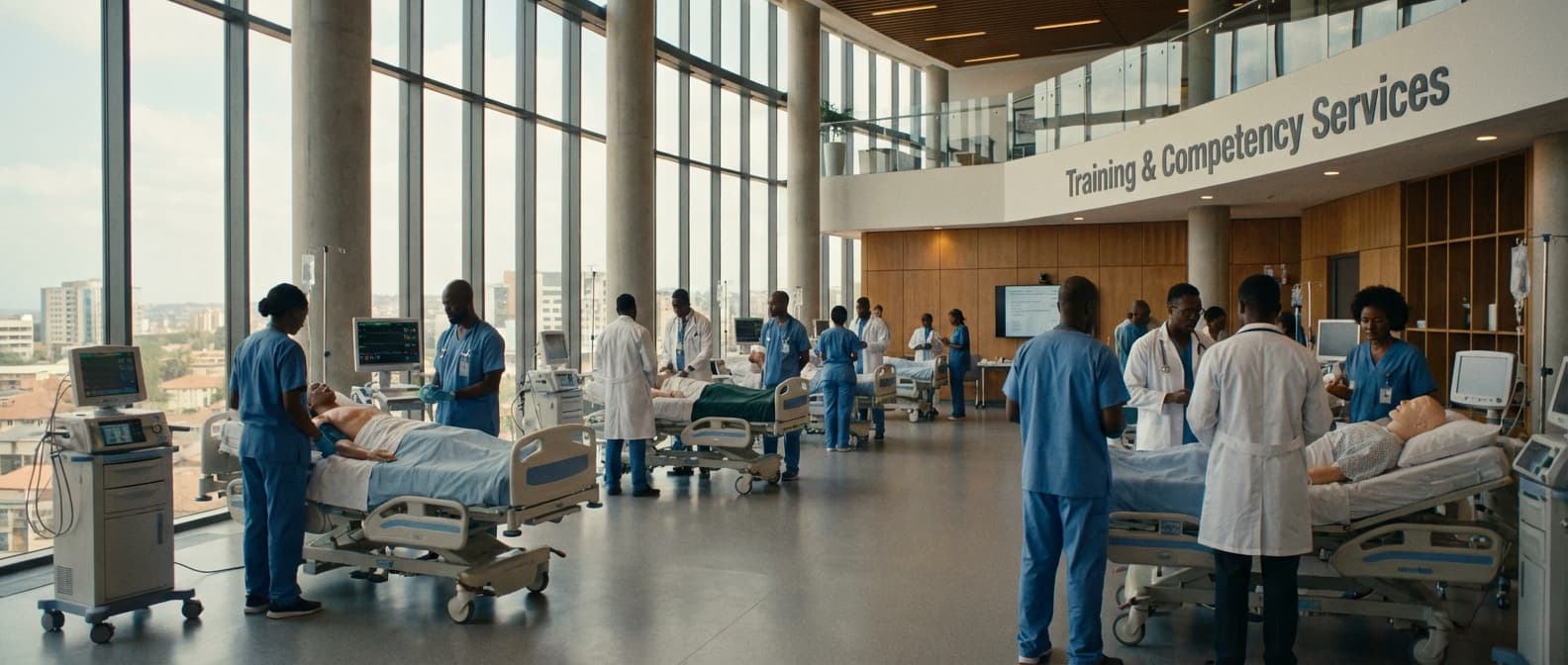
Anesthesia Workstation User Training Service in Madagascar
Engineering Excellence & Technical Support
Anesthesia Workstation User Training Service High-standard technical execution following OEM protocols and local regulatory frameworks.
Mastering Advanced Ventilation Modes
This module provides in-depth training on optimizing advanced ventilation modes (e.g., Pressure Support, Volume Control Plus, Auto-Flow) on the anesthesia workstation. Learn to tailor ventilation strategies to specific patient conditions, enhance patient safety, and improve clinical outcomes through hands-on simulations and expert guidance.
Proactive Alarm Management & Troubleshooting
Equip your team with the skills to effectively manage and respond to workstation alarms. This highlight covers identifying common alarm triggers, understanding their clinical significance, implementing preventive measures, and efficient troubleshooting techniques to minimize disruptions and ensure continuous patient monitoring.
Seamless Integration & Workflow Optimization
This session focuses on integrating the anesthesia workstation into the broader clinical workflow. Discover best practices for pre-use checks, patient setup, data recording, and integration with other hospital systems (e.g., EMR). Optimize your team's efficiency and reduce the risk of errors through streamlined processes.
What Is Anesthesia Workstation User Training Service In Madagascar?
The Anesthesia Workstation User Training Service in Madagascar is a specialized educational program designed to equip healthcare professionals with the knowledge and practical skills necessary for the safe, effective, and efficient operation of modern anesthesia workstations within the Malagasy healthcare context. This service addresses the inherent complexity of these sophisticated medical devices, which integrate multiple life-support functions for patient monitoring, ventilation, and anesthesia delivery. Training is critical for ensuring patient safety, optimizing resource utilization, and adhering to evolving clinical best practices and regulatory standards relevant to Madagascar.
| Target Audience | Needs Addressed | Typical Use Cases |
|---|---|---|
| Anesthesiologists and Certified Registered Nurse Anesthetists (CRNAs) in Madagascar | Ensuring proficiency in operating advanced anesthesia delivery and ventilation systems, optimizing patient safety, and maintaining competency with new or updated equipment. | Routine surgical procedures (minor to major), emergency surgery, critical care settings, and management of patients with complex respiratory or hemodynamic conditions requiring mechanical ventilation and precise anesthetic control. |
| Anesthesia Technicians and Biomedical Engineers responsible for equipment setup and maintenance | Understanding the mechanical and electronic functionalities of the workstation for accurate setup, calibration, basic troubleshooting, and preventive maintenance to minimize downtime and ensure operational readiness. | Daily equipment preparation, responding to equipment-related issues during procedures, assisting anesthesiologists with equipment-specific queries, and performing scheduled maintenance checks. |
| Healthcare administrators and procurement officers in Malagasy hospitals and clinics | Informed decision-making regarding equipment acquisition, understanding the training requirements and costs associated with new anesthesia workstations, and ensuring compliance with quality and safety standards. | Evaluating potential anesthesia workstation purchases, planning for staff training as part of new equipment implementation, and developing protocols for safe equipment utilization across departments. |
| Medical educators and trainers in Malagasy medical institutions | Developing and delivering standardized, high-quality anesthesia workstation training programs to future generations of healthcare professionals, incorporating current technologies and best practices. | Incorporating hands-on training modules into anesthesia residency programs, continuing medical education (CME) courses, and skills-based workshops for practicing clinicians. |
Key Components of Anesthesia Workstation User Training
- Device Fundamentals: Comprehensive understanding of the anesthesia workstation's architecture, components (ventilator, vaporizers, gas delivery system, monitoring modules), and their interdependencies.
- Operational Procedures: Step-by-step guidance on pre-use checks, patient connection, setting ventilation parameters (tidal volume, respiratory rate, PEEP, FiO2), agent administration, and disconnection protocols.
- Monitoring and Interpretation: Training on utilizing integrated patient monitoring capabilities (ECG, SpO2, EtCO2, NIBP, invasive BP, temperature) and interpreting physiological data to guide anesthetic management.
- Alarm Management: Strategies for recognizing, responding to, and managing various alarm conditions, including understanding their causes and troubleshooting steps.
- Troubleshooting and Maintenance: Basic diagnostic procedures for identifying common malfunctions and understanding routine user-level maintenance requirements.
- Safety Protocols and Best Practices: Emphasis on infection control, electrical safety, emergency procedures (e.g., circuit disconnection, manual ventilation), and adherence to local clinical guidelines.
- Scenario-Based Simulations: Practical exercises simulating common and complex clinical scenarios to reinforce learned skills and decision-making under pressure.
- Regulatory Compliance: Overview of relevant Malagasy healthcare regulations and standards pertaining to anesthesia equipment use.
Who Needs Anesthesia Workstation User Training Service In Madagascar?
Anesthesia workstation user training services are crucial for healthcare facilities in Madagascar to ensure safe and effective use of advanced medical equipment. This training is vital for healthcare professionals who operate anesthesia workstations, enabling them to maximize the technology's benefits while minimizing risks to patients. The primary goal is to equip users with the knowledge and skills to operate, maintain, and troubleshoot these complex devices, ultimately improving patient care outcomes.
| Target Customer Type | Key Departments Requiring Training | Specific Roles to be Trained |
|---|---|---|
| Public Hospitals | Anesthesiology Department, Operating Rooms, Intensive Care Units (ICUs) | Anesthesiologists, Anesthesia Technicians, Nurses (especially those assisting in surgery) |
| Private Hospitals/Clinics | Anesthesiology, Surgical Theaters, Recovery Rooms | Anesthesiologists, Certified Registered Nurse Anesthetists (CRNAs) (if applicable), Surgical Nurses |
| Specialized Surgical Centers (e.g., cardiac, neurosurgery) | Anesthesiology Teams, Post-operative Care Units | Anesthesiologists with specialized experience, Anesthesia Fellows, Senior Nurses |
| University Teaching Hospitals | Anesthesiology Residency Programs, Surgical Departments, Biomedical Engineering | Medical Students (rotating through surgery/anesthesia), Anesthesia Residents, Faculty Anesthesiologists, Biomedical Engineers (for maintenance/troubleshooting training) |
| NGO Healthcare Facilities (often serving remote or underserved areas) | Operating Rooms, Emergency Departments | General Practitioners with surgical responsibilities, Trained Nurses, Medical Officers |
Target Customers and Departments in Madagascar for Anesthesia Workstation User Training
- Hospitals (public and private)
- Specialized Surgical Centers
- University Teaching Hospitals
- Non-Governmental Organization (NGO) Healthcare Facilities
Anesthesia Workstation User Training Service Process In Madagascar
This document outlines the standard workflow for the Anesthesia Workstation User Training Service Process in Madagascar, from initial inquiry to the successful execution of the training. This process ensures that healthcare professionals in Madagascar receive comprehensive and effective training on anesthesia workstations, promoting patient safety and optimal use of medical equipment.
| Stage | Key Activities | Responsible Party | Deliverables |
|---|---|---|---|
| Inquiry & Needs Assessment | Initial contact, information gathering, needs analysis | Client, Service Provider | Client requirements documented, Training scope defined |
| Proposal & Agreement | Proposal development, review, negotiation, contract signing | Service Provider, Client | Signed training proposal/contract |
| Pre-Training Preparation | Participant registration, logistics, material preparation, equipment verification, schedule confirmation | Client, Service Provider | Registered participants list, confirmed logistics, prepared training materials, confirmed schedule |
| Training Execution | Theoretical sessions, practical demonstrations, participant practice, Q&A, scenario-based learning | Service Provider, Participants | Delivered training modules, hands-on practice |
| Assessment & Evaluation | Knowledge assessment, practical skills assessment, participant feedback, trainer evaluation | Service Provider, Participants | Assessment results, participant feedback forms |
| Post-Training Follow-up | Certification issuance, report generation, ongoing support, feedback review, relationship management | Service Provider, Client | Certificates of completion, training report, established support channels |
Anesthesia Workstation User Training Service Process in Madagascar
- 1. Inquiry & Needs Assessment:
- Initial Contact: Potential clients (hospitals, clinics, medical institutions) initiate contact through designated channels (email, phone, website portal).
- Information Gathering: The service provider collects details about the institution, number of participants, specific anesthesia workstation models to be trained on, existing skill levels, and preferred training dates/locations.
- Needs Analysis: A detailed assessment of the training requirements is conducted to tailor the curriculum to the specific needs and context of the Madagascan healthcare system.
- 2. Proposal & Agreement:
- Proposal Development: Based on the needs assessment, a comprehensive training proposal is prepared, including:
- Training objectives and learning outcomes
- Curriculum details (theoretical and practical modules)
- Duration and schedule of the training
- Trainer qualifications and experience
- Required equipment and materials
- Cost breakdown and payment terms
- Logistics (travel, accommodation, if applicable)
- Proposal Development: Based on the needs assessment, a comprehensive training proposal is prepared, including:
- Proposal Review & Negotiation: The proposal is shared with the client for review. Discussions and negotiations may occur to finalize terms and scope.
- Contract Signing: A formal agreement or contract is signed by both parties, outlining all agreed-upon terms and conditions.
- 3. Pre-Training Preparation:
- Participant Registration: The client provides a list of participants with their relevant professional backgrounds.
- Logistics Arrangement: Travel, accommodation, and any necessary permits for trainers are finalized if the training is to be conducted on-site.
- Training Material Preparation: Training manuals, presentations, demonstration equipment (if not provided by the client), and assessment tools are prepared and translated if necessary.
- Equipment Verification: The anesthesia workstations at the client's facility are confirmed to be operational and accessible for training purposes.
- Schedule Confirmation: The final training schedule is communicated to all relevant parties.
- 4. Training Execution:
- On-site/Remote Delivery: Training is conducted either at the client's facility or remotely via virtual platforms, as agreed upon.
- Theoretical Sessions: Lectures, presentations, and case studies are delivered to cover the principles and functionalities of the anesthesia workstation.
- Practical Demonstrations: Hands-on demonstrations of workstation operation, maintenance, and troubleshooting are performed.
- Participant Practice: Trainees actively engage in using the anesthesia workstation under supervision, practicing various procedures and scenarios.
- Q&A and Discussion: Ample time is allocated for participants to ask questions and engage in discussions with the trainer.
- Scenario-Based Learning: Realistic simulation exercises are conducted to reinforce learning and assess the application of knowledge.
- 5. Assessment & Evaluation:
- Knowledge Assessment: A written or online test is administered to evaluate the theoretical understanding of participants.
- Practical Skills Assessment: Participants are assessed on their ability to operate the anesthesia workstation safely and effectively through practical evaluations.
- Participant Feedback: Trainees provide feedback on the training content, delivery, and overall effectiveness through evaluation forms.
- Trainer Evaluation: Trainers also provide an assessment of participant engagement and learning progress.
- 6. Post-Training Follow-up:
- Certification Issuance: Successful participants receive certificates of completion.
- Report Generation: A comprehensive training report is provided to the client, summarizing the training activities, participant performance, and key observations.
- Ongoing Support: Information on post-training support channels, troubleshooting resources, and refresher course options is shared.
- Client Feedback Review: The service provider reviews client feedback to identify areas for improvement in future training programs.
- Relationship Management: Maintaining a positive relationship with the client for future training needs and potential collaborations.
Anesthesia Workstation User Training Service Cost In Madagascar
The cost of anesthesia workstation user training services in Madagascar can vary significantly based on several factors. These include the complexity and specific features of the anesthesia workstation being trained on, the duration and intensity of the training program, the qualifications and experience of the trainers, the location of the training (on-site at a hospital versus an off-site facility), and the number of participants. Furthermore, the inclusion of specific modules, such as advanced troubleshooting, maintenance protocols, or specialized procedure integration, will influence the overall price. The current economic climate and the availability of specialized training providers in Madagascar also play a role in pricing.
| Training Package | Estimated Price Range (MGA) | Typical Duration |
|---|---|---|
| Basic User Training (Core Functionality) | 300,000 - 750,000 | 1-2 Days |
| Intermediate User Training (Advanced Features & Basic Troubleshooting) | 600,000 - 1,500,000 | 2-3 Days |
| Advanced User/Maintenance Training (In-depth Troubleshooting & Minor Maintenance) | 1,200,000 - 3,000,000+ | 3-5 Days |
| Specialized Module Training (e.g., specific ventilation modes, integration with monitors) | Varies based on module complexity, often an add-on | 0.5 - 1 Day per module |
Key Pricing Factors for Anesthesia Workstation User Training in Madagascar:
- Workstation Model & Complexity: Advanced, multi-functional anesthesia machines will generally incur higher training costs than simpler models.
- Training Duration & Intensity: Longer, more in-depth training sessions or those requiring hands-on simulation will be more expensive.
- Trainer Expertise & Credentials: Highly experienced and certified trainers, especially those with international recognition, command higher fees.
- Training Location: On-site training at a healthcare facility might involve additional travel and accommodation costs for trainers, which will be passed on.
- Number of Participants: Group training often offers a lower per-person cost compared to individualized sessions.
- Scope of Training Modules: Inclusion of specialized modules (e.g., advanced ventilation modes, patient monitoring integration, emergency scenarios) increases the price.
- Customization Requirements: Tailoring the training content to specific institutional needs can add to the cost.
- Provider Reputation & Resources: Established training companies with comprehensive resources might charge more than smaller, less established providers.
Affordable Anesthesia Workstation User Training Service Options
Providing accessible and cost-effective user training for affordable anesthesia workstations is crucial for widespread adoption and safe clinical practice. This service focuses on empowering healthcare professionals with the knowledge and skills to effectively operate these essential devices without a significant financial burden. We offer flexible training solutions designed to meet the diverse needs of healthcare facilities, from individual practitioners to larger hospital systems.
| Cost-Saving Strategy | Description | Benefit |
|---|---|---|
| Volume Discounts | Reduced per-user training fees for larger groups or multiple training sessions booked simultaneously. | Lower overall training expenditure for facilities with numerous users or ongoing training needs. |
| E-Learning & Blended Learning | Utilizing online modules for foundational knowledge, supplemented by shorter, focused in-person or virtual Q&A/practical sessions. | Reduces travel costs, minimizes time away from clinical duties, and offers flexible learning schedules. |
| Subscription Models | Annual or multi-year access to training content and updates for a fixed fee, regardless of the number of users. | Predictable budgeting, continuous learning opportunities, and access to the latest training materials. |
| Early Bird Registration | Discounted rates for booking training sessions well in advance of the scheduled date. | Incentivizes proactive planning and secures training slots at a reduced cost. |
| Partnerships with Manufacturers | Leveraging training programs offered or subsidized by affordable anesthesia workstation manufacturers. | Potentially zero or significantly reduced training costs when bundled with workstation purchase. |
Value Bundles for Anesthesia Workstation User Training
- {"title":"Basic Proficiency Bundle","description":"Ideal for new users or those requiring a refresher. Covers fundamental operation, safety checks, and basic troubleshooting. Includes core module access and a single Q&A session."}
- {"title":"Advanced Clinical Application Bundle","description":"For users seeking to maximize the workstation's capabilities. Includes all Basic Proficiency features plus modules on advanced ventilation modes, waveform analysis, and specific clinical scenarios. Offers two Q&A sessions and a simulation exercise."}
- {"title":"Train-the-Trainer Bundle","description":"Empowers internal staff to become subject matter experts and deliver training within their facility. Includes comprehensive curriculum access, all Advanced Clinical Application features, dedicated mentor support, and certification for trainers."}
- {"title":"Facility-Wide Onboarding Bundle","description":"A comprehensive solution for equipping an entire department or hospital. Includes customized training schedules, on-site or remote delivery options, and ongoing support for a defined period. Tailored to the specific number of users and workstation models."}
Verified Providers In Madagascar
Navigating healthcare options in a foreign country can be daunting. In Madagascar, ensuring you are receiving care from verified and reputable providers is paramount. Franance Health stands out as a leader in this regard, offering a network of credentialed healthcare professionals and facilities. Their rigorous vetting process guarantees that all affiliated providers meet high standards of quality, ethics, and professionalism, providing peace of mind for individuals seeking medical services.
| Provider Type | Franance Health Verification Criteria | Benefits for Patients |
|---|---|---|
| Doctors/Specialists | Valid medical license, board certification (where applicable), clean disciplinary record, demonstrated experience. | Access to qualified and experienced medical professionals for accurate diagnosis and effective treatment. |
| Hospitals/Clinics | Accreditation status, adherence to safety protocols, availability of essential equipment, qualified medical staff, patient rights policies. | Safe and well-equipped facilities with trained personnel, ensuring a secure and effective healthcare environment. |
| Laboratories | Proper licensing, use of calibrated equipment, quality control measures, qualified technicians. | Reliable and accurate diagnostic testing, crucial for informed medical decisions. |
| Pharmacies | Valid operating license, proper drug storage, dispensing of authentic medications, qualified pharmacists. | Access to safe and legitimate pharmaceuticals, dispensed with professional guidance. |
Why Franance Health Credentials Matter:
- Rigorous Vetting Process: Franance Health meticulously verifies the qualifications, licenses, and certifications of all their healthcare partners, ensuring adherence to international standards.
- Quality Assurance: Their credentialing process includes a review of clinical experience, patient feedback mechanisms, and compliance with ethical guidelines, guaranteeing a high level of care.
- Trust and Reliability: Choosing a Franance Health-affiliated provider means opting for a medical professional or institution that has undergone thorough scrutiny, reducing the risk of encountering unqualified practitioners.
- Access to Specialized Care: Franance Health facilitates access to a diverse range of specialists, ensuring that complex medical needs can be met with expert attention.
- Improved Patient Outcomes: By partnering with credentialed providers, Franance Health aims to contribute to better health outcomes and a more positive healthcare experience for all patients in Madagascar.
Scope Of Work For Anesthesia Workstation User Training Service
This Scope of Work (SOW) outlines the services to be provided for Anesthesia Workstation User Training. The training aims to equip healthcare professionals with the necessary knowledge and skills to safely and effectively operate the designated anesthesia workstations. This document details the technical deliverables and standard specifications for the training program.
| Deliverable Name | Description | Standard Specification | Format |
|---|---|---|---|
| Anesthesia Workstation User Manual (Annotated) | A comprehensive manual detailing all aspects of the workstation's operation, maintenance, and troubleshooting, with specific annotations highlighting key features and safety protocols relevant to the training. | Latest version of the manufacturer's user manual, supplemented with practical usage notes and scenario-based examples. Must be clearly organized and indexed. | Digital (PDF) and Hardcopy |
| Training Curriculum | A structured curriculum outlining the modules, learning objectives, topics covered, and estimated duration for each training session. | Modular design covering theoretical knowledge, practical demonstrations, hands-on exercises, and assessments. Tailored to the specific workstation model and user experience level (e.g., beginner, advanced). | Digital (Word/PDF) |
| Training Presentation Slides | Visual aids used during instructor-led sessions, covering all curriculum topics with clear diagrams, images, and key takeaways. | High-resolution visuals, concise text, and consistent branding. Must be interactive where applicable (e.g., embedded videos). | Digital (PowerPoint/PDF) |
| Hands-on Training Scenarios/Simulations | Practical exercises designed to replicate real-world clinical situations, allowing users to practice operating the workstation under various conditions. | Realistic scenarios covering patient setup, drug administration, ventilation modes, alarm management, emergency procedures, and emergency simulation with appropriate debriefing. | Live demonstration and supervised user practice |
| Competency Assessment Tools | Tools used to evaluate the user's understanding and practical skills post-training. | Includes written quizzes, practical skills checklists, and scenario-based performance evaluations. Must align with learning objectives. | Digital (Word/PDF) and Practical Observation |
| Training Completion Certificates | Formal documentation issued to users who successfully complete the training program. | Individually issued certificates detailing trainee name, workstation model, training date, and authorized trainer signature. Must be verifiable. | Digital (PDF) and Hardcopy |
| Troubleshooting Guide (Quick Reference) | A concise guide for common operational issues and their immediate solutions. | Pocket-sized or easily accessible digital format, organized by symptom or error code. Focus on immediate resolution steps. | Digital (PDF) and Laminated Hardcopy |
| Post-Training Support Plan | Details on how ongoing support will be provided after the initial training. | Includes contact information for technical support, frequency of refresher courses, and access to online resources or knowledge bases. Duration of support to be specified. | Digital (Word/PDF) |
Key Objectives of Anesthesia Workstation User Training
- To ensure users can safely and competently operate the anesthesia workstation.
- To familiarize users with the workstation's features, functions, and safety mechanisms.
- To enable users to perform routine maintenance and troubleshooting procedures.
- To understand the workflow and integration of the workstation within the anesthesia department.
- To promote adherence to best practices and clinical guidelines related to anesthesia delivery.
Service Level Agreement For Anesthesia Workstation User Training Service
This Service Level Agreement (SLA) defines the terms and conditions for the Anesthesia Workstation User Training Service provided by [Your Company Name] (hereinafter referred to as 'Provider') to [Client Company Name] (hereinafter referred to as 'Client'). This SLA outlines the guaranteed response times for support requests and the expected uptime for the training platform.
| Service Component | Uptime Guarantee | Response Time (Critical Issue) | Response Time (Major Issue) | Response Time (Minor Issue) |
|---|---|---|---|---|
| Anesthesia Workstation Training Platform Availability | 99.5% (measured monthly, excluding scheduled maintenance) | 1 hour (during Business Hours) | 2 business hours (during Business Hours) | 4 business hours (during Business Hours) |
| Technical Support for Training Platform Access | N/A (covered by platform availability) | 30 minutes (during Business Hours) | 1 business hour (during Business Hours) | 4 business hours (during Business Hours) |
| Support for Training Content Inquiries | N/A (covered by platform availability) | 2 business hours (during Business Hours) | 4 business hours (during Business Hours) | 8 business hours (during Business Hours) |
Key Definitions
- {"term":"Anesthesia Workstation User Training Service","definition":"The comprehensive training program, including online modules, simulations, and instructor-led sessions, designed to enable users to effectively operate and troubleshoot the anesthesia workstation."}
- {"term":"Training Platform","definition":"The online portal and associated systems used to deliver and manage the Anesthesia Workstation User Training Service."}
- {"term":"Uptime","definition":"The percentage of time the Training Platform is available and operational for users to access and utilize the training services."}
- {"term":"Downtime","definition":"The period during which the Training Platform is unavailable or non-operational."}
- {"term":"Response Time","definition":"The time it takes for the Provider to acknowledge and begin addressing a reported issue or request."}
- {"term":"Resolution Time","definition":"The time it takes for the Provider to resolve a reported issue or fulfill a request."}
- {"term":"Business Hours","definition":"Monday through Friday, 9:00 AM to 5:00 PM [Client's Time Zone], excluding public holidays."}
- {"term":"Critical Issue","definition":"An issue that renders the Training Platform completely inaccessible or prevents users from completing essential training modules."}
- {"term":"Major Issue","definition":"An issue that significantly impairs the functionality of the Training Platform or affects a substantial number of users' ability to train."}
- {"term":"Minor Issue","definition":"An issue that has a minimal impact on the overall functionality of the Training Platform and affects a limited number of users."}
Frequently Asked Questions

Ready when you are
Let's scope your Anesthesia Workstation User Training Service in Madagascar project in Madagascar.

Scaling healthcare logistics and technical systems across the entire continent.