
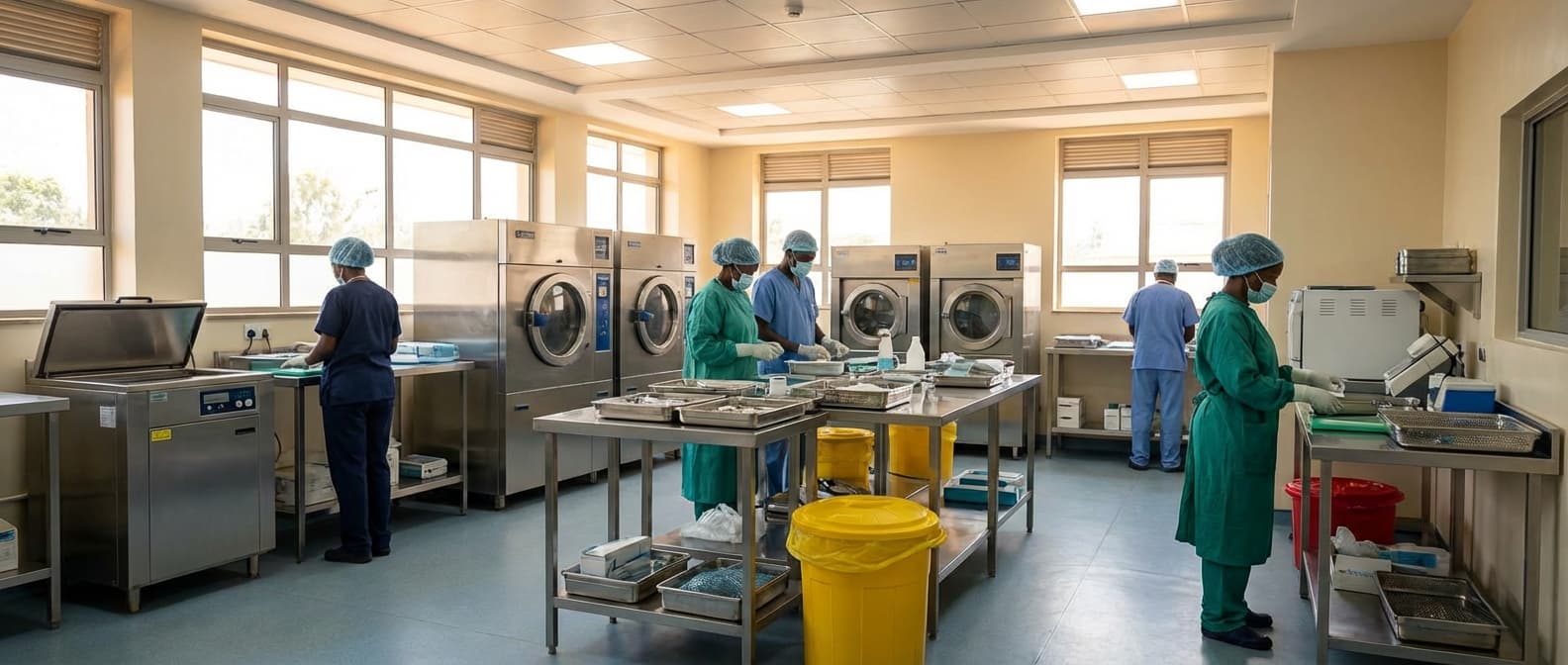
Medical Equipment Decontamination Service (Pre-Repair/Pre-Relocation) in Madagascar
Engineering Excellence & Technical Support
Medical Equipment Decontamination Service (Pre-Repair/Pre-Relocation) High-standard technical execution following OEM protocols and local regulatory frameworks.
Pre-Repair Decontamination & Safety Assurance
We provide critical pre-repair decontamination services for medical equipment in Madagascar, ensuring a safe working environment for technicians and preventing cross-contamination. Our rigorous process eliminates biohazardous materials before repair, safeguarding personnel and the integrity of the equipment.
Secure Pre-Relocation Disinfection Protocols
Moving medical equipment within or out of Madagascar? Our specialized pre-relocation disinfection ensures equipment is sanitized and free from contaminants. This prevents the spread of infectious agents during transit and guarantees equipment arrives at its new location in a sterile state, ready for immediate use.
Compliance & Traceability for Medical Assets
We offer meticulous decontamination documentation for all medical equipment services in Madagascar. Our detailed reports provide full traceability of disinfection processes, crucial for regulatory compliance, asset management, and ensuring the highest standards of healthcare facility safety and operational readiness.
What Is Medical Equipment Decontamination Service (Pre-repair/pre-relocation) In Madagascar?
Medical Equipment Decontamination Service (Pre-Repair/Pre-Relocation) in Madagascar refers to the specialized process of cleaning, disinfecting, and sterilizing medical devices and equipment prior to their repair or relocation within healthcare facilities or to new sites. This service is critical for preventing the transmission of healthcare-associated infections (HAIs), ensuring the safety of technicians, healthcare personnel, and future patients, and maintaining the integrity of the equipment itself. The decontamination process removes biological contaminants, chemical residues, and other potentially infectious materials that may be present on the equipment's surfaces and internal components. In the context of Madagascar, where resources and specialized infrastructure may be limited, a robust decontamination service is essential for maintaining a safe and functional healthcare environment.
| Who Needs the Service? | Typical Use Cases | |||||
|---|---|---|---|---|---|---|
| Hospitals and Clinics: Across all departments, including operating rooms, intensive care units, emergency rooms, laboratories, and outpatient services. | Diagnostic Laboratories: For equipment used in testing biological samples (e.g., microscopes, centrifuges, PCR machines). | Surgical Centers: For reusable surgical instruments, endoscopes, and related equipment. | Dental Practices: For dental instruments and chairs. | Medical Equipment Manufacturers and Service Providers: As a prerequisite before shipping equipment for repair or returning refurbished units. | Logistics and Relocation Companies: Handling the transfer of medical equipment between facilities. | Public Health Organizations: For equipment used in outreach programs or mobile clinics. |
| Pre-Repair Maintenance: Ensuring equipment is free from biological hazards before technicians commence repair work, protecting their health and preventing cross-contamination within repair workshops. | Pre-Relocation Transfers: Decontaminating equipment before it is moved from one ward, floor, or facility to another, preventing the spread of pathogens to new environments. | End-of-Life Equipment Handling: For equipment that is being disposed of or sent for recycling, ensuring public safety and environmental protection. | Routine Decontamination Cycles: For certain high-risk equipment that requires periodic decontamination between uses or during scheduled maintenance, even if not actively undergoing repair or relocation. | Post-Incident Decontamination: Following a known contamination event or outbreak, to thoroughly cleanse affected equipment. | Inventory Management: As part of the process for receiving new or returned equipment before it is put into service. |
Key Aspects of Medical Equipment Decontamination Service (Pre-Repair/Pre-Relocation)
- Scope: Encompasses a range of medical devices from simple diagnostic tools to complex surgical instrumentation and diagnostic imaging equipment.
- Objectives: To eliminate or significantly reduce microbial load, hazardous substances, and other contaminants.
- Regulatory Compliance: Adherence to national and international guidelines for infection control and medical device handling.
- Personnel: Requires trained technicians proficient in decontamination protocols and the use of specialized equipment and agents.
- Documentation: Meticulous record-keeping of decontamination procedures, agents used, and validation of efficacy.
Who Needs Medical Equipment Decontamination Service (Pre-repair/pre-relocation) In Madagascar?
In Madagascar, the need for medical equipment decontamination services before repair or relocation is critical for several key stakeholders. This specialized service ensures that equipment is safe to handle by technicians, preventing the spread of pathogens and protecting personnel. It also safeguards the integrity of the equipment itself, minimizing the risk of cross-contamination during the repair process. For relocation, decontamination ensures that no biohazards are transported to new environments, protecting public health and meeting regulatory standards. This service is particularly vital in settings with high patient turnover, infectious disease prevalence, or limited resources where sterilization protocols might be less robust.
| Customer Type | Relevant Departments | Reason for Decontamination (Pre-Repair/Pre-Relocation) |
|---|---|---|
| Hospitals (Public & Private) | Sterilization/CSSD (Central Sterile Supply Department), Biomedical Engineering, Infection Control, various clinical departments (e.g., Operating Theatre, ICU, Radiology, Laboratory) | To protect repair technicians from infectious agents, prevent cross-contamination during repair, ensure safe handling for transport, and maintain a sterile environment. |
| Clinics & Health Centers | Nursing Stations, Laboratory sections, Administrative departments | Similar to hospitals, but often on a smaller scale. Crucial for preventing disease spread in resource-limited settings. |
| Diagnostic Laboratories | Microbiology, Hematology, Biochemistry, Pathology departments | To prevent contamination of analytical instruments, protect lab personnel from hazardous biological samples, and ensure accurate test results. |
| Research Institutions | Specific research labs handling biological materials | To safeguard research integrity, protect researchers from biohazards, and prevent contamination of sensitive research equipment. |
| Medical Equipment Repair Companies | Service technicians, workshop staff | To ensure the safety of their personnel who handle potentially contaminated equipment. Often a mandatory requirement before accepting equipment for service. |
| Logistics & Relocation Companies | Operations teams, transport personnel | To prevent the spread of infectious agents during the physical movement of medical equipment between facilities or to storage. |
| NGOs (Healthcare Focus) | Project managers, field staff, equipment managers | To ensure safe handling and transport of equipment deployed in often remote or underserved areas where infection control might be challenging. |
| Government Health Ministries | Procurement, asset management, regional health authorities | To oversee and mandate safe practices for public health facilities, ensuring compliance and protecting public health. |
Target Customers and Departments for Medical Equipment Decontamination Service (Pre-Repair/Pre-Relocation) in Madagascar:
- Hospitals (Public and Private)
- Clinics and Health Centers
- Diagnostic Laboratories
- Research Institutions
- Medical Equipment Repair Companies
- Logistics and Relocation Companies specializing in healthcare assets
- Non-Governmental Organizations (NGOs) involved in healthcare provision
- Government Health Ministries and their facilities
Medical Equipment Decontamination Service (Pre-repair/pre-relocation) Process In Madagascar
This document outlines the standard workflow for the Medical Equipment Decontamination Service (Pre-Repair/Pre-Relocation) in Madagascar. The process is designed to ensure the safety of technicians, the integrity of equipment, and compliance with health regulations before any repair or relocation activities are undertaken.
| Phase | Step | Description | Responsible Party | Key Deliverables/Outputs | Notes/Considerations |
|---|---|---|---|---|---|
| 1.1. Client Inquiry | Healthcare facility or individual contacts the decontamination service provider to request decontamination for medical equipment prior to repair or relocation. | Client (Healthcare Facility/Individual) | Initial request for service | Inquiry can be via phone, email, or designated online portal. |
| 1.2. Information Gathering | Service provider gathers essential information: type of equipment, estimated condition, intended destination (repair workshop/new location), and any known biohazardous agents associated with its use. | Decontamination Service Provider | Equipment details, use history, destination information | Crucial for determining appropriate decontamination methods and safety precautions. |
| 1.3. Site/Equipment Assessment (if feasible) | In some cases, a preliminary assessment of the equipment or the environment it's in may be conducted, especially for complex or high-risk items. | Decontamination Service Provider | On-site assessment report (if applicable) | May involve remote consultation or a physical visit. |
| 2.1. Cost Estimation | Based on the gathered information, the service provider prepares a detailed quotation outlining the decontamination process, chemicals used, timeline, and associated costs. | Decontamination Service Provider | Formal quotation | Should include any potential surcharges for specific contaminants or emergency services. |
| 2.2. Client Review and Approval | The client reviews the quotation and provides approval, usually in writing (e.g., signed quotation, email confirmation). | Client (Healthcare Facility/Individual) | Approved quotation/service agreement | Confirmation of scope of work and payment terms. |
| 2.3. Service Agreement/Contract | A formal service agreement is established, detailing terms and conditions, liability, insurance, and cancellation policies. | Decontamination Service Provider & Client | Signed service agreement | Ensures clarity and legal protection for both parties. |
| 3.1. Appointment Scheduling | A mutually convenient date and time are scheduled for the decontamination service. | Decontamination Service Provider & Client | Confirmed service schedule | Consider equipment availability and technician schedules. |
| 3.2. Pre-Decontamination Briefing | The service provider briefs the client on any preparation needed at their end (e.g., power down equipment, clear surrounding area, provide access to water/power). | Decontamination Service Provider | Client preparation checklist/instructions | Ensures efficiency and safety during the decontamination process. |
| 3.3. Material and Equipment Preparation | The decontamination team gathers necessary cleaning agents, disinfectants, personal protective equipment (PPE), testing equipment, and transport containers. | Decontamination Service Provider | Ready-to-use decontamination kit/equipment | Selection of agents depends on equipment type and identified risks. |
| 4.1. Arrival and Site Setup | The decontamination team arrives at the designated location and sets up the work area, ensuring proper ventilation and containment. | Decontamination Service Provider | Prepared decontamination site | Safety protocols must be strictly adhered to. |
| 4.2. Equipment Assessment and Isolation | Upon arrival, the team conducts a brief visual inspection of the equipment and isolates it to prevent cross-contamination. | Decontamination Service Provider | Visually confirmed equipment condition, isolation measures | Any pre-existing damage should be noted. |
| 4.3. Cleaning and Disinfection Process | The equipment is thoroughly cleaned and disinfected using approved agents and methods suitable for the specific equipment and identified biohazards. This may involve manual wiping, spraying, or fogging techniques. | Decontamination Service Provider | Visibly clean and disinfected equipment | Specific protocols for different equipment types (e.g., electronics, invasive devices) must be followed. |
| 4.4. Rinsing and Drying (if applicable) | If necessary, equipment is rinsed and thoroughly dried to prevent damage from moisture or residue. | Decontamination Service Provider | Dry and residue-free equipment | Essential for sensitive electronic components. |
| 5.1. Verification and Quality Check | The decontamination team performs a final visual inspection and checks for any missed areas or residual contamination. | Decontamination Service Provider | Quality assurance check completed | Ensures thoroughness of the process. |
| 5.2. Decontamination Certificate Issuance | A formal decontamination certificate is issued, confirming that the equipment has undergone the specified decontamination process. This certificate details the equipment, date, methods used, and certifying body. | Decontamination Service Provider | Decontamination Certificate | This is a critical document for the receiving party (repairer/new location). |
| 5.3. Record Keeping | All details of the decontamination process, including chemicals used, time, personnel involved, and any observations, are meticulously recorded for internal records and potential audits. | Decontamination Service Provider | Detailed service log/record | Maintains accountability and traceability. |
| 6.1. Handover to Client/Transport | The decontaminated equipment is safely handed over to the client or prepared for transport to the designated repair workshop or relocation site. | Decontamination Service Provider & Client | Equipment handed over/prepared for transport | Secure packaging may be required. |
| 6.2. Final Invoicing and Payment | The service provider issues the final invoice based on the agreed-upon quotation, and the client processes the payment. | Decontamination Service Provider & Client | Final invoice, payment received | Prompt payment is expected as per the agreement. |
Medical Equipment Decontamination Service Workflow (Madagascar)
- Phase 1: Inquiry and Initial Assessment
- Phase 2: Quotation and Agreement
- Phase 3: Scheduling and Preparation
- Phase 4: Decontamination Execution
- Phase 5: Post-Decontamination and Documentation
- Phase 6: Equipment Release
Medical Equipment Decontamination Service (Pre-repair/pre-relocation) Cost In Madagascar
The cost of medical equipment decontamination services in Madagascar, specifically for pre-repair or pre-relocation, is influenced by several key factors. These include the type and size of the medical equipment, the nature and extent of contamination (e.g., biological, chemical, radioactive), the complexity of the decontamination process required, the location of the equipment within Madagascar (affecting transportation and accessibility), and the specific provider's expertise, certifications, and overhead. Generally, more complex and hazardous contaminations will command higher prices. The market in Madagascar is still developing for specialized decontamination services, meaning pricing can be less standardized than in more developed economies. However, we can outline typical pricing factors and provide estimated ranges in the local currency, Malagasy Ariary (MGA).
| Service Category (Approximate) | Estimated Cost Range (MGA) | Notes |
|---|---|---|
| Basic Decontamination (Routine Microbial/Surface Cleaning) | 50,000 - 250,000 MGA | For non-critical equipment with minimal contamination; often includes surface disinfection and cleaning. |
| Standard Decontamination (Moderate Biological Contamination) | 200,000 - 750,000 MGA | Suitable for equipment that has had contact with standard pathogens; may involve more thorough cleaning and disinfection. |
| Advanced Decontamination (High-Level Biological/Chemical Contamination) | 700,000 - 3,000,000+ MGA | For equipment exposed to hazardous biological agents, specific chemicals, or requiring specialized disinfection protocols. Larger, complex equipment (e.g., imaging machines) will fall into the higher end of this range or beyond. |
| Specialized Decontamination (Radioactive Materials/Highly Toxic Substances) | 3,000,000 - 10,000,000+ MGA | Requires highly specialized training, equipment, and safety measures. Pricing is highly variable based on the specific isotope/substance and risk assessment. This is often a highly specialized niche service. |
| On-site Service Fee (Additional) | 20,000 - 100,000 MGA (per visit/day) | Covers travel, logistics, and time for mobile teams. May vary significantly based on distance and accessibility. |
| Urgent/Expedited Service (Additional) | 25% - 75% of base service cost | For immediate response requirements. |
Key Pricing Factors for Medical Equipment Decontamination in Madagascar
- Equipment Type and Size: Larger and more intricate medical devices (e.g., MRI machines, CT scanners, large laboratory equipment) will inherently cost more to decontaminate than smaller, simpler items (e.g., examination tables, basic diagnostic tools).
- Nature and Extent of Contamination: Decontamination for routine microbial contamination is less expensive than for highly infectious biological agents, toxic chemicals, or radioactive materials. The amount of time and specialized agents/equipment needed increases with the severity of contamination.
- Decontamination Method: Different methods (e.g., steam sterilization, chemical disinfection, UV irradiation, high-level disinfection) have varying costs associated with the chemicals, equipment, and labor involved.
- Location and Accessibility: Decontamination services might need to be performed on-site. If the equipment is in a remote or difficult-to-access location, transportation costs for personnel and equipment, as well as potential accommodation, will increase the overall price.
- Urgency: Expedited decontamination services often come with a premium price due to the need for immediate resource allocation.
- Provider Expertise and Certification: Reputable providers with specialized training, certifications, and adherence to international safety standards will generally charge more for their services, reflecting the quality and reliability of their work.
- Regulatory Compliance: Services that ensure compliance with local and international health and safety regulations can also influence pricing.
- Waste Disposal: The cost of safely and legally disposing of contaminated materials generated during the decontamination process is often factored into the service fee.
Affordable Medical Equipment Decontamination Service (Pre-repair/pre-relocation) Options
Offering affordable medical equipment decontamination services before repair or relocation is crucial for maintaining operational efficiency, ensuring technician safety, and preventing the spread of infections. This service acts as a vital first step, preparing equipment for its next phase. Value bundles are designed to offer comprehensive solutions at a reduced cost, while strategic cost-saving measures ensure accessibility for a wider range of healthcare providers.
| Value Bundle Name | Included Services | Target Audience | Cost-Saving Benefit |
|---|---|---|---|
| Basic Decon Package | Surface disinfection (high-touch areas), basic external cleaning. | Small clinics, individual practitioners, low-volume equipment. | Lower upfront cost for essential cleaning. |
| Standard Decon & Prep | Comprehensive external decontamination, internal component dust removal, labeling for repair/relocation. | Medium-sized practices, specialized clinics, moderate equipment turnover. | Bundled services offer discount compared to individual service calls. |
| Comprehensive Decon & Audit | Full equipment decontamination (internal/external), visual inspection for damage, detailed cleaning log, biohazard waste disposal. | Hospitals, large healthcare systems, high-value or complex equipment. | Maximizes value through integrated inspection and documentation, potentially reducing future issues. |
| Volume Discount Program | Tiered pricing based on the number of equipment pieces decontaminated per month/quarter. | Any facility with consistent decontamination needs. | Significant per-unit cost reduction for higher volumes. |
Key Benefits of Pre-Repair/Pre-Relocation Decontamination:
- Enhanced Safety: Protects technicians and handlers from biohazards during repair or transit.
- Reduced Risk of Contamination: Prevents cross-contamination between facilities or during the repair process.
- Compliance Assurance: Meets regulatory and infection control standards.
- Extended Equipment Lifespan: Proper cleaning can prevent further damage and degradation.
- Streamlined Operations: Facilitates smoother repair and relocation processes by removing contaminants.
- Cost Containment: Minimizes potential delays, re-work, and exposure-related liabilities.
Verified Providers In Madagascar
In Madagascar, ensuring access to quality healthcare is paramount. When seeking medical services, understanding the credentials and affiliations of healthcare providers is crucial for making informed decisions. Franance Health stands out as a trusted organization that rigorously verifies healthcare professionals, offering patients peace of mind and confidence in their treatment. This commitment to verification means that providers affiliated with Franance Health have met stringent standards, ensuring a higher level of competence, ethical practice, and patient safety.
| Credential Verification Area | Franance Health Standard | Patient Benefit |
|---|---|---|
| Educational Background | Verification of degrees, diplomas, and accredited institutions. | Ensures providers have foundational medical knowledge. |
| Professional Experience | Validation of past employment, roles, and surgical case logs where applicable. | Confirms practical skills and hands-on experience. |
| Licensure and Certifications | Confirmation of valid and current medical licenses and specialized certifications. | Guarantees adherence to regulatory requirements and recognized expertise. |
| Ethical Conduct and Reputation | Checks for disciplinary actions, malpractice claims, and peer reviews. | Promotes trust and responsible patient care. |
| Continuing Medical Education (CME) | Verification of ongoing training and skill updates. | Ensures providers are up-to-date with the latest medical advancements. |
Why Franance Health Credentials Matter:
- Rigorous Vetting Process: Franance Health employs a comprehensive and multi-faceted verification process that goes beyond basic licensing. This includes scrutinizing educational backgrounds, professional experience, certifications, and adherence to ethical guidelines.
- Enhanced Patient Safety: By partnering with only verified providers, Franance Health significantly reduces the risk of encountering unqualified or unethical practitioners, thereby prioritizing patient well-being.
- Access to Expertise: Franance Health's network comprises skilled and experienced medical professionals across various specializations, ensuring you can find the right expert for your specific health needs.
- Commitment to Quality Care: The association with Franance Health signifies a provider's dedication to maintaining high standards of medical care, evidence-based practices, and continuous professional development.
- Streamlined Healthcare Navigation: For individuals and organizations seeking reliable healthcare services, Franance Health's verified provider list offers a trusted and efficient way to navigate the Malagasy healthcare landscape.
Scope Of Work For Medical Equipment Decontamination Service (Pre-repair/pre-relocation)
This Scope of Work (SOW) outlines the requirements for medical equipment decontamination services prior to repair or relocation. The objective is to ensure the safety of personnel and the environment by rendering potentially biohazardous equipment safe for handling, transport, and subsequent servicing. This SOW details the technical deliverables and standard specifications for the decontamination process.
| Category | Technical Deliverable | Standard Specification / Requirement | Verification Method |
|---|---|---|---|
| Equipment Assessment | Pre-Decontamination Risk Assessment Report | Identification of equipment type, intended use, potential contaminants (biohazards, chemical residues), and material compatibility with decontamination agents. Risk level assigned (Low, Medium, High). | Review of equipment history, manufacturer's guidelines, and visual inspection. |
| Decontamination Process | Decontamination Procedure Protocol | Detailed step-by-step procedure outlining the chosen decontamination method (e.g., chemical disinfection, sterilization, physical cleaning) based on risk assessment. Includes specific disinfectant/sterilant type, concentration, contact time, temperature, and application method. Must be validated for efficacy against target contaminants. | Documented protocol adherence by trained personnel. Validation records of decontamination agents. |
| Decontamination Agents | Approved Decontamination Agent Log | List of approved, hospital-grade disinfectants/sterilants. Agents must be EPA-registered (or equivalent) for the intended spectrum of activity. Material Safety Data Sheets (MSDS/SDS) for all agents must be available. | Review of MSDS/SDS and product efficacy data. Compliance with hospital formulary/approved chemical lists. |
| Personnel Training & PPE | Trained Personnel Certification | All personnel performing decontamination must have documented training in infection control, hazardous materials handling, and the specific decontamination procedures and agents used. Appropriate Personal Protective Equipment (PPE) including gloves, gowns, eye protection, and respiratory protection (if required) must be utilized. | Review of training records and PPE usage logs. On-site observation of personnel practices. |
| Waste Disposal | Contaminated Waste Disposal Manifest | All materials used in the decontamination process (wipes, swabs, PPE) that are considered contaminated must be disposed of as regulated medical waste according to local, state, and federal regulations. Proper labeling and chain of custody. | Review of waste manifests and disposal certificates from a licensed waste management provider. |
| Post-Decontamination Verification | Decontamination Efficacy Verification | Visual inspection for gross contamination. For high-risk equipment or when specified, environmental surface swabs may be taken and analyzed to confirm the absence of target pathogens. Adenosine triphosphate (ATP) testing may be used as an indicator of residual organic material. | Visual inspection records. Laboratory test results for surface swabs. ATP meter readings. |
| Documentation | Decontamination Certificate | A formal certificate for each piece of equipment decontaminated, signed by the authorized service provider. The certificate must include: equipment identification (serial number, asset tag), date of decontamination, name of technician, decontamination method used, decontaminant agent, and confirmation of efficacy. A copy must be provided to the recipient of the equipment (e.g., repair facility, relocation team). | Review of signed decontamination certificates for completeness and accuracy. Audit of documentation records. |
| Packaging & Handling | Contamination Containment & Labeling | Following successful decontamination, equipment must be packaged in a manner that prevents re-contamination during transit. Packaging materials should be clean. Equipment should be clearly labeled as 'Decontaminated' with the date of service. | Visual inspection of packaging and labeling prior to transport. |
Key Objectives and Service Scope
- To safely render medical equipment free from biological contaminants and hazardous materials prior to repair or relocation.
- To protect technicians, transport personnel, and the environment from potential infection or exposure.
- To comply with relevant health and safety regulations and industry best practices.
- To provide a documented certification of decontamination.
- Services include the assessment of equipment, selection of appropriate decontamination agents, execution of the decontamination process, and verification of efficacy.
Service Level Agreement For Medical Equipment Decontamination Service (Pre-repair/pre-relocation)
This Service Level Agreement (SLA) outlines the agreed-upon response times and uptime guarantees for the decontamination of medical equipment prior to repair or relocation. This SLA applies to all decontamination services performed by [Your Company Name] for [Client Name] at [Client Location(s)].
| Service Component | Service Level Objective (SLO) | Measurement Method | Client Notification | Escalation Process |
|---|---|---|---|---|
| Response Time - Standard Equipment (during Business Hours) | Within 4 Business Hours of request initiation. | Timestamp of request initiation vs. timestamp of technician arrival/service commencement. | Automated email confirmation upon request submission. Notification of technician dispatch. | If SLO is not met, client may escalate to Account Manager. Further delay triggers escalation to Senior Management. |
| Response Time - Critical Equipment (during Business Hours) | Within 2 Business Hours of request initiation. | Timestamp of request initiation vs. timestamp of technician arrival/service commencement. | Automated email confirmation upon request submission. Priority notification of technician dispatch. | If SLO is not met, client may escalate to Senior Account Manager. Further delay triggers escalation to Executive Management. |
| Response Time - Emergency Request (Standard & Critical Equipment - outside Business Hours) | Within 4 hours of Emergency Request initiation (acknowledgement within 1 hour). | Timestamp of Emergency Request initiation vs. timestamp of technician arrival/service commencement. Timestamp of acknowledgement. | Direct phone call and/or SMS confirmation of receipt and planned response. | If SLO is not met, client may escalate to On-Call Manager. Further delay triggers escalation to Director of Operations. |
| Uptime Guarantee - Decontamination Duration (Standard Equipment) | Minimize downtime. Target completion within [e.g., 8] Business Hours, subject to equipment complexity and contamination level. | Timestamp of service commencement vs. timestamp of decontamination completion verification. | Proactive updates on progress and estimated completion time. Notification upon completion. | If projected completion exceeds target, client may inquire with Project Manager for status. |
| Uptime Guarantee - Decontamination Duration (Critical Equipment) | Minimize downtime. Target completion within [e.g., 4] Business Hours, subject to equipment complexity and contamination level. | Timestamp of service commencement vs. timestamp of decontamination completion verification. | Proactive, frequent updates on progress and estimated completion time. Immediate notification upon completion. | If projected completion exceeds target, client may escalate to Senior Project Manager for intervention and expedited resolution. |
| Decontamination Quality | 100% adherence to manufacturer-approved decontamination protocols and relevant health & safety standards. | Quality assurance checks by on-site technician. Post-service quality report provided to client. | Notification of any deviations from protocol or unforeseen challenges. | Client may raise quality concerns directly with Quality Assurance Department. |
Key Definitions
- Decontamination: The process of eliminating, neutralizing, or removing byproducts of biological, chemical, or radiological contaminants through the application of specialized cleaning agents and/or physical processes to render equipment safe for handling, repair, or relocation.
- Downtime: The period during which medical equipment is unavailable for its intended use due to the decontamination process.
- Response Time: The maximum allowable time from the initiation of a decontamination request to the commencement of service by [Your Company Name]'s technical personnel.
- Uptime Guarantee: The commitment to minimize the duration of equipment unavailability during the decontamination process.
- Critical Equipment: Medical equipment designated by [Client Name] as essential for patient care, where any extended downtime could have a significant negative impact.
- Standard Equipment: Medical equipment not classified as critical.
- Business Hours: [Specify Business Hours, e.g., Monday - Friday, 8:00 AM - 5:00 PM Local Time, excluding public holidays].
- Emergency Request: A request for decontamination received outside of Business Hours or for Critical Equipment requiring immediate attention.
Frequently Asked Questions

Ready when you are
Let's scope your Medical Equipment Decontamination Service (Pre-Repair/Pre-Relocation) in Madagascar project in Madagascar.

Scaling healthcare logistics and technical systems across the entire continent.