
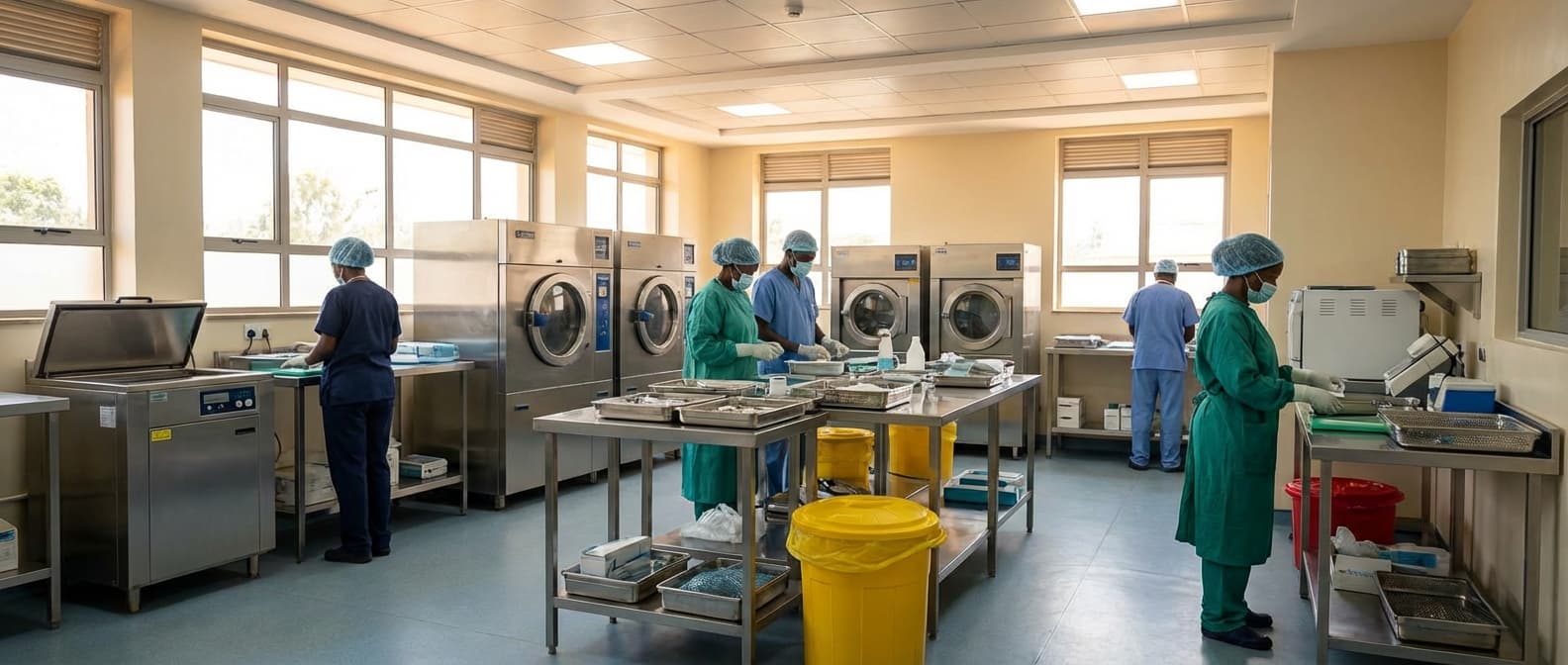
Infection-Control Readiness Support Service for Reusable Equipment in Madagascar
Engineering Excellence & Technical Support
Infection-Control Readiness Support Service for Reusable Equipment High-standard technical execution following OEM protocols and local regulatory frameworks.
Enhanced Sterilization Monitoring
Deployment of real-time sterilization process indicators and rigorous quality control checks ensures reusable medical equipment meets stringent international infection control standards, minimizing the risk of healthcare-associated infections.
Digital Equipment Traceability
Implementation of a robust digital tracking system, including barcode scanning, for all reusable equipment. This enables precise management of cleaning, disinfection, sterilization cycles, and maintenance, providing auditable records for safety and compliance.
Localized Capacity Building
Provision of comprehensive, hands-on training programs for Malagasy healthcare professionals on best practices for cleaning, disinfection, and sterilization, adapted to local resources and workflows, fostering sustainable infection control capacity.
What Is Infection-control Readiness Support Service For Reusable Equipment In Madagascar?
Infection Control Readiness Support Service for Reusable Equipment (ICR-SRE) in Madagascar is a comprehensive programmatic offering designed to ensure healthcare facilities maintain optimal infection prevention and control (IPC) standards specifically for reusable medical devices. This service focuses on bolstering the capacity of healthcare providers to safely decontaminate, sterilize, and maintain reusable equipment, thereby mitigating the risk of healthcare-associated infections (HAIs). The service is crucial in settings like Madagascar, where resource limitations and a high burden of infectious diseases necessitate robust and sustainable IPC practices.
| Stakeholder/Entity | Needs Addressed by ICR-SRE | Typical Use Cases |
|---|---|---|
| Public Healthcare Facilities (Hospitals, Health Centers) | Limited access to functional sterilization equipment, inconsistent staff training on IPC, lack of standardized reprocessing protocols, high incidence of HAIs. | Routine sterilization of surgical instruments, reprocessing of endoscopes, decontamination of respiratory therapy equipment, ensuring safe handling of syringes and needles in facilities with limited single-use options. |
| Private Healthcare Providers (Clinics, Dental Practices) | Varying levels of IPC knowledge, potential for outdated equipment, need for compliance with national health regulations. | Sterilization of dental instruments, reprocessing of minor surgical tools, ensuring safe practices for diagnostic equipment accessories. |
| Non-Governmental Organizations (NGOs) involved in healthcare delivery | Implementing new health programs in underserved areas, often with limited existing infrastructure and trained personnel. | Establishing IPC protocols for mobile clinics, training local health workers in remote areas on safe equipment reprocessing, equipping and validating sterilization units in newly established facilities. |
| Ministry of Health and National Health Agencies | Ensuring national adherence to IPC standards, monitoring the quality of healthcare services, mitigating public health risks associated with HAIs. | Developing national IPC guidelines for reusable equipment, conducting national assessments of IPC readiness, identifying training needs for healthcare workforces across the country. |
Key Components of ICR-SRE
- Assessment and Gap Analysis: Comprehensive evaluation of existing IPC infrastructure, protocols, and staff training related to reusable equipment management. Identification of specific deficiencies and unmet needs.
- Training and Capacity Building: Development and delivery of tailored training programs for healthcare personnel (nurses, technicians, environmental services staff) on best practices for cleaning, disinfection, sterilization, and sterile storage of various reusable medical devices.
- Equipment and Infrastructure Support: Guidance on the selection, procurement, installation, and maintenance of appropriate decontamination and sterilization equipment (e.g., autoclaves, washer-disinfectors, high-level disinfectants). Recommendations for optimizing reprocessing workflow and dedicated reprocessing areas.
- Protocol Development and Implementation: Assistance in establishing and implementing evidence-based Standard Operating Procedures (SOPs) for the entire lifecycle of reusable equipment, from point-of-use cleaning to sterile storage and distribution.
- Quality Assurance and Monitoring: Implementation of regular monitoring systems to assess the effectiveness of reprocessing procedures, including biological and chemical indicator testing, equipment maintenance logs, and adherence to protocols. Provision of feedback and corrective action plans.
- Supply Chain Management: Support in optimizing the procurement and management of essential consumables and disinfectants required for reprocessing reusable equipment.
- Sustainability Planning: Development of strategies for long-term maintenance, repair, and replacement of equipment, as well as ongoing staff training and competency assessment to ensure sustained readiness.
Who Needs Infection-control Readiness Support Service For Reusable Equipment In Madagascar?
Infection control for reusable medical equipment is a critical but often under-resourced aspect of healthcare in Madagascar. Facilities frequently struggle with the consistent availability of sterile, safe equipment, leading to a heightened risk of healthcare-associated infections (HAIs). This document outlines the need for and target beneficiaries of an Infection-Control Readiness Support Service for Reusable Equipment in Madagascar. This service aims to bolster the capacity of healthcare facilities to manage and sterilize reusable medical devices effectively, thereby improving patient safety and contributing to a more robust public health system.
| Primary Target Customers | Key Departments/Units Involved | Specific Needs Addressed |
|---|---|---|
| Public Hospitals (National, Regional, District) | Sterilization Unit (Centralized or Decentralized), Operating Theatres, Maternity Wards, Intensive Care Units (ICUs), Outpatient Departments | Lack of functional sterilization equipment, inadequate training of sterilization staff, poor adherence to protocols, insufficient supply of cleaning agents and consumables, challenges in equipment maintenance and repair. |
| Private Clinics and Hospitals | Similar to Public Hospitals, with potentially greater variation in resources and adherence levels. | Variable infrastructure, need for standardized protocols, potential gaps in formal training, reliance on imported supplies and equipment. |
| Health Centers (Centres de Santé - CS) | Nursing stations, minor procedure rooms, community health worker outreach programs | Limited or no dedicated sterilization facilities, reliance on basic disinfection methods, high volume of reusable items (syringes, thermometers, surgical instruments), challenges in safe disposal of contaminated waste. |
| Ministry of Public Health (Central & Regional Directorates) | Department of Health Infrastructure and Equipment, Department of Disease Prevention and Control, Provincial Health Offices | Need for data on equipment status and infection control compliance, development and enforcement of national guidelines, capacity building for supervisors, strategic procurement planning for sterilization equipment and supplies. |
| NGOs/International Organizations | Project management teams, technical advisors, program coordinators | Need for evidence-based interventions, support for training programs, assistance in procurement and supply chain management for infection control materials, monitoring and evaluation of supported facilities. |
Target Customers and Departments
- Healthcare Facilities: Public and private hospitals, clinics, health centers, and specialized medical units across all regions of Madagascar.
- Ministry of Public Health (Ministère de la Santé Publique): Central and regional health directorates responsible for policy, oversight, and resource allocation for healthcare facilities.
- Healthcare Professionals: Doctors, nurses, technicians, sterilization staff, and administrative personnel involved in patient care and equipment management.
- Non-Governmental Organizations (NGOs) and International Organizations: Those working in the health sector in Madagascar and supporting healthcare infrastructure and capacity building.
- Training Institutions: Medical and nursing schools that can integrate advanced infection control practices for reusable equipment into their curricula.
Infection-control Readiness Support Service For Reusable Equipment Process In Madagascar
This service aims to enhance the infection control readiness for the process of cleaning, disinfecting, and sterilizing reusable medical equipment in Madagascar. The workflow, from initial inquiry to the successful execution of support, involves a structured, multi-stage process designed to assess needs, develop tailored solutions, and ensure sustainable implementation. It prioritizes collaboration with healthcare facilities, government bodies, and relevant stakeholders to achieve optimal infection prevention and control standards.
| Stage | Key Activities | Responsible Parties | Deliverables |
|---|---|---|---|
| Inquiry & Initial Consultation | Expression of interest, initial problem identification, scope definition | Healthcare Facility, Support Service Provider | Meeting minutes, preliminary understanding of needs |
| Needs Assessment & Site Visit | Observation, interviews, resource review, practical assessment | Support Service Provider, Healthcare Facility Staff | On-site assessment report, data collection |
| Gap Analysis & Report Generation | Analyzing assessment data, identifying specific weaknesses, risk assessment | Support Service Provider | Detailed Gap Analysis Report |
| Solution Development & Proposal | Designing interventions, outlining resources, budgeting, timeline creation | Support Service Provider | Tailored Support Proposal |
| Agreement & Planning | Reviewing proposal, negotiating terms, joint development of execution plan | Healthcare Facility Management, Support Service Provider | Signed Agreement, Detailed Execution Plan |
| Implementation & Training | Conducting training, delivering equipment, implementing protocols, infrastructure adjustments | Support Service Provider, Healthcare Facility Staff | Trained Staff, Implemented Protocols, Functional Equipment |
| Monitoring & Evaluation | Observing practices, data collection, feedback sessions, performance review | Support Service Provider, Healthcare Facility Staff | Monitoring Reports, Performance Metrics |
| Refinement & Sustainability Planning | Adjusting interventions, developing long-term strategies, capacity building | Support Service Provider, Healthcare Facility Management | Revised Strategies, Sustainability Plan |
| Post-Implementation Support & Follow-up | Periodic check-ins, remote assistance, refresher training, ongoing consultation | Support Service Provider, Healthcare Facility | Follow-up Reports, Continued Improvement |
Workflow Stages
- {"title":"1. Inquiry & Initial Consultation","description":"Healthcare facilities, regional health offices, or Ministry of Health representatives express interest in improving their reusable equipment processing. This involves an initial contact to understand their current challenges and objectives related to infection control and equipment reprocessing."}
- {"title":"2. Needs Assessment & Site Visit","description":"A comprehensive assessment is conducted at the requesting facility. This includes observing current practices, interviewing staff, reviewing available resources (equipment, consumables, infrastructure), and identifying specific gaps in infection control readiness for reusable equipment."}
- {"title":"3. Gap Analysis & Report Generation","description":"The findings from the needs assessment are analyzed to pinpoint specific areas requiring improvement. This could include training needs, equipment deficiencies, workflow inefficiencies, or adherence to protocols. A detailed report is generated outlining these gaps and their potential impact on patient safety."}
- {"title":"4. Solution Development & Proposal","description":"Based on the identified gaps, a tailored support plan is developed. This proposal outlines recommended interventions, including training modules, equipment upgrades or procurement strategies, protocol development or refinement, and infrastructure improvements. It also details timelines, resource requirements, and expected outcomes."}
- {"title":"5. Agreement & Planning","description":"The facility and the support service provider agree on the proposed plan. A detailed execution plan is collaboratively developed, including specific activities, responsible parties, and a mutually agreed-upon schedule."}
- {"title":"6. Implementation & Training","description":"The agreed-upon interventions are put into action. This phase includes delivering targeted training to healthcare personnel on best practices for cleaning, disinfection, sterilization, and sterile storage. It may also involve the installation or upgrading of equipment, or the implementation of new Standard Operating Procedures (SOPs)."}
- {"title":"7. Monitoring & Evaluation","description":"Ongoing monitoring of the implemented changes is crucial. This involves observing adherence to new protocols, assessing the functionality of equipment, and collecting data on infection rates related to reusable equipment. Regular feedback sessions are held with facility staff."}
- {"title":"8. Refinement & Sustainability Planning","description":"Based on the monitoring and evaluation findings, adjustments are made to the implemented solutions. Strategies for long-term sustainability are developed, including establishing internal champions, integrating infection control into facility policies, and planning for future training needs."}
- {"title":"9. Post-Implementation Support & Follow-up","description":"The service may provide continued support through periodic follow-up visits, remote assistance, or refresher training sessions to ensure sustained adherence to best practices and to address any emerging challenges."}
Infection-control Readiness Support Service For Reusable Equipment Cost In Madagascar
This document outlines the pricing considerations for an Infection-Control Readiness Support Service for Reusable Equipment in Madagascar. The service aims to ensure that healthcare facilities have the necessary infrastructure, training, and supplies to safely reprocess reusable medical equipment, thereby preventing healthcare-associated infections. The cost of such a service is influenced by a range of factors, varying significantly due to local economic conditions, the scope of services provided, and the specific needs of each healthcare facility. Prices are typically quoted in Malagasy Ariary (MGA).
| Service Component/Scope | Estimated Price Range (MGA) - Low | Estimated Price Range (MGA) - High | Notes |
|---|---|---|---|
| Initial Assessment & Gap Analysis | 500,000 | 2,000,000 | Covers site visit, equipment inventory, and preliminary report. |
| Development of SOPs & Training Materials | 750,000 | 3,000,000 | Includes drafting, review, and finalization of infection control protocols. |
| Basic Staff Training (e.g., 10 staff, 3 days) | 1,000,000 | 4,000,000 | Covers core principles of infection control and basic equipment handling. Excludes travel/accommodation if applicable. |
| Advanced Staff Training (e.g., specialized equipment operation, supervisors) | 1,500,000 | 6,000,000 | More in-depth training for specific roles and advanced machinery. |
| Supply of Basic Disinfectants & Consumables (e.g., for 1 month, small clinic) | 300,000 | 1,500,000 | Includes detergents, sterile wraps, gloves, etc. |
| Supply of Specialized Disinfectants & Consumables (e.g., for 1 month, medium hospital) | 750,000 | 4,000,000 | Higher volume and specialized chemicals for advanced sterilization. |
| Installation of a Single, Small Autoclave (excluding equipment cost) | 1,000,000 | 5,000,000 | Focuses on plumbing, electrical, and initial setup. Equipment cost is separate. |
| Lease of a Basic Washer-Disinfector (monthly) | 2,000,000 | 8,000,000 | Includes maintenance. Does not include initial installation or purchase. |
| Full Readiness Support Package (Small Clinic - 6 months) | 5,000,000 | 15,000,000 | Includes assessment, basic training, initial supplies, and limited ongoing support. |
| Comprehensive Readiness Support Package (Medium Hospital - 12 months) | 20,000,000 | 75,000,000+ | Encompasses full scope, including potential equipment upgrades, extensive training, supply chain management, and regular monitoring. Very dependent on specific needs. |
Key Pricing Factors for Infection-Control Readiness Support Service (Reusable Equipment) in Madagascar
- Scope of Services: This is the most significant driver of cost. It can range from initial assessment and gap analysis to full implementation, including equipment procurement, installation, staff training, development of Standard Operating Procedures (SOPs), and ongoing monitoring and maintenance.
- Facility Size and Type: The number of beds, patient volume, and the types of medical procedures performed dictate the volume and complexity of reusable equipment requiring reprocessing. Larger hospitals with more specialized departments will incur higher costs.
- Current Infrastructure: The existing state of sterilization and disinfection units within a facility will impact the required investment. Facilities with outdated or non-existent infrastructure will require more extensive upgrades or new installations.
- Training Needs: The level of expertise of existing staff and the number of personnel requiring training in infection control protocols, equipment operation, and maintenance will influence training costs. This includes initial training and ongoing refresher courses.
- Equipment and Supplies: The cost of purchasing or leasing new sterilization equipment (e.g., autoclaves, washer-disinfectors), disinfectants, consumables, and personal protective equipment (PPE) is a direct component of the service cost.
- Technical Support and Maintenance: Ongoing technical support, regular maintenance, calibration of equipment, and emergency repair services contribute to the recurring costs of the service.
- Geographic Location within Madagascar: Accessibility and logistical challenges in remote or hard-to-reach areas can increase transportation and operational costs for service providers.
- Regulatory Compliance: Ensuring adherence to national and international infection control guidelines and standards may necessitate specific audits, documentation, and potentially higher-grade equipment, impacting costs.
- Duration of Contract: Long-term service contracts might offer economies of scale and potentially lower per-unit costs compared to short-term engagements.
- Level of Customization: Tailoring the service to meet the unique needs and budget constraints of a specific healthcare facility will affect the overall pricing structure.
Affordable Infection-control Readiness Support Service For Reusable Equipment Options
Our Affordable Infection-Control Readiness Support Service for Reusable Equipment Options empowers healthcare facilities to maintain the highest standards of patient safety without breaking the budget. We understand the critical importance of sterile and properly maintained reusable medical equipment in preventing healthcare-associated infections (HAIs). Our service focuses on providing accessible, cost-effective solutions that enhance your infection control protocols. We achieve this through strategic value bundling and implementing robust cost-saving strategies tailored to your unique operational needs.
| Cost-Saving Strategy | Description | Benefit |
|---|---|---|
| Preventative Maintenance Optimization: | Leveraging data-driven insights to schedule and optimize the maintenance of reusable equipment, ensuring it functions correctly and extends its lifespan. | Reduces unexpected equipment failures, costly emergency repairs, and premature replacement of expensive reusable items. |
| Efficient Inventory Management: | Implementing smart inventory tracking systems and recommending appropriate stock levels to minimize overstocking and waste of cleaning and disinfection supplies. | Lowers expenditure on consumables and reduces the risk of expired or degraded products, ensuring effectiveness. |
| Staff Training & Empowerment: | Providing high-quality, standardized training that equips your staff with the knowledge and skills to perform cleaning and disinfection procedures correctly the first time. | Minimizes errors leading to reprocessing or equipment damage, saving time and resources. Empowers staff to identify and report potential issues early. |
| Centralized Procurement of Consumables: | Leveraging our network to negotiate bulk discounts on essential infection control consumables and disinfectants for our clients. | Achieves significant cost reductions on frequently used supplies, directly impacting your operational budget. |
| Regulatory Compliance Guidance: | Ensuring your protocols align with current regulatory standards, avoiding potential fines and penalties associated with non-compliance. | Prevents costly audits, fines, and reputational damage that can arise from regulatory breaches. |
| Technology Integration & Automation: | Recommending and assisting with the integration of cost-effective technologies that automate certain aspects of the cleaning and disinfection process. | Increases efficiency, reduces labor costs, and improves consistency in reprocessing, leading to long-term savings. |
Value Bundles:
- Basic Readiness Bundle: Includes foundational training on reusable equipment cleaning and disinfection protocols, essential documentation templates, and access to our online resource library for best practices and regulatory updates.
- Standard Preparedness Bundle: Builds upon the Basic bundle by adding on-site readiness assessments, customized training sessions for your staff, and a starter kit of essential infection control consumables (e.g., indicator strips, cleaning brushes).
- Comprehensive Compliance Bundle: Offers all features of the Standard bundle, plus regular remote monitoring and consultation, personalized risk assessment for your specific reusable equipment inventory, and prioritized support for any immediate infection control concerns.
- Customizable Solutions: We recognize that every facility is different. Our team can work with you to design a value bundle that precisely matches your current needs, budget, and existing infrastructure, ensuring you only pay for what you truly require.
Verified Providers In Madagascar
Navigating the healthcare landscape in a country like Madagascar can be challenging, especially when seeking providers who offer both quality care and financial transparency. For individuals and organizations seeking reliable and trustworthy healthcare partners, understanding the significance of verified providers and specific credentials becomes paramount. Franance Health stands out as a beacon of assurance in this regard, offering a robust network of healthcare professionals and institutions that have undergone rigorous vetting processes. Their commitment to transparency and adherence to international standards makes them the optimal choice for anyone prioritizing safe, effective, and financially predictable healthcare solutions in Madagascar. This document outlines why Franance Health credentials represent the best choice for your healthcare needs.
| Credential Type | Franance Health Assurance | Benefit to Patients |
|---|---|---|
| Medical Licenses & Certifications | Verified as current, valid, and issued by recognized Malagasy authorities. | Ensures practitioners are legally qualified to practice. |
| Professional Experience & Specializations | Verified through credentialing committees and documented professional histories. | Confirms expertise in specific medical fields and adequate experience. |
| Facility Accreditations & Standards | For partner clinics and hospitals, verification of adherence to safety, hygiene, and quality management standards. | Guarantees a safe and well-equipped healthcare environment. |
| Ethical Conduct & Reputation | Background checks and inquiries into professional conduct and community standing. | Reduces the risk of encountering practitioners with a history of malpractice or unethical behavior. |
| Financial Transparency Agreements | Signed agreements confirming adherence to clear and pre-defined billing structures. | Provides predictability in healthcare costs and avoids hidden fees. |
Why Franance Health Credentials Offer Superior Assurance:
- Rigorous Vetting and Verification: Franance Health employs a multi-faceted verification process that extends beyond basic licensing. This includes in-depth background checks, assessment of professional experience, and confirmation of ethical standing within the Malagasy medical community.
- Commitment to Quality Standards: Franance Health partners only with providers who demonstrate a commitment to upholding high standards of medical practice, patient care, and facility management. This often aligns with international best practices, ensuring a superior level of service.
- Financial Transparency and Predictability: A core tenet of Franance Health is ensuring financial clarity. Their verified providers adhere to transparent billing practices, minimizing the risk of unexpected costs and enabling better budget management for individuals and employers.
- Access to Specialized Care: The Franance Health network is designed to offer a broad spectrum of medical services, from general practitioners to specialists. Their verification process ensures that even specialized services are delivered by qualified and competent professionals.
- Patient-Centric Approach: Verified providers within the Franance Health network are expected to prioritize patient well-being and satisfaction. This includes clear communication, informed consent, and a focus on positive patient outcomes.
- Trust and Reliability: The 'verified' status conferred by Franance Health instills a high level of trust. It signifies that a provider has met stringent criteria, offering peace of mind to patients and stakeholders.
Scope Of Work For Infection-control Readiness Support Service For Reusable Equipment
This Scope of Work (SOW) outlines the requirements for Infection-Control Readiness Support Services specifically for reusable medical equipment. The objective is to ensure that healthcare facilities maintain robust infection prevention and control (IPC) practices for all reusable equipment, from cleaning and disinfection to sterilization and storage. This service will provide expert guidance, assessment, training, and development of standard operating procedures (SOPs) to enhance the safety and efficacy of reusable equipment management, thereby minimizing the risk of healthcare-associated infections (HAIs).
| Technical Deliverable | Description | Standard Specification/Reference |
|---|---|---|
| Current State Assessment Report | A comprehensive report detailing the current practices, equipment, infrastructure, and staff competency related to reusable equipment IPC. Includes identification of gaps and areas for improvement. | Based on direct observation, interviews, document review, and adherence to established IPC guidelines (e.g., CDC, WHO, AAMI ST, ISO standards). |
| Standard Operating Procedures (SOPs) Manual | A detailed, facility-specific manual outlining step-by-step procedures for the entire lifecycle of reusable equipment processing: decontamination, cleaning, disinfection, rinsing, drying, inspection, packaging, sterilization, sterile storage, and transport. Includes documentation requirements. | Aligned with manufacturer's instructions for use (IFUs), relevant national/international standards (e.g., AAMI ST series, ISO 17665, ISO 13085, ISO 14937), and regulatory requirements. |
| Staff Training Materials and Delivery | Development of training modules (presentations, handouts, practical demonstrations) and delivery of training sessions for relevant personnel (e.g., sterile processing technicians, nurses, environmental services staff) on the approved SOPs and IPC principles. | Content should cover principles of microbiology, modes of transmission, cleaning efficacy, disinfection levels, sterilization methods, handling of sterile items, and risk management. Competency assessment included. |
| Equipment and Consumables Validation Protocol | Guidance and support in developing protocols for validating the efficacy of new or existing cleaning agents, disinfectants, sterilization equipment, and packaging materials. Includes recommendations for performance monitoring. | Referencing manufacturer specifications, relevant ASTM standards, AAMI TIR series, and regulatory agency guidance (e.g., FDA for medical devices). |
| Monitoring and Auditing Framework | Design of a system for regular monitoring and auditing of reusable equipment processing activities. Includes checklists, data collection methods, analysis of results, and reporting mechanisms to track compliance and identify trends. | Based on established quality assurance principles and regulatory audit expectations. Examples of audit parameters: cleaning effectiveness (visual inspection, protein testing), sterilization process parameters (temperature, time, pressure), sterile field integrity, storage conditions. |
| Recommendations for Infrastructure and Workflow Optimization | Actionable recommendations for improving the physical layout, workflow design, and environmental controls within processing areas to enhance efficiency, reduce the risk of cross-contamination, and ensure optimal IPC. | Consideration of industry best practices for sterile processing departments, segregation of clean and dirty areas, ventilation, and material flow. |
| Compliance and Accreditation Support Documents | Guidance and documentation templates to support readiness for regulatory inspections and accreditation surveys (e.g., Joint Commission, national health authorities). Includes self-assessment tools and relevant policy documents. | Aligned with current standards and guidelines from relevant accrediting bodies and regulatory agencies. |
| Risk Assessment and Mitigation Plan | A documented assessment of potential infection risks associated with reusable equipment and the development of strategies to mitigate these risks. | Utilizing risk assessment methodologies and drawing upon knowledge of potential failure modes (e.g., FMEA) and their impact on patient safety. |
Key Service Areas
- Assessment of current reusable equipment infection control practices.
- Development and refinement of Standard Operating Procedures (SOPs) for cleaning, disinfection, and sterilization.
- Training programs for staff involved in reusable equipment processing.
- Guidance on selection and validation of cleaning, disinfection, and sterilization equipment and consumables.
- Development of monitoring and auditing systems for reusable equipment processes.
- Recommendations for infrastructure and workflow optimization.
- Support in regulatory compliance and accreditation preparation.
Service Level Agreement For Infection-control Readiness Support Service For Reusable Equipment
This Service Level Agreement (SLA) outlines the response times and uptime guarantees for the Infection-Control Readiness Support Service for Reusable Equipment. This service ensures that organizations have timely access to expert support and resources to maintain the highest standards of infection prevention and control for their reusable medical equipment.
| Service Component | Response Time (for non-critical issues) | Response Time (for critical incidents) | Uptime Guarantee |
|---|---|---|---|
| Expert Consultation & General Inquiries | Within 4 business hours | N/A | 99.5% |
| Proactive Monitoring & Reporting Access | Within 24 business hours | N/A | 99.9% |
| Critical Incident Response (e.g., outbreak suspected, equipment failure impacting patient safety) | Within 1 business hour (initiation of contact) | Within 2 business hours (initial assessment and action plan) | N/A (Focus on immediate incident resolution) |
| Access to Updated Guidelines & Training Materials Portal | N/A (24/7 access) | N/A | 99.9% |
| Support for Validation/Verification Assistance | Within 8 business hours | N/A | 99.5% |
Key Service Components
- Proactive monitoring and reporting of infection control compliance for reusable equipment.
- On-demand expert consultation for infection control protocols and best practices.
- Rapid response to critical infection control incidents related to reusable equipment.
- Access to updated guidelines and training materials.
- Support for validation and verification of reprocessing procedures.
Frequently Asked Questions

Ready when you are
Let's scope your Infection-Control Readiness Support Service for Reusable Equipment in Madagascar project in Madagascar.

Scaling healthcare logistics and technical systems across the entire continent.