
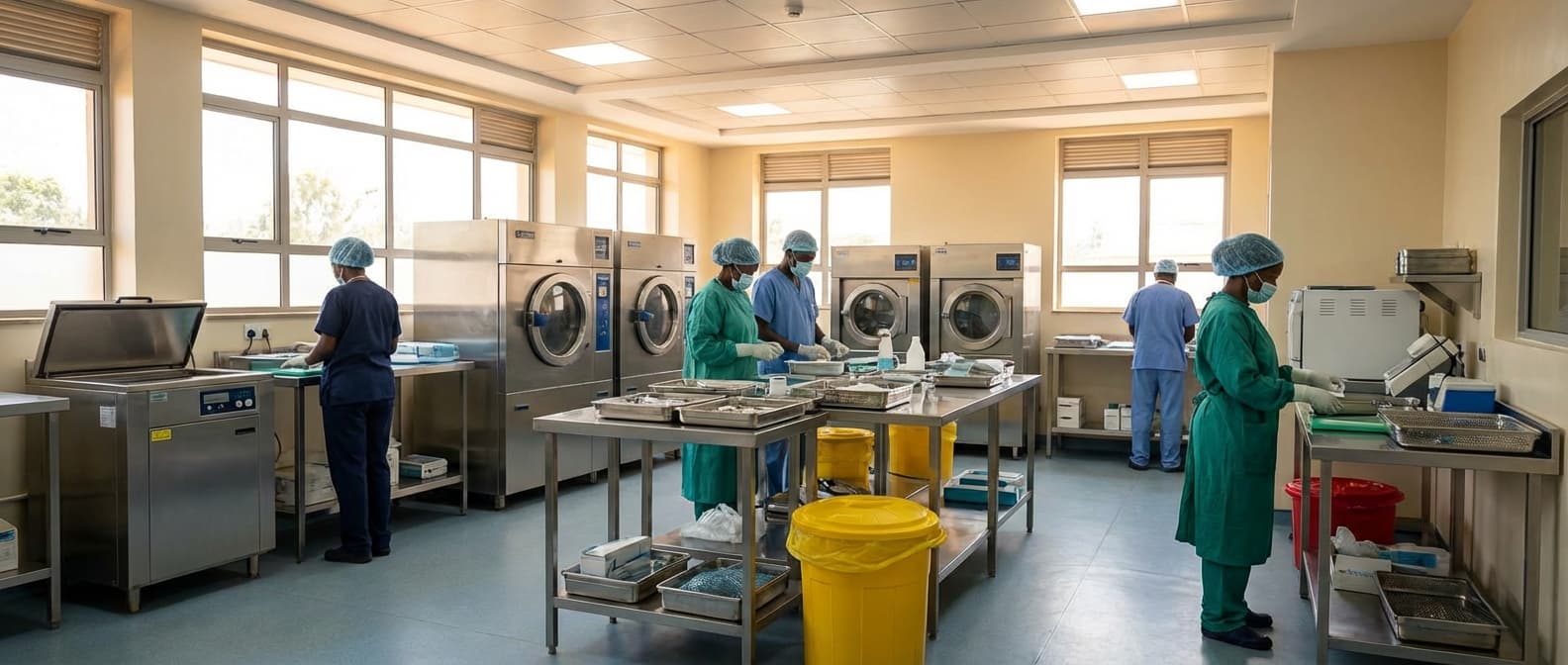
Autoclave Validation Support Service in Madagascar
Engineering Excellence & Technical Support
Autoclave Validation Support Service High-standard technical execution following OEM protocols and local regulatory frameworks.
ISO 17025 Accredited Validation
Ensure your autoclaves meet rigorous international standards with our ISO 17025 accredited validation services. We provide traceable, documented evidence of sterilization efficacy, crucial for regulatory compliance and patient safety in Madagascar's healthcare sector.
Advanced Calibration & Monitoring
Leverage our state-of-the-art calibration equipment and real-time monitoring systems to guarantee precise temperature, pressure, and time parameters. This minimizes the risk of sterilization failures and extends the lifespan of your autoclaves in Madagascar's diverse environmental conditions.
Digital Documentation & Reporting
Receive comprehensive, digitally signed validation reports accessible via a secure cloud platform. This streamlined process ensures immediate availability of critical data for audits, troubleshooting, and continuous improvement of your sterilization protocols across Madagascar.
What Is Autoclave Validation Support Service In Madagascar?
Autoclave validation support services in Madagascar are specialized technical consulting offerings focused on ensuring the performance, reliability, and compliance of steam sterilization equipment (autoclaves) used in various critical sectors. These services are essential for maintaining product sterility, patient safety, and adherence to regulatory standards. The core of these services involves a systematic, documented approach to demonstrating that an autoclave consistently performs as intended under defined operating conditions.
| Who Needs Autoclave Validation Support? | Typical Use Cases |
|---|---|
| Healthcare Facilities: Hospitals, clinics, dental practices, and laboratories that sterilize medical devices, surgical instruments, and laboratory equipment. | Sterilization of reusable medical instruments for surgical procedures, diagnostic tests, and patient care to prevent Healthcare-Associated Infections (HAIs). |
| Pharmaceutical and Biotechnology Companies: Manufacturing facilities involved in producing sterile drug products, biologicals, and medical devices. | Sterilization of manufacturing equipment, media, vials, stoppers, and other components to ensure product sterility and prevent contamination in drug manufacturing. |
| Food and Beverage Industry: Companies involved in processing and packaging food products requiring sterilization to extend shelf life and ensure safety. | Sterilization of packaging materials, containers, and processing equipment to achieve commercial sterility and prevent spoilage or foodborne illnesses. |
| Research Institutions and Academia: Laboratories conducting research that requires sterile environments and equipment. | Sterilization of glassware, media, and equipment for experiments in life sciences, microbiology, and other research disciplines. |
| Veterinary Services: Animal hospitals and clinics sterilizing surgical instruments and equipment. | Ensuring the sterility of instruments used in animal surgery and diagnostics. |
Key Components of Autoclave Validation Support Service:
- Installation Qualification (IQ): Verifies that the autoclave is installed correctly according to manufacturer specifications and relevant standards. This includes checking physical installation, utilities (power, water, steam), and safety features.
- Operational Qualification (OQ): Confirms that the autoclave operates within its defined parameters and tolerates expected variations. This involves testing critical control points such as temperature, pressure, time, and sterilization cycle parameters across a range of operating conditions.
- Performance Qualification (PQ): Demonstrates that the autoclave consistently achieves the required sterilization levels for the intended load types under normal operating conditions. This typically involves using biological indicators (BIs) and chemical indicators (CIs) to confirm microbial inactivation and effective penetration of the sterilizing agent.
- Revalidation: Periodic re-assessment and re-qualification to ensure the autoclave continues to meet validation requirements after significant maintenance, repairs, relocation, or changes in operating procedures or load types.
- Documentation and Reporting: Comprehensive generation of validation protocols, test records, calibration certificates, and final validation reports that meet regulatory and internal quality assurance requirements.
- Training: Providing technical training to in-house personnel on the operation, monitoring, and basic maintenance of the validated autoclave systems.
- Troubleshooting and Root Cause Analysis: Assisting in identifying and resolving any performance deviations or failures observed during validation or routine operation.
Who Needs Autoclave Validation Support Service In Madagascar?
In Madagascar, organizations that rely on sterilized medical and laboratory equipment for patient safety, research integrity, and compliance with health regulations often require specialized Autoclave Validation Support Services. These services ensure that autoclaves are functioning correctly and consistently sterilizing instruments, preventing the spread of infections and guaranteeing the reliability of experimental results. The need for such support is paramount for maintaining high standards of healthcare and scientific advancement within the country.
| Customer Type | Key Departments Requiring Support |
|---|---|
| Hospitals and Clinics | Central Sterile Supply Department (CSSD), Operating Theatres, Infection Control Department, Laboratory Services, Outpatient Clinics |
| Diagnostic Laboratories | Microbiology, Pathology, Hematology, Biochemistry, Molecular Diagnostics |
| Research Institutions | All departments utilizing sterile equipment for experiments (e.g., Life Sciences, Medical Research, Environmental Science) |
| Pharmaceutical Companies | Quality Control (QC) Department, Research and Development (R&D) Department, Manufacturing (for sterile production environments) |
| Dental Practices | Sterilization Room/Area |
| Veterinary Clinics | Surgical Suites, Diagnostic Laboratories |
Target Customers and Departments Requiring Autoclave Validation Support Services in Madagascar
- Hospitals and Clinics
- Diagnostic Laboratories
- Research Institutions
- Pharmaceutical Companies
- Dental Practices
- Veterinary Clinics
Autoclave Validation Support Service Process In Madagascar
This document outlines the Autoclave Validation Support Service process in Madagascar, detailing the workflow from initial customer inquiry to the final execution and reporting of validation activities. The service aims to ensure autoclaves meet regulatory and operational requirements for sterilization processes.
| Stage | Description | Key Activities | Deliverables | Responsibility |
|---|---|---|---|---|
| The customer expresses interest in autoclave validation services. | Receive inquiry, understand customer needs, discuss service scope, clarify regulatory requirements (e.g., ISO, local health regulations). | Initial understanding of customer requirements, preliminary service discussion. | Customer, Service Provider (Madagascar) |
| Based on the initial consultation, a formal proposal and quotation are generated. | Assess equipment details, validation scope (IQ, OQ, PQ), required standards, provide a detailed proposal including methodology, timeline, and cost. | Formal Proposal, Detailed Quotation, Service Agreement Template. | Service Provider (Madagascar) |
| Upon acceptance of the proposal, a contract is signed, and the validation schedule is established. | Contract negotiation and signing, confirm dates and times for validation execution, coordinate with customer's operational schedule, inform relevant personnel. | Signed Service Contract, Confirmed Validation Schedule. | Customer, Service Provider (Madagascar) |
| A preliminary visit to the customer's facility to assess the autoclave and its environment. | Inspect autoclave, review installation records, assess utilities (steam, water, power), identify potential challenges or requirements, confirm site readiness. | Site readiness assessment report (if conducted). | Service Provider (Madagascar) |
| The core validation activities are performed on-site. | Installation Qualification (IQ): Verify proper installation. Operational Qualification (OQ): Test autoclave functionality under various conditions. Performance Qualification (PQ): Demonstrate effective sterilization of typical loads under normal operating conditions. Use calibrated equipment and adhere to established protocols. | Raw validation data, calibration certificates for test equipment. | Service Provider (Madagascar) |
| The collected data is analyzed, and a comprehensive validation report is generated. | Analyze IQ, OQ, and PQ data, identify deviations or out-of-specification results, interpret findings, prepare a detailed validation report including executive summary, methodology, results, analysis, and conclusions. | Draft Validation Report, Analysis Summary. | Service Provider (Madagascar) |
| The validation report is reviewed by the customer, and final approval is sought. | Submit draft report to customer for review, address customer queries and feedback, make necessary revisions, obtain formal sign-off on the final report. | Final Approved Validation Report. | Customer, Service Provider (Madagascar) |
| Ongoing support and guidance are provided after the validation is complete. | Provide recommendations for maintenance and re-validation, offer further consultation on sterilization best practices, maintain records for future reference, support any regulatory audits. | Recommendations for future actions, continued customer support. | Service Provider (Madagascar) |
Autoclave Validation Support Service Process Workflow
- Inquiry & Initial Consultation
- Proposal & Quotation
- Contract & Scheduling
- Pre-validation Site Visit (Optional)
- Validation Execution
- Data Analysis & Reporting
- Final Review & Approval
- Post-validation Support & Recommendations
Autoclave Validation Support Service Cost In Madagascar
The cost of autoclave validation support services in Madagascar is influenced by several key factors, leading to a range of pricing. These services are crucial for ensuring the effectiveness of sterilization processes in healthcare, laboratories, and other critical environments. The specific requirements of the facility, the complexity of the autoclaves, the number of units to be validated, and the extent of the validation process (e.g., IQ, OQ, PQ) all play a significant role in determining the final cost. Additionally, the experience and accreditation of the service provider, as well as travel and accommodation expenses if the provider is not local to the client's facility, will contribute to the overall investment.
| Service Type | Estimated Price Range (MGA) | Notes |
|---|---|---|
| Basic Installation Qualification (IQ) | 150,000 - 300,000 | Covers verification of proper installation and component identification. |
| Operational Qualification (OQ) | 250,000 - 500,000 | Tests the autoclave's operational parameters within specified limits. |
| Performance Qualification (PQ) - Per Cycle | 300,000 - 600,000 | Verifies consistent performance under typical load conditions. May require multiple cycles. |
| Full Validation (IQ, OQ, PQ - Single Autoclave) | 700,000 - 1,400,000 | Comprehensive validation covering all stages for one unit. |
| Re-validation (OQ/PQ) | 400,000 - 800,000 | Annual or bi-annual re-validation to ensure continued compliance. |
| Protocol Development | 100,000 - 250,000 | Customized validation protocol creation. |
| Travel & Accommodation (if applicable) | Variable | Dependent on distance and provider's location. |
Key Pricing Factors for Autoclave Validation Support Services in Madagascar
- Scope of Validation: Installation Qualification (IQ), Operational Qualification (OQ), and Performance Qualification (PQ) have different cost implications.
- Number and Type of Autoclaves: Validating multiple units or different sizes/capacities of autoclaves will increase the overall cost.
- Facility Size and Location: Larger facilities or those in remote areas may incur higher travel and logistical costs.
- Service Provider Expertise and Accreditation: Highly experienced and accredited providers may command higher fees.
- Frequency of Validation: Routine re-validation cycles are typically less expensive per cycle than initial validation.
- Additional Services: Any supplementary services, such as calibration, maintenance, or protocol development, will add to the cost.
- Report Generation and Documentation: The level of detail and complexity of the validation reports can influence pricing.
Affordable Autoclave Validation Support Service Options
Autoclave validation is a critical but often costly process for healthcare facilities, research labs, and manufacturing industries. Ensuring your autoclaves operate correctly and meet regulatory standards is paramount for patient safety, product integrity, and compliance. This document outlines affordable autoclave validation support service options, focusing on value bundles and cost-saving strategies to make this essential service more accessible.
| Service Option | Description | Value Proposition | Cost-Saving Strategy |
|---|---|---|---|
| Basic Validation Package | Includes essential tests like cycle verification, temperature mapping, and pressure checks for a single autoclave. Delivered with comprehensive reports. | Ensures fundamental compliance and operational integrity at a foundational level. Ideal for facilities with fewer autoclaves or less complex needs. | Bundles essential services at a fixed price, reducing per-test costs compared to individual service calls. Predictable budgeting. |
| Comprehensive Validation Bundle | Encompasses all aspects of basic validation plus biological indicator testing, vacuum leak tests, and documentation review for multiple autoclaves. Can be tailored to specific industry needs. | Provides a robust assurance of sterilization efficacy and regulatory adherence for facilities with multiple units or higher compliance demands. | Offers a discounted rate when multiple validation services or units are included in a single agreement. Reduces administrative overhead for scheduling and reporting. |
| Annual Maintenance & Validation Contract | Combines scheduled preventive maintenance with routine validation testing. Includes priority service and discounted rates on emergency call-outs. | Proactive approach to equipment reliability and continuous compliance, minimizing downtime and unexpected repair costs. Streamlines annual compliance efforts. | Locks in favorable pricing for a defined period. Reduces the need for ad-hoc service bookings which are typically more expensive. Preventive maintenance reduces the likelihood of costly breakdowns. |
| Remote Monitoring & Data Analysis | Leverages technology to remotely monitor autoclave cycles, collect data, and provide trend analysis. Can flag potential issues before they become critical. | Increases operational efficiency and provides real-time insights into autoclave performance, allowing for early intervention and proactive adjustments. | Reduces the need for some on-site validation events by providing continuous assurance. Potentially lowers travel costs for technicians. Data-driven insights can optimize cycle parameters, saving energy and consumables. |
| Training & Internal Audit Support | Provides training for your in-house staff on basic validation procedures and documentation, along with support for internal audits. | Empowers your team to conduct routine checks and understand validation requirements, fostering a culture of compliance and reducing reliance on external services for every task. | Reduces the frequency of external validation by equipping your staff for basic checks. Saves on consultant fees for audit preparation. |
General Cost-Saving Strategies for Autoclave Validation:
- Bundle Services: Opt for packages that combine multiple validation tests or include maintenance. This often comes with a volume discount.
- Long-Term Contracts: Commit to annual or multi-year contracts for validation and maintenance to secure preferred pricing and priority service.
- Schedule Strategically: Coordinate validation with planned maintenance or downtime to minimize disruption and potential extra service calls.
- Leverage Technology: Explore remote monitoring solutions that can reduce the frequency of on-site visits and provide continuous data assurance.
- In-House Training: Invest in training your staff for basic checks and documentation, which can supplement external validation needs.
- Preventive Maintenance: Regular maintenance significantly reduces the risk of costly breakdowns and emergency repairs, which are almost always more expensive.
- Compare Providers: Obtain quotes from multiple reputable validation service providers to ensure competitive pricing.
- Understand Your Needs: Accurately assess your facility's validation requirements to avoid paying for services you don't need.
- Group Purchasing Organizations (GPOs): If applicable to your industry, explore if your GPO offers discounted validation services.
- Optimize Cycle Parameters: Work with your provider to ensure your autoclave cycles are efficient and validated, potentially saving on energy and consumables.
Verified Providers In Madagascar
In Madagascar's evolving healthcare landscape, identifying trustworthy and qualified medical professionals is paramount. 'Verified Providers in Madagascar' highlights those who have undergone rigorous credentialing processes, ensuring they meet high standards of medical expertise and ethical practice. Among these, Franance Health stands out as a beacon of reliability and excellence.
| Credential Type | Verification Focus | Benefit to Patients |
|---|---|---|
| Medical Licenses & Certifications | Ensures foundational legal and professional qualifications. | Confirms providers are legally permitted to practice and have met industry standards. |
| Education & Training Records | Validates academic and specialized training from reputable institutions. | Assures providers possess the theoretical knowledge and practical skills required. |
| Work Experience & References | Confirms practical application of skills and professional reputation. | Provides confidence in the provider's real-world experience and peer recognition. |
| Ethical Conduct & Disciplinary History | Screens for any past malpractice or professional misconduct. | Guarantees adherence to high ethical standards and patient safety. |
| Continuing Medical Education (CME) | Mandates regular updates in medical knowledge and skills. | Ensures providers are current with the latest treatments and diagnostic techniques. |
Why Franance Health Credentials Represent the Best Choice:
- Rigorous Verification Process: Franance Health employs a multi-faceted verification system that goes beyond basic licensing. This includes scrutinizing educational backgrounds, professional experience, board certifications, and any disciplinary actions.
- Commitment to Continuous Professional Development: Verified Franance Health providers are required to engage in ongoing training and education, ensuring they are up-to-date with the latest medical advancements and best practices.
- Patient-Centric Approach: The verification process emphasizes not only clinical skills but also a commitment to patient well-being, communication, and ethical conduct.
- Transparency and Accountability: Franance Health maintains a transparent record of its verified providers, allowing patients to make informed decisions about their healthcare.
- Access to Specialized Care: By vetting a wide range of specialists, Franance Health ensures that patients can access qualified care for diverse medical needs across Madagascar.
Scope Of Work For Autoclave Validation Support Service
This Scope of Work (SOW) outlines the services to be provided by [Service Provider Name] (hereinafter referred to as "the Provider") to [Client Name] (hereinafter referred to as "the Client") for Autoclave Validation Support Services. The objective of this service is to ensure that the Client's autoclaves consistently operate within specified parameters to achieve effective sterilization, meeting regulatory requirements and internal quality standards.
| Deliverable | Description | Standard Specification/Reference | Format |
|---|---|---|---|
| Validation Master Plan (VMP) | Outlines the overall validation strategy, scope, objectives, responsibilities, and timelines for the autoclave validation project. | ICH Q7, ISO 13485, GHTF SG1/N044:2001, Client's internal SOPs | Electronic Document (PDF) |
| Installation Qualification (IQ) Protocol | Details the tests and procedures to verify that the autoclave is installed correctly, according to manufacturer specifications and regulatory requirements. | Manufacturer's Installation Manual, Relevant Industry Standards (e.g., AAMI TIR14), Client's Design Specifications | Electronic Document (PDF) |
| Installation Qualification (IQ) Report | Documents the results of the IQ testing, deviations encountered, and confirmation of successful installation. | N/A (results-based) | Electronic Document (PDF) |
| Operational Qualification (OQ) Protocol | Details the tests and procedures to verify that the autoclave operates consistently within defined operating ranges and meets performance specifications under normal and worst-case conditions. | Manufacturer's Operating Manual, Cycle Sheets, Relevant Industry Standards (e.g., AAMI TIR14), Client's Sterilization Cycle Parameters | Electronic Document (PDF) |
| Operational Qualification (OQ) Report | Documents the results of the OQ testing, including data from test runs, analysis of temperature, pressure, and time parameters, and confirmation of operational readiness. | N/A (results-based) | Electronic Document (PDF) |
| Performance Qualification (PQ) Protocol | Details the tests and procedures to verify that the autoclave consistently delivers the required sterilization performance using the Client's actual product or representative biological indicators (BIs) and chemical indicators (CIs). | Client's Product Information, Sterilization Cycle Parameters, Relevant Industry Standards (e.g., EN 285, ISO 11135, AAMI TIR14), BI Manufacturer's Instructions, CI Manufacturer's Instructions | Electronic Document (PDF) |
| Performance Qualification (PQ) Report | Documents the results of the PQ testing, including BI/CI results, cycle load configurations, and confirmation of effective sterilization. | N/A (results-based) | Electronic Document (PDF) |
| Requalification Protocols (IQ/OQ/PQ) | Protocols for periodic or post-maintenance revalidation to ensure continued compliance. | Based on original VMP and regulatory guidance | Electronic Document (PDF) |
| Validation Summary Report | A comprehensive report summarizing the validation activities, results, deviations, and conclusion regarding the autoclave's validated status. | ICH Q7, ISO 13485 | Electronic Document (PDF) |
| Calibration Certificates for Validation Equipment | Certificates confirming that all measurement and monitoring equipment used during validation has been calibrated and is traceable to national/international standards. | NIST, UKAS, or equivalent accreditation standards | Electronic Document (PDF) |
| Data Analysis and Interpretation | Statistical analysis of validation data to confirm conformity to specifications and trends. | Relevant statistical methods (e.g., standard deviation, mean, range) | Included within reports or separate document |
| Recommendations for System Improvements | Suggestions for optimizing autoclave performance, cycle efficiency, or compliance based on validation findings. | N/A (expert opinion) | Included within reports or separate document |
Technical Deliverables
- Validation Master Plan (VMP) for Autoclave
- Installation Qualification (IQ) Protocol and Report
- Operational Qualification (OQ) Protocol and Report
- Performance Qualification (PQ) Protocol and Report
- Requalification Protocols (IQ/OQ/PQ) as needed
- Validation Summary Report
- Calibration Certificates for Validation Equipment
- Data Analysis and Interpretation
- Recommendations for System Improvements (if applicable)
- Training Material for Client Personnel (optional, based on agreement)
Service Level Agreement For Autoclave Validation Support Service
This Service Level Agreement (SLA) outlines the response times and uptime guarantees for the Autoclave Validation Support Service provided by [Your Company Name] to [Client Company Name]. This SLA is an addendum to the Master Service Agreement between the parties.
| Service Component | Response Time (Business Hours) | Resolution Target (Business Hours) | Uptime Guarantee |
|---|---|---|---|
| Critical Support (Validation Failure) | 1 hour | 4 business hours | 99.9% (for validated autoclaves, availability of support) |
| High Priority Support (Technical Issue) | 2 business hours | 8 business hours | N/A (support availability) |
| Medium Priority Support (Inquiry/Guidance) | 4 business hours | 24 business hours | N/A (support availability) |
| Low Priority Support (General Information) | 1 business day | 48 business hours | N/A (support availability) |
| Scheduled Maintenance/Calibration Support | As per agreed schedule | As per agreed schedule | N/A (support availability) |
Service Scope
- On-site technical support for autoclave validation procedures.
- Troubleshooting and resolution of autoclave validation failures.
- Calibration and preventative maintenance support for validated autoclaves.
- Remote support for general inquiries and initial troubleshooting steps.
- Assistance with re-validation processes.
Frequently Asked Questions

Ready when you are
Let's scope your Autoclave Validation Support Service in Madagascar project in Madagascar.

Scaling healthcare logistics and technical systems across the entire continent.