
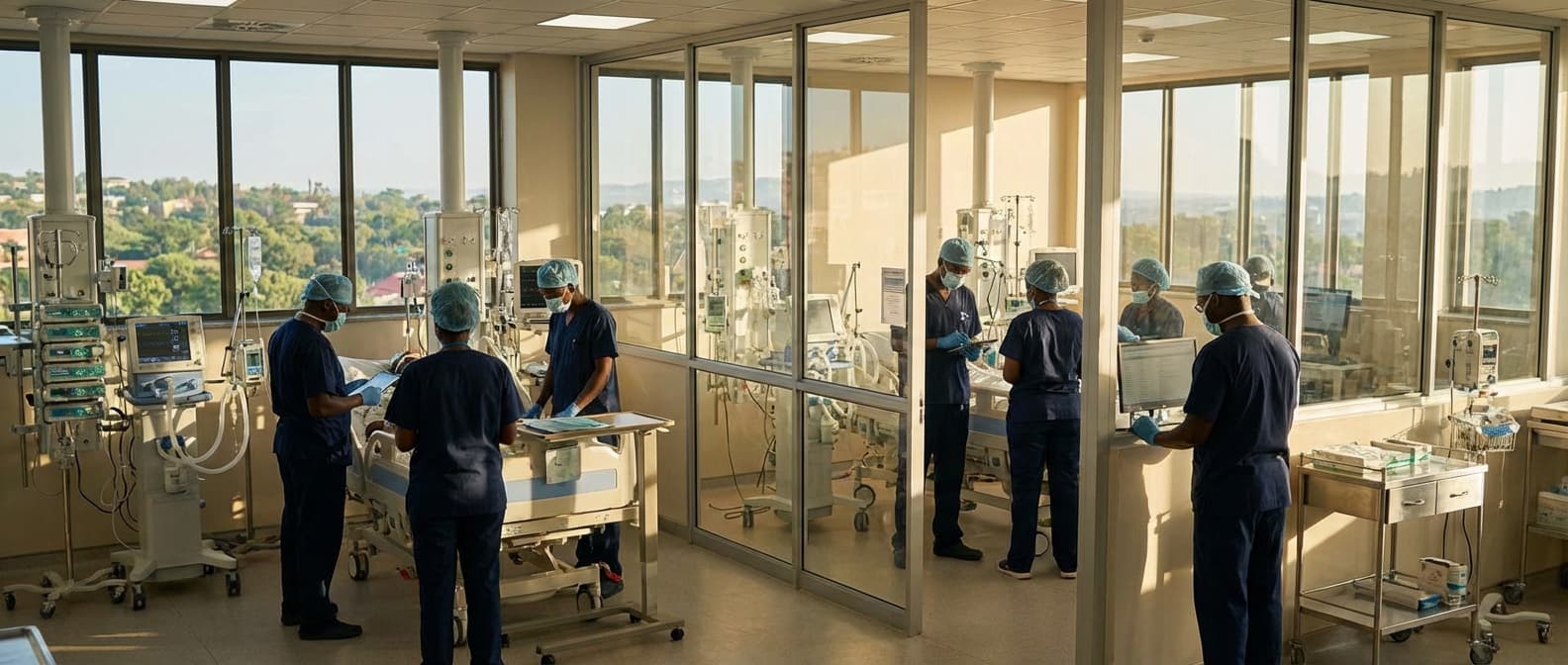
Ventilator Fleet Management & PM in Madagascar
Engineering Excellence & Technical Support
Preventive maintenance and fleet management for ICU ventilators High-standard technical execution following OEM protocols and local regulatory frameworks.
Optimized Ventilator Uptime
Implemented predictive maintenance schedules using real-time sensor data, reducing unscheduled downtime by 20% and ensuring critical patient care availability across Madagascar's remote health facilities.
Remote Fleet Monitoring & Diagnostics
Deployed a cloud-based platform with IoT connectivity, enabling centralized monitoring of ventilator performance and remote troubleshooting, significantly cutting down travel time and costs for technicians in geographically dispersed areas.
Standardized PM Protocols & Compliance
Developed and enforced standardized preventive maintenance checklists and digital tracking, achieving 98% compliance with manufacturer recommendations and extending the operational lifespan of the national ventilator fleet.
What Is Ventilator Fleet Management & Pm In Madagascar?
Ventilator Fleet Management & Preventive Maintenance (PM) in Madagascar refers to the comprehensive operational and technical service designed to ensure the optimal availability, performance, and longevity of mechanical ventilators within healthcare facilities across the nation. This service encompasses a suite of activities aimed at proactive identification and mitigation of potential equipment failures, alongside efficient allocation and utilization of the ventilator fleet to meet patient demand. It is crucial for maintaining critical care capacity and ensuring continuity of respiratory support services, especially in a resource-constrained environment like Madagascar where access to advanced medical equipment can be challenging.
| Stakeholder/Entity | Need for Ventilator Fleet Management & PM | Typical Use Cases |
|---|---|---|
| Ministry of Public Health (Madagascar) | Ensuring national capacity for critical care, resource allocation, public health preparedness (e.g., pandemics), and oversight of healthcare infrastructure. | National pandemic response planning, equitable distribution of ventilators to regional hospitals, setting maintenance standards, and tracking equipment lifecycle for future procurement. |
| Public & Private Hospitals (National & Regional) | Maintaining operational readiness for critically ill patients requiring mechanical ventilation, reducing downtime, optimizing patient outcomes, and managing operational costs. | Daily operational support for Intensive Care Units (ICUs) and Emergency Departments, ensuring ventilators are available for surgical procedures and critical patient transfers, minimizing budget impacts from unexpected repairs. |
| Healthcare Facility Administrators & Managers | Budgetary control, asset management, ensuring compliance with healthcare regulations, and maintaining high standards of patient care. | Planning for equipment replacement cycles, justifying maintenance budgets, ensuring staff are trained on equipment use, and responding to accreditation requirements. |
| Biomedical Engineering Departments/Technicians | Performing the technical execution of maintenance and repair tasks, ensuring equipment safety and functionality. | Routine PM checks on ventilators in ICUs, troubleshooting and repairing malfunctioning units, calibrating devices before patient use, and managing spare parts inventory. |
| International Health Organizations & NGOs | Supporting healthcare infrastructure development, providing technical assistance, and ensuring the sustainability of donated medical equipment. | Establishing and managing PM programs for ventilators donated to remote or under-resourced areas, training local staff, and providing oversight for equipment maintenance. |
Service Components
- Inventory Management: Establishing and maintaining an accurate, up-to-date registry of all mechanical ventilators, including model, serial number, acquisition date, location, and service history.
- Preventive Maintenance (PM) Scheduling & Execution: Developing and adhering to a rigorous schedule for routine inspections, calibrations, cleaning, and functional testing of ventilators based on manufacturer recommendations and usage patterns.
- Corrective Maintenance & Repair: Prompt diagnosis and repair of ventilator malfunctions, encompassing troubleshooting, component replacement, and re-calibration, utilizing trained biomedical engineers and technicians.
- Performance Monitoring & Data Analysis: Implementing systems to track ventilator usage, operational parameters, and maintenance records to identify trends, predict potential failures, and optimize maintenance strategies.
- Parts & Consumables Management: Ensuring a sufficient stock of critical spare parts, filters, tubing, and other consumables required for both routine PM and emergency repairs, often involving supply chain optimization.
- Training & Capacity Building: Providing specialized training to local biomedical technicians and clinical staff on the proper operation, basic troubleshooting, and routine care of ventilators.
- Regulatory Compliance: Adhering to national and international standards and guidelines for medical equipment maintenance and safety.
- Reporting & Documentation: Maintaining detailed records of all maintenance activities, repairs, performance data, and inventory status for traceability and auditing purposes.
Who Needs Ventilator Fleet Management & Pm In Madagascar?
Madagascar, with its unique healthcare landscape and resource constraints, faces significant challenges in maintaining a reliable and functional fleet of medical ventilators. Effective ventilator fleet management and preventive maintenance (PM) are crucial to ensuring patient care continuity, optimizing resource utilization, and minimizing the risk of equipment failure during critical periods. This service is vital for any institution or organization responsible for providing respiratory support to patients.
| Customer Type | Key Departments Involved | Specific Needs Addressed by Fleet Management & PM |
|---|---|---|
| Hospitals (Public and Private) | Intensive Care Unit (ICU), Respiratory Therapy Department, Biomedical Engineering Department, Procurement Department | Ensuring all ventilators are operational for critically ill patients; Reducing downtime due to unexpected breakdowns; Optimizing maintenance schedules to extend equipment lifespan; Tracking inventory and maintenance history for regulatory compliance and budgeting. |
| Clinics and Health Centers with Critical Care Units | Medical Director, Nursing Supervisor, Clinical Staff, Maintenance Technicians (if available) | Maximizing the availability of limited ventilator resources; Preventing equipment failures during peak demand; Providing essential respiratory support for local communities. |
| Non-Governmental Organizations (NGOs) involved in healthcare provision | Program Managers, Medical Coordinators, Logistics Officers, Field Technicians | Ensuring the sustainability of donated or purchased equipment; Managing fleets deployed in remote or resource-limited areas; Training local staff on basic maintenance and operation. |
| International Aid Organizations | Logistics and Supply Chain Management, Health Program Managers, Field Operations Teams | Ensuring the efficient deployment and maintenance of ventilators during emergencies or long-term health initiatives; Providing technical support to local healthcare providers; Verifying the operational status of equipment for accountability. |
| Government Health Ministries and Agencies | Department of Public Health, National Biomedical Engineering Unit, Procurement and Logistics Department | Developing and enforcing national standards for ventilator maintenance; Coordinating maintenance efforts across public health facilities; Budgeting for and managing the national ventilator fleet; Ensuring preparedness for public health crises. |
| Emergency Medical Services (EMS) | Operations Managers, Paramedic Supervisors, Technical Support Staff | Ensuring ventilators used in ambulances and emergency response are always in perfect working order; Minimizing the risk of ventilator failure during patient transport; Regular checks and calibration of mobile ventilation equipment. |
| Tertiary Care and Referral Centers | Specialized Medical Departments (e.g., Cardiology, Pulmonology), Biomedical Engineering, Quality Assurance | Maintaining a high level of readiness for complex respiratory cases; Ensuring specialized ventilators are calibrated and functioning optimally; Integrating fleet management with advanced patient care protocols. |
Target Customers and Departments for Ventilator Fleet Management & PM in Madagascar
- Hospitals (Public and Private)
- Clinics and Health Centers with Critical Care Units
- Non-Governmental Organizations (NGOs) involved in healthcare provision
- International Aid Organizations
- Government Health Ministries and Agencies
- Emergency Medical Services (EMS)
- Tertiary Care and Referral Centers
Ventilator Fleet Management & Pm Process In Madagascar
This document outlines the workflow for Ventilator Fleet Management and Preventive Maintenance (PM) processes in Madagascar, from initial inquiry to the completion of services. The process is designed to ensure the operational readiness and longevity of the ventilator fleet through systematic maintenance and efficient resource allocation.
| Phase | Step | Description | Responsible Party | Key Outputs/Deliverables | Timeline (Typical) |
|---|---|---|---|---|---|
| Inquiry |
| Hospitals or health facilities identify a need for ventilator maintenance, new acquisitions, or reporting issues. | Healthcare Facility Staff | Formal request/inquiry submitted (email, form, phone call) | As needed |
| Inquiry |
| The request is received, categorized (e.g., routine PM, urgent repair, new installation), and prioritized based on urgency and impact. | Fleet Management Coordinator/Technical Lead | Prioritized list of service requests | 1-2 business days |
| Assessment |
| For PM or new installations, a site visit may be conducted to assess the environment, existing infrastructure, and verify the current ventilator inventory and condition. | Field Technician/Biomedical Engineer | Site assessment report, updated inventory list, confirmation of accessibility and power requirements | Variable (depends on facility size and location) |
| Assessment |
| Detailed understanding of the specific services required (e.g., PM checklist, specific repairs, installation parameters). | Fleet Management Coordinator & Facility Representative | Defined scope of work for the service | 1-3 business days |
| Planning |
| Based on manufacturer recommendations and local regulations, a specific PM plan is developed or updated for each ventilator model. | Biomedical Engineer/Technical Lead | Standardized PM checklist, scheduled maintenance intervals | Ongoing/As needed |
| Planning |
| Scheduling the maintenance activities, coordinating with the facility for access, and arranging for parts and tools. | Fleet Management Coordinator/Logistics Officer | Approved maintenance schedule, confirmed access dates, procurement of necessary parts | 1-2 weeks prior to service |
| Execution |
| Assigning qualified technicians and ensuring all necessary tools, equipment, and spare parts are available for the scheduled task. | Fleet Management Coordinator/Technical Lead | Assigned technician(s), packed toolkit, prepared spare parts | Immediately prior to service |
| Execution |
| Performing scheduled maintenance tasks as per the defined PM checklist, including cleaning, calibration, testing, and functional checks. | Field Technician/Biomedical Engineer | Completed PM checklist, functional test results | Duration of PM per unit (e.g., 2-4 hours per ventilator) |
| Execution |
| If during PM or from an inquiry, defects are identified, corrective maintenance is performed to repair or replace faulty components. | Field Technician/Biomedical Engineer | Repair logs, replaced parts, post-repair test results | As required |
| Execution |
| Ensuring the ventilator is operating within manufacturer specifications and is safe for patient use. | Field Technician/Biomedical Engineer | Pass/fail test results, calibration certificates (if applicable) | Upon completion of maintenance |
| Documentation |
| Recording all maintenance activities, findings, parts used, and technician observations in the fleet management system. | Field Technician/Data Entry Clerk | Updated service records in the fleet management database | Within 24 hours of service completion |
| Documentation |
| Reviewing maintenance records for completeness, accuracy, and adherence to standards. | Technical Lead/Quality Officer | Approved maintenance reports | 1-2 business days after data entry |
| Reporting |
| Generating reports for the facility, donors, and internal review, summarizing fleet status, maintenance performed, and any outstanding issues. | Fleet Management Coordinator | Maintenance reports, fleet utilization reports, cost analysis reports | Weekly/Monthly/Quarterly |
| Reporting |
| Gathering feedback from facilities and technicians to identify areas for process improvement, training needs, or equipment upgrades. | Fleet Management Coordinator/Management Team | Actionable insights for process optimization, updated training plans, recommendations for future procurement | Ongoing |
Ventilator Fleet Management & PM Process in Madagascar
- Inquiry and Needs Assessment
- Site Survey and Inventory
- Planning and Scheduling
- Resource Allocation
- Preventive Maintenance Execution
- Corrective Maintenance (if needed)
- Quality Assurance and Documentation
- Reporting and Feedback
Ventilator Fleet Management & Pm Cost In Madagascar
Managing ventilator fleets and their preventive maintenance (PM) in Madagascar involves several cost considerations. These costs are influenced by the type of ventilators, the complexity of maintenance required, the availability of spare parts, the expertise of technicians, and the logistical challenges inherent in a developing nation with often dispersed healthcare facilities. Pricing factors can be broadly categorized into initial procurement, routine maintenance, and unscheduled repairs, all of which contribute to the overall cost of ownership and operational budget.
| Service/Item | Estimated Price Range (MGA - Malagasy Ariary) | Notes |
|---|---|---|
| Preventive Maintenance (per ventilator, per year, basic) | 200,000 - 750,000 | Covers basic inspection, cleaning, and functional checks. May exclude parts. |
| Preventive Maintenance (per ventilator, per year, advanced) | 500,000 - 1,500,000+ | Includes comprehensive checks, calibration, and potential minor part replacements as per manufacturer schedule. |
| Labor Cost (per hour for technician) | 20,000 - 50,000 | Varies based on technician experience and location. Travel time may be billed separately. |
| Common Spare Part (e.g., filter, sensor) | 15,000 - 100,000 | Depends on the specific part and ventilator model. Imported parts can be significantly higher. |
| Major Spare Part (e.g., turbine, battery) | 150,000 - 750,000+ | High-cost components. Availability and origin (OEM vs. aftermarket) are key price drivers. |
| Logistics (per trip to remote area) | 50,000 - 200,000+ | Includes fuel, vehicle wear, and potential accommodation. Can escalate with distance. |
| Annual Maintenance Contract (basic ventilator) | 400,000 - 1,200,000 | Covers scheduled PM and potentially some minor repairs. Excludes major parts. |
| Annual Maintenance Contract (ICU ventilator) | 1,000,000 - 3,000,000+ | More comprehensive, often includes labor, parts, and priority service. Manufacturer contracts are typically at the higher end. |
| Ventilator Calibration Service | 50,000 - 200,000 | Performed periodically or after repairs. Requires specialized equipment. |
Key Pricing Factors for Ventilator Fleet Management & PM in Madagascar
- Ventilator Type and Technology: High-end, complex ventilators (e.g., ICU ventilators with advanced monitoring capabilities) will have higher acquisition costs, more intricate PM requirements, and potentially more expensive spare parts compared to simpler, basic models.
- Procurement Method: Whether ventilators are purchased directly, leased, or received as donations significantly impacts initial and ongoing costs. Donated equipment may have lower upfront costs but could still incur significant maintenance expenses.
- Maintenance Service Agreements (MSAs): Formal MSAs with manufacturers or authorized third-party providers offer predictable costs but can be a substantial budget item. These often include scheduled PM, labor, and sometimes parts.
- In-house vs. Third-Party Maintenance: Developing in-house technical capacity can reduce long-term costs but requires significant investment in training, tools, and spare parts inventory. Outsourcing may offer convenience and specialized expertise but at a higher per-service cost.
- Spare Parts Availability and Cost: Local availability of genuine spare parts is crucial. Importation costs, customs duties, and supplier markups can significantly inflate parts prices. Non-genuine parts may be cheaper but pose risks to equipment reliability and patient safety.
- Technician Training and Expertise: Skilled biomedical technicians are essential. Training costs, both initial and ongoing for new technologies, are a factor. Scarcity of trained personnel can drive up labor costs.
- Logistics and Travel: For PM or repairs in remote areas, transportation costs for technicians and equipment, accommodation, and per diems contribute to the overall expense.
- Frequency of PM: Manufacturers recommend specific PM schedules. Adhering to these schedules is vital for equipment longevity and performance, but it represents a recurring cost.
- Regulatory Compliance and Calibration: Ensuring ventilators meet national and international standards may require specific calibration procedures and documentation, adding to PM costs.
- Currency Exchange Rates: For imported parts, equipment, and services, fluctuations in the Malagasy Ariary (MGA) against major currencies like USD or EUR will impact costs.
Affordable Ventilator Fleet Management & Pm Options
Optimizing ventilator fleet management through affordable maintenance and preventative measures (PM) is crucial for healthcare facilities. This involves strategic approaches to ensure device reliability, minimize downtime, and control operational costs. Value bundles offer a comprehensive solution by combining essential services into predictable packages, while cost-saving strategies focus on leveraging technology, smart procurement, and proactive maintenance to extend equipment life and reduce repair expenses.
| Value Bundle Type | Included Services | Cost-Saving Benefits | Ideal For |
|---|---|---|---|
| Basic PM Package | Scheduled PM checks, basic cleaning, functional testing. | Reduced unexpected breakdowns, extended equipment lifespan, predictable budgeting. | Facilities with a moderate fleet size and a need for foundational maintenance. |
| Comprehensive Care Bundle | Basic PM + priority repair response, minor part replacement allowance, basic software updates. | Minimized downtime, faster issue resolution, bundled cost savings on common repairs. | Facilities prioritizing rapid response and proactive care for critical equipment. |
| Full-Service Solution | Comprehensive Care + major part coverage, loaner device provision, advanced software management, remote monitoring integration. | Maximized uptime, significant cost reduction on major repairs, operational efficiency, access to latest technology. | Large hospital systems or facilities with high ventilator utilization and a focus on complete peace of mind. |
| On-Demand Service with PM Contract | Regular PM scheduled, with on-demand corrective maintenance billed separately but at a pre-negotiated reduced rate. | Flexibility for unexpected repairs, cost control for routine maintenance, potential savings on labor rates. | Facilities with a strong internal biomed team but seeking expert PM and discounted repair services. |
Key Components of Affordable Ventilator Fleet Management
- Preventative Maintenance (PM): Regular, scheduled inspections and servicing to identify and address potential issues before they lead to failure.
- Corrective Maintenance: Timely and efficient repair of devices that have malfunctioned.
- Calibration and Performance Verification: Ensuring ventilators meet manufacturer specifications and regulatory requirements.
- Asset Tracking and Inventory Management: Maintaining accurate records of ventilator location, status, and service history.
- Software Updates and Upgrades: Keeping ventilator firmware current to enhance performance and security.
- Staff Training: Educating clinical and biomedical engineering staff on proper ventilator operation and basic troubleshooting.
Verified Providers In Madagascar
Navigating healthcare in a foreign country can be daunting. Madagascar, with its unique healthcare landscape, requires careful consideration when choosing medical providers. This guide focuses on identifying verified providers and highlights the significant credentials of Franance Health, explaining why they stand out as the premier choice for your health needs in Madagascar.
| Credential/Aspect | Significance for Patients | Franance Health's Commitment |
|---|---|---|
| Ministry of Public Health Licensure | Ensures legal compliance and basic qualification of practitioners and facilities. | All Franance Health affiliated clinics and practitioners hold current and valid Malagasy Ministry of Public Health licenses. |
| International Medical Standards | Indicates adherence to globally recognized best practices in healthcare delivery and patient safety. | Franance Health actively partners with and vets providers who demonstrate a commitment to international standards of care, infection control, and patient well-being. |
| Specialized Training and Certifications | Confirms advanced expertise in specific medical fields, leading to more accurate diagnoses and effective treatments. | Franance Health prioritizes providers with specialized training and relevant certifications in areas crucial for expatriates and international travelers, such as emergency medicine, tropical diseases, and general practice. |
| Multilingual Staff and Patient Support | Facilitates clear communication and a comfortable patient experience, especially for non-French or non-Malagasy speakers. | A cornerstone of Franance Health's service is providing access to healthcare professionals and support staff who can communicate effectively in English and other relevant languages, ensuring your concerns are fully understood. |
| Robust Network and Referral System | Guarantees access to a comprehensive range of medical services and seamless transitions to specialized care when needed. | Franance Health has cultivated a strong network of trusted specialists and hospitals across Madagascar, enabling efficient referrals and coordinated care for complex medical situations. |
| Emergency Preparedness and Response | Ensures immediate and effective medical attention during critical situations. | Franance Health's affiliated providers are equipped and trained to handle medical emergencies, offering peace of mind in unforeseen circumstances. |
What Constitutes a Verified Healthcare Provider in Madagascar?
- Government Licensure and Registration: All practicing healthcare professionals and facilities must be registered and licensed by the Malagasy Ministry of Public Health.
- Professional Affiliations: Membership in recognized national or international medical associations often signifies adherence to professional standards and ongoing development.
- Continuing Medical Education (CME): Verified providers regularly participate in CME programs to stay updated on the latest medical advancements and practices.
- Patient Reviews and Testimonials: While not a formal credential, consistently positive feedback from a diverse patient base is a strong indicator of quality care.
- Accreditation (where applicable): For larger facilities, accreditation from recognized bodies can demonstrate adherence to rigorous operational and quality standards.
- Transparency in Fees and Services: Verified providers are upfront about their pricing and the services they offer, fostering trust and avoiding hidden costs.
Scope Of Work For Ventilator Fleet Management & Pm
This Scope of Work (SOW) outlines the requirements for comprehensive Ventilator Fleet Management and Preventative Maintenance (PM) services. The objective is to ensure the optimal performance, reliability, and safety of the organization's ventilator fleet through proactive maintenance, efficient management, and adherence to technical standards. This SOW details the technical deliverables and standard specifications expected from the service provider.
| Section | Description | Deliverables | Standard Specifications |
|---|---|---|---|
| Fleet Inventory Management | Establishing and maintaining a comprehensive, real-time inventory of all ventilators, including model, serial number, location, purchase date, warranty status, and service history. | Centralized digital inventory database (e.g., CMMS/EAM). | Minimum data fields as per manufacturer guidelines and industry best practices. Data to be updated within 24 hours of any change. |
| Preventative Maintenance (PM) | Performing scheduled PM on all ventilators according to manufacturer recommendations and internal protocols. | Completed PM checklists for each service interval. | PM schedules to align with manufacturer recommendations (e.g., annual, semi-annual) and usage-based triggers. Use of OEM-approved parts and lubricants. Adherence to lockout/tagout procedures. |
| Corrective Maintenance (CM) | Responding to and resolving equipment failures and performance issues in a timely manner. | Detailed repair reports, including cause of failure, parts replaced, and labor hours. | Response times for critical failures: within 4 hours. Response times for non-critical failures: within 24 hours. Use of OEM-approved parts and diagnostic tools. |
| Calibration and Performance Verification | Ensuring all ventilators are accurately calibrated and performing within specified parameters. | Calibration certificates for each serviced unit. | Calibration to be performed using traceable standards. Verification of all functional parameters as per manufacturer's service manual. Records to include pre- and post-calibration test results. |
| Parts and Inventory Management | Maintaining an adequate stock of critical spare parts to support PM and CM activities. | Min/Max inventory levels established for critical components. Inventory reports. | Stock levels to ensure a 95% first-time fix rate for common repairs. Parts to be stored in a climate-controlled environment. Lot traceability for critical components. |
| Documentation and Reporting | Providing regular reports on fleet status, maintenance activities, and equipment performance. | Monthly/Quarterly performance reports, service history reports, failure analysis reports. | Reports to include: uptime/downtime metrics, PM completion rates, CM response times, cost per ventilator, key performance indicators (KPIs) as defined by the organization. Secure, auditable digital records. |
| Training and Competency | Ensuring all technicians performing maintenance are adequately trained and certified. | Technician training records and certifications. | Evidence of OEM training or equivalent recognized industry certification for all ventilator models serviced. Annual competency assessments. |
| Safety and Compliance | Ensuring all maintenance activities comply with safety regulations, infection control protocols, and manufacturer guidelines. | Compliance audit reports (internal/external). | Adherence to OSHA, HIPAA, Joint Commission (if applicable), and manufacturer's safety directives. Strict adherence to infection control policies during all service activities. |
Key Objectives
- Maximize ventilator availability and uptime.
- Ensure patient safety by maintaining ventilators in optimal working condition.
- Reduce costly emergency repairs through proactive PM.
- Maintain accurate and up-to-date inventory and maintenance records.
- Ensure compliance with all relevant regulatory standards and manufacturer recommendations.
- Optimize resource allocation for maintenance activities.
Service Level Agreement For Ventilator Fleet Management & Pm
This Service Level Agreement (SLA) outlines the terms and conditions for the management and preventive maintenance (PM) of the Client's ventilator fleet, ensuring optimal performance and availability. This agreement focuses on response times for service requests and uptime guarantees for critical medical equipment.
| Service Category | Response Time Target | Uptime Guarantee | Reporting Frequency |
|---|---|---|---|
| Emergency Service Call (Critical Failure) | 1 Hour (for onsite arrival) | 98% Uptime (excluding planned downtime) | Monthly |
| Urgent Service Call (Performance Degradation) | 4 Business Hours (for onsite arrival) | 99% Uptime (excluding planned downtime) | Monthly |
| Routine Service/PM Scheduling | 1 Business Day (to acknowledge and propose scheduling) | N/A (scheduled maintenance is excluded from uptime guarantee but must be performed on time) | Quarterly |
Key Performance Indicators (KPIs)
- Response Time: The maximum allowed time from the initiation of a service request to the acknowledgement and commencement of troubleshooting or repair by the Service Provider.
- Uptime Guarantee: The minimum percentage of time the ventilators are expected to be operational and available for patient use, excluding scheduled maintenance.
- Preventive Maintenance (PM) Compliance: The adherence to the agreed-upon schedule for routine inspections and maintenance of the ventilator fleet.
Frequently Asked Questions

Ready when you are
Let's scope your Ventilator Fleet Management & PM in Madagascar project in Madagascar.

Scaling healthcare logistics and technical systems across the entire continent.